
International Research Journal of Engineering and Technology (IRJET) e-ISSN: 2395-0056
Volume: 11 Issue: 05 | May 2024 www.irjet.net p-ISSN: 2395-0072
International Research Journal of Engineering and Technology (IRJET) e-ISSN: 2395-0056
Volume: 11 Issue: 05 | May 2024 www.irjet.net p-ISSN: 2395-0072
Nitin Kumar1 , Sahil Dhiman2, Dr. Rajeshwar Singh Banshtu3
1Research scholar,National Institute of Technology Hamirpur, Himachal Pradesh 177005 India.
2P.H.D scholar,National Institute of Technology Hamirpur, Himachal Pradesh 177005 India.
3Associate Professor,National Institute of Technology Hamirpur, Himachal Pradesh 177005 India.
Abstract An Environmental Impact Assessment (EIA) is a comprehensive investigation that is carried out in order to evaluate the potential environmental impacts, whether a project's potential effects on the environment wouldbebeneficialordetrimental. Researchprojectsthat are part of environmental impact assessments entail the investigation of environmental, social, and economic factors. For the purpose of this essay, the Environmental Impact Assessment (EIA) studies that were conducted in thecementsectorareespeciallyinvestigated.Thepurpose ofthisresearchistodeterminetheprecisecharacteristics that have to be taken into account while evaluating the influence that a planned cement firm would have on the environment.Effortsaremadetoestablishastandardized structure for submitting the Environmental Impact Assessment (EIA) report to the regulatory authority. The rulesofeachcountryrequirethemandatorysubmissionof EIA reports. The style, structure, legislation, or laws that regulate compliance with Environmental Impact Assessment (EIA) and the amount of factors needed by EIAstudiesmayvarycorrespondingly.
Keywords—Cementindustry,sustainability,EIA,Cement manufacturing
India has been an important participant in the global cementindustrysince1982,rankingasthesecond-largest cement manufacturer worldwide and making a considerable contribution to the country's economy. The industry has garnered substantial investments from both domesticandinternationalinvestorsowingtoitspotential for infrastructure and building development. The cement industry is anticipated to get a significant boost from recent efforts such as smart cities, with international businesses playing a big role in government-driven projects [1]. Housing and real estate industries are the primary factors that stimulate the demand for cement, constituting around 65% of the overall consumption in India.Furthermore,cementusageisalsoinfluencedbythe presenceofpublicinfrastructureandindustrialexpansion. As of 2017-18, India has a total cement manufacturing capacity of around 460,000 tons. It is anticipated that cementconsumptionwouldincreaseby5%in2019owing to a rise in housing demand and greater investment on infrastructure. The industry plans to produce 300
megatonstomeetdomesticdemandandfivemegatonsfor exports.Thetoptwentycementorganizationsaccount for 77% of the total cement production, while the remaining 400smallplantsaccountfortherest.Thegovernmenthas sanctioned investment projects to facilitate the growth and prosperity of private sector enterprises in the industry. In 2018-19, the government introduced a housing fund of Rs 25,000 crore via the national housing bank, aimed at promoting affordable housing. This initiative is anticipated to stimulate the demand for cement in theconstruction sector. Thecement industry is projected to achieve an annual production of 550-600 million tonnes by 2025, driven by growing needs from sectors like housing, commercial development, and industrialconstruction.
An Environmental Impact Assessment (EIA) is a crucial process in the Indian cement industry, involving a comprehensive study of the environmental and social impactsofthe entire life cycleof cement production. This assessment includes collecting data on existing environmental conditions, identifying and assessing potential environmental and social impacts at different stages of the cement production process, assessing pollutants,evaluatingnoiseandvibrationlevels,assessing mining activities, evaluating solid and hazardous waste generation, energy consumption patterns, and estimating greenhouse gas emissions [2]. The EIA process is a regulatoryrequirementinmanycountries,includingIndia, andinvolvescollaborationbetweentheprojectproponent, environmental experts, regulatory authorities, and affected communities. In order to achieve the goal, it is necessary to make informed judgments that strike a balancebetweeneconomicgrowthandenvironmentaland socialsustainability[3].ThespecificsofanEnvironmental Impact Assessment (EIA) for a cement plant in India would be determined by the volume of the project, its geographical location, and the unique characteristics of the facility.To ascertain the proposed cement plant's potential effects on the environment and society, the Environmental Impact Assessment (EIA) process is compulsory. This evaluation ensures that the factory will adhere to environmentally aware practices and will be viable in the long run. Engaging with local communities and stakeholders via public consultation procedures is essential for gathering input, addressing problems, and incorporating local expertise into the decision-making process.
International Research Journal of Engineering and Technology (IRJET) e-ISSN: 2395-0056
Volume: 11 Issue: 05 | May 2024 www.irjet.net p-ISSN: 2395-0072
The cement industry plays a vital role in constructing nationalinfrastructureduetoitsincreasingshareofglobal output. The corporation has relocated its cement production operations to nations with less strict environmental rules due to increasing environmental concernsin emergingcountries, particularlyin Europe, to supportitsfastgrowth[4].Cementmanufactureisusually usedtomakeconcrete,acompositematerialmadeofsand, gravel, broken stones, and cement. Cement is crucial for the advancement and improvement of infrastructure, serving as a vital component in economic and social domains. Accounting for 5-6% of the carbon dioxide emissions created by human activity, it plays a significant part in creating global warming. In addition, it disperses microscopic particles, dangerous metals, and persistent chemical contaminants like dioxins. Just under one percent of the power that the US produces goes toward energy use.The cement industry faces environmental challengesduetoitshighenergy intensityandcalcination process, which releases carbon dioxide as a byproduct. TheIEAGreenhouseGasR&DProgramhascommissioned studies to assess CO2 emissions and suggest potential remedies. The industry's use of raw materials, fuels, and chemicaladditivescontributestoenvironmentalpollution [5]. Ecofys Energy and Climate and Berkeley National Laboratory are addressing these concerns. Pollution is carbon dioxide, hydrocarbons, sulfur oxides, nitrogen oxides,andparticulates.Airpollutionandglobalwarming result from these contaminants. Climate change makes greenhouse gas emissions a big issue. Over 7% of worldwide CO2 emissions come from cement production. When considering its impact on global warming, it ranks as the second most damaging chemical in the world. The environmental difficulties in the cement business need a comprehensive strategy including the advancement and implementation of cleaner technology, enhancements in energy efficiency, and the investigation of alternative materials or processes with reduced environmental implications [6, 15]. Sustainable cement sector environmental solutions need governments, industry stakeholders, and academia. Cement industry environmental issues. The cement industry is recognized for its high energy intensity, with a considerable amount ofworldwideprimaryenergyconsumptionallocatedtoits activities. Calcination of cement clinker releases carbon dioxide. This increases industrial carbon emissions. The IEA Greenhouse Gas R&D Program, Ecofys Energy and Climate, and Berkeley National Laboratory are studying cement industry carbon dioxide emissions and offering solutions. Raw materials, fuels, and chemical additives used in cement manufacture harm the environment [7]. According to the IEA, cement companies could cut their carbon emissions by 56 percent by 2050 if they used carboncaptureandstorage(CCS).Asubstantialportionof greenhouse gas emissions originate from the energy and
process needs of the cement industry. Ten countries producedcementaccountedforastaggering63percentof global carbon emissions in 1994.Carbon emissions of 307 million metric tons were anticipated from cement production.Severalstrategiestoreduceemissionsinclude using more efficient energy sources, transitioning to lowcarbon oil, recycling spent oils, including additives into cement, and ultimately eliminating CO2 emissions while substitutingcementsderivedfromclinkerkilnfluegas.
Pollution from cement factories affects the atmosphere, leading to a 37.7% increase in CaO levels in soil samples near the cement mill. The most hazardous regions are locatedwithinaradiusof0–2kilometersfromthecement industry. To protect people and the environment, cement companies should be subject to strict pollution control laws and a buffer zone should be set up around them. Cement production in Egypt rose from 4 million metric tons in 1975 to 46 million metric tons in 2009. In sum country provides 1.5% of the world's cement. In the vicinity of cement plants, dust emissions may account for up to 30% of PM10, but in Greater Cairo, they only constitute 6%. The current dust emissions from existing facilitieswilldecreasefrom300to100mg/m3,whilenew plants' emissions will decrease from 100 to 50 mg/m3 under the revised regulatory standards expected to be approved in 2010. Potential solutions to cement industry pollution and cleaner development include switching to alternative fuels for kiln operation, cutting down on nitrogen oxides (NOx), eliminating dust emissions, recycling silica waste into cement, reusing bypass dust, and finally, finding a safe place to dispose of radioactive waste [12]. Calcium sulfoaluminate and b-Ca2SiO4-rich cements are two alternatives that may reduce energy consumption and carbon dioxide emissions. Under the right circumstances, cement factories may make use of waste products including tires, fuels, U.S. solid waste, and solvents as supplemental fuel. Recycled materials such as glass,plastic,andrubbermaybeencasedinconcrete.
Emissionsreleasedduringthecement-makingprocessare the main environmental health and safety risk. There is a chancethatthecementsectorwillcontributesignificantly to air pollution caused by human activity. Approximately 5%ofthetotalanthropogenicCO2emissionsoccurduring cement production. While making cement, several different gases are discharged into the air, including particulate matter, dioxins, sulfur oxides, NOx, CO, CO2, H2S, volatile organic compounds, and CO. Gaseous and particle-based pollution are the two main categories. Burning fossil fuels releases dangerous air pollution [9]. Nitrogenoxides,sulfurgas,carbonmonoxide,andvolatile organicchemicalsareexamples.Particulatematter,mostly composed of dust and carbon particles, is produced by a wide variety of industrial processes, including clearing
International Research Journal of Engineering and Technology (IRJET) e-ISSN: 2395-0056
Volume: 11 Issue: 05 | May 2024 www.irjet.net p-ISSN: 2395-0072
roads, packing, stacking, cement processing, blasting, transportation, and packaging. Additional emissions during cement manufacturing come from transportation equipment used for mining and delivering raw and finished materials [14]. Additionally, there are emissions from the fuel used for electrical generating, which supportsotherprocessesincementproduction.Resources that cement manufacturers in certain nations use as fuel.Manylimitedresources,includingfossilfuelsandraw minerals,arerequiredforthecementproductionprocess. Cement manufacture contributes to around 5-6% of human-causedemissionsofgreenhousegassesandcarbon dioxide. A cement kiln may discharge a variety of air pollutants, such as sulfur dioxide, carbon monoxide, nitrogen oxides, water, oxygen, sulfur dioxide, fluorides, and chlorides, as well as trace amounts of heavy metals and organic compounds.Toxic organic compounds and metalsarereleasedwhenrefuseisburnedincementkilns [10]. Material-handling equipment including the clinker cooler,crushers,andgrindersaresourcesofairpollution. These emissions may cause eye irritation, respiratory infections (including TB), chest pain, chronic bronchitis, asthmaattacks,heartproblems,andearlydeath,according to study. Air pollution is known to harm ecosystems and humans. Infrastructure growth has boosted the cement industry worldwide, degrading the environment and harming human health [11]. The emissions of gases and particlesfromcementfactoriesarecausingadeclineinair quality, resulting in significant environmental degradation,particularlyairpollution.
The cement industry has a major role in energy consumption and environmental effect. Critical climate and security concerns related to cement manufacturing are air pollution and substantial energy use. Cement manufacture needs substantial amounts of raw materials andfossilfuels,bothofwhicharefiniteresources.Cement manufacturecontributestoaround5-6%ofanthropogenic carbon dioxide emissions. The release of solid particles and gasses into the environment results from the use of naturalenergysourcesandmaterials.Heavymetals,sulfur dioxide, NOx, carbon monoxide, water, oxygen, and minor quantities of particulate matter, chlorides, fluorides, and CO are cement kiln emissions [8]. Incinerating industrial wasteincementkilnsleadstotheemissionoftoxicmetals andorganicsubstances.Crushingandgrindingmachinery, theclinkercooler,andothermaterialhandlingequipment allgenerateparticleemissions. AfterChina,Indiaranksas theworld'ssecond-largestcementmanufacturer.Tomake cement, a powder called "raw meal" is made by drying, crushing, and combining limestone with additions like bauxite and iron ore [13]. The raw material is heated, processed, and then cooled using an air conditioning
system in a precalciner and kiln to yield clinker, a semifinishedproduct.OrdinaryPortlandCement(OPC)ismade by cooling the clinker (which makes up 95% of the material)withair andthen mixingit with gypsum (which makesup 5%).Itis necessaryto thoroughly mix different types of cement with other basic materials. Essential cement properties are developed by the inclusion of numerous materials with clinker; these qualities, in turn, determinethecement'seventualusage[16
International Research Journal of Engineering and Technology (IRJET) e-ISSN: 2395-0056
Volume: 11 Issue: 05 | May 2024 www.irjet.net p-ISSN: 2395-0072
Impact Area Description
AirPollution emissionsofpollutantssuchasNOxandSOxas wellasgreenhousegasses(CO2)duringthefuel burningandlimestonecalcinationprocesses.
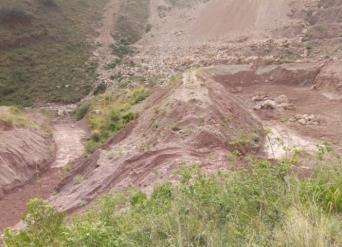
LandDegradation Landscapes are disturbed by the mining of limestoneandotherrawmaterials.
WaterPollution Waterresourcesintheareamaybedepletedby the processing and dust suppression uses of water. Additionally, contaminants may be presentinwastewaterdischarge.
BiodiversityLoss Plantandanimallifemaybeharmedbyhabitat damage brought on by dust deposition and quarrying.
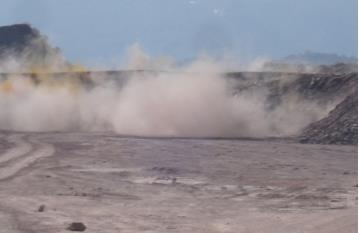
DustEmissions The processing, grinding, and transportationof suspended particles can have an adverse effect onrespiratoryhealthandairquality.
Energy Consumption Greenhouse gas emissions are a result of the energy-intensivecementproductionprocess.
Solid Waste Generation Waste items that need to be disposed of properly include kiln dust and leftover quarry material.
NoisePollution Noisedisturbancesresultingfromtransporting, grinding, and crushing operations may affect neighboringpopulations.
The cement industry has a significant environmental impact,primarilyduetothefollowingfactors:
Greenhouse Gas Emissions:The chemical conversion of lmanufacture. This is a big greenhouse gas emitter. Cement kilns emit CO2 by burning fossil fuels.imestone intoclinkerreleasesCO2duringcement.
Energy Consumption:Cementmanufacturedemandsalot ofenergy,notablyclinkerformationathightemperatures. Use of fossil fuels like coal increases energy consumption andemissions.
Raw Material Extraction and Processing:Degradationof ecosystems, loss of biodiversity, and disturbance of habitats can result from mining and the extraction of raw materials(suchasclayandlimestone).
Air Pollution:Particulate particles, sulfur dioxide (SO2), nitrogen oxides (NOx), and volatile organic compounds (VOCs) are among the air pollutants released during this cement manufacturing process. Air pollution, which these pollutants exacerbate, is harmful to both people and the planet[17].
Severity
High
Mitigation Strategies
Decrease the clinker factor, or the clinker to cement ratio.Utilizewastebiomassasanalternativefuel;Apply cutting-edgetechnologiestoincreasekilnefficiency.
Moderate After mining, carry out plans for land reclamation. Reduce the footprint of the quarry by using effective extractiontechniques.
Moderate Employ water-conserving technology Utilize recycled processwater.Beforedischarging,treatwastewater
Moderate Reduce habitat disruption when quarrying; put dust control measures in place; and replace damaged areas withnaturalplants.
Moderate Use dust suppression methods (water sprays) to automateandenclosematerialhandlingactivities.
High Investinproductionprocessesandkilnsthatareenergyefficient, and whenever feasible, use renewable energy sources.
Moderate Examine the possibilities for utilizing kiln dust in the manufacturing of cement or for other purposes. Implementplansforresponsibledisposalofwaste.
Moderate Use equipment with noise reduction technology and adopt operational procedures to reduce noise (e.g., crushingduringoff-peakhours)
Water Consumption: Cement production involves significant water consumption, both for raw material extraction and in the production process itself. Excessive waterusagecanleadtolocalwaterscarcityandnegatively impactaquaticecosystems.
Waste Generation:Cement production generates byproductsandwaste,includingdust,ash,andkilnslag.The management and disposal of these materials can pose environmentalchallenges.
Transportation: The transportation of raw materials, clinker, and finished cement products contributes to carbonemissions,especiallyiflongdistancesareinvolved.
Various techniques and technologies may be applied to reduce the environmental effect of the cement industry.
Alternative Raw Materials and Fuels:Lesseningtheload on conventional resources and the environment is possibleviatheuseofbiomassandotheralternativefuels andrawmaterials.
Energy Efficiency: Integratingenergy-efficienttechnology and practices in production may decrease energy use and relatedemissions.
International Research Journal of Engineering and Technology (IRJET) e-ISSN: 2395-0056
Volume: 11 Issue: 05 | May 2024 www.irjet.net p-ISSN: 2395-0072
Carbon Capture and Storage (CCS): CCSsystemsmay be used to collect and retain CO2 emissions generated in the cementproductionprocess.
Use of Sustainable Practices: Employing sustainable mining practices, water recycling, and reclamation of minedareascanhelp reducethe environmental impactof rawmaterialextraction.
Recycling and Reuse:Encouraging the use of recycled materialsincementproductionandfinding waystoreuse by-productscancontributetowastereduction.
Emission Standards and Regulations: Stringent environmental regulations and emission standards can drive industry-wide adoption of cleaner technologies and practices.
Investinginresearchanddevelopmentforgreenercement technologies, such as low-carbon or carbon-neutral cements, can help in the long-term transition to more sustainable practices. Overall, addressing the environmental impact of the cement industry requires a combination of technological innovation, regulatory measures, and industry-wide commitment to sustainability.
In India, the EIA (Environmental Impact Assessment) of the cement industry is governed by Acts and regulations. The efficacy of the Environmental Impact Assessment (EIA) can only be comprehended when accurate data and its analysis are provided by the industry, and policymakers acknowledge the accuracy of the data supplied at the grassroots level. Decisions should then be made appropriately to limit the impact of industrial activities. Thus, an industry must thoroughly consider all ways to reduce the environmental effect of a proposed project. Furthermore, the industry must commit to adhering to the regulations set by both the State Government and the Central Government of India, which are periodically enforced. Subsequently, a formal request maybesent totheappropriateauthorityfor the approval of the planned project. The theoretical framework prioritizesacollaborativeandmultidisciplinaryapproach, incorporating the cooperation of environmental specialists, engineers, social scientists, regulatory agencies, and impacted populations. The purpose is to strike a balanced equilibrium between economic advancement and environmental and social well-being, while also following legal requirements and ensuring transparencyindecision-making.
1. Mandal, S. K., and S. Madheswaran. "Environmental efficiency of the Indian cement industry: An interstate analysis." Energy Policy, 2010:1108-1118.
2. Rehan, R., and M. Nehdi. " Carbon dioxide emissionsandclimatechange:policyimplications for the cement industry." Environmental Science &Policy,2005:105-114.
3. Dhoble, Yogesh, Environmental Impact Assessment of Cement Industry - A Short Note (March 16, 2013). Available at SSRN:https://ssrn.com/abstract=2234380orhtt p://dx.doi.org/10.2139/ssrn.2234380
4. Bhandi,J.S.,&Kumnoor,B.(2013).Problemsand Prospects of Cement Industry. Indian Streams ResearchJournal,2(12),1-4.
5. Bhayani, S. J. (2010). Determinant of Profitability inIndianCementIndustry:AnEconomicAnalysis. SouthAsianJournalofManagement,17(4),6-20.
6. Kumar,S.,&Bansal,N.C.(2013).GrowthofIndian Cement Industries: An Analysis. International Journal of Management Research and Reviews, 3(1),2156-2166.
7. Pandey,A.(2017).ImportanceofCementIndustry in India. International Journal of Marketing and Technology,7(8),29-51.
8. Pareek, A., & Pincha, S. (2015). Indian Cement Industry: A Road Ahead. International Journal in ManagementandSocialScience,3(8),432-439.
9. Vaijayanthimala, P., & Vijayakumar, A. (2014). Analysis of Operating Performance of Indian Cement Industry. International Journal of Innovative Research & Development, 3(5), 88100.
10. Al-Neaimi, Y. I., Gomes, J. and Lloyd, O. L. 2001. "Respiratory illnesses and ventilatory function among workers at a cement factory in a rapidly developing country." Occupational Medicine, 51(6):367-373.
11. F. A. Rodrigues and I. Joekes, “Cement industry: sustainability, challenges and perspectives,”Environ. Chem. Lett., vol. 9, no. 2, pp.151-166,2011
International Research Journal of Engineering and Technology (IRJET) e-ISSN: 2395-0056
Volume: 11 Issue: 05 | May 2024 www.irjet.net p-ISSN: 2395-0072
12. A. M. Al-Omran, S. E. El-Maghraby, E. A. Nadeem, A. M. El-Eter, and S. M. I. Al-Qahtani, “Impact of cement dust on some soil properties around the cement factory in Al-Hasa Oasis, Saudi Arabia,”Am. J Agric Env. Sci, vol. 11, no. 6, pp. 840-846,2011
13. J. Li, P. Tharakan, D. Macdonald, and X. Liang, “Technological, economic and financial prospects of carbon dioxide capture in the cement industry,”Energy Policy, vol. 61, pp. 1377-1387, 2013
14. C.A.Hendriks,E.Worrell,D.DeJager,K.Blok,and P. Riemer, “Emission reduction of greenhouse gases from the cement industry,” inProceedings of the fourth international conference on greenhouse gas control technologies, 1998, pp. 939-944
15. K.Syamala Devi , V.Vijaya Lakshmi and A. Alakanandana, impacts of cement industry on environment – an overview, Vol: I. Issue LVII, November2017
16. Vigneshwar Mekha , Adma Kamalakar Reddy,Experiences of Cement Industry in India, International Journal of Research in Geography (IJRG)Volume4,Issue2,2018,PP72-78.