
International Research Journal of Engineering and Technology (IRJET) e-ISSN: 2395-0056
Volume: 11 Issue: 05 | May 2024 www.irjet.net p-ISSN: 2395-0072
International Research Journal of Engineering and Technology (IRJET) e-ISSN: 2395-0056
Volume: 11 Issue: 05 | May 2024 www.irjet.net p-ISSN: 2395-0072
Rishabh Bahri1 , Dr.Dharmendra 2
1Research scholar, National Institute of Technology Hamirpur, Himachal Pradesh 177005 India.
2Assisstant Professor, National Institute of Technology Hamirpur, Himachal Pradesh 177005 India.
Abstract - Thestonecrushing industryisa crucialsector in India,producingcrushedstonesforconstructionpurposeslike roads, highways, bridges, buildings, and canals. This industry is growing rapidly due to infrastructure development plans. However, it also poses significant environmental issues, such as rapid pollution, which negatively impacts human health and the environment. The release of dust into the air and water is one of the many negative environmental and health effects of the mining and stone crushing industries.
This study highlights the urgent need for a more thorough evaluation of how stone crushing affects water quality. We suggest reorienting the analysis to focus on the presence of heavy metals and other contaminants that can leak from objects that are piled high or encounter water through unintentionalspills.Whenwateriscontaminated,itcanupset aquatic ecosystems and seriously jeopardize the health of neighbouringcommunitiesthatdependonitforirrigationand drinking.
The material that has already been written about how stone crushing affects the environment is reviewed in this review, with an emphasis on how it degrades water quality. We draw attention to the shortcomings of the present research conducted in India, especially its lack of concentration on particular contaminants. We support a more thorough methodology to evaluate the whole range of possible pollutants discharged from stone-crushing processes.
The continued growth of the stone crushing industry necessitates the implementation of sustainable practices and stricter regulations. Responsible operations are crucial to safeguard vital water resources and ensure the health and well-being of surrounding communities. This review underscores the urgent need for a more comprehensive understanding of the water quality impacts of stone crushing in India, paving the way for sustainable development and environmental protection.
Key Words: Stone crushing, Pollution, Health effects, Environmentaleffects,Contamination,Heavymetals
1.INTRODUCTION
Mining is a significant economic endeavor in several developing nations, including our own. Operations, regardless of size, are naturally disruptive to the environment,generatingsignificantquantitiesofdustdebris that may be detrimental. The quarry and stone crushing
industryinIndiaisexpandingquicklybecauseoftherising demandsofconstructionandindustry,aswellasthecurrent focus on developing the country's infrastructure. Nevertheless, reliable data for this industry is scarce. Numerous rural migrant and unskilled laborers in India receive direct employment from the country's numerous stonecrushers.InIndia,moststonecrushingisasmall-scale, labor-intensiveindustry.[1].Theprocessesareperformed manually. Currently, there is less information about dust emissionsfromtheseunits,theirconnectiontooccupational exposure, and the respiratory health status of workers. Mining, particularly opencast mining, involves extracting rocksandminerals,andisoftenseenasaharmfulactivity with significant negative effects on the environment. Quarries produce significant amounts of stone via cutting processes, leading to adverse effects on nearby surface water. Regarding the influence of pollutants compared to pollution. Any chemical, radioactive nuclide, organ phosphorus compound, trace gas, geochemical material (suchdustorsilt),biologicalcreatureorproduct,orphysical characteristic (such as heat) that is purposefully or inadvertentlygeneratedbyhumans.Potentiallyorcurrently discharged into the environment [2]. Mining affects many aspects of the ecosystem, including the enduring and significant effects of abandoned mining waste piles and extensive extraction locations. Drilling, blasting, and crushingmineralsarecrucialoperationsinthemajorityof bigopen-pitmines.
TheoperationofHeavyEarthMovingMachines(HEMM)in large open cast mines can significantly impact the environment, causing dust, noise, and ground vibration. Opencast mining, particularly in Jhansi district, is more damaging than underground mining, causing water, soil, noise,andlandpollution.Miningactivitiesnotonlyaffectthe physicalandbiologicalstructureofanareabutalsoleadto socio-economic changes and eliminate traditional income sources.Suppliedparticulatematter(SPM)sulphurdioxide (SOx)aremajorsourcesofemissionsfromvariousopenpit mining activities. Control methods include planning and implementing preventive and suppressive measures to maintainpollutantlevelswithincertainstandards.However, thereisnowell-definedmethodforpredictingtheimpactof air pollution due to mining. Most dust found in industrial environmentsismineral-based,andevenafterpreliminary work has been done, it must be disturbed. Underground minesarethemostabundantandubiquitouscontaminants intheatmosphere,withsilicadustcausingsevereproblems andwidespreaddusttowhichmineralscomeincontactdue
International Research Journal of Engineering and Technology (IRJET) e-ISSN: 2395-0056
Volume: 11 Issue: 05 | May 2024 www.irjet.net p-ISSN: 2395-0072
todustandgaspollutantsinandaroundminingcomplexes fromfreshlycutopenmines.Thisdeteriorationinairquality requires assessment of the impact on air quality due to mining and suggest appropriate abatement measures. Mining has a significant impact on the environment, especiallyonthequalityofgroundwaterandsurfacewater. Mineralresourcesplayacrucialroleinacountry'seconomic development and human civilization [3]. Mining, like any otherindustrialactivity,leavesastrongnegativeimpacton theenvironmentunlessexecutedcarefullyandinaplanned manner. It is well established that mining is an environmentallydestructiveactivity,withpotentialimpacts onlandzeroorworseafterminingceases.
Stone crushers are beneficial for the building sector, although they contribute to issues including increased expensesanddifferentenvironmentalandhealthconcerns. Wewillstudystonecrusherfunctioning,identifyproblems, andprovideindustry-economicremedies.Ourcostanalysis will assess the additional costs of adopting stone crusher control devices to reduce their effect. We will compare Indianstonecrushingfacilitiestothoseinwealthycountries tofindimplementationconcerns.
The nation depends on the stone crushing industry to providecrushedstoneindifferentsizesforuseinbuilding, bridge,road,highway,andcanalconstruction.InIndia,there are more than 12,000 stone crushers. There will likely be more due to plans for the highways, canals, and other infrastructure required for the nation's expansion. The Indian stone crushing industry is an important economic sector,withanestimatedyearlyturnoverofRs.5000crore, orroughlyUS$1billion.Over500,000peoplearethoughtto beemployeddirectlybythebusiness,doingtasksincluding transportingcrushedandminedgoodsandrunningcrushing plants. Since most of these people are from rural, economically deprived areas with limited employment opportunities, they play a vital social role in rural communities. It gives poor, uneducated, illiterate rural populations a means of subsistence., and unskilled individualslivinginruralareas.
Thestonecrushersectorispresentnearmostmajorcities andvillagesthroughoutthecountryduetoongoingbuilding activity nationwide. Crushed stone items become more expensive when transported over long distances; for this reason,crushersshouldbelocatedclosertodemandcenters, such as cities, bridges, and canals. In order to run, stone crushers require a large quantity of labor and electricity. Transportingcrushedstoneproductsaswellasminedstone requiresaccessroads[4].Forthesereasons,themajorityof stonecrushersarelocatedoutsideofmajorcitiesorcloseto important construction sites.. Stone Crushers often form clustersconsistingoffivetofiftymachines.Thecrushersare situatedclosertotherawmaterialsource,includingstone minesandriverbeds.
Mining is a significant economic endeavor in several developingnations.Operations,regardlessofsize,impactthe environment by releasing vast amounts of dust and pollutants.TheminingandstonecrushingsectorinIndiais expanding quickly in response to rising demand from the buildingindustry.Althoughexactstatisticsforthissectorare not easily accessible, it is believed that 12,000 stone crushers in India directly employ around 500,000 rural migrant and unskilled laborers. Stone crushing is a smallscaleindustryinIndiathatreliesheavilyonphysicallabor.
Stonecrushingandscreeningproceduresaredusty.Thedust generatedhasatendencytoremainsuspendedintheairand disperse across the area around the stone crusher. The dispersionofdustisinfluencedbythewind'sdirectionand velocity.Airhumiditysignificantlyinfluencesthedispersion ofdustparticles.Inhalingfineparticlesinthestonecrusher business might pose health risks to workers. The word 'occupational hazard' denotes the risky characteristics. Individualswhotransportrocksandstones,livenearstone crusherindustries,andthosewhotrespassintheareawillall beimpactedbythisissueofdustpollution.Bothanimalsand plantswillalsobeimpacted.
Krishnendu Mukhopadhya, et al. (2011) reviewed that workers in stone crushing units are exposed to asbestos, particlepollution,andrepairablesilicaattheworkplaceand nearby homes. In both the workplace and adjacent communities,thelevelsofrepairableparticulatemattersand silicaexposurewereplannedtobeevaluatedintheresearch. To reduce the unit's dust emissions, researchers tested a novel dustabatementdryengineeringcontrol system,and thefindingswereencouraging[5].
Dulal Chandra Saha and Pratap Kumar Padhy (2011) reviewed that Trees should be strategically planted near factories and roadsides to absorb air pollutants, such as particulate matter, in order to mitigate pollution. Trees experiencesubstantialharmfromdustaccumulation,which hindersphotosynthesisandproteinsynthesis,makingthem vulnerable to damage from bacteria and insects despite having stress-tolerant systems. Some species thrive in polluted environments, and the effects of pollutants are spatiallyinfluenced.Regulationslikedustcontainmentand suppressionmeasuresareneededtomitigatetheseeffects [6].
Ravindran (2013) reviewed emphasized the need of maintainingacleanatmosphereinsidethesector.Rocksare crushed into little fragments in a stone crusher. When boulders are crushed, a significant amount of dust is produced,whichthendispersesintheairaroundthestone crusher.Hedeterminedthatbreathinginfinedustposesa healthrisk[7].
International Research Journal of Engineering and Technology (IRJET) e-ISSN: 2395-0056
Volume: 11 Issue: 05 | May 2024 www.irjet.net p-ISSN: 2395-0072
Anjani Gupta (2019), reviewed that dust from stone crushingactivitiescontainsexcessiveamountsofparticulate matter,exceedingpermissiblelimitsinwinterandsummer. The concentration of SO2 and NO2 is within the National Ambient Air Quality Standard (NAAQS) limits. The higher particulate matter value is found at BKC due to increased vehicle movement and handling of stone boulders and gravels. The dust also contains a high percentage of respirable particulate matter, including silica, which can causeserioushealthproblems.Thehumannosefiltersout 99%ofinhaledparticles,whiletherestenterthewindpipe and lungs. Respirable particulates may deposit in alveoli, slowingoxygenexchangeandcausingshortnessofbreath[8].
Dr. H. Thavamalar (2019), reviewed that Stone crushing businessinIndia'ssmallscalesectorsignificantlycontributes tomeetingthehousingneedsofpeoplebysupplyingcrushed stones for constructing roofs. This business is valuable for supplyingessentialrawmaterialsforinfrastructureprojects such as road paving, bridge construction, and canal development. The research reveals that there are existing social and economic issues in the stone crushing facilities. Implementing ideas effectively should eliminate the difficulties. The proprietors of the crusher plants should providesuitableamenitiestocreateapleasantenvironment andensuretheworkers'healthandsafety[9].
Javed Manzoor and Mahroof Khan (2020), reviewedthat Stonecrushingandquarryingoperationssignificantlyimpact environmentalqualityandhumanhealth.Thisstudysetout to compare and contrast the environmental policies of several quarrying and stone crushing operations in the PoonchregionofJammuandKashmir,India.Methodssuchas questionnaires, laboratory experiments, general observations,andfieldworkwereusedtocarryoutthestudy. Numerous significant negative effects have been reported, suchasincreasednoise,dust,andwaterpollution;decreased agriculturaloutput;lossofbiodiversity;deteriorationofthe land; formation of unproductive areas; reduction in water quality; accidents; socioeconomic disputes; and serious healthriskstothelocalpopulation.Thereisnoattemptmade by the local administration of these units in the region to lessen negative impacts on human health and the environment. According to the most recent studies, regulationsmustbeputinplacetoprotecttheenvironment and public healthfrom theseveral types of pollutantsthat thesefacilitiesproduce.[10].
In response to rising population demands, there has been extensiveexploitationofnatural resourcesrecently,which continuesdaily.Theenvironmentalthreatsresultingfromthe gradualdeclineofthebiospherehavebecomeasignificant concern in recent times. Human activities impact the environment via both direct and indirect means. Stone
crushingand quarrying areillustrative of such operations. Stone crushing and quarrying are important industrial sectors that produce crushed stones for construction purposes.However,theyhavecausedglobalconcernsdueto theirsocioeconomicimpacts.Humanactivitycanproducea variety of pollutants, including dust, water, noise, and air pollution,whichcanhaveasignificantnegativeimpactonthe environment. The native plant life, soil, forests, and the habitats of various animals are all impacted by these activities.Onesignificantformofpollutionthatsignificantly affectspeopleisthenoiseproducedbystonecrushingand quarryingoperations.Afterairandwaterpollution,theWHO ranks it as the third most dangerous type of pollution. Because of the immediate and cumulative harm that noise fromthestonecrushingandquarryingindustriescausesto health, including heart problems, depression, stress, sleep disruptions, and hearing loss, it is regarded as a major annoyance.[11].Stonedustisaprimaryaerosolthatplaysa keyroleinairpollution.Theinfluencefluctuatesdepending onseveralfactorsassociatedwiththeparticulargeographical location and microclimatic conditions. It harms plant and animal life, changes soil pH,and createshaze that reduces vision.Stonecrushingreleasesmanydustparticlesofvarious sizes into the air, dispersing suspended particulate matter andgaseouscontaminants.Dustmayclogandharmplants' internalsystems,weardownleavesandcuticles,andreduce agriculturalproductivity.Dustmaycausesilicosisandother illnesses. Dust is not only a nuisance but may also have adverseimpactsonthehealthofadjacentpopulationsand the surrounding ecosystem, including biodiversity, plants, andwaterbodies.Exposuretodustmayleadtorespiratory disorders and illnesses such as silicosis, as well as skin infections. Stone crushing and quarrying operations alter ecosystems, disrupting local hydrological and geological processes, in addition to generating dust and noise. These actions alter the substratum, landscape patterns, damage natural habitat, disturb natural succession, and impact genetic resources. Disposing of waste rocks near crushing andquarryingfacilitiesmayimpairnaturaldrainage,leading toriversandstreamsbeingdivertedintofarmlandregions andcausingfloods.Furthermore,theriseinstonecrushing and quarrying operations has led to social challenges and conflicts worldwide. These issues encompass land use disputes,threatstosocio-culturalheritage,displacementof communities,destructionofculturallandmarks,strugglesfor self-governance,controloverresources,andtheemergence ofabandonedtowns
International Research Journal of Engineering and Technology (IRJET) e-ISSN: 2395-0056
Volume: 11 Issue: 05 | May 2024 www.irjet.net p-ISSN: 2395-0072
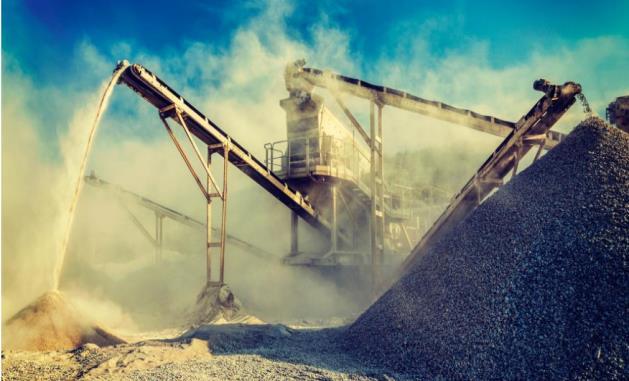
The environmental impact of a stone crusher can be considered in terms ofseveral aspects,suchasair quality, water quality, noise pollution, soil erosion, and habitat destruction.Here'sabriefassessmentofeachaspect:
Air Quality:
Dust Emissions: Stone crushers produce a considerable amountofdustduringthecrushing process.Thisdustcan lead to respiratory problems for nearby residents and workers. Additionally, it can settle on vegetation and contributetoairpollution.
Particulate Matter (PM) Emissions: Crushing activities can releaseparticulatematterintotheair,includingfineparticles (PM2.5)andcoarseparticles(PM10),whichcanhaveadverse healtheffects.
Water Quality:
RunoffContamination:Theoperationofstonecrusherscan generate runoff containing sediments, minerals, and other pollutants.Thisrunoffcanenternearbywaterbodies,leading towaterpollution.
Groundwater Contamination: The use of chemicals in the crushingprocessorimproperdisposalofwastematerialscan lead to groundwater contamination, affecting local water quality.
Noise Pollution:
OperationalNoise:Stonecrushersproducenoiseduringtheir operation,whichcanbeasourceofdisturbancefornearby residents and wildlife. Ecosystems can be disrupted and humanhealthnegativelyimpactedbyprolongedexposureto loudnoise.
Soil Erosion:
DisturbancetoLandscape:Theprocessofstonecrushingmay involve extensive excavation, leading to soil erosion and
disruptionofnaturallandscapes.Thiscanresultinthelossof fertilesoilandalterationoflocalecosystems.
Habitat Destruction:
ImpactonFloraandFauna:Destroyingnaturalhabitatsfora varietyofplantandanimalspeciesisapotentialoutcomeof establishing and operating stone crushers. This has the potentialtoupsetecologicalharmonyandleadtoadeclinein biodiversity.
Waste Generation:
Waste Disposal: The handling and disposal of waste generated during the crushing process, such as unused materialsandby-products,needtobemanagedproperlyto preventenvironmentalharm.
To mitigate these environmental impacts, stone crusher operatorscanimplementvariousmeasures,including:
Dust SuppressionSystems:Installingdustcontrolsystems tominimizeairbornedustemissions.
Water Management: Implementing proper drainage systemsandsedimentationpondstocontrolwaterrunoffand preventwaterpollution.
Noise Barriers:Erectingbarriersorsoundproofenclosures toreducenoiseemissions.
Reclamation and Rehabilitation: Implementing reclamation and rehabilitation plans to restore disturbed landandhabitats.
Compliance with Regulations:Adheringtoenvironmental regulationsandobtainingnecessarypermitsbeforeinitiating operations.
It's important for stone crusher operators to conduct comprehensiveenvironmentalimpactassessmentsandadopt sustainablepracticestominimizetheirecologicalfootprint. Additionally,communityengagementandconsultationwith relevant stakeholders can help address concerns and find abbreviations in the title or heads unless they are unavoidable.
The dust produced during stone crushing processes comprisesasubstantialquantityoffineinhalableparticles. Althoughfineparticlemattermakesonlyatinypercentage oftotalsuspendedparticulatematter,itsimpactmaybefar greater.Thehighsilicacontentinthedust,togetherwiththe particle size distribution, may create a dangerous environmentforworkersandnearbyregions,posingrisksto humanhealth.Basedontheresultsofthesite'sairquality andhealthevaluation,thedustthatwasfoundtheremaybe very harmful to respiratory health. The study entails
International Research Journal of Engineering and Technology (IRJET) e-ISSN: 2395-0056
Volume: 11 Issue: 05 | May 2024 www.irjet.net p-ISSN: 2395-0072
conducting an exhaustive assessment of air quality and formulating a detailed strategy for the management of occupationalandenvironmentalhealthinthesevitalsmallscale industries. Dust is mostly produced by aggregate production activities including mining, blasting, cutting, hauling,processing,andtransportation.Ashasbeenthecase inpreviousyears,dustaccumulatesduetothedryclimate, lack of vegetation, and strong winds. The high aggregate productionratecontributessignificantlytotheaccumulation of dust particles in the surrounding open area. Water hardnessindirectlyimpactshumanhealthbycontributingto air pollution. Local challenges in implementing control measures include high investment costs, large water use, insufficient expertise among stone crusher operators, and financiallimitations.
[1] GautamS.P.(2009)ComprehensiveIndustryDocumentStone Crushers, Central Pollution Control Board "PariveshBhawan" East Arjun Nagar, Shahdara" Delhi Langer,W.H.,2001.
[2] Ashutosh D. Kambl et. al, Reduction of environmental pollutionwhilestonecrushing,InternationalJournalof AdvanceResearch,IdeasandInnovationsinTechnology, Volume5,Issue32019
[3] Ramana T.V. Management of stone crushing industry anditsimpactonEmployeesandenvironment“a case study”.InternationaljournalofResearchinCommerce, EconomicsandManagement.2011;1(3):154-157.
[4] Ravindran,S.(2013).StoneCrushersandDustProblem. Middle-East Journal of Scientific Research, 14 (12), 1734-1740.
[5] KrishnenduMukhopadhyay.,AyyappanRamalingam.,& Raghunathan Ramani (2011). Exposure to Respirable ParticulatesandSilicainandaroundtheStoneCrushing UnitsinCentralIndia.IndustrialHealth,49,221-227.
[6] Dulal Chandra Saha., & Pratap Kumar Padhy (2011). Effects of Stone Crushing Industry on Shorea Robusta and Madhuca Indica Foliage in Lalpahari Forest. AtmoshericPollutionResearch.2,463-476.
[7] Ravindran,S.(2013).StoneCrushersandDustProblem. Middle-East Journal of Scientific Research, 14 (12), 1734-1740.
[8] Anjani Gupta, Assessment of Stone Crusher Pollution and Its Control Measures. International Journal of AdvancedScientificResearchandManagement,Special Issue5,April2019
[9] Dr.H.Thavamalar,Socio-EconomicandEnvironmental ImpactofStoneCrushingIndustryinVillupuramDistrict ofTamilnadu,JETIRMay2019,Volume6,Issue5
[10] Javed Manzoor and Mahroof Khan, Environmental Perspective of Stone Crushing and Quarrying: A Case Study from Poonch District of Jammu and Kashmir, India,Vol.15,No.(1)2020,Pg.68-74
[11] Mr. Rushikesh B. Mane , Sunil Jadhav , Shubham Bhodhale & Kishor Rakh, Assessment of Environment Pollution due to Stone Crusher Plant At Katraj, Pune, JRARMay2019,Volume6,Issue2