
International Research Journal of Engineering and Technology (IRJET) e-ISSN: 2395-0056
Volume: 11 Issue: 05 | May 2024 www.irjet.net p-ISSN: 2395-0072
International Research Journal of Engineering and Technology (IRJET) e-ISSN: 2395-0056
Volume: 11 Issue: 05 | May 2024 www.irjet.net p-ISSN: 2395-0072
T. SWAPNA1 , T. JHANSI2 , K.SUNITHA RANI3
1Assistant Professor, Dept of Architecture and Planning, University College of Architecture and Planning, A.N.U, Guntur, AP
2 Assistant Professor, Dept of Architecture and Planning, University College of Architecture and Planning, A.N.U, Guntur, AP.
3 Assistant Professor, Dept of Architecture and Planning, University College of Architecture and Planning, A.N.U, Guntur, AP.
Abstract - Thetrend of digitalfreeformand theawareness of environmental issues have propelled architecture to a higher level by comprehensively merging new technologies and green concepts. These findings imply that a new framework for comprehending the design process that combines digital technology and the sustainable idea is required. The debate is whether the overall interactions betweendigitaltechnologyandsustainabilitythinking,aswell astheholisticintegrationof newdesignmethods, shouldtake precedence over micro concerns. This might bring the design process up from a fragmented level to one that is more allencompassing and universal.
Key Words: Digital-Green,designprocess,digitaltechnology, sustainableconcept.
Utilizing computer numerical control (CNC), rapid prototyping(RP),anddigitalCAD/CAMtechnologyasnew design mediums, researchers such as Frank Gehry, Mark Burry, Larry Sass, Branko Kolarevic, et al. realized the increasingdemandsfornewdigitaldesignprocess.Giventhe advanced technological capabilities of computation, calculation, and simulation, modern architecture should placegreateremphasisonimplementingconceptssuchas habitability, self-sufficiency, and more, rather than just focusingonaestheticandpracticalfeatures.Asaresult,the conventionaldesignprocesswhichconsistsoftheschematic design, construction stages, detail design, and design developmentevolvedintandemwiththenewstructureof thedigitaldesignprocess.Thedigitaldesignprocessmakes extensiveuseofthefournewstepsofcomputationalconcept design,analysis,production,andassemblytechnique.The conceptof"green"hasexpandedbeyondasimplefocuson beingmoreautonomous,self-sufficient,andabletogenerate renewable energy on its own. Technology breakthroughs haveuppedthebarandmadebuildingsomethingimpossible achievable, which has given the field extraordinary knowledgeandpotential.Digitaltechnologiesmustadvance together with the traditional sustainable design process, which entails site planning and research, building form,
envelopedevelopment,finishing,andtechnicalsupport.The concept of sustainability has changed over the last few decadestoincorporatedigitaltechnologyandself-sufficient green thinking. The digital era has brought about a significantchangeindesign,butnewtechnologieshavealso hadanimpactonresearchandthewayarchitectsapproach sustainability. An ecological building is "a kind of living organism" thatrespondsto itssurroundings,according to Yeang (1999),whodefinedtheminthe1990s.Someofthe pioneers of digital sustainability, like Norman Foster with the Reichstag Dome, etc., understood the need of sustainability.Additionally,Kolarevic (2004)proposedthat understanding sustainability and using curvilinear shapes are equally crucial strategies. The Carbon Tower by Peter Testa and Ove Arup was cited as an illustration of digital technologythatsavesenergy.Throughtechnologytransfer from textiles to the highly-compressed carbon fiber reinforcementoftheexteriorhelix,architectswereableto showthe eliminationofvertical columnsbetweenstories. Withrecyclableandnaturallyfinishedstainlesssteel,Steven Holl's (2005)SilverWaterDropdemonstratedhisabilityto combine landscape and architecture while preserving the digitalfreeform,echoingYeang's (1999)conceptofbringing a building and its surroundings into conversation. Additionally,DavidFisher'sdesignoftherotatingskyscraper included prefabricated floor components and a windturbine-powered self-powered system. The architecture improved the use of technology and green design, and it thoroughly expresses the idea of digital mobility in a building.Forarchitecturalapplications,digitaltechnologies like laser cutting, CNC (Computer Numerical Control) technology, and 3D computer modeling offer affordable manufacturing processes. These innovative techniques enable the pre-assembly of building elements, minimizing wasteandloweringconstructionexpenses.Inaddition,owing totechnologicalimprovements,scientistsandarchitectsmay test novel materials throughout the design phase to determineiftheybettersatisfysustainablestandards.These results suggest that in this new era of digital and green design,weneedanewframeworktounderstandhowdigital technologyandsustainableprinciplesarecombined.
International Research Journal of Engineering and Technology (IRJET) e-ISSN: 2395-0056
Volume: 11 Issue: 05 | May 2024 www.irjet.net p-ISSN: 2395-0072
Inthepast10years,newCAD/CAMtechnologyhasenabled architects to create structures using integrated methodologies.Thefoundationofthedigitaleraisthenew analyticalsoftwarewithsophisticatedcomputing,calculating, and simulation capabilities. A few of them were also observingthesteadyriseinsustainabilityandsufficiency.It's timetoinvestigateifthecombinationofemergingtechnology and the green idea might completely reshape digital architecture. People are now increasingly conscious of environmental concerns and the need for new design principlesthattakeenergyanddigitalsavingsintoaccount. Thesepatternsforcescholarstoconfrontthenovelobstacles surrounding the way in which digital architecture will addresstheproblemofsustainableinnovation.Asignificant amountofcontemporarydigitalsustainablearchitectureis stillperceivedasbeinglimitedtoatechnicalgreenconcept, despite the fact that greenconceptsare increasinglybeing integratedintothedesignprocessofdigitalarchitecture.This includes the process and interaction between digital technology and the sustainable concept, rather than being restrictedtobeingabuilding'smachineryadd-onorahybrid combinationofnewtechnologiestosustainthebuildingor theadoptionofanothertechniquetodesignprojects Someof thecreativedigitalfree-formsthatareconnectedwiththese technologiesseemtobethedirectsolutionsandnovelways todigitalsustainabledesign.Theprimarygoalofthisstudyis to ascertain if digital freeform, when combined with emerging technology and ecological requirements, can supporttheNewDigital-Greendesignprocess'ssustainable requirements. By using case studies, the three steps to approach this research are: (1) to conduct a wide investigation of case studies to make a comprehensive evaluationofthenewfactorsfortheanalysisofnewdesign process;(2)tounderstandthelogicsandcharacteristicsofa new digital-green design factor; (3) to analyze the basic designprocessintermsoffromgeneral,sustainable,digital and the preliminarily digital-sustainable architecture to obtainanewmodelofDigital-Greendesignprocess.
Therationalebehindselectingthese10examplesistoclarify the subsequent ideas. Initially, projects are chosen from differentnationsusinganunbiasedviewpoint.Theplacesare spread throughout Asia, the Middle East, America, and Europe. Second, the buildings incorporate several architecturalsizes,includingthatofavastpublicstadiumand aprivatedwelling.Lastbutnotleast,theselectedarchitects areadeptatexperimentingwithcreatingdigitalarchitecture thatincorporatessustainabilityconcerns.Thegoalofthe10 instances is to investigate different aspects of the architecturesthroughananalysisofthedesignprocessesthat includedigitalmanipulationandsustainabledesignthinking. Thelinkbetweendigitaltechnologyandsustainablequalities,
aswellasthelogicofdesignprocesses,areillustratedwith largerapplicationsthroughthe10projects.
The case study suggests that the digital or sustainable architecture'sinitialframeworkmightnotbeenoughforthe demandsofthedigital-greendesignprocess. Applyingfresh elements is required to generalize the new design process and include digital technologies and sustainable concepts. Thefivebasicfactorsdetail/joint,material,object,structure, andconstructionweregroupedthroughoutthecreationof the original design process [22–29]. Seven elements were developedwhenthefivetraditionalfactorswerereexamined: the joint, detail, substance, object, structure, construction, andinteraction[30].Theclassicaspectswerereinterpreted with the backdrop of digital thought. Five digital factors concept,manipulation,construction,shape,andspacewere suggestedthroughthedigitaldesignprocessusinginnovative assemblytechniques[29].Furthermore,theuseofcomputers andCAD/CAMtechnologyinthedesignprocesschangedthe expression of digital architecture into the combination of digitalandsustainableoperation.Thiswasmadepossibleby advancements in technology and the growth of green thinking. Once both sets of fundamental components are understood,comparisonsaremadetodeterminehowsimilar those factors are, which helps to construct a new design processskeleton.Theresearchwouldonlyfocusonthemost important aspects related to structure, building form (envelope), electrical power, technological principles, environment (water, waste, energy, noise), location (microclimate,greenspace),andmaterialswhiletakinginto account the functioning of sustainable components. This examination, however, focuses on the new design process thatcombinesdigitaltechnologywithsustainableidearather thanthepuresustainablemechanicalissue.Thenewdesign process approach differs from the original expression of digital architectural manipulation by combining green thinkingwiththedigitaldesignmanipulationmethodology. Consequently, building (structure), materials, object, interaction,andformarethenewfiveDigital-greencriteria thataresuggestedinthisresearch[22–31].
5.1
Thenewdesignprocessapproachcombinesgreenthinking with the digital design manipulation technique, setting it apartfromtheoriginalmanifestationofdigitalarchitectural manipulation. Thus, the new five Digital-green criteria proposedinthisresearcharebuilding(structure),materials, object,interaction,andform.
International Research Journal of Engineering and Technology (IRJET) e-ISSN: 2395-0056
Volume: 11 Issue: 05 | May 2024 www.irjet.net p-ISSN: 2395-0072
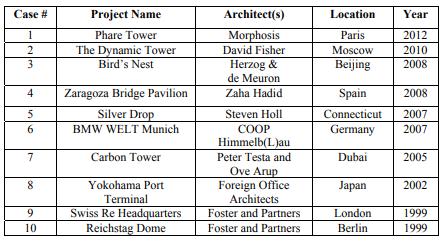


Fig -3:Digitaldesignprocess[6].
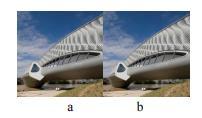
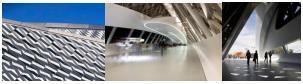
The discipline of digital architecture differs from conventionalarchitectureinitsdesignprocessduetomany modifications. It is also essential to investigate the design process using sustainable methods, as Figure 3 illustrates. Figure3isalmostexactlylikeearlierinstancesofdigitalor traditional architecture. The design process of combining digitaltechnologyandgreenaspectsisstartedbasedonthe analysis of the prior design processes and proportionate knowledgeofthecase-studycomponents.Thecharacteristics of computational design media and digital graphics (topologicalsurface,isomorphicfield,etc.)enablearchitects to freely alter the form and create a more functional skin/envelope,maximizingthepotentialofadynamicdigital design process. Consequently, new opportunities are presentedbythedevelopingprocessesofconceptualdesign, computational concept, and envelope analysis. Figure 4 illustrates the surprising new shapes and sustainable influence in the new Digital-Green design process. It is believedthatthisnewdesignmethodwillassistdesignersin integrating sustainable and digital elements into fashion designthroughoutthedesignthinkinganddesignprocess.

5.2 Discussion of ten cases
5.2.1
The shape may be dynamic and functionally sound at the same time, thanks to technology and the advancement of greenthinking.ThegrowthofthefreeforminCases1and4 wasdictatedbytheneedtoreacttothesun'spathinorderto reduceglareandheatgain.Thesouthfaçade'scurveddouble skin and the north façade's flat, clear-glazed exterior demonstratethebuilding'sintentionstoreduceheatgainand maximize internal delighting. Flow up the structure to improveventilation.
5.2.2
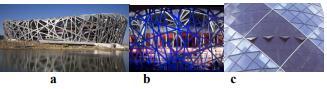
Designersmightcontrolvarioustypesofmaterialstoobtain thedynamicshapeonewantstoapproachwhilealsohaving sustainable value for the environment by employing computertechnologyandsimulation.Case4illustratesthe ideaofcoveringthebuilding'sexteriorwithbrand-new,ecofriendly glass fiber concrete triangle panels. Case 5 shows howadigitalfreeformstructuremadeofstainlesssteelmight alsobeenvironmentallyfriendlybyreducingheatabsorption asthesteelbecomesnaturallypolishedandrecyclable.glass fiberconcretetocoverthebuilding'sexterior.Case5shows howadigitalfreeformstructuremadeofstainlesssteelmight
International Research Journal of Engineering and Technology (IRJET) e-ISSN: 2395-0056
Volume: 11 Issue: 05 | May 2024 www.irjet.net p-ISSN: 2395-0072
alsobeenvironmentallyfriendlybyreducingheatabsorption asthesteelbecomesnaturallypolishedandrecyclable.
5.2.3
Thedefinitionsoffundamentalarchitecturalfeatures,suchas roof,façade,column,orwindow,mightbecomeambiguous duetotheircompletepurposesandduties,giventheconcern forbothdigitalandgreendesign.InCase3,forexample,the structurecombinedthewalls,roof,andstairsintoasingle, harmonious system. With its load-bearing grid-like layout, thestructureactedasboththefaçadeandthestructure.The rainwatercollectingsystem'seco-friendlyattributeshighlight the roof's two purposes in Case 3. In Case 6, the original architectural elements are replaced with new forms and multiple functions to encourage the continuity of natural ventilationthroughouttheentirebuilding.Thefaçadeandthe DoubleConecolumnstructuremergetogetherwiththeroof withthesolarmodulesintegratedonthesurface.
5.2.4
Theaimofcomputertechnologyandtheneedsofsustainable concern offer a completely new way to explore different possibilities in the areas of construction. This feature is particularlyevidentinCase2whenthewholeskyscraperis tobebuiltentirelyfromprefabricatedpartsthataremade digitallyforfastconstructionandenergysaving.InCase6,the project uses rectangular pipes to support the glass panes directlyinsteadoftraditional roundpipes,whichcertainly reducessteelconsumptioninconstruction
5.2.5
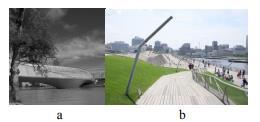
TheprojectinCase1attemptstoproduceacloseinteraction betweentheenvironmentalcontextandgreenspacewiththe crown of wind turbines on the roof garden to grow the building’sownecosystem.Oneexampleisthesharkscales envelope of Case 4, with its shingle’s different ways of generation allowing for leading natural light and visual contactwiththeriver,whichdemonstrateitsrelationshipto the surrounding environment visually and sustainably. In Case 5, with the merging of high technology with green thinking, the ozonation bubbling system and green roof system on the rooftop brings natural light to the interior buildingandalsocorrespondstothesurroundingsite.From Case8,onecanobservehowarchitectureandgreenspace interact with each other. This linear structure, which
connectsthesitetotherooftopgreenspace,thecitytothe sea, and the interior and exterior, expresses itself as an extension of the urban site by placing the building's green roof into a continuous relationship with the surrounding publicparkandwaterfront.Hence,theinteractionbetween thisarrangement,greenspaceandpeople,emphasizeshow digitalarchitectureproducesmorethanjustafluidshape,but also interacts with the surroundings with environmental purpose.
In the digital-green era, our research has highlighted the necessity of a deeper degree of interaction between the sustainable idea and the digital design process. Disconnected concerns are the focus of modern digital sustainable architecture. The digital-green trend in architecturaldesignhasnotonlybeensupersededbydesign advancements, but the process of completely integrating digitaltechnologywithsustainableaspectshasalsoevolved. Using this knowledge, a novel design approach that combinessustainabilityanddigitaltechnologythroughthe use of fresh variables is used in the research. Approach mightpotentiallyleadto thedevelopment ofa conceptual model or computer-generated prototype. Models or simulationstoassessthepotentialofthenewfactorsandthe newdesignmethodpriortofurtherinvestigation. Wewill getadeepercomprehensionoftheconnectionsbetweenthe newgreenmovementandtheCAD/CAMtechnologies-based digital-greenarchitectureinupcomingdigital-greenprojects thanks to this procedure. Examining the novel design processthatthisstudysuggestsmightpointfutureresearch in the direction of investigating other design mediums or alterations to correlate with digital and sustainable applications.Throughanewlyintegratedunderstandingof modern technology and sustainable design thinking, the outcomemayimpactthecreationoffutureworkandbring aboutsomedegreeofchange.
[1] McDonough, William & Michael Braungart. Cradle to Cradle:RemakingtheWayWeMakeThings,NorthPoint Press,2002.
International Research Journal of Engineering and Technology (IRJET) e-ISSN: 2395-0056
Volume: 11 Issue: 05 | May 2024 www.irjet.net p-ISSN: 2395-0072
[2] Koleravic,Branko.Architectureinthedigitalage:Design andmanufacturing.SponPress,2004.
[3] Mitchell,W.J.ATaleofTwocities:Architectureandthe digitalRevolution,InScience,1999.
[4] RyderG., etal.Rapiddesign andmanufacturetoolsin architecture,AutomationinConstruction,2002.
[5] Burry, M. Rapid prototyping, CAD/CAM and human factors,AutomationinConstruction,2002.
[6] Lawson, Bryan. How designers think: The design processdemystified,TheArchitecturalPress,1997.
[7] Mendler, S. & W. Odell. The HOK guidebook to sustainabledesign,JohnWiley&Sons,2006.