
International Research Journal of Engineering and Technology (IRJET) e-ISSN:2395-0056
Volume: 11 Issue: 05 | May 2024 www.irjet.net p-ISSN:2395-0072
International Research Journal of Engineering and Technology (IRJET) e-ISSN:2395-0056
Volume: 11 Issue: 05 | May 2024 www.irjet.net p-ISSN:2395-0072
P. Madhavi1 , K.M.D. Bhavani2 , M.Geethanjali3 , N. ManiSri4 , P. Trinadh5 , T. Sreenivasu6
1,2,3,4,5 - U.G. Students6 - Sr.Assistant Professor Department of Electronics and communication Technology Sri Vasavi Engineering College (Autonomous), Tadepalligudem, Andhra Pradesh, India ***
ABSTRACT
This technology uses biometric data to analyze andidentify individuals based on their facial features, creating a unique "faceprint" that can be compared against a database of known faces. Automated attendance management systems are integral to various domains, facilitating streamlined tracking of attendance records while minimizing manual intervention. Initially,the system captures images or video streams ofindividuals entering the premises using cameras strategically placed at entry points. These images are then processedtoextractfacialfeaturesandgenerate uniqueface templates for individual. The extension for this implementation is, it maps more than two personsatatime. Individual student Images, labelled with H. T.No. The image capturedwithmorethantwostudentsiscomparedwithdata base of the students if the student gets absent it need to mark the absent, if the student presents his/ her H.T. No should mark as Present. In theproposed system, we use the Haarcascadeclassifiertodeterminethepresenceorabsence of faces and LBPH (Local binary pattern histogram) algorithmforfacerecognition.
Keywords: Haarcascade classifier, LBPH (local binary pattern histogram) Algorithm.
Facial recognition technology has become increasingly prevalent in our society, with applications ranging from unlockingoursmartphonestosecuritysurveillancein public spaces. This technology works by analyzing unique facial features of individuals, such as the distance between the eyes,theshapeofthenose,andthecontour ofthejawline, to identifyandverifytheiridentity.
While facial recognition systems offer many potential benefits, such as enhancing security and convenience, they alsoraiseconcernsaboutprivacy, surveillance, and potential misuse. Debates continue about the ethical and legal implications of widespread facial recognition deployment, prompting discussions around regulation, accountability, andtheprotectionofindividualrights.
The impact of facial recognition technology has been farreaching, with applications in law enforcement, security, retail, and social media. On the positive side, facial recognitionhasenabledlawenforcementagenciestoquickly identify suspects and locate missing persons, leading to numeroussuccessfulinvestigations.Intheretailsector,facial
recognitiontechnologyhasbeenusedtoenhancecustomer service by providing personalized recommendations and improvingsecurityinstores.
In the rapidly evolving landscape of technology, facial recognition systems stand at the forefront, representing a profound intersection of artificial intelligence, computer vision, and biometric identification. These systems have garnered significant attention for their potential to revolutionize security, streamline processes, and personalize experiences. Yet, they also evoke complex discussions surrounding privacy, ethics, and societal implications. This comprehensive exploration delves into the multifaceted nature of facial recognition systems, examining their mechanisms, applications, challenges, and broadersocietalimpact.
2.1 Local Binary Pattern Histogram (LBPH):
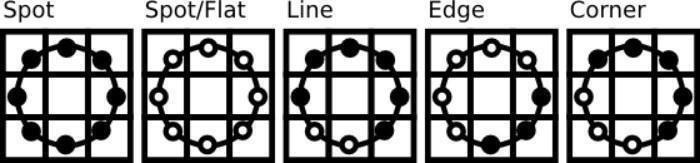
LBPH,awidelyutilizedmethodinimageprocessing, servesa robust technique for texture analysis and featureextraction. Its applications span various domains, including face recognition, texture classification, andobject detection. By adeptly capturing local patterns within images, LBPH effectively describes texture, demonstrating resilience to lighting variations and other distortions. Its versatility renders it indispensable acrossboth academic research and industrialcontexts.
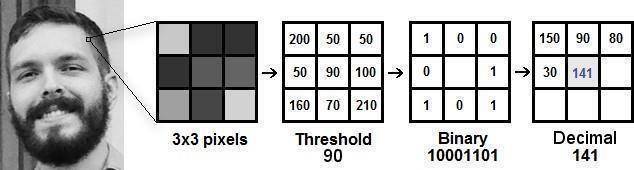
Fig2.1.1FaceRecognitionusinglbphAlgorithm
• ConsideranimagewiththedimensionsoftheNx Masshowninfig2.1.1
• Afterwards, dividing the image into portions of equalheightandwidthproducesauniformnxm foreachportion.
International Research Journal of Engineering and Technology (IRJET) e-ISSN:2395-0056
Volume: 11 Issue: 05 | May 2024 www.irjet.net p-ISSN:2395-0072
• Foreveryregion,weuseLBPoperator.TheLocal Binaryoperatorisdefinedinwindowof3x3.
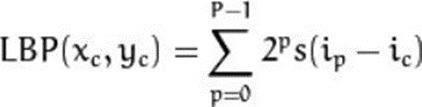
In this equation, the LBP value is determined by accumulating contributions from neighbouring pixels surroundingthecentralpixel.
Now,HerePindicatesthetotalnumberofneighboring pixelscontemplated.
Sisthescalingfactorwhich willbeusedtoweighthe contributionsofeachpixel.
ip – This is the intensity of the neighboring pixel at position.
ic–Thisistheintensity ofthecentered pixel.
2p encodes the outcome for comparison between theintensity of the neighboring pixel and the central pixel.
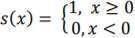
The Local Binary Pattern (LBP) calculates a binary code for eachpixel bycomparingits neighbors'pixel valuestothatof the central pixel, followed by converting this code into a decimal value, indicative of the pixel's LBP value. The resultant histogram of these LBP values, observed across either an image or a region of interest, frequently acts as a featuredescriptoressentialfortaskssuch astextureanalysis orpatternrecognition.
2.2 HaarCascade Classifier:
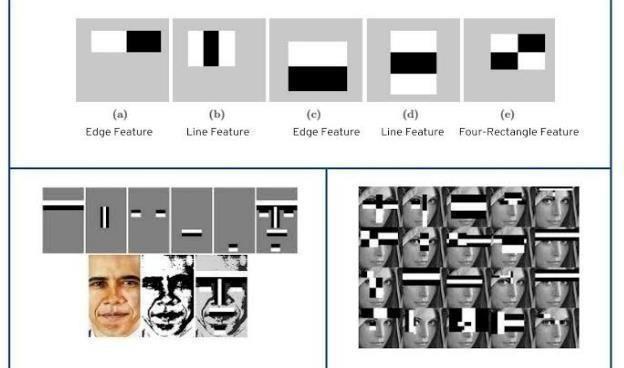
HaarCascade is a ML algorithm used to pick outobjects in an images,regardlessoftheirscaleincomputer vision, particularly for object detection. These algorithms utilize Haar-like features to identify objects within images by analysing variations in pixel intensities. A cascade of classifiers is employed to efficientlydiscard regions of the image that are unlikely tocontain the object being detected, therebyacceleratingthedetectionprocess.
This method has proven effective for various applications, includingfacedetection,pedestriandetection,andmore.
Our proposed method researches for taking the attendance systemforthestudentsmorethanoneatatimeintheimage willbeimplemented.Theimage
capturedwithmorethantwo students is compared withdata base of the students if the studentgetsabsentitneedtomarktheabsent,ifthestudent presentshis/herH.T.NoshouldmarkasPresent.Theprocess showninfig3.1
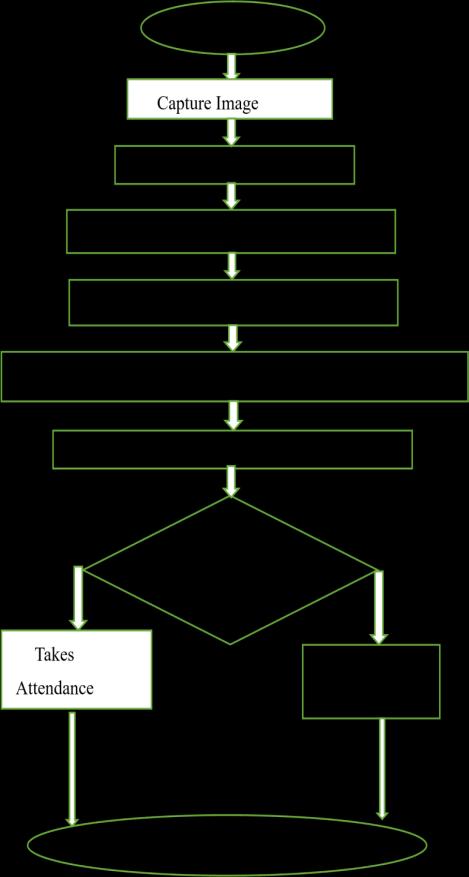
Fig3.1SystemFlowChart
Stepsasfollowed:
Step1:fromthefig3.1,thisstepdisplaysthefrontviewofthe GUI.
Step2:In thisstep,theimageof thestudentcaptured.
Step3:Inthisstepthecapturedimagesaretakenastheinput images.
Volume: 11 Issue: 05 | May 2024 www.irjet.net
Step4:Inthisstep,theimagesaredividedintoseveralblocks. 3. This window shows the trained images of the capturedimagestheimagefolder. International Research Journal of Engineering and Technology (IRJET) e-ISSN:2395-0056
Step 5: In this step, the histogram of each block will be calculated.
Step 6: In this step, the calculated histograms arecombined intosinglehistogram.
Step 7: In this step, Haar cascade classifier is loaded, which is ML algorithm used to identifyfacial features within the segmented blocks. This classifier is trained to recognize patterns corresponding toeyes,nose,andmouth,crucialfor accuratefacialrecognition.
Step 8: In this step, the face images were processed, which means feature extraction and normalization techniques to the detected facial regions within each block. These processes involveextractingrelevantfacialfeaturessuch as keypoints,edges,andtextures,whilealsostandardizingthe representationofeachfaceimagetoensureconsistencyand comparabilityacrossdifferentsamples.
Step9:Inthisstep,ifthefaceisdetectedittakesattendance andmarksattendanceonexcelsheetwithname,id,andtime and excel sheet was saved with date. If the face was not detected,itdisplaysunknown.
Thisfront viewis obtained by using GUI as shownin
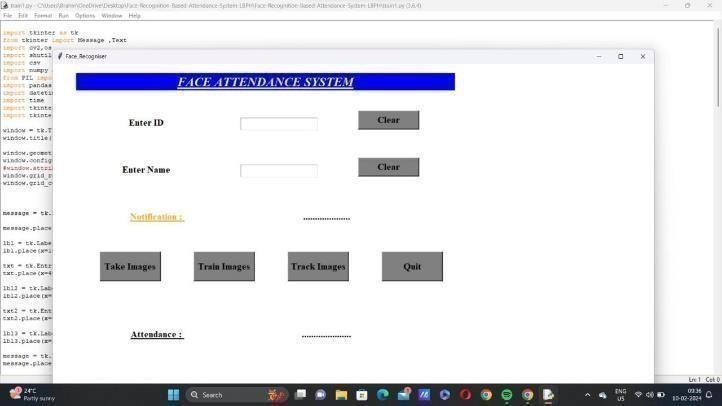
2. This window appears for capturing the image of student
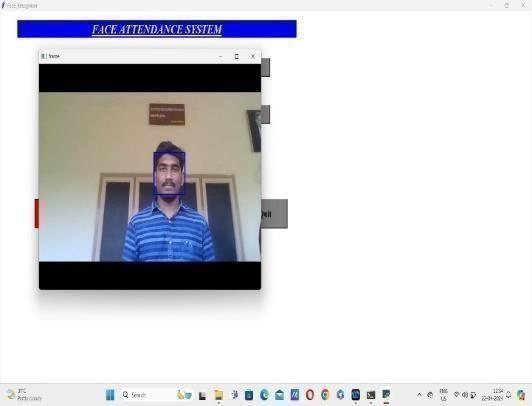
p-ISSN:2395-0072
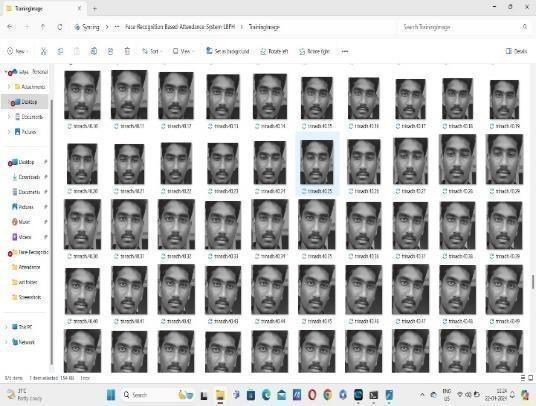
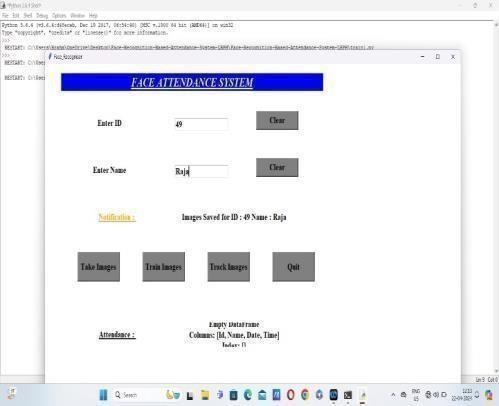
4.Notifications of saved images wereshow in thiswindowasbelowfig4.4
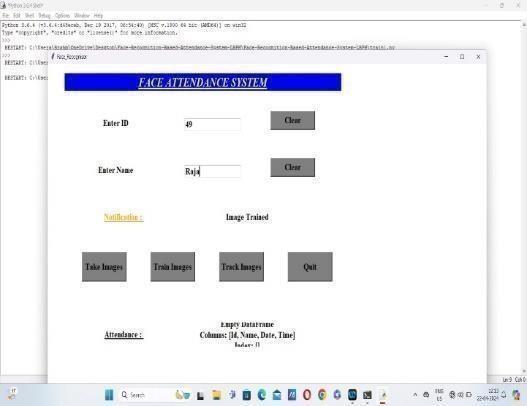
5.ByclickingonTrainimagebutton,theimagewillbe trainedanddisplaysthenotificationasImagetrained. Thesavedanddetectedimagesweretrained.
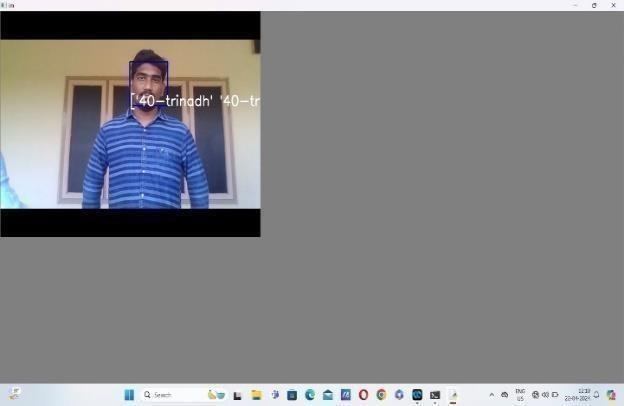
6.By clicking on the track image button, it scans the faces and matches them against a pre-trained database. Upon recognizing a face, it retrieves the
associated name and ID information. The above window shows how the project spontaneously detects and track the attendance of particular person.
International Research Journal of Engineering and Technology (IRJET) e-ISSN:2395-0056
Volume: 11 Issue: 05 | May 2024 www.irjet.net p-ISSN:2395-0072
.1 7.Aftertheimagesweretracked,byclickingonquit shown on window marks attendance in excel sheet savedwiththedatewhichwasshowninfig4.7

4.7
.2 8.Face detection of two members were shown in theimage asbelowfig4.8.
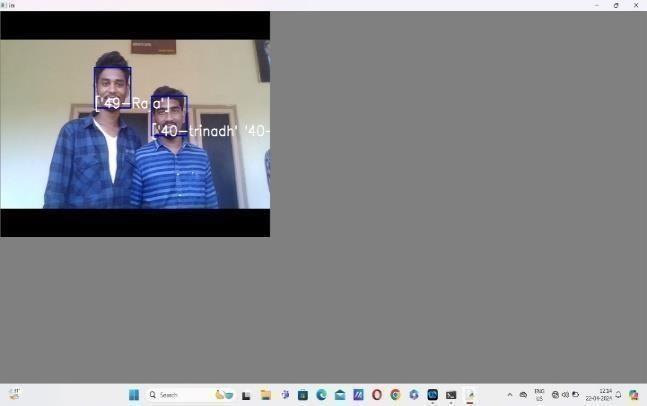
9.The untrained image was recognised as unknown in theaboveimagesinceitwas untrained asshowninfig4.9

This project focusses on marking the attendance through automated attendance management system by capturing the images and converting into blocks, comparing them withthedatabaseiftheimagesmatchwithdataindatebase it marks whether the student is absent or present. Traditional attendance marking technique does notdisturb students but also teaching process The system helps in gettingmoreaccuracy.Thisresearchisdevelopedtoreduce the human intervention for marking the attendance in educational institutes. In this system, the attendance is marked for 2 or 3 students at a time which is time consumingthattooregardlessofanyhumanefforts,whichis themainextentinthissystem.
1. Pruthvi Kumar A1 , Ranjith M2 , Rohith M3 , Guru Kiran K4 , Prof. Imran Ulla Khan5, “Automated Attendance Management System Based On Face Recognition” In Proceedings of the International Journal of Engineering Research & Technology (IJERT). Conference on Computer Vision and PatternRecognition,2022,(pp.2278-0181).
2. Hapani, Smit, et al. "Automated Attendance System UsingImageProcessing."2018FourthInternational Conference on Computing Communication Control andAutomation(ICCUBEA).IEEE,2018.
3. Md AkbarSajid Akbar, Md Sajid, et al. "Face RecognitionandRFIDVerifiedAttendanceSystem." 2018 International Conference on Computing, Electronics & Communications Engineering (iCCECE).IEEE,2018.
International Research Journal of Engineering and Technology (IRJET) e-ISSN:2395-0056
Volume: 11 Issue: 05 | May 2024 www.irjet.net p-ISSN:2395-0072
4. Adrian Rhesa SiswantoAnto SeptianMaulahikmah Satriyo NugrohoGalinium Siswanto, Adrian Rhesa Septian, Anto Satriyo Nugroho, and Maulahikmah Galinium. "Implementation of face recognition algorithm for biometrics based time attendance system." 2014 International Conference on ICT For SmartSociety(ICISS).IEEE,2014.
5. Radhika C, Damale, Prof. Bageshree, V.Pathak.,“Face Recognition Based Attendance System Using Machine Learning Algorithms ", Proceedings of the Second International Conferenceon Intelligent Computingand Control Systems (ICICCS2018) IEEEXplore Compli-ant Part Number: CFP18K74ART;ISBN:978-1-5386-2842-3.IEEE2018.
6. Ali akbar punjani, chowdhary obaid, “Automated attendance management system using face recognition”, international journal of advanced computerscienceandtechnologyvol62017.
7. T. A. P. K. K. L... Roshan- Tharanga, S. M. S. C. Samarakoon,“Smartattendanceusingrealtime facerecognition,”2013.
8. khalel mohammed, A.S. Toba, “Multimodal student attendance management system”, ElmogyAinshamsengineeringjournal2019.
9. V.P.Chitragar, Rohan Charmore, Mahesh Yeshwanthrao, “Smart student attendance management system using face recognition”, IJARIIEvol-42018.
10. Md Shafiqul Islam et al., "A Combined Feature Extraction Method for Automated Face Recognition in Classroom Environment", International Symposium on Signal Processing andIntelligentRecognitionSystems,2017.
11. T. Lim, S. Sim, and M. Mansor, "Rfid based attendance system, " in Industrial Electronics, 2009. ISIEA 2009. IEEESymposium on, vol. 2. IEEE,2009,(pp.778-782).
12. P. Viola and M. J. Jones, "Robust real-timeface detection, " International journal ofcomputer vision,vol.57,no.2,(pp.137-154,2004).
13. W. Zhao, R. Chellappa, P. J. Phillips, and A. Rosenfeld, "Face recognition: A literature survey, " Acm Computing Surveys (CSUR), vol. 35,no.4,(pp.399-458,2003).
14. T. Ahonen, A. Hadid, and M. Pietik ainen,"Face recognition with local binary patterns, " in Computer Vision-ECCV 2004. Springer, 2004, (pp.469-481).
15. N. A. I. Q. S. Z. Rameez Qasim, M. Mutsaied Shirazi, "Comparison and improvement of pca andlbpefficiencyforfacerecognition,"2013.
16. M. O. Faruqe and M. Al Mehedi Hasan, "Face recognition using pca and svm, " in Anticounterfeiting,Security,andIdentificationin Communication, 2009. ASID 2009. 3rd International Confer-ence on. IEEE, 2009, (pp. 97-101).