
International Research Journal of Engineering and Technology (IRJET) e-ISSN: 2395-0056
Volume: 11 Issue: 05 | May 2024 www.irjet.net p-ISSN: 2395-0072
International Research Journal of Engineering and Technology (IRJET) e-ISSN: 2395-0056
Volume: 11 Issue: 05 | May 2024 www.irjet.net p-ISSN: 2395-0072
Varsha K 1 , Sheena K N2
1 PG student, Environmental engineering in Department of Civil Engineering, M-Dasan Institute of Technology Ulliyeri, Kerala, India
2 Assistant Professor, Department of Civil Engineering, M-Dasan Institute of Technology Ulliyeri, Kerala, India
Abstract – The main aim of the experimental study is to compare the efficiency of sawdust activated carbon in treating service station wastewater in both batch and column adsorption method. The parameters like oil and grease, turbidity, chloride, Biochemical Oxygen Demand (BOD), Chemical Oxygen Demand (COD) are effectively reducing in both batch and column adsorption method. Batch study was conducted by taking adsorbent dosage as a variable parameter. Sawdust was added into wastewater In the order of 2g, 4g, 6g, 8g, 10g respectively for a contact time of 60 min in the batch adsorption study. column adsorption study was performed by taking flow rate and contact time as a variable parameter. Flow rate was varied as 10 ml/min, 8 ml/min, 6ml/min, 4ml/min, 2ml/min respectively. Contact time was varied in the order of 20 min, 40 min, 60 min, 80 min, 100 min. The maximum removal efficiency was obtained at 6g of adsorbent for 60 min contact time in batch adsorption study. The maximum removal efficiency was obtained at a flow rate of 6ml/min for a contact time of 60 min in column adsorption study. This work shows sawdust activated carbon as an effective adsorbent intreating service station wastewater.
Key Words: Adsorbent dosage, sawdust, service station wastewater, batch adsorption study, column adsorption study.
Water pollution because of discharging untreated oil and greasy water directly into water source is a great threat to environmental pollution and can kill aquatic organism both plants and animals. Water is the most important resource and due to increased concern for the futureoftoday’swatersupplieshumanshavebeenforced to develop new technologies to protect these bodies of water from contamination. Industrial growth and discharge of wastewater directly to surface water stream hasincreasedthelevelofpollutantsinwaterthisisoneof the major concerns of mankind. The main problem of the service station is that the disposal of wastewater is not done accurately especially in the case of small and not so well-equipped service station releases the wash water directly into streams or into ground. The water released into ground which have oil and grease suffocate the
natural porosity of the soil and clogs the pores on the surfaceofgroundanditresiststhedownwardpercolation of the rainwater which recharge underground water system. The service station wastewater contains high concentrations of oil and grease and many other impurities, therefore proper treatment prior to discharge is required.Thewastewaterfromservicestationismainly from the carwash activities they perform. The present studyfocusesontheeffectofsawdustactivatedcarbonin treating service station wastewater by conducting batch adsorptionandcolumnadsorptionstudy
The adsorbent used for the treatment of wastewater collected from service station is the chemicallyactivatedsawdustforthebetterremoval of oil and grease from the wastewater. Sawdust is the waste materialgeneratedbywood-basedindustries.Dumpingof sawdust is also a threat to natural environment so by using sawdust oil and grease can be removed from the servicestationwastewater.Exposuretoexcessiveamount ofwooddustmayirritatetheeyes,noseandthroat.
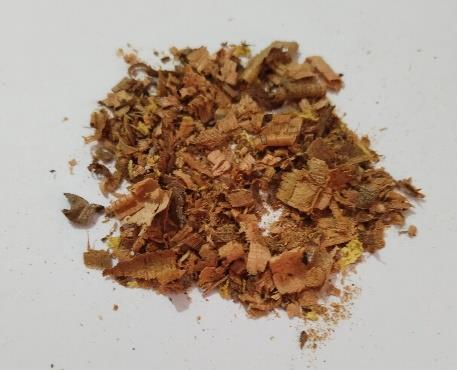
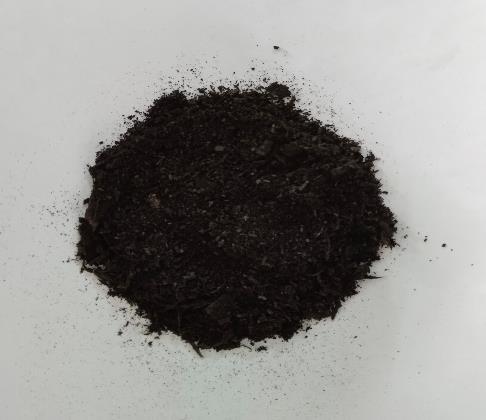
The waste sawdust was first washed to remove dirt and then dried, crushed and sieved sawdust was passedthrough2.54mmsieve.5gmofsievedsawdustwas mixed with 250 ml of 0.1M NaOH and stirred. Sawdust wasthenseparatedusing0.075mmsieve,andrinsedwith 2 L of distilled water. This procedure was repeated twice to ensure removal of base from sawdust. The purified sawdust was then mixed with 0.1 M of sulfuric acid for a period of 24 hours and later dried. Then filtered after
International Research Journal of Engineering and Technology (IRJET) e-ISSN: 2395-0056
Volume: 11 Issue: 05 | May 2024 www.irjet.net p-ISSN: 2395-0072
washing with 100-150 mL of distilled water. It is then driedandstoredinairtightcontainer.
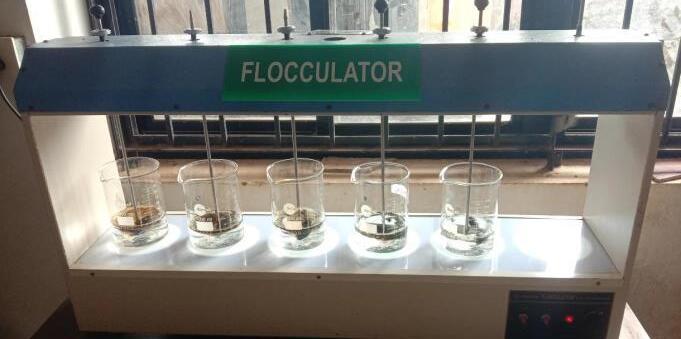
In batch adsorption study, the service station wastewaterwastreatedwithsawdustactivatedcarbonby varyingitsdosageas2g,4g,6g,8g,10gforaperiodof one hoursbyagitatingitunderthejartestapparatus.Sawdust has usually low bulk density, high water porosity, low air porosity, and low cation exchange capacity. A batch adsorption experiment from the liquid phase, also known asimmersionexperiment,isoneofthemostcommontests usedtomeasureadsorptionequilibriumandkineticsfrom solutions. It is done normally by adding a known mass of sample to a fixed volume of liquid at an initial concentration.
The service station wastewater was treated with sawdustactivatedcarbonbyvaryingtherateofflowas10 ml/min, 8 ml/min, 6 ml/min, 4 ml/min and 2 ml/min respectively. the time of collection of wastewater through the column setup after filtration was varied as 20 min, 40 min, 60 min, 80 min, 100 min respectively. The dosage of adsorbents was kept constant as 6g since the optimum dosageofadsorbentwere6ginthebatchadsorptionstudy.
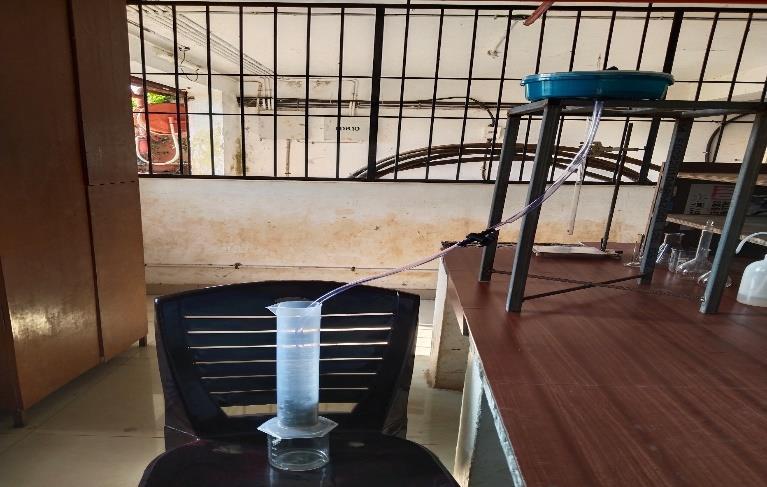
While performing the column adsorption study, there is a chance for the filter to get clogged. As a result to prevent cloggingfilteraidsareused.Thesearethesubstancesused topreventthefiltermediumfrombecomingclogged.
Forbatchadsorptionstudy,optimumresultswere obtained at 6g of adsorbent dosage. Sawdust has a maximumremovalefficiencyof73.46%foroilandgrease and 69.63% for turbidity. Sawdust has removal efficiency of 67.54% for chloride, 56.53% for BOD, 54.92% for CODrespectively
Adsorbent study was performed with sawdust activated carbon by the column adsorption method by varying the rate of flow of wastewater and time of collectionoftreatedwaterthroughthecolumnsetup. For column adsorption study optimum results were obtained at6ml/minflowrateandcontacttime60min.sawdustis havinga maximumremoval efficiencyof62.24%foroil& grease,61.66%forturbidity,62.25%forchloride,51.25% forBOD,51.39%forCOD.
International Research Journal of Engineering and Technology (IRJET) e-ISSN: 2395-0056
Volume: 11 Issue: 05 | May 2024 www.irjet.net p-ISSN: 2395-0072
efficiency of 62.25% for chloride. Sawdust shows a removal efficiency of 51.25% for BOD and 51.39% for COD.
Whiletakingcontacttimeasavariableparameter sawdust is having a maximum removal efficiency of 59.59% for oil and grease. Sawdust shows removal efficiencyof56.12%forturbidity.Sawdustshowsremoval efficiency of 54.30% for chloride. Sawdust shows maximum removal efficiency of 48.8% for BOD and 49.05%forCOD. Optimum resultswereobtained ata flow of6ml/minandcontacttime60min.
Fig-6: Removalefficiencyofparametersincolumn adsorptionstudytakingflowrateasvariableparameter
Taking contact time as a variable parameter, sawdust is having a maximum removal efficiency of 59.59% for oil and grease, 56.12% removal efficiency for turbidity, 54.30% for chloride, 48.80% for BOD, 49.05% forCOD.Optimumresultswereobtainedatacontacttime of60min.
[1] MNAsha,KSChandran,HPHarish(2016)“Recycling of wastewater collected from automobile service station” Procedia environmental sciences 35 (2016) 289-297
[2] Jisha T J, M A Chinnamma (2017) “Effect of natural coagulants on the treatment of automobile service station wastewater” international journal of engineering development and research vol5 (2) 23219939
[3] Rafeah Wahi, Luqman Abdullah Chuah, Zainab Ngaini (2013) “Oil removal from aqueous state by natural fibrous sorbent: An overview” separation and purificationtechnology 113 (2013) 51-63
[4] Nur Hayati Notzir, Mohd Izwan Masngut 92022) “physical structures and adsorption efficiencies of sugarcane bagasse, coconut pulp, and sawdust as natural adsorbents in removal of heavy metals from car wash activity” Malaysian journal of medicine and health sciences 18, page No: 108 -116
Fig-7: Removalefficiencyofparametersincolumn adsorptionstudytakingcontacttimeasavariable parameter
Inbatchadsorptionmethod,sawdustshoweda maximumremovalefficiencyof73.46%foroilandgrease. Sawdust is able to keep pH of wastewater in alkaline range. Sawdust is having a maximum removal efficiency of69.63% for turbidity. Sawdust is showing removal efficiency of 67.54% for chloride. Sawdust is showing removalefficiencyof56.53%forBOD.Sawdustisshowing maximumremovalefficiencyof54.92%forCOD.Optimum results were obtained at 6g of adsorbent dosage for a contactperiodof60min.forcolumnstudytherateofflow of wastewater and the time of contact was varied. While takingflowrateasavariableparameter,sawdustishaving a maximum removal efficiency of 62.24% for oil and grease. Sawdust is having a maximum removal efficiency of 61.66%for turbidity. Sawdust shows a removal