
International Research Journal of Engineering and Technology (IRJET) e-ISSN: 2395-0056
Volume: 11 Issue: 05 | May 2024 www.irjet.net p-ISSN: 2395-0072
1
Er. Deshpande Satish Avinash, Master of Technology Scholar in Construction Technology and Management
Precast Concrete Pavement with their application and benefits. (CTM), ‘Jan Nayak Choudhary Devi Lal Memorial College of Engineering’, Sirsa, affiliated to Chaudhary Devi Lal University, Sirsa, Haryana, India
2 Er. Janardan Tiwari, Assistant Professor, Head of Civil Engineering Department, ‘Jan Nayak Chaudhary Devi Lal Memorial College of Engineering’, Sirsa, Haryana, India
Abstract - A brief about the “Precast Concrete Pavement (PCP) Technology” that has been discussed further in the paper publication, along with its applications and benefits. At that time, the said technology was believed to be a matter of technical curiosity, that is, to investigate if the PCP technology was technically feasible. No serious attempts or efforts were made then to develop the technology as an entirely cost-effective pavement rehabilitation strategy and to implement the technology on a production basis. However, the urgency of the need for new technologies in the face of aging roadways and the increasing need for timely repair and rehabilitation cannot be overstated. As more and more roadways are reaching maturity and the need for timely repair and restoration becomes acute and urgent need, highway agencies are looking for new technologies that will result in shorter lane closures and long-life pavements that are more economical over the total life cycle and do not require significant interventions for repair or restoration during their entire service life.
Key Words: Concrete, Precast Concrete Pavement, Cast-In-Place Pavement, Applications of PCP, Benefits of PCP
1. INTRODUCTION
Pavement, the lifeline of any country, is a critical factor thatfuelsitsgrowth.InavastcountrylikeIndia,roadsare the arteries that connect remote areas with more developedurban regions. WithIndiaboasting thesecondlargest road network in the world, spanning over 59,00,000 kilometers, the significance of pavement technology becomes even more pronounced.Urban areas haveseenasignificantriseintrafficrecently,whichmakes road construction and maintenance challenging. While bituminous pavement can be built quickly, it needs to be maintainedoften.Conversely,concretepavementrequires very little maintenance but takes a very long time to construct. Another aspect for improvement with cast-inplaceconcretepavement(CIP)ishavingtheprobabilityof qualitycompromiseduetoexecutionchallenges
Moreover, the extended duration of traffic diversion causes a rise in the probability of traffic congestion and accidents.Inordertoaddress theissue,PCPtechnology is beingutilizedandisrapidlygainingpopularityaroundthe globe The use of this technology enables high-quality,
rapid building and restoration of damaged pavement. By allowing for the completion of the construction or repair workatnight,trafficcongestioncanbeavoidedduringthe day. PCP pavement construction differs significantly from CIP pavement construction in terms of the basic construction process. At a casting yard, pavement panels with the necessary dimensions and shapes are cast. After that,thepanelsaregiventhenecessaryamountoftimeto cure in the yard. After the panels have reached the necessary level of strength, they are moved to the constructionlocation.Asuitablefoundationiscreatedonsite, with a leveling course added to the base course to ensure even support for the PCP panels when they are installed. After placing the panels in their designated position,theyareconnectedusingdowelbars.
1.1 Types of Concrete Pavement
The following various types of concrete pavement are constructedworldwide:
1.1.1 Plain Jointed Concrete Pavement (PJCP)
PJCPisatypeofconcretepavementthatdoesnothaveany reinforcement.Thepavementisprovidedwithsaw-cutsat suitable distances to define the pavement panel size, but therearenodowelbarsprovidedatthesejoints.Thistype ofpavementissuitableonlyforpavementswithlesstraffic intensityandwhereheavyvehiclesarenotexpected.
1.1.2
Jointed Concrete Pavement (JCP)
JCPisaconcretepavementtypethatdoesnotpossessany reinforcement within the panel; however, itis connectedby dowel bars. These panels are saw-cut after 24 hours of casting to define the crack development path. The saw cuts, which later develop to be the joints of the pavement, are provided with additional plain MS dowel bars to facilitate load transfer between adjacent panels. The presence of the dowel bars enables the pavement to allowheavytrafficandhightrafficintensities.
1.1.3
Joint Reinforced Concrete Pavement (JRCP):
JRCPisaconcretepavementtypethatisprovidednotonly with plain MS dowel bars but also with additional reinforcementin the panels.This reinforcement improves the flexural strength of the pavement. The spacing of the transverse joint is up to 15 m, and cracks are allowed in thepavement.Thereinforcementpresentinthepavement
International Research Journal of Engineering and Technology (IRJET) e-ISSN: 2395-0056
Volume: 11 Issue: 05 | May 2024 www.irjet.net p-ISSN: 2395-0072
holds together these cracks, and the transverse jointsare providedwithdowelbars.
1.1.4
Continuously Reinforced Concrete
Pavement (CRCP):
Itis,auniquetypeofconcretepavement,isnotablefor its lack of joints and dowel bars. Instead, it showcases a continuousreinforcementatthepanel'scenter,effectively preventing cracks from widening. These cracks, which naturally occur at intervals of 0.5 m to 1.8 m, are a key characteristic of CRCP. This pavement is particularly effective in areas with high traffic volumes, making it a practicalchoiceforsuchlocations.
1.1.5
Prestressed Concrete Pavement:
Concrete Pavements, which are 100 m to 150 m long, can be constructed by providing post-tensioning along the trafficdirection.Anexpansionjointisrequiredattheends of this length. Post-tensioning is performed after the concreteisplacedatthelocation.Thispost-tensioningnot only helps improve the pavement performance but also improvestheridingqualityofthepavement.
1.1.6 Prestressed Precast Concrete Pavement (PPCP): PPCP is mainly used for repair and reconstructionpurposesbut has alsobeen usedfor new construction.Inthismethod,aconcretepanelisfabricated at a casting yard, cured, transported to the work site, and placedinthepreparedbed.Thepre-stressingofthepanels helps to reduce their thickness and also helps in handling andtransportingthem.
1.2 Precast Concrete Pavement Technology
Concrete panels used in PPCP systems are manufactured in a controlled environment in a yard, then they are transported to the project site, where they are installed (connected and supported) on a prepared foundation (either regraded or existing). PPCP canbe usedfor repair, reconstruction, or new construction of ‘Hot Mix Asphalt] (HMA)andPavementQualityConcrete(PQC).Becausethe panels are fabricated off-site in a plant, they already gain the required strength before they reach the site, and the common defectslikeabrasionand potholesdue to quality getridof.Incontrolledconditions,goodtexturingismade. Long-term durability is improved as the panels are under compressionformajorsections.
Thebasicandimportantconstructionstepsare:
1 Castingandcuringprecastpanelsintheyard.
2 Preparation of the base course by developing the crustormillingtheexistingsurfaceatthesite.
3 Transportingthepanelstothesite.
4 Placethepanels,ensuringtheyareattheproperlevel.
5 Groutingactivityasperdesignrequirement.
6 Grindingunevennessatthejoints(ifany).
7 Sealingthejointswithpolysulphidesealant.
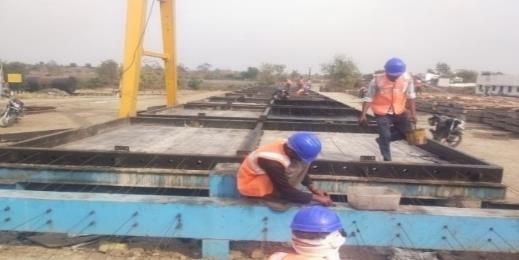
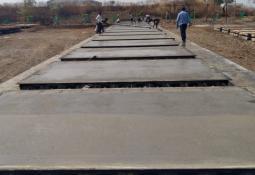

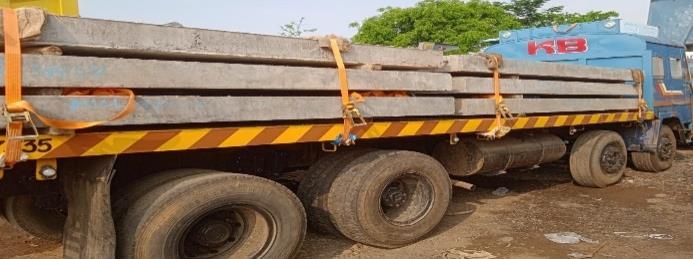

Fig.1.4: PlacingofPanels.

Fig.1.5: GroutingofPanels
International Research Journal of Engineering and Technology (IRJET) e-ISSN: 2395-0056
Volume: 11 Issue: 05 | May 2024 www.irjet.net p-ISSN: 2395-0072
1.3 Benefits of Precast Concrete Pavement.
ThebenefitsoradvantagesofPPCPareelaboratedbelow:
1. Itallowsfastpavementconstructionandrepair.PPCP cansave75%ofconstructiontimeatthesite.
2. It assists in minimizing the unexpected and unforeseen risks related to traffic congestion caused during construction. Traffic jams cause 20% of emergencypatientdeathsinIndia.
3. Ithelpsreduceroadusers'fuelconsumption,thereby reducing user costs. According to “traffic data gathered by the ‘Missouri Department of Transport’ (DOT), the user cost incurred because of extended laneclosureisdecreasedby”25%.
4. TheuseofPPCPcandrasticallyincreasethequalityof construction. If designed to the same thickness as traditional Concrete Pavement, PPCP can last 50 years.
5. Pavement construction during any weather conditionsispossiblethroughtheuseofPPCP.
6. PPCP panels can be prestressed, which further enhancesthepavement'sperformanceandallowsthe optimum utilization of material, thereby making it eco-friendly.
7. Replacement and repair using PPCP panels are speedyandeasy.
8. PPCP can be used to construct pavement in remote areas where it is difficult to provide all the required machinery for pavement construction and whereit’schallenging to maintain the required quality.
1.4 Applications of Precast Concrete Pavement.
1) Intermittent repairs of roads
Roadscanbedonewithoutdisturbingvehiculartraffic.

2) Road Junctions
Junctions are repared with PPCP without any road closures.
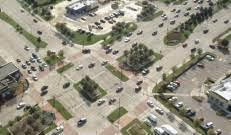
3) Temporary Road.
ReusableRoadpanelscanbeusedtoconstruct temporary roads in new, developing townships and industries. Later, thesepanelscanbereusedforpermanentroadpositions.
4) Bus Pads and Helipads.
Temporarybuspadsandhelipadscanalsobeconstructed usingremovablePPCP.
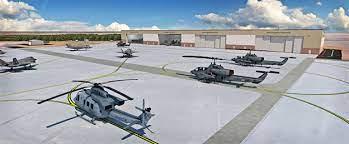
5) Airfield Pavements.
Using PPCP,apronsandtaxiways can be constructed and repaired immediately without delay.This would save considerablerevenuefortheairports.

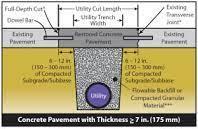
6) Maintenance of Underground Utilities.
Thistechnologyeasestheundergroundutilitymaintenance process.
International Research Journal of Engineering and Technology (IRJET) e-ISSN: 2395-0056
Volume: 11 Issue: 05 | May 2024 www.irjet.net p-ISSN: 2395-0072
2.0 Different Types of PCP
The stresses produced within the PCP panels are largely determined by their dimensions. Higher flexural stress requires higher thickness and consequently increases the weight of the panel. The increase in the panel weight makes it challenging to handle. The type of PCP has a notableimpactonthedimensionsofapanel.
Thedifferentkindsofpaneldimensioningare:
2.1.1
Reinforced Precast Concrete Panel (RPCP)
RPCPpanelsareutilizedforhandlingheavyweights There are one or two layers of reinforcement attached to the panels. A study funded by Florida DOT conducted an APT on PCP panels designed for temporary pavement use, measuring 1.83m x 3.66m x 0.10m, showing highly satisfactoryperformance("TawfiqandArmaghani2016"). PCP panels measuring 4.0m x 3.5m x 0.33m were employedforrepairpurposesinthePhilippines,asstated byEnriquezetal.in2013."Burnham(2007)"and"GaryL. D. (2006)" utilized panels measuring 3.66m x 3.66m x 0.23m in Minnesota and Colorado. Research investigating howamixofconcreteaswellas paneldimensionsimpact the thickness of a panel found “that the best size for reinforced PCP panels is” 3.50m x 4.40m ("Vaitkus et al. 2019").
2.1.2 Pre-tensioned Precast Concrete Panels
This have nominal reinforcement bars added to them and aidinreducingpanelthickness.Tofacilitatethetransferof load among the panels, the panels are additionally outfitted with an appropriate dowelled LTM. The panels size is restrictedto 3.5M x 4.5M (''Smith and Snyder2016”)
2.1.3 Post-Tension Precast Panels (PPCP)
Two panels of PCP are post-tensioned along the traffic direction, and one PPCP panel is “pre-tensioned perpendicular to the direction” of traffic. Post-tensioning enhancesthebuildingprocessandoffersasuperiorriding surface by acting as a load transfer mechanism. The servicelifeofPPCPpanelsmeasuring3.65mx2.44mwas found to be remarkable in testing conducted by (‘Alwehaidah and Russell in 2018’). PPCP “panel dimensions in Indonesia are” 2.5m x 8.2m ("Tayabji et al. 2013") ("Nantung et al. 2010"), in California, they are
11.28 m x 2.44m ("Chen and Chang 2015"), in Missouri, they are 3.0 m x 11.58m ("Gopalaratnam et al. 2006"), in Iowa Bridge approach slab they are 6.10m x 4.3m ("Merritt et al. 2007"), in Texas they are 11.58 m x 3.0m ("Merritt et al. 2001"), in Delaware they are 7.3 m x 3.0m ("TysonandTayabji2009")andinMississippi,theyare7.3 mx2.36m("Tayabji2001")
2.2 Load Transfer Mechanism (LTM)
TheLTMisprovidedinconcretepavementtofacilitatethe transfer of the axle load from the loaded panel to the unloaded panel. The presence of an LTM facilitates the transferofapartofthisloadtotheadjacentpanel,thereby reducing the stresses developed in the loaded panel. In Cast-in-Place (CIP) pavement, inter-panel load transfer is facilitated by aggregate interlocking, LTM, and base load transfer.The absence of aggregate interlocking in the PCP aggravatesthesignificanceofanefficientLTM.Anefficient LTM reduces the probability of damage to the base layers byavoidingunevenpaneldeflectionuponvehiclepassage. In the absence of an LTM, the base is damaged, which causescracksinthepanel. LTE(LoadTransferEfficiency) of over 70 % must be ensured for efficient and optimal long-term pavement performance ("Smith and Snyder 2016"). A few of the essential types of LTMare discussedbelow.
2.2.1 Hook and Tie LTM (“Yeoman1957")
Hooks arepresentat the center of the depth of the panel. These hooksare interlocked, and the panel is rotated into its final position, as shown in Fig. 2.2. It is only for light traffic conditions; no practical implementation hasbeen documented.

2.2.2 Threaded Sliding LTM (“Tsuji1996")
Thedowelsare “insertedintoa longdowel slotpresentin 1panel”.Astringistiedtotheouterendofthedowel.The stringisinsertedthroughtheshortdowelslotprovidedin the adjacent panel. Once the panelsare placedinto their finalposition,thestringispulledout,andthedowelslides intoitsfinalposition,asshowninFig.2.3
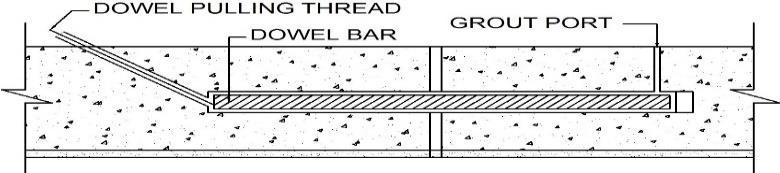
Fig. 2.3 ThreadPulledSlidingSlotLTM
International Research Journal of Engineering and Technology (IRJET) e-ISSN: 2395-0056
Volume: 11 Issue: 05 | May 2024 www.irjet.net \ p-ISSN: 2395-0072
2.2.3 Sliding Slot LTM ("Tayabjietal.2012")
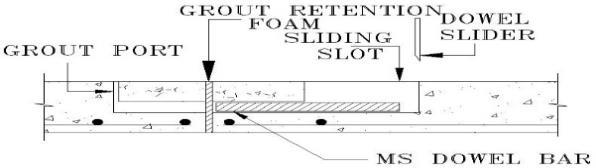
Panelsare providedwith slits running from the top surface to the dowel slot. These slitsare usedto slide the dowelsinsertedintothelongdowelslotssothatthedowel takes its final position. The slotis later filled outwith an appropriate grout material Fig. 2.4 Patents restrict it. Hence theconstruction of the panels is complex withslit arrangement with a possibility of surface damage while thecastingofslitarrangement.
2.3 Base Preparation Method (BPM)
Precast Concrete Pavement (PCP) is a marvel of engineering, with a base that is precisely fabricated, often not matching the base course top surface. As a result, careful positioning of the PCP panels is required to guaranteeeventransferofload“fromthepaneltothebase course. Any deviation from this could result in stress concentration” at the point of contact in the precast slab, which issomething that needs to be prevented. Moreover, achieving the required Modulus of Subgrade reaction (K) value is crucial for the panel to obtain a good support condition.
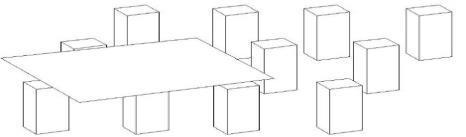
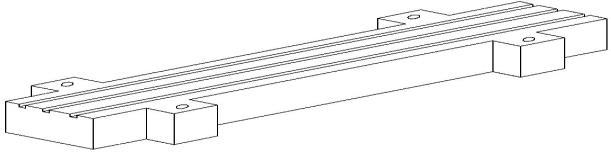
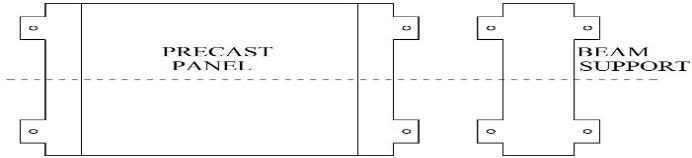
AsperIRC:58(2015),alayerofDLC(“DryLeanConcrete”) asabasecourseisagame-changer,significantlyimproving the K value. This reassures the audience of the effectivenessofDLC. However,itisessential thatthelayer of DLC prepared on the site has the required compaction and strength, and a uniform surface to ensure the panels are supported uniformly. After providing a layer of DLCof the required thickness and surface accuracy, the finer surface undulations/ roughness canbe correctedusing a leveling course. The treatment required below the PCP panels will vary for different soil conditions.The PCP behavior undervarying soil conditions had been analyzed, and J W Bull (1986) presented useful design charts. BPM for various conditions of soil has been different and hadbeendescribedindetailbelow.
2.3.1 Soft Soil Conditions

2.3.2 Medium or Hard Soil Condition
PCP base preparation for hard or medium “soil conditions is comparable to CIP pavement base preparation. The course of base could be prepared by using DLC as well as gaining the necessary modulus of subgrade reaction; however, PCP requires additional leveling treatment”. The BPM needed varies greatly depending on the PCP kind which is being built and the expected traffic volume ("Tayabji and Wouter 2015"). The following BPM types werecreatedforPCP:
2.3.3
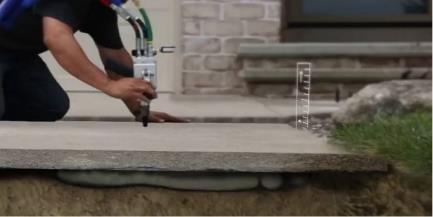
Use of Polyurethane Foam
As a result of its ability to swell, the polyurethane foam raisestheconcretepaneltotheappropriatelevel(Fig.2.5). Additionally,allofthespacesbeneaththepanelarefilledin bythefoam'sswelling("Thrasher2018")("Tayabji2014"). Toavoidraisingthepanel abovethenecessarylevel,extra care must be taken to make sure that no more foam is placed below it. This method is very expensive, requires carefulexecution,andrequiresexpertsupervision.
3.0 Life Cycle Cost
When comparing the life cycle costs of Precast Concrete Pavement (PCP) and Traditional Concrete Pavement (TCP),itisimportanttounderstandandconsiderthelongterm expenses associated withmaintenance, repairs, and replacement over the entire lifespan of the pavement. Although the initial construction costs may differ, the life cycle costs provide a more comprehensive assessment of thetotalcostofbothpavements.
Thefollowingaresomefactorsthatneedtobeconsidered:
1. Durability and Maintenance: PCP is known for its durability, strength, and stability. The controlled manufacturing process, use of high-quality materials, and
International Research Journal of Engineering and Technology (IRJET) e-ISSN: 2395-0056
Volume: 11 Issue: 05 | May 2024 www.irjet.net p-ISSN: 2395-0072
advanced reinforcement result in long-lasting pavements. PCP panels are less susceptible to cracking, spalling, and other forms of deterioration, resulting in lower long-term costs. While still durable, TCP may require more regular maintenance activities such as joint sealing, crack repairs, andtopsurfacetreatments
2. Service Life: The service life of PCP is often longer than that of TCP. Precast concrete panels are cast in a controlledfactoryenvironment,ensuringconsistentquality and uniformity, resulting in a longer-lasting pavement requiringlessfrequent replacementor rehabilitation.TCP, although durable, may have a shorter service life due to factors like weathering, traffic loading, and material variability.
3. Traffic Disruption and User Costs: During maintenance or rehabilitation activities,the disruptionto traffic flow andtheassociated costs can significantly impacttheoveralllifecyclecosts.PCPoffersbenefitsinthis aspectduetoitsmodulardesign.Individualprecastpanels can be easily removed and replaced without affecting the entirepavementsection.Thisminimizestrafficdisruptions andreducesuser costs.Conversely, TCP requires larger sections tobe replacedor repaired, resulting in more significantdisruptionsandhigherusercosts.
4. Rehabilitation and Retrofitting: Over the entire life cycle of a pavement, rehabilitation or retrofitting may be needed to address changing traffic demands or incorporatenewtechnologies.PCPoffersflexibilityinthis regard. The modular nature of precast panels allows for easier rehabilitation and retrofitting options, such as adding new features orupgradingthe pavement.TCP may require more extensive and costly rehabilitation activities, potentiallyleadingtohigherlifecyclecosts
5. Environmental Impact: The environmental impact associated with pavement materials and maintenance practices is important. PCP canbe designedwith sustainable features, such as incorporating recycled materials and employing eco-friendly manufacturing processes. Additionally, PCP's durability and reduced maintenance requirements contribute to lower life cycle environmental costs. TCP may have higher environmental costs due to the need for regular maintenance activities and potential material waste. It is worth mentioning that the life cycle costs of PCPand TCP can vary based on sitespecific conditions, climate, traffic loads, and maintenance practices. Performing a comprehensive life cycle cost analysis specific to the project's needs and considering thesefactorswillprovideamoreaccuratecomparisonand assist in making informed decisions about pavement selection.
4.0 CONCLUSION
This study introduces a new technology: precast concrete pavement (PCP). It further explains the various applications and advantages of this technology. It focuses on the detailed financial comparison of PCP with traditional concrete pavement. It further studies the feasibility of the technology for various applications. The studyconcludes withthefollowingpoints: PCPtechnology focuses on constructing concrete roads using precast pavement slabs. This allows for better quality and faster pavement construction. The technology helps reduce carbonemissionsby70%comparedtotraditionalconcrete pavement. Apart from being fast and of higher quality, it also allows for longer concrete roads.A detailed comparison of the cost of PPCP with traditional concrete roads shows that the construction cost of PPCP is 9.95% higher than traditional concrete pavement, and the life cyclecostis5%less.
The various applications of PCP and their feasibilityare mentionedbelow:
Implementation in urban areas will help users commute without delays or waste time, energy, and fuel. Additionally, it will save them from hazardous situationscreatedduringroadconstruction.
Implementation in Rural Areas, where obtaining and maintaining the quality of roads becomes a challenge due to a lack of focus and difficulty obtaining the material needed. This can be avoided completely by usingfactory-madeproductslikePCP.
Implementation in Military applications, like the construction of helipads, airfields, and roads in highrisk zones where labor and civilians can’t stay for longer durations. This removes the threat to civilians and provides military support to construct roads in worseterrainconditions.
Implementation in Hilly regions isespecially importantas it is very challenging to construct a traditional bituminous or concrete pavement in hilly areas where the traffic cannotbe divertedfrom anywhere. In such scenarios, the construction of PCP canbe conductedinfewertraffic durations by the closureofroads,andthetrafficcanbefreelyallowedin thedaytimeorhightraffictimes.
This technology is suitable for implementation in specific cases where the traffic flow is highly valuable and traffic disruption cannot be tolerated, wherever there is hilly terrain and resource availability is a problem, and in industrial applications where the flow of work cannot be disturbedforroadrepairsandconstruction.
REFERENCES
[1] Smith and Snyder (2016). Report on Manual for Jointed Precast Concrete Pavement. (2016). National PrecastConcreteAssociation.
International Research Journal of Engineering and Technology (IRJET) e-ISSN: 2395-0056
Volume: 11 Issue: 05 | May 2024 www.irjet.net p-ISSN: 2395-0072
[2] Chen, Y., and Chang, L.M. 2015. “Paving for the future- Precast Prestressed Concrete Pavement (PPCP).” Scientific Cooperations Journal of Civil EngineeringandArchitecture.1(1):7–12
[3] ShirazTayabji DanYe,andNeerajBuch (2012)“Joint LoadTransferandSupportConsiderationsForJointed K.Elissa,“Titleofpaperifknown,”unpublished.
[4] Naum Sapozhnikov, Raymond Rollings (2007) Soviet “PrecastPrestressedConstructionforAirfields”
[5] Tayabji, S., & Brink, W. (2015). ‘Precast Concrete PavementBeddingSupportSystems’.
[6] Smith et. Al. (2003) “Automated construction in Japan”.
[7] Tayabji, (2014), “Precast Concrete Pavement InnovationsPerformanceandBestPractices.”