
International Research Journal of Engineering and Technology (IRJET) e-ISSN:2395-0056
International Research Journal of Engineering and Technology (IRJET) e-ISSN:2395-0056
Mr. M. VINOTH
M.E. Assistant Professor
Department of Electronics and Communication Engineering Chennai Institute of Technology (Autonomous)
Department of Electronics and STEVE LORDSON R B
Communication Engineering Chennai Institute of Technology (Autonomous)
ABSTRACT - This study investigates the use of machine learningtocustomizeand optimize anesthesia treatment, addressing the issue of patient variability in reaction to anesthesia. Machine learning algorithms will process large datasets containing patient information, medical history, and surgical specifics. These findings will be utilized to create tailored anesthetic prediction algorithms that adjust medication regimens to specific patientfeatures.
The study aims to reduce the hazards associated with unpredictable patient responses. Understanding individual characteristics through trained algorithms allows for safer and more effective anesthetic regimes, potentially leading to better patient outcomes and recovery. Throughout surgery, systems will continuously assess data, modifying forecasts to reflect changing conditions.
This enhances patient safety and provides dynamic decision support for healthcare professionals throughout the procedure. Seamless integration with existing healthcare information systems and electronic health records is crucial. User-friendly interfaces will facilitate widespread adoption among healthcare professionals. Integratingmachinelearninginanesthesiapredictionhas the potential to revolutionize patient care. Personalized predictions, improved response to variability, real-time adaptation, and interoperability all contribute to safer procedures, potentially reduced healthcare costs, and an overallhigherqualityofcare.
Keywords—Anesthesia Prediction, Machine Learning Techniques, Personalized Approach, Real-time, Adaptability,PatientOutcomes,HealthcareProfessionals, Interoperability
The administration of anesthesia in medical procedures is a critical aspect of patient care, necessitating precision, adaptability, and a personalized approach. The introduction of machine learning techniques into anesthesia prediction presents a transformative opportunity to enhance the accuracy and efficiency of anesthesia administration. This study delves into the objectives and potential impact of
Volume: 11 Issue: 05 | May 2024 www.irjet.net p-ISSN:2395-0072 © 2024, IRJET | Impact Factor value: 8.226 | ISO 9001:2008 Certified
M
Department of Electronics and Communication Engineering Chennai Institute of Technology (Autonomous)
integrating machine learning in anesthesia prediction, aiming to revolutionize the field and address existing challenges.
Anesthesia prediction involves a complex interplay of patient-specific factors, medical histories, and the intricacies of surgical procedures. The current standard practices often face challenges associated with the inherent variability in patient responses to anesthesia. Thisvariabilitymakesitchallengingtopredicttheoptimal type and dosage accurately, leading to potential risks, prolongedrecoverytimes,andincreasedhealthcarecosts.
In the pre-2000s, machine learning in medicine was mostly employed for fundamental applications such as diagnostic systems and decision support tools. Systems were primitive, frequently rule-based, and lacked the sophisticationfoundtoday
Withtheintroductionofelectronichealthrecords(EHRs), machine learning began to integrate patient data into predictive analytics. Algorithms helped in disease prognosis, treatment planning, and patient outcome forecasting, laying the framework for personalized medicine.
Deep learning emerged in the 2010s, ushering in a substantial transformation. Convolutional Neural Networks (CNNs) have transformed medical imaging, improving diagnosis accuracy in domains such as radiology, pathology, and cardiology, and in some cases outperforminghumanskills.
Precision medicine relied heavily on machine learning, which used genomic data to personalize treatments for eachpatient.Algorithmsfoundgeneticmarkers,predicted illness susceptibility, and optimised medication therapy, resultinginmoreeffectiveandtailoredtreatments.
NLP has developed as an effective method for extracting unstructured clinical data from medical records, research literature, and social media. Sentiment analysis, information extraction, and summarization improved clinical decision-making, patient monitoring, and medicationdiscovery.
International Research Journal of Engineering and Technology (IRJET) e-ISSN:2395-0056
Volume: 11 Issue: 05 | May 2024 www.irjet.net p-ISSN:2395-0072
The proliferation of wearables and IoT sensors resulted in massive amounts of patient-generated health data (PGHD). This data was processed by machine learning algorithms to enablereal-timemonitoring,earlydiseaseidentification,and behaviourchange,benefitingbothpatientsandclinicians.
As machine learning models became increasingly complicated, there was a demand for explainable AI in healthcare. Interpretable algorithms provided insights into decision-making processes, which increased professional trust while also assuring patient safety and regulatory compliance.
Looking ahead, the combination of machine learning and quantum computing offers hope for solving complicated medical challenges like drug development and molecular modelling. Predictive analytics will continue to advance, enabling early illness identification, preventive measures, and individualized treatment techniques, ushering in a new eraofproactivehealthcare.
"[1]Thepaper"Repurposingelectroencephalographicsignal for automatic segmentation of intra-operative periods under general anesthesia " authoredby O.SaintAubin;I.Khemir;J. Perdereau;C.Touchard;F.Vallée;J.CartaillerpublishedIEEE EUROCON 2023 - 20th International Conference on Smart Technologies This paper Intraoperative EEG method, via gradient boosting, accurately detects loss and recovery of consciousnessduringanesthesia,showcasinghighprecision.
[2] The paper" Monitoring Level of Hypnosis Using Stationary Wavelet Transform and Singular Value Decomposition Entropy With Feedforward Neural Network,"authored by Muhammad Ibrahim Dutt; Wala Saadeh featured in IEEE Transactions 2023 on Neural Systems and Rehabilitation Engineering ( Volume: 31), This paper Framework predicts continuous depth of anesthesia using SWT and fractal features, yielding 97.1% classification accuracyandsuperiorregressionperformance
[3] " Parametric Modeling and Deep Learning for Enhancing Pain Assessment in Postanesthesia," authored by Mihaela Ghita,IsabelaRBirs,DanaCopot,CristinaIMuresan,Martine Neckebroek, Clara M Ionescu published on IEEE Trans Biomed Eng . 2023 Oct, This paper Models and artificial intelligence (AI) allow objective and personalized nociceptionantinociception prediction in the patient safety era for the design and evaluation of closed-loop analgesia controllers.
[4] The paper "Predicting anesthetic infusion events using machine learning," authored by Naoki Miyaguchi, Koh Takeuchi, Hisashi Kashima, Mizuki Morita & Hiroshi MorimatsupublishedinScientificReportsvolumePublished: 08 December 2021 Study uses machine learning for anesthesiologist decisions on remifentanil, with LSTM
showing promising performance, enhancing anesthesia decision-makingpotential.
[5]“SpectrumAnalysisofEEGSignalsUsingCNNtoModel Patient’sConsciousnessLevelBasedonAnesthesiologists’ Experience,”authoredbyQuanLiu;JifaCai;Shou-ZenFan; Maysam F. Abbod; Jiann-Shing Shieh; Yuchen Kung; Longsong Lin published in IEEE Access ( Volume: 7) 23 April2019,StudyintroducesCNNsfordepthofanesthesia predictionfromrawEEGdata,achieving93.50%accuracy, showcasingpotentialforbrainmapping
[6] " Pain Prediction From ECG in Vascular Surgery,” authoredriciaAdjei1,WilhelmVonRosenberg1,Valentin Goverdovsky 1, Katarzyna Powezka 2, Usman Jaffer 2, Danilo P Mandic 1,published in the IEEE J Transl Eng Health Med . 2017 Sep 3-D polynomial model links physiological metrics to pain ratings, predicting pain sensitivityinvaricoseveinsurgerieswithhighaccuracy.
[7] “Proposal of Anesthetic Dose Prediction Model to Avoid Post-induction Hypotension Using Electronic AnesthesiaRecords”authoredbyNanakaAsai;ChiakiDoi; Koki Iwai; Satoshi Ideno; Hiroyuki Seki; Jungo Kato; Takashige Yamada; Hiroshi Morisaki; Hiroshi Shigeno presented on 04-06 November 2019 - Study aims to prevent post-induction hypotension via personalized anesthesia dosing, employing ridge regression on electronicrecordswithpromisingresults.
"[8]“PredictingandEvaluatingtheEffectofBivalirudinin Cardiac Surgical Patients” authored by Qi Zhao, Thomas Edrich, Ioannis Ch Paschalidis,published in IEEE Trans Biomed Eng . 2014 Feb. This paper contrasts model-free, regularized regression with model-based, populationparameterized approach for predicting PTT from bivalirudininfusionrates.Adaptivemodelexcels.
[9] " Estimating the depth of anesthesia by applying sub parameters to an artificial neural network during general anesthesia" by M. Ghanatbari; A. R. Mehri Dehnavi; H. Rabbani; A. R. Mahoori published 04-07 November 2009, StudyintroducestwoANNstructuresforDOAestimation, correlating EEG signals with BIS monitor readings, showcasingstrongpredictioncapabilities
3. PROPOSED SYSTEM
3.1 Machine Learning:
Description:
The suggested approach makes use of boosting and regression algorithms, which are a subset of machine learning methods, to more precisely compute anesthesia dosages.Medical practitionerscanaccessitbecausetoits
International Research Journal of Engineering and Technology (IRJET) e-ISSN:2395-0056
Volume: 11 Issue: 05 | May 2024 www.irjet.net p-ISSN:2395-0072
user-friendly Flask web application interface. By lowering themarginforerrorandimprovingpatientcare,thissystem will allow users to enter patient data and obtain precise anesthesiadosagerecommendations.
Training Details:
Linear Regression: Train model to minimize difference betweenpredictedandactualvaluesbyfittingastraightline tothedata.
Decision Tree Regressor: Train model by recursively partitioning data into subsets, optimizing splits to minimize variancewithineachsubset.
Gradient Boosting Algorithm: Train ensemble of decision treessequentially,with eachsubsequent tree fitting residual errors from the previous trees, aiming to minimize overall error.
Benefits:
Personalized medicine: By adjusting anesthetic dosages to each patient's unique needs, hazards relatedtoerraticreactionscanbereduced.
Better patient outcomes and recovery: Anesthesia that is safer and more effective has the potential to improvepatientoutcomesandspeeduprecovery.
Improved patient safety: A more accurate approachtoanesthesiaismadepossiblebymachine learning, which helps to understand individual subtletiesandmaypreventdifficulties.
Dynamic decision support: During surgery, realtime data analysis enables the anesthetic plan to be modified in response to a patient's changing condition, hence improving safety.
Lower healthcare expenses: Using anesthetic medications more precisely may result in lower expenditures. Improved reaction to patient variability, real-time adaptation, and personalized predictions all help to provide care of a higher caliberoverall.
Seamless integration: Medical practitioners' workflow can be streamlined by achieving simple integrationwithcurrenthealthcaresystems.
Widespread adoption: Healthcare practitioners maybemoreinclinedtoemploythistechnologyif it hasanintuitiveinterface.
Flow Of Execution:
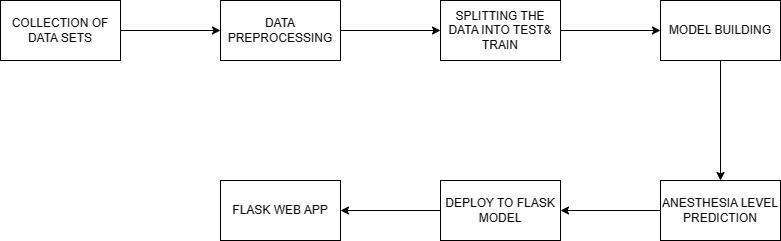
Figure 1. Blockdiagram
Collection of Data Set:
Data set collected from various sources, ensuring diversity and adequacy for model training. Include features such as patient vital signs, medical history, and anesthesia type, ensuring comprehensive coverage of factors influencing anesthesialevel.
Data Processing:
Data preprocessed to handle missing values, normalize features, and encode categorical variables. Techniques like feature scaling and dimensionality reduction applied to enhance model performance and efficiency, ensuring data readinessfortraining.
Fitting the Data into Test and Train:
Data split into training and testing sets using cross-validationorrandomsampling.Trainingset used to fit model parameters, while testing set evaluates model performance, ensuring robustnessandgeneralizationtounseendata.
Model Building:
Build regression model using algorithms like linear regression, decision trees, or gradient boosting. Tune hyperparameters via techniques likegridsearchorrandomizedsearch,optimizing model performance for accurate anesthesia level prediction.
Anesthesia Level Prediction:
Utilize trained model to predict anesthesia level based on input features like patient vitals and medical history. Model outputs anesthesia depth estimation, aiding anesthesiologists in patient monitoring and managementduringsurgeries.
Deploy to Flask Model:
Integrate trained model into Flask web application using frameworks like Flask-RESTful. Expose prediction endpoint, enabling users to input patient data and receive real-time
International Research Journal of Engineering and Technology (IRJET) e-ISSN:2395-0056
Volume: 11 Issue: 05 | May 2024 www.irjet.net p-ISSN:2395-0072
anesthesia level predictions, ensuring accessibility andusability.
Flask Web App for Machine Learning Model: DevelopinteractivewebinterfaceusingFlask,HTML, CSS, and JavaScript. Incorporate features for user input, model inference, and result display. Implement responsive design and user-friendly interface for seamless user experience, facilitating intuitiveinteractionwiththemodel.
6.1 Setting up the jupyter environment:
InstallAnacondaorusepiptoinstallJupyter.LaunchJupyter Notebook, create or open notebooks, write code, and save work.
6.2 Downloading Anaconda navigator:
To download Anaconda, visit the official Anaconda website and navigate to the "Anaconda Individual Edition" section. From there, select the appropriate installer based on your operating system and architecture. After clicking the "Download" button, follow any prompts for optional information and wait for the installer to finish downloading. Locate the downloaded installer file on your computer and double-click it to start the installation process. Follow the instructions provided by the installation wizard, including agreeing to the license agreement, choosing the installation location, and optionally adding Anaconda to your system PATH. Once the installation is complete, you can start using Anaconda by launching Anaconda Navigator or using the AnacondaPrompt.
7. Data preparation:
Data preparation for anesthesia prediction involves collecting patient data such as vital signs, medical history, and anesthesia type. Ensure comprehensive coverage of factors influencing anesthesia depth. Preprocess data by handling missing values, encoding categorical variables, and normalizing features to ensure uniformity and improve model performance. Perform exploratory data analysis to understand data distribution and relationships between variables. Utilize techniques like feature scaling and dimensionalityreductiontoenhancedataqualityandreduce complexity. Verify data integrity and consistency to mitigate potential biases. Prepare data in a format suitable for machinelearning algorithms, facilitating accurate anesthesia levelprediction.
Training the system:
Train the system by selecting appropriate machine learning algorithms such as regression or ensemble methods.Splitdataintotrainingandtestingsets,ensuring model generalization. Tune hyperparameters through techniques like grid search. Fit the model to the training data, optimizing for accurate anesthesia level prediction basedonpatientfeatures.
Comparison Table:
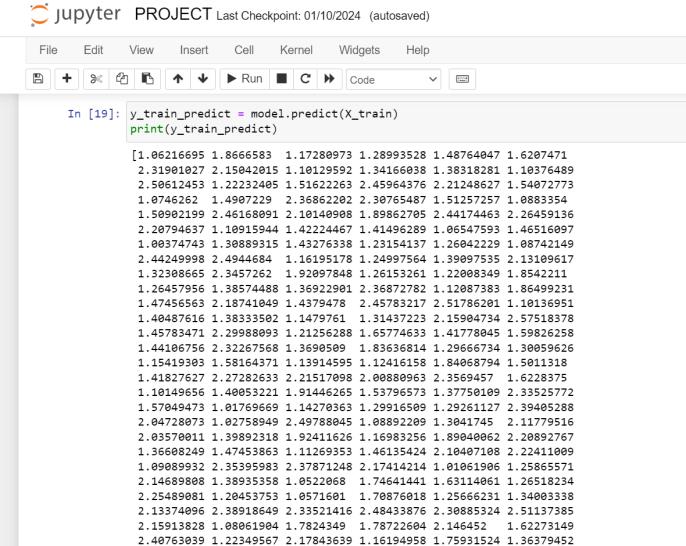
Fig1:Trainingoflinearresgressionmodel
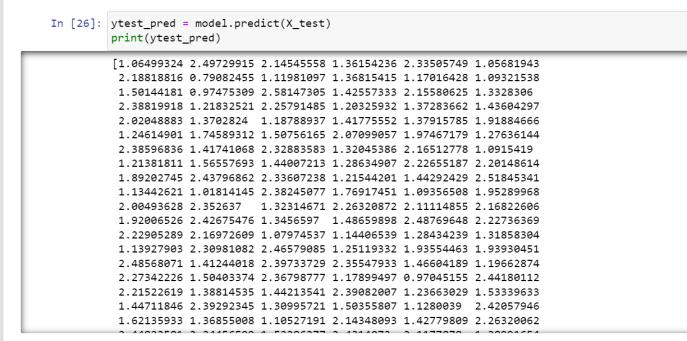
Fig2:Predictionoflinearresgressionmodel
International Research Journal of Engineering and Technology (IRJET) e-ISSN:2395-0056
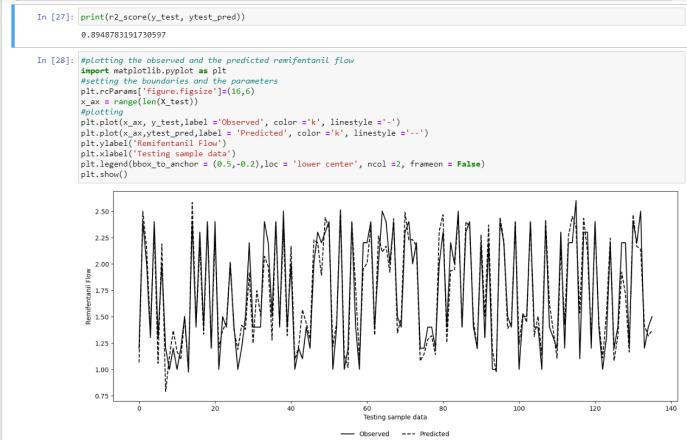
Fig3:Accuracyandthegraphforobservedvspredictionin linearresgressionmodel
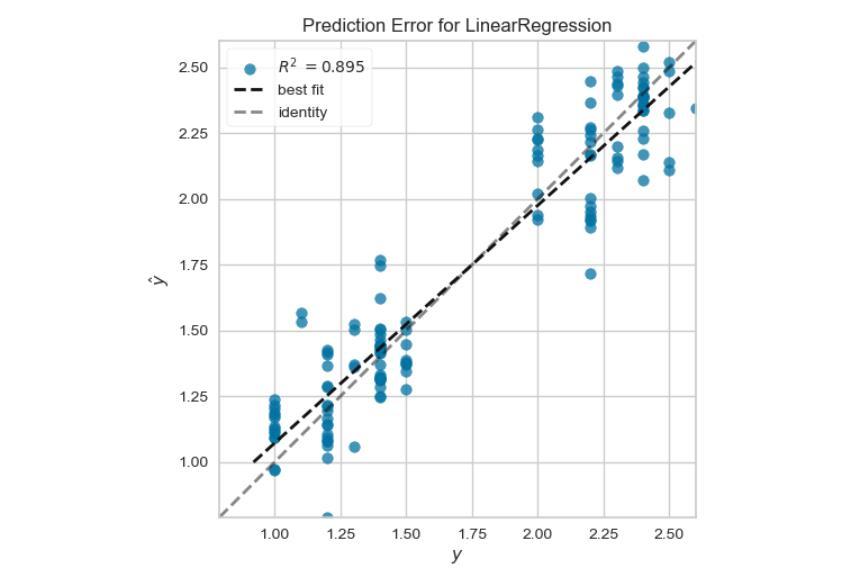
Fig4:Predictionerroroflinearresgressionmodel
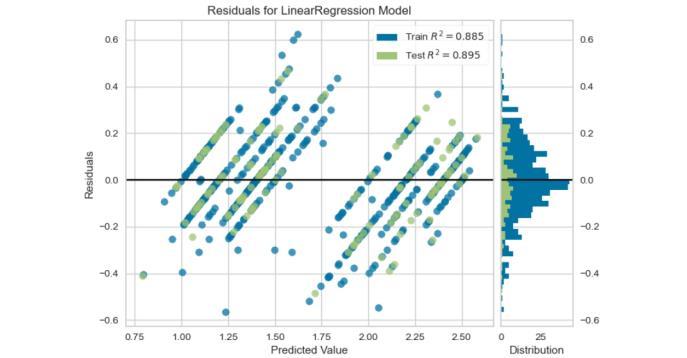

Fig5:Residualsforlinearresgressionmodel
Volume: 11 Issue: 05 | May 2024 www.irjet.net p-ISSN:2395-0072 © 2024, IRJET | Impact Factor value: 8.226 | ISO 9001:2008 Certified Journal | Page2043
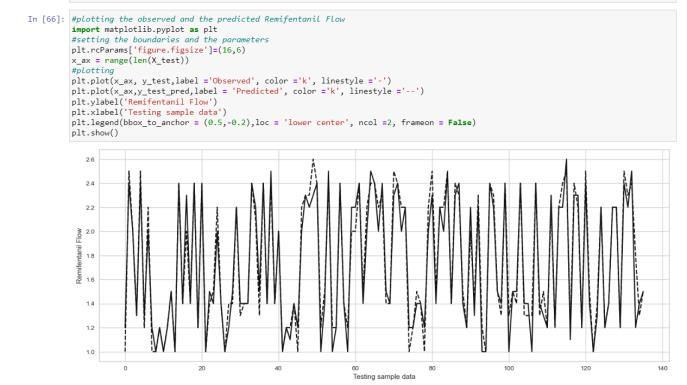
Fig6:GraphforobservedvspredictioninDecisionTree Regressionmodel
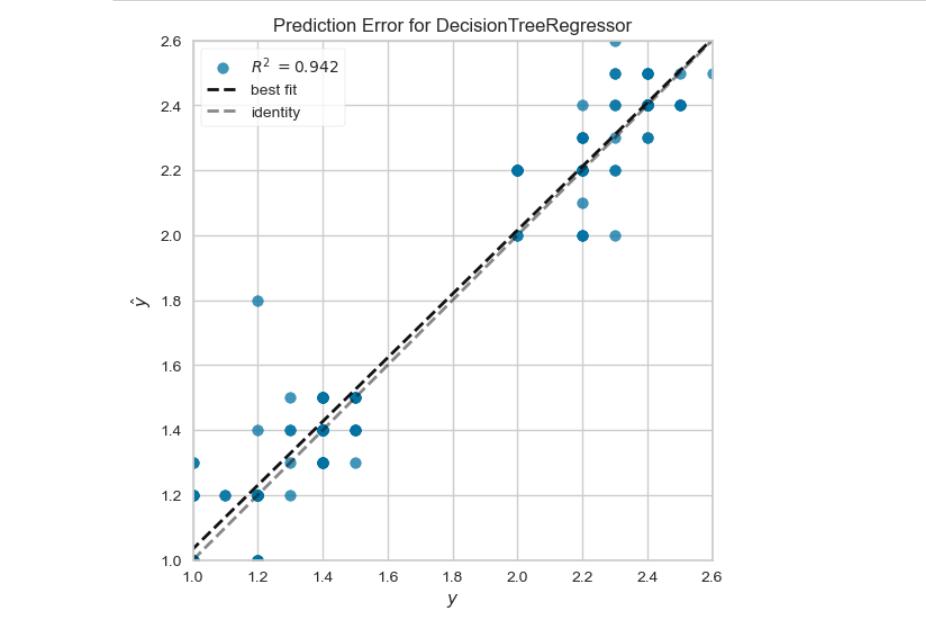
Fig7:PredictionerrorofDecisionTreeRegressionmodel
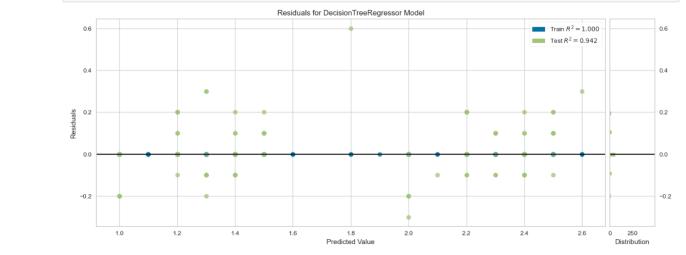

Fig8:ResidualsforDecisionTreeRegressionmodel
International Research Journal of Engineering and Technology (IRJET) e-ISSN:2395-0056
Volume: 11 Issue: 05 | May 2024 www.irjet.net p-ISSN:2395-0072
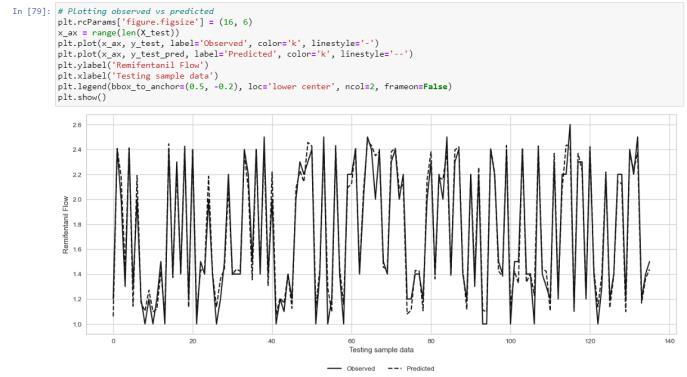
Fig9:GraphforobservedvspredictioninGradientboosting Regressor
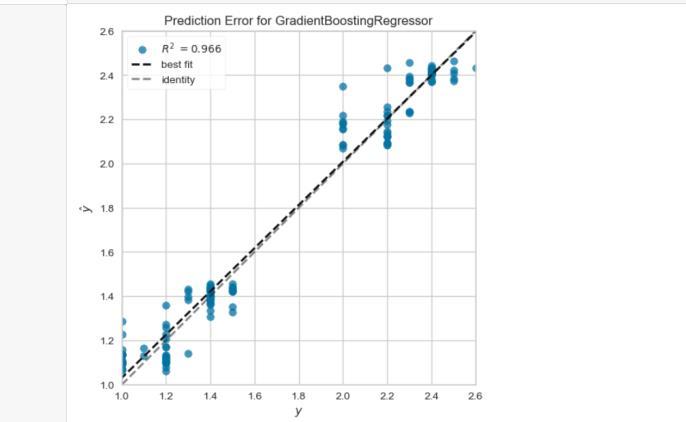
Fig10:PredictionerrorforGradientboostingRegressor
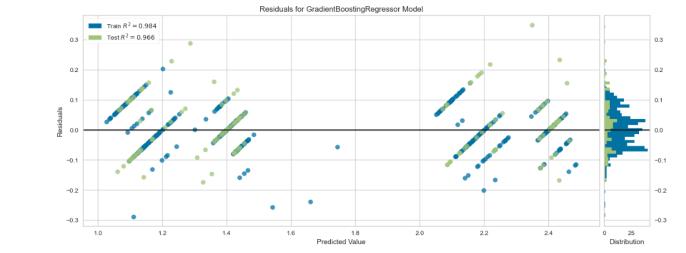

Fig11:ResidualsforGradientboostingRegreesorand predictedanesthesiavalue
Predicted results:

Fig:Accuracycalculationforlinearregression

Fig:AccuracycalculationforDecisiontreeregressor Fig:AccuracycalculationforGradientboostingRegressor

This paper presented a novel system for predicting anesthesia requirements during surgical procedures. The system leverages machine learning techniques, specificallyregressionandboostingalgorithms,toanalyse patient data and recommend anesthesia dosages. A userfriendly web interface allows medical professionals to easily access the system and receive dosage recommendations.Thissystemhasthepotentialto:
Improve Prediction Accuracy: By utilizing machine learning, the system aims to provide more reliable dosage predictions compared to traditionalmethods.
Optimize Resource Utilization: More accurate predictions can lead to a reduction in wasted medication and potentially shorter procedure times.
Enhance Patient Care: Precise dosages can minimize risks associated with over- or underanesthetization, ultimately improving patient safetyandrecoveryexperiences.
Furthermore, the inclusion of a user-friendly interface fosters adoption of this technology within healthcare settings. Future research could evaluate the system's performance in a clinical setting and explore the integration of additional patient data sources for even morerefinedanesthesiapredictions.
This revised conclusion focuses on the potential benefits ofthesystemforimprovingpredictionaccuracy,resource utilization, and patient care. It also highlights the userfriendlyinterfaceandsuggestsareasforfutureresearch.
The future enhancements in deep learning-based anesthesia prediction systems hold the potential to revolutionize patient care by providing personalized, accurate, and real-time guidance to anesthesiologists, ultimately leading to improved surgical outcomes and
© 2024, IRJET | Impact Factor value: 8.226 | ISO 9001:2008 Certified Journal | Page2044
International Research Journal of Engineering and Technology (IRJET) e-ISSN:2395-0056
Volume: 11 Issue: 05 | May 2024 www.irjet.net p-ISSN:2395-0072
patient safety. However, achieving these advancements will require collaborative efforts among researchers, healthcare professionals, regulatory bodies, and technology developers while addressing challenges related to ethics, interpretability,andcontinuouslearning.
Inconclusion,theefficientandaccuratepredictionof anesthesia requirements in healthcare is paramount for patient safety, resource optimization, and cost-effectiveness. The complexity of patient responses to anesthesia necessitates advanced data analytics and machine learning techniques for reliable predictions. The proposed system, leveraging regression and boosting algorithms with a userfriendly interface, exemplifies the potential of technology to enhance anesthesia administration practices. By addressing the variability in patient responses and providing precise dosage recommendations, such systems can significantly improve patient care outcomes and healthcare efficiency. Movingforward,continuedresearchanddevelopmentinthis area are crucial to further refine predictive models and ensuretheirwidespreadadoptioninclinicalsettings.
"[1]Thepaper"Repurposingelectroencephalographicsignal for automatic segmentation of intra-operative periods under general anesthesia " authoredby O.SaintAubin;I.Khemir;J. Perdereau;C.Touchard;F.Vallée;J.CartaillerpublishedIEEE EUROCON 2023 - 20th International Conference on Smart Technologies. This paper Intraoperative EEG method, via gradient boosting, accurately detects loss and recovery of consciousnessduringanesthesia,showcasinghighprecision.
[2] The paper" Monitoring Level of Hypnosis Using Stationary Wavelet Transform and Singular Value Decomposition Entropy With Feedforward Neural Network,"authored by Muhammad Ibrahim Dutt; Wala Saadeh featured in IEEE Transactions 2023 on Neural Systems and Rehabilitation Engineering ( Volume: 31), This paper Framework predicts continuous depth of anesthesia using SWT and fractal features, yielding 97.1% classification accuracyandsuperiorregressionperformance.
[3] " Parametric Modeling and Deep Learning for Enhancing Pain Assessment in Postanesthesia," authored by Mihaela Ghita,IsabelaRBirs,DanaCopot,CristinaIMuresan,Martine Neckebroek, Clara M Ionescu published on IEEE Trans Biomed Eng . 2023 Oct, This paper Models and artificial intelligence (AI) allow objective and personalized nociceptionantinociception prediction in the patient safety era for the design and evaluation of closed-loop analgesia controllers.
[4] The paper "Predicting anesthetic infusion events using machine learning," authored by Naoki Miyaguchi, Koh Takeuchi, Hisashi Kashima, Mizuki Morita & Hiroshi MorimatsupublishedinScientificReportsvolumePublished:
08 December 2021 Study uses machine learning for anesthesiologist decisions on remifentanil, with LSTM showing promising performance, enhancing anesthesia decision-makingpotential.
[5] Y. Liu, B. Ma and Y. Wang, " Estimating the time-delay for predictive control in general anesthesia," 2021 IEEE International Conference on BigData (Big Data),Orlando, FL, USA, 2021, pp. 4798-4801, doi: 10.1109/BigData52589.2021.9671409.
[6] G. Mashevskiy and P. Dubrovina, " A TransformerBased Prediction Method for Depth of Anesthesia During Target-Controlled Infusion of Propofol and Remifentanil," 2020 IEEE International Conference on Electrical Engineering and Photonics (EExPolytech), St. Petersburg, Russia, 2020, pp. 136-139, doi: 10.1109/EExPolytech50912.2020.9243867.
[7]“SpectrumAnalysisofEEGSignalsUsingCNNtoModel Patient’sConsciousnessLevelBasedonAnesthesiologists’ Experience,”authoredbyQuanLiu;JifaCai;Shou-ZenFan; Maysam F. Abbod; Jiann-Shing Shieh; Yuchen Kung; Longsong Lin published in IEEE Access ( Volume: 7) 23 April2019,StudyintroducesCNNsfordepthofanesthesia predictionfromrawEEGdata,achieving93.50%accuracy, showcasingpotentialforbrainmapping
[8]C.K.Holland,H.ShekharandM.Lafond,"Repurposing electroencephalographic signal for automatic segmentation of intra-operative periods under general anesthesia" 2019 IEEE International Ultrasonics Symposium(IUS),Glasgow,UK,2019,pp.2037-2039,doi: 10.1109/ULTSYM.2019.8926290.
[9] C. Shih, W. Cheng-Chung Chu and Y. -W. Chang, " Proposal of Anesthetic Dose Prediction Model to Avoid Post-induction Hypotension Using Electronic Anesthesia Records,"2019IEEE43rdAnnualComputerSoftwareand ApplicationsConference(COMPSAC),Milwaukee,WI,USA, 2019,pp.720-729,doi:10.1109/COMPSAC.2019.00108.
[10] A. F. Nur Masruriyah, T. Djatna, M. K. Dewi Hardhienata, H. H. Handayani and D. Wahiddin, " Models and their uncertainty for bp maintenance during spinal anesthesia using phenylephrine" 2019 Fourth International Conference on Informatics and Computing (ICIC), Semarang, Indonesia, 2019, pp. 1-4, doi: 10.1109/ICIC47613.2019.8985716.
[11] C. A. Devi, S. P. Rajamhoana, K. Umamaheswari, R. Kiruba, K. Karunya and R. Deepika, "Analysis of neural networks based heart disease prediction system", Proc. 11thInt.Conf.Hum.Syst.Interact.(HSI),pp.233-239,Jul. 2018.
International Research Journal of Engineering and Technology (IRJET) e-ISSN:2395-0056
Volume: 11 Issue: 05 | May 2024 www.irjet.net p-ISSN:2395-0072
[12]“Proposal of AnestheticDose Prediction Model toAvoid Post-induction Hypotension Using Electronic Anesthesia Records” authored by Nanaka Asai; Chiaki Doi; Koki Iwai; SatoshiIdeno;HiroyukiSeki;JungoKato;TakashigeYamada; Hiroshi Morisaki; Hiroshi Shigeno presented on 04-06 November 2019 - Study aims to prevent post-induction hypotension via personalized anesthesia dosing, employing ridge regression on electronic records with promising results..
[13] " Pain Prediction From ECG in Vascular Surgery,” authored ricia Adjei 1, Wilhelm Von Rosenberg 1, Valentin Goverdovsky1,KatarzynaPowezka2,UsmanJaffer2,Danilo P Mandic 1,published in the IEEE J Transl Eng Health Med . 2017 Sep 3-D polynomial model links physiological metrics to pain ratings, predicting pain sensitivity in varicose vein surgerieswithhighaccuracy.
[14]A.H.Alkeshuosh,M.Z.Moghadam,I.AlMansooriandM. Abdar, "Using PSO algorithm for producing best rules in diagnosis of heart disease", Proc. Int. Conf. Comput. Appl. (ICCA),pp.306-311,Sep.2017.
"[15] “Predicting and Evaluating the Effect of Bivalirudin in Cardiac Surgical Patients” authored by Qi Zhao, Thomas Edrich, Ioannis Ch Paschalidis,published in IEEE Trans Biomed Eng . 2014 Feb. This paper contrasts model-free, regularized regression with model-based, populationparameterized approachfor predicting PTTfrom bivalirudin infusionrates.Adaptivemodelexcels.
[16] N. Al-milli, "Backpropogation neural network for prediction of heart disease", J. Theor. Appl.Inf. Technol., vol. 56,pp.131-135,2013.
[17] S. Abdullah and R. R. Rajalaxmi, "A data mining model for predicting the coronary heart disease using random forest classifier", Proc. Int. Conf. Recent Trends Comput. MethodsCommun.Controls,pp.22-25,Apr.2012
[18]P.K.Anooj,"Clinicaldecisionsupportsystem:Risk level prediction of heart disease using weighted fuzzy rules", J. KingSaudUniv.-Comput.Inf.Sci.,vol.24,no.1,pp.27-40,Jan. 2012.
[19] " Estimating the depth of anesthesia by applying sub parameters to an artificial neural network during general anesthesia" by M. Ghanatbari; A. R. Mehri Dehnavi; H. Rabbani; A. R. Mahoori published 04-07 November 2009, Study introduces two ANN structures for DOA estimation, correlating EEG signals with BIS monitor readings, showcasingstrongpredictioncapabilities