
International Research Journal of Engineering and Technology (IRJET) e-ISSN: 2395-0056
Volume: 11 Issue: 05 | May 2024 www.irjet.net p-ISSN: 2395-0072

International Research Journal of Engineering and Technology (IRJET) e-ISSN: 2395-0056
Volume: 11 Issue: 05 | May 2024 www.irjet.net p-ISSN: 2395-0072
Harshraj K Wani1 , Akash G Bhalerao1 , Aman N Bisen1 , Ganesh K Badgujar1,2 , Shashikant T Vagge, Rameshwar B Umbarkar1
1Department of Mechanical Engineering, Govt. college of Engineering, Jalgaon, Maharashtra, India - 425002
2Khandesh Engineering Services, Jalgaon, India, 425001
Abstract - Thispaperprovidesanin-depthexploration of motorcycle crash guards and leg guards, essential components in enhancing rider safety and protecting motorcycles from unforeseen incidents. We navigate through the current trends in the market, analyzing what riders are looking for in terms of design and functionality. From sleek and stylish designs to those with robust protective features, we delve into the diverse landscape of options available. Additionally, we scrutinize the compatibility of these guards with various motorcycle models, ensuring a comprehensive understanding of their adaptability. This study aims to serve as a practical guide forridersseekingsuitableprotectionandformanufacturers aiming to meet the evolving demands of the market. By combining insights into market trends, design variations, and compatibility factors, this paper offers valuable perspectives to a wide audience interested in the world of motorcyclecrashguardsandlegguards.
Key Words: Bike accessories, Leg guard, motorcycle crash guard, ride safety
1.INTRODUCTION
The primary objectives include analyzing current market trends, understanding consumer preferences, and identifying emerging technologies. The report seeks to closely examine the diverse design variations in these guards, considering both aesthetic appeal and functional features. Additionally, a key focus is on assessing the compatibility of these guards with various bike models, recognizing the importance of adaptability to different motorcycle structures. By achieving these objectives, the report endeavors to offer valuable insights for riders, manufacturers,and industrystakeholders,contributing to the enhancement of safety measures and user-friendly experiencesformotorcycleenthusiasts.
Since the EEVC 1993 report, the only study that describestheproblemsofleginjuriesisthatofOtte(1994). MuchofwhatiscontainedbelowisfromOtte’sreportbutit is important to give a very brief extract from the EEVC reportforcomparison,asfollows:
“Mackay (1985) suggests two general mechanisms ofleg injury, direct impact with the other vehicle andcrushing between the motorcycle and the other vehicle, and this distinction between a direct blow and trapping between the two vehicles is clear in many injury studies,forexampleHurtetal.(1981)andNyquistetal.(1 985),who document the production of rider nearside lowerleginjuriesduetotrappingbetweenmotorcycleand theothervehicle,orthepinchingactionexperiencedwhen thecycle‘slaps’againstthecar.”
However, many of the above studiesaresomewhatold andtheoneoftherecentstudiesisthatofOtte.Therefore, this was examined in detail to determine how thecurrent patterns of leg injuries differ from those described above. Otte completed this study to analyze the risk to motorcyclists of leg injuries in accidents and to find the opportunities for leg protection by comparing risks for those injured on machines with and without leg fairings. Each injury was analyzed by type, legarea and severity (AIS) and correlated to the impact situation with impact direction, impulse angle, load and characteristics ofkinematic behavior; 258motorcycle accidents withcars were analyzed for leg injuries. Otte’s study confirms previous findings that some 60% of the motorcyclists in accidents sustained leg injuries, mostly fractures of injury severityAIS2-3.
The presence of fairings had little effect on the overall incidence of head and thorax injuries; 19.3% with and 18.1%without fairings for the head and 25.9% with and 22.8%withoutfairingsforthethorax.However,Ottemakes thepointthatachangeintheriderkinematicsisobserved with leg fairings and this accounts for the different distributionofinjuriesamongthecollisiontypes.
Ottealsoquantifiedthelikelybenefitsforleginjuries.It was estimated that an overall reduction of 21.1%of leg injury costs could be achieved with leg protection. The costliest collision types were type 1 (motorcycle comes across path ofcar resultingin an impact to the side of the bike)andtype2(motorcyclecollideswithfrontofanother vehicle) for which an estimated reduction of 31.7% could be achieved. However, the greatest benefit, 34.6%, would be for type 5 collisions (motorcycle collides with rear
International Research Journal of Engineering and Technology (IRJET) e-ISSN: 2395-0056
Volume: 11 Issue: 05 | May 2024 www.irjet.net p-ISSN: 2395-0072
ofanother vehicle) and 6 (another vehicle collides with rearofmotorcycle).
Note*: Constructional suggestions for leg protectors includedrecommendationsforthefoottobecoveredfrom the side and front and the design of protection to include the elimination of compression effects. It was also stated that the tibia must be protected in the front by an energy absorbingelementalthoughtheridermustbefreetoleave themotorcycleduringtheimpact.
Crash guards and leg guards play a crucial role in preventing injuries during accidents, particularly in the context of motorcycles. Crash guards, also known as engine guards or crash bars, provide protection to the motorcycle'sengineandothercriticalcomponentsincase of a fall or collision. They help absorb impact and minimizedamagetothebike,reducingtherisk ofinjuries totherider.
Legguards,commonlyreferredtoaslegcrashguardsor highway pegs, are designed to protect the rider's legs in caseofacrash.Theycanhelppreventfracturesandother injuriesbyactingasabarrierbetweentherider'slegsand thegroundorotherobstacles.
While these guards are not foolproof, they significantly contribute to rider safety by mitigating the severity of injuries in certain situations. It's important for riders to chooseandinstalltheseguardsproperly,consideringtheir bikemodelandintendeduse.
IntheMarketOverview,weexplorethediverseworld of leg guard designs and variations, highlighting current trends, consumer preferences, and market dynamics. By examining the latest innovations and competitive landscape, we aim to provide a comprehensive understanding of the factors driving the market and the potentialforfuturegrowth.
2.1 Design Variations
Designsinmarketvarywithrespecttobikemodels,but with these structural variations there are a lot more variations in material and ergonomic considerations whichultimatelyaffectthefinancialmarketoflegguard.
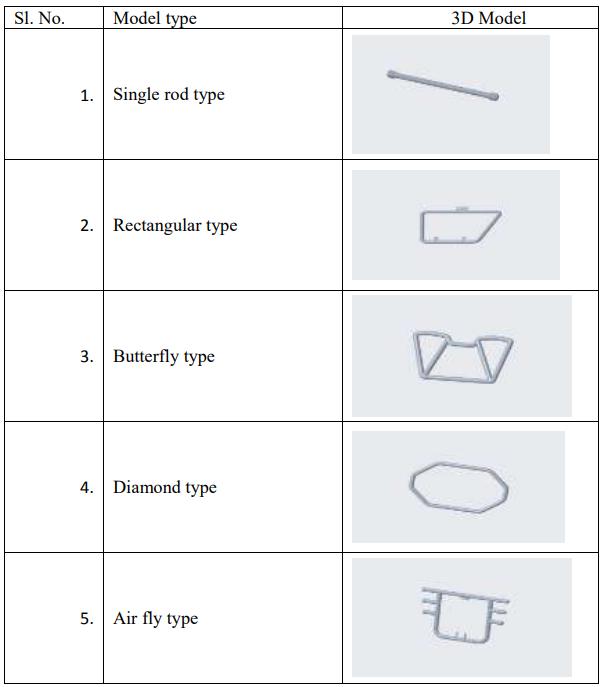
Figure 1 Available Designs of leg guards
Materials used for motorcycle leg guards or engine guards often adhere to specific specifications outlined by organizations such as the Indian Standards (IS) and these aremostlyaslistedbelow.
1) MildSteel(MS):
Specifications: Generally, follows IS 2062 standardsforhot-rolledsteel.
Designation: IS 2062:2011 - Hot Rolled Medium andHighTensileStructuralSteel.
2) AluminumAlloy:
Specifications: Various grades such as AA6061, AA6063,orAA7075.
Designations:
AA6061: IS 733:2001 - Wrought Aluminum and Aluminum Alloys Sheets and Strips for GeneralEngineeringPurposes.
AA6063: IS 1285:1997 - Wrought Aluminum and Aluminum Alloys Extruded Bars, Rods, Tubes,SectionsandProfiles.
3) StainlessSteel:
Specifications: Grades like SS304 or SS316 are commonlyused.
International Research Journal of Engineering and Technology (IRJET) e-ISSN: 2395-0056
Volume: 11 Issue: 05 | May 2024 www.irjet.net p-ISSN: 2395-0072
Designations:
SS304: IS 6911:1992 - Stainless Steel Plate, Sheet,andStrip.
SS316: IS 6911:1992 - Stainless Steel Plate, Sheet,andStrip.
4) CarbonFiber:
Specifications: Varies based on the manufacturer andintendedapplication.
Designations:NospecificISdesignation,ascarbon fiber materials are generally manufactured to industryorproprietarystandards.
5) TitaniumAlloy:
Specifications: Different grades such as Ti-6Al-4V orTi-3Al-2.5V.
Designations:
Ti-6Al-4V: No specific IS designation, as titanium alloys are often manufactured to ASTM (American Society for Testing and Materials)orotherinternationalstandards.
Ti-3Al-2.5V: Same as Ti-6Al-4V, typically conformstoASTMstandards.
A.
In such systems, crash guard is made retractable with the help of electronic circuits. The Electronic Circuit calculates the instantaneous roll angle and controls the movementofthecrashguard.TheADXL345accelerometer isusedtomeasurethestaticaccelerationofgravityfortiltsensing applications. It is a small, thin, and low power 3axisaccelerometerwithhighresolution(4mg/LSB)which, enablesmeasurementofinclinationchangeslessthan1.0°. LCD 1602 display is used todisplay the instantaneous roll angle and, DC motors are used for the movement of the crashguard.
B.
The Mechanical Implementation consists of two mechanisms;acammechanism,andthecrashguardframe. The cam mechanism driven by the DC motors moves the crash guard frame. It transforms the rotational motion from the motors into linear motion for extending and retractingthecrashguardframe.
In moto gp type crash guards, wheels are attached at bothendsoftheguardsoastomaintainthemomentumof bike even when taking stiff turns and sliding over the dry tarmac.Therefore,actingasanindependentsafetysystem forbikes.
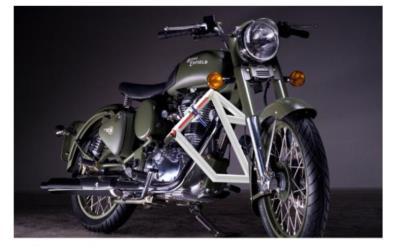
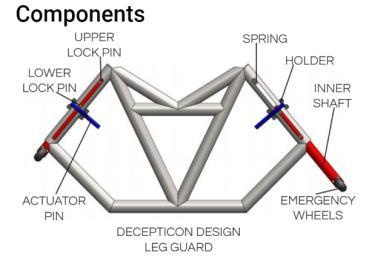
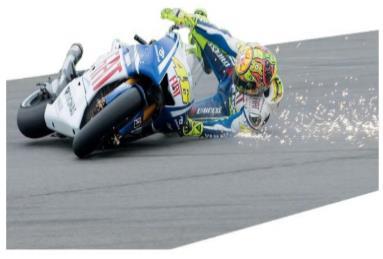
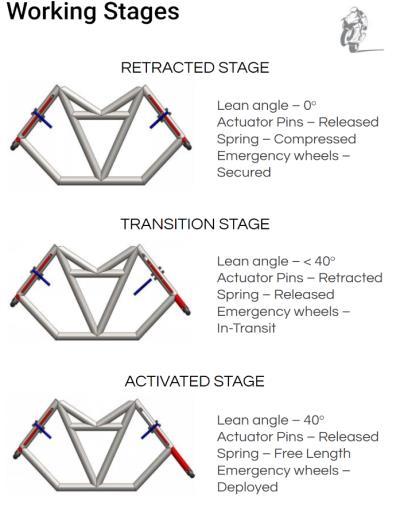
The market dynamics surrounding leg guards, also known as crash bars or engine guards, in the motorcycle industry are driven by a combination of safety concerns, evolving rider preferences, and technological advancements. As motorcycle safety regulations become more stringent, manufacturers must ensure that their leg guards meet or exceed these standards, leading to a focus onrobustdesignandcompliancewithsafetyrequirements. Moreover,changingtrendsinmotorcycleusage,suchasthe riseofadventuretouringandoff-roadriding,contributeto the demand for leg guards that offer enhanced protection againstimpactsanddebris.
Material innovation plays a crucial role, with lightweightyetdurablematerialslikealuminumalloysand compositematerialsgainingtractionduetotheirabilityto provide superior protection without adding excessive weight to the motorcycle. Additionally, aesthetic considerations and compatibility with various motorcycle models drive product development, as riders seek leg guards that not only offer safety but also complement the overall look and feel of their bikes. As the aftermarket
International Research Journal of Engineering and Technology (IRJET) e-ISSN: 2395-0056
Volume: 11 Issue: 05 | May 2024 www.irjet.net p-ISSN: 2395-0072
accessories market continues to thrive, manufacturers compete to offer innovative, customizable leg guards that cater to the diverse needs and preferences of motorcycle enthusiasts while maintaining affordability and brand reputation.
TheglobalmotorcyclemarketislikelytobeofUS$8.84 BillioninFY2022,upfromUS$8.39Billionin2021.From 2022 to 2032, motorcycle accessories sales are supposed toincreaseatCAGRof6%toreachavalueofUS$15Billion bytheendof2032.
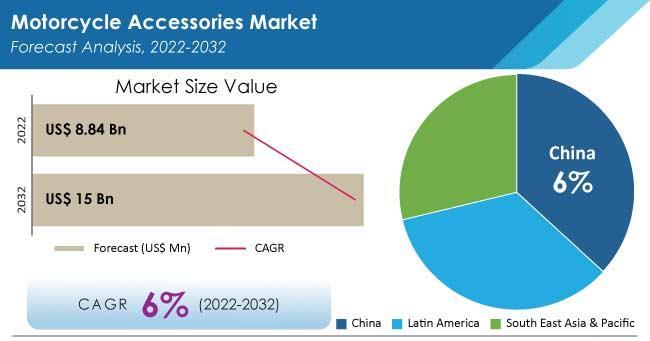
In Asia, market value is supposed flourishing to whopping amount of US$ 7.5 Billion. Key contributors to this growth are namely TVS motors, Hero MotoCorp, Yamaha Motor, Harley Davidson, Vega Auto Accessories, StuddsAccessories,OmSteel industries&SteelbirdHitech Indialtd,etc.
In 1993 the European Commission in its action programme on road safety stated in the section on active and passive vehicle safety that it proposed to take new initiatives forward which included leg protection devices for mopeds. Mind you they also said that they would also look at devices for preventing increasing speed limits imposed by construction, in particular for two-wheel motorvehicles.
Steppingintotheframeinpracticaltermsanduptothe plate was the then Roads Minister Peter Bottomley, the TransportResearchLaboratory(TRRL)andaDoctorBryan Chinn,whohadpreviouslyin1985BryanChinnpresented his PhD thesis “Injuries to Motorcyclists’ Legs: Testing Procedures and Protection”, with the claim that leg protectorswouldprotectridersfromseriousleginjuries.
The research by the TRRL was questioned by the motorcycle industry, IMMA (International Motorcycle Manufacturers Association) and members of the Japan
AutomobileResearchInstituteandDynamicResearch,Inc. who commissioned their own studies. The results showed thatthelegprotectordesignwasonlybeneficialin25%of accident situations and actually detrimental in 50% of accidents.
Note*: Worse still the effects of the leg protectors on head trajectory and deceleration would lead to increased severe and fatal head injuries. This is caused by the leg protectors restraining the rider and causing pivoting aroundthehipsbringingtheheadintocontactwiththecar that the motorcycle was in collision with. There was also anincreasedchanceofpelvisfracture,whichispotentially fatal. The net result of that design was the lower leg injurieswouldbetransferredtoupperleg,torso,andhead injuries.
After going through all the above details, we conclude that:
Design of Leg guards and crash guards be such thatitdoesnotrestrainthemovementofriderin any case. This results in transmission of impact force to motorcycle components and not to the riderbody.
Tubular structures are preferred over Leg protectors.Because they arelight weightanddo not oppose the basic movement of rider in case ofaccidentsandimpacts.
Overcoming challenges in achieving compatibility requires a holistic approach, combining innovative design, adaptable materials, rigorous testing, and a keen understanding of user preferences. The success of a universal leg guard hinges on its ability to seamlessly integrate with diverse motorcycle models while meeting safety, aesthetic, and performanceexpectations.
[1] Motorcycle safety: a scoping study by M A Elliott, C J Baughan,JBroughton,BChinn,GBGrayson,JKnowles, L R Smith and H Simpson, Prepared for Road Safety Division,DepartmentforTransport.
[2] European Experimental Vehicles Committee (EEVC) (1993).Reportonmotorcyclesafety.
[3] Otte D (1994). Biomechanics of impacts to the legs of motorcyclists and constructional demands for leg protectors on the motorcycle. Hannover. Paper presentedatthe1994InternationalConferenceonthe Biomechanics of Impacts, September 21-23, Lyon, France
International Research Journal of Engineering and Technology (IRJET) e-ISSN: 2395-0056
Volume: 11 Issue: 05 | May 2024 www.irjet.net p-ISSN: 2395-0072
[4] Jha S. N. Fact.MR/Motorcycle Accessories Market [Online]// factmr.com.- May 2022.- January 26, 2024.https://www.factmr.com/report/1057/motorcycleaccessories-market.
[5] PhD Elaine Hardy Leg Protectors: The Evil Genie Has Returned![Online]//MotorcycleMinds.org.-October 2016.- January 26, 2024.https://motorcycleminds.org/2016/10/02/legprotectors-the-evil-genie-has-returned/.
[6] International Journal of Electrical Engineering & Technology (IJEET) Eenesh Chavan and Dr. Roopa M Department of Electronics and Communication EngineeringSRMInstituteofScienceandTechnology, RamaPuramChennai,TamilNadu,India
We extend our sincerest gratitude to those who havecontributedtothecompletionofthisresearchpaper. Firstly, we express our appreciation to Dr. Shashikant T. Wagge sir from Govt College of Engineering Jalgaon, our guide, whose guidance and support have been invaluable throughout the research process. Their expertise has shapedthisworksignificantly.
We also extend our thanks to Mr. Ganesh K Badgujar, Khandesh Engineering Services, for their assistance in data analysis and interpretation, enhancing the depth and accuracy of our findings. Additionally, we acknowledgethecontributionsof Mr. AyushN Chaudhari, Mr.AkashGBhalerao,Mr.RishabhRSharnagat,Mr.Aman NBisenfortheirvaluableinputandfeedback.
Lastly, we are grateful to the participants who generously shared their time and insights, and to our familiesandfriendsfortheirunwaveringsupport.Without each of these contributions, this research would not have beenpossible.
Thank you all for your indispensable roles in this endeavor.