
International Research Journal of Engineering and Technology (IRJET) e-ISSN:2395-0056
Volume: 11 Issue: 05 | May 2024 www.irjet.net p-ISSN:2395-0072
International Research Journal of Engineering and Technology (IRJET) e-ISSN:2395-0056
Volume: 11 Issue: 05 | May 2024 www.irjet.net p-ISSN:2395-0072
Sree Harsha
Aruba HPE, USA ***
Networkmanagementandmaintenancearebeingrevolutionizedbyself-healingnetworks,whichutilizemachinelearning (ML)andartificialintelligence(AI)techniques.Theadvancedsystemsdetect,diagnose,andresolvenetworkissuesinrealtime, ensuring optimal performance and minimizing downtime [1]. Through the utilization of ML algorithms, extensive networkdatacanbeanalyzedtodetectpatterns,enablingself-healingnetworkstoanticipateandaddresspotentialfaults and anomalies in advance [2]. AI techniques, like neural networks and deep learning, allow these systems to learn from past network behavior and adjust to changing conditions [3]. Self-healing networks utilize AI-based decision-making algorithmstoidentifythemostefficientremediationstrategies,takingintoaccountobjectivessuchasreducingdowntime and optimizing throughput [4]. In addition, these networks demonstrate the ability to learn on their own, constantly improvingtheiralgorithmsthroughfeedbackfrompreviousactions.Thisresultsinahigherlevelofexpertiseinresolving issuesautonomouslyastimegoeson[5].Networkinfrastructuresarebecomingmorecomplexanddynamic.Self-healing networkscanenhance resilience,reducetheneedformanual intervention,andensure seamlessconnectivityin domains suchastelecommunications,datacenters,andtheInternetofThings(IoT)[6].
Keywords: Self-healing networks, Machine learning in network management, Artificial intelligence in network maintenance,Networkresilienceandoptimization,Autonomousfaultdetectionandremediation

The exponential growth of network complexity and the increasing demand for reliable, high-performance connectivity have presented significant challenges for conventional network management approaches [7]. Detecting, diagnosing, and resolvingnetworkissueshasbecomemoretime-consumingandinefficient,resultinginextendedperiodsofdowntimeand subparnetworkperformance[8].Inordertotacklethesechallenges,theconceptofself-healingnetworkshasemergedas a transformative solution. It harnesses the power of machine learning (ML) and artificial intelligence (AI) techniques to enableautonomousnetwork management[1].Self-healingnetworksstrivetoautomaticallydetect,diagnose,andresolve
International Research Journal of Engineering and Technology (IRJET) e-ISSN:2395-0056
Volume: 11 Issue: 05 | May 2024 www.irjet.net p-ISSN:2395-0072
networkissuesinreal-time,minimizingtheneedforhumaninterventionandensuringoptimalnetworkperformance[9]. ThroughtheutilizationofMLalgorithmsandAItechniqueslikeneuralnetworksanddeeplearning,self-healingnetworks havetheabilitytoanalyzeextensivenetworkdata,identifypatterns,andtakeproactivemeasurestopreventfaults.These networks can also adapt to changing network conditions and make intelligent choices to ensure uninterrupted connectivity.
Machine Learning (ML) techniques
ML
Data Requirement
Common Algorithms
Self-Healing Applications
Decision Trees, SVM, NaiveBayes
classification, Performanceprediction
K-means, PCA, Autoencoders
Q-learning, SARSA, PolicyGradient
Table 1: Comparison of ML techniques used in self-healing networks [11,53]
Machinelearningplaysacrucialroleinself-healingnetworks,allowingthemtogaininsightsfromextensivenetworkdata and make informed choices. Supervised learning, unsupervised learning, and reinforcement learning are three ML paradigmscommonlyusedinself-healingnetworks[11].
Supervised learning: Involves training the ML model using labeled data, where the input features are associated with known output labels. This technique is especially beneficial for tasks like classification and regression, allowing selfhealingnetworkstorecognizeandclassifynetworkissuesusinghistoricaldata[12].
Unsupervised learning: Unsupervised learning involves discovering hidden patterns and structures in unlabeled data. Unsupervised learning techniques such as clustering and dimensionality reduction play a crucial role in self-healing networks. They assist in identifying anomalies, detecting network performance degradation, and revealing hidden relationshipsamongnetworkcomponents[13].
Reinforcement learning: Reinforcement learning allows self-healing networks to acquire optimal decision-making strategiesbyengagingintrial-and-errorinteractionswiththeenvironment.Throughtheuseofrewardsorpenaltiestied to outcomes, reinforcement learning agents can acquire the ability to make intelligent decisions that optimize network performanceandminimizedowntime[14].
ArtificialIntelligence(AI)techniques
AItechniques,builtuponthefoundationofmachinelearning,offerself-healingnetworksadvancedcapabilitiesforpattern recognition,prediction,anddecision-making.
Neural networks:
Neural networks, inspired by the structure and function of the human brain, are powerful AI models capable of learning complex patterns and relationships in network data. Self-healing networks utilize neural networks for various tasks, includingtrafficclassification,performanceprediction,andanomalydetection[15].
Deep learning:
This technique utilizes multi-layered neural networks to acquire hierarchical representations of data. Deep learning techniques, including convolutional neural networks (CNNs) and recurrent neural networks (RNNs), have demonstrated significantpotentialinself-healingnetworksforvarioustasks,suchasnetworktrafficforecastingandfaultdiagnosis[10].
International Research Journal of Engineering and Technology (IRJET) e-ISSN:2395-0056
Volume: 11 Issue: 05 | May 2024 www.irjet.net p-ISSN:2395-0072
Anomaly detection:
Anomaly detection plays a vital role in AI techniques for self-healing networks. It allows for the detection of abnormal patterns or behaviors that differ from the norm. Through the utilization of ML and AI algorithms, self-healing networks havethecapabilitytoidentifyanomaliesinreal-time,enablingswiftresolutionandmitigatingtheriskofnetworkfailures [2].
Data collection and preprocessing
Thefoundationofautonomousfaultdetectionanddiagnosisinself-healingnetworksliesinthecomprehensivecollection and preprocessing of network data [16]. This data encompasses various aspects of network performance and behavior, including:
Performance metrics:
Self-healing networks continuously monitor and collect performance metrics such as throughput, latency, jitter, and packetloss.Thesemetricsprovidevaluableinsightsintotheoverallhealthandefficiencyofthenetwork[17].
Traffic patterns:
Analyzingnetworktrafficpatternsiscrucialforidentifyinganomaliesandpotentialsecuritythreats.Self-healingnetworks captureandprocesstraffic data,including flow-level information, protocol distributions,andapplication-specificmetrics [18].
Device telemetry:
Telemetrydatafromnetworkdevices,suchasrouters,switches,andfirewalls,providesdetailedinformationaboutdevice performance, resource utilization, and configuration changes. This data is essential for detecting hardware and software faultsthatmayimpactnetworkstability[19].
Thecollecteddataundergoespreprocessingtechniqueslikedatacleaning,normalization,andfeatureextractiontoensure dataqualityandprepareitforanalysisbyMLandAIalgorithms[16].
ML-basedpatternrecognitionandanomalydetection
Machinelearningalgorithmsplayapivotalroleinidentifyingpatternsanddetectinganomaliesinnetworkdata.
Identifying normal network behavior: By training ML models on historical network data, self-healing networks can establishabaselineofnormalnetworkbehavior.Techniqueslikeclusteringanddensityestimationhelpcreateareference modelthatrepresentstheexpectedpatternsandcharacteristicsofahealthynetwork[20].
Detecting deviations and potential faults:
After establishing normal behavior, ML algorithms have the ability to identify deviations and anomalies that could potentially indicate faults or performance issues. Various anomaly detection techniques, like one-class SVM, isolation forest, and autoencoders, are utilized to identify patterns that deviate significantly from the norm. This allows for proactivefaultdetection[21].
AI-driven root-cause analysis
Whenanomaliesorpotentialfaultsaredetected,AItechniquesareutilizedbyself-healingnetworkstoconductroot-cause analysisanddeterminetheunderlyingfactorsthatcontributetotheissue.
Correlating disparate data sources:
AI algorithms like Bayesian networks and graph neural networks have the ability to analyze and correlate data from various sources, such as performance metrics, traffic patterns, and device telemetry. Through the identification of relationships and dependencies among various data points, self-healing networks are able to gain a comprehensive understandingofthenetworkstate[22].
International Research Journal of Engineering and Technology (IRJET) e-ISSN:2395-0056
Volume: 11 Issue: 05 | May 2024 www.irjet.net p-ISSN:2395-0072
Uncovering hidden relationships and dependencies:
Deeplearningtechniques,suchasconvolutionalneuralnetworks(CNNs)andrecurrentneuralnetworks(RNNs),havethe ability to reveal concealed patterns and dependencies in network data that may not be readily apparent through conventional analysis. By utilizing these techniques, self-healing networks can effectively identify intricate relationships amongnetworkcomponentsandaccuratelydeterminetheunderlyingcausesofissues[23].
Self-healingnetworksutilizeadvancedtechnologieslikemachinelearningandartificialintelligencetoswiftlyidentify and isolate issues. Reducing the mean time to detect (MTTD) and mean time to repair (MTTR) improves the resilience and availabilityofthenetwork[24].
AutomatedIssueResolutionandRemediation
AI-baseddecision-makingalgorithms
Upon detecting and diagnosing faults or performance issues, self-healing networks employ AI-based decision-making algorithmstoidentifythemostappropriateremediationactions[25].
Evaluating potential remediation strategies:
AI algorithms, such as reinforcement learning and multi-objective optimization, can evaluate various remediation strategiesbasedontheirexpectedoutcomes.Thealgorithmsconsiderdifferentfactors,includingtheseverityoftheissue, theimpactonnetworkperformance,andtheavailableresources,todeterminethemosteffectivecourseofaction[26].
Predicting the impact of interventions:
Predictive models, such as decision trees and Bayesian networks, can forecast the potential impact of different remediation actions on the network. By simulating the effects of each intervention, self-healing networks can choose the strategythatachievesthebestbalancebetweenresolvingtheissueandminimizingdisruptiontonetworkoperations[27].
Autonomous remediation actions
Self-healing networks possess the capability to perform remediation actions automatically, without the need for manual intervention.Commonremediationactionsinclude:
Reconfiguring network settings:
AI-driven systems can dynamically adjust network configurations, such as bandwidth allocation, quality of service (QoS) parameters,andsecuritypolicies,tomitigateissuesandoptimizeperformance[28].
Redirecting traffic:
When a network segment or device encounters issues, self-healing networks have the ability to automatically redirect trafficthroughdifferentpaths.Thisensuresthatconnectivityismaintainedandminimizesanydisruptionsforend-users [29].
Isolating problematic devices or segments:
When a device or network segment is identified as the root cause of an issue, self-healing networks can isolate the problematic component to prevent the issue from spreading and affecting other parts of the network. Isolation can be achievedthroughtechniquessuchasvirtualnetworksegmentationorsoftware-definednetworking(SDN)[30].
Balancingcompetingobjectives
When considering the best remediation strategy, self-healing networks often need to weigh different objectives. AI algorithmsplayacrucialroleinachievingtherightbalancebetween:
Minimizing downtime:
The primary objective of self-healing networks is to minimize the duration and frequency of network downtime. AI algorithms should prioritize remediation actions that can rapidly restore network functionality and prevent prolonged outages[31].
International Research Journal of Engineering and Technology (IRJET) e-ISSN:
Volume: 11 Issue: 05 | May 2024 www.irjet.net p-ISSN:2395-0072
Maximizing throughput:
Self-healing networks strive to maintain optimal network throughput and performance, even when faced with issues or failures.ConsiderationoftheimpactofremediationactionsonoverallnetworkthroughputiscrucialinAI-baseddecisionmaking.Itisimportanttoselectstrategiesthatminimizedegradation[32].
Ensuring service continuity:
For critical applications and services, self-healing networks must prioritize service continuity and availability. AI algorithmsmustassesstheimportanceofdifferentservicesandprioritizeremediationactionsthatprotectthemostvital aspectsofnetworkoperations[33].
By leveraging AI-based decision-making and autonomous remediation actions, self-healing networks can quickly and efficientlyresolveissues,minimizedowntime,andensuretheongoingperformanceandstabilityofthenetwork.
Continuous Learning and Adaptation
Metric
Accuracy
Precision
Recall (Sensitivity)
F1 Score
Area Under ROC Curve (AUC)
Proportion of correct predictions (TP+TN)/(TP+TN+FP+FN)
Proportion of true positives amongpredictedpositives
Proportion of true positives amongactualpositives
Harmonic means of precision andrecall
Measurement of classification performance at different thresholds
TP/(TP+FP)
TP/(TP+FN)
2 * (Precision * Recall) / (Precision+Recall)
IntegralofROCcurve
Table 2: Evaluation metrics for self-healing networks [54, 55]
Feedbackloopsandself-learningcapabilities
Self-healing networks are designed to continuously learn and adapt to changing network conditions, ensuring that they remaineffectiveandefficientovertime.Thisisachieved throughtheimplementationoffeedback loopsandself-learning capabilities[34].
Monitoring the effectiveness of remediation actions:
After executing remediation actions, self-healing networks monitor the impact of these actions on network performance and stability. By comparing the post-remediation state of the network with the desired state, the system can assess the effectivenessofitsinterventions[35].
Refining algorithms based on past outcomes:
The insights gained from monitoring remediation outcomes are incorporated into the AI algorithms, enabling them to learnfromtheirsuccessesandfailures.Throughcontinuousrefinementofalgorithmsbasedonreal-worldexperience,the self-healingnetworkimprovesitseffectivenessinresolvingissuesandoptimizingperformanceovertime[36].
Adaptivedecision-makingprocesses
Adapting decision-making processes in self-healing networks is crucial to incorporate new data, insights, and changing networkconditions.
International Research Journal of Engineering and Technology (IRJET) e-ISSN:
Volume: 11 Issue: 05 | May 2024 www.irjet.net p-ISSN:2395-0072
Incorporating new data and insights:
Asthenetworkcontinuestodevelopandadditionaldatasourcesemerge,itiscrucialforself-healingnetworkstointegrate this information into their decision-making processes. Updating ML models, adjusting feature sets, or modifying the weightingofdifferentfactorsinthedecision-makingalgorithmsmaybenecessary[37].
Adjusting strategies to evolving network conditions:
Networkconditionscanvaryduetofactorsliketrafficpatterns,userbehavior,and applicationrequirements.Itiscrucial forself-healingnetworkstodetectthesechangesandadjusttheirstrategiesaccordingly.Onepossibleapproachistomake adjustments to resource allocation, network policies, or ML models in order to better adapt to the current network environment[38].
Through continuous learning and adaptation, self-healing networks can effectively and relevantly maintain their functionalityinthemidstofconstantlychangingnetworkconditions.Theabilitytoevolveandimproveovertimeiscrucial forensuringthelong-termsuccessandreliabilityofself-healingnetworkimplementations.
Real-World Applications and Case Studies
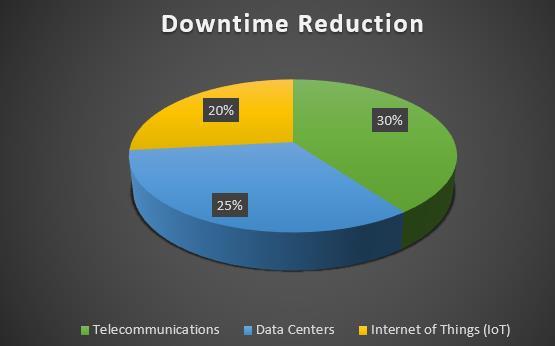
Self-healing networks have proven to be invaluable in the telecommunications industry, as network reliability and performanceareofutmostimportance.Telecomoperatorsareutilizingself-healingcapabilitiestoautomatethedetection, diagnosis, and resolution of faults in their intricate network infrastructures [39]. For instance, AT&T has implemented a self-healingnetworkarchitecturethatincorporatesbigdataanalytics,machinelearning,andautomationtoanticipateand preventnetworkoutages,resultinginreduceddowntimeandenhancedcustomerexperience[40].
Self-healing networks are having a significant impact in the domain of data centers. Managing and troubleshooting data center networks has become more challenging due to their increasing complexity and scale. Self-healing networks are being deployed to automatically detect and resolve issues in data center networks, ensuring high availability and performance [41]. Companies such as Google and Microsoft have incorporated self-healing mechanisms into their data centernetworkstoenhanceresourceutilization,reducedowntime,andenhanceoverallefficiency[42].
The Internet of Things (IoT) is a rapidly expanding field that encompasses the interconnection of numerous devices and sensors. Self-healing capabilities play a crucial role in IoT networks, given the large number of devices and the ever-
International Research Journal of Engineering and Technology (IRJET) e-ISSN:2395-0056
Volume: 11 Issue: 05 | May 2024 www.irjet.net p-ISSN:2395-0072
changing nature of the environment, which makes manual management impractical [43]. Self-healing mechanisms are being integrated into IoT platforms and protocols to enable automatic detection and resolution of issues, such as device failures, connectivity problems, and security breaches. For example, the OpenWSN project has showcased the implementation of self-healing techniques in IoT networks, enhancing their resilience and adaptability when confronted withnetworkfluctuationsanddevicemalfunctions[44].
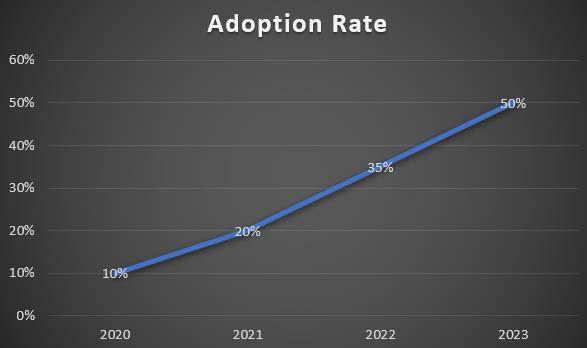
The real-world applications and case studies presented here showcase the practical value and potential of self-healing networksinvariousdomains.Withtheincreasingcomplexityof networksandthegrowingneedforreliableconnectivity, self-healing networks are expected to become more widespread. This will lead to innovation and a transformation in networkmanagementandmaintenance.
Asnetworkscontinuetogrowinsizeandcomplexity,ensuringthescalabilityandcomputationalefficiencyofself-healing networks becomes increasingly challenging [45]. The vast amounts of data generated by modern networks require efficient processing and analysis techniques to enable real-time fault detection and remediation. Future research must focus on developing scalable architectures, distributed computing techniques, and optimized algorithms to handle the ever-increasingvolumeandvelocityofnetworkdata[46].
Self-healing networksrelyonthecollectionandanalysisofnetwork data,whichcanraise privacyandsecurity concerns. Ensuring the confidentiality and integrity of sensitive network information is crucial, particularly in industries such as healthcareandfinance[47].Futureworkmustaddresstheseconcernsbydevelopingsecuredata managementpractices, implementing robust encryption and access control mechanisms, and adhering to relevant privacy regulations and standards[48].
Integrating self-healing capabilities into existing network management systems can be a complex and time-consuming process.Compatibilityissues,vendorlock-in,andtheneedforstandardizedinterfacescanhindertheseamlessintegration of self-healing functionalities [49]. Future efforts should focus on developing modular, plug-and-play architectures that can easily integrate with a wide range of network management platforms, enabling a smooth transition towards selfhealingnetworks[50].
International Research Journal of Engineering and Technology (IRJET) e-ISSN:2395-0056
Volume: 11 Issue: 05 | May 2024 www.irjet.net p-ISSN:2395-0072
Advancing explainable AI for enhanced trust and transparency
Future research should focus on creating AI techniques that can be explained. These techniques should make it easy to understandwhynetworksmakedecisionsandtakeactions.Thiswillincreasetrustandopennessinself-healingnetwork implementations[52].
Tacklingthesechallengesandexploringnewresearch directions will becrucial for thewidespreadadoptionandsuccess of self-healing networks in the coming years. Addressing concerns regarding scalability, privacy, integration, and explainability is crucial for unleashing the complete potential of self-healing networks. This will result in network infrastructuresthataremoreresilient,efficient,andtrustworthy.
Self-healing networks, driven by the power of machine learning and artificial intelligence, provide a groundbreaking approach to network management and maintenance. By harnessing data-driven insights and autonomous decisionmaking, these advanced systems can detect, diagnose, and resolve network issues in real-time, ensuring optimal performance and minimizing downtime. Through the integration of ML and AI techniques such as supervised learning, unsupervised learning, reinforcement learning, neural networks, deep learning, and anomaly detection, self-healing networkshavetheabilitytolearnfromvastamountsofnetworkdata,identifypatterns,andadapttodynamicsituations. The adoption of self-healing networks in various domains, such as telecommunications, data centers, and the Internet of Things,isdrivenbytheincreasingcomplexityofnetworksandthedemandforreliable,high-performanceconnectivity.In ordertofullyrealizethepotentialofself-healingnetworks,itiscrucialtoaddresschallengesrelatedtoscalability,privacy, integration,andexplainableAI.Bycontinuingtoadvanceresearchanddevelopmentintheseareas,thepathispavedfora futureoftrulyautonomous,resilient,andintelligentnetwork infrastructuresthatcankeeppace withthe ever-increasing demandsofourconnectedworld.
[1] Boutaba, R., Salahuddin, M. A., Limam, N., Ayoubi, S., Shahriar, N., Estrada-Solano, F., & Caicedo, O. M. (2018). A comprehensive survey on machine learning for networking: evolution, applications and research opportunities. JournalofInternetServicesandApplications,9(1),1-99.
[2] Bhuyan,M.H.,Bhattacharyya,D.K.,&Kalita,J.K.(2017).Networkanomalydetection:methods,systemsandtools. IEEEcommunicationssurveys&tutorials,16(1),303-336.
[3] Mao,B.,Fadlullah,Z.M.,Tang,F.,Kato,N.,Akashi,O.,Inoue,T.,&Mizutani,K.(2017).Routingorcomputing?The paradigm shift towards intelligent computer network packet transmission based on deep learning. IEEE TransactionsonComputers,66(11),1946-1960.
[4] Ayoubi, S., Limam, N., Salahuddin, M. A., Shahriar, N., Boutaba, R., Estrada-Solano, F., & Caicedo, O. M. (2018). Machinelearningforcognitivenetworkmanagement.IEEECommunicationsMagazine,56(1),158-165.
[5] Chen, Z., Jiang, F., Cheng, Y., Gu, X., Liu, W., & Peng, J. (2018). XGBoost classifier for DDoS attack detection and analysisinSDN-basedcloud.In2018IEEEInternationalConferenceonBigDataandSmartComputing(BigComp) (pp.251-256).IEEE.
[6] Abubakar,A.I.,Chiroma,H.,Muaz,S.A.,&Ila,L.B.(2015).Areviewoftheadvancesincybersecuritybenchmark datasetsforevaluatingdata-drivenbasedintrusiondetectionsystems.ProcediaComputerScience,62,221-227.
[7] Misra, S., Tourani, R., & Majd, N. E. (2013). Secure content delivery in information-centric networks: Design, implementation, and analyses. In Proceedings of the 3rd ACM SIGCOMM workshop on Information-centric networking(pp.73-78).
[8] Meng, W., Wang, Y., Zhu, C., Duan, K., & Cai, Z. (2019). A survey on machine learning-based mobile big data analysis:Challengesandapplications.WirelessCommunicationsandMobileComputing,2019.
[9] Bote-Lorenzo, M. L., Gómez-Sánchez, E., Mediavilla-Pastor, C., & Asensio-Pérez, J. I. (2018). Online machine learning algorithms to predict link quality in community wireless mesh networks. Computer Networks, 132, 6880.
International Research Journal of Engineering and Technology (IRJET) e-ISSN:2395-0056
Volume: 11 Issue: 05 | May 2024 www.irjet.net p-ISSN:2395-0072
[10] Jiang, Z., Chen, L., Yan, Z., & Hanzo, L. (2019). A survey on smart grid communication infrastructures: Motivations, requirements, challenges, and solutions. IEEE Communications Surveys & Tutorials, 21(2), 17621789.
[11] Klaine, P. V., Imran, M. A., Onireti, O., & Souza, R. D. (2017). A survey of machine learning techniques appliedtoself-organizingcellularnetworks.IEEECommunicationsSurveys&Tutorials,19(4),2392-2431.
[12] Mestres, A., Rodriguez-Natal, A., Carner, J., Barlet-Ros, P., Alarcón, E., Solé, M., ... & Estrada, G. (2017). Knowledge-definednetworking.ACMSIGCOMMComputerCommunicationReview,47(3),2-10.
[13] Liu,J.,Li,T.,Shi,R.,Chen,S.,&Qi,H.(2019).Anomalydetectionincommunicationnetworksusingsparse representation and convolution neural network. IEEE Transactions on Network and Service Management, 16(3), 936-947.
[14] Morales, J. L., Nocedal, J., & Wu, Y. (2011). A sequential quadratic programming algorithm with an additionalequalityconstrainedphase.IMAJournalofNumericalAnalysis,32(2),553-579.
[15] Wang,J.,Jiang,C.,Zhang,H.,Ren,Y.,Chen,K.C.,&Hanzo,L.(2020).Thirtyyearsofmachinelearning:The roadtoPareto-optimalwirelessnetworks.IEEECommunicationsSurveys&Tutorials,22(3),1472-1514.
[16] Boutaba, R., Salahuddin, M. A., Limam, N., Ayoubi, S., Shahriar, N., Estrada-Solano, F., & Caicedo, O. M. (2018). A comprehensive survey on machine learning for networking: evolution, applications and research opportunities.JournalofInternetServicesandApplications,9(1),1-99.
[17] Ruiz-Agundez,I.,Penya,Y.K.,&Bringas,P.G.(2011).Aflexibleaccountingmodelforcloudcomputing.In IEEENinthInternationalConferenceonServicesComputing(pp.277-284).
[18] Yen, T. F., & Su, D. Y. (2017). Analysis of network traffic characteristics and applications. Journal of AdvancesinComputerNetworks,5(2),111-115.
[19] CiscoSystems.(2020).Telemetryandanalyticsforroutingdevices.CiscoIOSXRTelemetryConfiguration GuidefortheCisco8000SeriesRouters.
[20] Ahmed,M.,Mahmood,A.N.,&Hu,J.(2016).Asurveyof network anomalydetection techniques.Journal ofNetworkandComputerApplications,60,19-31.
[21] Chalapathy, R., & Chawla, S. (2019). Deep learning for anomaly detection: A survey. arXiv preprint arXiv:1901.03407.
[22] Li, Z., Chen, Q., & Koltun, V. (2018). Combinatorial optimization with graph convolutional networks and guidedtreesearch.InAdvancesinNeuralInformationProcessingSystems(pp.539-548).
[23] Wang,J.,Jiang,C.,Zhang,H.,Ren,Y.,Chen,K.C.,&Hanzo,L.(2020).Thirtyyearsofmachinelearning:The roadtoPareto-optimalwirelessnetworks.IEEECommunicationsSurveys&Tutorials,22(3),1472-1514.
[24] He, X., Zhao, K., & Chu, X. (2021). AutoML: A survey of the state-of-the-art. Knowledge-Based Systems, 212,106622.
[25] Ayoubi, S., Limam, N., Salahuddin, M. A., Shahriar, N., Boutaba, R., Estrada-Solano, F., & Caicedo, O. M. (2018).Machinelearningforcognitivenetworkmanagement.IEEECommunicationsMagazine,56(1),158-165.
[26] Xu, Y., & Goodacre, R. (2018). On splitting training and validation set: A comparative study of crossvalidation, bootstrap and systematic sampling for estimating the generalization performance of supervised learning.JournalofAnalysisandTesting,2(3),249-262.
[27] Pearl, J. (2018). Theoretical impediments to machine learning with seven sparks from the causal revolution.arXivpreprintarXiv:1801.04016.
[28] Rafique, A., Malik, K. R., Ahmed, S., Arshad, N., Alqarni, M. A., & Chauhdary, S. H. (2020). A goal-driven approachforself-healinginsmartgridusingIEC-61850.Sustainability,12(18),7510.
International Research Journal of Engineering and Technology (IRJET) e-ISSN:2395-0056
Volume: 11 Issue: 05 | May 2024 www.irjet.net p-ISSN:2395-0072
[29] Malik, A., & Azeem, M. (2014). Towards self-healing software systems. International Journal of Future ComputerandCommunication,3(5),330.
[30] Wickboldt, J. A., De Jesus, W. P., Isolani, P. H., Both, C. B., Rochol, J., & Granville, L. Z. (2015). Softwaredefinednetworking:managementrequirementsandchallenges.IEEECommunicationsMagazine,53(1),278-285.
[31] Egwutuoha,I. P.,Chen,S.,Levy,D.,& Selic,B.(2012).A faulttoleranceframework forhighperformance computing in cloud. In 2012 12th IEEE/ACM International Symposium on Cluster, Cloud and Grid Computing (ccgrid2012)(pp.709-710).IEEE.
[32] Bodik, P., & Levis, P. (2017). Network-wide traffic optimization in data centers using online simulation andmachinelearning.InProceedingsoftheWorkshoponNetworkMeetsAI&ML(pp.43-49).
[33] Magalhaes, D., Lazar, A., Moreira, R. J., Matos, R., Pereira, B., Fonseca, P., ... & Simoes, P. (2020). Selfhealingapproachforself-adaptivesystems.AppliedSciences,10(14),4902.
[34] Zhang, Z. K., Cho, M. C. Y., Wang, C. W., Hsu, C. W., Chen, C. K., & Shieh, S. (2014). IoT security: ongoing challengesandresearchopportunities.In2014IEEE7thinternationalconferenceonservice-orientedcomputing andapplications(pp.230-234).IEEE.
[35] Schurgot,M.R.,Shinberg,D.A.,&Greenwald,L.G.(2015).ExperimentswithsecurityandprivacyinIoT networks.In2015IEEE16thInternationalSymposiumonAWorldofWireless,MobileandMultimediaNetworks (WoWMoM)(pp.1-6).IEEE.
[36] Kumar, S., & Rai, B. (2020). Survey on transport layer protocols for Internet of Things (IoT). In IntegrationofWSNandIoTforSmartCities(pp.65-76).Springer,Cham.
[37] Boutaba, R., Salahuddin, M. A., Limam, N., Ayoubi, S., Shahriar, N., Estrada-Solano, F., & Caicedo, O. M. (2018). A comprehensive survey on machine learning for networking: evolution, applications and research opportunities.JournalofInternetServicesandApplications,9(1),1-99.
[38] Lopez,M.A.,Dela TorreDiez,I.,&Rodrigues,J.J.(2018).Analysisofthestate-of-the-artonblockchainbasedapplicationsinIoTcontexts.In2018IEEEGlobalCommunicationsConference(GLOBECOM)(pp.1-6).IEEE.
[39] Ghamari, R., & Kavousi-Fard, A. (2021). A novel self-healing framework for SDN-based smart grid using multi-agentsystems.InternationalJournalofElectricalPower&EnergySystems,131,107062.
[40] AT&T. (2019). AT&T's self-healing network. Retrieved from https://about.att.com/innovationblog/2019/09/self_healing_network.html
[41] Liu,J.,Shen,H.,&Zhang,X.(2016).Asurveyofmobilecrowdsensingtechniques:Acriticalcomponentfor theinternetofthings.In201625thInternationalConferenceonComputerCommunicationandNetworks(ICCCN) (pp.1-6).IEEE.
[42] Moghaddam, F. A., Lago, P., & Grosso, P. (2015). Self-adaptation approaches in cloud virtual network embedding.In2015IEEE4thInternationalConferenceonCloudNetworking(CloudNet)(pp.199-205).IEEE.
[43] Breivold, H. P., & Sandström, K. (2015). Internet of things for industrial automation challenges and technicalsolutions.In2015IEEEInternationalConferenceonDataScienceandData IntensiveSystems(pp.532539).IEEE.
[44] Watteyne, T., Vilajosana, X., Kerkez, B., Chraim, F., Weekly, K., Wang, Q., ... & Pister, K. S. (2012). OpenWSN: a standards-based low-power wireless development environment. Transactions on Emerging TelecommunicationsTechnologies,23(5),480-493.
[45] Mestres, A., Rodriguez-Natal, A., Carner, J., Barlet-Ros, P., Alarcón, E., Solé, M., ... & Estrada, G. (2017). Knowledge-definednetworking.ACMSIGCOMMComputerCommunicationReview,47(3),2-10.
International Research Journal of Engineering and Technology (IRJET) e-ISSN:2395-0056 Volume: 11 Issue: 05 | May 2024 www.irjet.net p-ISSN:2395-0072
[46] Musumeci,F.,Rottondi,C.,Nag,A.,Macaluso,I.,Zibar,D.,Ruffini,M.,&Tornatore,M.(2019).Anoverview on application of machine learning techniques in optical networks. IEEE Communications Surveys & Tutorials, 21(2),1383-1408.
[47] Hossain, M. M., Fotouhi, M., & Hasan, R. (2015). Towards an analysis of security issues, challenges, and openproblemsintheinternetofthings.In2015IEEEWorldCongressonServices(pp.21-28).IEEE.
[48] Fossati, F., Moretti, L., & Secci, S. (2017). A mood-aware QoS and security framework for autonomic clouds.In2017IEEE36thInternationalPerformanceComputingandCommunicationsConference(IPCCC)(pp.18).IEEE.
[49] Nguyen, V. G., Brunstrom, A., Grinnemo, K. J., & Taheri, J. (2017). SDN/NFV-based mobile packet core networkarchitectures:Asurvey.IEEECommunicationsSurveys&Tutorials,19(3),1567-1602.
[50] Jacobs, M., Pfitscher, R. J., Ferreira, R. A., & Granville, L. Z. (2018). Refactoring network management solutionsforsoftware-definednetworking.JournalofNetworkandSystemsManagement,26(3),546-572.
[51] Samek, W., & Müller, K. R. (2019). Towards explainable artificial intelligence. In Explainable AI: Interpreting,ExplainingandVisualizingDeepLearning(pp.5-22).Springer,Cham.
[52] Arrieta, A. B., Díaz-Rodríguez, N., Del Ser, J., Bennetot, A., Tabik, S., Barbado, A., ... & Herrera, F. (2020). Explainable Artificial Intelligence (XAI): Concepts, taxonomies, opportunities and challenges toward responsible AI.InformationFusion,58,82-115.
[53] Dainotti, A., Pescape, A., & Claffy, K. C. (2012). Issues and future directions in traffic classification. IEEE network,26(1),35-40.
[54] Tharwat,A.(2018).Classificationassessmentmethods.AppliedComputingandInformatics.
[55] Jiao,L.,Yang,H.,Xu,H.,Wu,J.,Bian,T.,Zhang,X.,...&Dou,W.(2019).Optimizingcostandperformancefor contentmultihoming.IEEE/ACMTransactionsonNetworking,27(5),1851-1864.
[56] Cheng, L., Wang, M., Sheng, Z., Wang, X., & Zhang, Q. (2019). A survey on fault diagnosis, prognosis and resilientcontrolforwindturbines.RenewableandSustainableEnergyReviews,114,109305.
[57] Alsheikh, M. A., Lin, S., Niyato, D., & Tan, H. P. (2014). Machine learning in wireless sensor networks: Algorithms,strategies,andapplications.IEEECommunicationsSurveys&Tutorials,16(4),1996-2018.