
International Research Journal of Engineering and Technology (IRJET) e-ISSN: 2395-0056
Volume: 11 Issue: 05 | May 2024 www.irjet.net p-ISSN: 2395-0072
International Research Journal of Engineering and Technology (IRJET) e-ISSN: 2395-0056
Volume: 11 Issue: 05 | May 2024 www.irjet.net p-ISSN: 2395-0072
Miss. Patil Vidya Hindurao1 , Mr. Nadaf Nihal Muner2 , Miss. Patil Rutuja Dilip3 , Mr. KumarSagar M. Dange4
*1,2,3 B. Tech Student, Dept of Electronics and Telecommunication Engineering , Nanasaheb Mahadik College of Engineering, Peth, Maharashtra, India
*4 Professor, Mr. KumarSagar M. Dange Dept of Electronics and Telecommunication Engineering , Nanasaheb Mahadik College of Engineering, Peth, Maharashtra, India
Abstract - Fire detection and its blow out is a dangerous job. It can put the life of a fire fighter at risk. In many fire accidents fire fighters are losing their lives every year throughout the world. To avoid these conflicts research and development in Artificial Intelligence gives rise to robotics. These robots are designed to be used in extreme conditions where human interruption become less, and robots are using for various work. We will using this implemented robot to assist fire fighters and to reduce the risk of their lives.
Key Words: IOT (Internet Of Things) , Node MCU (ESP8266), IORT (Internet Of Robotic Things), Flame+Sensor ,Motor Driver IC, Servo Motor
TheIoTbasedfireextinguishingrobotthatdetectsfire.Now adays,safetyfromfireisalsoimportantaspectthatwehave to concern about. Because fire fighters have to face some problemswhilefireextinguishinglikeitmaybedangerous to their lives and they have to work in some unfriendly environments like high temperature, explosions and collapsed buildings also. Thus, it is necessary to replace human with machines like robots that detect fire automaticallybyavoidingobstacles.So,itwouldsavehuman lives and heavy losses also. An Autonomous fire extinguishing robot has been developed to extinguish the fire by navigating the arena and avoiding obstacles. The robot also provides external communications by sending SMS.InternetofRoboticThingsisarecentlydevelopedfield which mainly focuses on machine intelligence framework based on IoT and Robotics. In IoT, the intelligent agents monitor the activities and integrate the data from the sensorstodeterminethefinestcourseofaction.Fusionof advancedInternetofThingsandRobotictechnologiesgives rise to Internet of Robotic Things. The overall system architecture of IoT is divided into 5 layers namely the hardware/robotic things layer, the hardware layer, the internetlayer,infrastructurelayerandapplicationlayer.The aimoftheproposedsystemistocontroltherobotthrough anandroidapplication.Therobotwillbepatrollingthrough prescribed area. Such robot will be easier and effective replacementforthefiremen.Therobotwillworkfasterthan the firemen, so it will be timesaving. Android operating systemsareportable,andtheyhavemanyfeatures.So,we willbedevelopinganandroidapplicationthroughwhichwe
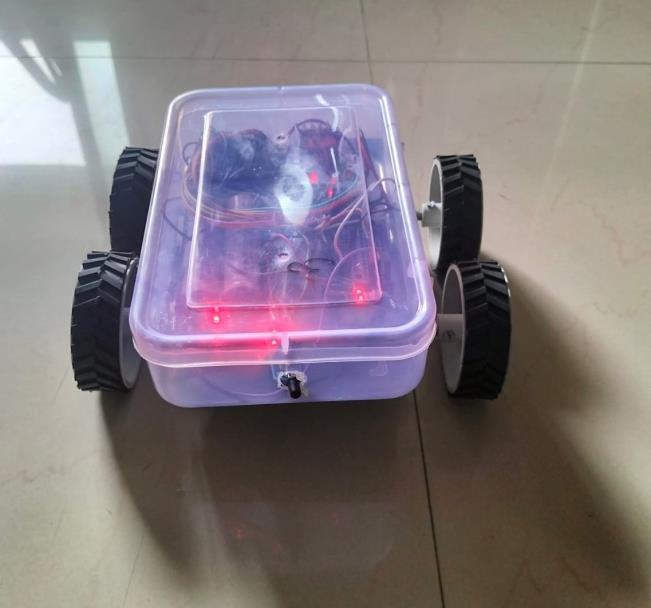
will control the robot. The objective of the system is to performfireextinguishingtask.Therobotwillbeconsisting of different sensors, node MCU and water pump and CO2 pump.
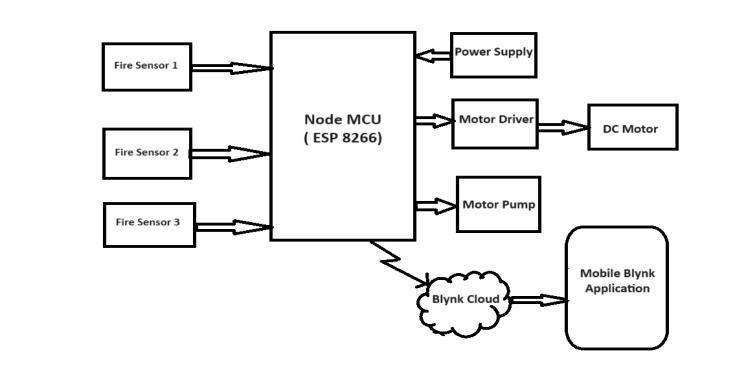
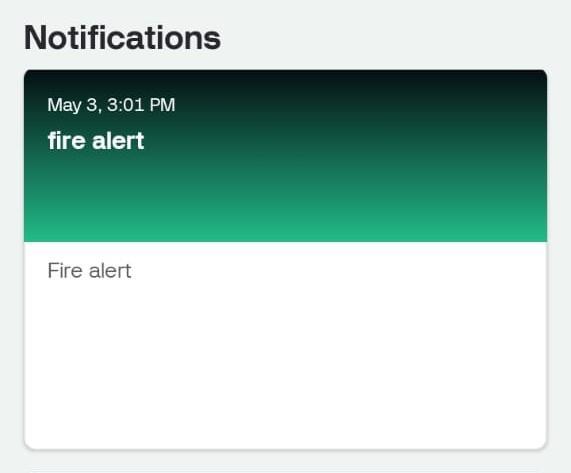
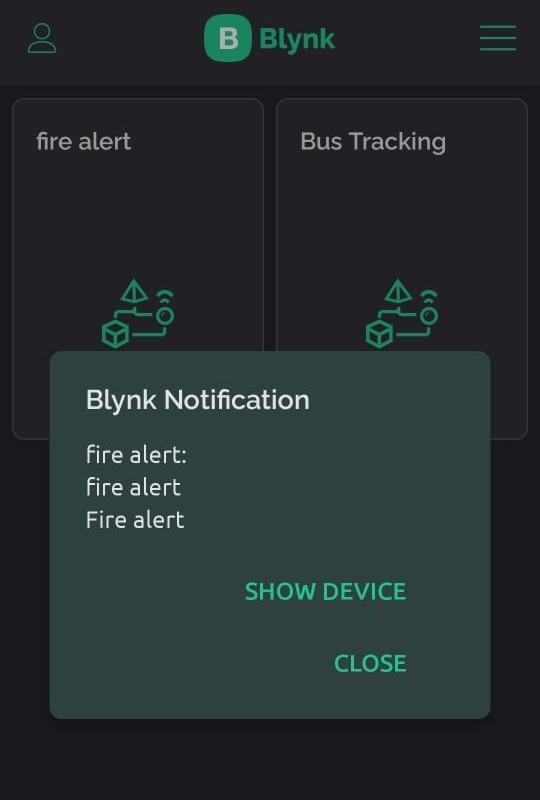
ThedesignconsistsofarrayofsensorsandNodeMCU.The firefighting robot is connected with Node MCU through wirelessmedium.Ifanodedetectsfire,itwillnotifythatto the central Node MCU. Central Node MCU will sends information to fire safety officers and initiate robot to perform Firefighting actions and start the pump to extinguish the fire. At the receiving end, two motors are interfacetotheL293DMotordriver.Thesetwomotorsare used for the movement of the robot in various directions. Batteryisusedtosupplythepower.Thestoragesystemis usedtostorethevaluesofthegraphanalyzedbythesensors. The Node MCU will get all the values from the various sensors and will give commands to the robot to start the pump.
theyhavebeendefinedintheabstract.Abbreviationssuchas IEEE,SI,MKS,CGS,sc,dc,andrmsdonothavetobedefined. Donotuseabbreviationsinthetitleorheadsunlesstheyare unavoidable.
3.1 Component list
▪NodeMCU
▪Flamesensor
Volume: 11 Issue: 05 | May 2024 www.irjet.net p-ISSN: 2395-0072
▪Motordriver
▪DCmotor
▪12vliionbattery
▪Waterpump
▪Servomotor
▪DCfemalejackconnector
3.2 Component Description
3.2.1 Node MCU (ESP8266):
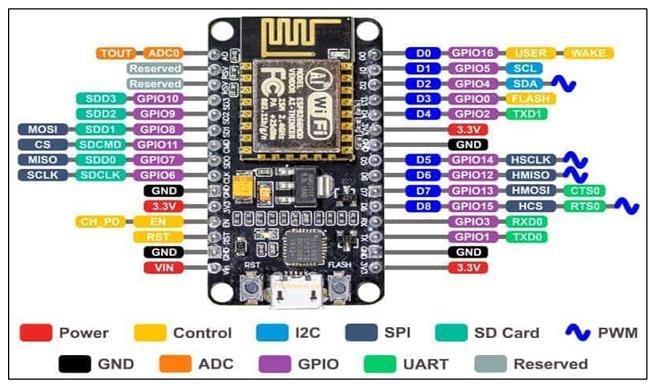
The NodeMCU (Node Microcontroller Unit) is an opensource software and hardware development environment builtaroundaninexpensiveSystem-on-a-Chip(SoC)called theESP8266.TheESP8266,designedandmanufacturedby Expressive Systems, contains the crucial elements of a computer:CPU,RAM,networking(WiFi),andevenamodern operatingsystemandSDK.Thatmakesitanexcellentchoice forInternetofThings(IoT)projectsofallkinds.
However,asachip,theESP8266isalsohardtoaccessand use. You must solder wires, with the appropriate analog voltage,toitspinsforthesimplesttaskssuchaspoweringit onorsendingakeystroketothe“computer”onthechip.You also have to program it in low-level machine instructions thatcanbeinterpretedbythechiphardware.Thislevelof integration is not a problem using the ESP8266 as an embeddedcontrollerchipinmass-producedelectronics.Itis ahugeburdenforhobbyists,hackers,orstudentswhowant toexperimentwithitintheirownIoTprojects.
But, what about Arduino? The Arduino project created an open-source hardware design and software SDK for their versatile IoT controller. Similar to NodeMCU, the Arduino hardwareisamicrocontrollerboardwithaUSBconnector, LEDlights,andstandarddatapins.Italsodefinesstandard interfaces to interact with sensors or other boards. But unlikeNodeMCU,theArduinoboardcanhavedifferenttypes of CPU chips (typically an ARM or Intel x86 chip) with memorychips,andavarietyofprogrammingenvironments. ThereisanArduinoreferencedesignfortheESP8266chip as well. However, the flexibility of Arduino also means significantvariationsacrossdifferentvendors.Forexample, most Arduino boards do not have WiFi capabilities, and someevenhaveaserialdataportinsteadofaUSBport.
3.2.2 Flame Sensor:
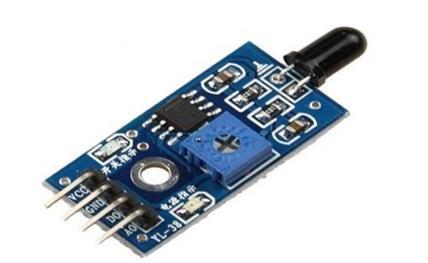
Asensorwhichismostsensitivetoanormallightisknown asaflamesensor.That’swhythissensormoduleisusedin flame alarms. This sensor detects flame otherwise wavelengthwithintherangeof760nm–1100nmfromthe light source. This sensor can be easily damaged to high temperature. So, this sensor can be placed at a certain distance from the flame. The flame detection can be done froma100cmdistance,andthedetection7anglewillbe600. Theoutputofthissensorisananalogsignalordigitalsignal. These sensors are used in firefighting robots as a flame alarm.
A flame-sensor is one kind of detector which is mainly designed for detecting as well as responding to the occurrenceofafireorflame.Theflamedetectionresponse can depend on its fitting. It includes an alarm system, a naturalgasline,propane&afiresuppressionsystem.This sensorisusedinindustrialboilers.Themainfunctionofthis is to give authentication whether the boiler is properly workingor not. The responseof thesesensorsisfaster as wellasmoreaccuratecomparewithaheat/smokedetector becauseofitsmechanismwhiledetectingtheflame.
Thissensor/detectorcanbebuiltwithanelectroniccircuit usingareceiverlikeelectromagneticradiation.Thissensor uses the infrared flame flash method, which allows the sensortoworkthroughacoatingofoil,dust,watervapor, otherwiseice.
The pin configuration of this sensor is shown below. It includes four pins which include the following. When this moduleworkswithamicrocontrollerunitthenthepinsare
International Research Journal of Engineering and Technology (IRJET) e-ISSN: 2395-0056
Volume: 11 Issue: 05 | May 2024 www.irjet.net p-ISSN: 2395-0072
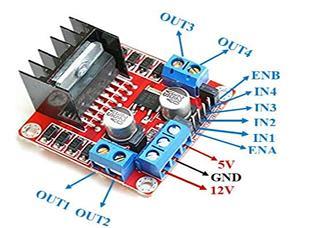
3.2.3 Motor DriverL239D):
L293DisadualH-bridgemotordriverintegratedcircuit(IC). Motordriversactascurrentamplifierssincetheytakealowcurrentcontrolsignalandprovideahigher-currentsignal. Thishighercurrentsignalisusedtodrivethemotors.L293D containstwoinbuiltH-bridgedrivercircuits.Initscommon mode of operation, two DC motors can be driven simultaneously,bothinforwardandreversedirection.The motoroperationsoftwomotorscanbecontrolledbyinput logicatpins2&7and10&15.Inputlogic00or11willstop thecorresponding motor.Logic01and10 will rotateit in clockwiseandanticlockwisedirections,respectively.Enable pins1and9(correspondingtothetwomotors)mustbehigh formotorstostartoperating.9Whenanenableinputishigh, theassociateddrivergetsenabled.Asaresult,theoutputs becomeactiveandworkinphasewiththeirinputs.Similarly, when the enable input is low, that driver is disabled, and theiroutputsareoffandinthehigh-impedancestate.They are designed to drive inductive loads such as relays, solenoids,dcandbipolarsteppingmotors,aswellastheir high-current/high-voltage loads in positive-supply applications.
3.2.4 DC Motor:
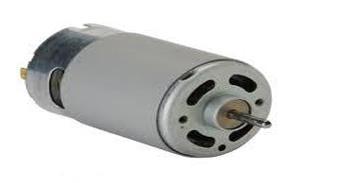
It is a Special type of DC Motor that runs on a 12-volt DC Supply. It is a general-purpose DC motor. Most of the household electronics machine consists of a 12-volt dc motor.Thecurrentratingofthismotordependsontheload of the motor. The speed of DC motors is specified in RevolutionPerMeter(RPM).
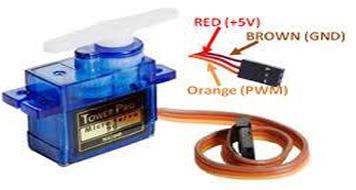
The Servo Motor SG-90 (SG90) is a small and affordable servomotorwidelyusedinvariousapplicationsthatrequire precise control over angular motion. Despite its compact size, it offers impressive performance and Fig 6: Servo Motor(SG90)11versatility.Withanoperatingvoltagerange typically between 4.8V to 6V, it can be easily powered by commonpowersources.TheSG90servomotorisdesigned to rotate within a range of approximately 180 degrees, providing a wide range of motion for controlling mechanisms. Its built-in gear mechanism ensures smooth and precise motion, allowing for accurate positioning of objectsorcomponents.Thismakesitidealforapplications that require precise control, suchas robotics, RC vehicles, andpan-tiltcamerasystems.
International Research Journal of Engineering and Technology (IRJET) e-ISSN: 2395-0056
Volume: 11 Issue: 05 | May 2024 www.irjet.net p-ISSN: 2395-0072
5.
ThisfireextinguishingrobotusingIoTisIntroducedtohelp fire men to avoid the Risk situations. This proposed work PresentsanoutlineaboutthefireExtinguishingrobotusing IoT and also Gives objectives and advantages of the Proposedsystem.ItprovidesbetterFeaturesthatmakeita morepracticallyUsablerobotinreal time. Byintroducing
ThissysteminindustriesandotherFactories,fireaccident ratescanbedecreased.
❖ RevolutionizingFireSafety:AFuturisticOutlookonIoTEnabled Autonomous Fire Extinguishing Robots with AndroidControlInterface.
❖ Innovative Solutions for Tomorrow: Harnessing the Power of Internet of Robotic Things (IoRT) in Fire Safety throughIntelligent,AutonomousFireExtinguishingRobots.
❖ SmartFireDefense:UnveilingthePotentialofAndroidControlledIoTFireExtinguishingRobotsforRapidandRiskFreeEmergencyResponse.
❖ Beyond Boundaries: A Glimpse into the Future of Fire SafetywithCutting-EdgeInternetofRoboticThings(IoRT) TechnologyandAndroidInterfaceIntegration.
[1]VipulAgrawal,AnoopKini.“Design&Developmentofan IoTbasedFirefightingRobotusingArduino”International Journal for Research in Applied Science & Engineering Technology(IJRASET).2019.paperID:IJRASET21196ISSN No.:2321-9653
[2]E.V.Sivakumar, P.Manoj, S.Punithadevi, S.Sherlin Sylvia, M.Thangaraj(2016). “Voice Controlled Intelligent Fire ExtinguisherRobot”IJSART–2016.
[3]Megha Kanwar1, Agilandeeswari L. “IOT Based Fire Fighting Robot”, 978-1-5386-4692-2/18/$31.00 ©2018 IEEE.2018.
[4]Anjitha Krishnan,Athira Paul,FathimaShermin,Merlin Jose, Merin Skariah. “Implementation of GSM Based Fire Fighting Robot” ,International Journal of Innovative Research in Computer and Communication Engineering. 2017.
[5]LakshayArora,Prof.AmolJoglekar“CellPhoneControlled Robot with Fire Detection Sensors’ ,Lakshay Arora et al, / (IJCSIT) International Journal of Computer Science and InformationTechnologies.2015.6(3):2954-2958p.
[6]R.Karthik, M.Karthikeyan, D.Manoj Kumar, T.Divagar “VoiceOperatedIntelligentFireExtinguishingVehicle”,5th International Conference on Advanced Computing & communicationSystems(ICACCS).2019.
[7]Saini, R., & Gupta, A. (2020). "A Review on IoT Based Firefighting Robot: Challenges and Opportunities". International Journal of Advanced Research in Computer Science and Software Engineering, 10(3), 233-237. ISSN: 2277-128X.
2024, IRJET | Impact Factor value: 8.226 | ISO 9001:2008 Certified Journal | Page1980
International Research Journal of Engineering and Technology (IRJET) e-ISSN: 2395-0056
Volume: 11 Issue: 05 | May 2024 www.irjet.net p-ISSN: 2395-0072
[8]Mishra, A., & Tiwari, P. (2018). "IoT based Firefighting Robot: A Review". International Journal of Advanced ResearchinComputerScience,9(3),411-415.ISSN:09765697.
[9]Singh,G.,&Sharma,R.(2019)."DesignandDevelopment ofIoTBasedFirefightingRobotforIndustrialApplications". International Journal of Computer Science and Mobile Computing,8(7),60-65.ISSN:2320-088X.
[10]Patel,N.,&Patel,S.(2017)."AReview:IoTBasedFire FightingRobot".InternationalJournalofComputerScience TrendsandTechnology,5(4),162-166.ISSN:2347-8578.
BIOGRAPHIES

Miss. Vidya H. Patil FinalYearB-tech student in the Electronics and Telecommunication Engineering at Nanasaheb Mahadik College of Engineering,Peth,Maharashtra,India

Mr. Nihal M. Nadaf FinalYearB-tech student in the Electronics and Telecommunication Engineering at Nanasaheb Mahadik College of Engineering,Peth,Maharashtra,India

Miss. Rutuja D. Patil Final Year Btech student in the Electronics and Telecommunication Engineering at Nanasaheb Mahadik College of Engineering,Peth,Maharashtra,India

Prof. Mr. Kumarsagar M. Dange Currently working as an HOD in the Electronics and Telecommunication Engineering at Nanasaheb Mahadik College of Engineering, Peth, Maharashtra,India