
International Research Journal of Engineering and Technology (IRJET) e-ISSN: 2395-0056
Volume: 11 Issue: 05 | May 2024 www.irjet.net p-ISSN: 2395-0072

International Research Journal of Engineering and Technology (IRJET) e-ISSN: 2395-0056
Volume: 11 Issue: 05 | May 2024 www.irjet.net p-ISSN: 2395-0072
Charan S1 , Pravin P2 , Logashwaran B3 , Logeswaran P4, Midhun K5, Pavanan B6
1,2,3,4,5Student, Department of Mechanical Engineering, Rajiv Gandhi College Of Engineering And Technology, Puducherry, India.
6Assistant Professor, Department of Mechanical Engineering, Rajiv Gandhi College Of Engineering And Technology, Puducherry, India. ***
Abstract - The project aims to innovate bicycle drivetrain systems by integrating a shaft-driven mechanism with a 3speed gearbox, addressing challenges like maintenance and limited gear range in traditional chain-based systems. It involves designing, fabricating, and testing a prototype, emphasizing optimized gear ratios and durability. Fabrication includes cutting, welding, machining, and assembly, ensuring precision and compatibility. Rigorous quality control measures are implemented. Testing evaluates performance under realworld conditions, focusing on efficiency and durability. The project contributes to advancing bicycle drivetrain technology, with potential applications in commuter and urban cycling for sustainability and performance enhancement
Key Words: Drivetrainsystems,3speedGearbox,Design, Fabrication,Testing,Efficiencyenhancement
1.1
The pedaling motion initiation begins with the rider applying force to the pedals, transmitting it through the crankset,whichconsistsofoneormorecranksattachedto thepedals.Insteadofdirectlyconnectingtotherearwheel, some bicycles utilize a shaft-driven system for power transmission. This system employs a shaft, a long rotating rod,totransmittorquefromonepointtoanother.Nearthe crankset, a bevel gear is attached to the end of the shaft, transferring motion. This bevel gear meshes with another attachedtotheendofthecrankset,formingabevelgearpair thattransfersthetorquefrompedalingtotheshaft.Asthe ridercontinuestopedal,thetorqueappliedtothecranksetis transmitted to the shaft through the meshing bevel gears, causing the shaft to rotate. At the other end of the shaft, anotherbevel gearisattached,whichmesheswitha bevel gearmountedonthehuboftherearwheel.Consequently,as theshaftrotatesduetopedaling,torqueistransferredtothe rear wheel hub's bevel gear, propelling the rear wheel forward.Thespeedandforceoftherider'spedalinginfluence thespeedandpowertransmittedtotherearwheel,thereby determiningthebicycle'sspeed
Gearboxesarecrucialinmechanicalsystems,adjusting shaftspeedandtorqueforvariedapplications.Theyenable power transmission and control in industries like automotiveandrobotics.Typesincludespur,helical,bevel, andwormgears,eachservingspecificpurposes.Planetary gearboxes stand out for compactness and high torque. Efficiencyiskey,achievedthroughprecisionmanufacturing and lubrication. Gearboxes play an indispensable role in advancing technology and innovation by optimizing performanceacrossdiverseapplicationsInthisproject,we focus on the constant mesh gearbox, exploring its design principles, operational characteristics, and applications alongsidesynchronousmesh,planetarygearbox,andsliding mesh types. Understanding these gearbox mechanisms is crucialforoptimizingperformanceinvariousapplications.
Computer-Aided Design (CAD) software is utilized by engineers, architects, and designers to create precise technical drawings and 3D models of physical objects or structures. It enables design, visualization, analysis, and documentationwithefficiencyandaccuracy,servingasan indispensable tool across industries like manufacturing, construction,automotive,andaerospace.CADsoftwarehas evolvedfrom2Ddraftingtoolsinthe1960stoincorporate advanced 3D modelling, simulation, and collaboration features. Initially requiring mainframe computers, CAD is nowaccessibleondesktops,laptops,andmobiledevices.Key featuresincludedrawingtoolsforprecise2Ddrawings,3D modelling capabilities for virtual representations, parametric design for defining geometric relationships, assembly design for complex products, simulation and analysis for assessing performance, documentation and annotation for detailed communication, and collaboration andsharingfeaturesforremoteteamworkanddataaccess
International Research Journal of Engineering and Technology (IRJET) e-ISSN: 2395-0056
Volume: 11 Issue: 05 | May 2024 www.irjet.net p-ISSN: 2395-0072
1. Utilize computer-aided design (CAD) software to designbevelgearsandshaft,adheringtoestablished engineering principles for making of shaft drive system
2. FollowedbyDesigninggearboxusingCADsoftware and engineering principles outlined in relevant machinedesigntextbooks
3. Conductmaterialselectionforgears,enclosuresand shaftbasedoncriteriasuchasmachinability,costeffectiveness,compatibility,andperformance.
4. Executing fabrication processes which includes machining,cutting,welding,andsurfacefinishinginhouse, while outsourcing gears fabrication to specializedmanufacturers.Assembleandintegrate shaftdrivesystemandgearboxontothebicycle.
5. Assemblingthepartsgatheredfrommanufacturers ontothecycletocompletetheproject
6. Choose appropriate lubricants such as grease and gearoilconsideringfactorslikeviscosity,anti-wear additives, and operating conditions for efficient transmissionbeforetestingandevaluation.
Leveragingcomputer-aideddesign(CAD)software,theteam meticulouslydrafteddetailedplansforthebevelgearsand shaft,adheringcloselytoestablishedengineeringprinciples andmethodologiesoutlinedinauthoritativetextssuchas"A TextbookofMachineDesign"byR.S.Khurmi&J.K.Gupta. Factors such as gear geometry, tooth profiles, and shaft dimensions were carefully optimized to ensure optimal performance,efficiency,andcompatibilitywiththebicycle's frameandothercomponents.Materialselectionforboththe gearsandshaftwasconductedwithprecision,considering critical criteria such as machinability, cost-effectiveness, strength,andcompatibilitywithlubricants.Throughiterative refinementandsimulation,thedesignevolvedintoarobust andcompactconfiguration,poisedtodeliverenhancedspeed, performance,anddurabilitywhilemaintainingcompatibility with the rider's input power. Throughout the process, meticulous attention to detail and rigorous adherence to engineeringstandardsensuredthesuccessfulrealizationofa highly efficient shaft drive system tailored to meet the project'sobjectivesandperformancecriteria.
The final outputs of the components of shaft drive system wereaddedbelow,Withtheoutputimagesattachedbelow, weoffertransparentinsightintotheintricaciesofourdesign.


International Research Journal of Engineering and Technology (IRJET) e-ISSN: 2395-0056
Volume: 11 Issue: 05 | May 2024 www.irjet.net p-ISSN: 2395-0072
Gearboxes play a vital role in mechanical systems, enablingpowertransmissionandspeedcontrolbymodifying the relationship between input and output shafts. Understanding different gearbox types is crucial for optimizingperformanceindiverseapplications.Thisanalysis exploresfourprominentgearboxvarieties:ConstantMesh, Synchronous Mesh, Epicyclic, and Sliding Mesh. Constant Meshgearboxesmaintainallgearsinconstantengagement, adhering closely to established engineering principles and methodologies outlined in authoritative texts such as "A TextbookofMachineDesign"byR.S.Khurmi&J.K.Gupta. Factors such as gear geometry, tooth profiles, and shaft dimensions were carefully optimized to ensure optimal performance,efficiency,andcompatibilitywiththebicycle's frameandothercomponents.CADfacilitatedtheexploration ofvariousdesigniterationsandconfigurations,allowingfor seamlessintegrationofgears,shafts,bearings,andhousing components. By harnessing the power of CAD, the design teamcouldsimulatetheoperationofdifferentgearboxtypes, analysestresspoints,andoptimizeperformanceparameters. Thisdigitalapproachnotonlyexpeditedthedesignprocess butalsoenhancedaccuracyandreliability,ultimatelyleading tothecreationofahighlyefficientandrobustgearboxsystem tailoredtomeettheproject'sobjectives.Thefinaloutputsof the components of shaft drive system were added below, Withtheoutputimagesattachedbelow,


Selectingtheappropriatematerialsforbevelgear,shaftand gearbox components is a crucial step in ensuring the performance,durability,andreliabilityofthesystem.Factors such as mechanical properties, operating conditions, environmental considerations, cost constraints, and manufacturingfeasibilityplaypivotalrolesinthisdecisionmakingprocess.Collaborationwithmaterialsengineersor specialistsisoftensoughttonavigatethesecomplexitiesand identifytheoptimalmaterialoptionsforgearsandshafts. Thematerialsweselectedfortheprojectweregiveninthe belowtable,
Table -1: MaterialSelectionforComponents
MaterialsUsed
SpurGear(Gearbox)
Shaft(Gearbox)
Alloysteelgrade34CrNiMo6
Alloysteelgrade34CrNiMo6
BevelGear(Shaftdrive) C45(carbonsteel)
Shaft(Shaftdrive) C45(carbonsteel)
Theassemblyprocessesforgearboxcomponentstypically involveseveralkeystepstoensureproperfit,alignment,and functionality.First,theindividualgearsandshafts,typically made from high-strength steel alloys like AISI 4340 or similarEuropeangradessuchas34CrNiMo6,arecarefully inspected and prepared for assembly. Next, the gears are mountedontotheshaftsusingprecisemachiningtechniques orkeywaystoensuresecureattachment.Bearingsarethen installedontotheshaftstosupportsmoothrotationwithin thegearboxhousing.Thegearboxhousing,oftenmadefrom cast iron or aluminum alloys, provides structural support and protection for the internal components. Finally, the assembled gears, shafts, bearings, and housing are meticulouslyalignedandsecuredtogetherusingfastenersor welding techniques to complete the gearbox assembly. Throughout the assembly process, attention to detail and adherence to engineering standards are paramount to ensurethereliabilityandperformanceofthegearboxinits intendedapplication
Theassemblyof a shaftdrivesysteminvolvesseveral key steps, beginning with the preparation of the gear blank throughmillingoperations.Initially,blankingoperationsare conductedtoremove excess material,machinethepartto printspecifications,andleaveadequatemachiningstockfor finishingoperations.Oncethegearblankisprepared,milling machines are utilized for various machining tasks. Face millingisemployedtoshapetheconicalsurfaceofthegear,
International
Volume: 11 Issue: 05 | May 2024 www.irjet.net p-ISSN: 2395-0072
utilizing a face milling cutter tilted at the desired angle. Subsequently,gearteetharemachinedusingamillingcutter toremovematerialandachievethedesiredshape.Afterthis, theshaftismachinedusingalathemachine,withoperations suchaspartingoff,facing,andturning.Finally,keywaysare createdonboththeshaftandpiniongeartoensureproper alignment and synchronization. The assembly process involvesinsertingthekeyintothekeyway,facilitatingasnug fitbetweentheshaftandgear,therebyensuringtheyrotate togetherseamlessly.
Thefollowingfinaloutputimageshowcasestheculmination of our project: a shaft-driven bicycle featuring a 3-speed gearbox.Thisinnovativedesignrepresentsaleapforwardin bicycle technology, offering smoother rides and enhanced durability.Theimagehighlightsthesleekintegrationofthe gearboxintotheframe,symbolizingourteam'sdedicationto pushingtheboundariesoftraditionalbicycledesign


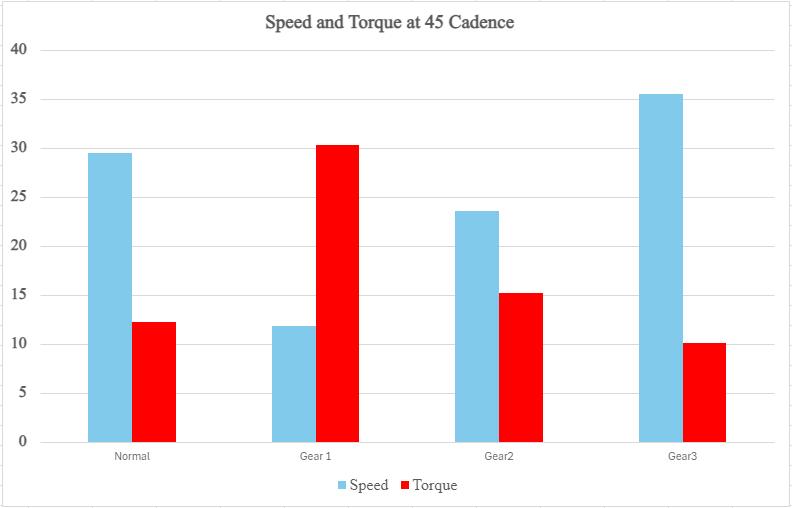
Followingthemeticulousdesignandfabricationphases,the shaft-drivenbicyclewiththeincorporated3-speedgearbox underwentcomprehensivetestingprocedurestoevaluateits performance,durability,anduserexperienceacrossvarious riding conditions. The testing protocols were designed to assess key parameters such as speed and torque of the modifiedcycle,Thefollowingformulaswereused,
1. Speed=ω×radiusofthewheel×gearratio
2. T=P/ω
3. ω=Rpm×2π/60
Note:
1. Radiusofwheelinmeter
2. Rpm refers to the wheel revolution/output shaft revolution
3. WeassumedPower
The relationship between speed and torque in a bicycle's drivetrain system is fundamental to understanding its performancecharacteristicsacrossdifferentgearratios.In thecontextofourstudyontheshaft-drivenbicyclewithan integrated3-speedgearbox,thegraphicalrepresentationof speedandtorqueforvariousgearconfigurationsprovides valuable insights into the dynamic behavior of the bicycle underconstantloadandflatterrainconditions,andagraph isdrawnfromthevalueobtainedthroughcalculationsandis addedbelow
International Research Journal of Engineering and Technology (IRJET) e-ISSN: 2395-0056
Volume: 11 Issue: 05 | May 2024 www.irjet.net p-ISSN: 2395-0072
The "Design and Fabrication of a Shaft-Driven Bicycle Incorporating a 3-Speed Gearbox" project represents a significantadvancementinbicycledrivetraintechnologyand user experience enhancement. Meticulous planning and engineering led to the development of a compact and efficient drivetrain system seamlessly integrated with the bicycle frame, offering multiple gear ratios. Fabrication involved precise manufacturing techniques ensuring structuralintegrity,reliability,andaestheticappeal.Testing validatedthegearbox'sperformanceacrossvariousriding conditions,affirmingitspotentialforpracticalapplications incommuterandrecreationalcycling.Overall,thisproject demonstrates the feasibility and benefits of shaft-driven bicycledrivetrainswithintegratedgearboxes,contributing totheevolutionofcyclingtechnologytowardssustainable andenjoyabletransportationsolutions.
[1] D.AnmolParashar,SeemantPurohit,ShrikantMalviya, Neeraj Pandey, Prof. Amit Kumar Kundu (May 2016), “Designandfabricationofshaftdrivenbicycle”, ISSN (Online):2349-784X.
[2] K.NagendraReddy;N.PhanindraKumar;P.V.Goutham Kumar; V.Bala Sankara Rao and Manoj Kumar Roy. Design and Fabrication of Chainless Bicycle InternationalJournalforModernTrendsinScienceand Technology 2021, 7, pp. 50-54. https://doi.org/10.46501/GIETAE10.
[3] K.Anand,S.Abinath,V.Balaganesh,E.Dharanidharan,S. Karthikeyan(April2023). Design and Fabrication of Bicycle Using Bevel Gear. International Journal of Research in Engineering, Science and Management, Volume6,Issue4,April2023,https://www.ijresm.com| ISSN(Online):2581-5792
[4] Apisa, Dominic; Powell, Bradley; Colvin, Garrett; and Monsour, John, "Chainless Bike Drive" (2021). Williams Honors College, Honors Research Projects. 1406. https://ideaexchange.uakron.edu/honors_research_proj ects/1406
[5] Dandage R.V., Patil A.A., Kamble P.N. (April 2017), DESIGN, ANALYSIS & FABRICATION OF SHAFT DRIVEN BICYCLE. ISSN2348-7550.
[6] Prathmesh Surnis, Dr. Naresh Jaiswal (Sep 2021), “DesignandAnalysisof2-StageGearboxforATV” InternationalJournalforResearchinAppliedScience& EngineeringTechnology(IJRASET)ISSN:2321-9653;IC Value:45.98;SJImpactFactor:7.429.Volume9IssueIX -Availableatwww.ijraset.com
[7] A.Y.V. Gopi Krishna, R.V. Kiran (2019), “DESIGN AND ANALYSISOFATWOSTAGEREDUCTIONGEARBOX” International Research Journal of Engineering and Technology (IRJET) e-ISSN: 2395-0056. Volume: 06 Issue:12|Dec2019www.irjet.net
[8] M. Hofstetter, D. Lechleitner, M. Hirz, M.Gintzel, A. Schmidhofer (2018),“Multi-objectivegearboxdesign optimization for xEV-axle drives under consideration of package restrictions”. https://doi.org/10.1007/s10010-018-0278-9
[9] Laxmikant mangate, Anudipsing Patil, Darshan Patil, RohitPatil,SayaliPatil,SourabhPatil. “4SPEEDLATHE GEARBOX”.
[10] Vijayan.S.N, Prabin.K.B, Venkatasubramanian.D,Pon madasamy.M and Sakthivel.M (2016) “Performance Analysis of Bicycle Driven By Gear and Shaft Transmission System”. https://www.researchgate.net/publication/317559355
[11] Joshua Filgate, Jesse Kuhn, Morgan Misek, Jay Seiter, Michael Witonis (2007) “Internal gearbox for downhill mountain bikes”