
International Research Journal of Engineering and Technology (IRJET) e-ISSN: 2395-0056
Volume: 11 Issue: 05 | May 2024 www.irjet.net p-ISSN: 2395-0072
International Research Journal of Engineering and Technology (IRJET) e-ISSN: 2395-0056
Volume: 11 Issue: 05 | May 2024 www.irjet.net p-ISSN: 2395-0072
Vijaykumar B P 1 , Chandrashekar M2 , Abhishek kumar K 3 Prasad E 4 Usha k 5
1Assistant Professor, Department of Mechanical Engineering, Ballari Institute of Technology and Management, Ballari, Visveswaraya Technological University , Belagavi, Karnataka, India 2-5 UG Student ,Department of Mechanical Engineering, Ballari Institute of Technology and Management, Ballari, Visveswaraya Technological University , Belagavi, Karnataka, India
Abstract Frictional brake lining materials are broadly made of asbestos as their constituent. But asbestos is dangerous for handling due to health hazardous. Asbestos has ample physical, mechanical and tribological properties. The material replacing it should have all these properties with no undermine. In this paper a study on asbestos base and asbestos free brake lining material is presented. Purpose behind this is combining the demerits of asbestos free and asbestos base materials with comparable properties. Some organic waste from farm like banana peel, palm kernel shell, were also tested for the replacement of asbestos and they found worth through comparison with each other
Key Words: material, mechanical properties, tribological properties,environment,friction
1. INTRODUCTION
Brakepadmaterialisaheterogeneoussubstancecomposed ofdifferentelements.Eachconstituentelementhasitsown functions which include improvement of at low and high temperature,reducenoise,prolonglife,increasestrengthand rigidity as well as reduce porosity. Changes in the weight percentageortypesofelementsintheformulationmayresult to the alteration of the chemical, mechanical and of the brakepadmaterialsdeveloped(Jangetal.,2004;Choetal., 2005andMutluetal.,2005;Zaharudinetal.,2012)[1].Early researchershaveconcludedthatnosimplecorrelationexist betweenwearandfrictionpropertiesoffrictionalmaterials with the mechanical and physical properties (Talibet.1al.,2006;Todorovic, 1987 and Tanaka et al., 1973)[6]. As a result, each new formulation developed requirestobesubjectedtoseveralteststoevaluateitswear andfrictionpropertiesusingon–roadbrakingperformance testaswellasabrasiontestingmechanismtoensurethatthe developed friction pad material meets the minimum requirementsofitsintendeduse(Talibetal.,2006).Modern brakepaddevelopmenthashistoryspanningoverthepast 100 years. Herbert Frood was credited to be the first to inventbrakepadmaterialsin1897.Thispadwasacotton–based material that was used for wagon wheels as well as earlyautomobilesandcoupledwithbitumensolution.This inventionledtotheformationofthemanufacturingcompany known as Ferodo Company, a firm which still supplies frictional materials till date. Bertha Benz, the wife of Carl Benz was the first to invent patented automobile friction
pads.Thisinventioncameduringherfirstlongandhistoric distance trip by a car in 1888(Blau, 2001)[8]. The earliest brake pad material was woven, but in the early1920's, moulded materials which were made of crysotilefibres, a plentiful mineral were used to replace it. In the 1950's, metallicpadsthatwereresin–bondedwereintroduced,and semi–metalswhichcontainhigheramountofmetaladditives were developed in the 1960s (Nicholson 1995). Industrial brake pads usually contain many constituents such as ceramic particles and fibres, metallic chips, minerals solid lubricantsandelastomersinamatrixmateriallikephenolic resin. Also, Ole–Von et al. (2005) investigated the use of antimony in brake pads. The results show that the use antimony(Sb)infrictionmaterialsshouldbesuspendedasit posed a human cancer risk due to considerable concentrations of Sb in thematerial. Agricultural products arealsoemergingasinexpensiveandnewmaterialsinthe development of brake pad material with commercially viability and environmental acceptability (Bledzki and Gassan,1999)[11].Cyraetal.(2001)reportedthatamongthe different kinds of agricultural products investigated, lignocellulosesfillersaremosttimesconsideredasattractive materialstobeutilisedasfillersofthermoplasticpolymers due to its excellent properties. It is possible to obtain composite materials with properties very similar to the existing synthetic–filler reinforced plastics with their superiorpropertiessuchaslowdensity,energyrecovery,low cost,enhanced recyclability andbiodegradability.Garciaet al.(2007),BledzkiandGassan(1999)andSeki,(2006),also reported the use of rice husk thatone of the agricultural productswhichcanbepotentiallyutilisedasfillersinfriction pad production is the. It was stated that rice is the most importantfoodcropgrownandplantedintheworldtoday andtheycanbegrindedandburnedatlowtemperature.This burningandgrindingprocessproducedwhiteasheswhich consistofabout80%silica.Thericestrawcomprisesof20% hemicelluloses, 30% cellulose and lignin, 10% water and about15%mineralash.Thismineralashiscomposedmainly of95%silica,insolublesilicatesofiron,aluminium,calcium and magnesium (Van–Hoest, 2006)[15].Concerted efforts havebeenchannelledtowardsreplacingasbestosandother carcinogenicmaterialsintheproductionofbrakepads.Inthe workofNakagawaetal.(1986),metalfibreswereusedinthe productionofbrakepadssoastocountertheenvironmental pollution caused by asbestos.During this study, a semi–metallictypeofpadmaterialwasdevelopedfromchattered–
Volume: 11 Issue: 05 | May 2024 www.irjet.net
machinedmetalfibresasitexhibitsgoodpropertiesinline with brake characteristics and also good wear resistance. Thispadcontainedcloseto60%byweightofthesteelfibres having60microns(μm)indiameterandlengthof3mm[16] DagwaandIbhadode(2008)andDeepikaetal.(2013),also developedanon–asbestos–containingfrictionpadmaterial usinganagro–wastematerialbase,palmkernelshell(PKS) asa reinforcement material.It was reported in their work thatpalmkernelshellwasselectedbecauseitexhibitedmore favourable properties than the other agro–waste they investigated.Aigbodionetal.(2010);Basharetal.(2012)and Ruzaidietal,(2011),alsodevelopedanon–asbestosbrake pad by utilizing bagasse, coconut shell and palm ash respectivelyasreinforcementmaterials.Theresultoftheir studyshowedthattheselectedreinforcementmaterialswere comparable with other commercially available brake pad materials[19].
2.1
Medicalresearchcarriedouthasshownthatasbestosfibres canlodgeinthelungstherebyinducingadverserespiratory conditions. Environmental (EPA) in1986 announced a proposedbanonasbestos.ThisproposedbanbyEPAmay haverequiredallnewautomobilevehiclestopossessnon–asbestos brakes and clutches by 1993, aftermarket would havehaduntil1996toconverttonon–asbestoswhichisnon–hazardous(Blau,2001).Thoughtheuseofasbestosinbrake pads has not been fully banned, but most brake pad producing industries are moving away from the use of asbestos as reinforced material to using on–hazardous reinforcedmaterialinfrictionpadproduction.Thisisbecause oftheconcernsregardingairborneparticlesinthefactories and disposal of asbestos containing wastes (Dagwa and Ibhadode,2006).Severalstudieshavebeencarriedoutusing differentreinforcedmaterialstofindapossiblereplacement forasbestoswhosedusthasbeenreportedtobecarcinogenic (cancercausing
Some of these studies are discussed in the following section
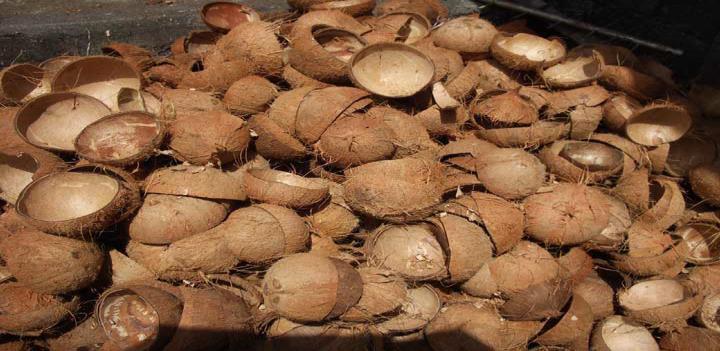
CoconutshellsshowninFigure1areagriculturalwastesused in the preparation of various attractive articles (antiques) andalsoappliedintheproductionofactivatedcharcoalas well as reinforcement material in the production of composites. Salmah (2013) reported that coconut shell is lingo cellulosic filler which exhibits excellent properties comparedtomineralfillers(kaolin,calciumcarbonate,mica and talc). Some of the outstanding properties reported by Salmah(2013)includeminimalhealthhazard,high–specific strength–to–weight ratio, low cost, biodegradability, environmental friendly and renewability. Matthew (2012) reported that moisture desorption of coconut shells takes
p-ISSN: 2395-0072
place between 25 and150°C and at 150°C, degradation of sclerenchymacells,whichareresponsibleforholdingwater in the shell occurs. Further heating of the shells between 190°C to 260°C may result to the degradation of hemicelluloses present in the shell and at240°C to 350°C, degradationofcellulosetakeplace.Thefinalstageofthermal degradationinvolvesthebreakdownofligninwhichoccurs between280°Cand500°C(Matthew,2012).
Basharetal.(2012)conductedastudywiththeaimoffinding possiblereplacementforasbestos,usedcoconutshellpowder todevelopbrakepadmaterial.Thismaterialwasmixedwith other ingredients such as catalyst, epoxy resin, cast iron fillings,silica,andaccelerator.Thecoconutshellwasdriedin thesunforsomedaysinordertogetridoftheshellmoisture andthenreducedintosmallersizesusinganvilandhammer andthenpoundedusingmortarandpestle.Finally,agrinding machinewasusedtogrounditintopowderandsievedwitha meshsizeof710μm.Inthestudy,theweightsofepoxyresin andthecoconutshellpowderwerevariedwhiletheweightof the other ingredients remained unchanged. Mechanical (tensile, hardness, compressive, wear and impact) and corrosiontestswereconductedtostudytheeffectofprocess ontheproducts.Theresultsshowthatasthepercentageof thecoconutshellpowder increases,thehardness,breaking strength, compressive and impact strength reduces. Therefore,itwasreportedthathigherpercentageofcoconut powder results to brittleness and that brake pad samples with50%matrixand10%reinforcementswellassamples with60%matrixand10%reinforcementcanbeadoptedin friction pad production since they are far lighter and possessesbetterpropertieswhencomparedwiththeother compositions. The report also suggested that the coconut shellreinforcedbrakepad.Possessingthiscompositionmay beabetteralternativetoasbestosasitpossesseslowerwear resistancethough;thepresenceofironfilingsinthesamples causespoorresistancetocorrosionDarlingtonetal.(2015) intheirstudyalsoproducedanasbestos–freebrakepadfrom locallysourcedrawmaterialsusingcoconutshellpowderand palm kernel shell as reinforcement materials, graphite as lubricant, polyester resin as binder material, carbides and metalchipsastheabrasives.Accordingtothereportoftheir study,threedifferentsamplesofbrakepadswereproduced by varying mass compositions of coconut shell and palm International Research Journal of Engineering and Technology (IRJET) e-ISSN: 2395-0056
International Research Journal of Engineering and Technology (IRJET) e-ISSN: 2395-0056
Volume: 11 Issue: 05 | May 2024 www.irjet.net
kernel shell while thecomposition of the binder,lubricant andabrasivematerialsremainedunchangedthroughoutthe experiment.Thetestsresultsobtainedshowsthatdeveloped sampleshavedensitywhichfallsbetween2.55–2.78g/cm3 , wear rate of 0.2007–0.2733g/min, percentage water absorption of 0.0399–0.0522% and hardness of 3.00 –3.41.Samplesofcommercialbrakepadswerealsotestedand itwasfoundthatthecommercialpadspossessesadensity of3.36g/cm3,wearrateof0.1873g/min,waterabsorptionof 0.0327%andhardnessof2.53.Theseresultsshowedthatthe developedsamplesthoughcouldnotmeetupwithproperties ofcommercialbrakepadsduetoitshighdensityandwear ratebutcomparedwellwithcommercialbrakepadsandcan serveasanalternativetocommercialproducts.Thereforethe studyconcludedthatlocallysourcedpalmkernelandcoconut shellcanbeusedasareplacementforcommercialpad.
2.3 Palm Kernel Shell and Fibre
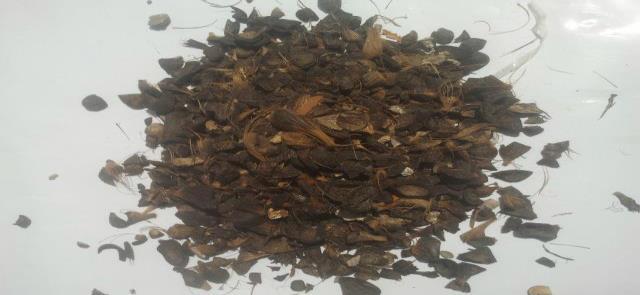
Ndoke (2006) showed that palm kernel shell as shown in Figure2,hasanaveragedrydensityof0.65mg/m3,porosity of28%andanimpactvalueof4.5%.Thereportsuggested thatthedrydensity,porosityandimpactvalueofpalmkernel shellplaceitinthesamecategoryaslightweightaggregate andgoodsubstituteforasbestos.
Fono–TamoandKoya,(2013),developedbrakepadmaterials forautomobileusingstandardfactoryprocedurefrompalm kernelshell.Mechanicalpropertiesofthematerialdeveloped werestudied.Theresultsshowedthatthedevelopedpadhas anaveragehardnessof32.34andaverageshearstrengthof 40.95MPa.Thecoefficientoffrictionoftheproductwasalso tested and the result indicated that the pad possessed a frictional coefficient of 0.43. This result was in agreement withtheworkofKoyaetal.(2004)inwhichitwasstatedthat the coefficients of friction of palm kernel shell on metal surfaces are in the range of0.37–0.52.In contrast, friction coefficientthatfallswithintherangeof0.30–0.70isdesirable whenusingbrakepadmaterial(Roubiceketal.,2008).The bondingofthematerialtothebackplatewasalsotestedand theresultindicatesavalueof3375N/s.Allthevaluesofthe responsesthoughnotasexcellentasasbestos–basedbrake padswhosecoefficientoffrictionfallswithin0.37–0.41asthe recommendedbySAEwasreportedtobegoodandcanbe applied as automotive friction material therefore making palmkernelshellagoodsubstituteforasbestosandsuitable
p-ISSN: 2395-0072
forbrakefrictionpadsproduction.Ikpambeseetal.(2014) also developed asbestos free automobile brake pads from palmkernelfiberstogetherwithepoxyresinasbinder.The fibers(PKFs)weresoakedincausticsodasolution(sodium hydroxide)for24hourstogetridoftheremnantofredoilin fiber.Thefiberswerethenwashedwithwatertoremovethe causticsodaandthendriedunderthesunforaperiodofone week. The binder used during the study was varied in formulationsduringproduction.Thephysical,morphological and mechanical properties of the composite were investigated to examine the effect of composition on the friction material. The results obtained from the study indicatedthatthencoefficientoffriction,temperature;wear rate,stoppingtimeandnoiselevelofthepadsincreaseswith increasing speed. The results also show that moisture content, porosity; surface roughness, hardness, specific gravity,waterandoilabsorptionrateremainedstablewith increasing speed. From the microstructure analysis it was observed that worm surfaces wear where the asperities ploughedwerecharacterizedbyabrasiontherebyexposing thewhiteregionofthefibersandincreasingthesmoothness ofthecompositematerial.Thereportshowedthatthebrake pad sample with composition of 10% palm wastes, 40% epoxy–resin, 15%calcium carbonate, 6% Al2O3, and 29% graphite gave optimum properties. Therefore, it was concludedthatpalmkernelfiberscanbeusedeffectivelyasa goodreplacementforasbestosinfrictionpadproduction.
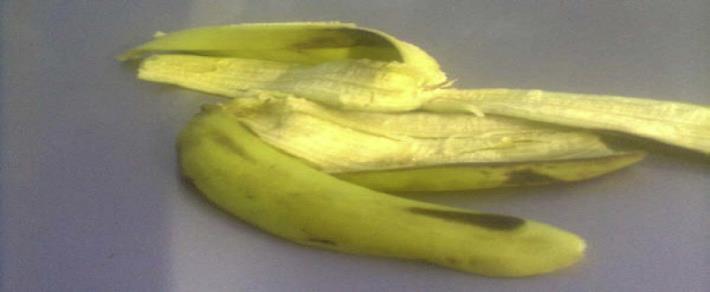
Bananapeelsshowninbelowfigure3theycanalsobecalled asbananaskin.Theyarethecasingofthebananafruit.Itis admiredfruitconsumedworldwidewithayearlyproduction ofover145milliontonnes.Oncethefruitisconsumed,the peel is generally discarded.Because of this removal of the banana peel, a significant amount of organic waste is generated(Babatunde,1992).
The coefficient of friction of banana peel on a linoleum (a tough washable floor covering) surface was measured at just0.07.Thisisabouthalfthatoflubricatedmetalonmetal surface. Several researchers have attributed this to the crushingofthenaturalpolysaccharidefolliculargel,releasing homogenoussol(Kiyoshietal.,2012).Ithasbeenreported thatatincreasedtemperature,bananapeelpowderbecomes more gelatinous and at much higher temperatures, the
International Research Journal of Engineering and Technology (IRJET) e-ISSN: 2395-0056
Volume: 11 Issue: 05 | May 2024 www.irjet.net
hardnessincreases.Therefore,becauseofthesepropertiesof bananapeel,itissuggestedforuseintheformulationofnew friction pad material as it increases the binding ability of resinathighertemperatures(Idrisetal.,2013).Idrisetal. (2013) carried out a work for the correct substitute for asbestosandphenolicresin(phenolformaldehyde)binder formulatedanewbrakepadusingbananapeelswaste.The composition of the resin varied from5 to 30 wt% with intervalof5wt%.Thebananapeelsusedinthestudywas dried and ground into powder (uncarbonized, BUNCp). Analysisoftheparticlesizeofthepeelparticleswascarried outinaccordancewithBS1377:1990.Duringthestudy,two sets of samples were produced using the carbonised and uncarbonised banana peels particles. Physical, wear, morphology and mechanical properties of the formulated brakepadswereinvestigated.
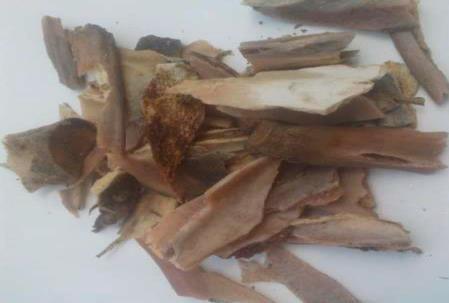
Duetolargenumberofcowsbeingslaughtereddailyinthe Nigeria, cow bones as shown in Figure 4 are abundantly available.Thesenaturalfibersareobtainedfromcowwastes which causes environmental pollution. Isiaka and Temitope(2013) reported that cow bone exhibit excellent structural compatibility in addition to the surface compatibility requirements as biomaterials. Mayowa et al. (2015)also reported that cow bone consists of livingcells which are renewed constantly in the bone and widely scattered within non–living material known as the matrix formed byosteoblasts cells. It was also reported that this osteoblastsinthebonesecreteandmakesproteincollagen, which gives the bones elastic property which help it withstandstressesgeneratedbylifting,walking,andother relatedactivities.
Isiaka and Temitope (2013) investigated the influence of particle size distribution of cow bone powder on the mechanicalpropertiesofpolyestermatrixcompositeswith the aim of considering how suitable it is to be applied as biomaterials. During the study, the cow bone used was thoroughlywashedtogetridofunwantedmaterialsandthen crushedintosmallerparticlessizesusinghammer.Sievesize analysiswasconductedonthecrushedbonesandwassieved intothreesievesizesof300,106and75μm.Othermaterials used during the experiment include unsaturated polyester
p-ISSN: 2395-0072
resinwhichservesasthebinder,acatalystknownasmethyl ethyl ketone peroxide (MEKP), polyvinyl acetate which serves as the mould releasing agent,2% cobalt solution (accelerator)andacleaningagentknownasethanol.Though, from the results obtained, the authors reported that cow bones can serves as reinforcement material in polyester matrix as well as a good replacement for asbestos but tribologicalpropertiessuchaswearresistanceandfriction coefficientwhichmajorlyaffectthefrictionalbehaviourofa brakepadwasnotinvestigated.
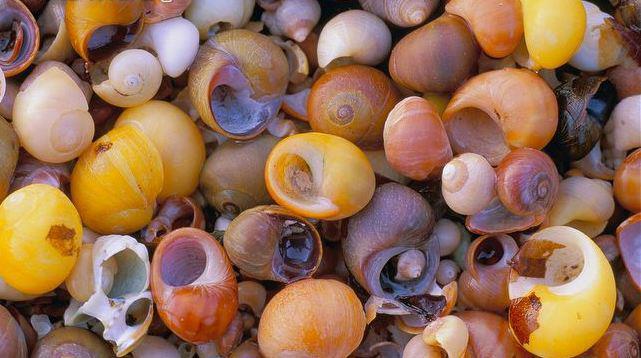
Periwinkles shown in Figure 5 are small marine snails belonging to the family Littorinidae (class Gastropoda,phylumMollusca).Theyarewidelydistributed shore snails which are usually found on stones, rocks or pilings. Some are found on mud flats while some tropical formsarefoundontheproprootsormangrovetrees.The shellofperiwinklesistheoutercasingoftheanimalwhichis usuallydiscardedafterthefleshinsideisconsumed.Theyare usuallyconsideredasagriculturalwasteproductsinriverine areaofsouthernNigeria(Yawasetal.,2013)
Yawasetal.,(2013)developedanasbestos–freebrakepad usingperiwinkleshellasreinforcedmaterial.Theperiwinkle shellsusedduringthestudywasgroundedandsievedinto grainsizesof125,250,335,500and710μm,andwasmixed with 35% phenolic resin binder. Five test samples were developed using compression moulding machine at a pressureof40kg/cm2,amouldingtemperature(160oC)and acuringtime(1.5hours).Allthepreparedsampleswerepost cured in an oven of temperature 140oC for 4 hours. The microstructure(surfacemorphology)oftheproducedfriction materialswasanalysedusingscanningelectronmicroscope and the results indicate that the microstructures of the developedsamplesshowedahomogeneousdistributionas the periwinkle shell particles sieve size decreases. Mechanical, physical and tribological properties of the periwinkleshellbasedbrakepadswerealsoinvestigatedand contrastwiththepropertiesofasbestos–basedbrakepads.It wasconcludedthat thehardness,compressivestrengthand densityofthepreparedbrakepadsincreasesasthe sizeof periwinkleshelldecreasesfrom710to125μmwhiletheoil absorption,wearrateandwaterabsorptionratedecreasesas
International Research Journal of Engineering and Technology (IRJET) e-ISSN: 2395-0056
Volume: 11 Issue: 05 | May 2024 www.irjet.net
theparticlesizeoftheperiwinkleshelldecreases.Therefore, theresultsobtainedforthesievesizeof125μmofperiwinkle shellparticlescontrastwithcommercialbrakepad.Thebest values of the test results reported include specific gravity (1.01g/cm3),coefficientoffriction(0.41),hardness(116.7 HRB),Compressive strength (147 N/mm2), and thickness swellinwater(0.39%)andthicknessswellinSEAoil(0.37 %).Itwasthereforedecidedthatperiwinkleshellparticles can effectivelysubstitute forasbestos in the production of brakepads.
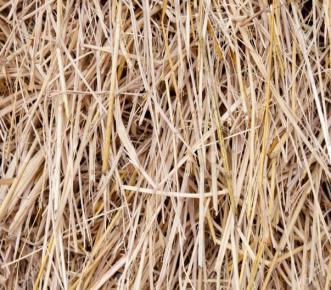
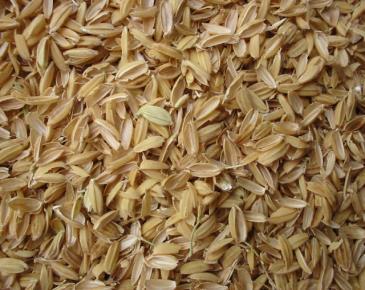
Ricehusksandricestrawareagriculturalwasteswhichare abundantlyavailablemostlyinriceproducingcountrieslike Nigeria.RicehuskdustandricestrawdustshowninFigure6 areknowntohavehighsilicaandlowlignincontentwhich givesfrictionmaterialsaceramic–likebehaviour(Ibrahim, 2009). These materials are used as filler or reinforcement materialsinthedevelopmentofcompositeslikefrictionpads.
AcharyaandSamantrai(2012)studiedthewearandfriction behaviourofricehuskusingrandomlyorientedunmodified and modified rice husk as reinforcement in epoxy matrix(AralditeLY556andhardenerHY951).Apinon–disc apparatus was carriedtostudythe wear behaviourof rice huskcompositesreinforcedwith5–20wt%.Thepinofeach sample was attached to a holder and then abraded under differentloadsof5,7.5,10and15N.Eachtestwasconducted for duration of 5 minutes. The results of the coefficient of frictionandwearrateofthecompositewerefoundtobethe functions of sliding velocities, normal load and the filler volume fraction. Scanning electron microscope (SEM) was used to also study morphology of the worn surface of the composites.
AccordingtothereportofAcharyaandSamantrai(2012),the testresultshowsthatwearratesdecreaseswithincreasein thericehuskfibresadditionunderalltestingconditions.It wasthenconcludedthattheadditionofthericehuskfibresin epoxyisveryeffectiveintheimprovementofthecomposite wearresistanceandtheoptimumfibrefractionwhichgave theoptimumwearresistancetothecompositeisfoundtobe 10w%.Themorphologiesofscanningelectronmicrographof wornsurfacefortheuntreatedricehuskcompositeandthe benzoyl chloride treated rice husk composite showed that surfacedamageandcrackingofthematrix(longitudinaland
p-ISSN: 2395-0072
transverse crack) are more pronounced for the untreated composite. Reverse is the case for the benzoyl chloride–treated composite as the surface damage seems to be minimal and onlylongitudinal cracksare identified on the surface of the material in the rolling direction. It was thereforeconcludedthatthetreatmentofthesurfaceofthe fibrerestrictsthepropagationofthecracksinthetransverse direction thereby improving the wear resistance of the composite.
Bagasse as shown in Figure 7 is a fibrous residue that remains after crushing the stalks. It is composed of fibers, water andlittle amounts ofsoluble solute. The percentage contributionofeachofthesecomponentsinbagassedepends onthematurity,variety,efficiencyofthecrushingplantand the harvesting techniques. Bagasse contains about 30%hemicelluloses,40%cellulose,and15%lignin
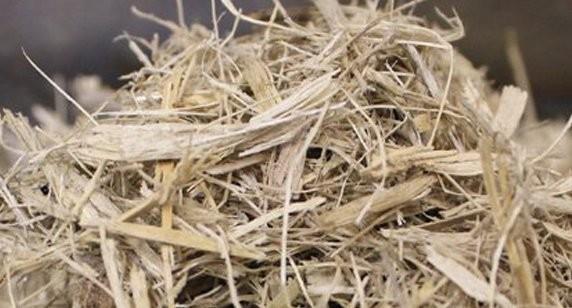
Aigbodion et al. (2010), with the conducted a study using bagasse to produce brake pads in the ratio of 30% resin and70%bagasseusingcompressionmouldingmachine.The bagasse’s used in the studywere sieve into grades of 100, 150,250,350and710μm.Thebinderusedduringthestudy was phenolic resin (phenol formaldehyde). During the experiment,thecompressionmouldingmachinewassettoa moulding temperature of 140oC, moulding pressure of 100KN/cm2pressureandacuringtimeof2minutesandthe finalproductwascuredinanovenfor8hours.Theoptimal valuesofthepropertiesexaminedduringthestudyinclude hardness (92 at 3000 kgf), density (1.65 g/cm3), microstructureanalysis,compressivestrength(103.5MPa), flame resistance(charred with 46% ash), water and oil absorption(5.04and0.44%).Fromtheresultobtained,itwas reported that the compressive strengths of the produced samplesfollowedsimilartrendwiththatofthevaluesofthe hardnessaseachofthepropertiesincreaseswithdecreasing sievesizes.Themicrostructureofeachsamplewasreported and the results showed that as the particles size of the bagassedecreases,therewasmoreuniformdistributionof theresinwiththebagassewhichwasattributedtotheproper bondingbetweentheresinandthebagasseasthesievegrade decreases.Itwasthereforeconcludedinthestudythatbetter propertiesoffrictionpadcanbeachievedusingalowersieve
International Research Journal of Engineering and Technology (IRJET) e-ISSN: 2395-0056
Volume: 11 Issue: 05 | May 2024 www.irjet.net p-ISSN: 2395-0072
grade of 100μm of bagasse with a composition 70% and 30%ofresin.

Natural materials such as seashell (exoskeletons of mollusks)ismadeupofthreedistinctlayerswhichinclude the smooth inner layer composed mainly of calcium carbonate,intermediatelayer(calcite)andtheouterlayerof horny Substance known as conchiolin (Schaeffer, 2014). Norazlina et al. (2015) reported that seashell as shown in Figureprimarilyconsistofcalciumcarbonate(CaCO3),been naturallyabove80%CaCO3byweightwithonlyabout2% proteincontentandnocomplexextractionprocessisneeded to use it for composite production. Seashells exhibit significantcombinationsoflowweight,toughness,stiffness andstrengthwhichareinsomecasesunrivaledbymineral fillers(Vigneshetal.,2015).Theseashellpowderusedinthe study was utilised as filler by the authors to produce a compositeusingpolyesterbinder.Thetestresultsindicate that the commercial CaCO3 based composite possesses an impact and tensile strength of 918 MPa and 3.2 kJm–2 respectively while seashell based composite exhibit an impact and tensile strength of 904 MPa and 3.4kJm–2 correspondingly. The authors therefore concluded that seashellcanbeusedinplaceofcommercialCaCO3toproduce compositessincecommercialCaCO3andseashell(musselor oyster shells) produces similar results regardless of their variationindistributionofparticlesizeandparticlesizes.
MaizehusksasshowninFigure9aretheoutercoveringof maize.Formostapplications,thehusksneedtobesoakedin hotwatertobecomeflexible.Thistypeofhuskisregularly used to encase foods for baking or steaming thereby impartinglightmaizeflavour.AdemohandAdeyemi(2015) conducted a study using maize husks as reinforcement material to produce automotive brake pads. Three friction composite compositions were developed using the maize husks as strengthening material with varied epoxy resin binder.
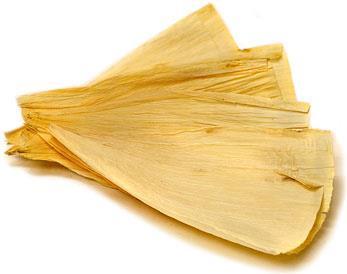
Maize husks were crushed and sieved to a mesh size of 300μm.Otheringredientsusedduringthestudyincludesilica sand,epoxyresin,calciumcarbonate, anhydrousironoxide, talcasreleaseagentandpowderedgraphite.Threesamples were produced using curing time of 80–120minutes and varying wt% of maize husk and binder (epoxy resin and hardener at 1:2) while the weight of friction modifier (graphite powder), abrasives (silica and iron oxide), and fillers(calciumcarbonate)werekeptconstantthroughoutthe experiment. To ascertain suitability of the formulated composites for brake pad application, the samples were subjectedtoteststodetermineitsmechanical,physicaland tribologicalproperties.Someofthetestsconductedinclude waterandoilabsorption,density,frictioncoefficient;wear resistance,thermalconductivity,hardness,compressiveand tensilestrengths.Theoptimalvaluesofthedevelopedbrake padcomparedwithasbestos–basedbrakepads.
A comprehensive review of application of non–hazardous reinforcementmaterialsaspossiblereplacementforasbestos hasbeenhighlightedinthisstudy.Thephysical,mechanical and tribological properties of these brake pads compared favorably with the commercial brake pad. The need for resultsobtainedfromtheseresearchworkstoevolvefrom laboratorywilladdressthecurrentgapinmakingavailable eco–friendly and low–cost brake pads for commercial consumption.
[1] Jang, H., & Kim, S. J. (2000). The Effects of Antimony Trisulfide and Zirconium Silicate in the automotive. Wear,239:229–36.
[2]Cho,M.,Kim,D.,&KimS.J.(2005).Effectsofingredients on tribological characteristics of a brake pad, An experimentalcasestudy,Wear,258(11–12):1682–1687.
[3] Mutlu, I., Eidogan, O., Findik, F. (2005). Production of ceramicadditiveautomotivebrakepadandinvestigationof itsbrakingcharacteristics,InternationaljournalofTribology, 84–92.
International Research Journal of Engineering and Technology (IRJET) e-ISSN: 2395-0056
Volume: 11 Issue: 05 | May 2024 www.irjet.net p-ISSN: 2395-0072
[4]ZaharudinA.M.,TaliR.J.,BerhanM.N.,BudinS.,&Aziurah R.(2012).Taguchimethodforoptimizingthemanufacturing parameters of friction materials, Faculty of Mechanical Engineering, University Technology MARA, 40450, Penang,MalaysiaKedah,Malaysia.
[5] Todorovic, J. (1987). Modelling of the tribological propertiesoffrictionmaterialsusedinmotorvehiclesbrakes. ProcessingInstn.MechanicalEngineers.226,911–916.
[6] Talib, R. J., Mohmad, S. S., Ramlan, K..(2012). Selection ofbest formulation for semi–metallic brake friction materialsdevelopment. Powder metallurgy (accessed atwww.intechopen.com),1–30.
[7] Tanaka, K., Ueda, S., & Noguchi, N. (1973). Fundamentalstudies on the brake friction of resin–based frictionmaterials.Wear,23,349–365.
[8]Blau,P.J.,(2001).Compositions,TestingandFunctions ofFrictionBrakeMaterialsandtheirAdditives:A reportby OakRidgeNationalLaboratoryforU.SDept.ofEnergy. Retrieved fromwww.0rnl.gov/webworks/cppr/y2001/rpt/11 2956.pdf.
[9] Nicholson, G. (1995). Facts about Friction. P&W PriceEnterprises,Inc.,Croydon,PA.
[10] Ole–Von U., Staffan, S., Reed, D., Michael, B. (2005).Antimony in brake pads–a carcinogenic component?,JournalofCleanerProduction,13,19–31
11] Blesdzki, A. K., & Gassan J. (1999). Composite ReinforcedwithCellulosebasedFibres,ProgressinPolymer Science,24(2), 221–274. doi: 10.1016/S0079–6700(98)00018–5.
[12] Cyras, V. P., Iannace, S., Kenny J. M., & Vazquez, A. (2001).Relationship between processing and properties ofbiodegradablecompositesbasedonPCL/starchmatrixand Sisalfibers.PolymerComposites,22:104–110.
[13]Garcia,D.,Lopez,J.,Balart,R.,Ruseckaite,R.A.,&Stefani, P.M. (2007). Composites based on sintering rice husk–wastetirerubbermixtures,MaterialDesign,28:2234–2238.
[14] Seki, Y. (2006). Rice and its waste, Science and Technical.TheScienceTechnologyResourcesCouncil,Turkey, 464:30–30.
[15]Van–Hoest,P.J.,(2006).RiceStraw,TheRoleofSilica andTreatments to Improve Quality. Journal of Animal FeedScienceTechnology,130:137–171.
[16] Nakagawa, T., Ishi, M. Suzuki, K., Yanada, M., and Ito, K.(1986).DevelopmentofTechnologyforproducingShort–
Length Metal Fiber by Chatter Machining, Research andDevelopmentinJapan,TheOkochiMemorialprize,45–50.
[17] Dagwa I. M., & Ibhadode A. O. A. (2008). The Developmentof Asbestos–Free Friction Pad Material from PalmKernelShell:aJournaloftheBraz.Soc.ofMech.Science andEngineering,2(154).
[18] Deepika, K., Bhaskar, R. C., & Ramana, R. D. (2013).Fabrication and Performance Evaluation of a CompositeMaterial for Wear Resistance Application. InternationalJournalofEngineeringScienceandInnovative Technology.(2)6.
[19]Aigbodion,V.S.,Agunsoye,J.O.,Hassan,S.B.,Asuke,F., &Akadike, U. (2010). Development of Asbestos–free BrakepadusingBagasse:Tribologyinindustry,32(1).
[20] Bashar D., Peter B. M., and Joseph M., (2012). Effect ofMaterial Selection and Production of a Cold–WorkedCompositeBrakePad,JournalofEngineeringofaPure andAppliedScience,2(3)154.
Production. International Journal of Chemistry and MaterialResearch,3(2),27–40.