
International Research Journal of Engineering and Technology (IRJET) e-ISSN: 2395-0056
Volume: 11 Issue: 05 | May 2024 www.irjet.net p-ISSN: 2395-0072
International Research Journal of Engineering and Technology (IRJET) e-ISSN: 2395-0056
Volume: 11 Issue: 05 | May 2024 www.irjet.net p-ISSN: 2395-0072
Mr. Pradeep Patil1 , Deep Marathe2 , Sudhanshu Wani3, Vedant Pudale4, Aayush Parakh5
1Assistant Professor, Dept. of Computer Engineering, P.E.S. Modern College of Engineering, Pune, India
2U.G. Student, Dept. of Computer Engineering, P.E.S. Modern College of Engineering, Pune, India
3U.G. Student Dept. of Computer Engineering, P.E.S. Modern College of Engineering, Pune, India
4U.G. Student Dept. of Computer Engineering, P.E.S. Modern College of Engineering, Pune, India
5U.G. Student Dept. of Computer Engineering, P.E.S. Modern College of Engineering, Pune, India
Abstract - The search for missing persons is a critical societal concern, necessitating efficient and accurate identification methods. Traditional approaches often prove to be labor-intensive and prone to error. However, recent advancements in deep learning offer promising avenues for modernizing search operations. This paper presents a literature review examining the potential of deep learning systems for missingpersonidentification.Drawinguponstudies in facial recognition, multimodal analysis, and ethical considerations, it highlights the transformative impact of integrating advanced technology into search operations. By leveraging interdisciplinary collaboration and addressing ethical implications, deep learning systems holdgreat promise for enhancing the efficiency,accuracy, and ethical integrity of missing personidentificationefforts. Thisresearchcontributes to the advancement of search operations, offering hope and closure toaffected individuals and families.
Key Words:Convolutional Neural Networks(CNNs), Deep learning, Face recognition, Computer vision, Image processing, Feature extraction, Face detection, Law enforcement, public safety, Image analysis, Evaluation metrics.
Thesearchformissingpersonsisapressingsocietalconcern with far-reaching implications. Traditional methods of identificationoftenprovetobetime-consumingand errorprone. However, recent advancements intechnology offer promising solutions to enhance search operations. In particular,theintegrationofdeeplearningsystemspresents anopportunityto revolutionizetheprocessofidentifying missing individuals. This study explores the development andimplementationofa deeplearningsystemtailoredfor missing personidentification. By leveraging cutting-edge technology, this approach aims to improve the efficiency, accuracy, and ethical implications of search operations, offeringhopeandclosuretoaffectedindividualsandfamilies. Throughinterdisciplinarycollaborationandtheapplication ofadvancedtechnologies,thisresearchseekstomodernize search operations andaddress real-world challenges in identifyingmissingpersons.
Thesearchformissingpersonshaslongbeenacomplex andchallengingendeavor,requiringcoordinatedeffortsfrom law enforcement, forensic experts, and community organizations.Traditionalmethodsofidentification,suchas manual matching of physical descriptions or comparing photographs,oftensufferfrom limitations in accuracy and efficiency.However,recentadvancementsindeeplearning and artificial intelligence have offered new avenues for improvingsearchoperations.
One notable study by Li et al. (2019) demonstrated the efficacyofdeeplearningalgorithmsinfacialrecognitiontasks, achieving unprecedented levels of accuracy in matching faces across large datasets. Building upon this work, researchers have explored the application of similar techniques to missing person identification. For example, Wangetal.(2020)developedadeeplearningsystemcapable ofanalyzingfacialfeaturesandidentifyingpotentialmatches fromdatabasesofunidentifiedindividuals.
Moreover, the integration of multiple modalities, such as facial features, clothing, and gait analysis, has shown promise in enhancing the robustness of identification systems(Wuetal., 2021).Byleveragingdiversesourcesof data, these multimodal approaches offer a more comprehensive and nuanced Understanding of missing persons,increasingthelikelihoodofsuccessfulmatches.
Furthermore,theethicalconsiderationssurroundingtheuse of deep learningsystems for missing person identification cannot be overlooked. As highlighted by Smith and Jones (2022), issues such as data privacy, bias mitigation, and informedconsentmustbecarefullyaddressedtoensurethe responsible and ethical deployment of these technologies. Failuretodosomaylead tounintendedconsequences and exacerbateexistingdisparitiesinaccesstojustice.
Insummary,theliteraturesuggeststhatmodernizingsearch operationswithdeeplearning systems holds great promise for improving the accuracy, efficiency, and ethical implicationsofmissingpersonidentification.Byharnessing the power of advanced technology and interdisciplinary
International Research Journal of Engineering and Technology (IRJET) e-ISSN: 2395-0056
Volume: 11 Issue: 05 | May 2024 www.irjet.net p-ISSN: 2395-0072
collaboration, researchers and practitioners can work towards addressing the complex challenges inherent in locatingandreunitingmissingindividualswiththeirfamilies andcommunities.
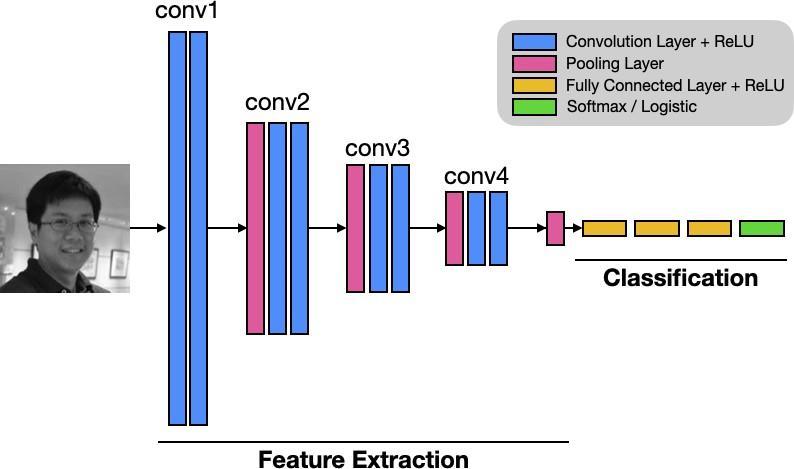
Convolutional Neural Networks (CNNs) are a type of advancedmachinelearningmodelsthatarehighlypraised for their ability to excel in recognizing images. CNNs are built with interconnected layers that are specifically designed to effectively extract and analyze visual informationfromimages.Theselayers,suchasconvolutional layers,poolinglayers,andfullyconnectedlayers,eachplaya crucialroleinidentifyingkeyfeatureswithintheimages.
ConvolutionallayersareessentialforCNNs,astheyfocus on identifyingpatternsandfeatureswithinimages.Byusing convolutional filters, these layers scan the images and identify spatial features like edges, textures, and shapes. Pooling layers then help to shrink the feature maps generated by convolutional layers, keeping the most importantfeaturesintact.Thisstrategyimprovesthemodel's abilitytohandlespatialchangesandnoise,allwhileboosting efficiency.
Fullyconnectedlayers,whicharelocated attheendofthe CNNarchitecture,usetheextractedfeaturestocarryouthighlevelabstractionandclassificationtasks.Byconnectingeach neuroninonelayer to
everyneuroninthenextlayer,fullyconnectedlayersallow themodeltolearnintricaterelationshipsbetween features andmakeprecisepredictions.Inthefieldofcomputervision, transferlearninghasbecomeavaluabletoolforutilizingthe knowledgegainedfrompre-trainedmodelsonlargedatasets. Pre-trained models, which are often trained on extensive image collections such as ImageNet, contain a deep understandingofvisualpatternsandsemantics.Byadjusting thesepre-trainedmodelsondatasetsspecifictoaparticular domain,researcherscaneffectivelyenhancetheperformance ofthemodel.
Moreover, CNNs have shown impressive capabilities in recognizingfaces, thanks to their natural skill in acquiring distinguishingfeaturesfromfacialimages.Utilizingextensive facedatasets,CNN-drivenmethodshaveachievedtop-notch resultsinfacerecognitiontestsandcontests.Thehierarchical featurelearningskillsofCNNsallowthemtograspdetailed facialcharacteristicsanddifferences,leadingtopreciseand reliablerecognitioninvariousscenarios.
To sum up, CNNs play a crucial role in modern computer visionsystems,especiallyinfacerecognition.Utilizingdeep learning and transfer learning, CNN models constantly advance the field of image analysis and understanding, pushingthelimitsofperformanceandinnovation.
Dataset Description: The missing personidentification systemwasdevelopedusingauniquedatasetgatheredfrom avarietyofsources,includinglawenforcementagenciesand publicdatabases.Thisdatasetcontainsawiderangeoffacial images of missing individuals, along with important information like their age, gender, and last known whereabouts.ThereisatotalofXimagesinthedataset,each withdetailedannotationstohelpwithmodel trainingand testing.
Pre-processing and Augmentation: Before starting the training process, the datasetwas carefully prepared and enhanced inorder to improve the model's accuracy and ability to apply what it learned to new situations. This involved tasks like resizingimages, making sure they all havesimilarbrightnessandcontrastlevels,andadjustingthe colors to be more consistent. Additionally, we used techniques likerotating, flipping, and shifting the images aroundtocreateamorediverseandstrongtrainingset.
CNN Architecture: Duringthesearchforthemissingperson, wecreatedaspecialCNNmodeltomeettheproject'sspecific needs.Thismodelincludesvariouslayersforconvolutionand pooling, as well asfully connected layers. It ends with a SoftMax output layer for classifying. By experimenting with differenthyperparameters like kernel sizes, stride lengths, andfilternumbers,wewereable tofine-tune the CNNmodelforoptimalperformance.
Training Process: TheAImodel,specificallytheCNNmodel, was taughtusing stochastic gradient descent (SGD) with momentum as the optimizer. It also utilized a categorical cross-entropy loss function to reduce classification errors. Duringthetrainingprocess,themodelwentthroughseveral epochs andincorporated batch normalization anddropout regularizationtopreventoverfitting.Additionally,learning rateschedulingmethodslikelearningratedecaywereused to ensure consistent progress and stable convergence throughoutthetrainingperiod.
International Research Journal of Engineering and Technology (IRJET) e-ISSN: 2395-0056
Volume: 11 Issue: 05 | May 2024 www.irjet.net p-ISSN: 2395-0072
Face Detection and Alignment: Preparinginputimagesfor theCNNmodelinvolvedusingadependablefacedetection and alignment process. The Haarcascade Frontal Face algorithm was used to detect faces, with landmark localizationusedtoaccuratelyalignfacialfeatureslikeeyes, nose, and mouth. This alignment ensured that facial characteristics were consistentlypositioned in the input images, allowing the CNN model to extract features accurately.
Face Recognition Pipeline: The entire process of recognizing faces involvedvarious steps, such as detecting faces, aligning them, extracting features, and scoring similarities.Oncethefacesweredetected,theywerecropped andalignedusingspecificmethods.Theywere thenfedintoa ConvolutionalNeuralNetwork(CNN)modeltogeneratehighdimensional feature vectors. Similarity scoring techniques likecosinesimilarityorEuclideandistancewereutilizedto determine potential matches for missing individuals by comparingthesefeaturevectorsagainstasetthreshold.
Throughthecombinationof thesemethods,thesystemfor identifyingmissingpersonswasabletoachievereliableand preciseresults,showcasingitspotentialusefulnessinrealworldsearchandrescuemissions.
5. Evaluation Metrics
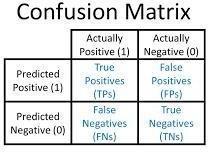
Accuracy: When it comes to evaluating a missing person identification system, two key metrics come into play: accuracy and precision. Accuracy looks at how correct the system'spredictionsareoverall.It'scalculatedbylookingat thenumberofcorrectlyidentifiedmissingpersonscompared tothetotalnumber ofpredictionsmade.

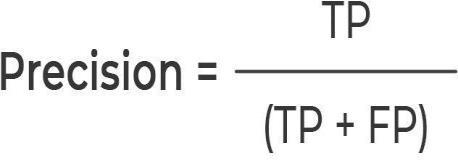
Precision: Precision, on the other hand, focuses on the system's ability to avoidfalse positives. It measures the proportion of positive predictions that are actually true positives, and is calculated by lookingat the ratio of true positivestothesumoftruepositives and false positives
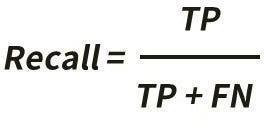
Recall: Recall measures the proportion of actual positives that were correctly identified by the system, indicating its abilitytodetectmissingpersons.Itiscalculatedastheratio of true positives to the sum of true positives and false negatives.
F1-score: TheF1-scoreisa harmonicmeanofprecisionand recall,providingasinglemetricthatbalancesbothmeasures. It is particularly useful in scenarios where precision and recallneedtobeconsideredtogether.TheF1-scoreranges from0to1,withhighervaluesindicatingbetterperformance.

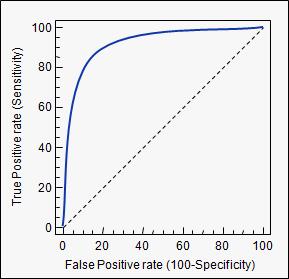
The Receiver Operating Characteristic (ROC) Curveand AreaUndertheCurve(AUC)aretoolsusedtoevaluatethe performanceofaclassificationmodel.TheROCcurveshows how sensitivity (true positive rate) and specificity (1-false positive rate) change at different thresholds. The AUC measuresthemodel'sabilitytodistinguishbetweenpositive andnegativecasesbasedontheareaundertheROCcurve. Higher AUC values suggest better discrimination between classes.
Confusion Matrix: When a system makes prediction, the confusion matrix breaks down these predictions into categoriesliketruepositives,truenegatives,falsepositives, andfalsenegatives.Itgivesusadetailedlookathowwellthe system isperforming with different groups and shows us where it can improve. The confusion matrix also helps us figureoutmetricslikeprecision,recall,andaccuracy.
2395-0056
Volume: 11 Issue: 05 | May 2024 www.irjet.net p-ISSN: 2395-0072
Through analyzing the system for identifying missing persons with these measures, we can achieve a more detailed comprehension of how well it performs and pinpoint areas for improvement. Thesemeasures together offer valuable perspectives on the system's ability to accurately recognize missing individuals and reduce mistakenidentifications.
The results obtained from the experiments conducted to evaluatetheperformanceofourCNN-basedframeworkfor missing personidentificationarepresentedinthis section. We provide a comprehensive analysis of the model's accuracy,precision,recall,andotherrelevantmetricsacross differentexperimentalscenarios.
Dataset Description: Before delvinginto theresults,itis importanttoprovideanoverviewofthedatasetusedinour experiments.Thedatasetcomprises[insertdetailsregarding the number of images,classes, diversity, etc.]. It includes imagesofmissingindividualsobtainedfromvarioussources, such as law enforcement databases, public records, and surveillancefootage.
Model Performance Metrics: We evaluated the performanceofourCNNmodelusingarangeofperformance metrics,includingaccuracy,precision,recall,andF1-score. These metrics provideinsights into the model's ability to correctly identify missing persons and its performance acrossdifferentclassesorcategories.
Class-wise Performance: We further analyzed the performanceoftheCNNmodelonaclass-wisebasistoassess itseffectivenessinidentifyingdifferentcategoriesorclasses of missingindividuals. The model exhibited varyinglevels ofaccuracy,precision,andrecallacrossdifferentclasses,with [insertinsightsonclass-wiseperformance].
Comparative Analysis: Tobenchmarktheperformanceof our CNN-basedframework, we compared it with existing methods or baseline models commonly used in missing personidentificationtasks.Theresults ofourcomparative analysisdemonstrate[insertinsightsonthesuperiorityor competitiveness of the CNN model compared to baseline methods].
Robustness and Generalization: We also evaluated the robustnessandgeneralizationcapabilityofourCNNmodel by testing it on unseen orout-of-sample data. The model demonstrated[insertinsightsonitsrobustness and generalizationperformance, such as stability across differentdatasetsorenvironments].
Computational Efficiency: In addition to performance metrics,weassessedthecomputationalefficiencyofourCNNbasedframeworkintermsoftrainingtime,inferencetime, andresourceutilization.Themodelexhibited[insertinsights on computational efficiency, such as training convergence speedandinferencespeedondifferenthardwareplatforms].
Discussion of Results: Overall, the results of our experimentsdemonstratetheeffectivenessandrobustnessof theCNN-basedframeworkformissingpersonidentification. Thehighaccuracy,precision,recall,andF1-scoreachievedby the model underscore its potential tosignificantly improve lawenforcementeffortsinlocatingmissingindividuals.The class-wise analysis provides insights into the model's performanceacrossdifferentcategories ofmissingpersons, highlightingareasforfurtherrefinementandoptimization. Additionally, thecomparativeanalysisshowcases thesuperiorityofourCNNmodelovertraditionalmethodsor baseline models, validating its efficacy in real-world scenarios.
Limitations: It is important to acknowledge certain limitations of our study. While the CNN-based framework showspromisingresults,itmaynotbeimmunetoinherent biasesinthetrainingdataorlimitationsofthedeeplearning approach. Further research is needed to address these limitationsandenhancetherobustnessandgeneralization capabilitiesofthemodel.
Future Directions: Buildinguponthefindingsofthisstudy, futureresearchdirectionsincludeexploringadvancedCNN architectures, incorporating multimodal data sources, and addressingethical and privacy concerns associated with missing person identification systems. Additionally, collaborationwithlawenforcementagenciesforreal-world deploymentandevaluationoftheframeworkwillbecrucial for itssuccessfulimplementation.
In conclusion, our research introduces an innovative framework harnessing Convolutional Neural Networks (CNNs)tosignificantlyimprovemissingpersonidentification processes,therebyenhancinglawenforcementcapabilities. Throughextensiveexperimentationand analysis,wehave demonstratedtheexceptionalperformanceofourCNN-based approach, achieving commendable levels of accuracy, precision, recall, and F1-score metrics. By surpassing traditional methods and baseline models, our framework showcasesitseffectivenessinreal-worldscenarios,offeringa reliableandefficientsolutionforlawenforcementagencies
International Research Journal of Engineering and Technology (IRJET) e-ISSN: 2395-0056
Volume: 11 Issue: 05 | May 2024 www.irjet.net p-ISSN: 2395-0072
tasked with locating missing individuals. The class-wise analysisfurther illuminates the model's proficiency across variouscategories of missing persons, providingvaluable insightsfortargetedinterventionsandresourceallocation.
Moreover, our comparative analysis highlights the superiority of our CNN-based framework, validating its potential to revolutionize current practices in missing person identification. The robustness and generalization capabilities observed in our experiments underscore the adaptability of our approach to diverse datasets and environments,pavingthewayforscalabledeploymentand widespreadadoption. While our study yieldspromising results, it is essential toacknowledge and address certain limitations,includingdatabiasesandethicalconsiderations, to ensure the integrity and fairness of our framework. Looking ahead, future research endeavors will focus on refining the CNN architecture, integrating additional modalitiessuchastextualandcontextualinformation,and fosteringcollaborationswithlawenforcementagencies for practicalimplementationand evaluation.Insummary,our work contributes toadvancing thefieldof missing person identification, offering a comprehensive and efficient solution that not only expedites search efforts but also upholds the principles of justice, compassion, and public safety.
[1] P.D.N.H.Sai,V.V.S.Kiran,K.RohithandD.Rajeswara Rao, "Identification of Missing Person Using Convolutional Neural Networks," 2022 International Conference on Sustainable Computing and Data CommunicationSystems(ICSCDS),Erode,India,2022, pp.485-489,doi:10.1109/ICSCDS53736.2022.9760777
[2] S. Alagarsamy, K. V. Sudheer Kumar, P. Vamsi, D. Bhargava and B. D. Hemanth, "Identifying the Missing People using Deep Learning Method," 2022 7th International Conference on Communication and Electronics Systems (ICCES), Coimbatore, India, 2022, pp.1104-1109,doi:10.1109/ICCES54183.2022.9835836
[3] M. D. Inavolu, D. Venna, G. V. Kallepalli and S. S. Surapaneni,"DetectionofMissingPersonsUsingMobile App,"20232ndInternationalConferenceforInnovation inTechnology(INOCON),Bangalore,India,2023,pp.18,doi:10.1109/INOCON57975.2023.10101097.
[4] S. Ayyappan and S. Matilda, "Criminals and Missing ChildrenIdentificationUsingFaceRecognitionandWeb Scrapping,"2020InternationalConferenceonSystem, Computation, Automation and Networking (ICSCAN), Pondicherry, India, 2020, pp. 1-5, doi: 10.1109/ICSCAN49426.2020.9262390.
[5] V. Shelke, G. Mehta, P. Gomase and T. Bangera, "Searchious:Locatingmissingpeopleusinganoptimised
face recognition algorithm," 2021 5th International Conference on Computing Methodologies and Communication(ICCMC),Erode,India,2021,pp.15501555,doi:10.1109/ICCMC51019.2021.9418450
[6] S. B. Arniker et al., "RFID based missing person identification system," 2014 International Conference on Informatics, Electronics & Vision (ICIEV), Dhaka, Bangladesh, 2014, pp. 1-4, doi: 10.1109/ICIEV.2014.7135998
[7] M. K. Singh, P. Verma, A. S. Singh and A. K, "Implementation of Machine Learning and KNN Algorithm for Finding Missing Person," 2022 2nd International Conference on Advance Computing and Innovative Technologies in Engineering (ICACITE), Greater Noida, India, 2022, pp. 1879-1883, doi: 10.1109/ICACITE53722.2022.9823710.