
International Research Journal of Engineering and Technology (IRJET) e-ISSN: 2395-0056
Volume: 11 Issue: 05 | May 2024 www.irjet.net p-ISSN: 2395-0072
International Research Journal of Engineering and Technology (IRJET) e-ISSN: 2395-0056
Volume: 11 Issue: 05 | May 2024 www.irjet.net p-ISSN: 2395-0072
S. Gadling1 , J. Tambare2 , S. Kasare3 , U. Londhe4 , Dr. A. I. Dhatrak5 , P. V. Kolhe6
1,2,3,4 UG Scholar, Department of Civil Engineering, GCOE Amravati, Maharashtra, India
5Associate Professor, Department of Civil Engineering, GCOE Amravati, Maharashtra, India
6PhD Research Scholar, Department of Civil Engineering, GCOE Amravati, Maharashtra, India
Abstract - From last two decades, we have seen significant infrastructure development in India, leading to rapid pavementconstruction,oftenonsoftandunfavorableground. ThisnecessitatesthickerpavementlayersduetolowCalifornia Bearing Ratio (CBR) values, resulting in the depletion of natural resources. Soil stabilization offers an economical solution by modifying existing soil properties to meet design requirements.Cement-basedstabilizationiscommon,butnew commercial stabilizers like Zycobond and Terrasil have emerged. Evaluating their effectiveness compared to traditionalcementiscrucial.Variousstudieshaveinvestigated the use of additives like Silica fume, Recron 3-S fiber, and Terrasil to enhance soil strength and reduce pavement thickness, focusing on increasing CBR values for economic benefits. Expansive soils pose challenges, expanding during monsoon and shrinking in summer, necessitating soil stabilization. Utilizing industrial by-products like Ground Granulated Blast Furnace Slag (GGBS) and Rice Husk Ash (RHA), along with additives such as Terrasil and Zycobond, offers promising solutions for improving soil properties and sustainable construction practices.
Key Words: Soil Stabilization, Terrasil, Zycobond, Lime, Expansivesoil
Incivilengineeringandbuildingprojects,soilstabilizationis essential, particularly in regions with difficult soil composition.Conventionaltechniquessuchasusingcement, lime, or asphalt are expensive and harmful to the environment. On the other hand, alternative, economical, andeco-friendlysoilstabilizationmethodslikeTerrasiland Zycobond are gaining popularity. A soil stabilizer called Terrasil binds soil particles together to give them more strength and endurance. It works well on a variety of soil types,suchasgravelly,clayey,andsandysoils.Incontrast, Zycobond creates strong molecular bonds between soil particles, increasing the soil's resistance to load-bearing stressesanddeformation.Itworksespeciallywellinwide soils, high groundwater table regions, and harsh soil environments. Zycobond and Terrasil together can have synergistic effects on soil stability. In this paper, we will exploretheprinciplesbehindthestabilizationofsoilusing Terrasil and Zycobond, examining their mechanisms of action, benefits, applications, and potential challenges. Additionally,casestudiesandreal-worldexampleswillbe
presentedtoillustratetheeffectivenessoftheseinnovative soilstabilizationsolutionsinvariousconstructionscenarios.
Dr.R.S.Kumar et al. (2018)studiedtheeffectofstabilizers (ZycobondandTerrasil)onstrengthofsubgradeonBCsoil. Inordertocarryoutexperimentalinvestigation,clayeysoil wascollectedfromtheKarimnagarDistrict,Telangana,India. The chemical stabilizers used in the study were Zycobond and Terrasil. Zycobond and Terrasil were commercially manufactured by Zydex Industries. These stabilizers were used to investigate their effectiveness in improving the strengthofsubgradeonBCsoil.Thetestsperformedonthe soilforitsclassificationincludedtheCaliforniaBearingRatio (CBR)test,whichmeasuresthestrengthofthesoil,andthe moisture-density curve test, which determines the compaction characteristics of the soil. Additionally, the specific gravity, free swell percentage, liquid limit, plastic limit, plasticity index, and particle size distribution curve testswereconductedtofurtherclassifythesoil.Theresults oftheexperimentshowedthattheadditionofZycobondand Terrasil to the clayey soil led to improvements in the unsoakedCBRvalueintherangeof2.7%to6.31%.Additionally, thesoakedCBRvalueshowedimprovementintherangeof 2.17%to3.72%foradosageof0.6kgTerrasilandZycobond. Test results pertaining toClaystabilized withTerrasil and ZycobondaregiveninTable1.
Table 1: Test Results Pertaining to Clay Stabilized with TS and ZB (R. S. Kumar et al., 2018)
CBR Test Results
Terrasil & Zycobond
Itwasalsoobservedthatasthecuringperiodincreased,the abilitytoreactthechemicalwiththesoilincreased,especially forthe0.6kgchemicaldosage,andgraduallydecreasedasthe chemical dosage increased. These results indicate the effectiveness of Zycobond and Terrasil in improving the strengthofthesubgradeonBCsoil.
International Research Journal of Engineering and Technology (IRJET) e-ISSN: 2395-0056
Volume: 11 Issue: 05 | May 2024 www.irjet.net p-ISSN: 2395-0072
Dr. B. L. Swami et al. (2016) experimentally examined the suitabilityofnano-chemicalstabilizerinblackcottonsoil.The studywasconductedonblackcottonsoilwhichwasclassified as intermediate compressible clay (CI) found in Jhalawar KotaregionofIndia.Thechemicalsusedassoilstabilizersin experimentalinvestigationswereTerrasilandZycobond.To stabilizegivensoilswithTerrasil,initially,itwasmixedwith water in the required proportion to prepare the Terrasil solution. Similarly, Terrasil was mixed first, and then Zycobond was added. For combinations that consisted of cement, initially, a predetermined quantity of cement was addedtooven-drysoils,thentheTerrasilsolutionwasmixed withthesoil-cementblend.Thetrailmixprogramforvarious soiltestsaregiveninTable2.
S. No. Treatment
Trial Mix (kg/m3) Chemical Added)
1 Untreated NA NA NA 2
3
All the test specimens were prepared using the static compaction method at the optimum moisture content determined by the standard Proctor test. Terrasil and Zycobondwerefoundtoimprovesoilengineeringproperties, including decreased plasticity index, optimal moisture content,andincreasedmaximumdrydensity.Thetreatment alsoenhancedstrength,withtheCaliforniaBearingRatioand Unconfined Compressive Strength values increasing significantly. Terrasil also reduced soil permeability, indicating enhanced water resistance. The optimal dosage rate for soil stabilization was Dosage-2, which included specificproportionsofTerrasilandZycobond.Combinations of Terrasil and Zycobond with cement showed improved mechanicalcharacteristics.
D. S. Ray and P. Tripathi (2020) performed a test on Evaluation and Analysis of Soil Stabilization with NonConventional Additives. The researchers selected three stabilizers for the study: Silica fume, Recron 3-S fibre, and Terrasil. These materials were chosen based on their propertiesandavailability.Soilsampleswerecollectedfrom KrishnaNagar,Lucknow,foruseintheexperiments.Thetest planincludedGrainsizedistribution,Liquidlimittest,Plastic limittest,StandardProctorTestandCaliforniaBearingRatio (CBR)Test.Thesoilwasblendedwithvariouspercentagesof thestabilizerstodeterminetheoptimumpercentageofeach additive.CBRtestswereconductedonsampleswithdifferent stabilizerpercentages.Thetestswereperformedaccording torelevantIS(IndianStandard)codesandguidelines.CBR valueswererecordedfordifferentcombinationsofstabilizers
.Crustthicknessofthepavementwascalculatedbasedonthe CBRvaluesobtained.Costanalysiswasperformedtoevaluate the economic feasibility of using stabilizers. The study concluded that the combination of Silica fume, Recron 3-S fibre, and Terrasil (SF+RF+T) was the most effective and economicalforsoilstabilization.Recommendationsforfuture researchandareasforfurtherinvestigationwereprovided.
T.Raghavendra etal. (2018)conductedastudythataimedto addresstheexpansivenessandcrackingissuesinblackcotton soil, which contain montmorillonite clay mineral, by stabilizingitwithnanochemicals.TheSoilsamplecollected wasBlackcottonsoilnearRGMCollege,Nandyal.Thetests conducted were Specific gravity, liquid limit, plastic limit, sieve analysis, hydrometer analysis, compaction test, unconfinedcompressivestrengthtest,directsheartest,CBR test, and free swell index test. The study used stabilizing agents like Cement (3% of soil amount), Terrasil, and Zycobondatdifferentproportions(0.6kg/m3,0.8kg/m3,1 kg/m3,1.2kg/m3).Fig1showsVariationofFreeSwellIndex onAdditionofChemicals(TerrasilandZycobond)
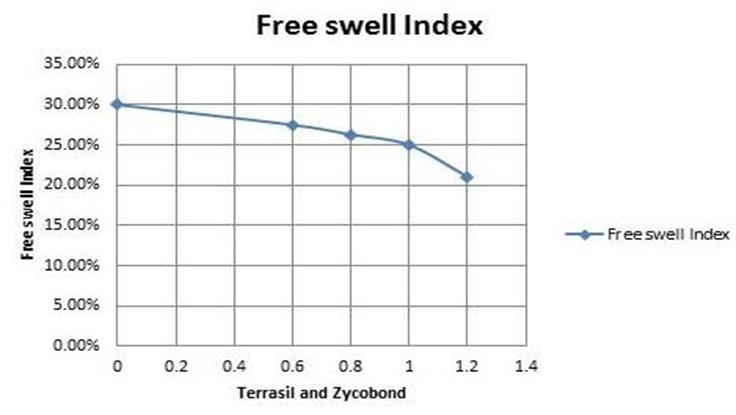
Fig 1: Variation
TheadditionofTerrasilandZycobondresultedinadecrease in the free swell index of the soil. This indicates an improvement in soil behavior, particularly in terms of reducing volume changes associated with moisture variations Table3showstheUCSofallsamplesvaryingwith curingperiod.
International Research Journal of Engineering and Technology (IRJET) e-ISSN: 2395-0056
Volume: 11 Issue: 05 | May 2024 www.irjet.net p-ISSN: 2395-0072
Thestudyfoundthattheunconfinedcompressivestrength decreased as the dosage of nano chemicals (Terrasil and Zycobond) increased. This outcome contrasts with the expectationthataddingstabilizingagentslikecementand nanochemicalswouldenhancethestrengthofthesoil.Given the unexpected decrease in unconfined compressive strength with the addition of nano chemicals, the study concluded that further investigation is necessary to understandtheunderlyingreasonsforthisphenomenon.
M. P. Kumar et al. (2022) carried out the experimental investigation, treating expansive soil with varying proportionsofRiceHuskAsh(RHA)andZycobond.Thetype of soil used in the study was natural expansive soil which was extracted from the agricultural fields of turupulanka nearAmalapuram,EastGodavaridistrict,AndhraPradesh. Thepreliminarytestswereperformedonuntreatedsoiland soilwasclassifiedasCHaccordingtoISstandards.Thesoil wasfurthertestedwithRHAandZycobondtocarryouttests likeUCS,CBR,Compaction test,Differential freeswell and Atterberg’slimit.Theresultsoftreatingexpansivesoilwith 15% RHA and 1.5% Zycobond were compared with untreated soil. The treated soil had shown a significant decreaseinplasticityindex,adecreaseinoptimalmoisture content, and an increase in maximum dry density. The CaliforniaBearingRatio(CBR)andUnconfinedCompressive Strength(UCS)valueshadalsoimproved,withtheCBRvalue increasingby24.66%andtheUCSvalueby27.40%after28 daysofcuring,respectively.Overall,itwasconcludedthat soil stabilization with 15% RHA and 1.5% Zycobond considerably improved the strength characteristics of expansiveclaybeds.
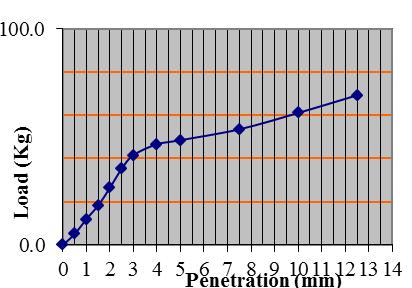
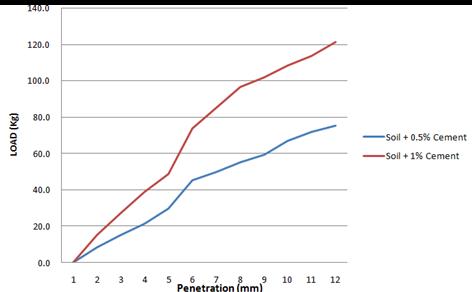
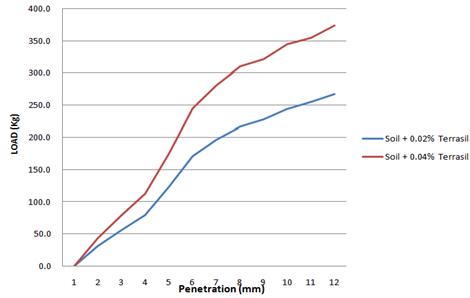
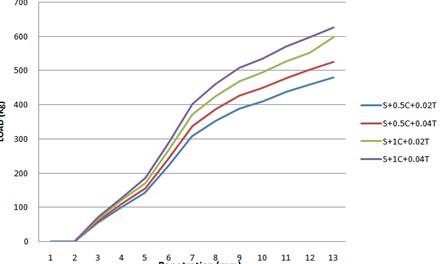
Prof. N. B. Parmar et al. (2016) carried out Laboratory InvestigationofSoilStabilizedusingTerrasil.BlackCotton (BC)soilsampleswerecollectedforlaboratorytestingwhich represented the natural soil condition without any stabilization. The collected soil samples were prepared accordingtostandardproceduresfortesting.Twotypesof stabilizerswereselectedforthestudy,Terrasilwaschosen asachemicalstabilizer,whilecementservedasatraditional stabilizerforcomparisonpurposes.Forcementstabilization, dosages of 0.5% and 1% were used. For Terrasil stabilization,dosagesof0.02%and0.04%wereemployed. Various laboratory tests were conducted to evaluate the engineeringpropertiesofthestabilizedsoilsamples. Fig2 showssoakedCBRvalueofnaturalsoil.Fig3showssoaked CBRvalueofSoil+Cement Fig4showssoakedCBRvalueof Soil + Terrasil. Fig 5 shows soaked CBR value of Soil + Cement+Terrasil
International Research Journal of Engineering and Technology (IRJET) e-ISSN: 2395-0056
Volume: 11 Issue: 05 | May 2024 www.irjet.net p-ISSN: 2395-0072
Addition of stabilizers like cement and Terrasil led to an increaseintheCaliforniaBearingRatio(CBR)valuesofthe soilfrom2.58to5.38onadditionof1%cement,from2.58to 12.49onadditionof0.02%Terrasil,andfrom2.58to17.89 onaddition of0.04% Terrasil.Thisindicated thatTerrasil hadanotableeffectonimprovingthesoil'sbearingcapacity. Thestudyfoundthata dosageof0.04%Terrasil provided the best CBR values compared to other dosages tested. Stabilizing the soil with cement and Terrasil affected the GranularSubBase(GSB)andDenseBituminousMacadam (DBM) layers of the pavement, resulting in a reduction in theirthickness.Thisreductionrangedfromapproximately 35-80%, indicating potential cost savings in pavement construction. The study concluded that Terrasil could effectively improve the strength of the subgrade soil, enhance load-carrying capacity, reduce permeability, erosion, and construction costs, making it a promising stabilizerforroadconstruction.
K. Italiya et al. (2020) carried out an experimental investigation on improvement of soil properties using zycobond+terrasilwithGGBS.Theaimoftheinvestigation was to determine the physical and chemical behaviour of unsterilizedblackcottonsoilandevaluatethestrengthand theeffectivenessofthestabilizersmixedwithblackcotton soil. The study focuses on black cotton soil, chosen for its expansive properties. Stabilizers like Ground Granulated Blast Furnace Slag (GGBS), Zycobond, and Terrasil are selected based on their properties and suitability for soil stabilization.Baselinesoilpropertiesoftheblackcottonsoil are established through tests including Liquid limit test, Plastic limit test, Standard Proctor test for Optimum MoistureContent(OMC)andMaximumDryDensity(MDD), California Bearing Ratio (CBR) test for soil strength assessment.Initially,thesetestsareperformedonuntreated black cotton soil (0% stabilizer content) to determine baselinevalues.Stabilizers(GGBS,Zycobond,andTerrasil) are added to the black cotton soil in varying percentages, rangingfrom0%to15%bydryweight.Thepercentageof stabilizersisgraduallyincreased,andtestsarerepeatedat eachincrementtoobservetheeffectsonsoilproperties.As the percentage of stabilizers increased, there was an increaseintheCBRvalueforunsoakedconditionsinboth samples Table4showstheresultofP.L,L.LandP.Iwith0% to15%usingGGBS,ZBandTS.Table5showstheresultof OMC and MDD with 0% to 15% GGBS. Table 6 shows the resultofUnsoakedCBRwith0%to15%GGBS,ZBandTS Table 7 shows the result of Soaked CBR with 0% to 15% GGBS,ZBandTS
Table 4: Result of P.L, L.L and P.I with 0% to 15% using GGBS, ZB and TS (K. Italiya et al., 2020)
Table 5: Result of OMC and MDD with 0% to 15% GGBS (K. Italiya et al., 2020)
Sr. No. GGBS (%)
Table 6: Result of Unsoaked CBR with 0% to 15% GGBS, ZB and TS (K. Italiya et al., 2020)
Sr. No. GGBS, ZB & TS (%)
Table 7: Result of Soaked CBR with 0% to 15% GGBS, ZB and TS (K. Italiya et al., 2020)
No. GGBS, ZB & TS (%)
Volume: 11 Issue: 05 | May 2024 www.irjet.net p-ISSN: 2395-0072
This suggests an improvement in soil strength. However, whenthestabilizerpercentagereached15%,theCBRvalues forbothunsoakedandsoakedconditionsdecreasedinboth samples.Thisindicatesadecreaseinsoilstrengthathigher stabilizerpercentages.WiththeincreaseinGGBS,Zycobond, andTerrasilpercentages,theOMCdecreasedwhiletheMDD increased. This suggests that the soil became denser and harder withhigherpercentagesofstabilizers.Thespecific gravity of the soil increased with higher percentages of stabilizers,indicatingincreasedsoildensity.Thepercentage of finer particles decreased with the increase in stabilizer percentages,whichstrengthenedthesoil.Thestudyfound that a 10% addition of GGBS, Zycobond, and Terrasil providedsignificantimprovementinCBRvalues.Increasing stabilizer percentages led to improvements in soil properties,butexcessivelyhighpercentagesmightleadto decreasedsoilstrength.
N. A. Patel et al. (2015) carried out subgrade soil stabilizationusingchemicaladditives.Inthisexperimental investigation, the soil under scrutiny was gathered near Nadiad, Gujarat, where the road was slated to pass, connectingAhmedabadtoVadodaraviaNH8.Inthestudy, twochemicaladditiveswereusedasstabilizers:Terrasiland Zycobond and they were sourced from Zydex Industries, Vadodara.Thestudyconductedseverallaboratorytestson theuntreatedsoiltoevaluateitsphysicalandengineering propertiesaccordingtoIndianStandard(IS)specifications which included Liquid Limit Test, Plastic Limit Test, Free Swell Index Test and California Bearing Ratio (CBR) Test. Fromthesepreliminaryteststhesoilwasclassifiedasclayey soil.Thesoilwastreatedwiththechemicalstabilizersand underwent a series of laboratory tests similar to those performedontheuntreatedsoil.Thestudyfoundthatthe use of Terrasil and Zycobond stabilizers improved soil engineering properties, making it more suitable for road construction.Theliquidlimitdecreased,indicatingimproved stabilityandreducedmoisture-inducedvolumechanges.The plastic limit also changed, affecting workability and compactioncharacteristics.Thefreeswellindexdecreased, minimizingpotentialforsoilexpansion.Themaximumdry density increased, indicating better compaction and loadbearingcapacity.TheCaliforniaBearingRatio(CBR)value alsoimproved,indicatinggreaterresistancetopenetration andimprovedload-bearingcapacity.Thesefindingssupport theeffectivenessofchemicalsoilstabilizationtechniquesin enhancing soil performance and ensuring long-term road infrastructurestability.
O. S. Aderinola and E. S. Nnochiri (2017) carried out the stabilizationofLateriticsoilusingTerrasilsolution.Inorder to carry out this experimental investigation, six different lateritic samples were sourced from three borrow pits locatedwithinAkure,Nigeria.Thesesampleswerechosento representavarietyofsoilconditionsandwerecollectedin accordance with standard sampling procedures. Before
stabilization,preliminarytestswereconductedonthesoil samplestodeterminetheirbasicproperties.
Table 8: Summary of Preliminary Results of Lateritic Soil Sample from Borrow Pit 1 (E. S. Nnochiri et al., 2017)
Table 9: Summary of Preliminary Results of Lateritic Soil Sample from Borrow Pit 2 (E. S. Nnochiri et al., 2017)
Table 10: Summary of Preliminary Result of Lateritic Soil Sample from Borrow Pit 3 (E. S. Nnochiri et al., 2017)
International Research Journal of Engineering and Technology (IRJET) e-ISSN: 2395-0056
Volume: 11 Issue: 05 | May 2024 www.irjet.net
Table 12: Compaction Tests Results for Borrow Pit 3, Sample 2 (E. S. Nnochiri et al., 2017)
Tables8and9showthatthesoilsamplesfromborrowpits1 and 2 were good enough and therefore needed no stabilization,whilesoilsamples1and2fromborrowpit3 are poor in strength, thus, necessitating the need for stabilization. Table 10showsthesummary of preliminary resultoflateriticsoilsamplefromborrowpit3
Terrasil,a commerciallyavailablechemical stabilizer,was preparedbymixingitwithdistilledwaterinaspecifiedratio. Compactiontestswereperformedonthesoilsampleswith varying percentages of Terrasil solution. The soil samples werecompactedusingstandardcompactionprocedures,and the MDD and OMC were determined for each Terrasil contentlevel.
Table 11: Compaction Tests Results for Borrow Pit 3, Sample 1 (E. S. Nnochiri et al., 2017)
CBR tests were conducted to evaluate the strength characteristicsofthestabilizedsoilsamples.Theunsoaked CBR values were determined for each soil sample with differentpercentagesofTerrasilsolution.
Table 13: CBR Tests Results for Borrow Pit 3, Sample 1 (E. S. Nnochiri et al., 2017)
Tables 11 and 12 show the relationship between the Maximum Dry Density (MDD) and Optimum Moisture Content (OMC) with variations of water – terrasil ratio contents. The result indicated that between 0% and 12% terrasilsolution,theMDDvaluesforbothsamples increased andtheOMCreduced.
Table 14: CBR Tests Results for Borrow Pit 3, Sample 2 (E. S. Nnochiri et al., 2017)
International Research Journal of Engineering and Technology (IRJET) e-ISSN: 2395-0056
Volume: 11 Issue: 05 | May 2024 www.irjet.net p-ISSN: 2395-0072
but increasing pavement load capacity, offering economicbenefitsforroaddevelopment.
Terrasil-treated soil can replace clay in landfill liners and capping materials due to their strong bonds, increasedstrength,andimperviousness.
Tables 13 and 14 show that for the increasing addition of terrasil solution, CBR value rose from 8.4% to optimum value of 30.3%, for sample 1. For sample 2, the CBR rose from6.2%to32.0%
Fromthestudy,itwasconcludedthatTerrasilwasfoundto reduce the plasticity indices of the soil, improving its strengthproperties.CBRvaluesincreasedwiththeaddition ofTerrasil,indicatingenhancedsoilstrength.Terrasilwas consideredaneffectiveandeconomicalstabilizingagentfor poorsoil.
M.V.Reddy et al. (2023)investigatedtheimprovementof strengthcharacteristicsofexpansivesoilsusingterrasil,fly ashandcement.Thestudyaimedtoevaluatetheimpactof stabilizer mix proportions on soil properties, determine optimal additive combinations for improved strength, evaluate stabilizer effectiveness in supporting structures, and explore cost-effective soil stabilization methods in challengingsoilconditions.Soilsampleswereobtainedfrom MahabubNagar,andvariousstabilizerswerechosenforthe study.Thematerialsincluded43-gradeOrdinaryPortland Cement, terrasil from ZYDEX INDUSTRY, and fly ash obtainedfromathermalpowerplant.Standardlaboratory experiments were conducted to evaluate different mix proportionsofstabilizersaddedtothesoil.Theexperiments aimedtodeterminetheoptimalcombinationandproportion ofadditivesthatimprovedsoilstrengthandotherrelevant properties.Threesetsofadditivemixtureswereusedinthe experiment,varyingintheproportionsofcement,terrasil, andflyash.Varioussoilproperties,includingspecificgravity, grainsizedistribution,Atterberglimits,CBRvalues,andUCC strength,weremeasuredandrecordedforuntreatedsoiland soil with different stabilizer mixtures. The experimental results were analyzed and discussed in terms of the effectiveness of different stabilizer combinations in improvingsoilproperties.Conclusionsweredrawnbasedon the findings, highlighting the most effective mixtures and theireconomicviability.
Fromtheabove-mentionedpublishedresearchworkbased on use of terrasil and zycobond as chemical stabilizers in geotechnical engineering to modify the stability of soil, followingconcludingremarkscanbedone:
Thefindingssuggestadding Terrasil and Zycobondto improvenaturaluse,reducingliquidlimitandplasticity,
StudyfoundthatsoilstabilizationwithGGBS,zycobond, and terrasil improved CBR values, but increased stabilizerpercentagesledtodecreasedoptimalmoisture content,increaseddrydensity,andspecificgravity.
TheCBRvalueofparentsoilincreaseswiththeaddition ofRecronfiber,andTerrasilwithvaryingpercentages, withSilicafumeincreasingitmoreeffectivelyat15%. Thebestcombinationforsoilstabilizationis(SF+RF+T), whichismosteconomicalandreducescrustthickness withhigherCBRvalues.
Terrasil stabilized roads improve subgrade strength, reduceerosion,andenhancesoilquality.Construction costsarelowerthanun-stabilizedpavements,reducing 60-80%.
CBRvaluesincreaseswiththeincreaseinpercentageof terrasil solution. Terrasil serve as a cheap stabilizing agentforpoorsoil.
Soil type significantly influences performance, with nano-chemical soil stabilizers improving clay soil's properties. However, increased dosage rates result in stiffersoilandimpermeability.
Using RHA and Zycobond stabilized soil significantly improvesthestrengthcharacteristicsofexpansiveclay beds,reducingliquidlimit,plasticlimit,OMC,MDD,CBR, UCS,andstrengthover28days.
[1] P.Tripathi,D.S.Ray(2020),“EvaluationandAnalysisof Soil Stabilization with Some Non-Conventional Additives”, InternationalJournalofEngineeringResearch & Technology (IJERT),Volume09,Issue07,pp.2-7
[2] K.Italiyal,S.Chauhan,P.Lakhani,K.Umrao,V.Vaghela, S.Nayak(2020),“ImprovementofSoilPropertiesusing Zycobond+TerrasilwithGGBS”, InternationalJournalof InnovativeResearchinTechnology,Volume07,Issue01, pp.1-3
[3] N. A. Patel, C. B. Mishra, D. K. Parmar, S. B. Gautam (2015), “Subgrade Soil Stabilization using Chemical Additives”, InternationalResearchJournalofEngineering and Technology (IRJET),Volume02,Issue04,pp.3-5
[4] U.V.Mrudul,Prof.S.M.Damodariya,Prof.N.B.Parmar (2016), “Laboratory Investigation of Soil Stabilized
International Research Journal of Engineering and Technology (IRJET) e-ISSN: 2395-0056
Volume: 11 Issue: 05 | May 2024 www.irjet.net p-ISSN: 2395-0072
using Terrasil”, International Journal for Scientific Research & Development,Volume04,Issue03,pp.2-4
[5] O. S. Aderinola, E. S. Nnochiri (2017), “Stabilizing Lateritic Soil Using Terrasil Solution”, Journal of Civil Engineering,Volume12,Issue01,pp.4-8
[6] A. Thomas, R. K. Tripathi, “Soil Stabilisation Using Terrasil”, International Journal of earth sciences and engineering,Volume09,Issue03
[7] S. Subbarayudu, S. Rozwana (2017), “Study of soil stabilization by using recron-3s, fly-ash & lime”, International Journal for Technological Research in Engineering,Volume04,Issue09
[8] N.A.Patel,Prof.C.B.Mishra,Mr.V.V.Pancholi(2015), “ScientificallySurveyingtheUsageofTerrasilChemical forSoilStabilization”, International Journal of Research in Advent Technology,Volume03,Issue6
[9] J. B. Ozaa, Dr. P. J. Gundaliya (2012), “Study of black cottonsoilcharacteristicswithcementwastedustand lime”, International Journal of Advanced Structures and Geotechnical Engineering,Volume01,Issue02.
[10] R. Srivastava, P. Kushwaha, Dr. B. L. Swami (2016), “SuitabilityofNano-ChemicalStabilizerinBlackCotton Soil”, Indian Geotechnical Conference,pp.1-7
[11] Dr. R. S. Kumar, S. R. Rohith, W. Paul, N. K. Swamy (2018),“AStudyontheeffectofStabilizers(Zycobond& Terrasil) on Strength of Subgrade on BC Soil”, Indian Journal of Scientific Research
[12] T. Raghavendra, B. Rohini, G. Divya, S. A. Sharooq, B. Kalyanbabu(2018),“StabilizationofBlack CottonSoil using Terrasil and Zycobond”, International Journal of Creative Research Thoughts
[13] M. P. Kumar, R. D. Babu, K. Ramu (2022), “Use of ZycobondinEnhancingTheStrengthofExpansiveSoil ModifiedWithRiceHuskAsh(RHA)”
[14] G. Sneha, M. V. Reddy, M. Prashanth, S. Talari (2023), “ImprovementofStrengthCharacteristicsofExpansive Soils Using Terrasil, Fly Ash and Cement by Forming ZycoBond”