
International Research Journal of Engineering and Technology (IRJET) e-ISSN: 2395-0056
Volume: 11 Issue: 05 | May 2024 www.irjet.net p-ISSN: 2395-0072
International Research Journal of Engineering and Technology (IRJET) e-ISSN: 2395-0056
Volume: 11 Issue: 05 | May 2024 www.irjet.net p-ISSN: 2395-0072
Ar. Gayathri RS1, Ar. Indra Priya K2, Ar. Fathima Taskeen Z3
1Post Graduate Student, M. Arch – Construction Project Management, Faculty of Architecture, Dr. MGR Educational and Research Institute, Adayalampattu, Chennai
2Deputy Head of the department, M. Arch – Construction Project Management, Faculty of Architecture, Dr. MGR Educational and Research Institute, Adayalampattu, Chennai
3Additional Head of the department, M. Arch – Construction Project Management, Faculty of Architecture, Dr. MGR Educational and Research Institute, Adayalampattu, Chennai
Abstract – The construction industry faces numerous challenges, and one often overlooked issue is noise management, especially in India. Ignoring the dangers of construction noise can have serious health effects on workers and disrupt the surrounding environment. This study thoroughly examines the characteristics of noise from construction activities. It conducts a comprehensive analysis of noise management through a review of literature, journal studies, and online and live case studies. Additionally, the research identifies various noise mitigation strategies for construction projects to prioritize the health and safety of workers. By selecting a real-time construction site for this research, suitable noise barriers are chosen and its cost-time analysis is conducted to compare with the overall project budget for the noise barrier implementation.
Key Words: Construction, Noise, Workers, Health, Safety, Surroundings
Construction activities are known to generate high levels of noise which can potentially expose workers to hazardous noise levels. Excessive exposure to noise can have both Auditory and Non-Auditory effects. The Auditory effects include noise-induced hearing loss, tinnitus, and hyperacusis while the non-auditory effects include sleeping disturbances, irritability, stress, poor concentration, difficulties in speech comprehension, annoyance,andcognitiveimpairments.Additionally,noise can cause increased blood pressure and heart disease. To mitigate these risks, regulatory bodies such as the Occupational Safety and Health Administration (OSHA) and the Indian Ministry of Forest and Environments have recommendeda maximum allowablenoise exposure level of90decibelsfor8hours.Anyexposuretonoiseabove85 decibels is not recommended. Unfortunately, many workers do not wear adequate hearing protection further increasing their susceptibility to permanent hearing damage. According to the Centre for Disease Control and Prevention,22 million workersare exposedto potentially
damaging noise at work each year. Safety managers are crucial in mitigating these risks by providing comprehensive information on the dangers of construction noise exposure and enforcing safety measures to ensure the safety and well-being of workers andsurroundings.
The primary aim of the study is to identify the characteristics of construction noise generated by various construction activities and to reduce the noise levels by implementing effective noise mitigation strategies such as noise barriers. The study will also analyze the cost and time involved in implementing these strategies, compare them with the overall budget, and ensure the health and safety of construction workers and the surrounding environment.
ThePrimaryObjectiveistoassessHigh-noiseconstruction operations and recommend an appropriate Noise Barrier in real-time at a construction site to mitigate the associatednoise.Thisincludesanalyzingthecostandtime implicationsandensuringthehealthandsafetyofworkers andthesurroundingenvironment.
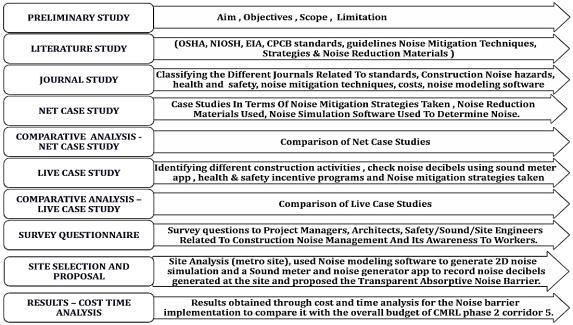
Fig - 1: Methodology
International Research Journal of Engineering and Technology (IRJET) e-ISSN: 2395-0056
Volume: 11 Issue: 05 | May 2024 www.irjet.net p-ISSN: 2395-0072
3.1 Standards
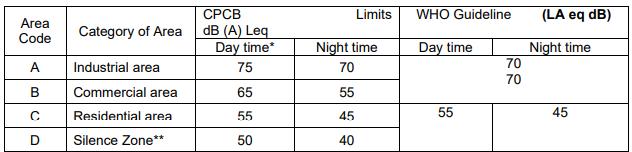
Fig - 2: CPCBguidelinesforambientnoiselevels
3.2
Photovoltaic Noise Barriers (PVNBs), Echo Barriers, Polycarbonate Noise Barriers, Timber Noise Barriers, Green Wall Barriers,AbsorptiveNoise Barriers, Reflective Noise Barriers, Concrete Noise Barriers, Metallic Noise Barriers.
ForMachineriesandEquipments-PerforatedVinyl Foam, Proprietary Fiber Blend, Acoustic Floor Mat Treatments, Sound Dampening Mats, Nubbed Foams, Soundproofing Blanket.
3.4
TheJournalstudyconsistsof20researchpapersrelatedto noise management in construction, which also include OSHA standards, personal protective equipment, methods andanalysistodetectconstructionnoise,noisemitigation techniques, different types of noise barriers, noise reduction materials, cost analysis, compensation claims due to construction noise, 2D and 3D noise simulation software used to generate noise data, and health impacts onworkersandthesurroundingenvironment
4. CASE STUDY
4.1 Net Case Studies
PhotovoltaicNoiseBarrier(PVNB)technologyinvolvesthe combination of noise control measures with the generation of renewable power energy. The effectiveness of this approach is demonstrated in a real settlement situated alongside roads. Noise control efficiency was analyzed using Sound PLAN software. Additionally, the evaluation process utilized the TOPSIS method, a widely used multi-criteria decision-making technique (MCDM). The results showed a 44% reduction in noise, while also being capable of generating 524804 kWh of electricity annually.
ThecasestudyusedtheDALYmetrictoassesshealthrisks from construction noise. It found that individuals near construction sites are most affected. Contractors should consider these risks and implement environmentally friendly construction practices to minimize the impact on nearbyresidents.
Thisstudywascarriedoutinaresidentialcontextaround the auxiliary tunnel of line 3 metro- Abbas-Abad districtTehran- Iran. The William Fine Method revealed that construction policies fail to consider all necessary environmental conditions in urban development and inadequatemonitoringledto constructionnoise pollution becomingasignificantproblemforTehrancitizens.
Thetypologyofthestructureisthatofahospital,situated within the institutional campus in Ramapuram, Chennai. Thetotalbuilt-upareaofthehospitalbuildingamountsto 132,000 square feet, and it is structured as a G+10 building.Theprojectcommencedin2022andiscurrently inprogress.
Theprimaryaimofselectingthiscasestudyistomeasure thedecibellevelsofconstructionoperationsthatgenerate high noise, along with the types of equipment involved, and to analyze the characteristics of the resulting constructionnoise.
The Site has experienced high Noise levels due to various Construction activities including Concrete Mixing, Wood Cutting, Granite Polishing, Floor Tile Polishing, Tile Cutting, Concrete Drilling, Excavation for Pile Foundation, and Pile Foundation Works. The Noise Decibels and Frequencygraphhavebeenaccuratelyrecordedusingthe SoundMeter&NoiseGeneratorApp.
FollowingthemeasurementofNoiseDecibellevelsduring construction activities, Interviews were conducted with theconstruction workersto assesstheirunderstanding of the hazards associated with construction noise and its impact on their health. Subsequently, Safety and Site Engineers, along with the Project Manager, were interviewedtoascertaincompliancewithsafetymeasures such as providing Audiometric tests, Ear muffs, and Earplugs for high-noise operations. Furthermore, interviewsaimedtoascertainifsafetyincentiveprograms were in place to educate workers about health and safety duringconstruction.
International Research Journal of Engineering and Technology (IRJET) e-ISSN: 2395-0056
Volume: 11 Issue: 05 | May 2024 www.irjet.net p-ISSN: 2395-0072
TheconstructionworksfortheMMRCmetroLine3inthe Colaba - Cuffe Parade area have led to significant noise disturbancesfornearbyresidents.
These construction activities, occurring both during daytime and nighttime, have caused sleeplessness, disturbances, and increased blood pressure among children and elderly individuals. In response to the complaints, the Mumbai Pollution Control Board (MPCB) wascontacted,andacasefornoisepollutionwasfiled.The National Environmental Engineering Research Institute (NEERI)intervenedandinstructedtheMumbaiMetroRail Corporation Ltd (MMRCL) to conduct a noise assessment studyontheColaba–CuffeParadestretchandimplement necessarynoisecontrol measuresattheconstructionsite. NEERI emphasized that while the noise may not pose a directhealthriskorcausehearingdamage,itsignificantly affects people's quality of life. The construction noise can leadtoirritation,stress,andsleepdisturbances,ultimately contributingtohigherbloodpressureandanxiety.
Following NEERI's directives, noise decibel levels were recorded at various points near the metro site, and the Mumbai Metro Rail Corporation (MMRC) commenced the installation of noise barriers near residential areas to mitigate noise levels. These noise barriers are composed of polycarbonate. After their installation, the noise barriers have resulted in an overall noise reduction of 20 to25decibels.
Thissurveyaimsto gatherinsightsonconstructionnoise, itshazards,andnoisemanagementfromArchitectureand Civil Engineering students, site/civil engineers, architects, project managers, and safety managers. The survey comprises15questionsandhasreceivedresponsesfroma totalof110participants.
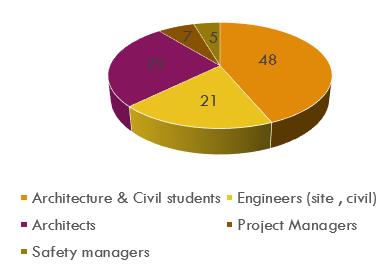
Chart - 1: Participantsforsurveyquestions
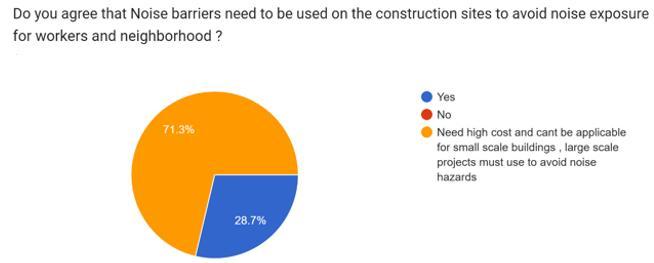
Chart - 2: Surveyresultsonimplementingnoisebarrier
Based on the survey results, it is evident that there is a need for noise barriers in the busiest urban areas to mitigateconstructionnoise.
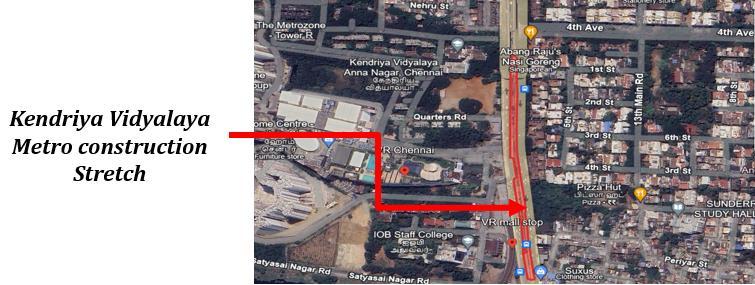
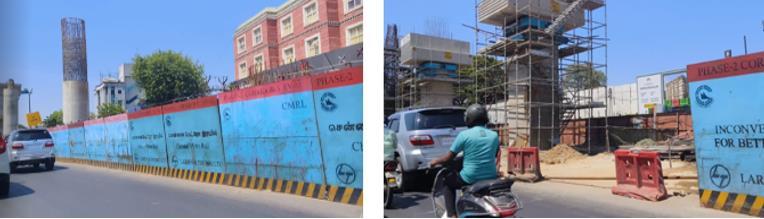
TheselectedsiteisKendriyaVidyalayaMetroConstruction site, situated within the CMRL Phase 2 Corridor 5. CMRL Phase 2, Corridor 5 spans from Madhavaram to Sholinganallur, covering a total distance of 47.0 km, with 41.17 km being elevated and 5.83 km underground. The Kendriya Vidyalaya stretch encompasses a distance of 0.9 km.
Reason for choosing the KV Metro site
Phase 2 of the Corridor 5 metro construction is taking placeonthebustling100-footGrandNorthernTrunkRoad inAnnaNagar,Chennai.
The construction activities, particularly during night hours, have been significantly impacting the residents, especially the elderly and children, leading to sleep disturbances, headaches, high blood pressure, stress, and even cardiac issues due to exposure to excessive noise levels. Subsequently, the affected residents have lodged a formal complaint with the Pollution Control Board.
International Research Journal of Engineering and Technology (IRJET) e-ISSN: 2395-0056
Volume: 11 Issue: 05 | May 2024 www.irjet.net p-ISSN: 2395-0072
Implementing noise mitigation strategies, such as noise barriers, helps reduce the adverse effects of construction andtrafficnoiseinthearea.
The important landmarks and major point sources where the noise decibels are recorded near the Kendriya Vidyalaya metro construction site are Kendriya Vidyalaya School, VR Mall, IOB Staff College, Be Well Hospital, and Central Govt Officers Quarters. These are where the point sourcesaretakenforrecordingnoisedecibels.
Noise Decibels have been generated using the Sound Meter&NoiseGeneratorapp.
Table - 1: NoisedecibelsrecordedduringtheDay
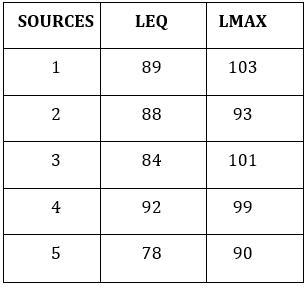
Table - 2: NoisedecibelsrecordedduringtheNight
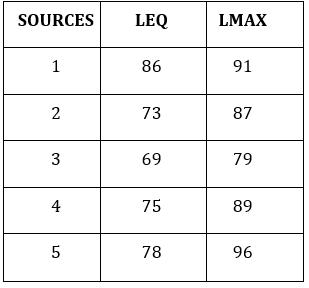
AspertheguidelinesoftheCentralPollutionControlBoard (CPCB)forambientnoisedecibellimits,therecordednoise decibels at the site exceed the permissible levels. Consequently, nearby residents are being exposed to prolonged periods of heavy construction noise, leading to adversehealtheffects.
`
5.2 Cost Analysis – CMRL Phase 2, Corridor 5
Table - 3: EstimatedCostofCMRLCorridor5(Crores)
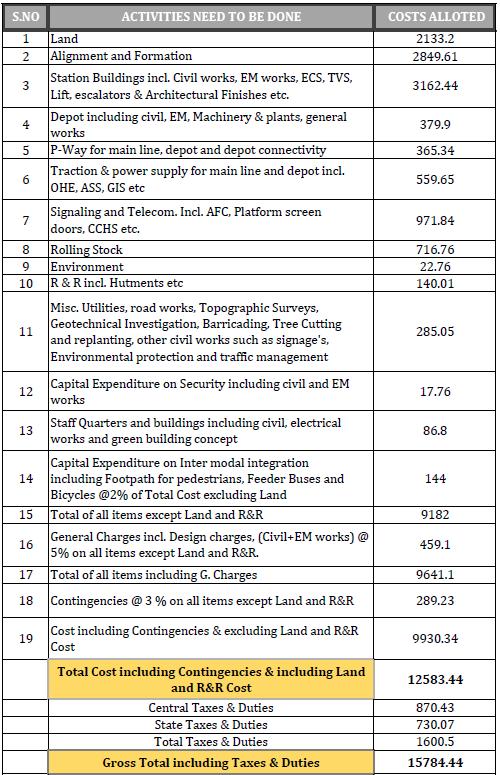
Table - 4: EstimatedCostofEnvironmentalManagement
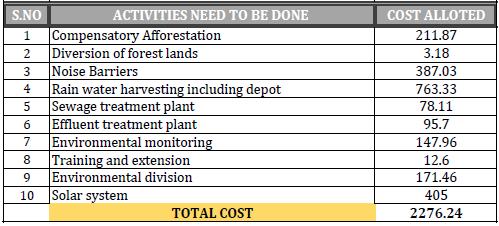
(Coststhatareestimatedintheabovetableinlakhs)
Overall cost and Budget for CMRL, Corridor 5
Theoverallbudgetforcorridor5=Rs.15,784.44 Crores
BudgetforEnvironmentalManagement=Rs.22.76 crores
CostallottedforNoisebarriers = Rs.3.87 Crores
Though separate costs have been allotted for Noise barriers, no Noise Barrier is implemented in any of the ChennaiMetrosites.
International Research Journal of Engineering and Technology (IRJET) e-ISSN: 2395-0056
Volume: 11 Issue: 05 | May 2024 www.irjet.net p-ISSN: 2395-0072
5.3.1
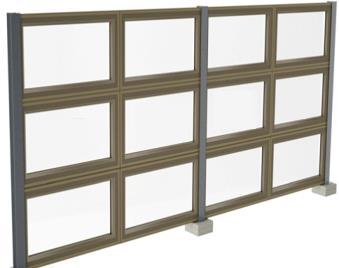
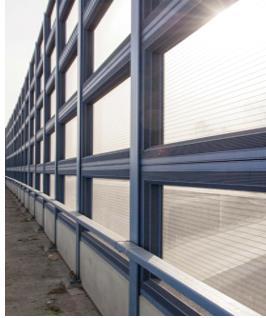
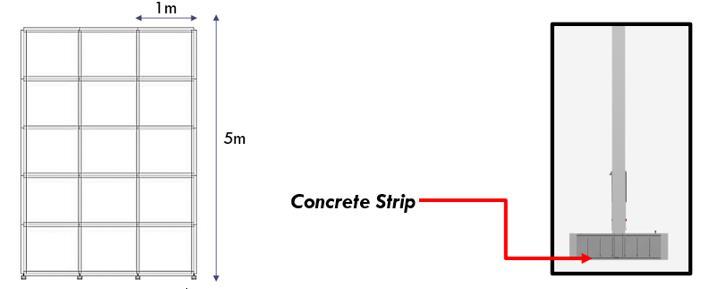
AbsorptiveNoisebarriers,ontheotherhand,don’treflect sound.Thismaterialissuitableforbuildingnoisebarriers to protect residents living alongside roads or railways. It offers high transparency and sound insulation (up to 32 decibels), comes in a wide range of colors, is easy to assemble and maintain, is highly resistant to UV rays and corrosion, durable, and lightweight. The proposed noise barrierhasadesignlifeofapproximately25years,witha height of 5m on each side and bay widths of 1m. The barrier materials consist of PMMA and aluminum with a 15mm thickness. The estimated installation cost for the noisebarrieris5800persquaremeter,resultinginanoise reduction of approximately 32 decibels. These noise barriers can be securely affixed using either concrete foundations or by bolting them to a continuous concrete strip.
5.3.2
Concrete
Length = 2952.76 ft ; Width = 1 ft ; Height = 6 inches
Concrete grade =M25
Materials Required:
Cement (No. of bags) = 236 bags ; Sand = 12 tons ; Aggregate = 24tons
Cost:
Cement = 236x380=Rs.89,680 ; Sand = 12tonsx1600 =Rs.19,200 ; Aggregate = 24x1150=Rs.27,600
Total Cost for one side of the road = Rs.1,36,480
The construction of concrete strips on both sides of the metrostretchwillresultinadoublingoftheoverallcost.
Total cost for concrete strips = Rs.2,72,960
Cost of Noise Barrier installation = 5800/sq.m
Length = 900m+900m ; Height = 5m
Total area = 4500+4500=9000sq.m
The total cost of Noise barriers for one side of the stretch = Rs.2,61,00,000
We need to calculate the cost of installing noise barriers onbothsidesofthemetroconstructionstretch.
Total cost of the noise barriers = Rs.5,22,00,000
Total cost for concrete strips = Rs.2,72,960
Total cost of the noise barriers = Rs.5,22,00,000
Overall Budget required = Rs. 5,24,72,960
Rs. 5,24,72,960 > Rs. 3,87,00,000
International Research Journal of Engineering and Technology (IRJET) e-ISSN: 2395-0056
Volume: 11 Issue: 05 | May 2024 www.irjet.net p-ISSN: 2395-0072
Thebudgetneededfortheinstallationofnoisebarriersat theKVmetrostationstretchexceedstheallocated budget fornoisebarriersforcorridor5,whichis Rs. 1,37,72,960
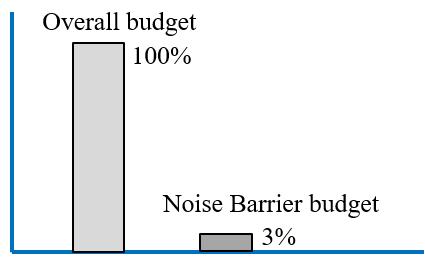
Chart -3: PercentageofoverallandNoiseBarrierbudget
5.3.3 Time Analysis
Noisebarrierinstallationwork=150sq.m/day
Timerequiredfor(4500+4500)9000sq.m=60days
Estimated Budget for the Noise Barrier installation at the KVmetrosite(0.9km)is Rs. 5,24,72,960 Crores
As per CMRL data, Total Budget allotted for the Noise Barrier Installation for the entire Phase 2 Corridor 5 (47 km)is Rs. 3,87,00,000
EstimatedbudgetforNoiseBarrierinstallation(47kms)is Rs. 246.28 Crores
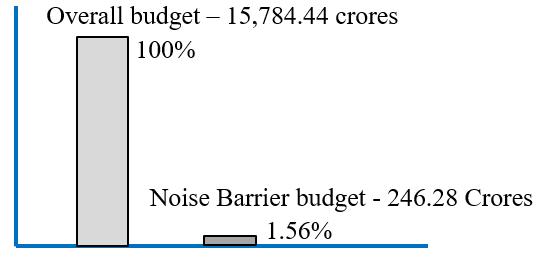
Chart - 4: PercentageofOverallCMRLPhase2,Corridor5, andNoiseBarrierbudget
Overall Budget Required (with noise barrier installation costs) = 16,030.72 Crores
The selected Metro site for analysis is situated on one of Chennai's most heavily trafficked roads, which is already subject to substantial traffic noise and ongoing construction activities, particularly at night. As a result, the neighborhood is experiencing heightened levels of noise pollution. Consequently, the proposal to implement Transparent Absorptive Noise barriers aims to mitigate the overall noise levels along this stretch, which encompasses schools, colleges, hospitals, commercial
complexes, malls, and residential apartments. The installation of these noise barriers will also serve to reduce residents' exposure to excessive noise. Given that the Chennai Metro Rail Limited (CMRL) has yet to complete metro construction at the selected site, the concurrent installation of the noise barriers can be seamlessly integrated with the construction of Metro Corridor5.
It is evident from the findings that the construction industry and government in metropolitan areas such as Chennaiarenotadequatelyaddressingconstructionnoise pollution and its associated risks. While the immediate impact of construction noise may not be substantial, prolonged exposure to high levels of noise can have adverseeffectsonthehealthofbothconstructionworkers and residents in proximity to construction sites. The Central Pollution Control Board (CPCB) has identified ChennaiasoneofthenoisiestcitiesinIndia,yettherehas beenanotableabsenceofnoisemanagementstrategiesin thecity.
Although the implementation of noise barriers and associated costs may present additional expenses, it is imperative to consider and enact noise mitigation technologies and strategies, especially in densely populated urban areas and major infrastructure projects. This approach is crucial not only for safeguarding the health and well-being of workers but also for fostering a pollution-freeenvironmentinsociety.
Mr. Balaji (Assistant General Manager); Mr. Suresh (Site Engineer); Mr. Deepan (Safety Engineer); Mr.Mahesh Kumar (Project Manager); Mr. Vivek (Civil Engineer); Mr. Kamaraj (Safety Manager); Mr.Arvind (Chief Architect); Mr.Shankar(AcousticEngineer)
[1] Elaheh Pahlevan, Bahram Malekmohammadi, Hasan Hoveidi, Esmaeil Salehi, “Environmental Risk AssessmentofNoisePollutionCausedbyConstruction Activities (Case Study: Metro Line 3, 7th District Tehran)
[2] F. Hasmaden, N. Yüğrük Akdağ&G. Zorer Gedik“An approach to the design of photovoltaic noise barriers andacasestudyfromIstanbul,Turkey
[3] Jun Xiao, Xiaodong Li and Zhihui Zhang “DALY-Based Health Risk Assessment of Construction Noise in Beijing, China
[4] OSHA Safety and Health Program Management Guidelines,www.osha.gov
International Research Journal of Engineering and Technology (IRJET) e-ISSN: 2395-0056
[5] https://www.dpcc.delhigovt.nic.in/cpcbstandards
[6] https://www.grammbarriers.com/ourproducts/acous ticnoisebarriers/clearsoundblokabsorptive/#:~:text= Safety%20%E2%80%93%20Transparent%20noise% 20barriers%20help,this%20day%20in%2C%20day% 20out
[7] https://chennaimetrorail.org/
Volume: 11 Issue: 05 | May 2024 www.irjet.net p-ISSN: 2395-0072 © 2024, IRJET | Impact Factor value: 8.226 | ISO 9001:2008 Certified Journal | Page1710