
International Research Journal of Engineering and Technology (IRJET) e-ISSN: 2395-0056
Volume: 11 Issue: 05 | May2024 www.irjet.net p-ISSN: 2395-0072
International Research Journal of Engineering and Technology (IRJET) e-ISSN: 2395-0056
Volume: 11 Issue: 05 | May2024 www.irjet.net p-ISSN: 2395-0072
Ar. Keerthika1, Prof.Ar. Vidya Naveen2
1Post-Graduate Student, M.Arch Construction Project Management, Faculty of Architecture, Dr. M.G.R Educational and Research Institute, Chennai
2Faculty of Architecture, Dr. M.G.R Educational and Research Institute, Chennai.
Abstract - Bridges play a crucial role in transportation infrastructure by enabling the efficient movement of both people and goods. The construction of bridges presents significant safety and health hazards for the workers involved. The research aims to conduct a comprehensive examination and evaluation of the safety of construction workers who are specifically engaged in bridge construction projects. The goals include researching safety issues, legal provisions, assessing safety measures, analyzing technologies, and determining the most effective safety technology. The study draws on primary data from surveys, interviews, and on-site observations, as well as secondary data from accident histories and safety records. Recommendations will be adapted with an emphasis on ongoing evaluation and adaption of safety practices to maintain a safer work environment.
Key Words: Bridge construction, Worker’s safety, Hazards, Fatalities, Safety measures, Employee satisfaction.
Bridgeconstructionisademandingindustrythatinvolves heavygear,dangerousterrain,andheights.Employeesareat riskoffallsandstructuralcollapses.Tosafeguardemployee safety and guarantee project success, an effective safety culture must be established. Considering building bridges involves high-risk tasks and intricate challenges, worker safety is crucial. Effective safety regulations, ongoing training, supervision, and appropriate safety equipment, such as fall protection systems and personal protective equipment,arenecessarytocreateasafeworkenvironment inthebuildingofbridges.Riskssuchasoperatingmachinery nearroadwaysorinsmallareasrequiretobeaddressedto employees.Placingahighpriorityonworkersafetylowers costs and increases productivity by reducing accidents, injuries,andfatalities.Itpromotesapositiveatmosphereat work,raisingemployeesatisfactionandretention.
The objective of this study focuses on understanding and addressing the safety concerns of workers involved in building bridges. It involves looking into the laws and regulations concerning worker safety and assessing how wellsafetymeasuresarebeingimplementedduringdifferent stages of construction. Additionally, the study examines
varioustechnologiesthatcouldenhancesafetyforworkers throughoutthebridge-buildingprocess
The methodology for assessing and improving safety practicesinbridgeconstructioninvolvesthreemainsteps: data collection, case study analysis, and training recommendations.
Firstly, data collection involves gathering primary and secondary data sources. Primary data sources include surveys,interviewswithworkersandsupervisors,andonsiteobservationstounderstandcurrentsafetypracticesand challenges.
Secondly, conducting a case study involves assessing the constructionsite'scurrentsafetypoliciesandpractices.This includes evaluating compliance with safety regulations, guidelines,andindustrystandards.
Finally,trainingrecommendationsaredevelopedbasedon thefindingsfromthedatacollectionandcasestudyanalysis. These recommendations are tailored to the specific circumstances of the construction project, considering factorssuchaslocation,design,materials,andotherrelevant variablesaffectingsafety.
Ensuring safety and health for construction workers in bridge construction in India involves adherence to regulations, comprehensive training, and provision of personalprotectiveequipment(PPE).Measuressuchasfall protection, scaffolding safety, and regular equipment maintenancearecrucial.Emergencyresponseplans,weather considerations,andpromotinghealthandhygienefurther contribute to worker well-being. Safety inspections, noise control, and establishing safety committees are vital for identifyingandaddressinghazards.Additionally,prioritizing worker welfare by providing fair wages, insurance, and healthcare access fosters a safe and supportive work environment.
International Research Journal of Engineering and Technology (IRJET) e-ISSN: 2395-0056
Volume: 11 Issue: 05 | May2024 www.irjet.net p-ISSN: 2395-0072
` LAWS ` DESCRIPTION PUNISHMENT
1 FactoriesAct (1948) Measures related to working hours, overtime, breaks, annual leave, and the employment
2 Buildingand Other Construction Workers (Regulationof Employment and Conditionsof Service)Act (1996)
3 TheContract Labour (Regulation andAbolition) Act(1970)
Twoyearsin imprisonment andafineofup toRs.2lakhs
Toprovide necessary protective equipment and training Punishedbya fineofuptotwo thousandrupees orasentenceof jailthatcanlast uptothree months
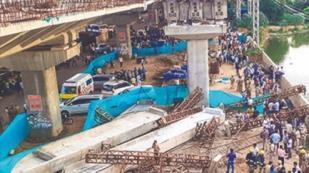
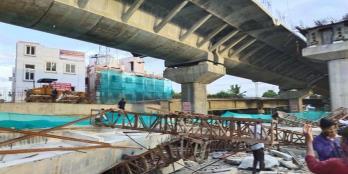
oneworkerandinjuringanother.Theincidentoccurreddue toafaultinthehydrauliccableswhileworkerswerefixing bearingsbetweenprecastconcretesegments.Despiteefforts towarn,oneworker,AakashSinghfromUP,sufferedserious injuries and was hospitalized. Poor maintenance of construction equipment played a significant role in the accident. Various factors such as construction defects, substandard materials, lack of maintenance, inadequate oversight, human error, and insufficient risk assessment contributed to the tragic event. This incident underscores thecriticalimportanceofadheringtosafetystandardsand implementing rigorous maintenance practices in constructionprojectstopreventsuchdisasters.
Ensure certain rights for contract laborers
4 TheIndian Electricity Rules(1956) Measures related to working hours, overtime, breaks, annual leave, and the employment
5 Buildingand Other Construction Workers' WelfareCess Act(1996) Fund initiatives such as health care, education, housing, and social security.
Imprisonment foratermwhich mayextendto threemonths,or withfinewhich mayextendto onethousand rupees
Thepenaltyfor mostoffenses isafinewhich mayextendto threehundred rupees.
Table -1: Lawsandregulation 5. NET CASE STUDIES
5.1 Natham flyover collapse
OnAugust2021,tragedystruckduringtheconstructionofa flyoveraspartoftheMadurai-NathamNational Highways projectinIndia.AsectionoftheflyoverbetweenPandiyan HoteljunctionandChettikulamcollapsed,claimingthelifeof
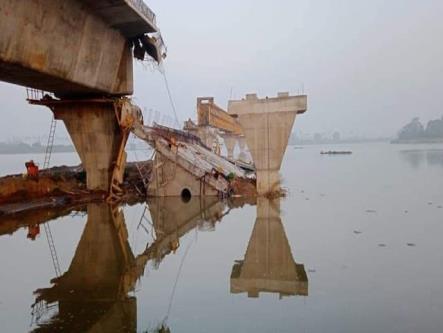
OnJanuary2022,asectionofanewbridgebeingconstructed over the Kollidam River near Anaikkarai in Thanjavur districtcollapsed.Thebridge,intendedtospan950meters from Anaikkarai to connect northern districts through Ariyalur, collapsed while more than fifteen workers were present. The cause of the collapse was attributed to a mechanical breakdown. The incident occurred as a large cranewasbeingutilizedtoinstallablockbetweenspans16 and17.Theblockfellasaresultofahydraulichosefailure, causingnodamagetonearbypillarsorstructures.
5.3
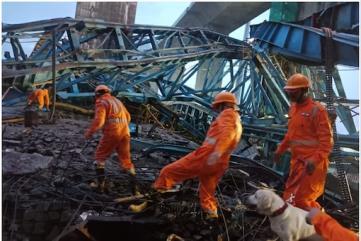
OnAugust2023,tragedystruckduringtheconstructionof the Samruddhi Mahamarg, a 701-kilometer expressway linkingMumbaiandNagpur.ManagedbytheMaharashtra StateRoadDevelopmentCorporation,theprojectspans10 districts, including Nagpur, Washim, Wardha, and others. Thefirstphase,fromNagpurtoShirdi,wasinauguratedby PrimeMinisterNarendraModiinDecember2022,covering
International Research Journal of Engineering and Technology (IRJET) e-ISSN: 2395-0056
Volume: 11 Issue: 05 | May2024 www.irjet.net p-ISSN: 2395-0072
520 kilometers. Chief Minister Eknath Shinde announced planstocompletethethirdandfinalphasebyDecemberof the same year. Unfortunately, a crane collapse claimed at least 20 lives during construction. The crane, reportedly collapsingfromaheightof200feet,wasengagedinlifting girders for an under-construction bridge. This incident highlightstherisksassociatedwithlarge-scaleinfrastructure projectsandunderscorestheimportanceofstringentsafety measurestopreventsuchtragedies.
5.4 Morbi bridge collapse
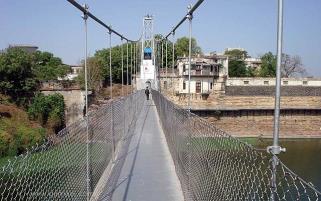
The Jhulto Pul, a 230-meter-long pedestrian suspension bridge soaring 15 meters above the Machchhu River, connectstheMahaprabhujiandSamakanthadistricts.After undergoingsixmonthsofrepairs,itofficiallyreopenedon October26,2022.OnOctober30,2022,thebridgecollapsed undertheweightofoverfivehundredpeople,exceedingits officialcapacityof125.
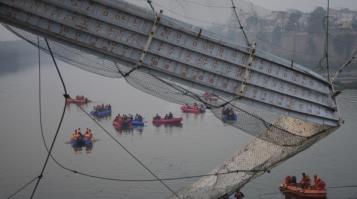
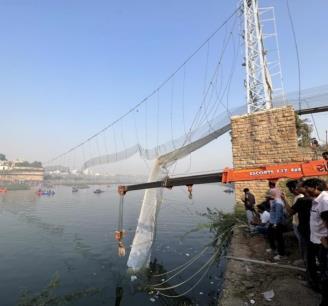
The premature reopening, without the necessary fitness certificate, and structural deficiencies like rusted cables, broken anchors, and loose bolts were identified as the primarycausesofthedisaster,accordingtoaforensicreport presentedincourt.
These case studies highlight the direct consequences of infrastructure failures during construction, revealing commonissuessuchasinadequatemaintenance,oversight, andadherencetosafetyprotocols.Theincidents,including theMadurai-Nathamflyovercollapse,Thanecraneaccident, Kollidam River concrete span collapse, and Morbi bridge collapse, all resulted from mechanical failures and insufficient maintenance practices. They underscore the critical importance of rigorous safety measures, regular equipment inspections, and structural assessments to prevent such tragedies. These incidents serve as poignant reminders of the need for strict adherence to regulatory standards and thorough maintenance procedures to safeguardthewell-beingofworkersandthepublicduring constructionprojects.
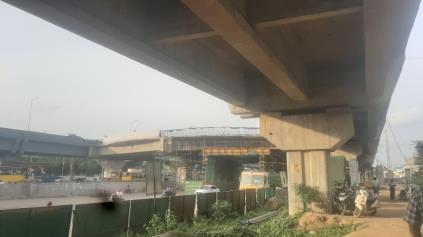
Stretch name: LC-32 IN BETWEEN TAMBARAM AND VANDALURRAILWAYSTATION
Area: Perungalathur
Length of the bridge: Totalof6arm
ChennaitoChengalpattuarm=812.897m
Easternbypassarm=324.098m
ChengalpattutoChennaiarm=743.172m
Srinivasanagarroadarm=452.159m
Quadrant=100.060m
Start date: 01.12.2020
Completion date: 23.10.2023eot–30.12.2023
Project cost: 243crores
Bridge construction cost: 155crores
Land acquisition: 79crores
Current status: 73%
Total. no. of. workers: 40-50
Structural consultants: Highwaydepartment
Main contractor: Renaatusconsultants
First aid room: yes
Fall protection: Doublelinerlifeharness
Helmet
Reflectivejacket
International Research Journal of Engineering and Technology (IRJET) e-ISSN: 2395-0056
Volume: 11 Issue: 05 | May2024 www.irjet.net p-ISSN: 2395-0072
Goggles–white,black
Gloves
Harness
Safetyshoes
Safetyjacket
Mask
Faceshield
Earplug
Apron
Safetypersons:2(day&night)
Security:10
Supervision:PM,DPM,seniorengineer-6
Workerstraining:yes
ELECTRICAL SAFETY
Possibleoccurrence:Electriccablemaygetpuncturedueto binding.
Electricaloverrunleadstoshortageofhighvoltage Measurestaken:UsingadvancedElectricalLeakageCircuit Breaker(ELCB)/immediatedis-connectivity,socketusedat possiblelocation.
ELCB
Inordertopreventshockinelectricalinstallationswithhigh earthimpedance,earth-leakagecircuitbreakers,orELCBs, areutilizedassafetydevices.Whenthevoltageleveloverthe dangerthreshold,itsensestinystrayvoltagesonthemetal casingsofelectricalequipmentandbreaksthecircuit.
PURPOSE
The primary functions of an earth leak detection circuit (ELCB)aretoidentifyEarthleaks,guardagainstelectrical shock injuries to humans, and stop short circuit-related electricalfires.
TRAFFIC MANAGEMENT
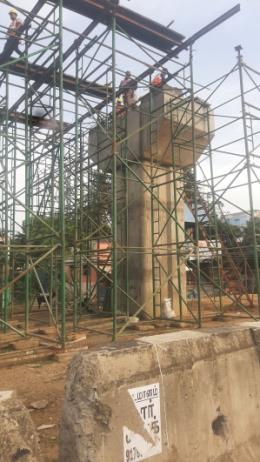
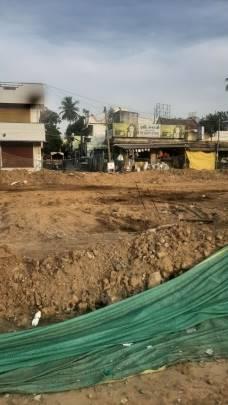
TheHighwayDepartment,withtheassistanceoflocalpolice, managed traffic in Perungalathur by creating two access points: one for government buses and bus stop drop-offs, andanotherfortwo-wheeledvehicles,Cars.
TRAFFIC DIVERSION
STRIP LIGHT - Strip lighting has been installed along the entire bridge to aid in identifying nighttime construction activities,inadditiontothebarricade.
SOLAR BLINKER -Asolarindicatorhasbeenpositionedat the diversion entrance, aiding traffic diversion for fourwheelersandmakingiteasiertoavoidtheconstructionarea.
REFLECTIVE STICKER -Forthepurposeofindicatingthe work, reflective stickers are placed on the barricade's surface.
FIRE SAFETY
Electrical overruns, due to high voltage, result in wire shortagesandcanleadtofiresintheconstructionarea.
FIRE EXTINGUISHER –Intotalof3extinguisherinthesite
Nearoffice
DBroom
Nearpanelboard
SIGNAGE
Takediversion
Speedlimit
Verticallimit
Deepexcavation
Workinprogress
SAFETY PRECAUTIONS
Safetycatchnet
Materialfallarrest
Manfallarrest
Safetydustnet
Barrication
Striplight
The Perungalathur bridge project, LC-32, spans between Tambaram and Vandalur railway stations with six arms, including the longest from Chennai to Chengalpattu at 812.897m. Started on December 1, 2020, and slated for completion by December 30, 2023, the project costs 243 crores,with155croresfor constructionand79croresfor landacquisition.Currently73%complete,itemploys40-50 workersunderRenaatusconsultantswithoversightfromthe Highwaydepartment.SafetymeasuresincludePPE,ELCBs forelectricalsafety,andmultiplefireextinguishers.Traffic management involves strip lighting, solar blinkers, and reflectivestickers,ensuringsmoothflowandsafety.
Stretch name: Chainage13.5
Area: Vembakkam
Length of the bridge: 47.6M
International Research Journal of Engineering and Technology (IRJET) e-ISSN: 2395-0056
Volume: 11 Issue: 05 | May2024 www.irjet.net p-ISSN: 2395-0072
Totalof3spans
Eachspan–15m
2outsidewallof0.8m
Middlewallof0.5m
Bridge type: Minorbridge
Start date: 01.12.2020
Completion date: 10.06.2023
Project cost: 6CR
Current status: 65%
To. no. of. workers: 40
WORKINGHOURS:7am–8pm
WorkersfromBengal,Bihar,AndhraPradesh
Structuralconsultants:LNMalvia
Main contractor: JSRECR
Labor insurance: yes
Safety engineer: 2
Safety meeting: conductedeverymonth
Security: 2
Signage: yes
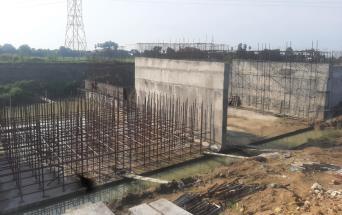
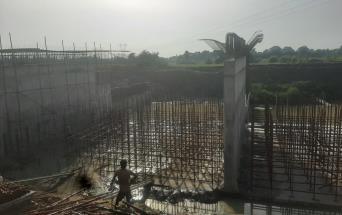
TheVembakkambridgeprojectatChainage13.5spans47.6 meters with three 15-meter spans and walls of 0.8m and 0.5m.Asaminorbridge,itbeganonDecember1,2020,and issettocompletebyJune10,2023,withaprojectcostof6 crores.Currently65%complete,itemploys40workersfrom Bengal, Bihar, and Andhra Pradesh, working from 7am to 8pmunder JSRECR and structural consultantsLN Malvia. Safety is prioritized with labor insurance, two safety engineers,monthlysafetymeetings,andpropersignage,all overseenbytwosecuritypersonnel.
Two construction sites performed a thorough safety assessment to evaluate worker safety, site security, and protocoladherence.Whilefirstaidkits,safetyprograms,and safety representatives are present at both locations, emergency phone numbers are not displayed. First aid suppliesarekeptatSite1,butnotatSite2.Therearenoeye washstationsateitherlocation.
WhileSite2lackssufficientfireextinguishersandotherhot work precautions, key safety measures include the use of PPEappropriatelyandcomprehensivefireprotectionplans. Scaffoldingproceduresandfallsafetydevicesareinplace, severalflawsincludingexposedholesandmissingguardrails havebeenidentified.Site2 exhibitsadditional gapsinthe
electrical safety precautions, which are only partially addressed.
Site 2 has deficiencies in seat belt use and ROPS, heavy equipment operations typically comply with safety guidelines.Bothsiteshavecertifiedoperatorsandthemost recentinspectionsfortheircranesandhoists.
Excavation and trenching procedures are largely in compliance at Site 2, more regular inspection is required. Site1hasstrongermanagementofitscuttingandwelding operations,butSite2doesnothaveasufficientfirewatchor PPEcompliance.Thereareprotocolsinplacefordemolition thatguaranteethemanagementofhazardousmaterialsand utilitydisconnections.
Managinghazardousmaterialsentailsabatementstrategies andqualifiedstaff,butSite2needbettercontainmentand disposalmethods.Whilebothlocationsdemonstrateahigh level of overall commitment to safety procedures, several details still need to be addressed to guarantee complete complianceandworkersafety.
Safety and worker welfare are given top priority in both projectsbutPerungalathurbridgeproject'sgreaterscaleand complexity,ithasmorecomprehensiveanddetailedsafety measures in place. Using cautions safety equipment like ELCBs,thoroughtrafficmanagementplans,andstrongfire safety protocols demonstrate a proactive attitude to controlling the hazards that come with such a big infrastructure project. The proposed Vembakkam Bridge complieswithallapplicablesafetyrequirements.Itwouldbe preferabletoincorporatesomeofthemoreadvancedsafety featuresfoundinthePerungalathurproject,especiallyinthe areas of fire safety and cautious traffic control. Regular inspections and updates to safety protocols could ensure thatbothprojectsmaintainhighsafetystandards,ultimately safeguarding the well-being of all workers and ensuring timelyprojectcompletion.
By addressing these safety and management gaps, both projects can enhance their compliance with safety regulations, reduce the risk of accidents, and ensure the health and safety of their workforce, thereby setting a benchmarkforfutureinfrastructureprojects.
Consideringthehigh-risknatureoftheconstructionsector, worker safety is most importance in bridge construction projects. This research clarifies the vital significance of workersafetyfirst,identifyingthemainsafetychallenges, andassessingcurrentsafetymeasuresthroughananalysis.
Operating heavy gear and working at heights, workers at serious danger of accidents and injuries when building
International Research Journal of Engineering and Technology (IRJET) e-ISSN: 2395-0056
Volume: 11 Issue: 05 | May2024 www.irjet.net p-ISSN: 2395-0072
bridges. A safer workplace can be created with the implementation of strong safety laws, continual training programs,andthesupplyofsuitablesafetygear,suchasfall preventionsystemsandpersonalprotectiveequipment.
Inadditiontoloweringthenumberofinjuriesandfatalities workersafetyalsocreatesahappyworkenvironmentthat increasesemployeeretentionandsatisfaction.Humanlives shouldn't be lost in the process of building bridges. Prioritizingsafetymayensurethewell-beingofconstruction workersandprogressthebuildingofcrucialtransportation infrastructure.
Inordertopreventtherisksinbridgeconstruction,wireless technologiesplayavitalroleinensuringworkersafetyby providing real-time communication, monitoring, and data collectioncapabilities.
RFIDtagsattachedtoworker’shelmetsorequipmentenable real-timetracking,whileGPSintegrationallowsforprecise locationmonitoring,particularlybeneficialinemergencies oronexpansiveconstructionsites.
Bluetooth technology is utilized for proximity sensors, issuing alerts when workers approach hazardous areas. Wearable sensors monitor vital signs, triggering alerts if distress is detected. Drones equipped with cameras and sensors surveillance, identifying safety hazards, and ensuringprotocoladherence.
Videosurveillance,meshnetworks,andIoTdevicesfurther enhance safety by collecting data on environmental conditions and structural integrity. These wireless technologies collectively create a safer working environment, facilitating better communication, real-time incident response, and data-driven safety improvements, ultimately safeguarding the well-being of construction workersinbridgeconstructionprojects.
1) ByungjooChoi,SeungjunAhn,A.M.ASCE,SangHyun Lee, 2016, Role of Social Norms and Social Identifications in Safety Behavior of Construction Workers. I: Theoretical Model of Safety Behavior under Social Influence, United States, http://dx.doi.org/10.1061/(ASCE)CO.19437862.0001271
2) CarlosM.Zuluaga,S.M.ASCE, AlexAlbert,A.M.ASCE, Paz Arroyo, 2018, Protecting Bridge Maintenance Workers from Falls: Evaluation and Selection of CompatibleFallProtectionSupplementaryDevices, United states, https://doi.org/10.1061/(ASCE)CO.19437862.0001529.
3) Seungjun Ahn, A.M.ASCE, Luke Crouch, Tae Wan Kim, Raufdeen Rameezdeen, 2020, Comparison of Worker Safety Risks between Onsite and Offsite Construction Methods: A Site Management Perspective, Ausralia, https://doi.org/10.1061/(ASCE)CO.19437862.0001890.
4) DongZhao,Ph.D.,A.M.ASCE,AndrewP.McCoy,Ph.D, BrianM.Kleiner,Ph.D, JingDu,Ph.D,TonyaL.SmithJackson, Ph.D, 2015, Decision-Making Chains in Electrical Safety forConstruction Workers, United states,http://dx.doi.org/10.1061/(ASCE)CO.19437862.0001037.
5) LingMa,HonglingGuo,YihaiFang,2020,Analysisof Construction Workers’ Safety Behavior Based on Myers-Briggs Type Indicator Personality Test in a Bridge Construction Project, China, https://doi.org/10.1061/(ASCE)CO.19437862.0001958.
6) Fu You Xu, Ming Jie Zhang, Lei Wang, Jian Ren Zhang, 2016, Recent Highway Bridge Collapses in China: Review and Discussion, China, http://dx.doi.org/10.1061/(ASCE)CF.19435509.0000884.
7) MatthewR.Hallowell,A.M.ASCE, JimmieW.Hinze, M.ASCE, Kevin C. Baud, Andrew Wehle, 2013, Proactive Construction Safety Control: Measuring, Monitoring, and Responding to Safety Leading Indicators, United states, http://dx.doi.org/10.1061/(ASCE)CO.19437862.0000730.
8) Tung-Tsan Chen , C.C. Wang, 2014, Falling Risk Assessment of Advanced Shoring Method Bridge ConstructionProjects, Taiwan.