
International Research Journal of Engineering and Technology (IRJET) e-ISSN: 2395-0056
Volume: 11 Issue: 05 | May 2024 www.irjet.net p-ISSN: 2395-0072
International Research Journal of Engineering and Technology (IRJET) e-ISSN: 2395-0056
Volume: 11 Issue: 05 | May 2024 www.irjet.net p-ISSN: 2395-0072
Heet Rudani1 , Mili Shankla2
1Post Graduate (M.E.) Student, L.J. University, Ahmedabad, India.
2Mili Shankla, Assistance Professor, Civil Engineering Department, L.J. University, Ahmedabad, India.
Abstract - This article provides a brief overview of the Outrigger & Belt Truss system and explain its structural composition when lateral load is acting in modern high-rise buildings. The Outrigger is a solid beam that connects the shear or core wall to the outside column & Belt Truss are solid beams that connect the exterior columns. When this structure is subjected to lateral force, this system along with the column resists the rotation of the core so that it is significantly reduced lateral deflection and base shear that will occur in the free core. This study deals when and where to use an Outrigger & Belt Truss system in a RCC Building.
Key Words: Outrigger System, Belt Truss System, RCC Building,BaseShear,LateralDeflection.
1.INTRODUCTION
Theconstructionoftallstructuresinurbanenvironmentsis common in our country. Creating tall structures have becomeimportantduetoaccommodatingcommodityinthe city,sothestructurerisestothesky.Withthis,demandfor security,safety,andmaintenanceofthisfacilityhavebecome importantfactortoitstenantsduetotheeffectsofwindand earthquakes.Therefore,itisimperativethattallstructures requireasurgicalstructuralanalysisbeforetheyareplaced ontheground.Asaresult,creatinganeffectivesystemwith outrigger and belt truss becomes necessary for a building serviceabilityandstability.
In places like Japan, Taiwan, and other Middle Eastern countries, tall buildings have become synonymous with economic growth and prosperity in the region. These countries also have something in common - they often experiencedestructivenaturalforcessuchasearthquakes, hurricanesandcyclones.Therefore,thejobofa structural engineer is to find new innovative concepts to make tall structuressafe,asaresulttheycameupwithOutriggerand BeltTrussSystem.
Outriggers are the most effective against lateral loads oftenusedinhigh-risebuildings.Theconceptofbracingis usedinshipsitstrengthensthemastoftheshiptoresistthe force of the wind. Primarily tall structure resembles the masterofhisship
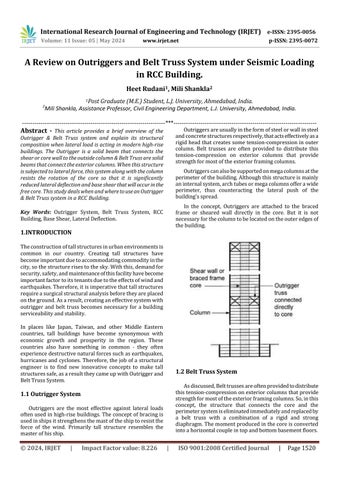
Outriggersareusuallyintheformofsteelorwallinsteel andconcretestructuresrespectively,thatactseffectivelyasa rigidheadthatcreatessometension-compressioninouter column. Belt trusses are often provided to distribute this tension-compression on exterior columns that provide strengthformostoftheexteriorframingcolumns.
Outriggerscanalsobesupportedonmegacolumnsatthe perimeterofthebuilding.Althoughthisstructureismainly aninternalsystem,archtubesormegacolumnsofferawide perimeter, thus counteracting the lateral push of the building'sspread
In the concept, Outriggers are attached to the braced frame or sheared wall directly in the core. But it is not necessaryforthecolumntobelocatedontheouteredgesof thebuilding.
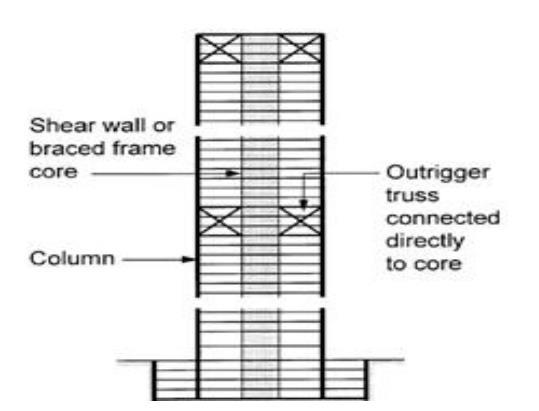
Asdiscussed,Belttrussesareoftenprovidedtodistribute thistension-compressiononexteriorcolumnsthatprovide strengthformostoftheexteriorframingcolumns.So,inthis concept, the structure that connects the core and the perimetersystemiseliminatedimmediatelyandreplacedby a belt truss with a combination of a rigid and strong diaphragm.Themomentproducedinthecoreisconverted intoahorizontalcoupleintopandbottombasementfloors.
International Research Journal of Engineering and Technology (IRJET) e-ISSN: 2395-0056
Volume: 11 Issue: 05 | May 2024 www.irjet.net p-ISSN: 2395-0072
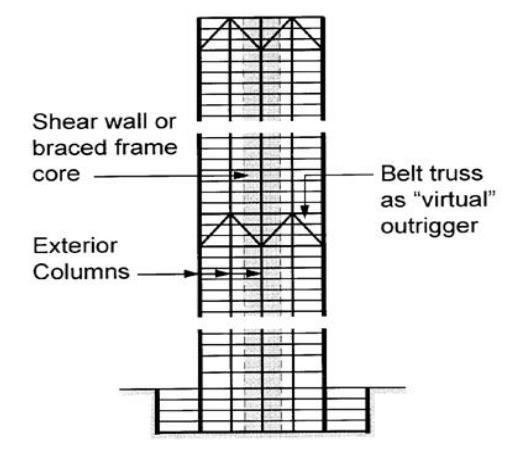
Basically,outriggerandbelt-trusssystemsconsistoffour parts:
Internalstructuralsystem: Itcanbesteelcore,concrete coreorcompositecore.
External structure system: It is frame tube system, moment-resistingframeormega-frame.
Outriggers: These are rigid connections connecting internalandexternalstructuralsystems.Thesecanbewall, truss,beam,orhybridthatis,onepartiswallandtheother partatruss.
Perimeter Belt: A connection connecting all or part of theperimetercolumntogether.Thiscanbeawall,atrussor adeepbeam.
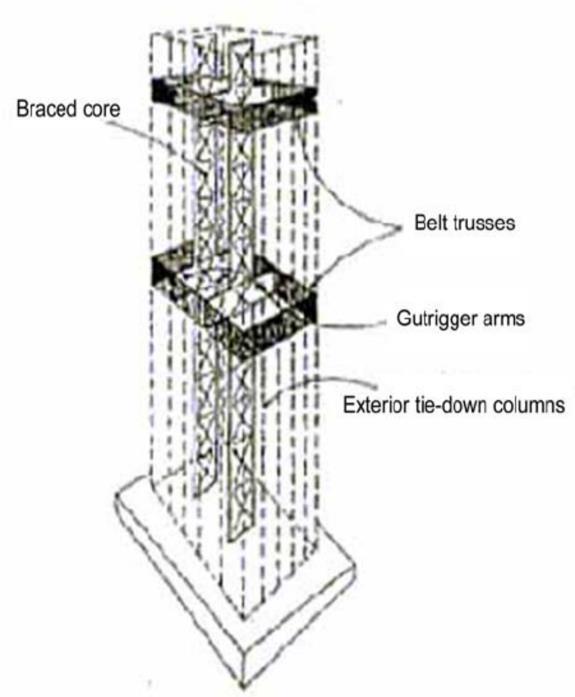
Thischapterpresentstheoverviewandtheinterpretation ofthepastworksbasedontherelatedtopicwhichprovide sufficientandnecessaryinformationforthisstudy.Literature surveyisimportantfactortounderstandthepreviouswork donearoundtheproposedtopic.
2.1 Thejas H K, Laxmi S, Abhilash D T,” Comprehensive Analysis of Outrigger Building System”, International Journal of Civil Engineering and Technology (IJCIET) (2020).
In this study, the analysis is done by considering tall verticalirregularityof30thstoreyof7x7bayfor1to10th storeyand7x6bay11thto20thstoreyand7x5Bay21stto 30thstorey.Theanalysiswasperformedtofindtheoptimal positionoftheoutriggerandthebelttrusssystemusingthe lateral loads. A 3D model is considered and developed to accommodate gravity load and the first and second outriggersareplaced.Inthis studywindloadiscalculated usingIS875(Part3)anddesignearthquakeloadcalculated byIS1893(part-1):2000codetoobtaindrift,deflectionand storyshear.
AsaConclusion,fromtheresultsinhigh-risebuildings,the useofoutriggersystemsandtrussbeltincreasesstiffnessand makesthestructureeffectiveinlateralloads.Themaximum drift at the top of the structure, if only the core is used is about206.9mm,whichcanbereducedbytheappropriate selectionofthelateralsystem.Whenoneoutriggerisat0.67h drift is about 130.4 mm. Using second outrigger at 0.67h thereisreductionof16.64%and13%indriftanddeflection. Theideallocationforthesecondoutriggerismid-heightof thebuilding.Itcanbeconcludedthattheoptimumlocationof theoutriggerisintherangeof0.5timestheheight(0.5h).
Kumar,” Comparison of seismic performance of outrigger and belt truss system in a rcc building withvertical irregularity”, International Journal of Research in Engineering and Technology (2016).
The main objective of this research is to compare outrigger,belttrussandoutriggerwithbelttrusswiththeir positionisconstantinallmodels.Inthisresearcha30-storey structurewithverticalirregularitiesissubjectedtoseismic analysisusingfiniteelementsoftwareETABSasperIS1893 (Part-1): 2002 and compare parameters like base shear, lateraldisplacementandstorydrift.
AsaConclusion,whenitcomestobaseshearandlateral load,buildingsbuiltwithonlybelttrussperformsbetterthan buildings with only outrigger and with both outrigger and belttruss.
International Research Journal of Engineering and Technology (IRJET) e-ISSN: 2395-0056
Volume: 11 Issue: 05 | May 2024 www.irjet.net p-ISSN: 2395-0072
2.3 Sathyamurthy K, Kavitha A. S,” Dynamic Analysis of Outrigger Braced Systems in High Rise Steel Building”, International Journal of Informative & Futuristic Research (2017).
According to this study, chevron braces can be more effective in high-rise buildings in controlling displacement and drift without increasing the base shear. The use of outriggerinthreedifferentstories,inadditiontobracing,is consideredveryeffectiveinreducingstoreydisplacement. Thisstudyshowsthatplacingthreeoutriggersonthe10th, 20th,and30thfloorsina40-storeybuildingnotonlycontrols the total lateral displacement, but also reduces the inter storeydriftintallbuildings,andfortheG+40steelstructure, 10th,20th,and30th storeylevelcanbeconsideredasthebest situation.Therefore,itisconcludedthattheuseofbracing andoutriggersystemsintallbuildingsincreasesstiffnessand makesthestructureeffectiveinlateralload.
2.4 Sandesh KumarShiroleY,Dr.B.KRaghuPrasad, Dr. Amarnath K,” Study of behaviour of outriggers in a high rise building under seismic loading”, International Research Journal of Engineeringand Technology (2016).
Asperstudy,Thedisplacementofthebuildingwasfound tobethelowestwhenoutriggerwasplacedonthe20thfloor and was reduced from 81.59 mm to 17.31 mm when no outriggerswereused.Themaximumstorydisplacementat top most story in the building is reduced by 34.1% when using the outrigger when compared to when no outrigger used.Whentheoutriggersareplacedonthe15thstorey,the baseforceis128.2kNandthedisplacementis60.1mmatthe performancepointwasfoundtobethelowestcomparedto the base forceand displacement at performance whenthe outriggers are placed on the 5th, 20th, 30th and no outriggers...areused.Theoptimumlocationoftheoutrigger wasfoundtobe0.66timestheheightabovethebaseofthe building.
2.5 Kiran Kamath, N. Divya,AshaURao,” AStudyon Static and Dynamic Behaviour of Outrigger Structural System for Tall Buildings”, Bonfring InternationalJournalofIndustrialEngineeringand Management Science (2012).
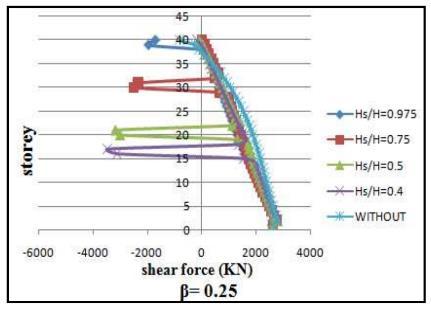
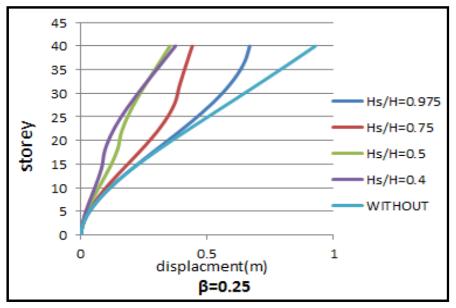
According to this paper, the use of outrigger structural systemsinconcretebuildingsincreasesstiffnessandmakes thestructureeffectiveinlateralloads. Basedontheresultsof the analysis: If the criterion is considered in lateral displacement,theoptimalpositionoftheoutriggerisinthe middle of the height for static and dynamic behaviour of structure.Outriggerwhenplacedontopofabuildingisless efficient,butinsomecases,itcanbesafertolocateitontop ofabuilding,soevenifitisnotaseffectiveasmid-rise,the
benefitofplacingitontopisveryeffective,reducingdriftby upto50%.Thereisa significantreductionintheforcesin core, especially the bending moment when the outrigger systemisadded.
1.Theuseofoutriggerintheconstructionindustryincreased efficiencycomparedtobuildingswithoutoutriggerincaseof bearinglateralload.
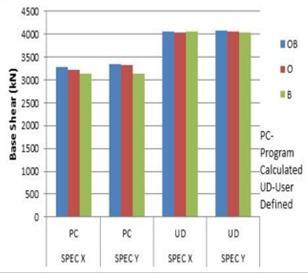
2.Outriggerplaysanimportantroleinincreasingstructural flexuralstrengthbyreducingbaseshearunderseismicload action.
3. Displacement inthestructuresystemof tall buildings is reduced,whenthesizeofoutriggermemberisincreased.
International Research Journal of Engineering and Technology (IRJET) e-ISSN: 2395-0056
Volume: 11 Issue: 05 | May 2024 www.irjet.net p-ISSN: 2395-0072
4.Byprovidingshearwall inthecentral core buildingwill reduceforcesinthecore.
5. In RCC Building, concrete Outriggers are more efficient thansteeloutriggerintallRCCBuilding.
6.Whenitcomestostoreydrift,buildingswithoutriggerand belttrusssystemsperformbetterthanbuildingswithonly outriggerandbelttrusssystems.
[1] Thejas H K, Laxmi S, Abhilash D T,” Comprehensive Analysis of Outrigger Building System”, International Journal of Civil Engineering and Technology (IJCIET) (2020).
[2] Daril John Prasad, Srinidhilakshmish Kumar,”
Comparison of seismic performance of outrigger and belt truss system in a rcc building with vertical irregularity”, International Journal of Research in EngineeringandTechnology(2016).R.Nicole,“Titleof paperwithonlyfirstwordcapitalized,”J.NameStand. Abbrev.,inpress.
[3] Sathyamurthy K, Kavitha A. S,” Dynamic Analysis of OutriggerBracedSystemsinHighRiseSteelBuilding”, International Journal of Informative & Futuristic Research(2017).
[4] Sandesh Kumar Shirole Y, Dr. B.K Raghu Prasad, Dr. AmarnathK,”Studyofbehaviourofoutriggersinahigh rise building under seismic loading”, International ResearchJournalofEngineeringandTechnology(2016).
[5] KiranKamath,N.Divya,AshaURao,”AStudyonStatic andDynamicBehaviourofOutriggerStructuralSystem for Tall Buildings”, Bonfring International Journal of IndustrialEngineeringandManagementScience(2012).