
International Research Journal of Engineering and Technology (IRJET) e-ISSN: 2395-0056
Volume: 11 Issue: 05 | May 2024 www.irjet.net p-ISSN: 2395-0072
International Research Journal of Engineering and Technology (IRJET) e-ISSN: 2395-0056
Volume: 11 Issue: 05 | May 2024 www.irjet.net p-ISSN: 2395-0072
S. Thirumalairajan1 , B. Dharanitharan2 , S. Dwaraga Prasath3 , S. Gugan4 , V. Logeshwaran5
1Lecturer, Department of Mechatronics, PSG Polytechnic College, Coimbatore-4, Tamil Nadu, India 2345 StudentScholar, Department of Mechatronics, PSG Polytechnic College, Coimbatore-4, Tamil Nadu, India
Abstract – Thereportdescribesthecreationofacomplex system aimed at tracking head gestures and preventing accidents by using machine learning, graphical programming, and hardware components. By employing a webcam, the system detects head movements and analyzes them using a trained machine learning model. It then triggers responses through hardware devices controlled by an ESP8266 microcontroller. The report begins by introducing Teachable Machine and PictoBlox, highlighting their roles in creating machine learning models without coding. It then explains the stages of the machine learning process, from defining objectives to deploying models. Additionally, it reviews existing AI-based accident prevention systems, discusses hardware integration, and explores the functions of specific components such as the ESP8266,buzzer,andvibratormotor.Detailedexplanations of hardware components, interfacing with PictoBlox, and example programs are provided, along with step-by-step instructions for block programming in PictoBlox, including machine learning integration. Finally, the report concludes with abstract, program, and output sections summarizing the project's goals, methodologies, and achievements, demonstrating the effective use of machine learning, graphical programming, and hardware integration to enhancesafetyproactively.
Key Words: Accident Prevention, Artificial intelligence, Machine Learning, ESP8266, Teachable Machine, Safety, Buzzer, Vibrator Motor, Pictoblox, Block Program.
Teachable Machine is an online tool designed for individuals to train their own machine learning classificationmodelswithoutanycodingknowledge.Users canutilizetheirwebcam,images,orsoundtotrainmodels. It employs transfer learning, a machine learning technique, to identify patterns and trends within the provided data and swiftly generate a classification model. Through transfer learning, users can incorporate their own data andrefinea model basedona pre-existing base model that has been trained on a vast dataset within a specific domain.For instance,the base model (mobilenet) used for image recognition in Teachable Machine was initially trained to recognize 1000 classes (such as dogs, phones, beds, trombones, etc.). The inherent features utilized by mobilenet to recognize these classes can also beappliedtoidentifynewclassesdefinedbytheuser.This
intricateprocessisconcealedfromusers,whocanbenefit from requiring less data and training time to develop effective and accurate models. PictoBlox, on the other hand, is a graphical programming software modeled after the latest version of Scratch, designed to make coding an enjoyable and straightforward experience. Featuring a user-friendly interface and drag-and-drop functionality, it serves as an ideal platform for beginners venturing into therealmofprogramming.
Numerous approaches have been explored in prior studies to tackle distracted driving incidents, incorporating both technological advancements and behavioral interventions aimed at reducing driver distractionsandenhancingroadsafety.
Cognitive Distraction Assessment: Previous research has examined various methods for assessing cognitive distraction among drivers, including eye tracking, cognitive workload assessments, and reaction time tests. By monitoringthesefactors,researcherscanidentify periods of heightened distraction and develop targetedinterventionstomitigatetheirimpact.
Behavioral Interventions:Researchershavealso explored behavioral interventions to address distracted driving behaviors. These interventions encompass educational campaigns, enforcement of distracted driving laws, and the implementation of incentive-based programs to promote safe driving practices. By focusing on driver attitudes and behaviors, these interventions aim to cultivate a culture of distraction-freedriving.
Technological Solutions: Technological advancements have led to the development of innovativesolutionstocombatdistracteddriving. These solutions include smartphone applications that disable certain functions while driving, invehicle systems that offer real-time feedback on driver behavior, and vehicle-to-infrastructure communication systems that alert drivers to potential hazards. By harnessing technology, these solutions strive to mitigate the impact of distractionsondrivingperformance.
International Research Journal of Engineering and Technology (IRJET) e-ISSN: 2395-0056
Volume: 11 Issue: 05 | May 2024 www.irjet.net p-ISSN: 2395-0072
Public Policy Initiatives: Governments and regulatory bodies have implemented various public policy initiatives to address distracted driving. These initiatives may involve enacting lawstoprohibitspecificbehaviors,suchastexting while driving, imposing fines and penalties for offenders, and allocating resources to support enforcement efforts. By establishing legal frameworks and raising awareness of the risks associated with distracted driving, these initiatives seek to influence societal norms and behaviors.
Collaborative Efforts: Recognizing the multifaceted nature of distracted driving, collaborative efforts involving diverse stakeholders, including government agencies, industry partners, and advocacy groups, have emerged. These collaborations aim to pool resources, share best practices, and coordinate efforts to comprehensively address distracted driving. By fostering collaboration and cooperation, these initiatives seek to amplify the impact of individual interventions and drive meaningfulchange.
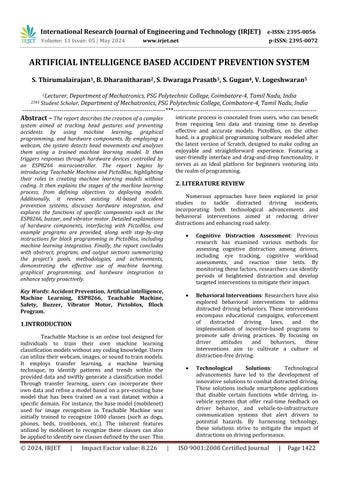
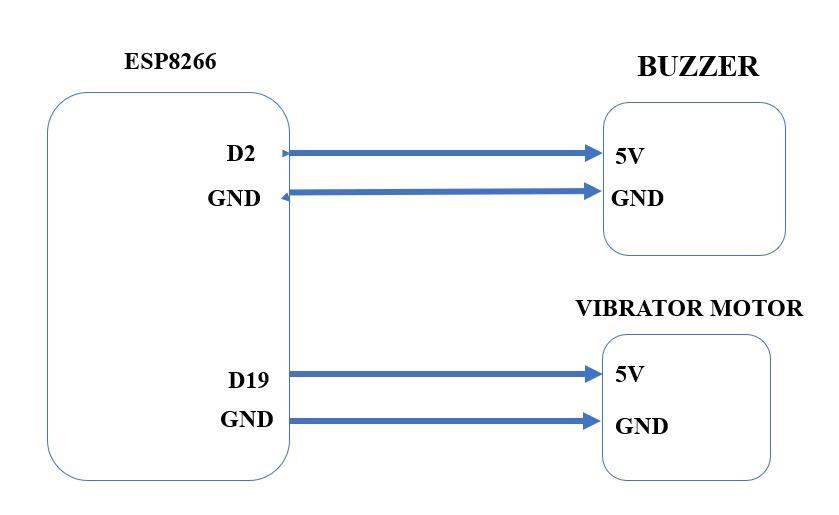
• Thesafetysystemincorporatesamicrocontroller, webcam, vibrator motor, and buzzer to enhance roadsafetymeasures.
• The webcam continuously captures real-time images of the driver's eyes, utilizing AI-powered computer vision for immediate analysis. These video feeds are processed through the microcontroller'sBluetoothmodule.
• Upondetectingsignsofdrowsinessordistraction, the buzzer issues an instant alert to the driver. If there's no response within ten seconds, the vibrator motor, installed on the steering wheel, providestactilefeedback.
• Thisintegratedconfigurationconstitutesaclosedloop system, merging auditory and tactile signals to promptly intervene and mitigate accidents stemmingfromdriverfatigueorinattention.
• Through seamless integration of cutting-edge technologies, the system actively improves road safetystandards.
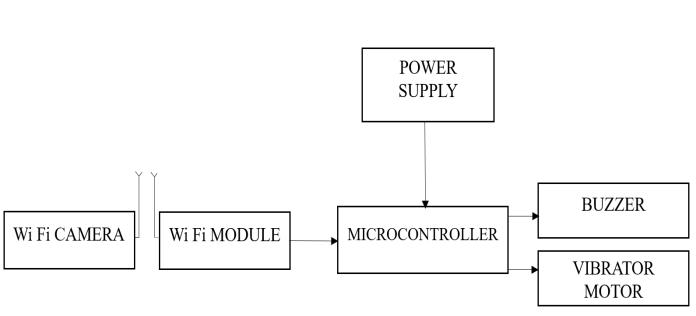
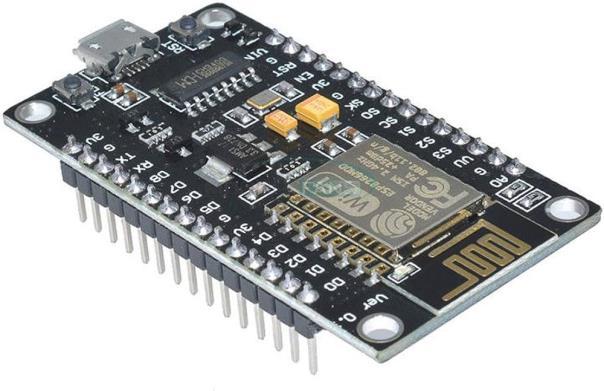
The ESP8266 stands out as a budget-friendly WiFi microchip featuring built-in TCP/IP networking software and microcontroller capabilities. It originates from Espressif Systems in Shanghai, China. Initially introduced to the English-speaking maker community through the ESP-01 module by third-party manufacturer Ai-Thinker in August 2014, it quickly gained popularity. This compact module enables microcontrollers to establish connections with Wi-Fi networks and execute basic TCP/IP operations using Hayes-style commands. Despite the initial scarcity of English documentation on thechipanditscommands,itsexceptionallylowpriceand minimal external component requirements attracted a wave of hackers eager to explore its potential. This interest led to efforts to decipher the Chinese documentation and delve into the module, chip, and associated software. An evolution of this technology, the ESP8285,sharessimilarfeaturesbutboastsbuilt-in1MiB flash memory, enabling the development of single-chip devices capable of Wi-Fi connectivity. Subsequently, the ESP32 family of devices has succeeded these microcontroller chips, offering expanded capabilities and functionalities.
International Research Journal of Engineering and Technology (IRJET) e-ISSN: 2395-0056
Volume: 11 Issue: 05 | May 2024 www.irjet.net p-ISSN: 2395-0072
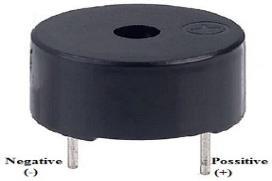
Audio signaling devices, such as beepers or buzzers, come in electromechanical, piezoelectric, or mechanicalvariations.Theirprimarypurposeistoconvert audiosignalsintoaudiblesound.TypicallypoweredbyDC voltage, they find application in timers, alarm systems, printers,computers,andvariousotherdevices.Depending on their design, they can produce a range of sounds, includingalarms,music,bells,andsirens.
4.3
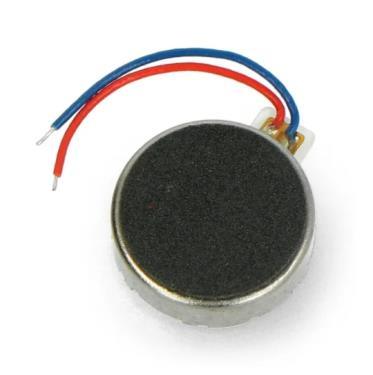
A vibrator is a mechanical device designed to create vibrations, usually accomplished by an electric motorwithanunbalancedmassattachedtoitsdriveshaft. Vibrators come in various types, and they are often integrated as components within larger products like smartphones, pagers, or video game controllers featuring a "rumble" feature. In devices such as smartphones and pagers, the vibrating alert is generated by a compact componentembeddedwithinthedeviceitself.
PictoBlox, a Scratch 3.0-based graphical programming software, serves as an excellent introduction to programming for beginners. Its intuitive interface and drag-and-drop functionality eliminate the need to memorize syntax and rules, which can often intimidate children new to programming. With PictoBlox, users can focus solely on problem-solving and developing essentialskillslikelogicalreasoning.
This software empowers users to create interactive games, animations, and even program robots, fostering creativity and critical thinking. In this paper, we explore how PictoBlox can be utilized in the context of artificial intelligence to nurture computational thinking and problem-solving abilities among primary school students.
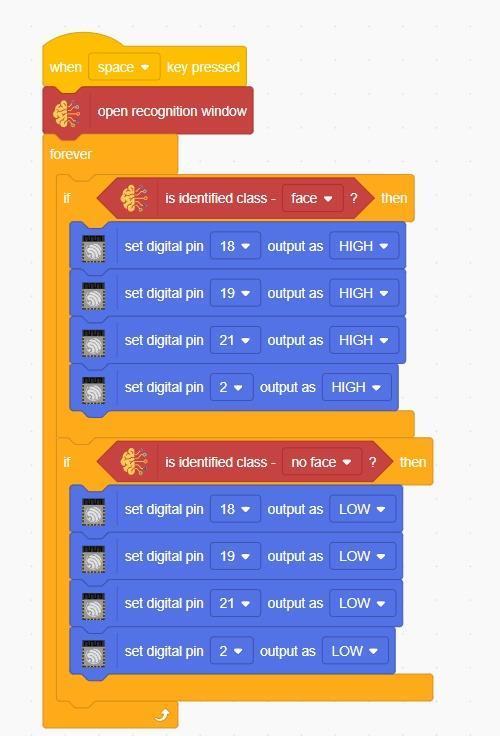
Fig – 6 :BlockProgram
International Research Journal of Engineering and Technology (IRJET) e-ISSN: 2395-0056
Volume: 11 Issue: 05 | May 2024 www.irjet.net p-ISSN: 2395-0072
Teachable Machine is a web-based tool designed by Google to simplify the creation of custom machine learning classification models, catering to users without specialized technical skills. With machine learning, these models can analyze data without the need for explicit programming. The platform aims to democratize machine learning by enabling students, teachers, designers, and enthusiasts to develop and utilize their own models. Its intuitive interface has led to widespread adoption, allowing individuals to explore and comprehend machine learning concepts more effectively. Users have leveraged Teachable Machine to develop educational materials, tutorials,andprojectscoveringvarioustopics,includingAI ethics. Esteemed institutions like Stanford University, NYU's Interactive Telecommunications Program, and the MIT Media Lab have embraced this tool for creative experimentationandlearning.
Quickly and effortlessly create machine learning models foryourwebsites,applications,and beyond noexpertise orcodingskillsneeded.
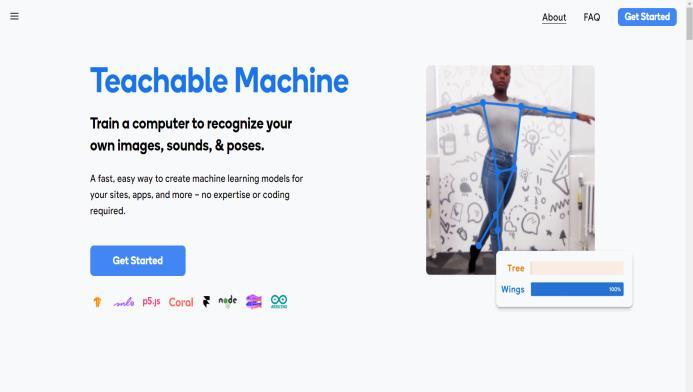
Fig – 7 :StartTeaching
Clickthe"GetStarted"button.
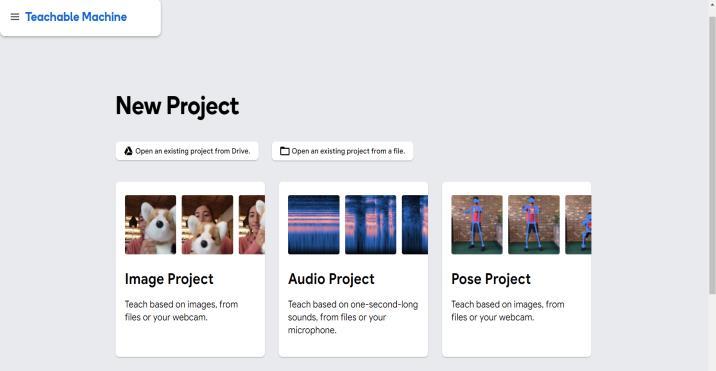
Fig – 8 :NewProjectPage
Navigate to the "New Project" page and select "ImageProject."
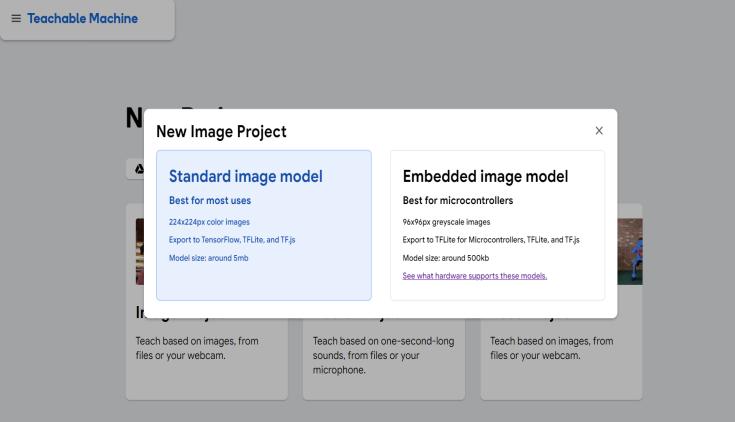
Fig – 9 :StandardImageModel
Choose any desired model from the options available.
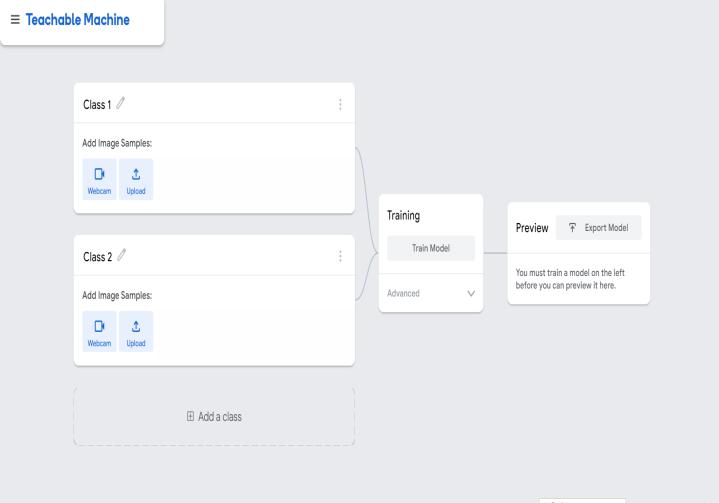
Fig – 10 :TrainingWindow
Utilizethewebcamtocreatesampleclasses.
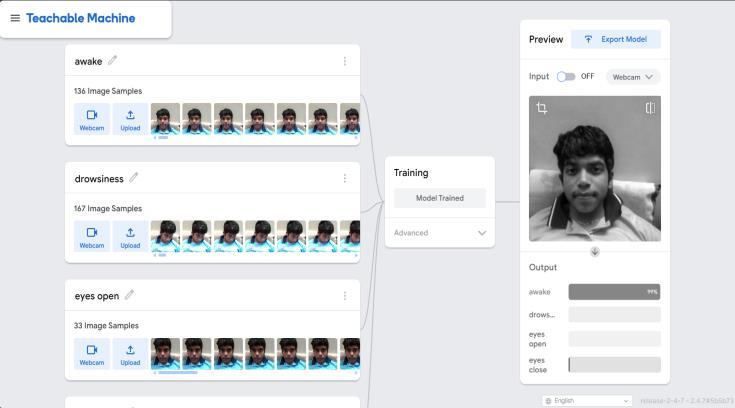
Fig – 11 :TrainingSampleWindow
International Research Journal of Engineering and Technology (IRJET) e-ISSN: 2395-0056
Train the sample model and select the "Export Model"button.
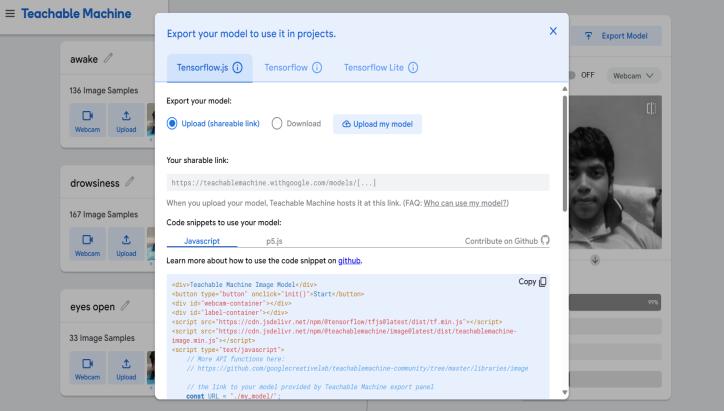
Fig – 12 :ExportModelWindow
Afterexporting,apagewillappearpromptingyou touploadthemodel.Clickthe"UploadmyModel" button.

Fig – 13 :Link
Once uploaded, a sharable link will be generated. Copythislink.
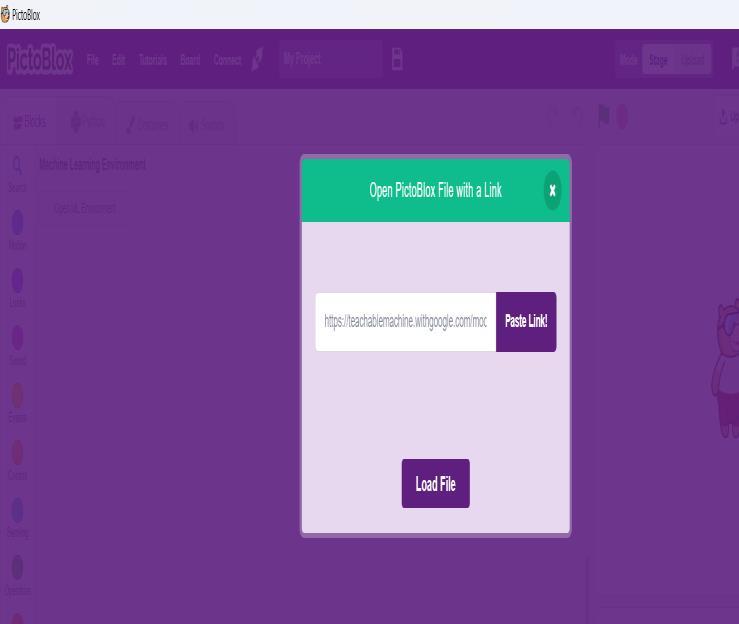
– 14 :PasteLink
Paste the copied link into the Pictoblox Software and click "Load File." The respective machine learningcodeswillthenbegenerated.
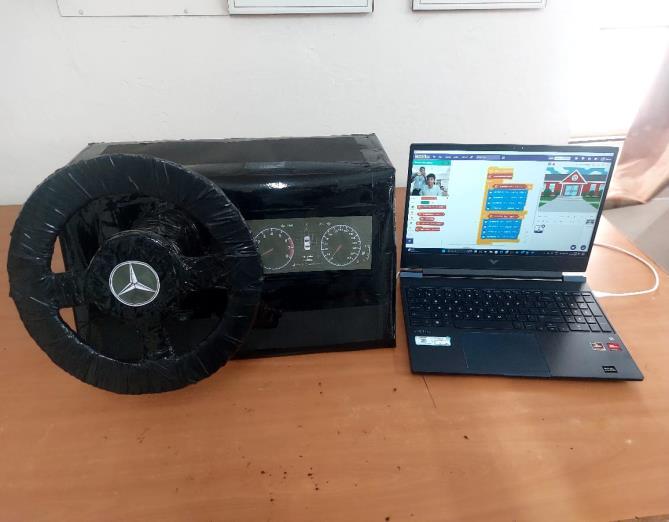
– 15 :Output
The combination of PictoBlox and Teachable Machines presents a robust and accessible solution with myriadapplications,spanningcomputervisionprojectsto assistive technologies. PictoBlox's intuitive visual programming interface empowers users of all levels to effortlesslydesignanddeployeyedetectionsystems.
On the other hand, Teachable Machines offer the capability to train and fine-tune machine learning models specifically for eye detection. This flexibility enables customization of detection models, catering to unique scenariosanduserrequirements.
When integrated, PictoBlox and Teachable Machines create a versatile platform for eye detection, fostering innovation in healthcare, accessibility, and securitysectors.Withadetailedexplanationoftheprocess and utilization of these tools, developers, educators, and enthusiasts alike are equipped to create precise and effectiveeyedetectionsystems.
As technology progresses, the synergy between PictoBlox and Teachable Machines is poised to drive further advancements in eye detection applications, making them more advanced and accessible than ever before.
[1] K. Choi, J. K. Suhr and H. G. Jung, "Fast pre-filteringbased real time road sign detection for low-cost vehiclelocalization", Sensors,vol.18,no.10,pp. 3590, 2018.
[2] A.Persson,H.Jonasson,I.Fredriksson,U.Wiklundand C. Ahlström, "Heart rate variability for driver
Volume: 11 Issue: 05 | May 2024 www.irjet.net p-ISSN: 2395-0072 © 2024, IRJET | Impact Factor value: 8.226 | ISO 9001:2008 Certified Journal | Page1426
International Research Journal of Engineering and Technology (IRJET) e-ISSN: 2395-0056
Volume: 11 Issue: 05 | May 2024 www.irjet.net p-ISSN: 2395-0072
sleepiness classification in real road driving conditions", 2019EMBC,pp.6537-6540,2019.
[3] S. Misal and B. B. Nair, "A machine learning based approach to driver drowsiness detection", Proc. ICICCT,pp.150-159,2018.
[4] A. A. Suhaiman, Z. May and N. A. A. Rahman, "Development of an intelligent drowsiness detection system for drivers using image processing technique", SCOReD,pp.233-236,2020.
© 2024, IRJET | Impact Factor value: 8.226 | ISO 9001:2008 Certified
|