
International Research Journal of Engineering and Technology (IRJET) e-ISSN: 2395-0056
Volume: 11 Issue: 05 | May 2024 www.irjet.net p-ISSN: 2395-0072
International Research Journal of Engineering and Technology (IRJET) e-ISSN: 2395-0056
Volume: 11 Issue: 05 | May 2024 www.irjet.net p-ISSN: 2395-0072
Gayatri Khatekar1, Sayali Nate2, Prof. Sudhakar Yerme3
1Student , Dept. of Computer Engineering, Usha Mittal Institute of Technology, Maharashtra, India
2Student , Dept. of Computer Engineering, Usha Mittal Institute of Technology, Maharashtra, India
3 Professor, Dept. of Computer Engineering, Usha Mittal Institute of Technology, Maharashtra, India
Abstract –
The pharmaceutical industry faces significant challenges in ensuring the integrity and authenticity of drug supply chains. Counterfeit drugs, diversion, andregulatorycompliance issues pose risks to public health and undermine trust in the pharmaceutical ecosystem. In response to these challenges, this research proposes the development of a Drug Tracing System (DTS) leveraging Block chain technology. Block chain, a decentralized and immutable ledger, offers a promising solution for enhancing transparency, traceability, andsecurity within pharmaceuticalsupplychains. Byimplementinga block chain-based DTS, stakeholders across the supply chain from manufacturers to distributors, pharmacies, and regulatory bodies can securely record and trace the entire lifecycle of pharmaceutical products. This paper aims to explore the potential benefits of integrating block chain technology into the pharmaceutical industry’s drug tracing processes.
Key Words: Component,formatting,style,styling,insert.
Counterfeitmedicinesarea majorchallengefortheglobal pharmaceuticalindustry.Herethequestionarises:Whatisa counterfeit medicine? According to the World Health Organization, "Drugs that are fraudulently designed, misbranded, substandard, disguised as a principle or identity, and do not meet prescribed standards are considered counterfeit or counterfeit." Research by the World Health Organization shows that one-tenth of the drugsusedbyconsumersinunderdevelopedcountriesare fakeandbaddrugs.ThesestatementsbytheWorldHealth Organization may or may not be perfect, as accurate estimatesorstatisticsoncounterfeitdrugsarenotavailable. Improperuseof medication cancauseseriousside effects andleadtoincreasedmortality.Afakemedicinemaycontain someingredientsorrealingredients,butthecontentofthese ingredients may be inappropriate and low or high in the productandmaycauseseriousproblemsforpeopletouse them.Sometimesthemanufacturersofthesefakedrugsuse the logo of some well-known and popular pharmaceutical companies to market their drugs easily and without any hurdles. Therefore, these drugs affect the sales of popular and common drugs such as antibiotics, cancer drugs, antibiotics,manycardiovasculardrugsandalsohavemany
side effects and lead to greater health problems. As we mentioned above, there are about 10-15 counterfeit medicines worldwide, but in developed countries, the percentageofsuchmedicinesisaround30.Everyyear,about 700,000peopledieofmalariaandabout200,000peopledie of counterfeits. As you know, technology keeps providing morewaystosellthesecounterfeitdrugs.Duetotheuseof technology,thecirculationofthesefakedrugsisincreasing day by day. The FBI and the International Anti-Coalition Coalition(IACC)announcedthatcounterfeitingisoneofthe biggest crimes of the 21st century and is growing rapidly every day, bringing new counterfeiting companies into business.
The implementation of blockchain technology in the pharmaceuticalindustry,particularlyinthecontextofdrug tracing systems, has garnered significant attention from researchers and industry stakeholders alike. This section providesanoverviewofrelevantliterature,casestudies,and initiativesthathaveexploredtheapplicationofblockchain technology to enhance transparency, traceability, and securitywithinpharmaceuticalsupplychains.
Numerous studies have investigated the potential applications of blockchain technology in healthcare, highlightingitsabilitytoaddresschallengesrelatedtodata security,interoperability,andpatientprivacy.Researchers haveproposedvarioususecases,includingelectronichealth records (EHRs) management, clinical trials, supply chain management,andprescriptiondrugtracking.
Existing literature underscores the pressing need for improvedtraceabilityandsecurityinpharmaceuticalsupply chains. Counterfeit drugs, product diversion, regulatory compliance issues, and inefficient data sharing among stakeholders pose significant risks to patient safety and industryintegrity.Scholarshaveemphasizedtheimportance ofadoptinginnovativetechnologies,suchasblockchain,to mitigate these challenges and enhance supply chain transparency.
International Research Journal of Engineering and Technology (IRJET) e-ISSN: 2395-0056
Volume: 11 Issue: 05 | May 2024 www.irjet.net p-ISSN: 2395-0072
Several pilot projects and initiatives have explored the feasibility of implementing blockchain-based drug tracing systems in the pharmaceutical industry. For example, the MediLedger Project, launched by Chronicled Inc., aims to createasecureandinteroperableplatformfortrackingand verifyingtheauthenticityofpharmaceuticalproductsusing blockchain technology. Similarly, the IBM Blockchain Platform has been utilized in collaboration with major pharmaceuticalcompaniestoimprovesupplychainvisibility andreducetheprevalenceofcounterfeitdrugs.
4.RegulatoryConsiderationsandStandards:
Regulatory agencies, including the U.S. Food and Drug Administration(FDA)andtheEuropeanMedicinesAgency (EMA),haverecognizedthepotentialbenefitsofblockchain technology in pharmaceutical supply chain management. However, challenges remain regarding regulatory compliance,dataprivacy,andtheestablishmentofindustrywidestandardsforblockchainimplementation.Researchers have highlighted the importance of engaging regulatory bodiesandindustrystakeholdersindevelopingguidelines and frameworks to ensure the responsible adoption of blockchaintechnologyinhealthcare.
3.PROPOSED MODEL
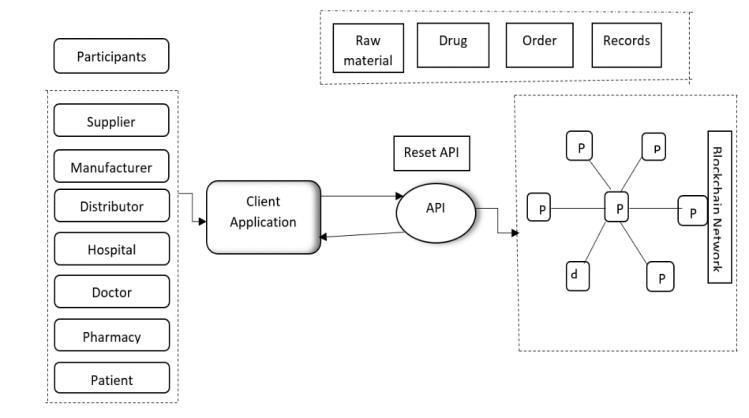
TheproposedDrugTracingSystem(DTS)aimstoleverage blockchaintechnologytoenhancetransparency,traceability, and security within pharmaceutical supply chains. By establishingadecentralizedandimmutableledger,theDTS will enable stakeholders to securely record and trace the entire lifecycle of pharmaceutical products, from manufacturingtodistributionanddispensation.Thissection outlines the key components and functionalities of the proposedmodel:
1.Blockchain Infrastructure:
The foundation of the DTS will be a blockchain network comprised of distributed nodes maintained by relevant stakeholders, including pharmaceutical manufacturers, distributors, pharmacies, regulatory agencies, and other authorizedparticipants.Theblockchaininfrastructurewill utilizeapermissionedorconsortium-basedmodeltoensure dataprivacy,integrity,andaccessibility.
2.Smart Contracts:
Smart contracts, self-executing contracts with predefined rulesandconditions,willbeutilizedtoautomateandenforce various processes within the DTS. Smart contracts will facilitatetransactions,record-keeping,andevent-triggered actions, such as product recalls or regulatory compliance checks.Byembeddingbusinesslogicintosmartcontracts, theDTSwillstreamlineoperationsandreducetherisk ofhumanerrororfraudulentactivities.
3.Product Identification and Serialization:
Each pharmaceutical product will be assigned a unique identifierorserialnumberatthepointofmanufactureusing standardizedencodingformats,suchasGS1identifiersorQR codes. These identifiers will be securely recorded on the blockchainalongwithrelevantmetadata,includingproduct specifications, batch numbers, expiration dates, and manufacturingorigins.Productserializationwillenableendto-endtraceabilityandauthenticationthroughoutthesupply chain.
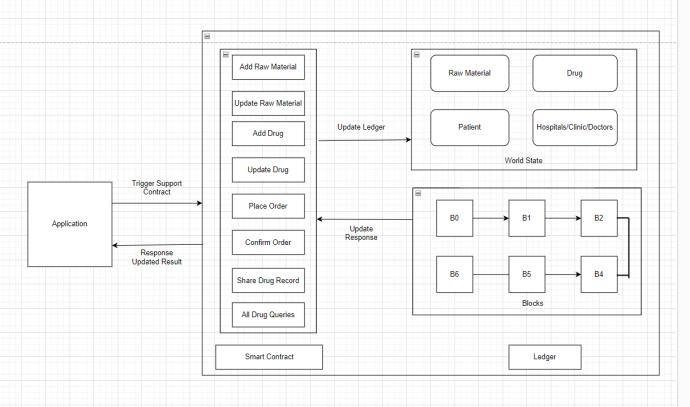
Fig: Smart Contract of Drug Tracing System
International Research Journal of Engineering and Technology (IRJET) e-ISSN: 2395-0056
Volume: 11 Issue: 05 | May 2024 www.irjet.net p-ISSN: 2395-0072
4.Transactional Transparency and Traceability:
All transactions and events related to pharmaceutical products,includingmanufacturing,shipping,receiving,and dispensing,willbetransparentlyrecordedontheblockchain in real-time. Each transaction will be cryptographically hashed and timestamped, ensuring immutability and tamper-proof audit trails. Stakeholders will be granted permissionedaccesstoaccesspertinentdata alignedwith theirrolesandpermissionswithintheDrugTracingSystem (DTS)
5.Data Integration and Interoperability:
The DTS will support seamless integration with existing systemsanddatabasesusedbypharmaceuticalstakeholders, such as enterprise resource planning (ERP) systems, electronichealthrecords(EHRs),andregulatoryreporting platforms.Applicationprogramminginterfaces(APIs)and standardizeddataformatswillfacilitatedataexchangeand interoperability, enabling stakeholders to leverage the benefits of blockchain technology without disrupting existingworkflows.
6. Compliance and Regulatory Reporting:
TheDrugTracingSystem(DTS)willstreamlineadherenceto regulatory mandates and reporting duties mandated by regulatoryauthoritiesliketheFDA,EMA,andotherrelevant governing bodies.. Automated reporting mechanisms and real-time visibility into product movements will enable timelyresponsetoregulatoryinquiries,audits,andrecalls, therebyimprovingregulatorycomplianceandpublicsafety.
4. RESULTS AND DISCUSSION
TheimplementationoftheproposedDrugTracingSystem (DTS) utilizing blockchain technology holds significant potential for enhancing transparency, traceability, and securitywithinpharmaceuticalsupplychains.Thissection presentsthekeyfindingsandimplicationsoftheresearch,as well as a discussion of the results in the context of the broaderpharmaceuticalindustrylandscape.
1.ImprovedTraceabilityandTransparency:
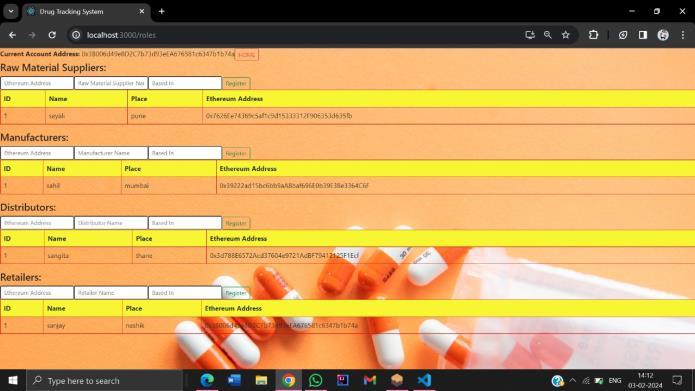
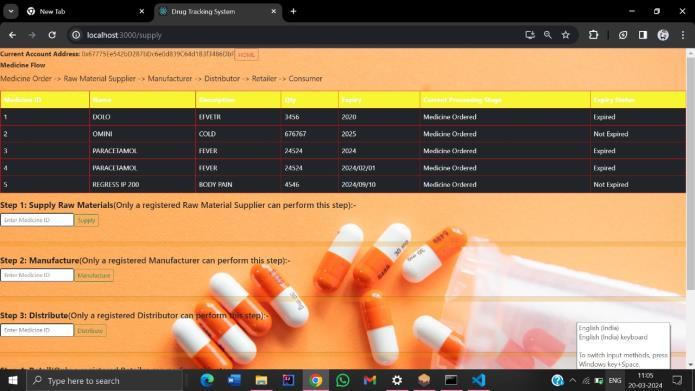
TheDTSdemonstratedthecapabilitytoenhancetraceability and transparency throughout the pharmaceutical supply chain.Bysecurelyrecordingproducttransactionsandevents on a decentralized blockchain ledger, stakeholders gained real-time visibility into the movement and provenance of pharmaceuticalproducts.
2.EnhancedSecurityandAuthentication:
The immutable nature of blockchain technology provided enhanced security and authentication mechanisms for pharmaceuticalproducts.Bycryptographicallyhashingand
timestamping each transaction, the DTS prevented unauthorized tampering or manipulation of product data. This cryptographic integrity ensured that product information remained immutable and verifiable, reducing the likelihood of counterfeit drugs infiltrating the supply chainandenhancingtrustamongstakeholders.
International Research Journal of Engineering and Technology (IRJET) e-ISSN: 2395-0056
Volume: 11 Issue: 05 | May 2024 www.irjet.net p-ISSN: 2395-0072
3.StreamlinedComplianceandRegulatoryReporting:
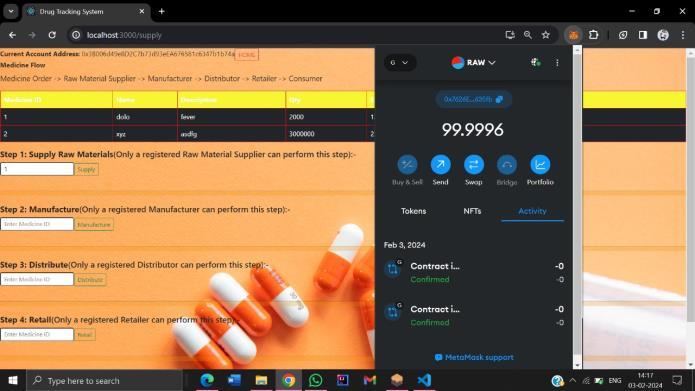
TheDTSfacilitatedstreamlinedcompliancewithregulatory requirements and reporting obligations imposed by regulatory agencies, such as the FDA and EMA. Real-time visibilityintoproductmovementsandautomatedreporting mechanismsenabledstakeholderstopromptlyrespondto regulatory inquiries, audits, and recalls. This proactive approach to compliance management reduced the administrativeburdenassociatedwithregulatoryreporting andenhancedtheoverallregulatorycompliancepostureof pharmaceuticalcompanies.
4.ChallengesandLimitations:
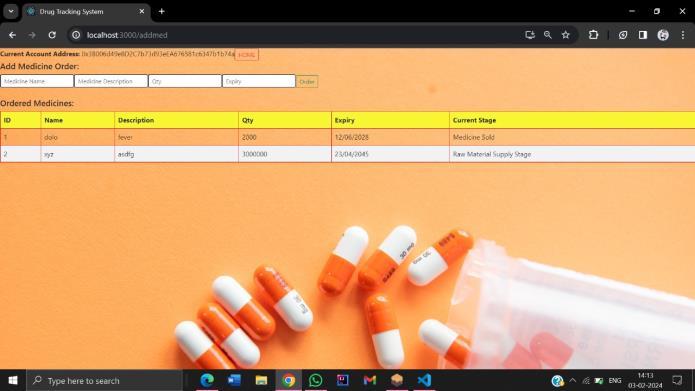
Despite the promising results of the DTS implementation, severalchallengesandlimitationswereidentifiedduringthe research process. These included scalability issues associated with blockchain technology, interoperability challengeswithexistingsystems,dataprivacyconcerns,and the need for industry-wide standards and regulatory harmonization.Additionally,theinitialimplementationcosts andtechnicalcomplexitiesofdeployingblockchainsolutions may pose barriers to widespread adoption within the pharmaceuticalindustry.
ThedevelopmentofaDrugTracingSystemusingBlockchain technologypresentsapromisingsolutiontothechallenges faced by the pharmaceutical industry. By leveraging the inherent security and transparency of blockchain, this system enhances traceability and authenticity throughout the supply chain. The implementation of smart contracts ensurestamper-proofrecord-keeping,reducingtheriskof counterfeit drugs and enhancing patient safety. Furthermore,theadoptionofsuchasystemhasimplications beyondindividualcompanies,extendingtoregulatorybodies andconsumersalike.Itsignifiesaparadigmshiftinsupply chain management, emphasizing the importance of transparencyandaccountability.Asthetechnologymatures andadoptionincreases,thepharmaceuticalindustrystands tobenefitsignificantlyfromthetransformativepotentialof blockchaininensuringtheintegrityofdrugdistributionand ultimatelyimprovingpublichealthoutcomes.
[1] Abramovich, J. (2019). Blockchain for Pharmaceutical Supply ChainManagement: New Paradigm and Opportunities.JournalofResearchinInnovativeTechnology, 5(1),10-20
[2]Dubovitskaya,A.,Xu,Z.,Ryu,S.,Schumacher,M.(2019). Blockchain applications in health care: A review. IEEE Access,7,176183-176197
[3] Kuo, T. T., Kim, H. E., Ohno-Machado, L. (2017). Blockchain distributed ledger technologies for biomedical andhealthcareapplications.JournaloftheAmericanMedical InformaticsAssociation,24(6),1211-1220.
[4] Muhuri, P. K., Shill, P. C. (2020). Blockchain in pharmaceuticalindustry:Areview.InternationalJournalof EngineeringResearchandTechnology,13(7),1498-1502.
[5] Ramani, P. (2021). Blockchain in pharmaceuticals: Opportunities and challenges. Journal of Pharmaceutical Sciences,110(2),615-620.
[6] Truby, J. (2018). Bitcoin, Cryptocurrency, and Government Regulations: A Global Overview. Journal of FinancialCrime,25(2),526-542
[7] Yli-Huumo, J., Ko, D., Choi, S., Park, S., Smolander, K. (2016).Whereiscurrentresearchonblockchaintechnology?
-Asystematicreview.PloSOne,11(10),e0163477.
[8] Swan, M. (2015). Blockchain: Blueprint for a new economy.”O’ReillyMedia,Inc.”.