
International Research Journal of Engineering and Technology (IRJET) e-ISSN: 2395-0056
Volume: 11 Issue: 05 | May 2024 www.irjet.net p-ISSN: 2395-0072

International Research Journal of Engineering and Technology (IRJET) e-ISSN: 2395-0056
Volume: 11 Issue: 05 | May 2024 www.irjet.net p-ISSN: 2395-0072
Ruchi Anil Patil1 , Prof. Priyanka Patil2
1Ruchi Anil Patil: Student, Dept. of Construction Management, MIT College of Management, Pune, Maharashtra, India
2Prof. Priyanka Patil: Professor, Dept. of Construction Management, MIT College of Management, Pune, Maharashtra, India ***
Abstract - Graphene, a two-dimensional crystalline manifestationofcarbon, hasgainedsignificantattention due to its unique blend of electrical, mechanical, optical, thermal, and sensing characteristics. Its strength, flexibility, and conductivity make it ideal for applications in electronics, energy storage, and biomedical engineering. Graphene researchisanewfield,leadingtoalackofstandardizedterms for categorizing its different forms. Its future scope includes enhanced structural materials, smart materials and sensors, energy-efficientbuildings,sustainableconstructionpractices, and 3D printing and prefabrication. Graphene's characteristics include strength, conductivity, flexibility, transparency, and barrier properties
Key Words: Graphene, Construction, Unique Material, Carbon,SingleLayer
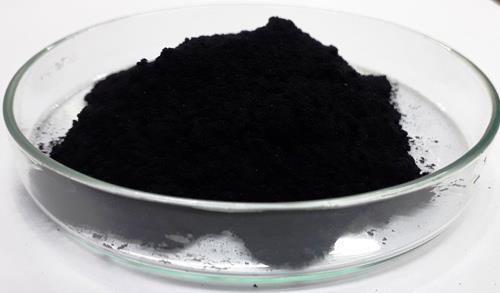
The material that has garnered the most attention from researchers in recent years is graphite, specifically in the formofgraphene.Thisunexpectedinterestcanbeattributed to the pioneering efforts of Andre Geim and Konstantin Novoselov,whoin2004managedtoextractasinglelayerof carbon from graphite, thus creating graphene. The InternationalUnionofPureandAppliedChemistry(IUPAC) laterofficiallynamedthisremarkablematerial"Graphene."
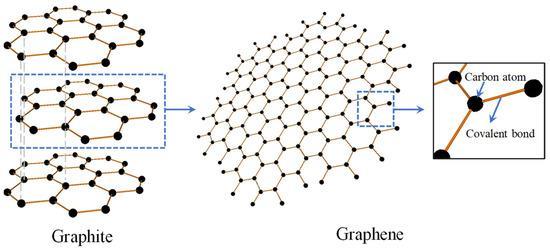
Grapheneisatwo-dimensionalcrystallinemanifestationof carbon, specifically a single-atom-thick, sp2-bonded flat layerofcarbonorganizedinahexagonalhoneycombpattern. Graphene has sparked significant interest due to its remarkableblendofelectrical,mechanical,optical,thermal, and sensing characteristics, all of which were previously believed to be unattainable in a single material. These uniquepropertiesincludeitsexceptionalstrength,flexibility, andconductivity,whichenableittobeutilizedinfieldssuch aselectronics,energystorage,andbiomedicalengineering
Graphene research is a new field, leading to a lack of standardizedtermsforcategorizingitsdifferentforms.To addressthisissue,theInternationaleditorialteamofCarbon has suggested a classification system for two-dimensional carbon materials. This system is designed to bring clarity andconsistencytotheclassificationofGraphenematerials
Graphene, a hexagonal carbon sheet, is a thin, versatile materialwithlateraldimensionsrangingfromnanometers tomicroscale.Itsmonolayerformisidealforhigh-frequency electronics,whilebi-layerandtri-layerformshavedistinct properties.
1. STRENGTH & durability - Graphene enhances the durabilityandlongevityoftraditionalconstruction materialslikeconcrete,asphalt,andcompositesby reducingcrackingandcorrosion,therebyenhancing theirresilience.
2. Lightweight material - Graphene's lightweight propertiesenablethedevelopmentofconstruction materials that reduce structure weight without compromising strength or durability, resulting in moreefficientmethodsandreducedtransportation costs.
3. Thermal and Electrical Conductivity - Graphene enhances thermal and electrical conductivity in constructionmaterials,improvingenergyefficiency andperformance.Itenhancesinsulationproperties, reducingheatingandcoolingenergyconsumption.
4. WaterandGasBarrier-Graphene'sgasandliquid blocking properties make it ideal for building materials like waterproof membranes and gas barriers,enhancingstructurestrengthandlongevity.
1. Enhanced Structural Materials - Graphene can enhance the strength, durability, and resilience of conventional construction materials like concrete, steel, and asphalt, paving the way for lighter, stronger,andmoreresilientbuildings.
2. Smart Materials and Sensors - Graphene's exceptional electrical and mechanical properties enablethedevelopmentofintelligentconstruction materials and sensors, enabling real-time
International Research Journal of Engineering and Technology (IRJET) e-ISSN: 2395-0056
Volume: 11 Issue: 05 | May 2024 www.irjet.net p-ISSN: 2395-0072
monitoring of structural well-being, preventing costlyrepairs,andensuringstructuresafety.
3. Energy-Efficient Buildings - Graphene-based materialsenhanceenergyefficiencyinbuildingsby improvinginsulation,reducingthermalconductivity, and enhancing energy storage, thereby reducing indoortemperatureregulationandgridreliance.
4. Sustainable Construction Practices - Graphene's lightweight,high-strengthpropertiescanpromote sustainableconstructionmethods,reducingmaterial consumption,waste,andenvironmentalimpact.Its useinmembranesandcoatingsenhancesbuilding resilience.
5. 3D Printing and Prefabrication - Graphene-based materials have the potential to revolutionize the construction sector by simplifying the building process, reducing construction time, and enabling uniquearchitecturaldesigns.
1.5. Characteristics of Graphene
1. Strength-Grapheneisahighlydurablematerialthat surpassessteelinstrengthandisalsolightweight.
2. Conductivity–Thismaterialisasuperiorconductor of heat and electricity, surpassing most other materialsintheseareas.
3. Flexibility–Graphene,renownedforitsstrengthand exceptionalflexibility,isanidealchoiceforvarious applications that demand flexibility as a key attribute.
4. Transparency – The material is transparent, allowinglighttopassthrough,makingitsuitablefor touchscreens,solarpanels,andbendableelectronics.
5. BarrierProperties–Graphene'simpermeabilityto gases makes it valuable for creating barriers in packaging materials and water purification applications.
6. Potential application - Graphene has numerous potential applications in fields like electronics, energystorage,medicaldevices,andaerospacedue toitsversatilenature
2. METHODOLOGY
A. MechanicalExfoliation(ScotchTapeMethod)-
The Scotch Tape Method, developed by Andre Geim and Konstantin Novoselov, is a time-consuming and inefficient method for extracting single-layer graphene from bulk graphite,leadingtotheirNobelPrizeinPhysicsin2010.
Process–
PreparationofStartingMaterial:Theprocessbegins with a piece of highly oriented pyrolytic graphite (HOPG),whichtypicallyconsistsofmultiplelayersof graphenestackedtogether.
Adhesive Tape: Scotch Tape is applied to the graphite sample's surface, and gently pressed to ensuregoodcontact.
Peeling-offlayers:Thetapeisappliedandcarefully removed from the graphite sample surface, removingthinlayersofgraphite.
Repeating the Process: Repeated application and peeling of tape thins graphite layers, transferring thinnerlayersontothetape.
Microscopic Inspection: The tape with graphite layers is examined under an optical or electron microscope to identify single-layer or few-layer grapheneareas,whichappearasthin,transparent sheets.
Transfer onto Substrate: Identifying suitable grapheneflakesallowsthemtobetransferredonto cleansubstrateslikesilicondioxide/siliconwafers forfurthercharacterizationanddevicefabrication.
TheScotchTapeMethodisamanualmethodforproducing high-qualitygraphenewithminimalimperfections,butnot suitable for mass production due to its slowness and scalability.
International Research Journal of Engineering and Technology (IRJET) e-ISSN: 2395-0056
Volume: 11 Issue: 05 | May 2024 www.irjet.net p-ISSN: 2395-0072
Chemical Vapor Deposition (CVD) is a method that breaks downcarbon-containinggasonmetalcatalystsubstratesat hightemperaturestogrowgraphenelayerbylayer.Tostart theprocess,asubstratelikecopper,nickel,orsiliconcarbide is prepared by cleaning and polishing to ensure a clean surface for graphene growth. Chemical vapor deposition (CVD)isaprocessthatproducesgraphenefilmsbyplacing carbon atoms on a substrate, typically copper, nickel, or silicon carbide wafers. The substrate is placed in a CVD reactor chamber, typically a high-temperature furnace or vacuum chamber, which is emptied of air and gases to regulategraphenegrowth.
Introduction of Carbon Precursor: A carboncontaininggasprecursor,likemethane,ethylene,or acetylene,isintroducedintoaCVDreactorchamber, whichdecomposesathightemperaturestorelease carbon atoms, forming graphene on the substrate surface.
HeatingandDecomposition:Thesubstrateisheated to700°Cto1000°C,dependingontheprecursorgas andsubstratematerial,causingtheprecursorgasto decompose and carbon atoms to adsorb onto the substratesurface.
Graphene Nucleation and Growth: Carbon atoms adsorb onto substrate surfaces, nucleating and forming graphene domains. Under optimal conditions, graphene domains cover substrate surface uniformly, controlled by temperature, gas flowrate,anddepositionduration.
CoolingandRemoval fromReactor: The graphene film thickness is achieved, the substrate is cooled, and the CVD process is stopped. The graphenecoated substrate is then removed for further processingandcharacterization.
TransferontoTargetSubstrate:Wetordrytransfer methodscanbeusedtotransfergraphenefilmonto different substrates for specific applications, preservingitsqualityandintegrity.
Characterization and Device Fabrication: The graphene film, synthesized using Raman spectroscopy, SEM, and AFM techniques, is evaluated for quality, thickness, and structural properties, enabling applications in electronics, photonics,sensors,andenergystorage.
Graphene oxide, a precursor for graphene, is created by oxidizinggraphite.Itischemicallyreducedtoformreduced graphene oxide (rGO), with functional groups and defects. Although not perfect, rGO offers simpler production and customizationforspecificapplications,restoringsp2carboncarbon bonds and increasing solubility in aqueous and organic solvents. The process involves substrate heating, carbon adsorption, graphene domain growth, cooling, transfer,andfabricationusingRamanspectroscopy,SEM,and AFM to assess the quality, thickness, and structural propertiesofthesynthesizedgraphenefilm.
CVDisatechniqueusedtocreategraphenefilmswithprecise controloverthickness,quality,andscalabilitybydepositing carbonatomsontoasubstratesurface.
SynthesisofGrapheneOxide(GO):Grapheneoxideis created by oxidizing graphite flakes with strong agentslikeKMnO4,NaNO3,orH2SO4,introducing oxygen-containing functional groups, forming a layered material with hydrophilic and insulating properties.
DispersionofGO:ThesynthesizedGOisdispersedin asolventlikewater,ethanol,orDMFtoformastable suspension,ensuringuniformexposureofGOsheets tothereducingagent.
ChemicalReduction:Chemicalreducingagentslike hydrazine, sodium borohydride, hydroquinone, ascorbic acid, and hydrogen iodide are used to reduceGOandproducerGObydonatingelectronsto oxygen-containingfunctionalgroups.
WashingandPurification:Followingreduction,the rGO product is purified by multiple rounds of centrifugation, filtration, and solvent washing to remove excess reducing agents, reaction byproducts,andresidualGO.
Drying and Characterization: The purified rGO is driedandcharacterizedusingtechniqueslikeXRD, FTIR,Ramanspectroscopy,SEM,andAFMtoassess its structural, chemical, and morphological properties.
Chemical reduction of GO produces rGO with tunable properties for electronics, energy storage, sensors, and composites. However, defects andstructural disorder may affectperformance.
International Research Journal of Engineering and Technology (IRJET) e-ISSN: 2395-0056
Volume: 11 Issue: 05 | May 2024 www.irjet.net p-ISSN: 2395-0072
D. Liquid-Phase Exfoliation (LPE): Liquid-Phase Exfoliation (LPE) is a solvent-based process that separates graphene layers, creating sheets for various uses,though the qualityand properties of theresultinggraphenemayvary.
E. Electrochemical Exfoliation - Electrochemical exfoliationisatechniquethatinvolvesapplyingan electriccurrenttoagraphiteelectrode,resultingin theintercalationandexfoliationofgraphenelayers.
3. USES OF GRAPHENE IN CONSTRUCTION INDUSTRY
1. Concrete Reinforcement – Graphene can enhanceconcrete'sstrengthanddurabilityby reducing cracking, increasing corrosion resistance, and enhancing mechanical propertiesthroughthedispersionofgraphene oxideornanoplatelets.
2. Coating&Paints –Graphenecoatingsprovide superior protection against corrosion, weathering, and chemical damage, extending the lifespan of steel structures, bridges, and other infrastructure while reducing maintenancecosts.
3. Smart Materials – Smart concrete uses graphene-based materials for real-time structural health monitoring, detecting stress, strain, temperature, and humidity changes, enabling early identification of structural problems.
4. Energy Storage – Graphene-based materials offer efficient energy storage solutions in buildings, particularly in theuse of graphenebased supercapacitors for powering smart windows, sensors, and structural monitoring systems.
5. Thermal Management – Graphene's high thermalconductivitycanimprovethethermal properties of construction materials, allowing
for better control of internal temperatures, thereby enhancing energy efficiency and comfort.
6. Waterproofing – Graphene's exceptional impermeability makes it ideal for waterproofing,creatingimperviousbarriersin construction materials to protect structures fromwaterinfiltrationandmoisturedamage.
7. Lightweight Composite material – Graphene composites can be used to create lightweight, durableconstructionmaterialswithimproved mechanicalproperties,makingthemsuitablefor aerospace,automotive,andstructuralsectors.
8. Solarpanel–Graphene'sexceptionalelectrical conductivity and transparency make it a promisingmaterialforsolarpanels,potentially improving performance, and longevity, and reducingmanufacturingcosts.
9. Flexible Electronics – Graphene's electrical conductivity and versatility make it ideal for flexible electronics in construction, enabling energy harvesting, light modulation, and adaptive shading through the integration of sensorsandactuators.
10. Lightweight Structural ComponentsGraphene-derived substances can create lightweight structural elements for buildings and infrastructure by incorporating it into composites and foams, resulting in strong yet lightweightstructures
Graphene-enhancedconcreteisanoveltypeofconcretethat incorporates graphene oxide nanoparticles, enhancing its mechanical strength, durability, and overall performance. Graphene's strength surpasses steel due to its distinctive atomicstructureandbondingproperties.
Graphene's strength surpasses steel due to its distinctive atomicstructureandbondingproperties.
1. Atomic Structure: Graphene is a twodimensional honeycomb lattice structure consisting of a single layer of carbon atoms covalently bonded to three adjacent carbon atoms.
2. Bonding Strength: Graphene's strength is attributed to its carbon-carbon bonds, which
International Research Journal of Engineering and Technology (IRJET) e-ISSN: 2395-0056
Volume: 11 Issue: 05 | May 2024 www.irjet.net p-ISSN: 2395-0072
distributestressevenlythroughoutthelattice, enhancing its resistance to deformation and fracture.
3. Defect-Free Structure: Graphene's strength is duetoitsflawlesscrystallinestructure,unlike steel'simperfections,whichlimititstheoretical strengthpotential.
4. SizeEffect:Graphene'sstrengthisattributedto its small size, resulting in a high surface-tovolume ratio, which minimizes defects and enhancestheeffectivenessofitsstrongcovalent bonds.
5. Flexibility: Graphene's two-dimensional structureallowsittobendandstretchwithout breaking, showcasing its superior mechanical characteristicscomparedtosteel.
Graphene concrete is a stronger material than ordinary Portlandcement(OPC)concrete,withacompressivestrength of 361 MPa. This makes it ideal for construction projects requiringdurabilityandstructuralintegrity.Engineersand builders can create structures that can withstand greater loads and pressures, ensuring long-lasting and resilient infrastructure.Thestudyshowsthateven0.03%graphene cansignificantlyenhanceconcretecompressivestrengthand flexuralstrengthby149%and80%respectively,highlighting thepotentialofgrapheneinconcretemixtures.
Graphene nanoparticles enhance concrete's strength and toughness by acting as reinforcement agents within the cementitious matrix,bridgingmicrocracksanddefects.
Graphene improves concrete's mechanical propertiesbyinhibitingcrackpropagationand reducing brittle failure risk, resulting in more durablestructures.
Graphene-based concrete enhances durability by resisting degradation mechanisms like freeze-thawcycles,chloridepenetration,sulfate attack,andASR,therebyprolongingtheservice lifeofconcretestructures.
Graphene nanoparticles enhance the workability and rheological properties of concretemixtures,facilitatingeasierplacement, compaction,andfinishingduringconstruction, actingaslubricants.
Graphene-based concrete enhances material usage, structure lifespan, and reduces environmental impact by optimizing
maintenance, resource consumption, and carbon emissions associated with repair and replacementactivities.
Graphene-based concrete improves material usage, structure lifespan, and reduces environmental impact by optimizing maintenance, resource consumption, and carbon emissions associated with repair and replacementactivities.
Graphene-basedasphalt,alsoknownasgraphene-enhanced asphalt, is a type of asphalt concrete that enhances its mechanical properties, durability, and performance. Graphene-based asphalt typically consists of the following components:
AsphaltBinder-Asphaltconcreteiscomposed of asphalt binder, a viscous, black petroleum substancethatactsasaglue,bindingaggregates likesand,gravel,andcrushedstone.
Agreements - Aggregates form the structural framework and mechanical properties of asphaltconcrete,whichistypicallygradedand mixed with the asphalt binder to create the asphaltmixture.
Graphene Nanoparticles - Graphene nanoparticles are added to asphalt binder in smallconcentrationstoimproveitsmechanical propertiesandperformance.
Additives - Asphalt mixtures may contain additiveslikepolymers,rejuvenators,fibers,or mineral fillers to enhance performance and modify properties, depending on the specific applicationrequirements.
Benefits
– Graphene-based asphalt offers several benefits overtraditionalasphaltconcrete:
Improved Mechanical Properties - Graphene reinforcement improves asphalt concrete's tensile strength, modulus of elasticity, and fatigue resistance, resulting in longer-lasting pavementswithreducedcrackingandrutting
EnhancedDurability-Graphene-basedasphalt offers enhanced durability and longer service lifeduetoitsresistancetoaging,deformation, moisturedamage,andthermalcracking.
ReducedRuttingandDeformation - Graphene nanoparticles enhance the stiffness and rut resistance of asphalt concrete, reducing
International Research Journal of Engineering and Technology (IRJET) e-ISSN: 2395-0056
Volume: 11 Issue: 05 | May 2024 www.irjet.net p-ISSN: 2395-0072
permanent deformation under heavy traffic loadsandhightemperatures
EnhancedThermalProperties-Graphene'shigh thermalconductivityefficientlydissipatesheat, reducing the risk of thermal cracking and prematurepavementfailureinhotclimatesor heavytrafficconditions.
EnvironmentalSustainability-Graphene-based asphalt can enhance environmental sustainability by prolonging the lifespan of asphalt pavements, reducing the need for frequentrepairsandreplacements.
Improved Mechanical Strength: Graphene reinforcement enhances asphalt concrete's tensile strength, elasticity, and fatigue resistance, resulting in stronger pavement structuresandimprovedresistancetocracking, rutting, and deformation under heavy traffic loads.
Enhanced Durability: Graphene nanoparticles enhance asphalt concrete's aging, thermal stability,andmoistureresistance,extendingits service life and reducing maintenance requirementscomparedtotraditionalasphalt.
BetterThermal Conductivity:Graphene'shigh thermalconductivityefficientlydissipatesheat, reducing the risk of thermal cracking and prematurepavementfailureinhotclimatesor heavytrafficconditions.
Improved Fatigue Resistance: Graphene reinforcement improves asphalt concrete's fatigue and crack propagation resistance, reducing pavement failure under repeated loadingandcyclicstressconditions,resultingin longer-lastingpavements.
Reduced Rutting and Deformation: Graphene nanoparticles enhance asphalt concrete's stiffness, rut resistance, and deformation resistance, reducing permanent deformation under heavy traffic loads and high temperatures.
EnvironmentalSustainability:Graphene-based asphalt extends asphalt pavement lifespan, reduces frequent repairs, and contributes to environmental sustainability by reducing life cyclecosts,therebyenhancingthedurabilityof transportationinfrastructure.
Road Construction: Graphene-based asphalt offers superior mechanical properties, durability, and performance compared to traditional asphalt, resulting in longer-lasting and more resilient pavements for new road construction.
Pavement Rehabilitation: Graphene-based asphalt is utilized in pavement rehabilitation and maintenance projects to enhance the structural integrity and longevity of aging pavements by applying an overlay or surface treatment.
Airport Runways and Taxiways: Graphenebased asphalt is ideal for airport runway and taxiway construction due to its strength, durability, and resistance to deformation, makingitsuitableforheavyaircraftloadsand hightrafficvolumes.
Parking Lots and Driveways: Graphene-based asphalt is a popular choice for low-traffic pavement surfaces due to its enhanced resistance to cracking, rutting, and moisture damage, resulting in smoother, longer-lasting pavement.
Bicycle Lanes and Pedestrian Pathways: Graphene-based asphalt is a sustainable and eco-friendly material suitable for the construction of bicycle lanes, pedestrian pathways, and recreational trails, offering enhancedsafety,comfort,anddurability.
Racetracks and Sports Surfaces: Graphenebasedasphaltisaversatilematerialusedinthe constructionofracetracks,sportssurfaces,and athletic tracks, offering superior traction, performance,anddurability.
SpecialtyApplications:Graphene-basedasphalt is ideal for specialty pavement projects in industrial facilities, military installations, and high-security areas due to its enhanced performancecharacteristics.
Cost:Despiteitshighcost,grapheneproduction may hinder its widespread use in the construction sector, but advancements in productionmethodscouldpotentiallyaddress thisissue.
International Research Journal of Engineering and Technology (IRJET) e-ISSN: 2395-0056
Volume: 11 Issue: 05 | May 2024 www.irjet.net p-ISSN: 2395-0072
Scalability: The construction industry faces challenges in scaling upgraphene production, but developing scalable manufacturing processes is crucial for increasing its accessibility.
Standardization: The absence of standardized testingmethodsandregulationsforgraphenebasedconstructionmaterialscouldhindertheir adoption, necessitating the establishment of industry standards for their reliability and consistency.
Compatibility: Graphene-based materials may necessitate modifications to existing construction processes and infrastructure, posing logistical challenges for proper integrationandcompatibility.
Safety Concerns: Despite being generally safe, there are concerns about the potential health and environmental impacts of graphene production and use, necessitating comprehensive risk assessments and safety protocols.
Graphene'suniquepropertiesandpotentialapplicationsin construction make it a green product, contributing to sustainabilityinvariousindustries.
Resource Efficiency - Graphene, a sustainable alternativetotraditionalconstructionmaterials, is derived from abundant carbon sources like graphiteandproducedusingsimplechemicalor mechanicalmethods.
Energy Efficiency - Graphene-based materials canenhanceenergyefficiencyinbuildingsand infrastructure, such as concrete, by reducing heating and cooling requirements and greenhousegasemissions.
Durability and Longevity - Graphene reinforcementimprovesconstructionmaterial durability, reducing frequent repairs and maintenance, conserving resources and minimizing environmental impact in production,transportation,anddisposal
Recyclability - Graphene-based materials like composites can be recycled or biodegradable, promotingthecirculareconomyandreducing waste, thus conserving resources and minimizing environmental impact in constructionprojects.
Reduced Carbon Footprint - Graphene-based materialscansignificantlyreduceconstruction's carbon footprint by enhancing building performance and sustainability, such as in graphene-enhancedconcrete,resultinginlower embodiedcarbonandlifecycleemissions.
Innovative Applications - Graphene offers sustainable construction solutions like selfsensingmaterials,energy-efficientcoatings,and lightweight composites, addressing environmental challenges and promoting sustainabledevelopmentintheindustry.
Consideringtheentirelifecycleofgraphene-basedmaterials, including production, use, and disposal, is crucial for assessingtheirenvironmental impactandoptimizingtheir sustainability
Graphene, a unique material with strength, conductivity, flexibility, and impermeability, has the potential to revolutionize the construction industry by enhancing structure durability, reducing maintenance costs, and reducingenvironmentalimpact.Grapheneenhancessafety, efficiency, and sustainability in construction projects by incorporatingitintocoatings,paints, smartmaterials,and energy storage solutions, enhancing real-time monitoring and adaptation. Graphene holds immense potential in construction, but challenges like scalability, cost, and standardizationrequirefurtherresearchforwidespreaduse andimprovedmaterialsandtechnologies.Grapheneholds immense potential for innovation, sustainability, and resilience in the construction industry, necessitating continuousresearch,development,andcollaborationtofully harnessitscapabilities.
[1] A.Mashhadani,V.Pershin“ConcreteModificationusing Graphene and graphene oxide” DOI 10.17277/amt.2020.02p.046-056
[2] Somnath Bharech , Richa Kumar “A Review on the propertiesandapplicationofgraphene”10;April-June, 2015pp.70-73
[3] M.Devasena,J.Karthikeyan“Investigationonstrength Properties of Graphene Oxide Concrete” -ISSN: 23496185February2015
[4] Belal G. Nassef, Galal A. Nassef, Mohamed A. Daha “ Graphene and Its Industrial Application – A Review “ DOI:10.5923/j.ijme.20201001.01
International Research Journal of Engineering and Technology (IRJET) e-ISSN: 2395-0056
Volume: 11 Issue: 05 | May 2024 www.irjet.net p-ISSN: 2395-0072
[5] Aungkan Sen, Md. Rahat Al Hassan, Fazlur Rashid “Graphene: AReviewonItsResearchTrend&synthesis Techniques”(ICMERE2017)18–20December2017
[6] https://www.mdpi.com/1996-1944/16/10/3783
[7] https://www.tradeindia.com/products/graphene-nanopowder-5575400.html
BIOGRAPHIES

Ruchi Anil Patil Student, Dept. of Construction Management, MIT College of Management, Pune, Maharashtra, India 1’st Author Photo
2024, IRJET | Impact Factor value: 8.226 |