
“Pioneering Sustainability: Analyzing Household Energy Consumption and Waste Generation in Palli, J&K UT-India's first Carbon-Neutral Panchayat"
Mr. Balwant Singh, Assistant Professor and PI, Unnat Bharat Abhiyan Coordinator, Dogra Degree College, {Affiliated to the University of Jammu} Bari Brahmana, Jammu, MA, UGC NET{Sociology}, MA {Pub.Administration}, B.Ed., PGDRD
1. Abstract
The"CarbonNeutral isanInitiativeofSh.Narendra ModiPrimeMinisterofIndia, MinistryofPanchayatiRaj,andSamba districtadministrationJ&KUT"includesthePalliPanchayatasapilotproject.Withthisproject,thestatehopes tofollowa low-carbon, climate-resilient example. The village of Palli is dedicated to India's first carbon-free panchayat., which is in Jammu'sSambadistrict.The500KWsolarplantwasinauguratedbytheprimeministeratthiscarbon-neutralpanchayat Anareaof9443KanaliscoveredbythePalliGramPanchayat,or"localself-government,"intheSambadistrictoftheJ&K UT;overhalfofthisisusedforagriculture.1313mmofrainfallistypicalannually.3700peopleinall,with1918malesand 1782women.Thegoalofthiseffortistoincreasesocioeconomicresilienceandlivelihoodsbyimplementingnature-based adaptation strategies. The following tactics are advised for establishing and sustaining carbon neutrality: 1. Emission reduction, 2. Improving carbon sinks, and 3. Using natural processes to produce carbon credits or reserves. The sample sizeincludesdatafromthe"EnergyUtilizationSurvey"andthe"WasteGenerationSurvey,"whichweregatheredfrom724 houses across the whole panchayat. The concept of a "Carbon Neutral Community" encourages zero-carbon growth and regionalgovernment-levelfoodandenergyself-sufficiency.GHGemissionswilldecreaseifelectricautorickshawsandzero trasharepromoted.Byestablishing"TheForestbanking"programsforlandownersandplantingtrees,inordertoassure organicCO2elimination.alocalgreeneconomycouldbeformed.Aninnovativepilotinitiativecalled"CarbonNeutralPalli Panchayat" integrates climate action into a resilient local economy. This project was developed to serve as a model for low-carbon and climate-resilient development throughout the nation in the UT of Jammu and Kashmir. Existing manufacturingprocessesneedtobemodifiedimmediatelyinordertoreducethereleaseofgreenhousegases(GHG)and absorbthegascarbondioxide(CO2)fromouratmosphere.
Key Words: Palli Panchayat, Carbon Neutrality, Greenhouse gases {GHG}, CO2, Energy utilization Survey, Waste generationsurvey
Introduction
Palli, a small hamlet in the Samba district of the UT of Jammu and Kashmir, made history on April 24, 2022, when theHonourable Prime Minister of India, Sh. Narendra Modi declared the panchayat as India's first carbon-neutral panchayat. In keeping with this vision, the Ministry of Panchayati Raj and Samba district administration delegated the workofsurveyingandanalyzingtheresidentialenergyutilizationandwastegenerationinPallipanchayattoUnnatBharat Abhiyan. ThePICoordinator,Mr.BalwantSinghDogra DegreeCollege, wasgiventhe assignmentbytheRCIIIT Jammuto surveyandgathermanualdataonenergyuseandgarbagegenerationinPallipanchayat.Students'assistancewasusedto completethis.InordertoexaminethedomesticenergyusageandwastegenerationinPallipanchayat,thisreportprovides thespecificsofthesurveythatwasconductedandtheresultsthatwereanalyzed.
2.1 About Palli Panchayat
PalliandBassiKhurdarethetwovillagesthatmakeupPalliPanchayat,whichissituatedintheBariBrahmanaTehsilof the District Samba. It is located approximately 28 kilometers from the district headquarters in Samba and is under the controloftheBariBrahmanablock.Itis340metersabovesealevelandliesbetweentheNorthlatitudeof32°64'andthe Eastlongitudeof74°93'.Thevillage,whichhasabout724houses,islocatedonlushplains.
SambaDistrict, Bari Brahmana MC, Panchayat Kartholi, and the West and South sides of Jammu District all encircle the Panchayat. Panchayat has a total area of 9443 kanal, of which over 50% is used for agriculture. 1313 mm of rainfall is typicalannually. Volume: 11 Issue: 05 | May 2024
Volume: 11 Issue: 05 | May 2024 www.irjet.net p-ISSN:
There are 3700 people overall (1918 males and 1782 women). A large portion of the total population is dependent on work-related activities and cultivated. The 500 KW solar plant was inaugurated by the prime minister at this carbonneutralpanchayat.
Pallihasemergedasa role model forpanchayatsandinspiredothersinIndiaand Jammu& Kashmirto becomecarbonneutral.6,408squaremetersofsolarpanelstotal of 1,500in Palli.340panchayathouseswill be poweredby thesesolar panels.
Electricity generated will be distributed through the neighborhood grid station. The first figure shows the Palli panchayat'ssolarpowerplant,whilethesecondfigureshowsanaerialpictureofthePallipanchayat.
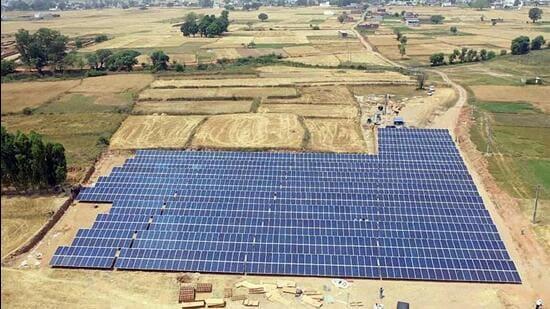
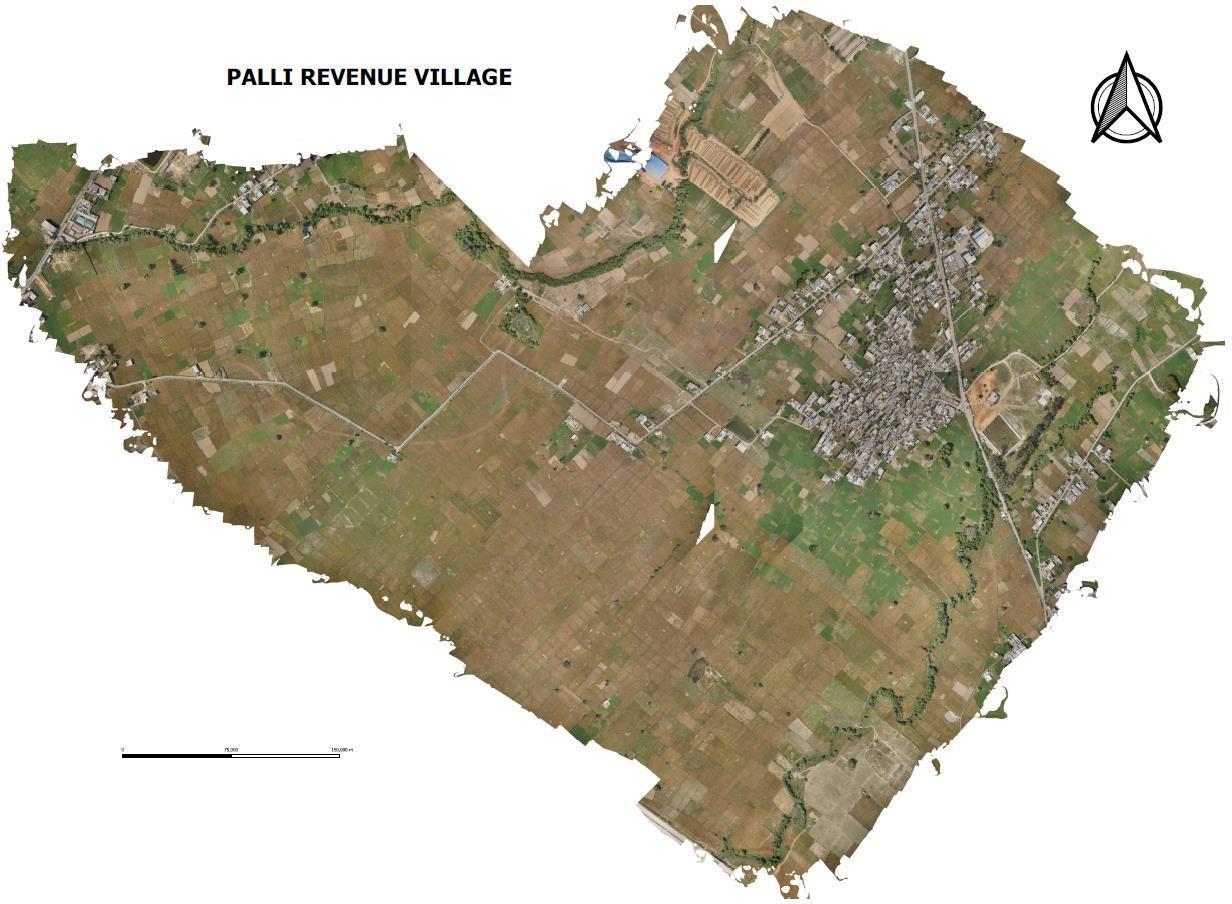
Fig.1:solarpowerplant{500kw}
Fig-2TheaerialviewofthePallipanchayat
3.Purpose of the Study:
Toprovidein-depthdetailsregardingthelevelofenergyaccess,energyusehabits,andseveralwayswasteisproducedin Palli Panchayat. Through the recommendation of sector-specific adaptation and mitigation methods, this pilot project seeks to transform Palli Panchayat in Samba district, J&K UT, into a "Carbon-neutral Panchayat." This will be achieved by conducting an examination of carbon emission and sequestration in the transportation, energy, waste, livestock, and AFOLU(agricultural,forestry,andotherlanduse)sectors.Theconceptofa"CarbonNeutralCommunity"encourageszerocarbongrowthandregionalgovernment-levelfoodandenergyindependence.
4. Method and Methodology:
The study research exclusively utilized primary data that was directly collected from participatory assessments and field surveysapplyingarangeofmethodologies,especiallydoor-to-doorassessingandinterviewswithrespondentsbasedona setofquestionnairesurveyforms.Manyvisitstookplaceinordertogatherthedata.Datawascollectedviasurveyforms and questionnaires. 724 households, or the sample size, were used to collect data using a structured questionnaire. The secondary sources including e-journals, government publications,government websites, etc. are also used For better understanding,theprimarydatawasexaminedusingtablesandgraphs.Therefore,usingthedatathathad beengathered, ananalysiswascarriedout,andtheresultswerealsoreviewed.
5. Information about the survey:
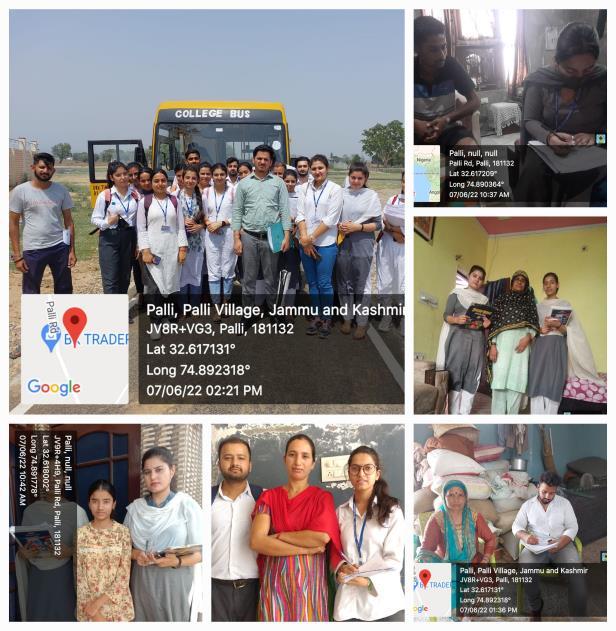
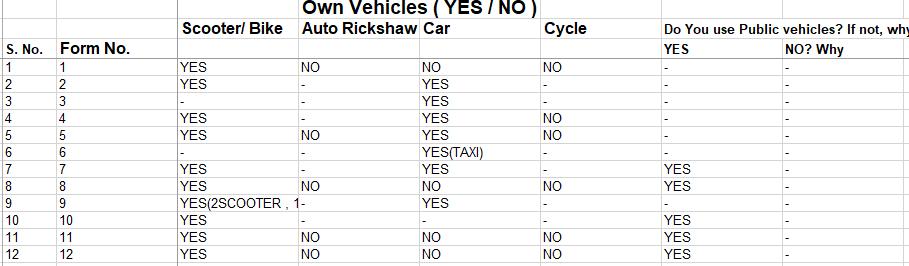
DograDegreeCollegeJammuwasoneoftheParticipatingInstitutions(PIs)thatattendedthediscussiononthecreationof amodelclimateactionplanduringtheMOPRofficers'visittoPalliGramPanchayatonJune3,2022.Whereasafieldsurvey ontheCarbonNeutralPalliPanchayatwasassignedto PIDogra DegreeCollegeBoththe"EnergySurvey"andthe"Waste Survey"of724housesintheentirepanchayatwerecarriedoutunderthesupervisionofMr.BalwantSingh,PICoordinator. Around 80 of the 724 households did not answer or were closed. Under the direction of UBA coordinator Mr. Balwant Singh, UBA Volunteers assisted in completing the tremendous task of surveying. Annexure 1 contains the comprehensive "EnergySurvey"and"WasteSurvey"analysis.Afterthecompletionofthefieldsurvey,641surveyformsweregiventothe IIT Jammu UBA team. A glimpse of the survey forms being distributed at IIT Jammu is shown in Fig. 4. Under the supervision of Prof. Rakesh Singhai, Dean of Outreach and Continuing Education Programs, and RCI Coordinator, IIT Jammu,theteamfirstcompletedtheenormous work of digitizingthe wholedata fromthephysicalcopiesoftheform.In Annexure2,asampleofthedigitizeddataisprovided.
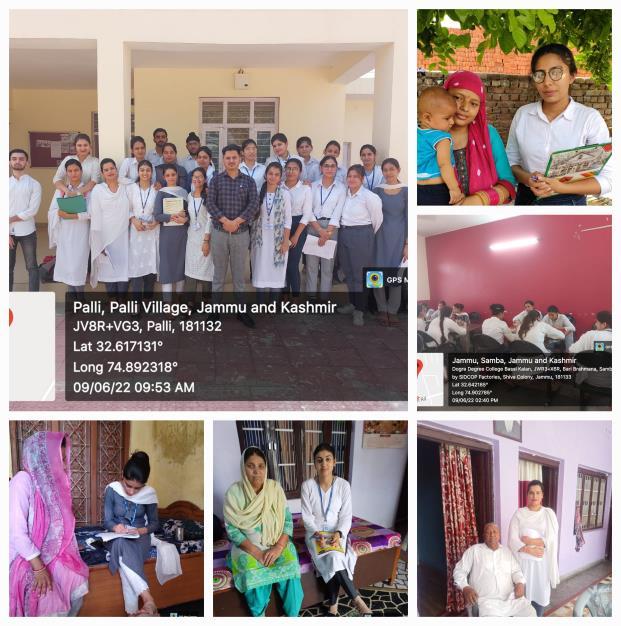
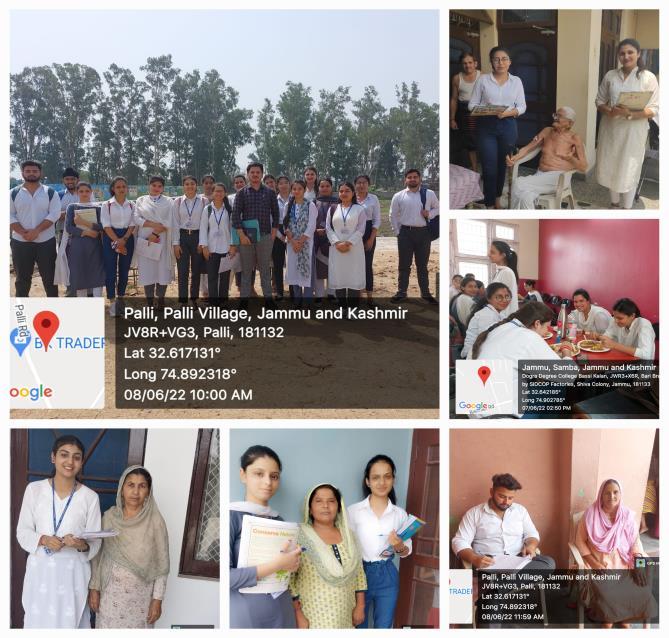
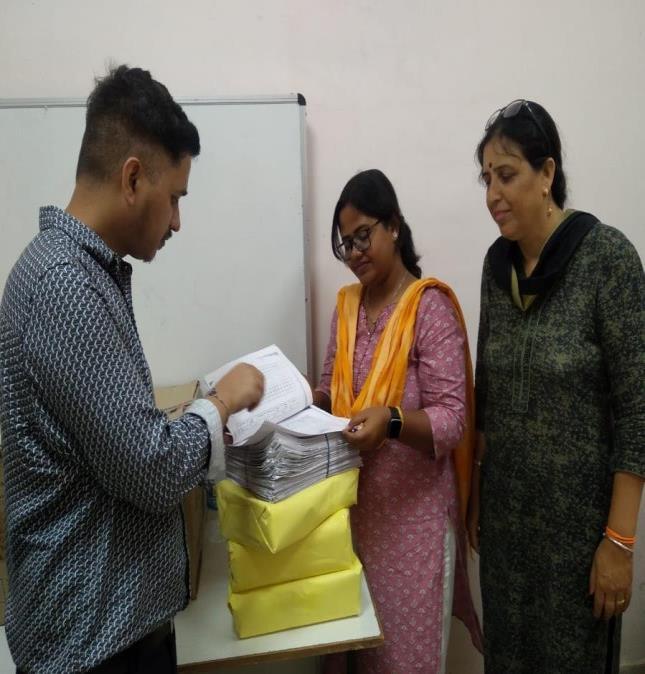
4showsMr.
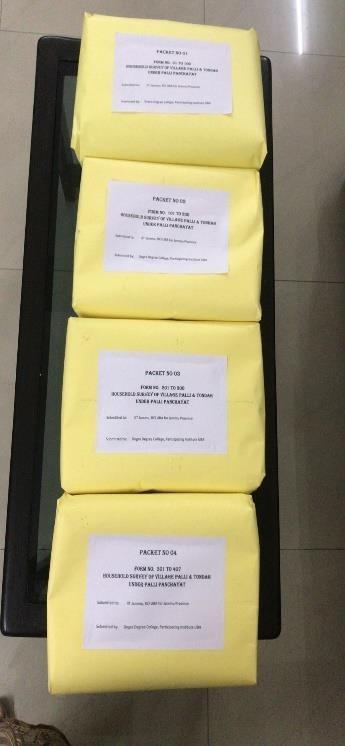
Singh PICoordinator,fromDograDegreeCollegedeliveringpackageswith641formstoDr. Riya
and Mrs.JeyotiKaulBhatfromIITJammu.
Fig-3:GlimplesoftheSurvey
Figure
Balwant
Bhowmik
Volume: 11 Issue: 05 | May 2024 www.irjet.net
6. Carbon Neutrality Definition:
In order to achieve carbon neutrality, carbon outputs and carbon sink absorption must be balanced. This can be accomplished by reducing or eliminating carbon dioxide emissions (the shift to a "post-carbon economy"). Carbon sequestrationisrequiredto offsetallgreenhousegas(GHG)emissionsona worldwidescale(Dasetal., 2022).Literature usesavarietyofdefinitionsofcarbonneutrality.
Table 1: Different definitions of carbon neutrality
Carbon neutrality GHG
The circumstance in which the greenhouse gas emissions related to the issue during the same period resultedinanetincreaseintheglobal release of greenhouse gases to the environment.
Carbon neutrality carbon Toachievecarbonneutrality,carbon emissionsandatmosphericcarbon absorptionmustbebalanced.
carbon neutrality
Carbon emission
Whencarbonemissionsfromanentity (such as a corporation, assistance, goods, or activity) are balanced off by funding an equivalent amount of carbonsavingselsewhereintheglobe, that entity is said to be in a "carbon neutral"state.
European Parliament European Parliament(2019)
Carbon footprint
Carbonfootprint 2019
Net zero carbon dioxide emission
Co2
The worldwide balance of anthropogenic CO2 emissions and removals during a certain time period results in net-zero carbon dioxide (CO2) emissions. The term carbon neutrality additionally refers to net zeroCO2emissions.
Carbon neutral GHG The second part of the decade should see a balance between anthropogenic GHG emissions from sources and removalsfromsinks.
IPCC
IPCC{2018}
Paris AgreementArt. 4
Unitednation Framework Convention on ClimateChange (2015)
climate Emissio ns
Thebalancebetweenthequantityof emissionsproducedandtheplanet's inherentabilitytoabsorbthemleads toclimateneutrality.
Dr.Riya Bhowmik,Associate Dean for Outreachand Skill Development Programs, andMrs. Jeyoti Kaul Bhat,ProjectStaff, UBA,IITJammu,assembledandcarefullyexaminedthedataonceithadbeendigitized.Thisstudycontainsin-depthdetails regardingthelevelofenergyaccess,energyusehabits,andseveralwayswasteisproducedinPallihomes.
Annexure 1
7. Analysis of Survey Data:
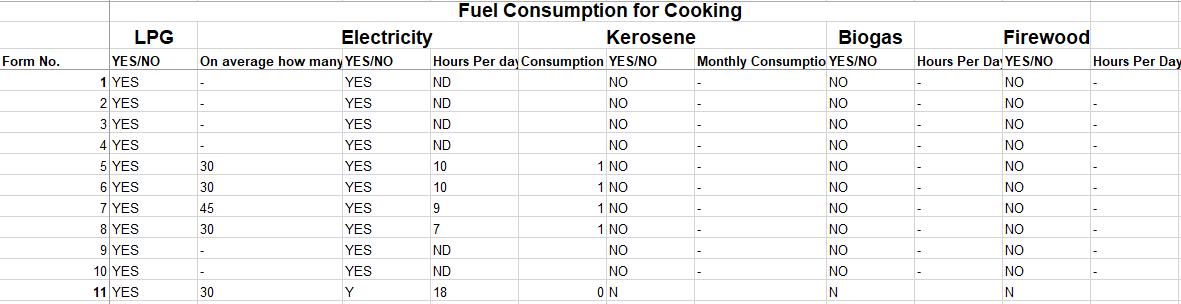
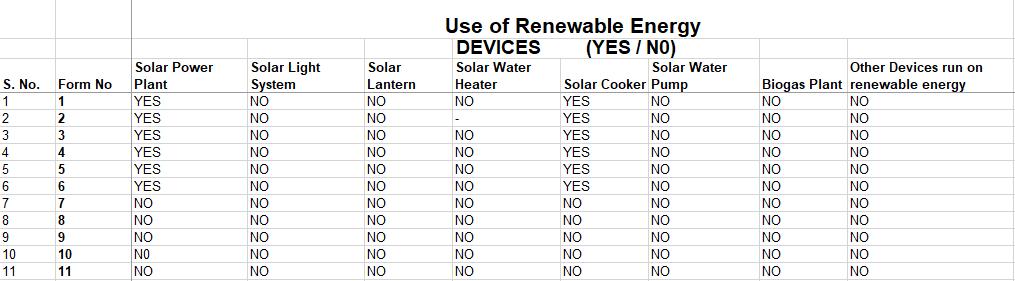
Thedatafromthe"EnergySurvey"andthe"WasteData"havebeenexaminedandareprovidedhere.Noresponseswere obtainedfromtherespondentsforsomeofthequestions,whichisrepresentedas"NoData"inthecurrentanalyses.
PAS2060 BSI(2014)
UNFCC UNFCC(2019)
Energy Usage Data:
Details of Respondents
Gender Distribution among Respondents
Source:PrimaryData
Source:PrimaryData
11 Issue: 05 | May 2024 www.irjet.net
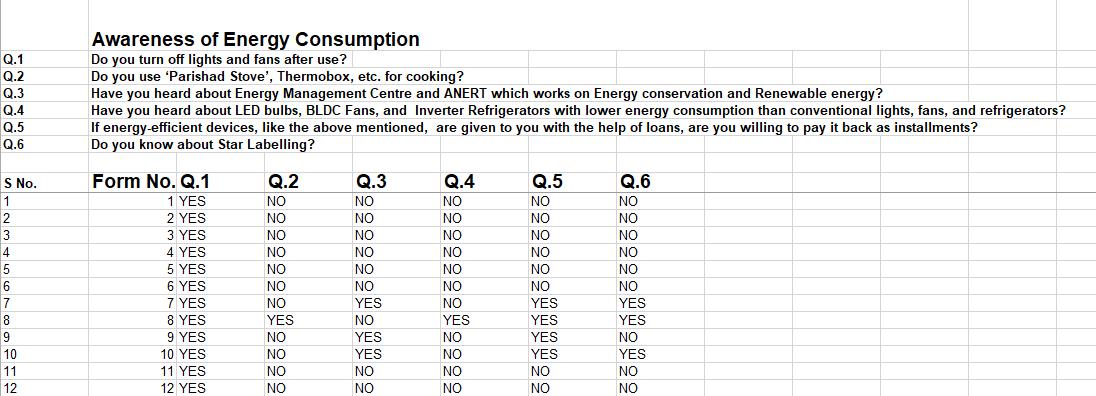
Awareness of Energy Consumption
1 Doyouturnofflightsandfansafteruse?
2 Doyouuse‘ParishadStove’,Thermobox,etc.forcooking?
3 HaveyouheardabouttheEnergyManagementCentreandANERTwhichworks onEnergyconservationandRenewableenergy?
4 HaveyouheardaboutLEDbulbs,BLDCFans,andInverterRefrigeratorswith lowerenergyconsumptionthanconventionallights,fans,andrefrigerators?
5 Ifenergy-efficientdevices,liketheabove-mentioned, aregiventoyouwiththe helpofloans,areyouwillingtopayitbackininstallments?
6 DoyouknowaboutStarLabelling?
Source:PrimaryData





Volume: 11 Issue: 05 | May 2024 www.irjet.net
Source:PrimaryData
Annexure 1I
International Research Journal of Engineering and Technology (IRJET) e-ISSN:2395-0056
Volume: 11 Issue: 05 | May 2024 www.irjet.net
8. Executive summary:
There are two revenue villages in Palli Gram Panchayat, and they are called Palli and Bassi Kurud. There are 3700 peoplelivinginthepanchayat,724households,and9443kanalsofland.Mostofthelandisusedforagricultureand related activities. Of the 240 hectares that are cultivated, 194.55 hectares are irrigated using canal irrigation. Mr. BalwantSingh,thePICoordinatoratDograDegreeCollegeinJammu,andGovernmentPolytechnicCollege,carriedout the field survey ofan energy and waste study of 724 houses throughout the whole panchayat. The data was thoroughly evaluated by Unnat Bharat Abhiyan, IIT Jammu, following its digitization. A local climate action strategy wasthencreatedafterthat.ThePalliGramPanchayat'semissionsituationisshownbelow:
© 2024, IRJET | Impact Factor value: 8.226 | ISO 9001:2008 Certified Journal | Page1289
Volume: 11 Issue: 05 | May 2024 www.irjet.net
I.
II. Emission from Agriculture
i.
III. Emissionfrom Vehicles
i.
{1121-Clarification required} ii.
I. i.Trees on FarmLand
ii. Trees on State/Public Lands - - -90(2000No.)
II. Tree in Horticulture 18000Nos. -270 -150(10000No.)
III. Soil OrganicCarbon - - -1.792c.t/Ha
AccordingtoareportfromPalliGramPanchayat'sLocalClimateActionPlan,atotalof10475.28tonnesofCO2peryear are now produced. Between 2022–2023 and 2027–2028, several interventions are to be adopted as part of the local climateactionplanbyvariousstakeholders.Themaininterventionssuggestedconsistof:
1.Building 10 biogas plants with a combined capacity of 2 cubic meters of biogas, which will result in an annual energy savings of 29,200 units and a 29-ton decrease in carbon emissions. The State Agriculture Department and Rural DevelopmentDepartmentwouldbuildthebiogasfacilities.
2.TheDepartmentofForests,plantedtreeslikePoplarandMeliDubiainvariouscombinationswithcropslikepaddyand wheatinoutlyingareas.Inadditiontoproducingwoodproductsincludingplywoodandplyboardandpromotinglivelihood security,itwasanticipatedthatitwouldsequester1125tonsofCO2whenitreachedmaturity.
Volume: 11 Issue: 05 | May 2024 www.irjet.net
3.The Rural Development Department and the Education Department have developed water storage facilities and rainwater harvesting structures as part of their drought-proofing efforts. In addition to rejuvenating other micro water bodies(Chappris),itwouldinvolvetherestorationandrejuvenationofthreepondswithacombinedimpoundingcapacity of 1.05 lakh liters. All government establishments will also have a rooftop rainwater harvesting structure erected in additiontothat.
4.Solid Liquid & Plastic Waste Management 100% achievement of the goal set forth in SBM-G for the management of solid waste and grey water. This would make it possible to create an ecosystem that is healthy, sustainable, and climateresilient.TheRuralDevelopmentDepartmentwouldberesponsibleforpayingtheproject'sexpenses.
5.Jammu & Kashmir State Power Distribution Company Limited installed a 1200 kW solar power plant, 52 solar street lights, and 50 solar water pumps to increase the amount of solar power that can be produced to meet the needs of the householdsandinstitutionsintheGramPanchayat.
The Local Climate Action Plan's project-based costs are broken down in the following manner:
The amount proposed for under Local Climate Resilience Plan – Palli (Rs. In Lakhs)
S. No. Department
From 2022-2023 through 2027-2028, various stakeholders will contribute a total of 1018.35 lakhs, or 10.18 crores.
Volume: 11 Issue: 05 | May 2024 www.irjet.net
9. Recommending measures:
2395-0072
TheruralpopulationofIndiahasverybasicenergyneeds,yettheseneedsarelargelyunmet(forcooking,drinkingwater, and irrigation). To increase efficiency, it is necessary to encourage the introduction of cleaner-burning fuels such as hot water challah, solar house lighting systems, solar street lighting, solar parabolic cookers, and biogas facilities. To reduce travel distance, producers and consumers should be located closer to one another. This calls for the development of regional markets, locally produced goods and services, and robust ecosystems that supply unrestricted access to local resources.Alternative systemremote distribution is expensive and energy-intensive. To cut emissions and the amount of money that leaves the village economy, local business owners must learn to develop and assemble products. As a result, emissions would be reducedand communitylivelihoodswould be improved (Mathurand Awasthi,2016). To achieve net zero CO2 emissions globally, all sectors and regions must implement significant emissions reductions, and active CO2 removalmustbeusedtobalanceanyremainingemissionsthatmaybetoodifficultorexpensivetoreduceoneatatime.To reach worldwide net-zero CO2 or GHG emissions, net negative emissions from one industry can balance out positive emissionsinanothersectororregion.ThetimescaleforachievingnetzeroCO2orGHGemissionsineachsectororlocation dependsonmitigationmeasures,costs,andsuggestedpolicies.
Conclusion:
Carbon-neutraldevelopmenthasbecomemoreimportantasnationsthroughouttheworldhaveunderstoodhowcrucialit is to reduce anthropogenic emissions to address the current climate issue. Development that is carbon neutral has emerged as a viable alternative for an environmentally friendly future. The current civilization must quickly make a transition to a low-emission economy because of its reliance on fossil fuels. Many countries have made commitments to eliminate coal and other fossil fuels and replace them with technology based on renewable resources. We can prevent climate change and prepare the path for an environmentally friendly, independent, beneficial, and ecologically sound futureforallbymakingthetransitiontoalow-carboneconomy.Byimplementinglawsandstrategies,creatingshort-and long-term initiatives, and involving all community members, a town can quickly become carbon neutral. When every community achieves and works to preserve carbon neutrality, the planet will be better for future generations as well as thepresent. Mainstreaming low-carbon development is the new approach for reaching the SDGs, preventing global warming, and guaranteeing an environmentally friendly future. The panchayat also started implementing energy-saving practices, including energy audits, LED bulb promotion, trash disposal facilities, vermicomposting, and distributing household recycling tools to homes. The goal of the initiative is to improve human welfare, aid in climate change adaptation,andbuildanenvironmentallysoundcommunity.
ACKNOWLEDGEMENT
Iameternallythankful totheseveralindividualswhosupportedmebyprovidingmewithwiseadviceattheappropriate time.Usingthisopportunity,IwouldliketoexpressmyheartfeltthankstoDr.Bela Thakur,theprincipalofDograDegree College,forhersupportandcooperationintakingonandcompletingthetask
I'd like to thank Dr. Riya Bhowmik,PI coordinator, as well as Ms. Jeyoti Kaul Bhat, a project staff member at UBA at IIT Jammu, for digitizing the data, thoroughly analyzing it, and offering assistance as the project task was being completed.. Finally,asincerethankyoutoa fewstudentsfortheircollaborationanddedication,withoutwhichtheproject wouldnot havebeenfeasible.
References:
1. AhujaRam{2001}ResearchMethods,NewDelhi,RawatPublication
2. Sharon Maria, S., Lakshmy, S., Nidhin, D. K., & Shibu, N. K. (2022). Carbon Neutral Communities: Model for Integrating Climate Action into Development Planning. In Sustainable Cities and Resilience (pp. 385- 396). Springer,Singapore
3. Brooks, J., Farley, R., Finkelstein, B., & Wright, J. (2011). Becoming Carbon Neutral - A guidebook for local governmentsinBritishColumbia.
4. Thanal:CarbonNeutralMeenangadi.Thiruvananthapuram:Thanal(2018)
Volume: 11 Issue: 05 | May 2024 www.irjet.net
p-ISSN:2395-0072
5. BSI. (2014). PAS 2060: 2014, Specification for the Demonstration of Carbon Neutrality. Carbon Footprint Ltd (2019). What is carbon neutrality? [WWW document]. https://www.carbonfootprint.com/carbonneutrali ty.html
6. Dutta,S.,Paul,P.,Bhattacharyya,S.,&Mandal,T.K.(2022).CarbonNeutralVillage.
7. LGD-LocalGovernmentDirectory,GovernmentofIndia{hhps://lgddirectory.gov.in}
8. United Nations: Report of the World Commission on Environment and Development: Our Common Future (1987)
9. Das, S. K., Bhujel, E. K., Laha, R., & Mishra, V. K. (2022). Carbon neutrality: benefits and importance under changingclimate.FoodandScientificReports,3(3):39-41
10. Mathur, M., & Awasthi, S. (2016). Carbon neutral village/cluster: a conceptual framework for envisioning. Current Science,1208-1215.
11. European Parliament (2019). What is carbon neutrality and how can it be achieved by 2050? [WWW document]
12. Global Energy Review (2021). Assessing the effects of economic recoveries on global energy demand and CO2 emissionsin2021IPCC(2018)AnnexI:Glossary.GlobalWarmingof1.5◦C.
13. An IPCC Special Report on the Impacts of Global Warming of 1.5◦ C Above Pre-Industrial Levels and Related GlobalGreenhouseGasEmissionPathways,intheContextofStrengtheningtheGlobalResponsetotheThreatof ClimateChange.SustainableDevelopment,andEffortstoEradicatePoverty,541-562
14. UNFCC (2019). What is climate neutrality? [WWW document]. https://unfccc.int/climateaction/climateneutral-now/resources-andfrequently-asked-questions#eq-1
15. UnitedNationsEnvironmentProgramme(UNEP)(2019)UNEnvironment“walksthetalk”oncarbonneutrality [WWW document]. https://www.unenvironment.org/new s-and-stories/story/un-environment-walks-talkcarbon-neutrality