
International Research Journal of Engineering and Technology (IRJET) e-ISSN: 2395-0056
Volume: 11 Issue: 05 | May 2024 www.irjet.net p-ISSN: 2395-0072
International Research Journal of Engineering and Technology (IRJET) e-ISSN: 2395-0056
Volume: 11 Issue: 05 | May 2024 www.irjet.net p-ISSN: 2395-0072
Akshata Chawan1, Shruti Joshi2 , Bipasha Bhat3, Rachana Dhannawat4
1Student, Dept. of Computer Engineering, Usha Mittal Institute of Technology, Mumbai, Maharashtra, India
2Student, Dept. of Computer Engineering, Usha Mittal Institute of Technology, Mumbai, Maharashtra, India
3Student, Dept. of Computer Engineering, Usha Mittal Institute of Technology, Mumbai, Maharashtra, India
4Head of Dept., Dept. of Computer Engineering, Usha Mittal Institute of Technology, Mumbai, Maharashtra, India
Abstract – Adecentralized,distributedledgersystemcalled blockchaintechnologymakesitpossibletosecurelyandopenly record transactions over a network of computers. A ridesharing system is a transportation service that connects passengers with drivers willing to offer rides using their own vehicles. By incorporating blockchain technology into its architecture, the ride-sharing sector can undergo a revolutionary transformation. Traditional ride-sharing systems face challenges related to security and centralized control. The purpose of our paper is leveraging the decentralizednatureofblockchainfordriversandpassengers, that ensures enhanced privacy and trust which are the major concerns in these ride-sharing systems. In this paper, we have used blockchain to store ride details and user information to maintainsecurity,whereinsensitiveuserdataisencrypted,to prevent unwanted access. The ride-sharing agreements between drivers and passengers are automated and carried out by the system architecture through the use of smart contracts. Our proposed system eliminates the need for intermediaries, leading to lower charges and increased transparency. It also provides enhanced security and privacy forall parties involved, asall transactionsare recorded on an immutable ledger.
Key Words: Blockchain, Security, Ridesharing, Smart Contract, Solidity
Through“ride-sharing”service,driverscansharethecost of their travel with other passengers. Ride-sharing has becomeincreasinglycommonintoday’ssociety,expanding outsideofurbanareasandintosuburbanandruralplaces. Ride-sharing or ride-hailing services like OLA, Uber have become an integral part of urban transportation, offering convenient and cost- effective mobility solutions. These platformsdo,however,confrontanumberofdifficulties,such asproblemswithsecurity,transparency,andtrust.Theyrely on centralized intermediaries, whichcan lead to problems such as unfair pricing, data manipulation, and disputes betweendriversandpassengers.Toaddresstheissueswith centralized traditional ride-sharing services, we use blockchain.Theimplementationofblockchaininride-sharing couldresultinsignificantshiftsintermsoftrustandprivacy. The user’s data can be secured securely and will be unchangeable with the aid of blockchain. Additionally, a
centralized system cannot be regarded as trustworthy because every user is impacted if the server goes down, whereastherearenosuchproblemsinadistributedsystem, makingitrobustandreliable. Toensurethattheride-sharing systemfunctionsmoresmoothly,adecentralizedsystemin thepublicdomainisrequired,asthemajorityofthepresent ride-sharing techniques are governed by large firms and centralagencies.Oneofthecutting-edgetechnologieswith the power to totally change the market is blockchain. Decentralization, openness, consistency, immutability, and data security are some of the key features that make blockchain so powerful. Blockchain technology is an advanced technology that has the potential to power decentralizedsystems.
Also, Pollution reduction is a crucial objective that humanity must achieve. The majority of air and noise pollutioniscausedbyvehicles.Byreducingthenumberof carsontheroad,aride-sharingservicewillhelptoprotect the environment. Our proposed method strives to be decentralizedbyrecordingtherider’sjourneyanduserdata ontheblockchain.
Elements in Proposed System :
Blockchain : Adistributeddatabasethatissharedbyevery computer network node is called a blockchain. It uses cryptography to link the pieces of information it keeps together.Thiscreatesasecure,uncrackablerecordofeach andeverytransactionmadeontheblockchain.
Smart Contract : Theprimarypurposeofthesesystemsisto programmaticallycarryoutbusinesslogic,whichisdesigned tocarryoutcertainoperations, procedures,ortransactions inresponsetopredeterminedcriteria.Toputitsimply,smart contracts are blockchain-based programs that execute in responsetopredefinedconditions.
Ride-Sharing : Tofacilitatepeer-to-peersharing,thevehicle canaccommodatethreepassengersandpickthemupfrom variouslocations,ultimatelyreachingthefinaldestination.
Carpooling is a revolutionary way to commute. This carpoolingapplicationisdesignedtobescalable,extensible andhighlyavailable.[1].Centralizedsystemsrelyheavilyon
International Research Journal of Engineering and Technology (IRJET) e-ISSN: 2395-0056
Volume: 11 Issue: 05 | May 2024 www.irjet.net p-ISSN: 2395-0072
acentralauthoritytomanageandcoordinaterides,which can lead to bottlenecks, delays, and potential points of failure.Centralizedplatformsusuallycollecttransactionfees foreachjourney,whichcandiminish revenuesfordrivers while increasing expenses for customers. Existing ridehailing services, while useful and popular, still have some scope for improvement in terms of pricing models, user safety, transaction transparency, and data security [2]. Blockchainisgainingpopularityintheride-hailingindustry byallowinguserstoconnectdirectlywithdriverswhoare preparedtocarry them [2]. The exclusion ofa third party would mean that user’s data won’t be exposed to anyone outsidethesystemorsomeunnecessaryentity withinthe system[5].Aridercanrequesta carbyprovidinghis/her preferredstartlocationandthedestinationofthetrip[1]. WiththehelpofGoogleMapsintegratedintheapplication, thedriverandriderwouldknoweachother’swhereabouts, soastocatchupbeforetheride[5].Afterthecompletionof theridethefareiscalculatedusingtwofactorsi.e.baseprice and a multiplying factor associated with the distance travelled [5]. First, a user chooses his Pickup and Destination, after that the system makes calculations to calculate Distance, Estimated Travel Time, and Total Fare whichareaddedtotheinformationalongwithPickupand Destination, which are then sent to the main Blockchain whichcontainsallthedata[2]. Animportantaspectofaride sharing platform is to provide a robust and efficient ride matchingsystem.Aridematchingsystemallocatestherider with a set of some potential drivers. This set of drivers wouldonlybechosenfromtherider’svicinity[5].
A. Existing Ride-Sharing System
CentralizedRide-sharingapplicationslikeOLA,Uberarean installation that arrange two-way transportation on short noticethroughmobileappsandwebsites.
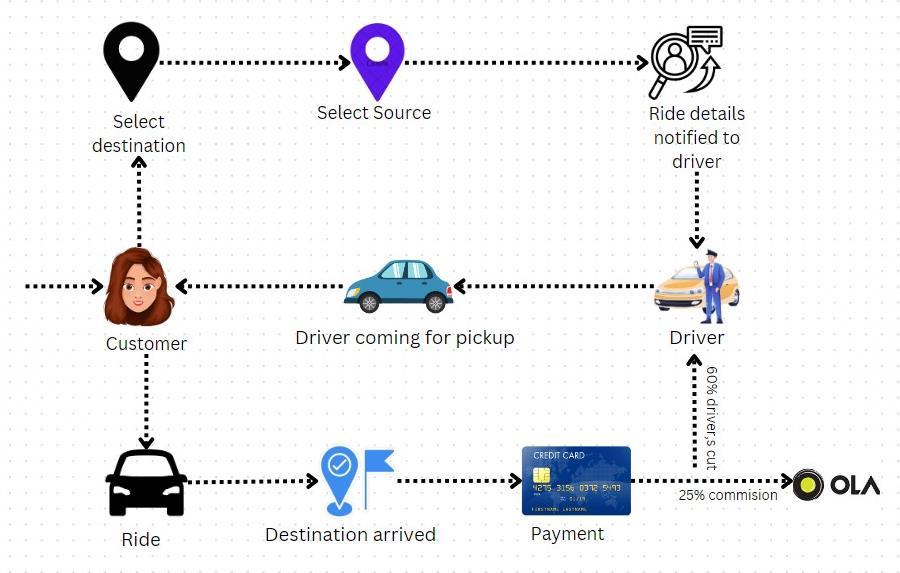
1) Expense issues brought on by intermediaries: In ordertobookcabs,third-partycompaniesmusthandle the payment process, vehicle monitoring, etc. Each of these mediators will charge a significant fee for each deal. In addition to raising the cost for the passengers andresultinginlowerpayforthedrivers.
2) Absence of Data Security and Privacy Mechanisms: Thecompany’sdatabasecontainsawealthofsensitive information,includingeachuser’shomeaddress,phone number and current location. Even though businesses spend a lot of money on data protection and user authentication, incidences of fraudulent identities and databasehackingbydatapiratesareprevalent.
3) Trust-based Centralization: The users’ trust in the systemgivescredibilityandaccountability.Acentralized organization also means that there is a single point of failure.Thus,asingleunfriendlybehaviorordishonest employee has the power to bring down a whole institution.
B. Proposed System
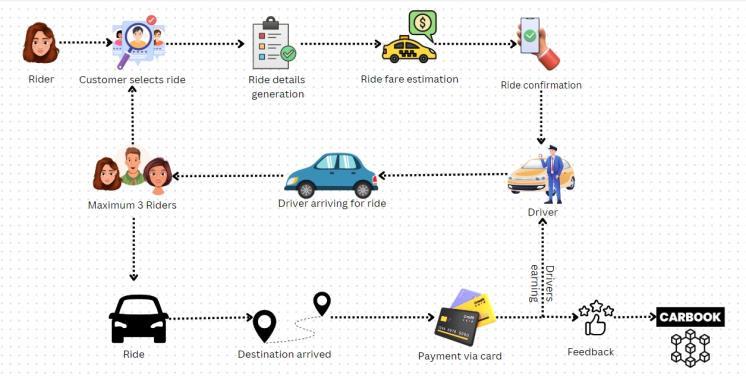
TheobjectiveofCarBookistodesignandimplementauserfriendlyanddecentralizedride-sharingsystempoweredby blockchainthatbenefitsbothdriversandriders.Itmaintains opennessonpertinenttransactiondetailswhileguaranteeing the privacy and confidentiality of user data. Our proposed systemeliminatestheneedforintermediaries,leadingusers to pay lower fare price. The proposed system includes followingsections:
1) User Platform: The user interface of CarBook is built using front-end frameworks, such as HTML, CSS, Web 3.0 technologyandisthepartwhereridersanddriversinteract with. Users can create accounts, login, input their travel preferences, and request rides using the CarBook’s userfriendlyinterface.Thedriverscanregisterthemselvesand uploaddocumentsastheproof,uploadcardetailsandride details.Italsoincludes“GoogleMapdirectionsAPI”whichis
International Research Journal of Engineering and Technology (IRJET) e-ISSN: 2395-0056
Volume: 11 Issue: 05 | May 2024 www.irjet.net p-ISSN: 2395-0072
used for traversing the route from the source towards the destination.
2) Backend: Flaskwillserveasthebackend.Itwillexpose APIs for frontend interaction. The fare estimations, the condition to limit maximum 3 passengers, Driver Waiting Algorithm are implemented using Javascript and python. MySQLisusedtostorethedatabaseofthepaymentsdoneby therider.
3) Blockchain: Flaskisusedtobuildthebackendserverthat managesandservesthisdatatoafrontendapplication.Flask isusedtoconnecttheweb-apptotheblockchainusingsmart contractsinGanache.CarBookhasmechanismforstoringthe detailsofbothdriversandpassengersinanencryptedform usingKeccak256algorithmtoensuresafetyandsecurity.The smartcontractsfortheblockchain-basedride-sharingsystem is written in Solidity. The smart contracts are intended to make sure that the data being entered is traceable, transparentand irreversible. The details of the rides tobe shared are stored on the blockchain with the help of the smart contract and cannot be changed at any cost. This ensures that the network is safe and secured. The rider/driver who wants to share the ride can enter the requireddetailsandcanpostitontheblockchain.
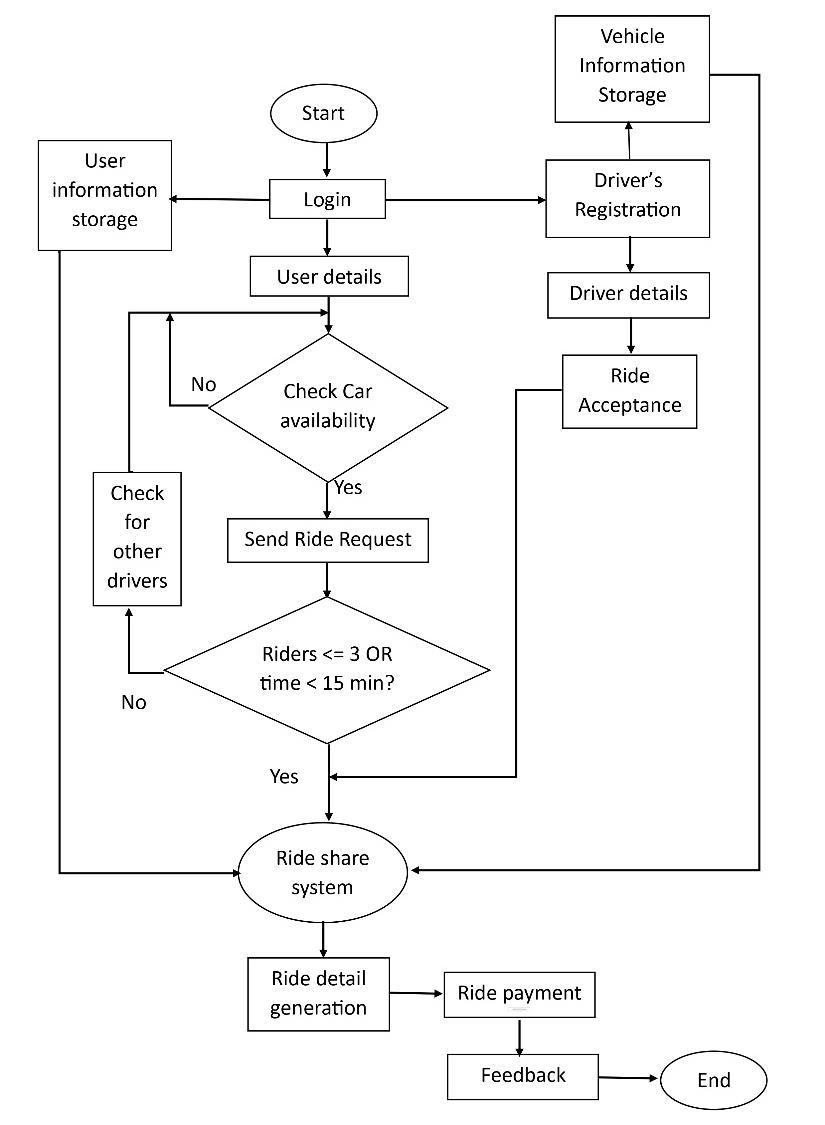
4) Ride-Sharing: To facilitate peer-to-peer sharing, the vehiclecanaccommodatethreepassengersandpickthemup from a particular location, ultimately reaching the final destination.Atthetimeofuploadingridedetails,thedriver inputsthetimewhentheridewouldstart.Analgorithmhas beenincorporatedwhereinafter15minutesfromtheinput time,thedriver’svehicleoptionwillbeunavailableforride booking. Also, once the driver accepts three ride requests, thentoo,thatparticulardriver’soptionwouldfreeze.
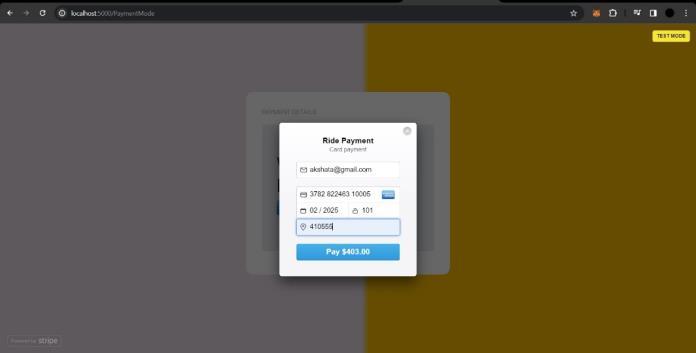
5) Payment and Pricing: Payment for rides is typically handled through the CarBook platform, and prices can be variablebasedonfactorslikedistanceandcostoffuel.Once therideiscompletedtheridergetsanoptiontopaytothe driver.He/shecanpayviacard.
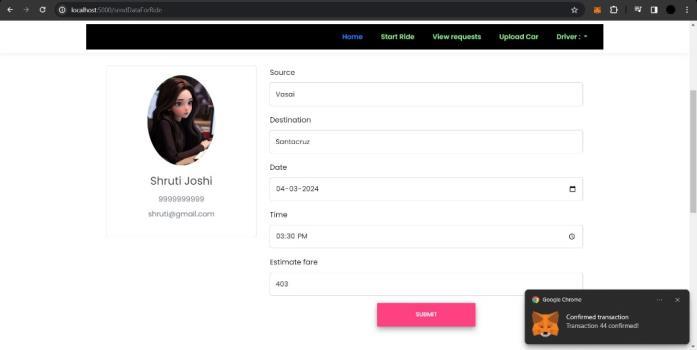
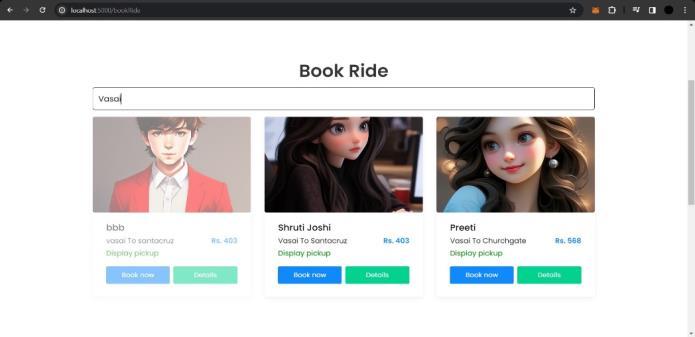
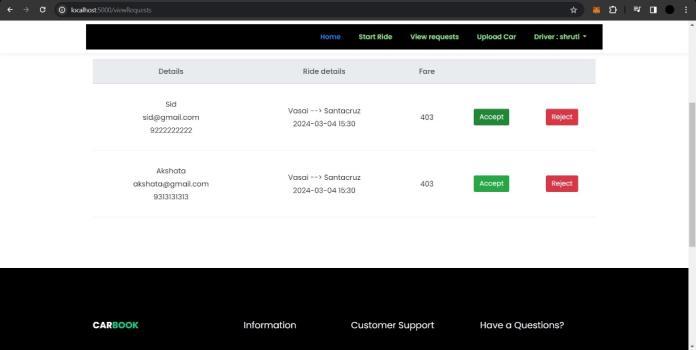
AuserhastosignupfirsttogetregisteredontheCarBook. Thereafter, he/she can log into the web-app for daily use. Theycanevenregisterthemselvesasdriversusingthesame account. Onuploadingtherequireddocuments,theuserwill becomea driverontheCarBook.Oncetheuserbecomesa driver,hecanfill theridedetailsinthe‘StartRide’section anytime he wants to start a ride. The fare for the ride is estimated automatically which depends on the distance betweenthesourceanddestinationandcostofthefuel. The driverhastoinputthetimehewantstostarttheride.The defaultwaitingtimeinthatparticularareahasbeensetto15 minutes. Theusercanrequestonlythecarsthatareavailable atthatmomentandhavebeendisplayedinthe‘Bookride’ section. Theacceptanceoftherequestdependssolelyonthe
driver.Thedriverhasachoicetoacceptridersuptoalimitof 3.Oncethereare3passengers,thatparticulardriver’scar selectionoptionfreezes.Also,after15minutesfromthetime thatdriverhadset,thatdriver’scaroptionfromthe‘Book ride’sectionoftheuserfreezes.WiththehelpofGoogleMaps integratedintheweb-app,thedriverandriderwouldknow therouteoftheride(sourcetodestination).Oncetherideis completed,theusercanpaythedriverviacard.
D. Algorithms
Algorithm 1: Fare Estimation
Algorithmcalculatefare(distance,rateperkilometer): 1.fare=distance*rateperkilometer 2.returnfare
Algorithm 2: Driver Waiting Algorithm
1)Getthecurrenttimeusingthe‘Date’object.
2)Extractaspecifiedtimefromthe‘recordResults’array, adjustingitbyadding15minutes.
3)Calculatethetimedifferenceinminutesbetweenthe timespecifiedbydriverandthecurrenttime.
4)Logthedifferenceinminutestotheconsole.
5)Ifthecountofridersequalto’0’ORatmost’3’,OR,ifthe calculatedtimedifferenceinminutesislessthan0: •Driverselectionoptionfreezes
International Research Journal of Engineering and Technology (IRJET) e-ISSN: 2395-0056
Volume: 11 Issue: 05 | May 2024 www.irjet.net p-ISSN: 2395-0072
Implementation
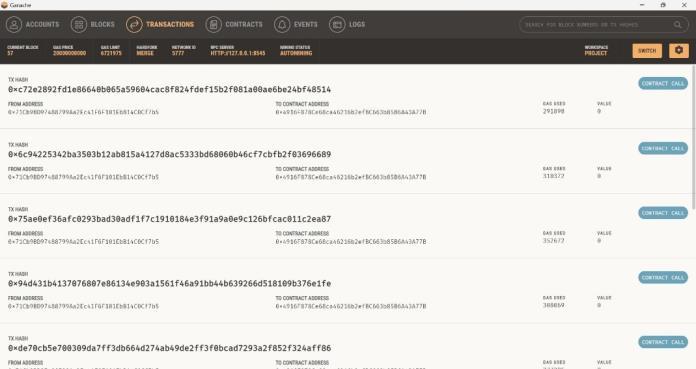
B. Comparison between Centralized Ride-Sharing systems and CarBook
Table-1showssomeoftheimprovementsofCarBookover CentralizedRide-Sharingsystems.
Table -1: Comparison between Centralized Ride-Sharing systemsandCarBook
Parameters Centralized Ridesharing Systems
Security Thelarge corporationscontrol acentralserver whereallthedatais kept,hencethe securityofthedata mightbe compromised.
Privacy Therider’spersonal informationisshared withthecentral authorityandmaybe abused.
Fare Centralizedsystems involvethirdparties wherepassenger coststendto increase,while driversreceivea comparativelylower payment.
CarBook : A Decentralized Ridesharing System
Thedataiskepton Blockchain,whichis unchangeableand cannotbealtered underany circumstances.
Despitethefactthat theblockchainmay beindependently verifiedbythepublic, userprivacyis maintainedsince sensitiveinformation isencryptedandkept secure.
InCarBook,thereis noinvolvementof thirdpartiesand hence,passengers payonlythefarefor ridedistanceandfuel used.
Volume: 11 Issue: 05 | May 2024 www.irjet.net p-ISSN: 2395-0072
Existingride-sharingplatforms,whileefficientandpopular, wouldnotbebetterintermsofpricingmodels,usersafety, transaction transparency, and data security. A centralized ride-sharingapplicationispronetoviolationofprivacyofthe personal data. In conclusion, CarBook is an innovative conceptthatoffersseveralbenefitsoverthetraditionalridesharing system. The system eliminates the need for intermediaries,resultinginreducedcostsforpassengersand drivers. The blockchain technology provides transparency and security, ensuring that the system is reliable and trustworthy.Blockchainensuressecurityandprivacyofdata by using public and private keys. It uses public-key cryptographytohandletransactionsbetweenusers.Itdoes notpermituserstotamperdataoncethedataisaddedtothe chain. Decentralized approach towards ride-sharing will storealltransactions,farecalculation,ride-matchinganduser information on a distributed ledger. The smart contract automatestheprocess,reducingthetimeandeffortrequired formanualprocessing,makingthesystemefficientandfast. As ride-sharing services grow in popularity and demand increases,scalabilitybecomesacriticalissue.However,the system also, faces several challenges that need to be addressedforsuccessful implementation,includinglack of awareness about blockchain, technical challenges like connectivity,systemreliabilityandscalabilitychallenges.To overcome these challenges, collaboration among stakeholders, including governments, vehicle associations andblockchaindevelopers,isnecessary.
HerearesomepotentialareasofgrowthfortheCarBook:
1) Expansion to More Regions: Currently, CarBook is only available in a few regions. However, with its numerous benefits,itisexpectedtoexpandtomore regions,offeringpassengersanddriversasecureand reliableplatformtosharevehicles.
2) Integration with Other Blockchain Applications: CarBook can be integrated with other blockchain applicationslikeverificationmechanisms,fordrivers and digital identitiesto offer a morecomprehensive solution.Thisintegrationwillmakethesystemmore efficientandsecure.
3) Improve User Experience: Itisanticipatedthatthe blockchain-based decentralized ride-sharing system wouldkeepenhancingbothdrivers’andpassengers’ user experiences. This will include faster and more accuratebookingandpaymentprocessing,improved safetyfeaturesandmorepersonalizedservices.
Overall,thefuturescopeofCarBookisvastandpromising.As thetechnologycontinuestoevolve,thesystemisexpectedto offermorebenefitstopassengersanddrivers,makingitthe widelypreferredplatformforride-sharing.
[1] Surbhi dhar, Sandra arun, Vivek dubey, Nilesh kulal, “AppforRideSharing(2020),”M.Young,TheTechnical Writer’sHandbook.MillValley,CA:UniversityScience, 1989.
[2] Rohit Panchal, Navneet Bahuguna, Sarthak Sharma, AnkitArora,AnkitaSharma,“DecentralizedCarHailing Application(2022)”.
[3] S.KhanjiandS.Assaf,“BoostingRidesharingEfficiency ThroughBlockchain:GreenRideApplicationCaseStudy,” 2019,pp.224-229,doi:10.1109/IACS.2019.8809108.M. Young, The Technical Writer’s Handbook. Mill Valley, CA:UniversityScience,1989.
[4] Baza,MohamedandLasla,NoureddineandMahmoud, MohamedandAbdallah,Mohamed.(2019).B-Ride:Ride Sharing with Privacy preservation, Trust and Fair PaymentatopPublicBlockchain.
[5] R. Joseph, R. Sah, A. Date, P. Rane and A. Chugh, “BlockWheels - A Peer to Peer Ridesharing Network,” 2021 5th International Conference on Intelligent Computing and Control Systems (ICICCS), Madurai, India, 2021, pp. 166-171, doi: 10.1109/ICICCS51141.2021.9432188.
[6] M.M.Badr,M.Baza,S.Abdelfattah,M.MahmoudandW. Alasmary,“Blockchain-BasedRide-SharingSystemwith Accurate Matching and Privacy-Preservation,” 2021 InternationalSymposiumonNetworks,Computersand Communications(ISNCC),Dubai,UnitedArabEmirates, 2021,pp.1-8,doi:10.1109/ISNCC52172.2021.9615661.
[7] S.NamasudraandP.Sharma,“AchievingaDecentralized and Secure Cab Sharing System Using Blockchain Technology,” in IEEE Transactions on Intelligent Transportation Systems, vol. 24, no. 12, pp. 1556815577,Dec.2023,doi:10.1109/TITS.2022.3186361.