
International Research Journal of Engineering and Technology (IRJET) e-ISSN: 2395-0056
Volume: 11 Issue: 05 | May 2024 www.irjet.net p-ISSN: 2395-0072
International Research Journal of Engineering and Technology (IRJET) e-ISSN: 2395-0056
Volume: 11 Issue: 05 | May 2024 www.irjet.net p-ISSN: 2395-0072
K. SUNITHA RANI1 , T. SWAPNA2 , T. JHANSI3
1 Assistant Professor, Dept of Architecture and Planning, University College of Architecture and Planning, A.N.U, Guntur, AP
2 Assistant Professor, Dept of Architecture and Planning, University College of Architecture and Planning, A.N.U, Guntur, AP.
3 Assistant Professor, Dept of Architecture and Planning, University College of Architecture and Planning, A.N.U, Guntur, AP.
Abstract The art of spaces is called architecture.Sometimes architectural space had an impact on human emotions. These are places where individuals may go to engage in culture. Study and appreciate art. A few museums are well-known for their art collections. The effect of architectural space across time is the main topic of this essay. The way spares are arranged in relation to exhibits to provide a certain impact is a theoretical and practical challenge in museum and gallery design. Communicate theintendedmessagetotheguests.Allof the functional and spatial specifications needed for museum development are included in this project. Through architectural manifestations, it hopes to impress visitors with a vivid history of its evolution. Cultural architecture, particularly museum architecture, has a bigsocialimpactand improves people's quality of life. Therefore, it is important to examine this type of architecture from a variety of angles in order to fully understand its spatial composition and functional organization.
Keywords: Natural history museums, Non-formal education, Learning experience, Indian visitors, Environmental awareness, Nature conservation, Heterogeneous society, Contextual model of learning
1.INTRODUCTION
Anybodymayattendamuseum,regardlessofqualifications, andfindinspirationinthetalesofourpastandpresent.The museum is the path ahead for human development. An organization that looks after, or conserves, a collection of artifactsandotheritemswithartistic,cultural,historical,or scientific value is called a museum. These objects are on displayforthepublictoseeinanumberofpublicmuseums througheithertemporaryorpermanentdisplays.Amuseum isafacilitythatchronicleshumanhistory.Oneofthemain goalsofmuseumsistoteach,andeducationisoneofthemost crucialdevelopmentrequirements."
Threeprimarytasksofamuseum:
• Education
• Presentation
• Formingofacollection
Beforeyoubegintoformatyourpaper,firstwriteand Just like education, public natural history museums provide entertainmentwhilealsoservingasameansofeducation.A natural history museum's main purpose is to supply the scientificcommunitywithbothhistoricalandcontemporary specimensfortheirstudies,whichadvancesourknowledge of the natural world. It offers a wealth of research opportunitiesforscientistsandresearchinstitutions,whichis advantageous to them, as well as conversational opportunitiesforthespecies.
Earlymuseumswereoriginallyprivatecollectionsof uncommon or unusual natural relics and objects ownedbyaffluentpeople,families,orinstitutes of art.
The"respectable"couldfrequentlygetentrytothese museums for the general public, particularly to privateartcollections,althoughthiswassubjectto theownerandhisemployees'whims.
Purchasing and showcasing these intriguing artifactswasonemethodthatwealthymenatthis timeroseinthesocialhierarchyoftheeliteworld.
From‘mouseion’tomuseum
The Greek mouseion, which denotes a location or temple devoted to the muses, is the source of the Latin term museum,pluralmusea,fromwhencetheword"museums"is derived. A museum is a shrine, where the values of knowledge and art are paramount. It strikes a balance betweenartisticdedications.
International Research Journal of Engineering and Technology (IRJET) e-ISSN: 2395-0056
Volume: 11 Issue: 05 | May 2024 www.irjet.net p-ISSN: 2395-0072
2.2.1 Early museums
Early museums were originally private collections of uncommon or unusual natural relics and things owned by affluent people, families, or institutions. These were frequently on show in what were referred to as wonder chambersorcabinetsofcuriosities.Respectablepeoplecould frequently gain public admission, especially to private art collections, but this was subject to the owner's and his employees'whims.Ennigaldi-Nanna'smuseum,whichwas established in around 530 BC and featured Mesopotamian artifacts, was the oldest museum of its kind that has been found.Itseemstohavehadenoughvisitorstojustifylabeling theorganizedcollection,butthereisnoproofofthis.
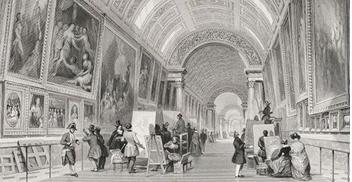
2.2.2 Modern museums
However,themiddleandupperclasseswerefrequentlythe onlyoneswithaccesstothese"public"museums.Itcanbe challengingtogetin.
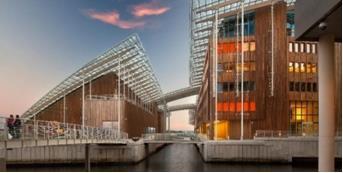
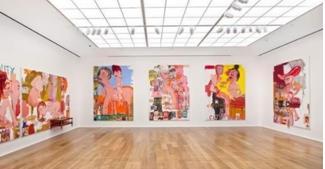
2.2.3 Contemporary art gallery
Mostgalleriesofcontemporaryartarefreetoenterforthe generalpublic,howeverothersaresemi-private.Typically, theymakemoneybykeepingbetween25%and50%ofart purchases. In addition, there are a lot of communal or nonprofitgalleries.severalinternationalartmarketsviewit
as gauche, although several galleries in major cities like Tokyochargeartistsadailyflatfee.
2.3 Ancient History Museum (B.C.):
Theconceptofcreatingorexpressingamuseumdatesback to ancient BC. An essential component of the historical librariesandschoolswasthemuseum.Athisdesire,alarge library filled with priceless treasures and antiques was constructed in the Tal El Amarna area during the reign of Pharaoh Akhenaten (1335–1353 B.C.). Some cloned fragments of ancient, valuable pieces made of the same materialswerediscoveredinLarsa,Mesopotamia(moderndayIraq),datingbacktothesecondmillenniumB.C.These fragments have been used for educational purposes. Sir LeonardWoolleyalsodiscoveredotherpartsofBabylonian city,whichdemonstratehowthemonarchsNebuchadnezzar andNaboniduscaredforcollectionsduringtheirreigns.
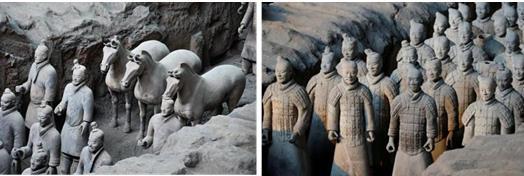
2.4 Museums of Medieval from the 5th to the 15th century:
The introduction of Christianity in medieval Europe highlighted new developments in the religious philosophy andcultureoftheperiod,givingthechurchahighpriority amongrulerssuchasprincesanddip-lomats.Themajorityof the art treasures were kept safe either in church safes or princesscastles.Becausecollectionshadbeenusedtopayfor weaponsthroughoutthewar,theywereextremelyimportant economically. Furthermore, the cloned pieces from these collections were traded, and among them were some treasures belonging to the emperor Charlemagne (r. 800–
International Research Journal of Engineering and Technology (IRJET) e-ISSN: 2395-0056
Volume: 11 Issue: 05 | May 2024 www.irjet.net p-ISSN: 2395-0072
814),ruleroftheRomanianempire,andtheFrankishking (768–800),whopossessedseveralpalacesinNijmegenand Anglhaim.Thesepalacesheldnumeroustreasures,including columns,goldenandsilverlights,andbronzedoors,which werelaterdividedbetweenthechurchandtheprinces.
2.5
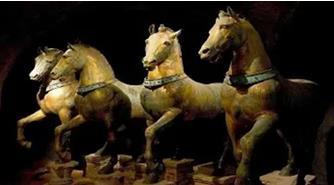
InEurope,the18thcenturyisregardedasthebirthyearof public museums. In addition to the new advancements in science,technology,andthearts,thepublic'sinterestinthe arts and culture increased, particularly following this century's Industrial Revolution and the decline in the influenceofthechurchandtheupperclass.Museumsusedto be exclusively accessible to the upper class, but they have been opened to the general public. During this time, new museums sprung up all throughout Europe. The Vatican collection, which included several old Renaissance masterpieces, was made public in 1734 at the Capitoline Museum(seeimagebelow)and1772atthePio-Clementino Museum.
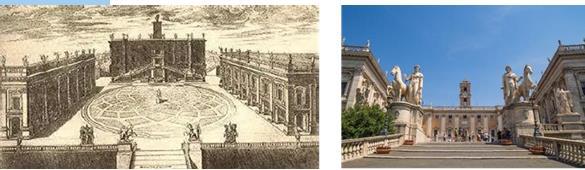
1568.
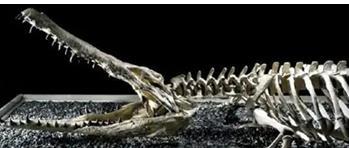
TheAmericanpeoplebegantoemulateEuropeancultureand art after discovering the Americas and turning it into an Englishcolony.Asaresult,theyestablishedtheCharleston Museum in South Carolina in 1773, making it the oldest museum in the country. Although it initially presented naturalhistory,itnowalsocoverstheentirehistoryofthe CivilWar,theancientworld,andtheLowcountry,asshownin thefigurebelow.
Theissueoffuturegrowthandmulti-phasebuildingistaken intoseriousaccountinthisplanning.Threebasicplansare provided as examples to show how a good small museum may be planned using the organizational diagram. These plans range in size from the smallest possible, measuring 1960 square feet, to 3823 square feet, representing three different capital expenditures and operating costs. As a generalrule,allplansincludeallowancesforfuturegrowth andmulti-phasebuilding.
In order to improve visitors' comprehension of the age, particularmodificationsandinterpretationswillbeneededin additiontothegeneralstandardsforthearchaeologicalsitesmuseums.Toputitanotherway,visitorstothesekindsof museums should have an immersive experience that is enhanced by audio-visual materials, recorded content, interactive areas, adequate lighting, and music. Bothinsideandoutsideofthestructure,themoodshouldbe preserved.
1. The building's outside landscaping should be designed to enhance the museum's visitor experience.
2. Theexhibition'sconceptandtonearesupportedand reflectedintheaestheticdecisionsmade.
3. Spatial structure and orientation. and traffic movement are suitable for the exhibition's objectives.
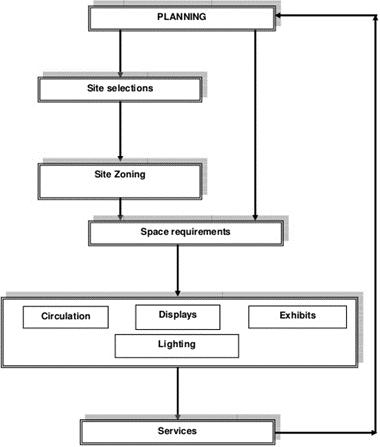
Planningamuseumentailsorganizingboththephysicalarea where the collection will be kept and the institution's real mission.Thelayoutanddesignofmuseumsdifferdepending on the collections they host, but generally speaking, they followtheguidelinesofcreatingaplacethatisaccessibleto thepublicandeffectivelyshowstheselectedobjects.
International Research Journal of Engineering and Technology (IRJET) e-ISSN: 2395-0056
Volume: 11 Issue: 05 | May 2024 www.irjet.net p-ISSN: 2395-0072
3.4 Gallery Design
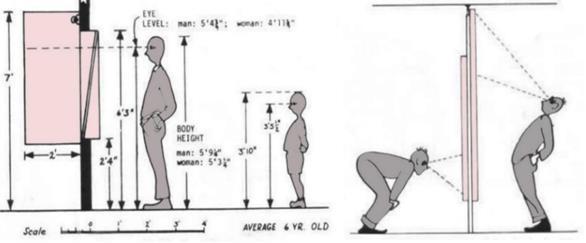
• Visitors ought to be free to navigate the display withouthavingtogobyanythingtheyhavealready seen.
• Enoughroommustbeprovidedforgueststomove atvariousspeeds.
• Whenenteringagallery,visitorsoftenturnright.
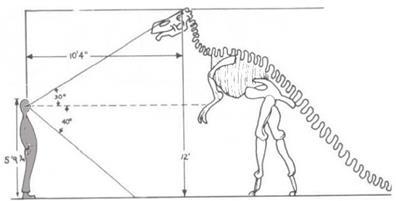
• Normalvisionbeginsatanangleof27°aboveeye level.
• Properly illuminated portraits or wall hangings shouldbehung10metersawayfromtheobserver, with the top not more than 4.9 meters above eye levelandthebottomaround70centimetersbelow.
• An ideal viewing area should have a sill height of 2.13metersforphotographsand3–3.65)metersfor sculptures.
• Each sculpture should have a 6–10 m² ground surface.
Gallery
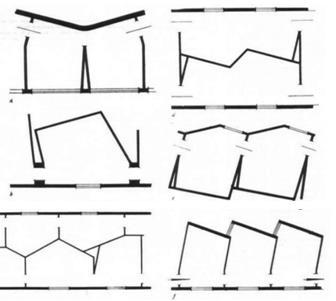
Themajorityofthetime,humanscanperceiveandidentify objects inside a roughly elliptical cone of vision, with the cone'stipateyelevel,andminimaleyemovement.Thespace willseembettertovisitors,andtheywillbeabletofollowthe displaywithease.Staggeredsetupsarefrequentlypossible. This gives the place a certain air of mystery and makes visitors want to look around corners to find out what's aroundthenextbend.
Alargeentrywayintoahallwayisnotalwaysrequired.Some interest is added by the arrangement of the cases, which somewhatconstrictstheentrybeforeopeninguptheinterior hall.
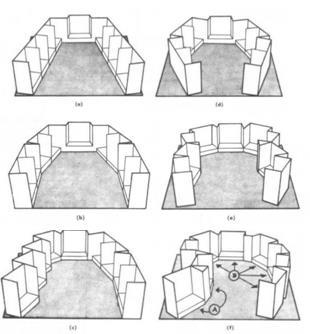
Fig -10:Possiblegalleryarrangements
International Research Journal of Engineering and Technology (IRJET) e-ISSN: 2395-0056
Volume: 11 Issue: 05 | May 2024 www.irjet.net p-ISSN: 2395-0072
Throughalteringtheirmeasurementsandtheproportionsof heighttobreadth,aswellasbyutilizingdiversewallcolors andflooringtypes.Whenchoosingtheformoftherooms,one crucialdetailneedstobekeptinmind.Asquareroom,ifit's larger than a particular amount (about 23 square feet).However, it is never ideal for them to be more than around22feetwide,12to18feethigh,and65to80feetlong. On the other hand,galleriesmeant forpermanent exhibits mayberatherlarge.
In conclusion, natural history museums playa vital rolein educating the public about the natural world and its incrediblebiodiversity.Bypreservingspecimensandartifacts from across the globe, these institutions allow visitors to comeface-to-facewithanimals,plants,fossils,andcultures thattheymayneverencounterinperson.Theexhibitsspark curiosityandamazementaboutEarth'swonders.
Beyond their exhibits, natural history museums conduct important scientific research that advances our understandingoflifeonthisplanet,bothpresentandpast. Their collections are an invaluable resource for study. Museum scientists describe new species, analyze evolutionary relationships, and research topics like environmentalchangeandconservation.
Additionally, natural history museums inspire the next generation of scientists, explorers, and environmental stewards.Childrenareawedbydinosaurskeletons,dazzled bygemandmineraldisplays,anddevelopanappreciationfor
nature'smarvels.Theseearlymuseumexperiencescankindle alifelongenthusiasmforscienceandtheoutdoors.
In our rapidly changing world, the roles of collecting, researching,educating,andinspiringhaveneverbeenmore crucial for natural history museums. They are vital institutions that connect people to the planet's natural heritage and warn us about the fragility of life on Earth. Protecting these treasured museums ensures we preserve ourunderstandingoftheworldforagestocome.
[1] https://www.architectmagazine.com/projectgallery/shanghai-natural-history-museum_o
[2] https://www.google.co.in/search?q=snail+shell+concep t+architecture&tbm=isch&hl=en&safe=active&sa=X&ved=2ahUKE wixsvn_i9LuA-hUzKbcAHU1IAAwQrNwCKAB6BQgBEJEC&biw=1688&bih=749#imgrc=9Dj0V0gIO7ly3M
[3] https://www.dezeen.com/2020/11/30/shenzhennatural-history-museum-3xn-zhubo-design-bh/
[4] https://issuu.com/akash.patel9195/docs/a_contempor ary_archeological_and_history_mu-seum
[5] https://en.wikipedia.org/wiki/Transport_in_Visakhapat nam
[6] https://www.census2011.co.in/census/city/402visakhapatnam.html
[7] https://en.climate-data.org/asia/india/andhrapradesh/visakhapatnam-2804/
[8] https://www2.slideshare.net/RaghupathiKandiboina/ci ty-profile-visakhapatnam
[9] https://matadornetwork.com/read/best-naturalhistory-museums-world/
[10] https://www.nhm-wien.ac.at/en