
International Research Journal of Engineering and Technology (IRJET) e-ISSN: 2395-0056
Volume: 11 Issue: 05 | May 2024 www.irjet.net p-ISSN: 2395-0072
International Research Journal of Engineering and Technology (IRJET) e-ISSN: 2395-0056
Volume: 11 Issue: 05 | May 2024 www.irjet.net p-ISSN: 2395-0072
Mansi Shekhawat1, Prof. Ajinkya Malokar2
1Student, Dept. of Architecture, Sipna School Of Planning And Architecture, Maharashtra, India 2Assistant Professor, Dept. Of Architecture, Sipna School Of Planning And Architecture, Maharashtra, India
Abstract - The Melghat region, with its abundant natural beauty and rich cultural heritage, presents a unique opportunity to explore the interconnection between tourism andculture.Bydelvingintothewaysinwhichthelocalculture influences tourism and how tourism impacts the cultural practices and traditions of the region, we can gain valuable insights into the potential for economic growth and development. One aspect to consider is how the region's cultural events, traditional crafts, and performing arts contributetothetourismpotential. Understandinghowthese cultural elements attract visitors and contribute to the local economy can provide a solid foundation for sustainable tourism development. Additionally, assessing how tourism affects the preservation of cultural heritage in the region and the impact on traditional practices is crucial for understandingthe long-term implicationsoftourismgrowth. By studying the interplay between culture and tourism in the Melghat region, we can gain a deeper understanding of how these factors can contribute to the economic growth and overalldevelopmentofthearea.Furthermore,identifyingany potentialchallengesorconflictsbetweentourismandcultural preservation will help in developing strategies to mitigate negative impacts and ensure a harmonious relationship between the tourism and culture.
Key Words: Tourism , Culture , Tradition , Economy , Government Schemes
Melghat, situated in Maharashtra's Amaravati district, is a designated tiger reserve wildlife sanctuary nestled within the southern offshoot of the Satpura Hill Range known as Gavilgarh Hill. Positioned 225 km west of Nagpur, it was establishedasawildlifesanctuaryin1967andattainedtiger reservestatusin1974.Itholdshistoricalsignificanceasone of the first nine tiger reserves designated under Project Tiger, a conservation initiative launched in 1972 to safeguardBengaltigers.
Renowned for its unique flora, diverse fauna, and rich biodiversity, Melghat Tiger Reserve holds a prominent position in Maharashtra's conservation history. Characterizedbyitsvariedtopographyofhighhillsanddeep valleys,itprovidesasecureandenduringhabitatforvarious species.ThereservefallswithintheBio-geographiczone6EDeccanPeninsula-CentralHighlands.
The buffer zone surrounding Melghat Tiger Reserve comprises the Multiple Use Area, designated as Reserve Forest,andishometo39villages.Whilepartofthereserve since1974,theareahistoricallylackedadequateprotection andhabitatrestorationefforts,particularlyalignedwiththe objectives of the tiger project. The region is inhabited by tribes like the Korkus, Nihals, and Gaolis, whose cultural heritageintertwineswiththesurroundingforests'floraand fauna.
Tourism in Melghat is centered around four key villages: Semadoh,Chikhaldara,Harisal,andShahnur,withadditional accommodationavailableatKolkas,located14kmbeyond Semadoh.Notably,theGavilgarhFortnearChikhaldaraHill Stationholdssignificanthistoricalimportanceandliesonthe bufferzone'speriphery.[1]
DiscoveredbyCaptainRobinsonoftheHyderabadRegiment in 1823, Chikhaldara captivated English settlers with its verdantlandscapesreminiscentofEngland.Managedbythe Municipal Council since 1948, Chikhaldara is the sole hill resortinVidarbha,perchedatanaltitudeof1118meters.It boasts abundant wildlife, including tigers, panthers, sloth bears,andwildboars,withthenearbyMelghatTigerProject housing82tigers.
LegendhasitthatChikhaldara,derivedfrom'chikal'(mud) and'dhara'(stream/falls),wasthesiteofBheema'sdefeatof thevillainousKeechakaintheMahabharata,givingrisetoits colloquial name. Though its scenic vistas can be savored fromHurricanePoint,ProspectPoint,andDeviPoint,other attractions like Gavilgad and Narnala Fort, Pandit Nehru BotanicalGardens,TribalMuseum,andSemadohLakeoffer memorableexcursions.Despitenotbeingearmarkedasahill stationinthe1984developmentplan,Chikhaldaraattracts between80,000to1.5lakhtouristsannually.
To study the importance of culture tourism and its contributionineconomicgrowthoftheMelghatregion.
To study and analysis how local culture can drive the tourismdevelopmentinMelghatregion.
International Research Journal of Engineering and Technology (IRJET) e-ISSN: 2395-0056
Volume: 10 Issue: 03 | Mar 2024 www.irjet.net p-ISSN: 2395-0072
To study the different government initiatives to boost the culturaltourismofMelghatregion.
Tostudythepositiveandnegativeimpactofculturaltourism inMelghatregion.
CulturalHeritageandTourism:Thepaperwouldexplorethe cultural heritage of the Melghat region, including the traditions, customs, and practices of the Korku tribe, and howtheseculturalelementsattracttouriststotheregion.It wouldinvestigatehowtourismactivitiesimpactlocalculture andtraditions,bothpositivelyandnegatively.
Economic Impact of Tourism: The research paper would analyze the economic impact of tourism on the Melghat region, focusing on aspects such as foreign exchange earnings,investmentopportunities,employmentgeneration, and economies of scale for local businesses. It would examinehowtourismcontributestotheeconomicgrowth anddevelopmentoftheregion.
Integration ofCultural and Tourism Industries: The scope would include studying the integration of cultural and tourism industries in the Melghat region and how this integration optimizes the tourism value chain. It would explore how combining cultural resources with tourism elements enhances the overall tourism experience and contributestotheeconomicprosperityoftheregion.
Socio-EconomicStudy:Theresearchpaperwouldinvolvea socio-economicstudyoftribesandnon-tribesintheMelghat region, analyzing their dependence on the Melghat Tiger Reserve and the adjoining areas. It would investigate the socialorganization,structure,andlivelihoodpracticesofthe localcommunitiesandhowtheyareinfluencedbytourism andculturalinteractions.
ConservationandCommunityContext:Thescopewouldalso coverinsightsfromconservationefforts,conflicts,andthe communitycontextintheMelghatregion.Itwouldexamine community perceptions towards tourism, conservation initiatives,andtheroleoflocalcommunitiesinsustainable tourismdevelopment.
TheStudyofculturalandtourismislimitedtotheMelghat regionoftheVidharbha,Maharashtra.
Study is limited to the literature analysis of the research topic.
5. Methodology
StudyandanalysisofhistoryoftheMelghatregion.
StudyandanalysisoftourismsectorofMelghatregion.
StudyandanalysisofvariousculturalpracticesinMelghat region.
Study and analysis of different ways leading to economic growthoftheMelghatregion.
Studyandanalysisofvariousgovernmentschemes.
Chikhaldara is the only and a popular hill station in Vidarbha,itattractsnumberoftouriststhroughouttheyear. Thetouristinflowdataforpastfiveyearswascollectedfrom the tourist tax record of Chikhaldara Municipal Council (Annexure2).Touristinflowpermonthinyear2016-17to 2020-21isshownbelow:
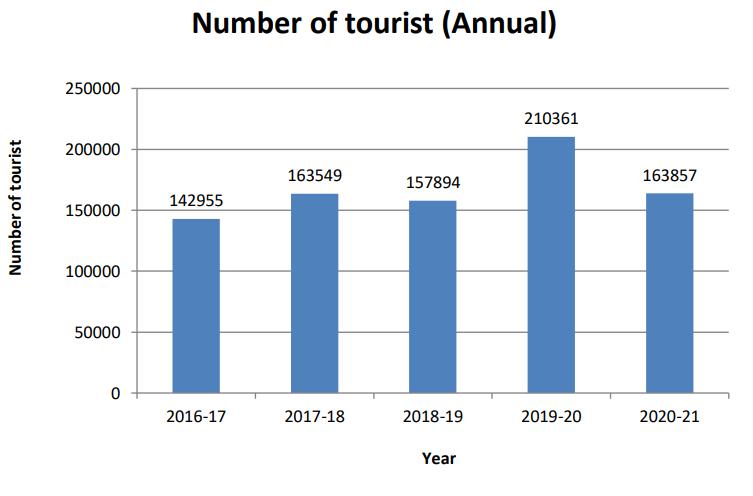
Chart-1showstheannualtouristinflowinChikhaldarafor last five years i.e. from 2016-17 to 2020-21. Chikhakdara wasvisitedbymorethan2.10lakhtouristsintheyear201920 whereas 2016-17 saw the least tourist visits in Chikhaldarai.e.around1.43lakh.Theaveragetouristvisits inChikhaldaraisaround1.67lakh.
International Research Journal of Engineering and Technology (IRJET) e-ISSN: 2395-0056
Volume: 10 Issue: 03 | Mar 2024 www.irjet.net p-ISSN: 2395-0072
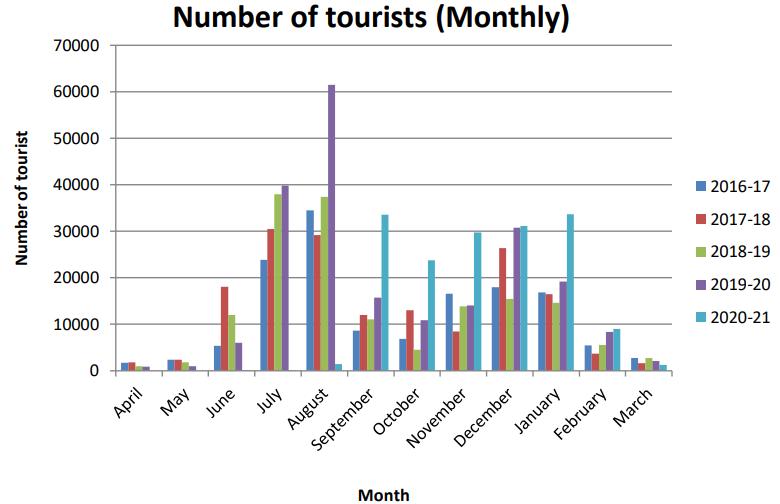
Fromchart-2itisclearlyvisiblethatChikhaldaraattracts majoritytouristduringmonsoonseasoni.e.inthemonthsof June, July and August followed by winter months from November to January. Chikhaldara witnesses negligible touristactivityduringsummers.
ThetouristactivityinChikhaldaraisunevenlydistributed. The average number of daily tourist visits in Chikhaldara ranges from around 40 tourists during summers to more than1000duringmonsoons.
This pattern arises due to the limited activities and destinations available for visits during the dry season. However, with the onset of the monsoon, the region transformsaswaterfallsrejuvenate,thelandscapeturnslush green, and misty weather blankets the area, drawing in a significantinfluxoftourists
Touristpointslocatedinchikhaldaraarelistedasfollows:
Malviyapoint(sunrise)
Bhimkund(Kitchakdari)
VairatDevi
SunsetPoint
BirDam
PanchbolPoint
KalapaniDam
MahadevMandir
SemadhohTigerProject
HarikenPoint
MozariPoint
ProspectsPoint
DeviPoint
Goraghat
ShakkarLake
GovernmentGarden
Museums
Waterfalls
Bakadari
PanchaDharagwaterfall
GawilgadFort
Coffee colony in Maharashtra, not numerous would believe it, but there are in little given Chikhaldara in Vidarbha,it'spopulardestinationfornaturesuckers.The hillstationboasts variouscatcalls andcreatures,denes andlacksetc.
Table -1: PropertyOfCoffeeGarden
Property of coffee garden
InChikhaldarasomecoffeeauditoriumsareprivateand some are belongs to government timber department. substantiallyinMariyampurauditoriumsarebelongsto Roman Catholic Church( Mission). To take care of civilizationontheinaugurationofBishopEliesGhonsalvis BishopofAmravatiDioceseandhonourableGovernorof MaharashtraShreeC.VidyaRaohavestationed100field workerstosuperviseandguidedthelocalssoastocover andsupervisedandguidethecivilizationoftheareaon regularbase.Table-1PropertyOfCoffeeGardenProperty ofcoffeetheatreproprietorAreainacresRomanCatholic Church60Government7.5HolyCrossConvent2.5Labors substantiallyoriginalcommunitiesareworkingincoffee estate,numerouspeoplegetemploymentsothattheyget diurnalsuccourtosurvive.Seasonallylaboursarehanded workshop,togetstipendondailybaseattherateofRs. 200perday.Thisincreasestheirpurchasingcapacityand increase the standard of living of ethnical. The sell of coffee greasepaint is through original shopkeepers especiallyoccupants.Noingrainedrequestisavailablethe excursionistsbuycoffeeattherateofRs.500perkg.The coffee produced bloomed during the month of stormy season it's on the flowering stage and by the month of Septemberseedsarereadyafterthecivilizationseason seedsareburnt,driedandpredicatedthepowerisready forsell.Yearlythey'redealing80kg.Coffeeroughlygoing isRs.40,000/-
The week long Chikhaldara Tourism Festival, in which colourful conditioning that attract excursionists from acrossMaharashtraisheld.Thejubileewasintroduced8 timesbackbyformerministerDr.SunilDeshmukhstill, theorganizersstoppedholdingthejubileeinaftertimes. Thejubileewasrevivedmanytimesbackkeepinginmind
International Research Journal of Engineering and Technology (IRJET) e-ISSN: 2395-0056
Volume: 10 Issue: 03 | Mar 2024 www.irjet.net p-ISSN: 2395-0072
the eventuality it has to induce profit. Food jubilee, adventuresportslikeparasailing,rappellingandtouring, andapictureexhibitiononMelghat’sbiodiversityarethe special point of jubilee. The jubilee provides tribals an occasiontoshowcasetheirbambooartandformoffolk culture. It also helps employment generation as particularsmadebytribalsarevended.
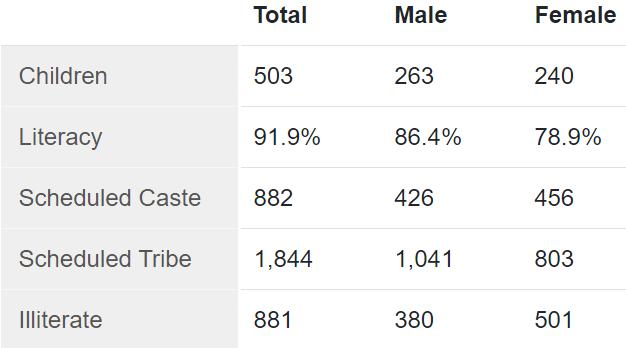
Chikhaldara,locatedintheAmravatidistrict,isaMunicipal Councilcitydividedinto17wards,withelectionsheldevery 5years.AccordingtothePopulationCensus2011,ithousesa total of 948 families and has a population of 5,158 individuals, comprising 2,789 males and 2,369 females, resultinginanAverageSexRatioof849.
Among the populace, 10% are children aged 0-6 years, totaling503,with263maleand240femalechildren,leading toaChildSexRatioof913,surpassingtheAverageSexRatio.
Chikhaldaraboastsacommendableliteracyrateof91.9%, higherthanthe87.4%literacyrateofAmravatidistrict.The maleliteracyratestandsat95.37%,whilethefemaleliteracy rateis87.74%,reflectingthecommunity'scommitmentto educationandempowerment.
TheChikhaldaraMunicipalCounciloverseestheprovisionof essential amenities such as water and sewerage to 948 households.Additionally,itholdstheauthoritytoconstruct roads within its jurisdiction and levy taxes on properties withinitspurview.
Intermsofdemographics,ScheduleCaste(SC)individuals constitute 17.1% of the population, while Schedule Tribe (ST) members make up 35.8% of the total populace in Chikhaldara.
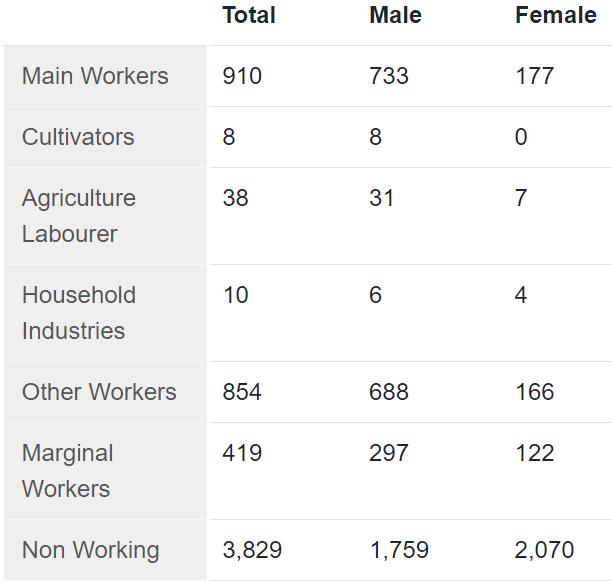
WithintheChikhaldaraMunicipalCouncil,1,329individuals areengagedinvariousworkactivities.Amongthem,68.5% areclassifiedasbeinginMainWork,involvingemployment orearningformorethan6months,while31.5%areengaged
in Marginal activities, providing livelihood for less than 6 months.
Of the 1,329 workers involved in Main Work, 8 are cultivators(ownersorco-owners),and38areAgricultural laborers,underscoringtheagriculturalsignificancewithin thecommunity'seconomiclandscape.[3]
5.6. Culture
Within the Melghat region, a significant tribal populace is dispersedacross theadministrativetahsilsofChikhaldara and Dharani. The Korku tribe stands out prominently, constitutingapproximately90percentofthedemographic, alongside other tribal communities like Dhanwar, Pardhi, Gond,andRajgonds.
TheKorkutribeboastsarichtapestryofculturalheritage, sharing many customs with neighboring tribes while maintaininguniquetraditionsoftheirown.Dividedintofour groups and spread across 36 clans, each clan venerates a unique totem, reflecting their spiritual connections to animals, objects, and nature. Inter-tribal disparities, particularly regarding marital practices, were more pronouncedhistoricallybuthavediminishedovertime.
Religiously,theKorkusaligncloselywithHinduism,though with nuanced differences. Their mythology elucidates naturalphenomenaandsocietaloccurrences,withreverence formainstreamHindudeitiesalongsidenaturalforceslike thesun,moon,rivers,andforests.LordShivaholdsprimary
International Research Journal of Engineering and Technology (IRJET) e-ISSN: 2395-0056
Volume: 10 Issue: 03 | Mar 2024 www.irjet.net p-ISSN: 2395-0072
reverence, supplemented by figures such as Ravana, Meghnath,andKilarMuthwa.Worshipofdeceasedancestors isprevalent,oftenmarkedbytheconstructionofsmallhuts and pillars. Supernatural beliefs permeate daily life, influencingactionsbasedonomens.Tattooingisconsidered asacredpractice,whilemagico-religiousandethnomedicinal traditionsremainprominent,albeitfacingdegradation.
Festivalsandartisticexpressions
Korku festivals, including diwali, dussehra, and holi, are celebratedwithfervor,accompaniedbyspecificobservances likegudipadwaandpola.Festivitiesinvolvefeasting,music, dance,andelaboratedecorations.Dance,amajorartform,is performed enthusiastically during festivals and special occasions,showcasingdiversestylesandattire.Morethan 14typesofdancesareprevalent,accompaniedbytraditional musicplayedoninstrumentslikesindhi,bhugadu,kingari, mrudanga,anddhol.
Culinarytraditionsandlanguagedynamics
Culinary practices among the Korku people echo those of neighboringtribalcommunitiesandwiderIndiantraditions, withrelianceonforestproduce,grains,vegetables,andnonvegetarianfare.Liquorconsumptioniscommon,withMahua beingapopularlocalbrew.Tobaccousageiswidespread.
Language forms a vital aspect of Korku identity, with the KorkulanguagefacingendangermentaccordingtoUNESCO. Effortstopreserveitfacechallengesduetosocioeconomic factors and language prioritization in education. Despite these challenges, Korku language shares dialectic and phonetic similarities with the Santhali language, underscoringitsuniquelinguisticheritage.[4]
Inrecenttimes,theIndianGovernmenthasacknowledged the pivotal role of tourism in job creation and foreign exchange earnings. In line with this recognition, it has implementedseveralinitiativestobolsterbothdomesticand international tourism, thereby significantly enhancing the tourismsector.Herearesomeoftheseinitiatives:
Swadesh Darshan Scheme: Launched in 2014–15 by the Ministry of Tourism, the Swadesh Darshan scheme is a flagshipprogramdesignedtopromotetheme-basedtourism andtapintoIndia'svasttouristpotentialByMarch2022,the MinistryhadcommittedRs.5,500croreininvestmentsand approved over 76 projects spanning 31 states/union territories. Furthermore, the scheme has catalyzed the enhancement of tourism infrastructure across more than 500 tourist destinations In April 2022, the ministry approved10newprojectsundertheheritagecircuittheme.
TheNationalIntegratedDatabaseoftheHospitalityIndustry stands as a flagship initiative in harmony with the
Aatmanirbhar Bharat vision, harnessing technology to empower businesses within the hospitality sector. The program aims to comprehensively understand the geographical spread, size, structure, and capacity of the hospitalityindustry.AsofAugust27,2022,atotalof45,152 accommodationswereregisteredunderthisportal.
E-touristVisa:IntroducedinOctober2014,theE-touristVisa initiativesimplifiestheprocessofobtainingatouristvisafor foreign nationals, thereby promoting tourism in India. In 2019alone,thegovernmentgranted2.36millione-tourist visas.
AdvertisingCampaigns:Throughcampaignslike'Incredible India,' the Indian Government has effectively promoted tourismandshowcasedthecountry'srichculturalheritage toaglobalaudience.Recentinitiativesincludethelaunchof theItalyeditionofIncredibleIndiaReconnect2022,avirtual roadshow aimed at enticing international tourists to visit India. Additionally, in May 2022, the Ministry of Tourism showcasedIndia’sdiversetourismofferingsattheArabian TravelMarket.
Theinterlinkedrelationshipbetweentourismandculturein theMelghatregionisasignificantfactorcontributingtothe economicgrowthanddevelopmentofthearea.TheMelghat regionisrichinculturalheritage,witharchaeologicalsites like the Gavilgarh fort and Narnala fort, as well as the presenceoftheKorkutribe,whichhasdiversetraditionsand practices.
This cultural richness attracts tourists, who come to experiencetheuniquehistoryandwayoflifeintheregion. Tourism activities in the Melghat region, such as jungle safarisandvisitstoarchaeologicalsites,createanarrayof benefitsthatspilloverthroughmultipleroutestopromote economic growth. Tourism increases foreign exchange earnings,encouragesinvestment,driveslocalfirmstowards greater efficiency due to increased competition, alleviates unemployment, and leads to positive economies of scale, decreasingproductioncostsforlocalbusinesses.
The integration of cultural and tourism industries in the Melghat region can optimize the tourism value chain by promotingthetransferoftourismvaluetohigh-consumer groups,combiningaestheticculturalresourceswithtourism elements,andredistributingresourcesandvaluesthrough the integration of supply chains.This integration can help evolveprimarytourism-relatedindustriestoahighervalueaddedstageinthevalue chain,contributingtotheoverall valueanddevelopmentofthetourismsectorintheMelghat region.
Moreover,theMelghatTigerReserve,aprimehabitatofthe tiger,isasignificantattractionfortourists,withitstropical
International Research Journal of Engineering and Technology (IRJET) e-ISSN: 2395-0056
Volume: 10 Issue: 03 | Mar 2024 www.irjet.net p-ISSN: 2395-0072
dry deciduous forest dominated by teak and its role as a catchment area for five major rivers.The Reserve's conservationhistoryandrichbiodiversityfurtherenhance its appeal as a tourist destination, contributing to the economicgrowthanddevelopmentoftheMelghatregion. Inconclusion,theinterlinkedrelationshipbetweentourism and culture in the Melghat region plays a crucial role in promotingeconomicgrowthanddevelopment.Theregion's cultural heritage, archaeological sites, and natural attractions, such as the Melghat Tiger Reserve, create a vibranttourismindustrythatgeneratesbenefitsforthelocal economy, drives investment, and creates jobs. The integration of cultural and tourism industries can further optimize the tourism value chain, contributing to the sustainabledevelopmentoftheMelghatregion.
Ownersarenotgivingattentiononcoffeegardenassuchas agriculturefarm.
Lowearningwagesisanotherproblemoflocalpeople.
No,properguidancetotribalpeopletomaketheircultural practicesmajorsourceofincome.
Migrationoftribalpeopleduetolackofjobopportunities.
Coffeegardenshaveresponsiblyutilized70acresoflandin the scenic hilly regions, showcasing their significant contributiontothearea'slandscapeandeconomy.
Shoppingfacilityhastoprovideitmeansstillthereisscope toimproveservices.
Thereexistsapromisingopportunityforlocalresidentsto embarkonagro-tourismventures,enticingurbandwellers toimmersethemselvesintheauthenticrurallifestyle.This initiativenotonlyfostersadeeperconnectionwithnature butalsofacilitatesthedirectsaleoflocallyproducedcoffee tovisitingtourists,enhancingeconomicsustainabilitywithin thecommunity
[1] Chikhaldara-Wikipedia
[2] DownloadPdfFile.aspx(forestsclearance.nic.in)
[3] Chikhaldara Population, Caste Data Amravati Maharashtra-CensusIndia
[4] The Korku Tribe of Melghat Region in India and Their Current State: An Ethnographic Study (sagepub.com)