
International Research Journal of Engineering and Technology (IRJET) e-ISSN: 2395-0056
Volume: 11 Issue: 05 | May 2024 www.irjet.net p-ISSN: 2395-0072
International Research Journal of Engineering and Technology (IRJET) e-ISSN: 2395-0056
Volume: 11 Issue: 05 | May 2024 www.irjet.net p-ISSN: 2395-0072
ArunKumar S1,Prof .Vidyashankar2,Prof.Shilpa R V3
1UG Scholar(BCA),Dept. of computer science,JSS College Arts,Commerce,Science(JSSCACS),Mysore,Karnataka,India
2HOD & Professor, Dept. of computer science,JSS College Arts,Commerce,Science(JSSCACS),Mysore,Karnataka,India
3Professor, Dept. of computer science,JSS College Arts,Commerce,Science(JSSCACS),Mysore,Karnataka,India
Abstract - Making informed treatment decisions and forecasting patient outcomes depend on the precise identification and categorization of brain tumours. A standardised framework for classifying brain tumours based onhistologicalandmolecularcriteriaisprovidedbythe2016 WorldHealthOrganisation(WHO)ClassificationofTumours of the Central Nervous System. The 2016 WHO classification has undergone significant modifications and adjustments, which are summarised below. The emphasis is on the significance of combining genetic and histopathological studies for accurate diagnosis and customised treatment plans. With over 85% of all cases, non-small cell lung cancer (NSCLC) is the most prevalent kind of lung cancer. Evidencebasedsuggestionsforthediagnosis,staging,andtreatmentof non-small cell lung cancer (NSCLC) are provided by the National Comprehensive Cancer Network (NCCN) Clinical PracticeGuidelines.Anoutlineofthediagnosticevaluationof non-small cell lung cancer (NSCLC) is given in this abstract, together with information on biopsy methods, imaging examinations, and molecular testing. The necessity of thorough assessment in directing treatment options and enhancing patient outcomes is emphasised. Theseabstractsprovidebriefoverviewsofimportantsubjects concerningthediagnosisoflung-relatedanomaliesandbrain tumours, offering insightful information about the present classification scheme. A multidisciplinary approach comprising clinical examination, medical imaging, and occasionally laboratory investigations is necessary for the diagnosisoflung-related disordersand braintumours.
Key Words: Brain tumours, Innocent, Malevolent, Diagnosis,Therapy
Findinglung-relatedanomaliesandbraintumoursearlyon is essential to enhancing patient outcomes and enabling prompt medical intervention. Accurate diagnosis and characterization of these disorders depend heavily on clinicalevaluationsandsophisticatedimagingmethodslike MRIsandCTscans.Timelydiagnosisincreasesthelikelihood ofeffectivemanagementandrecoverybyallowingforquick treatment.Thediagnosticapproachesandtechnologiesused todetectlung-relatedproblemsandbraintumourswill be examinedinthisintroduction,alongwiththeirimportancein themedicalfield.Thehumanbrainissurroundedbycranial bones,meninges,andcerebrospinalfluid(CSF),whichgive protection and support. The brain, spinal cord, and
accompanying nerve cells make up the central nervous system(CNS),whichcontrolsthewholehumanbody.
Prompt Identification Early detection of tumours and anomaliescanleadtobetterresultsandhighersurvivalrates since treatment choices are more effective at this point.CorrectDiagnosisUsingcutting-edgeimagingmethods, clinicalevaluations,andlaboratorytesting,wecanprecisely and thoroughly diagnose patients in order to create individualizedtreatmentregimens.FeaturesToassistinthe selection and monitoring of the most suitable course of treatment, describe the type, size, location, and extent of lung-relatedabnormalitiesandbraintumours.Differential diagnosis To differentiate between benign and malignant tumours, together with other lung disorders; to minimize needless treatments and provide suitable care methods. GuidelinesforTreatmentTosupportindividualizedtherapy methodsandenhancepatientoutcomesbyofferingcrucial information on tumor kind, stage, and molecular features thatwillaffecttreatmentoptions.
Identifyingandlocatingtumoursoranomaliesinsidethe brainandlungsbyusingsophisticatedimagingmodalities likeMRI,CT,andPETscans.Conductingclinicalevaluations toanalysessymptomsandgaugetheseverityoftheillness, suchasneurologicalexamsandpulmonaryfunctiontesting. Obtaining tissue samples for histological examination by biopsytechniques,whichhelpsidentifythekindandextent of abnormalities or tumours. Combining genetic and moleculartestingtoinformindividualizedtreatmentplans, forecast prognoses, and improve diagnosis. Working in interdisciplinary teams of medical experts to evaluate results,createall-encompassingtreatmentprogrammes,and givepatientsthebestcarepossible.Healthcarepractitioners can guarantee prompt and accurate diagnosis and hence enhance patient outcomes and quality of life by accomplishingthesegoals
Examining a broad range of academic articles, research papers, clinical guidelines, and review articles from respectable medical journals would be part of a literature analysis on the diagnosis of brain tumours and anomalies
International Research Journal of Engineering and Technology (IRJET) e-ISSN: 2395-0056
Volume: 11 Issue: 05 | May 2024 www.irjet.net p-ISSN: 2395-0072
associatedtothelung.Asurveyofthiskindmayaddressthe following important subjects and areas:
1. Imaging Modalities: Assessment of the diagnostic effectivenessandprecisionofdifferentimagingmodalities, including MRIs, CT scans, PET scans, and X-rays, in the detection of anomalies connected to the lungs and brain tumours. The investigation of biomarkers and molecular testing techniques, such as genetic mutations, protein expressionpatterns,andothermolecularsignatures,thatare utilisedinthediagnosisofparticularkindsofbraintumours and lung abnormalities is the second section. Examining tissuebiopsyspecimensforthepurposeofclassifyingand grading brain tumours and lung abnormalities, histopathological analysis examines the morphological characteristics and diagnostic standards.
2.DifferentialDiagnosis:Lookingintohowtodifferentiate betweenbenignandmalignanttumoursaswellasdiverse lung ailments such infections, autoimmune diseases, and inflammatory disorders, among other things. The third sectionofthearticlediscussesthetreatmentimplicationsof braintumoursandlung-relateddisorders,includinghowto chooseacourseofaction,anticipateapatient'sprognosis, and track their reaction to treatment.
3.Therapy Implications: This section discusses how brain tumor patients with lung-related anomalies may benefit from different treatments, how to forecast their prognosis, and howtotracktheirtherapyresponse.Emergingtechnology Anexaminationofcutting-edgetechniquesandtechnology fordiagnosis,includingliquidbiopsies,molecularimaging, and AI/ML algorithms, with the goal of enhancing patient outcomes.
4.Best Practices and Clinical Guidelines: Evidence-based clinicalguidelines,expertrecommendations,andconsensus statementsforthediagnosisandtreatmentoflung-related disordersandbraintumoursareexamined. Scientists and medicalpractitionerscanlearnagreatdealaboutthestateof-the-art methods, difficulties, and potential future directionsinthediagnosisofbraintumoursanddisorders related to the lungs by performing an extensive literature reviewcoveringthesetopics.
3.The reasons behind brain tumours:
It is impossible to pinpoint the exact aetiology of brain tumours, however a number of risk factors have been thoroughlyresearched.Amongthemare:
1. Radiation, both ionising and non-ionizing.
2.Familybackground;
3.Geneticandracialcharacteristics.
4.wayofliving
5.Nutrition.
6.Wine
7.CigaretteUse.
8.Dexpropran
1. Medical Assessment :A comprehensive clinical evaluation is carried out by healthcare professionals to determine symptoms, risk factors, and general health condition. This evaluation includes a review of medical historyandaphysicalexamination.
2. Studies on Imaging: Usecutting-edgeimagingtechniques to see and identify lesions or anomalies in the brain and lungs,suchasMRIs,CTscans,PETscans,andX-rays.Inorder to detect possible tumours, masses, or other anomalies, radiologistsevaluatethepictures.
3. ExperimentsinLabs:Toevaluateparticularfactorslinked tolungandbrainhealth,dolaboratorytesting,suchasblood testsandbiomarkerassays.Assessmentoftumourmarkers, trackingtherapyresponse,anddifferentialdiagnosis.
4. Histological analysis andbiopsies: Whennecessary,use tissuebiopsytechniquestoremovesamplesfromanomalies or worrisome lesions so that they can be examined histologically.Underamicroscope,pathologistsassessthe tissuesamplestoidentifythekind,grade,andsubtypeofany abnormalitiesortumours.
5. Examining at the Molecular Level: Using biopsy samples,domoleculartestingtoevaluategeneticmutations, patternsofproteinexpression,andothermolecularmarkers linkedtocertaintumorkindsorabnormalitiesinthelung. Prognosis and treatment decisions are guided by this information.
6. Collaboration Across Disciplines: Worktogetherwith diverse groups of medical specialists, including as radiologists,pathologists,pulmonologists,oncologists,and neurosurgeons,toevaluatediagnosticresults,talkthrough treatmentchoices,andcreatethoroughcareplans.
4. Step by step to resolve diagnosing brain
4.1tumors and lung-related abnormalities
Makingabraintumordiagnosis:
Step1:clinical assessment :Commence with a comprehensive clinical examination that includes a neurologicalevaluationandafullmedicalhistory.
Step2: Research on Imaging.
1.Magnetic Resonance Imaging, or MRI: Because of its excellent soft tissue contrast, this imaging technique is preferredforidentifyingbraintumours.
2.Computed Tomography, or CT: canbeutilisedinplaceof orinadditiontoMRI,particularlyincriticalcircumstances.
Step3:Examination of Images: Tofindanyanomaliesthat might point to a brain tumor, radiologists examine the imagingdata.
International Research Journal of Engineering and Technology (IRJET) e-ISSN: 2395-0056
Volume: 11 Issue: 05 | May 2024 www.irjet.net p-ISSN: 2395-0072
Tumor characteristics, including size, location, enhancing pattern, and surrounding edema, are assessed.
Step4:Biopsy: Abiopsymaybecarriedoutforaconclusive diagnosisorinsituationswheretheimagingstudiesarenot conclusive.Toexaminethetumortissueunderamicroscope, atinysamplemustberemoved.
4.2Making a Lung-Related Abnormality diagnosis:
Step 1: Clinical Assessment: Perform a comprehensive clinical evaluation that includes a physical examination, a reviewofmedicalhistory,andanassessmentofrespiratory symptoms.
Step 2: Visual Research:1.X-rayofthechest:frequentlythe firstimagingtechnique to assessproblemsinthelungs.It offers an overview quickly, yet it could be vague. 2.ComputedTomography(CT)scan:providesimageswith greaterresolutionandhasahighersensitivityforidentifying abnormalities in the lungs, such as tumours, nodules, and otherlesions.
Step 3: Examining Images: In order to detect any anomalies, such as masses, nodules, infiltrates, or other pathological alterations in the lungs, radiologists analyses theimagingtests.
Step4:Exams of the lungs (PFTs):Evaluatelunghealthand assist in the diagnosis of diseases like restrictive or obstructivepulmonarydisorders.
5.RESULT AND ANALYSIS
When determining the blood type of a kid, 16 potential combinations must be taken into account, as there are 4 distinctmotherbloodtypesand4possiblepaternalblood types.All16ofthepotentialcombinationsaredisplayedin thetablesthatfollow.Itisfeasibletofindthepotentialblood typesofaparent'soffspringifyouareawareoftheirblood types.

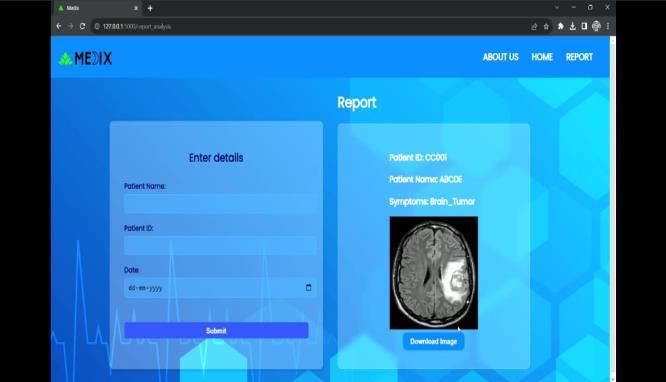
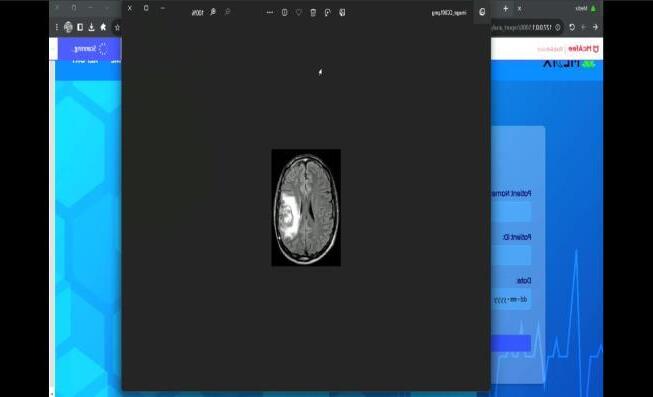
With implications for clinical practice and genetic counselling, this research shows the potential of parental blood groups as a predictor of offspring blood type. We identifiedthepotentialbloodtypesofchildrenbasedonthe bloodgroupsoftheirparentsbyanalyzingtheinheritance patterns of ABO blood groups using computational techniquessuchasPunnettsquares.Intherapeuticsettings, personalized assessment is crucial, as evidenced by our findingsthatshowdiversityinexpectedoutcomesbasedon combinationsofparentalbloodgroups.Wealsoemphasize the applicability of these predictions to other medical contexts, where knowledge of the prospective offspring's blood type can guide decisions and enhance patient outcomes,suchasorgantransplantation,geneticcounselling, andbloodtransfusions.
[1] Figarella-Branger,D.;Hawkins,C.;Ng,H.K.;Pfister,S.M.; Reifenberger,G.;Bert,D.J.;Cree,I.A.;Louis,D.N.;Perry, A.;Wesseling,P.;etal.AnoverviewoftheWHO's2021 classification scheme for central nervous system tumours.2021,23,1231–1251inNeuroOncol.
[2] Pallud,J.,Dezamis,E.,Huberfeld,G.,Gavaret,M.,Guinard, E., Dhermain, F., Varlet, P., Oppenheim, C.; et al. Levetiracetam Use Duration's Effect on Isocitrate Dehydrogenase's Overall Survival Adults with WildTypeGlioblastoma:AnObservationalStudy.
International Research Journal of Engineering and Technology (IRJET) e-ISSN: 2395-0056
Volume: 11 Issue: 05 | May 2024 www.irjet.net p-ISSN: 2395-0072
[3] Sarubbo, S.; Tate, M.; Merler, S.; Moritz-Gasser, S.; Herbet, G.; Duffau, H.; De Benedictis, A. The first functionalatlasofthehumanbrain:mappingimportant cortical hubs and white matter networks with direct electricalstimulation.2020,205,116237;Neuroimage. [Source:GoogleScholar][ReferenceCross]
[4] Barbareschi, M.; Avesani, P.; Papagno, C.; Dalpiaz, C.; Rozzanigo, U.; Annicchiarico, L.; Corsini, F.; Vitali, L.; Falchi, R.; et al. Comparison of awake versus sleepy surgeryforhigh-gradegliomaneurocognitive
2024, IRJET | Impact Factor value: 8.226 | ISO 9001:2008