
International Research Journal of Engineering and Technology (IRJET) e-ISSN: 2395-0056
Volume: 11 Issue: 05 | May 2024 www.irjet.net p-ISSN: 2395-0072
International Research Journal of Engineering and Technology (IRJET) e-ISSN: 2395-0056
Volume: 11 Issue: 05 | May 2024 www.irjet.net p-ISSN: 2395-0072
Prof. Bharath Bharadwaj B S1 , Ms. Chaitra B2 , Mr. Daman Medappa S S3 , Ms. Gagana J4 , Ms. Reshika Rajesh K5
1Assistant Professor, Dept. of Computer Science and Engineering, Maharaja Institute of Technology Thandavapura 2,3,4,5 Students, Dept, of Computer Science and Engineering, Maharaja Institute of Technology, Thandavapura ***
Abstract – People frequently disobey traffic signals, cause disruptions, and fail to react appropriately at signal points, which results in traffic jams and accidents. To acknowledge this issue, we installed a road blocker as spike, which prevents the vehicle from relying on the traffic signal and from breaking traffic signal laws. We have speed breakers in the shape of spikes to reduce or regulate the vehicle’s speed. By employing a mechanism, we may create a barricade from these speed breakers. We can use the produced barrier to operate a road blocker, which is powered by a timing sensor.
Key Words: Spike, Timing Sensor, Violation
1.INTRODUCTION
LesterWire,aDetroitpoliceofficer,madetheinitial discoveryoftrafficsignalin1912.Herecommendedatwocolour,redandgreenlightwithabuzzertoalertpedestrians of an approaching change in traffic. William Potts then altered this basic design in 1920 to incorporate the commonly used three-color red, amber, and green lights. With minimal deviation, this straightforward, three-color iconhasbeenusedwithcontemporarytechnologyincluding motion sensors, diode lights, and automated timers for almostacentury.
Tofacilitatetheefficientflowoftraffic,letvehicles orpedestrianstopassajunction,andlessenthefrequencyof collisions between cars approaching crossings from opposing directions, traffic lights are primarily designed. Due to the growing number of cars on the road, traffic infractionsarebecomingincreasinglyseriousbothinIndia and globally. Avoidance systems for traffic violations are necessarytoacknowledgetheconcerningissue.
Spikesareactivatedbythetrafficavoidancesystem topreventsystemhopping.Real-timetrafficsignalinfraction prevention is possible with this system. Additionally, we offer a separate access gate for government class one vehiclesandambulances,amongotheremergencyvehicles. Overthelasttenyears,India'svehiclepopulationhasgrown atarateofabout30%annually.
Thereisasignificantincreaseinvehiclesthisyear. The worldoftodayissteadilybecomingmoreautomated. Everyone demands that everything be networked and automated. This link can be as complex as connecting an American-based phone system to an Indian telephone
system,orbeasbasicasconnectingourkitchenoventoour cell phones. IoT promises to be extremely important in meetingthispublicneed.
The current traffic signal system is set up with delays,andthetimesduringwhichsignalschangeoverare fixed and independent of the volume of traffic at that moment. To acknowledge the serious issues with traffic congestion, the current traffic system needs to be modernized. Thus, to acknowledge numerous issues and enhance the traffic system, we now suggest a straightforward,reasonablypriced,andreal-timetrafficlight system. On the basis of PIC microprocessor, the system measurestrafficdensitybyemployingdynamictimingslots with varying levels and infrared sensors placed on either side of each route. Our solution will be very helpful in resolvingmostoftoday'strafficcongestionissues.
Currentlyinuse,trafficsignalviolationprevention systemsmostlyrelyonmanualmonitoringandstatictraffic cameras.Thesecamerasrecordtrafficcrossingsaspictures orvideos.Thevideoisviewedbyhumanoperatorswholook for infractions like speeding and running red lights. This method may take longer and yield lower accuracy. The currenttrafficsignal system issetupwithdelays,andthe times during which signals changeover are fixed and independent of the volume of traffic at that moment. To address the serious issues with traffic congestion, the current traffic system needs to be modernized. Thus, to addressnumerousissuesandenhancethetrafficsystem,we nowsuggestastraightforward,reasonablypriced,andrealtimetrafficlightsystem.Themicroprocessorattheheartof thesystemanalysestrafficdensity.Oursolutionwillbevery helpfulinresolvingthemajorityoftoday'strafficcongestion issues.
Thispartpresentstherecentresearchontheuseof the deep learning for traffic control and load balancing in SDN networks and Mao et al suggested a non-supervised deeplearningconvolutionalneuralnetwork-basedmethod for a software-defined wireless network. Compared to conventional routing protocols, this technique can better
International Research Journal of Engineering and Technology (IRJET) e-ISSN: 2395-0056
Volume: 11 Issue: 05 | May 2024 www.irjet.net p-ISSN: 2395-0072
controlnetworktrafficwhilepreservingahigherstandardof serviceTangetalsuggestedusingtwodeep-learningCNNs basedonintelligentpartialoverlappingchannelassignment toroutetrafficimprovingnetworkperformance.
To prevent congestion in an IoT network and predict traffic load in future period Mao et al proposed intelligentroutingbasedonadeeplearningtechniquefora CNNinacommunicationsystem.AnotherresearcherYuetal says that a deep reinforcement learning for an SDN that provideseffectiveroutingservicesandgoodconvergencefor optimizing the routing of the sensing region. Kumar and Vidyarthiintroducedaparticleswarmoptimization-based greenroutingtechniquetomaximizethenumberofnodes andtheircluster.Theobtainedresultsspecifyasignificant increaseinthelifespanofthenetwork.
The software-defined wireless network is gaining traction in the IoT domain. In a brand-new architecture knownasSDSenseisproposed.ItconsistsofanSDN-based WSN architecture that significantly improves network performancebydynamicallyreconfiguringsoftware-enabled sensorstomatchthenetwork'sstate.Misraetalproposeda situation-awareprotocolswitchingtechniqueforsoftwaredefined wireless sensor networks that allows real-time application. They gave an example of how their protocol mightincreasenetworkperformance.
Anotherresearcherdevelopedandimplementedan IoT-integratedsystemarchitecturethatincludesaWSN.A traffic management technique that includes bandwidth allocation,virtualmachinebasedonpriority,andadynamic flow pathing mechanism was proposed by Son and Buyya [24].and Al-Shammari et al developed a traffic flow management policy to organize traffic network resources. SomeoftheresearchershavebeenworkingtoimproveAIas its importance has grown, particularly in the area of algorithm training, where SNNs are quite helpful. Many methodshavebeenproposedandusedforaimoftraining. Thisstudy,incontrasttotheliteraturereviewed,buildstwo controllers within the same IoT control plane using an intelligentstack.Additionally,weofferarevisedtrainingto enhancethecontrollabilityofanISDN-IoTspikenetwork.
Thealgorithmmodificationisinspiredbythespike backpropagation(SBP)Ourmethodincorporatesanextra training mechanism to prevent accidents that maylead to disturbanceinthetrafficlevelforecast.
Cutting edge technology is used in the suggested traffic signal violation avoidance system. The gadget is positioned close to the zebra cross. Furthermore, these gadgets provide real-time autonomous traffic signal detection.Comparingthissystemtothecurrentapproaches, itismorepreciseandefficient.Thetwoprimarypartsofthe systemareaspikeandsensors.Asignalispickedupbythe
sensor. The system chooses whether to activate spikes by monitoringthesignallight'sactivity.Thismethodallowsus topreventsignalviolations.Thecurrenttrafficsignalsystem is set up with delays, and the times during which signals changeover are fixed and independent of the volume of traffic at that moment. To address the serious issues with traffic congestion, the current traffic system needs to be modernized.Thus,toaddressnumerousissuesandenhance the traffic system, we now suggest a straightforward, reasonablypriced,andreal-timetrafficlightsystem.
Following investigations and studies, it was determined that a system is need that would require physicalcontrolyetstillallowtheprocesstobeautomated. The automated system offers extremely high efficiency in completingthetaskathand,whilephysicalcontrolhelpsto preventundesireddisruptionsinthetrafficflow. Artificial intelligence, communications, and network science have advanced recently, which has increased the use of these technologiesinmanyfacets ofsociety. Our focusisonthe implementation of the proposed paradigm in the medical sphere, specifically in Iraqi hospitals. The spike ISDN-IoT network's sensing, control, and application make up the model.
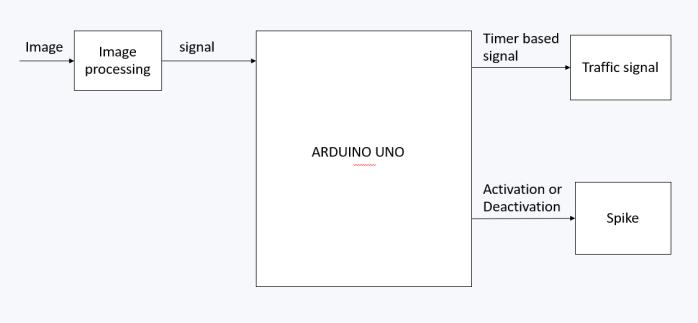
Ambulancesareintendedtobeabletonavigatethe busy and clogged traffic signals with the help of the proposedSmartTrafficControlSystem.Italsofacilitatesthe ambulances'abilitytoavoidaredlightthatcouldobstruct theirpath.ThisiscrucialinacountrylikeIndiawherethere aren'tanybufferspacesordesignatedlanesatthemoment thatallowambulancestopassthroughthetraffic.
Using an algorithm to process digital photos on a computerisknownasdigitalimageprocessing.Comparedto analog image processing, digital image processing, a subsection or field of digital signal processing, offers numerous advantages. It permits the application of a far greater variety of algorithms to the input data and can preventissueslikenoiseanddistortionaccumulationduring processing. Digital image processing can be described as
International Research Journal of Engineering and Technology (IRJET) e-ISSN: 2395-0056
Volume: 11 Issue: 05 | May 2024 www.irjet.net p-ISSN: 2395-0072
multidimensionalsystemssinceimagesaredefinedovertwo dimensions. Three key elements have influenced the formationanddevelopmentofdigitalimageprocessing:first, theadvancementofcomputers;second,theadvancementof mathematics; and third, the growing demand for a wide range of applications in the fields of environment, agricultural,andmedicalscience.
Methodology
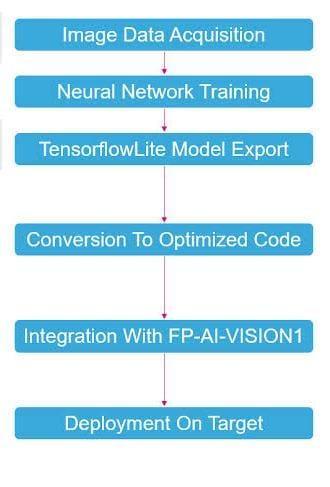
1. Model Training
-DatasetCollection:Gatheredadatasetcontainingimagesof ambulancesandnon-ambulancevehicles.
- Data Preprocessing: Preprocessed the images to ensure uniform size and format, including resizing and normalization.
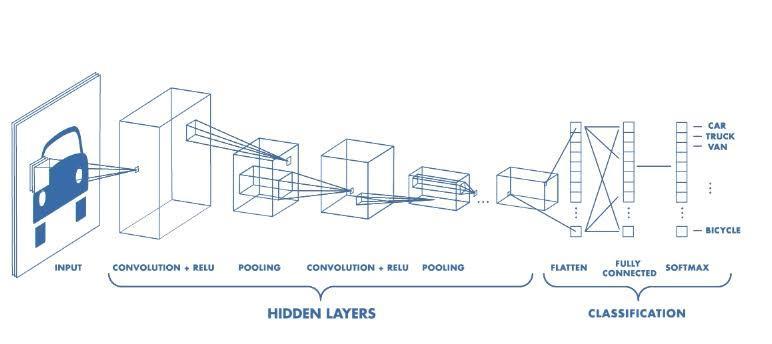
-ModelSelection:SelectedaConvolutionalNeuralNetwork (CNN)architectureforobjectdetection,suitableforthetask.
- Model Training: Trained the CNN model using the preprocesseddatasettoclassifyimagesaseitherambulance ornon-ambulance.
2. Real-Time Object Detection
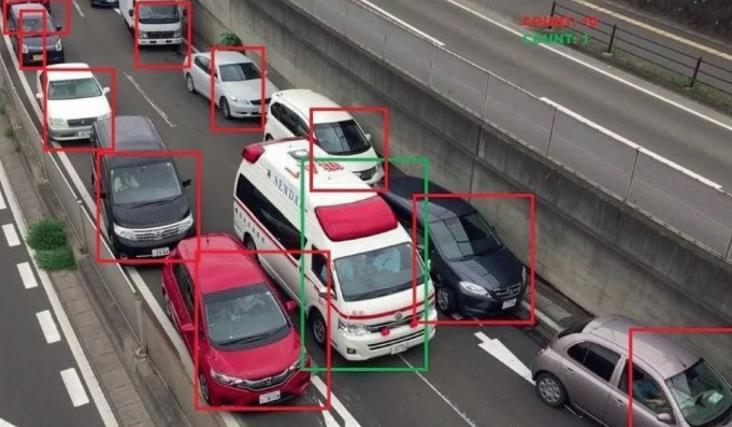
-ModelLoading:LoadedthetrainedCNNmodelusingthe Keraslibrary.
- Video Feed Acquisition: Utilized the OpenCV library to captureframesfromacamerainreal-time.
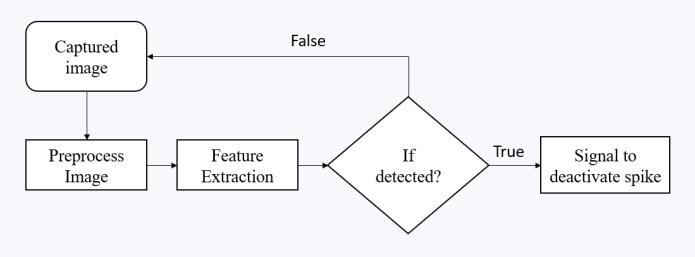
-FramePreprocessing:Preprocessedeachframetomatch theinputrequirementsoftheCNNmodel,includingresizing andnormalization.
- Object Detection: Used the loaded CNN model to make predictions on the preprocessed frames to detect ambulances.
-BoundingBoxVisualization:Drewboundingboxesaround detectedambulancesintheframesusingOpenCV.
International Research Journal of Engineering and Technology (IRJET) e-ISSN: 2395-0056
Volume: 11 Issue: 05 | May 2024 www.irjet.net p-ISSN: 2395-0072
Communication Setup: Established a serial communicationlinkbetweenthecomputerrunningthe objectdetectioncodeandanArduinoboard.
SignalTransmission:Sentsignalsfromthecomputerto the Arduino based on the detection results to trigger furtheractions,suchascontrollingservosorlights.
Arduino Processing: Programmed the Arduino to receivesignalsandperformthedesiredactions,suchas openingbarricadesorsignaling.
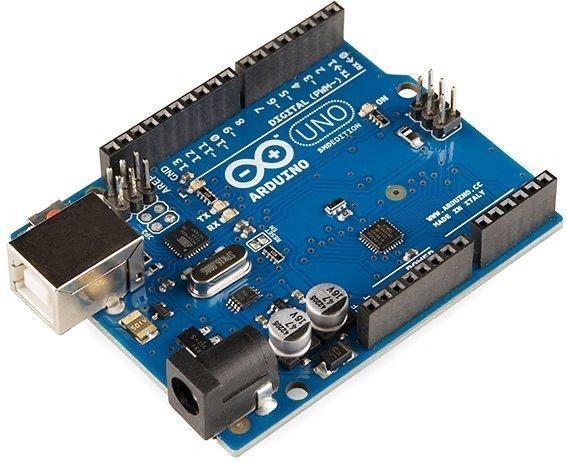
TheArduinoUnoisanopen-sourcemicrocontroller board that was created by Arduino.cc and first made availablein2010.ItisbasedontheMicrochipATmega328P microprocessor.Setsofdigitalandanaloginput/outputpins onthemicrocontrollerboardallowittobeinterfacedwith differentexpansionboardsandotherdevices.WithatypeB USBcableandtheArduinoIDE,theboard's14digitaland6 analogI/Opinscanbeprogrammed.Itcanbepoweredbya rectangular9-voltbatteryorabarrelconnectorthattakes voltages ranging from 7 to 20 volts. It shares the same headersastheLeonardoboardandthesamemicroprocessor astheArduinoNanoboard.
- Testing Environment Setup: Set up a controlled environmentfortestingthereal-timeobjectdetectionand Arduinointegration.
-PerformanceEvaluation:Evaluatedtheperformanceofthe systemintermsofdetectionaccuracy,real-timeprocessing speed,andArduinoresponsetime.
- Validation: Validated the system against a variety of scenarios and conditions to ensure its reliability and effectiveness.
Analyzed the results obtained from the system testing and validation to assess the performance of the developedsystem. Concludedthatthesystemsuccessfully detectsambulancesinreal-timeandintegrateswithArduino forfurtherprocessing,meetingtheprojectobjectives.
Using as much of the IoT's resources as feasible while maintaining a minimal design is how this system achieves real-time traffic assistance for ambulances. By helpingtoprovidepatientswithexcellentambulancecare, thesuggesteddesignhelpstosavetheirlives.Byapplyingit tomanypartsofpotentialdifficulties,itcangrowtobecome avitalcomponentofmunicipaladministration.Thesystemis simplydependableanditsdevelopmentandinstallationare economical.
[1] A. Ghosh, D. Chakraborty, and A. Law, “Artificial intelligenceininternetofthings,”CAAITransactionson IntelligenceTechnology,vol.3,no.4,pp.208–218,2018.
[2] D.Kaur,G. S.Aujla,N.Kumar,A.Y.Zomaya,C.Perera, and R. Ranjan, “Tensor-based big data management schemefordimensionalityreduceprobleminsmartgrid systems: Sdn perspective,” IEEE Transactions on Knowledge and Data Engineering, vol. 30, no. 10, pp. 1985–1998,2018.
[3] Z. Han, T. Lei, Z. Lu, X. Wen, W. Zheng, and L. Guo, “Artificial intelligence-based handoff management for densewlans:Adeepreinforcementlearningapproach,” IEEEAccess,2019.
[4] Q. Li, N. Huang, D. Wang, X. Li, Y. Jiang, and Z. Song, “Hqtimer: A hybrid {Q} − learning-based timeout mechanism in software-defined networks,” IEEE TransactionsonNetworkandServiceManagement,vol. 16,no.1,pp.153–166,2019.
[5] A. Rego, A. Canovas, J. M. Jimene , and J. Lloret, “An intelligent system for video surveillance in iot environments,”IEEEAccess,vol.6,pp.31580–31598, 2018.
[6] X. Huang, T. Yuan, G. Qiao, and Y. Ren, “Deep reinforcementlearningformultimediatrafficcontrolin softwaredefinednetworking,”IEEENetwork,vol.32,no. 6,pp.35–41,2018.
[7] F. Tang, Z. M. Fadlullah, B. Mao, and N. Kato, “An intelligent traffic load prediction-based adaptive channel assignment algorithm in sdn-iot: A deep learningapproach,”IEEEInternetofThingsJournal,vol. 5,no.6,pp.5141–5154,2018.
International Research Journal of Engineering and Technology (IRJET) e-ISSN: 2395-0056
Volume: 11 Issue: 05 | May 2024 www.irjet.net p-ISSN: 2395-0072
[8] G.Li,X.Wang,andZ.Zhang,“Sdn-basedloadbalancing schemeformulti-controllerdeployment,”IEEEAccess, vol.7,pp.39612–39622,2019.
[9] A. Tavanaei, M. Ghodrati, S. R. Kheradpisheh, T. Masquelier, and A. Maida, “Deep learning in spiking neuralnetworks,”NeuralNetworks,2018.
[10] N.KumarandD.P.Vidyarthi,“Agreenroutingalgorithm for iot-enabled software defined wireless sensor network,” IEEE Sensors Journal, vol. 18, no. 22, pp. 9449–9460,2018.