
International Research Journal of Engineering and Technology (IRJET) e-ISSN: 2395-0056
Volume: 11 Issue: 05 | May 2024 www.irjet.net p-ISSN: 2395-0072
International Research Journal of Engineering and Technology (IRJET) e-ISSN: 2395-0056
Volume: 11 Issue: 05 | May 2024 www.irjet.net p-ISSN: 2395-0072
1Suman Mokenapalli, 2Cherukupalli Siri, 3V. Bhasker and 4V.V. Basava Rao
1Research Scholar, 2Student, 3Asst Professor, 4Sr.Professor Department of Food Technology, University College of Technology, Osmania University, Telangana, India
Abstract - Wheat (Triticum) is a grass widely cultivated for its seed, a cereal grain that is a worldwide staple food. Jowar (Sorghum Bicolor) is also called as Sorghum. It is a grass species which is cultivated for its grain which belongs to the family Poaceae. Mustard seeds (Brassica nigra) mustardseeds are used as a spice in India. The physiochemical properties of food grains are mainly responsible for the final quality of the product. In the present study the physical and chemical properties for the food grains like length, breadth, density, bulk density, porosity, and true density, angle of repose, geometric mean diameter, sphericity, protein, fat, ash, and crude fiber were determined. The length andbreadth ofgrains were measured using the vernier calipers and screw guage. The moisture content of the taken samples was estimated using hot air oven equipment. The fat content estimated using soxtron equipment and the ash was estimated with muffle furnace. The density, bulk density, porosity, andtrue densityof wheat, jowar and mustard seeds of food grains were found using standard methods given by AOAC, 1990. The angle of repose, geometric mean diameter and sphericity of grains were also measured. Finally, the results were analyzed in significance for the designers and processors indesigningfood processing equipment.
Key Words: Wheat,Jowar,Mustardseeds,Physiochemical properties,processequipment
The physiochemical properties of food grains are mainly responsible for the final quality of the product. These propertiesareimportantforthedesignandprocessingofthe food. The physiochemical properties of food grains have somecharacteristicswhichareessentialfornutritionalvalue offoodgrains.Foodgrainslikecereals,legumes,milletsand oilseedsaretheimportantfoodcropsthatcontributetomost of the world staple food. Food grains provides many nutrients and energy for healthy life physiochemical propertiesoffoodgrainsincludelength,breadth,moisture content,density,bulkdensity,porosity,truedensity,angleof repose,geometricmeandiameterandsphericity.Knowledge ofthephysicalandchemicalpropertiesofthefoodgrainsis beingusedintheCooking,Baking,Sorting,Grading,Milling, andExtrusion
Thephysiochemicalpropertiesofthefoodgrainslikewheat, jowar and mustard seeds plays a very important role in safety and quality of the product. The physiochemical properties are very important in marketing process from productiontoconsumption.Thelengthandbreadthofthe foodgrainseffectsonproductquality,storagespace,packing densityofthegrains.Lowmoistureinfoodgrainshelpsto increasetheshelflifeandreducethemicrobialattack.High moisture content causes the growth of bacteria and decreases the nutritional content in it. Bulk density and densityisusedtoknowtheefficiencyofstorageofgrainsin bins,bagsandsilos.
Grainsizeisusedtostudytheporosity.Bulkdensityand densityisdeterminedtoknowthe efficiencyofstorageof grainsin bins,bagsandsilos.Bulk densityalsoaffectsthe processes such as mixing, milling and packaging. Porosity influences the storage capacity of grains. Higher porosity allowsgrainsofhigherstoragevolume.Angleofreposeisan importantparameterforflowability
2.1. Materials: The food grains such as Wheat, Jowar and MustardseedsareobtainedfromtheUshodhayamarketin Vidyanagar,Hyderabad.
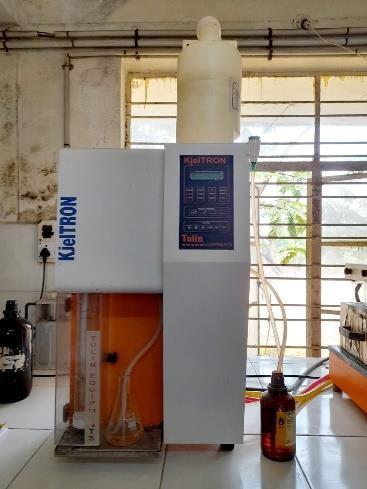
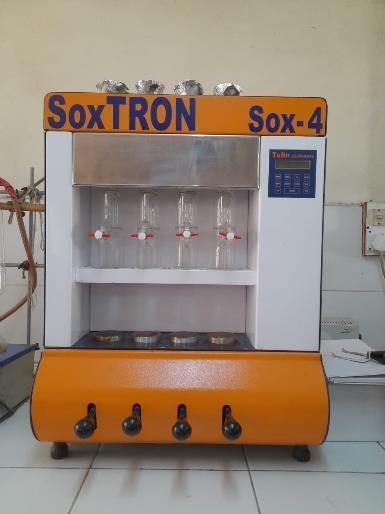
Theequipmentusedsuchasverniercalipersandscrewguage areobtainedfrom 〖JIT〗 ®ChuarBrand.Theequipment for fat analysis SoxTRON Sox-4 is obtained from Tulin equipments.Theequipmentforproteinanalysisisobtained fromKjelTRONTulinequipment’s
2.2 METHODS
2.2.1. PHYSICAL PROPERTIES
i. Length:
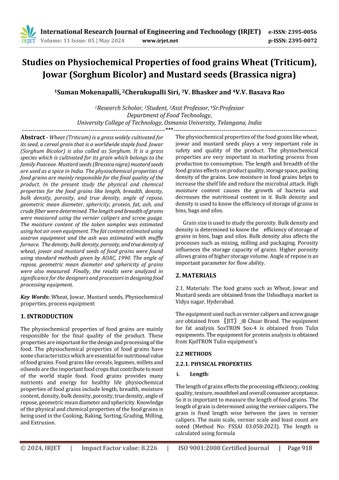
Thelengthofgrainseffectstheprocessingefficiency,cooking quality,texture,mouthfeelandoverallconsumeracceptance. Soitisimportanttomeasurethelengthoffoodgrains.The lengthofgrainisdeterminedusingtheverniercalipers.The grain is fixed length wise between the jaws in vernier calipers. The main scale, vernier scale and least count are noted (Method No: FSSAI 03.058:2023). The length is calculatedusingformula
International Research Journal of Engineering and Technology (IRJET) e-ISSN: 2395-0056
Volume: 11 Issue: 05 | May 2024 www.irjet.net p-ISSN: 2395-0072


ii. Breadth:
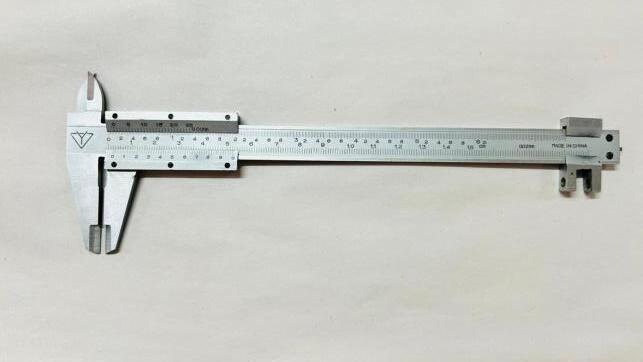
The breadth of the grains is determined using the screw guage. Measuringthegrainsbreadthhelpsinassessingthe uniformity of grains. Measuring dimensions helps in determining the packing density and storage space of the product.Thegrainisfixedbreadthwisebetweenthejawsof thescrewguage.Theheadscale,pitchscaleandleastcount arenoted.(MethodNo:FSSAI03.058:2023).Thebreadthis calculatedusingtheformula
iii. Density:
Densityisdefinedastheratiooftheweightbyvolume.To determine the density first take 10ml of toluene in a measuringjarandthenslowlyaddthegrainsofthesample weighed10gramsintothejarandobservethatthelevelof toluenerisesandthisisnotedastheriseinvolume.Nowthe ratio of the weight of the sample taken to rise in volume givesthedensityofthegrains,itisgivenby
iv. Bulk Density:
Bulk density is defined as the mass of the particles of the food material divided by the bulk volume. Bulk density is
also called as apparent density. The bulk density is important in separating and grading of grains. The bulk density values of bajra, ragi and rice were determined by standardmethodwhichisgivenby(AOAC1990).
v.
):
Porosity isthe measure ofthevoidspacesor openspaces withinamaterial,anditisusuallyexpressedasapercentage. Itindicatedthenumberofporesinthebulkoffoodgrains. Thepercentageofporosityismeasuredusingthefollowing relation(Mohsenin,1986):
Truedensityofgrainswasdeterminedastheratioofgrain sample weight to the true volume of the sample. The true density of the food grains was determined using the followingrelationship.

Whenthegrainsarepouredontoasurface,aheapisformed. The repose angle is influenced by the grain properties (moisture content, morphology, and particle distribution etc).Theangleofreposeisthesteepestanglerelativetothe horizontalplaneonwhichamaterialcanbepiledwithout thesurfacematerialsliding(IS:6663-1972).

Sphericityisdefinedasthesurfaceareaofasphereofthe same volume as that of the particle divided by the actual surfaceareaoftheparticle.Thisshowstheshapecharacter ofparticlerelativetothesphere.

A measure of the central tendency of particle size composition of substrate materials sometimes used as an indexofqualityofspawinggravels.Ithelpsincharacterizing the grains physical properties including flow ability,
International Research Journal of Engineering and Technology (IRJET) e-ISSN: 2395-0056
Volume: 11 Issue: 05 | May 2024 www.irjet.net p-ISSN: 2395-0072
porosity,packingdensity.Itiscrucialinfoodprocessingfor controlovergrainssizedistributionwhichimpactsproducts quality.Thesizesuchaslength,widthandthicknessofthe foodgrainsaremeasured.Thefollowingequationisusedto measure the geometric mean diameter of grains in mm (Mohsenin,1986).
i. Moisture Content:
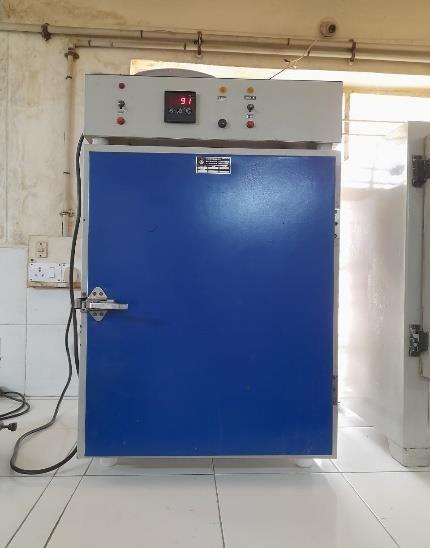
Weighapproximately5grammesofmaterialaccuratelyin amoisturedishthathaspreviouslybeendriedandtarred. Placethedishinahotairovensetto105°Candleavefor atleast2hourstodry.Letcoolinadesiccatorbefore weighing.Repeattheheating,cooling,andweighingsteps untilthedifferencebetweentwoconsecutivereadingsis lessthan2mg.documentthelowestweight.(MethodNo: FSSAI03.006:2023).Themoisturecontentwascalculated usingthefollowingformula
Moisturecontent(%)=
ii. Determination Of
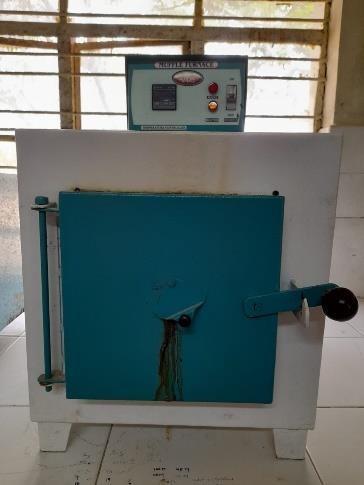
Aboutfivegramsofthesamplewasweighedaccuratelyinto a porcelain crucible. This was moved to a muffle furnace heatedto600°Candleftforabout4hours. Ithadturnedto whiteashatthispoint.Thecrucibleanditscontentswere cooledtoaround100°Cinairbeforebeingweighedatroom temperature in desiccators. The proportion of ash was computedusingthefollowingformula.(AOAC1995)
iii. Determination of Protein Content:
Proteinsarepolymersofaminoacids,themajorityof which are of amino acids having general formula NH2CHRCOOH may be distinguished from fats & carbohydrates is beingtheonlymacronutrientinfood containingnitrogen.(AOAC976.05(2005))
Reagents:
ConcentratedH2SO4
Catalysttitrates
40%NaOHsolution
O.1NNaOH
O.1NH2SO4
Methylredindicator
Procedure:
Add 0.55g of material to the instrument's digestion tube, followed by 25ml of concentrated H2SO4 and 1-2 catalyststabilisers.Adjustthetemperatureto370°Cand allow the solution to digest for 4-6 hours, or until it becomes blue. Remove the tube from the 0.1N H2SO4 solutioninatitrationflaskandplaceitonthedistillation unit.Attachatubeholdingdigestedsampletodistillation until the start button is pressed to effect a metered addition of NaOH. To initiate steam distillation, add 5 dropsofyellowcolour.Thisistheend.Nowfilltheburette with25mlof0.1NHCland0.1NNaOH.
Volume: 11 Issue: 05 | May 2024 www.irjet.net p-ISSN: 2395-0072
iv. Estimation of Fat Content:
ParametersrequiredforSoxTRONfatsolventextraction system.
CHEMICALS REQUIRED:
petroleumether
Extractiontime:Approx.45minsto1hr
Solventrecoverytime:Approx.30to45mins
Temperature: initial extraction time the temperatureshouldbe1200csolventrecoverytime temperatureshouldbe2500c.
PROCEDURE:
Placecollectionvesselsandsamplesinanoven setto100degreesCelsius.
Afterremovingmoisturefromcollectionjars, installthedesiccatoratroomtemperature.
Weightheemptycollectingvesselsandrecord theweightasW1. Thisistheinitial weightof the collection vessel. Now, put the thimble in theS.S.Springthimbleholderandplaceitonthe collectioncontainers.
Weighthesampleandtransferittothethimble. Assumethesampleweightis3grammes.Pour the solvent into the collection vessels at a volumethatis3/4thofthevessel'svolume
Loadcollectionvesselsinto thesystem. Turn onthesystemandsettheboilingpointofthe solventtothedesiredtemperature.Theboiling temperaturemaybe100degreesCelsiushigher thanthesolvent'smaximumboilingpoint.
Allow about 45-60 minutes to complete the process. After the process, raise the temperaturetosolventrecoverytemperature.
Rinsethesampletwicetocollectanyremaining fat.
Removedallcollectionvesselsandplacedthem inahotairoven.After15-20minutes,remove allthebeakersandsettheminadesiccatorfor 5minutes.
Remove all thimble holders and weigh collecting jars. This is the final weight of the collection containers, W2. To calculate the quantity of fat in a sample, use the following formulaandsubstituteW,W1,andW2.(AOAC OfficialMethod,2003)

v. Estimation Of Fiber Content:
The method is based on the solubilisation of noncellulosiccompoundsbysulphuricacidandKOHsolution. Determineseparatelythesamplemoisturebyheatingin anovenat105oC toconstantweight.Coolinadesiccator thenweighaccurately1gmofgrindedsample.
Approximatelywith1gand1.25%sulphuricacidupto the150mlnotchcrucible,afterpreheatingbythehotplate in order to reduce the time requirement for browning. Add 3 to 5 drops of n-octanol as antifoam agent. Boil 30mins exactly from the onset of browning. Connectto vacuum for draining sulphuric acid. Wash 3 times with 30ml of hot deionised water connecting each time to compressedairforstirringthecontentofcrucible.After draining the last wash, add 150ml of preheated KOH 1.25%,3-5dropsofantifoamingagentn-octanol.Boilfor 30mins, filter and wash three times with water by stirringeachtimebycompressedairtocoolthecrucibles andremovethealkaliresidues.Thenwashthreetimesthe crucible content with 25ml of acetone. Remove the acetone, stirring each time by compressed air. Remove thecruciblesanddeterminethedryweightafterdryingin anovenat105oCforanhouroruptoa constantweight. When ash content is also required, the crucibles are
International Research Journal of Engineering and Technology (IRJET) e-ISSN: 2395-0056
Volume: 11 Issue: 05 | May 2024 www.irjet.net p-ISSN: 2395-0072
placed in a muffle furnace, at 5500C for 3 hours and reweighedaftercoolinginadesiccator.
Thedifference in weight in comparison to the previous weight represents the crude fibre content without ash. (AOAC,2005)

Physiochemical properties have significant importance in designing,processing,handling,transportationandstorage. The length, breadth and density are important in sorting, grading and separation process in food grain processing. Qualityoffoodgrainsisalsodependonthebulkdensityof grains.Porosityanddensityofgrainsareimportantwhich affectthehardnessofkernel,milling,dryingrateetc.Angle of repose is useful in determining the slope stability and structure.Sphericityisveryimportantforgarinsasitaffects theflowability,densityandporosity.Thegrainswhichhave high sphericity will flow more easily, pack together with greateffiencyandhaslessvoidspacesbetweeneachother. These will have impact on storage, processing, and transportationofgrains.Thepostharvestmoisturecontent ofWheatis14-20%.Thewheattakenfromthemarketisof 11.45% moisture. The post harvest moisture content of jowaris12-14%.Theragitakenfromthemarketisdried which is of 9.158% moisture content. The post harvest moisturecontentofmustardseedsis9-15%.Thericetaken from the market is dried which is of 7.13%. Different physical properties such as length, breadth, moisture content,density,bulkdensity,porosity,truedensity,angleof repose, geometric mean diameter, sphericity, ash content, protein, fat and crude fibre were determined and results obtainedarepresentedinthetable1andtable2
Table 1: physicalpropertiesoffoodgrains
Table 2: Chemicalpropertiesoffoodgrains
4.Conclusion:
It can be stated that the relevance of analysing physical attributesarerecognisedasthebasicdata inconstructing themachineryandequipmentusedduringharvestingandin post-harvest such as storage operations. These are important in sorting, grading and many other processing operations to produce the high quality product. Physical properties, such as length, breadth, density, bulk density, porosity, True density, angle of repose, geometric mean diameter,sphericity,protein,ash,andfat,crudefibrewere determined. The moisture content of wheat, jowar and mustardseedsare11.45%,9.158%,and7.13%.
5. Nomenclature:

=mainscalereading

=LeastCount

=VernierScaleReading

=HeadScaleReading

=PitchScaleReading
=Bulkdensity,g/cm³
=Truedensity,g/cm³and
=Porosity,percent
h=Heightofthepile
D=diameterofthepile
Islength iswidth
Isthickness
Isweightofpetriplateandsamplebeforedrying,g
Isweightofpetriplateandsampleafterdrying,g
International Research Journal of Engineering and Technology (IRJET) e-ISSN: 2395-0056
Volume: 11 Issue: 05 | May 2024 www.irjet.net p-ISSN: 2395-0072
Isweightofsampletaken,g =Weightofsample =Weightofemptycollectionvessel =Weightofcollectionvesselcontainingfat isweightoftheresidueinthecrucibleafterdigestion isweightoftheashinthecrucible isweightofthesampleinthecrucible
6. References:
1. DasojuSaideepVarma,BhaskerVellanki,Comparative Study of Tray Dryer, Hot Air Oven and Tapered Fluidized Bed Dryer for Drying Wheat and Paddy Volume3,Issue1Jan-Feb2021
2. C. Ononogbo, O.C. Nwufo, C.A. Okoronkwo, N.V. Ogueke, J.O. Igbokwe and E.E. Anyanwu Equipment SizingandMethodfortheApplicationofExhaustGas WasteHeattoFoodCropsDryingUsingaHotAirTray DryerFebruary2020,Vol13(05),502–518
3. Adzimah Kwasi Stephen and Seckley Emmanuel., ImprovementontheDesignofaCabinetGrainDryer AmericanJ.ofEngineeringandAppliedSciences2(1): 217-228,2009
4. AOAC. Official Methods of Analysis. Association of OfficialAnalyticalChemistsInternational.In:Horwitz, W. (Ed.), 18th Ed. AOAC Press, Arlington, VA, USA, 2005.
5. Juliano, B.O., and Perez (1984) Results of a collaborative test on the measurement of grain elongationofmilledriceduringcooking.J.Cer.Sci2. 281-292.
6. IS 4333 (Part II): 2002 Methods of Analysis of food grainsPartIIMoisture
7. AOAC Official Method 926.06 Macaroni Products PreparationofSamples
8. AOACOfficialMethod925.10Solids(Total)andLoss onDrying(Moisture)inFlourAirOvenMethod.
9. MohseninNN.PhysicalPropertiesofPlantandAnimal Materials.GordonandBreachInc.,NewYork1980,5187.
10. ChandraD,ChandraS,PallaviandSharmaAK.Review ofFingermillet(EleusinecoracanaL.)Apowerhouse of health benefiting nutrients, Food Science and HumanWellness.2016;5(1):149-155.
11. ShivabasappaRS,Roopabai,SrideviH,Sharanagouda, UdaykumarN.Engineeringpropertiesoffingermillet (EleusinecoracanaL.)grains,InternationalJournalof AgriculturalEngineering.2012;5(2):178-181.
12. Agriculturalstatisticsataglance(2016).Department of agriculture cooperation and farmers welfare, Ministryofagricultureandfarmerswelfare,GOI.
13. Chhabra,N.andKaur,A.(2017).Studiesonphysical andengineeringcharacteristicsofmaize,pearlmillet and soybean. Journal of Pharmacognosy and Phytochemistry,6(5):01-05.
14. Nazni, P. and Bhuvaneswari, J. (2015). Analysis of physicochemical and functional characteristics of fingermillet(ElusinecoracanaL)andlittlemillet(P. sumantranse). International Journal of Food and NutritionalSciences,4(3),109-114.
15. Sunil, C. K., Venkatachalapathy, N., Shanmugasundaram, S., Pare, A. and Loganathan, M. (2016).Engineeringpropertiesoffoxtailmillet(Setaria italic L): VarietyHMT 1001. International Journal of Science,EnvironmentandTechnology,5(2):632-637.
16. Ramashia, S. E., Gwata, E. T., Meddows-Taylorc, S., Anyasia,T.A.andJideani,A.I.O.(2017).Somephysical and functional properties of finger millet (Elusine coracana) obtained in sub-Saharan Africa. FoodResearchInternational,104:110-118.
17. RathoreS,SinghK,KumarV.Milletgrainprocessing, uilizationanditsroleinhealthpromotion:areview, InternationalJournalofNutritionandFoodSciences. 2016;5(5):318-329.
18. Swami AM, Sadawarte SK, Patil BM, Sawate AR and WandhekarSS.Studiesonphysico-chemicalproperties of wheat, finger millet and guar gum. The Pharma InnovationJournal2021;10(5):1237-1240

1’st Author Photo
Mr.SUMANMOKENAPALLI ResearchScholaratthe DepartmentofFoodTechnology, CollegeofTechnology,Osmania University,hasadvanced academicresearchbyconducting fieldknowledge.Heisinterested inthepreservationoffoodgrains throughdryingandproduct development.
Research
Volume: 11 Issue: 05 | May 2024 www.irjet.net


Ms.CherukupalliSiriM.Tech StudentattheDepartmentof FoodTechnology,Collegeof Technology,OsmaniaUniversity.
Mr.VBhaskerisworkingas AssistantProfessorinFood Technology,UniversityCollegeof Technology,OsmaniaUniversity, Hyderabad,India.Hehas13 yearsofTeachingExperience.He haspublishedin17Technical PapersinreputedJournals.

Prof.VVBasavaRaoisworking asProfessorinChemical Engineering,atUniversityCollege ofTechnology,Osmania University,Hyderabad,India.He has28yearsteachingand4years ofindustrialexperience.Hehas supervised17PhDsand published67TechnicalPapersin reputedJournals.