
International Research Journal of Engineering and Technology (IRJET) e-ISSN: 2395-0056
Volume: 11 Issue: 05 | May 2024 www.irjet.net p-ISSN: 2395-0072
International Research Journal of Engineering and Technology (IRJET) e-ISSN: 2395-0056
Volume: 11 Issue: 05 | May 2024 www.irjet.net p-ISSN: 2395-0072
Celalettin Arslan1, Volkan KAYA2
1 Master's Student, Graduate School of Natural and Applied Sciences, Department of Artificial Intelligence and Robotics, Erzincan Binali Yıldırım University, Erzincan, Türkiye
2Associate Professor, Faculty of Engineering and Architecture, Department of Computer Engineering, Erzincan Binali Yıldırım University, Erzincan, Türkiye
Abstract - Understanding plant biology and classification of plant species stands out as an important issue in the field of biology. In recent years, with advancements in the field of artificial intelligence, the use of artificial intelligence for plant classification has increased. In this context, plant leaf images have begun to be examined with artificial intelligence. However, in the classification of plant species using artificial intelligence, the use of cell images may provide more accurate and reliable results compared to leaf images. Cell images allow for a closer focus on the genetic structure and fundamental characteristics of the plant, whereas leaf images may be more sensitive to environmental variability. Therefore, in plant classification using artificial intelligence, analyses based on cell images are preferred. In this study, microscopic cell images of four different plant species (Ficus Benjamin, Spathiphyllum, Ficus Elastica and Anthurium) were classified using machine learning methods such as KNN, SVM, Logistic Regression, Decision Trees and Random Forest. In order to classify plant species, a new data set consisting of microscopic cell images of four different plant species was created. Using this data set, plant species were classified with five different machine learning methods and their success accuracies were compared. As a result of the comparison, the best plant species classification was obtained by Random Forest with a success rate of 96.74%, and the worst plant species classification was obtained by the KNN method with a success rate of 86.05%. According to the results obtained, it was seen that microscopic plant cell images were successfully classified using machine learning methods.)
Key Words: Machine Learning, KNN, SVM, Logistic Regression, Decision Trees, Random Forest, Plant Classification
Nowadays,theuseofartificialintelligenceisincreasing.One of the areas where artificial intelligence is most used is imageclassificationstudies [1][2][3][4].Duringtheimage classificationprocess,artificialintelligenceapplicationscan detectqualitiesinimagesthataredifficulttodetectbythe humaneye.Thankstothesedetections,themachinetrains itselfanddecideswhichclassthenewimagesshouldbelong to, with the help of different features in different image classes.Imageclassificationstudieshavegainedsignificant
momentum with the rapid development of artificial intelligence[5].Thesestudiesaimtoincreaseaccuracyrates byreplacinghumansinvariousfields.However,inacomplex fieldsuchasplantclassification,theintegrationofartificial intelligenceisofgreatimportanceinordertoobtainmore consistent results that are not user-dependent. Artificial intelligence-supported systems can provide more reliable andconsistentresultsbyminimizinghumanerror.Artificial intelligence can be used as an analysis method to automaticallymeasureplanttraitstoaidgeneticdiscoveries [6]. When studies on plant species classification in the literatureareexamined,plantleafimagesaregenerallyused asthedataset.Manyimageclassificationstudiescarriedout to classify plants for various purposes show that classification is achieved with high success rates if appropriatedataisused.
Wu etal.presenta neural network approachto recognize plantleavesintheirstudy.Thecomputercanautomatically classifyleafimagesof32differentplantspeciesloadedfrom digital cameras or scanners. For this purpose, the PNN (Probabilistic Neural Network) method, which attracts attentionwithitsfasttrainingprocessandsimplestructure, was preferred. 12 features were extracted, which were processed by PCA(Principal Component Analysis) to generate the inputvector.Experimental resultsshow that the algorithm can work with more than 90% accuracy. Compared to other methods, this algorithm has been determinedtobefast,effectiveandeasytoimplement[7]
InDoğanandTürkoğlu'sresearch,deeplearningmethods were used to classify plant leaves and the performance of thesemethodswasevaluated.Theyusedatotalof7628leaf images from 32 plant classes in their study. Using deep learningalgorithmssuchasGoogleNet,AlexNet,ResNet50, Vgg16,Vgg19,theyachievedsuccessfulresultsintherange of97.77%-99.72%inclassifyingplantleaves[8].
In their study, Yaman and Tuncer aimed to detect leaf diseasesusingdeeplearningandfeatureselectionmethods using726imagesofwalnutleaves.Imagesweredividedinto twoclasses:healthyanddiseased,17differentdeeplearning modelswereevaluatedandDarkNet53andResNet101were
International Research Journal of Engineering and Technology (IRJET) e-ISSN: 2395-0056
Volume: 11 Issue: 05 | May 2024 www.irjet.net p-ISSN: 2395-0072
selectedasthetwomodelswiththehighestperformance.By combiningthefeaturesofthesemodels,featureextraction wascarriedoutwithahybridapproachandfeatureswere selected using the ReliefF algorithm. SVM algorithm, a machinelearningmethod,wasusedtoclassifytheselected features and 99.58% accuracy was achieved. This study provides an effective tool for early detection of plant diseases[9]
IntheirstudybyShruthietal.,thegeneralstagesofmachine learningclassificationtechniquesforplantdiseasedetection werepresentedandacomparativestudywasconducted.In thisstudy,machinelearningmethodssuchasKNN,SVMand deeplearningmethodswereused,anditwasobservedthat CNN (Convolutional Neural Networks) provided high accuracy and detected more diseases in more than one product[10].
Sabancıetal.intheirstudy,theyconductedaresearchonthe classification of leaves using a data set containing 14 differentphysicalpropertiesof12differentleafspecies.The classificationsuccessofleaveswasexaminedusingvarious (KNN, MLP, NaiveBayes, RBFNetworks, KStar, J48) data mining,machinelearninganddeeplearningalgorithms.Asa resultoftheclassifications,successratesbetween86.52% and94.32% wereobtained. Theresultsofthestudyshow that artificial neural networks can be used effectively in classifyingplantleavesandthatMLPperformsbetterthan otherclassificationalgorithms[11].
Priyaetal.intheirstudy,aresearchwasconductedonplant classificationprocessesbyusinga data setcontainingleaf images of 15 different plant classes and classifying these data with SVM and KNN machine learning methods. As a result of the research, it was determined that the results obtained from SVM provide more successful results comparedtotheKNNmethod[12].
Significantsuccessrateshavebeenachievedbyusingmany artificial intelligence methods in the literature review regarding the classification of plants. In many plant classificationstudiesintheliterature,plantleaveshavebeen used, butitseemsthattheclassificationprocessbased on plantcellsisinsufficient.Forthispurpose,intheprocessof classifyingplants,thecharacteristicsof eachplantspecies should be determined and it should be decided which featuresshouldbetakenintoconsiderationforclassification. However, if the data examined are similar to each other, determining the characteristics of the species makes the classification process difficult. Therefore, the main aim of thisstudyistoensuresuccessfulclassificationofcellimages ofdifferentplantspeciesusingmachinelearningmethods.In thisway,itwillcontributetoabetterunderstandingofplant biology,acceleratetheidentificationprocessofplantspecies and make a significant contribution to studies on the conservationofbiologicaldiversity.Thisresearchwillmake a significant contribution to the field of plant cell
classification by adopting an interdisciplinary approach includingbiology,artificialintelligence,anddatascience.The achievementstobeachievedwillprovidesignificantsupport to efforts to preserve biodiversity by allowing faster and more effective research in fields such as plant biology, agricultureandenvironmentalsciences.Forthisreason,4 differentplantspecieswereclassifiedusinganewdataset consisting of microscopic cell images with the KNN, SVM, Logistic Regression, Decision Trees and Random Forest methods discussed in the study. Using this dataset, the classificationexperimentalresultsoffivedifferentmachine learningmethodswerecompared.Thecontributionsofthis studycanbesummarizedasfollows:
1. Faster, more precise and more effective results will be obtainedintheclassificationofplantspeciesthantraditional methods.
2. Ensuring classification accuracy by using microscopic plant cell images in plant biology research will allow the discoveryofnewscientificinformation.
3.Itwillofferapplicationpotentialinunderstandingplant biologyandclassifyingplantspeciesinmanyfieldssuchas agriculture, biotechnology and natural resource management.
4.Byusingmicroscopiccellimagesinsteadofleafimagesin the classification of plant species, it will be possible to classifywithcell imagesobtainedfroma small partofthe plant'sleaf,evenifwedonothavetheentireleaf.
5.Itwillbepossibletoobtainmorepreciseresultsfromtwo different sources with classification studies on both leaf imagesandmicroscopiccellimages.
Microscopic cell images of ficus benjamin, spathiphyllum, ficuselastica,andanthuriumplantswereusedinthestudy. While creating the dataset, sections were taken from the leavesofeachplantinthestudyanddifferentimageswere obtained under the microscope using 40/0.65 - 160/0.17 objective zoom and 10x eyepiece size. After these images were taken with a high-resolution camera, sections with dimensions of 256×256 pixels were taken during the data pre-processing stage. The data obtained was used as 80% training data and 20% as test data to be used in machine learningmethods.Imagesofthedatasetusedaregivenin Figure1.
International Research Journal of Engineering and Technology (IRJET) e-ISSN: 2395-0056
Volume: 11 Issue: 05 | May 2024 www.irjet.net p-ISSN: 2395-0072
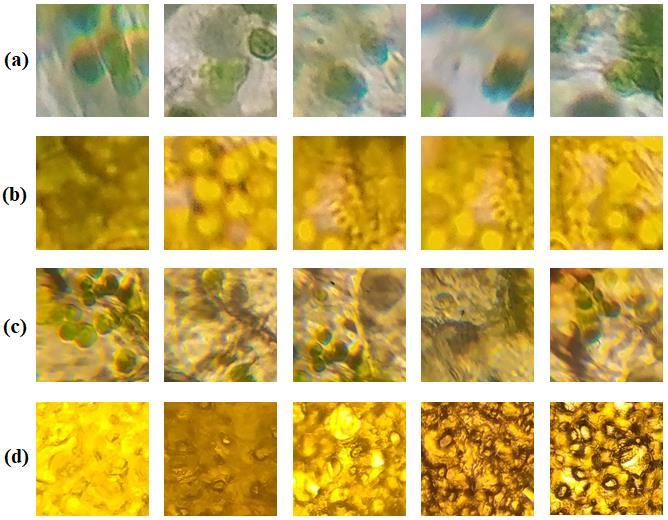
Figure 1: Sampledatasetimageobtainedaccordingto plantspecies(a)ficusbenjamin,(b)spathiphyllum,(c) ficuselastica,(d)anthurium
Theobtainedimagesweredividedintotrainingandtestdata in the numbers specified in Table 1 to be used with KNN, SVM,LogisticRegression,DecisionTreesandRandomForest machinelearningmethods.
Table 1: Numbersoftrainingandtestimagesseparated byplantspecies
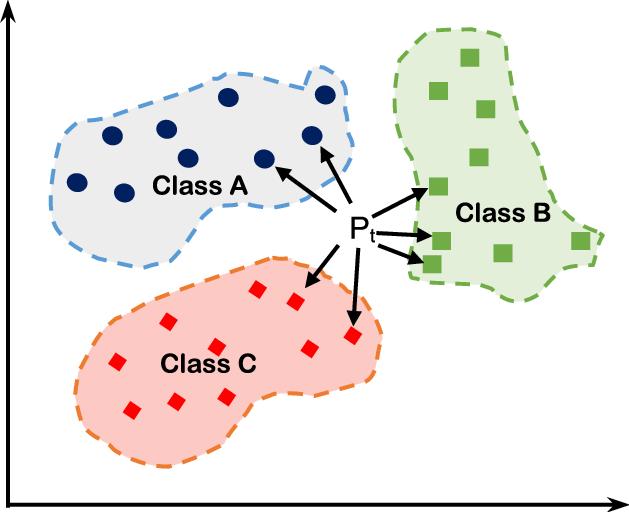
data,methodssuchasManhattanorEuclideanarepreferred [14].Accordingtothebasicoperation,inordertoclassifyan object, its nearest neighbors are examined. Among these neighbors, it is inferred that the neighbors with the most commonfeaturesandtheexaminedobjectareinthesame class.Thenumberofneighbors(k)isdeterminedbytheuser. Theuserevaluatestheperformanceofthemodelbytrying differentnumbersofneighbors.Ittriestodeterminethemost suitablenumberofneighborsbymeasuringtheaccuracyrate ofthemodel.Thenumberofneighborsisusuallydetermined as an odd number, so that there is no equality between neighbors in the classification process [15]. The general structureoftheKNNalgorithmisgiveninFigure2.
In areas such as image classification, machine learning methods can quickly process large data sets and classify themsuccessfully[2].Well-trainedmodelstendtoprovide more accurate results than humans and can be used in a varietyofindustries,aswellasofferingflexibilitywiththeir scalabilityandabilitytoadapttodifferenttypesofdata[13]. Since they can be continuously improved, they increase classification accuracy and improve the performance of systems.
KNNalgorithmisawidelyusedmachinelearningmethodin theliterature.Inthismethod,afeatureisselectedandthenit classifiesthesampleswithinthekneighborsclosesttothis feature. Various metrics are used in proximity calculation. Whencalculatingthedistancebetweennewdataandexisting
Vladimir N. Vapnik and Alexey Y. Chervonenkis began working in the fields of learning theory and statistical learningintheSovietUnionintheearly1960s.Duringthis period,theylaidthefoundationsofSVMbyconcentratingon basic concepts. Vapnik's book "The Nature of Statistical Learning Theory", published in 1995, is an important resourcecoveringthemodernformulationandfoundations ofSVM[17].In1995,VapnikandCortespublishedapaper called"Support-VectorNetworks"[18].Thisarticledescribed the modern formulation of SVM, demonstrating its effectiveness in classification problems and increasing the popularityofSVM.Inthisway,SVMhasbecomeanimportant machine learning algorithm over time. SVM is one of the developed machine learning algorithms and also provides solutions to classification problems. SVM is a machine learning algorithm widely used in the field of pattern recognitionandclassificationproblems[19][20].Thegeneral structureoftheSVMalgorithmisgiveninFigure3.
International Research Journal of Engineering and Technology (IRJET) e-ISSN: 2395-0056
Volume: 11 Issue: 05 | May 2024 www.irjet.net p-ISSN: 2395-0072
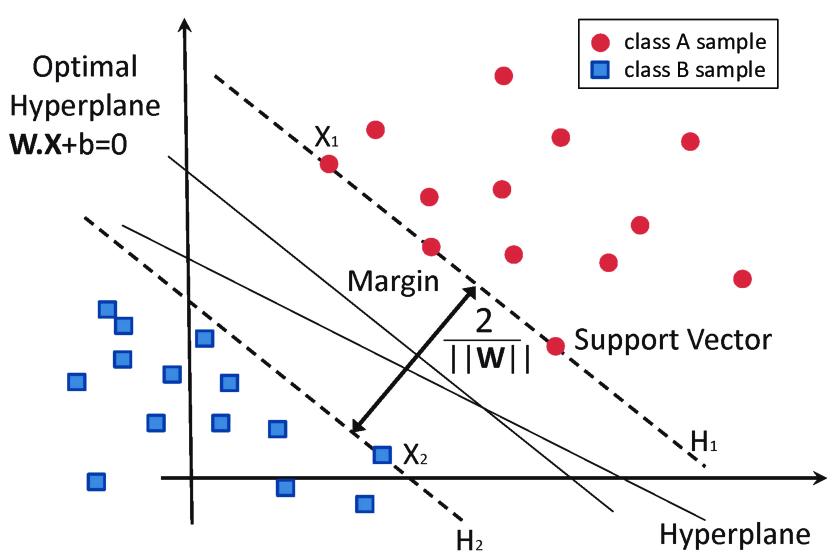
ThebasicprincipleofSVMistodeterminethesolutionthat canbestlinearlyseparate the data [22].Non-lineardata is analyzed by moving it to another dimension using the transformation technique. The number of samples used in SVMsisnegligible.SVMcanclassifypreviouslyundetermined dataduringlearning.Thisispossiblewithitsgeneralization abilityandisthemostimportantfeaturethatdistinguishesit fromothermethods.Today,SVMplaysanimportantrolein data mining, gene analysis, and pattern recognition and classification problems, enabling accurate results to be obtained[23].
Logistic Regression is an algorithm used to determine the effect of independent variables on a set of dependent variables and to make predictions and classifications accordingly[24].Dependentvariablescanstructurallytake continuousorcategoricalvalues.Inclassificationproblems, the dependent variable is generally used categorically and with two levels. Logistic regression analysis is preferred whenthedependentvariableistwo-level[25].
Inaddition,themodeltobecreatedwiththismethodaimsto realizetherelationshipbetweendependentandindependent variables with the least possible variables and the best fit [26].
3.2.4.
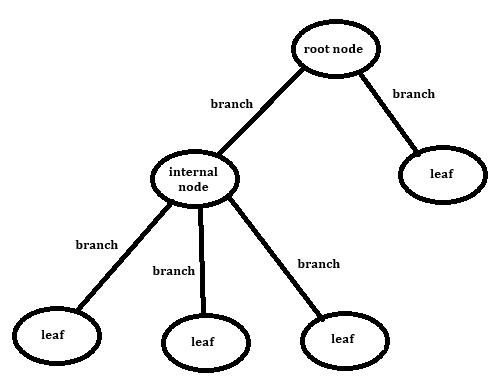
Decisiontreesareamachinelearningmethodoftenusedto solveclassificationandregressionproblems.Decisiontrees usethefeaturesinthedatasettocreatedecisionrulesand classify or evaluate data points using this rule set [27]. Decisiontreesareusedinmanyindustriesandapplications, especiallyinclassificationandpredictionproblems.Thebasic structure of the decision tree consists of three main components: nodes, branches and leaves. Each feature is expressedbyanode,andthepartsbetweentherootandthe leavesformthebranches[28].Anexampleofadecisiontree isgiveninFigure4
Randomforestalgorithmisoneoftheprominentonesamong successfulclassificationmethods[29].Randomforestisan ensemblelearningmethodfrequentlyusedforclassification and regression problems. In this method, more than one model is brought together to create a more powerful and generalizable model. The random forest algorithm first analyzes the classes of training data and then makes a conclusionbasedondecisiontreestopredicttheclassesof test data [30]. Additionally, when splitting at each node, randomlyselectedfeaturesareusedtocreatethedecision tree. Randomly selecting these features ensures that each tree is different from each other. The main principle of Random Forest is to make a stronger prediction by combiningthepredictionsofeachtree,usingtheabilityof each decision tree to make predictions alone [31]. For classificationproblems,thesepredictionsareoftencombined byavotingmethod:eachtreemakesapredictionforaclass and determines the class with the most votes as the final prediction.
AlthoughtheRandomForestmethodisspecifictodecision trees,itisagenerallyvalidapproachforallclassifiers,and beingfastandbeingabletohandlemanyvariablesasinputis animportantadvantage[32].
Classification results of a total of 3835 plant cell images belongingto4plantclasseswereobtainedusingKNN,SVM, Logistic Regression, Decision Trees and Random Forest machine learning methods. These results were analyzed supportedbyperformancetablesandconfusionmatrices.In the performance tables, the model's accuracy, precision, recall, f1-score, support, macro average and weighted averageresultswerecalculated.Theconfusionmatrixisa table in which the results obtained with the developed
International Research Journal of Engineering and Technology (IRJET) e-ISSN: 2395-0056
Volume: 11 Issue: 05 | May 2024 www.irjet.net p-ISSN: 2395-0072
classification model are compared numerically with the actual values. All results in the performance table can be calculatedusingthedatainthismatrix.
Accordingtotheexperimentalresultsobtained,anaccuracy valueof86.05%wasobtainedwiththeKNNmethod.Inthe KNNalgorithm,thenumberofneighborsthatgavethemost successfulresultswasdeterminedtobe3bytrialanderror method. Classification performance results are given in Table2andtheconfusionmatrixobtainedaccordingtothe predictionresultsisgiveninFigure5.
Table 2: PerformanceresultsobtainedwiththeKNN method
Table 3: PerformanceresultsobtainedwiththeSVM method
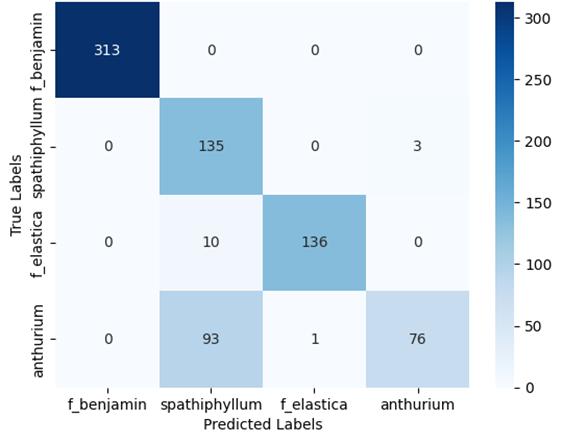
Figure 5: Confusionmatrixobtainedasaresultof classificationwiththeKNNmethod
Accordingtotheexperimentalresultsobtained,anaccuracy value of 83.70% was obtained with the SVM method. ClassificationperformanceresultsaregiveninTable3and theconfusion matrixobtained accordingtotheprediction resultsisgiveninFigure6.
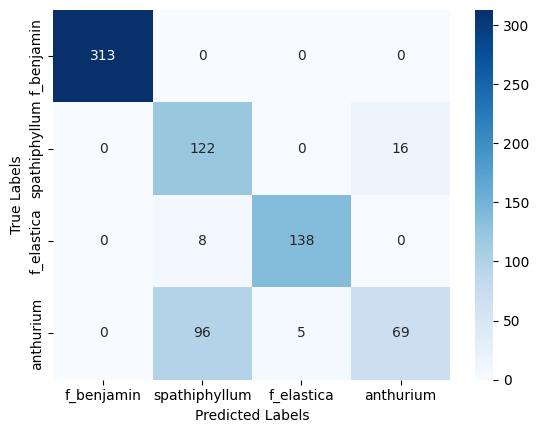
Figure 6: Confusionmatrixobtainedasaresultof classificationwiththeSVMmethod
Accordingtotheexperimentalresultsobtained,anaccuracy valueof77.84%wasobtainedwiththelogistic regression method. Classification performance results are given in Table4andtheconfusionmatrixobtainedaccordingtothe predictionresultsisgiveninFigure7.
Table 4: Performanceresultsobtainedbylogistic regressionmethod Plant Type
International Research Journal of Engineering and Technology (IRJET) e-ISSN: 2395-0056
Volume: 11 Issue: 05 | May 2024 www.irjet.net p-ISSN: 2395-0072
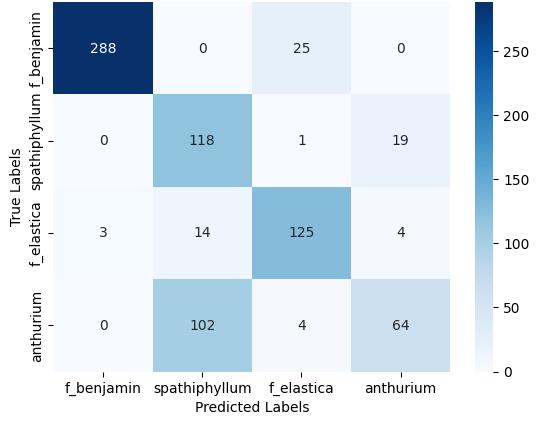
Figure 7: Confusionmatrixobtainedasaresultof classificationwiththelogisticregressionmethod
Accordingtotheexperimentalresultsobtained,anaccuracy value of 80.83% was obtained with the decision trees method. Classification performance results are given in Table5andtheconfusionmatrixobtainedaccordingtothe predictionresultsisgiveninFigure8.
Table 5: Performanceresultsobtainedwiththedecision treesmethod
Plant
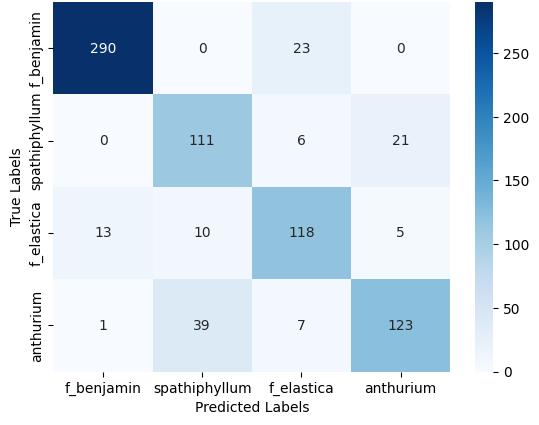
Figure 8: Confusionmatrixobtainedasaresultof classificationwiththedecisiontreesmethod
Accordingtotheexperimentalresultsobtained,anaccuracy value of 96.74% was obtained with the random forest method. Classification performance results are given in Table6,andtheconfusionmatrixobtainedaccordingtothe predictionresultsisgiveninFigure9.
Table 6: Performanceresultsobtainedwiththerandom forestmethod
International Research Journal of Engineering and
Volume: 11 Issue: 05 | May 2024 www.irjet.net p-ISSN: 2395-0072
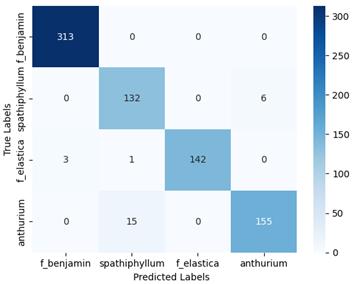
Figure 9: Confusionmatrixobtainedasaresultof classificationwiththerandomforestmethod
In addition, the success accuracy rates of the machine learning methods considered in the study in classifying 4 different microscopic cell images were compared and are giveninTable7.
Table 7: Classificationaccuracyratesofeachmachine learning
%86,05
%83,70
%77,84
%80,83
RandomForest
4.
%96,74
Inthisstudy,microscopiccellimagesoffourdifferentplant species (ficus benjamin, spathiphyllum, ficus elastica, and anthurium)wereusedtoclassifythespeciesofplantsusing machine learning methods such as KNN, SVM, Logistic Regression, Decision Trees andRandomForest. When the experimental results obtained are examined, the highest success rate was achieved with Random Forest, with a success rate of 96.74%, and it can be said that it is very successful for classification processes with artificial intelligence.Theresultsobtainedfromothermethodsarein therangeof77.84%-86.05%successaccuracy.Althoughthe resultsobtainedfromthesemethodsarelowcomparedto the Random Forest method, they can generally be interpreted as meaningful classification rates. When the results were examined, it was seen that machine learning
methods could be used effectively in plant classification based on microscopic cell images of the plant species. In particular, it has been observed that the Random Forest methodprovideshighaccuracyandimprovesclassification performance.
Asaresult,itemphasizesthatmachinelearningmethodscan play an important role in plant biology research and the necessityofadoptinganewperspectiveinthefieldofplant species classification. In addition, the success of machine learninginclassifyingplantcellimagesalsocontributesto thedevelopmentandincreaseduseofartificialintelligence. Researchers can achieve successful results by classifying with artificial intelligence. These studies can guide future researchers and effective classification models can be developed using larger data sets. Additionally, general comparative analyzes can be made using more artificial intelligencemethods.
[1] LeCun, Y., Bottou, L., Bengio, Y., & Haffner, P. (1998). Gradient-based learning applied to document recognition. Proceedings of the IEEE, 86(11), 22782324,doi:10.1109/5.726791
[2] Krizhevsky, A., Sutskever, I., & Hinton, G. E. (2012). Imagenetclassificationwithdeepconvolutionalneural networks. Advances in neural information processing systems,25.doi:10.1145/3065386
[3] Simonyan, K., & Zisserman, A. (2014). Very deep convolutional networks for large-scale image recognition. arXiv preprint arXiv:1409.1556, doi:10.48550/arXiv.1409.1556
[4] He,K.,Zhang,X.,Ren,S.,&Sun,J.(2016).Deepresidual learning for image recognition. In Proceedings of the IEEE conference on computer vision and pattern recognition(pp.770-778).doi:10.1109/CVPR.2016.90
[5] Nichols,J.A.,HerbertChan,H.W.,&Baker,M.A.(2019). Machinelearning:applicationsofartificialintelligence toimaginganddiagnosis.Biophysicalreviews,11,111118,doi:10.1007/s12551-018-0449-9
[6] Pound,M.P.;Atkinson,J.A.;Townsend,A.J;Wilson,M. H.;Griffiths,M.;Jackson,A.S.;Bulat,A.;Tzimiropoulos, G.;Wells,D.M.;Murchie,E.H.;Tony,P.P.;Andrew,P.F. (2017).Deepmachinelearningprovidesstate-of-the-art performance in image-based plant phenotyping. Gigascience, 6 (10), gix083. doi:10.1093/gigascience/gix083
[7] Wu,S.G.,Bao,F.S.,Xu,E.Y.,Wang,Y.X.,Chang,Y.F.,& Xiang, Q. L. (2007, December). A leaf recognition algorithm for plant classification using probabilistic neuralnetwork.In2007IEEEinternationalsymposium
International Research Journal of Engineering and Technology (IRJET) e-ISSN: 2395-0056
[8] Doğan, F., & Türkoğlu, İ. (2018). Derin öğrenme algoritmalarının yaprak sınıflandırma başarımlarının karşılaştırılması. Sakarya University Journal of ComputerandInformationSciences,1(1),10-21.
[9] Yaman, O., & Tuncer, T. (2022). Bitkilerdeki yaprak hastalığı tespiti için derin özellik çıkarma ve makine öğrenmesi yöntemi. Fırat Üniversitesi Mühendislik Bilimleri Dergisi, 34(1), 123-132, doi:10.35234/fumbd.982348
[10] Shruthi, U., Nagaveni, V., & Raghavendra, B. K. (2019, March). A review on machine learning classification techniques for plant disease detection. In 2019 5th International conference on advanced computing & communicationsystems(ICACCS)(pp.281-284).IEEE, doi:10.1109/ICACCS.2019.8728415
[11] Sabancı, K., Ünlerşen, M. F., & Aydın, C. (2016). Bitki yapraklarının veri madenciliği algoritmaları ile sınıflandırılması.ProceedingsBook,525.
[12] Priya,C.A.,Balasaravanan,T.,&Thanamani,A.S.(2012, March).Anefficientleafrecognitionalgorithmforplant classification using support vector machine. In International conference on pattern recognition, informaticsandmedicalengineering(PRIME-2012)(pp. 428-432).IEEE,doi:10.1109/ICPRIME.2012.6208384
[13] Deng,J.,Dong,W.,Socher,R.,Li,L.J.,Li,K.,&Fei-Fei,L. (2009,June).Imagenet:Alarge-scalehierarchicalimage database.In2009IEEEconferenceoncomputervision and pattern recognition (pp. 248-255). Ieee, doi:10.1109/CVPR.2009.5206848
[14] Kılınç,D.,Borandağ,E.,Yücalar,F.,Tunali,V.,Şimşek,M., &Özçift,A.(2016).KNNalgoritmasıverdiliilemetin madenciliği kullanılarak bilimsel makale tasnifi. Marmara Fen Bilimleri Dergisi, 28(3), 89-94, doi:10.7240/mufbed.69674
[15] Cover, T., & Hart, P. (1967). Nearest neighbor pattern classification.IEEEtransactionsoninformationtheory, 13(1),21-27,doi:10.1109/TIT.1967.1053964
[16] Atallah,D.M.,Badawy,M.,El-Sayed,A.,&Ghoneim,M.A. (2019). Predicting kidney transplantation outcome based on hybrid feature selection and KNN classifier. Multimedia Tools and Applications, 78, 20383-20407, doi:/10.1007/s11042-019-7370-5
[17] Vapnik, V. (2013). The nature of statistical learning theory. Springer science & business media. doi:10.1007/978-1-4757-2440-0
[18] Cortes,C.,&Vapnik,V.(1995).Support-vectornetworks. Machine learning, 20, 273-297. doi:10.1007/BF00994018
[19] Ayhan, S. ve Erdoğmuş, Ş. (2014). Destek vektör makineleriylesınıflandırmaproblemlerininçözümüiçin çekirdekfonksiyonuseçimi.İibfDergisi,9(1),175-198.
[20] Sengur,A.(2019).Ulticlassleast-squaressupportvector machines for analog modulation classification, expert systems with applications, 36(3), 6681-6685, doi:10.1016/j.eswa.2008.08.066
[21] García-Gonzalo,E.,Fernández-Muñiz,Z.,GarciaNieto,P. J., Bernardo Sánchez, A., & Menéndez Fernández, M. (2016).Hard-rockstabilityanalysisforspandesignin entry-type excavations with learning classifiers. Materials,9(7),531,doi:10.3390/ma9070531
[22] Sezer, O. G., Erçil, A., & Keskinoz, M. (2005, May). Independent component based 3D object recognition using support vector machines. In Proceedings of the IEEE 13th Signal Processing and Communications ApplicationsConference,2005.(pp.99-102).IEEE.doi: 10.1109/SIU.2005.1567629
[23] Kecman, V. (2001). Learning and soft computing: support vector machines, neural networks, and fuzzy logicmodels.MITpress.
[24] Cox, D. R. (1958). The regression analysis of binary sequences.JournaloftheRoyalStatisticalSocietySeries B: Statistical Methodology, 20(2), 215-232, doi:10.1111/j.2517-6161.1958.tb00292.x
[25] Gujarati, D. N., & Porter, D. C. (2009). Basic econometrics.McGraw-hill.
[26] Atasoy, D. (2001). Lojistik regresyon analizinin incelenmesi ve bir uygulaması. Unpublished master's thesis, Sivas Cumhuriyet University, Institute Social Science,Sivas.
[27] Quinlan, J. R. (1986). Induction of decision trees. Machinelearning,1,81-106.doi:10.1007/BF0011625
[28] Kavzoğlu, T., & Çölkesen, İ. (2010). Karar ağaçları ile uydu görüntülerinin sınıflandırılması. Harita TeknolojileriElektronikDergisi,2(1),36-45.
[29] Akar, Ö., & Güngör, O. (2012) Classification of multispectral images using random forest algorithm. JournalofGeodesyandGeoinformation,(106),139-146, doi:10.9733/jgg.241212.1t
[30] Erdem,F.,Derinpınar,M.A.,Nasirzadehdizaji,R.,Selen, O., Şeker, D. Z., & Bayram, B. (2018). Rastgele orman yöntemi kullanılarak kıyı çizgisi çıkarımı İstanbul
Volume: 11 Issue: 05 | May 2024 www.irjet.net p-ISSN: 2395-0072 © 2024, IRJET | Impact Factor value: 8.226 | ISO 9001:2008 Certified Journal | Page860 on signal processing and information technology (pp. 11-16).IEEE,doi:10.1109/ISSPIT.2007.4458016
International Research Journal of Engineering and Technology (IRJET) e-ISSN: 2395-0056
Volume: 11 Issue: 05 | May 2024 www.irjet.net p-ISSN: 2395-0072
örneği. Geomatik, 3(2), 100-107, doi:10.29128/geomatik.362179
[31] Breiman,L.(2001).Randomforests.Machinelearning, 45(1),5-32 doi:10.1023/A:1010933404324
[32] Ekelik,H.,&Altaş,D.(2019).Dijitalreklamverilerinden yararlanarak potansiyel konut alıcılarının rastgele ormanyöntemiylesınıflandırılması.JournalOfResearch İnEconomics,3(1),28-45.
© 2024, IRJET | Impact Factor value: 8.226 | ISO 9001:2008 Certified Journal | Page861