
Volume: 11 Issue: 05 | May 2024 www.irjet.net p-ISSN: 2395-0072
Volume: 11 Issue: 05 | May 2024 www.irjet.net p-ISSN: 2395-0072
Megha Nayak1 , Prof. Satendra Sonare2
1Reseacrh Scholar, Department of CSE, Gyan Ganga Institute of Technology and Sciences, Jabalpur, M.P.
2Professor, Departmet of CSE, Gyan Ganga Institute of Technology and Sciences, Jabalpur, M.P.
Abstract –
Recent developments in e-commerce and telecommunicationshaveincreasedtheuseofcreditcards forbothonlineandeverydaytransactions.However,casesof credit card fraud are on the rise, causing financial institutions to incur huge losses every year. Establishing effectivefrauddetectionsystemsiscriticaltoreducingthese losses, but is difficult due to the instability of most credit card information. Additionally, credit card fraud using traditionalmachinelearningalgorithmsisineffectiveastheir structure consists of a static map from input vectors to vectors. For this reason, customers who use credit cards cannot transfer their purchases. A clustering-based transformation using a neural network as the learner is adopted.Theperformanceoftheplanhasbeenconfirmed usingevidenceavailableinthecreditcardworld.
Keywords: Detection of fraud; tracking of fraud; Fraud transaction understanding, Neural Network, Adaptive Learning.
Electroniccommerceingeneralhasincreasedovertimedue tothepopularityofe-commercesuchasonlinestoressuch asAmazon,eBayandAlibaba.Credit/debitcardsarewidely usedinelectronictransactions.Recently,card-not-present transactions[1] have become more common in the credit cardindustry,ultimatelythroughonlinepaymentsystems such as paypal and alipay. The display value of global ecommerceisexpectedtoreach$24trillionby2019[2].But atthesametime,fraudoccurs,whichaffectstheeconomy.A studyofmorethan160companiesfoundthatthenumberof online frauds each year is 12 times greater than offline frauds[4].Sincethereisnoneedforaphysicalcardintheecommerceenvironmentandalmostalloftheinformationon the card is sufficient for transactions, fraudsters need the informationinthislettertogainpower.Forexample,after scammersobtaincardaccountnumbersandpasswordsfrom honest cardholders, they use them to purchase certain products.Fraudstersoftenobtaincardinformationthrough a variety of means: hijacking attempts to send letters containing the latest releases, copy-pasting of card informationbycopiers,phishing(clonewebsites),orfrom unknowncreditcardcompanies.5].Duetothecomplexityof theenvironmentandpopulationbase,itisinevitablethatall legitimate card holders will be robbed. The best way to
identify this type of strain is to analyze each account's payment pattern and identify errors associated with "normal"transactiondesign[6].Unauthorizedtransaction by someone other than the owner of the credit card or account.Astolen,lostorfraudulentcreditcardmayresultin cancellation. As online shopping has increased, cardless extortion or the use of credit cards in e-commerce has become more common. The spread of frauds such as ccf resultingfromtheproliferationofelectronicbankingand,in some cases, online payments leads to losses of billions of dollarseachyear.Intheeraofcomputerprogramming,ccf detectionhasbecomeoneofthemostimportantgoals.Asa businessowner,itdoesn'tmatteriflong-termtransportation is moving towards a money-free culture. As a result, traditional paymentstrategiesmaynotbeavailableinthe future and may not be suitable for business continuity. Customersdonotneedtocomeintothestorewithcashin their pockets. They now charge bills and credit cards. Therefore,companiesneedtoadapttheirenvironmentsto enablethemtoacceptavarietyofpayments.Thissituationis expected to continue for a long time [7]. CCF was the top source of theft recorded this year, after government documents and financial support [9]. In 2020, 365,597 attemptsweremadetospendmoneyusinganunusedcredit card[10].Thenumberoftheft-relatedconductcomplaints increased113%from2019to2020;thisincludesareported 44.6% increase in credit card identity theft [11]. Payment cardtheftcosttheglobaleconomy$24.26billionlastyear. Elaborate credit card skimming incidents accounted for 38.6% of incidents in 2018, making these states the least protectedfromcreditcardtheft.Therefore,examiningthe useofmoneyshouldbethepriorityoftheuseofinheritance. Theprogrammustidentifyfakeandnon-fakeswapsanduse thisinformationtodecidewhetherafutureswapisfakeor not. This problem includes major problems such as the operating speed of the system, attracting attention, and prioritization. Machine learning is a field of visual science thatusescomputerstomakepredictionsbasedonearlydata patterns.Machinelearningmodelshavebeenusedinmany studies to solve many problems. Deep learning (dl) applications include computer network organizations, anomaly detection, financial management, protection, portable cellular systems, medical ransomware discovery, recovery and malware discovery, video surveillance discovery,zonetracking,androidmalwarediscovery,home robotization and heart disease prediction. . For data classification, inverse vector machines (svm) can be a trainingmethod.Ithasbeenusedinmanyfields,including International Research Journal of Engineering and Technology (IRJET) e-ISSN: 2395-0056
International Research Journal of Engineering and Technology (IRJET) e-ISSN: 2395-0056
Volume: 11 Issue: 05 | May 2024 www.irjet.net p-ISSN: 2395-0072
imagerecognition[12],creditscoring[9],andpublicsafety [13]. Svm can solve two problems, both direct and unclassified,andfindsabroadplanetoseparateinputdata into support vectors, which is important for other distributions.Neuralsystemswerethefirsttechniqueused todetectcreditcardrobberiesinthepast[8].Somldivision (dl)nowfocusesondlmethod.Inthelongrun,deeplearning methodshaveattractedwidespreadattentionduetotheir high efficiency and effectiveness in different applications suchascomputervision,generallanguageprocessing,and speech. However, as some have thought, the use of deep tissueinidentifyingccfshasbeenexplored[7].Itusesalotof deeplearningtoidentifyccfs.Anyway,inthiscaseweselect the neural network and its layers to determine the initial ransomasavalidexchangeofsuitabledatasets.Thereare someoperationsintheconfigurationfilethatarelabeledas errorsandaresaidtobefaulty.
We propose a neural network display with additional criteria to extract and classify credit card transactions as fraudulentorfake.Usethe elementfindertofindthebest features in arrayed data. Some deep learning models are thenusedtoidentifyccfs.
1.1 Fraud Detection Approaches Currently,therearetwo kindsofapproachesoffrauddetection:(1)misusedetection and(2)anomalydetection[14].Figure1.1belowshowsthe typesofFrauddetectionmethods.
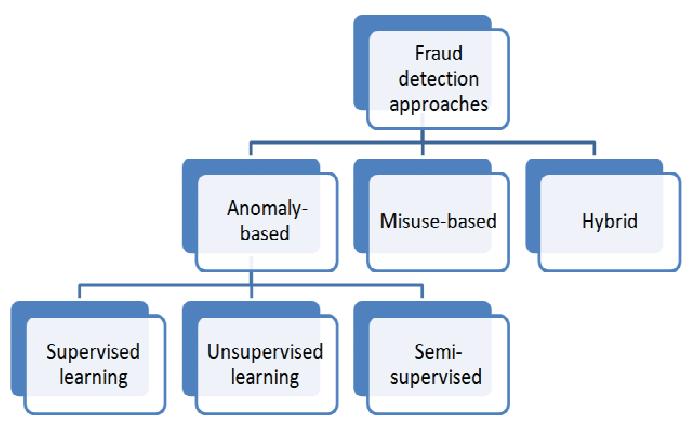
The first shouldcollecta largedatabaseofincorrectsigns andusethisasareferencetodistinguishexisting(mis)use. Thisapproachoftenrequirespriormalwareknowledgeto obtaindifferentransomwaredesigns.Differenttechniques such as neural systems, selection trees, iterative computations,andinversevectormachineshavebeenused forlocalizingcreditcardskimming[15].Buttheyhavetwo disadvantages:first,itismoredifficulttogetallthecheats; secondly,allthecheatsarehardertoget.Inaddition,itisnot possibletodistinguishpowerusagethatwasnotdetectedin previous sources today [16]. The difference is that the previously mentioned profile creates different exchange patternsbasedontransactionevidence,andthelatterflags exchanges that differ from the “average” of “normal” historicalprofilesaspotentialfraud.Mostirregularity-based
creditcardskimmingdetectiontechniques[17]attemptto eliminateactualrules-basedbehaviorpatternsandcalculate the similarity of these behavior patterns with future transactions.Themostimportantthingtoconsiderthisway isthatpeoplehavedifferentpersonalities,specificsalaries, specificmotivations,etc.Theywillhavedifferentpersonal shopping depending on their preferences. Adams et al. In [18] there is a reliable design of changing behavior from weektoweekandmonthtomonth.Acompletedescription ofthedesignoftimevariationispresentedin[18].Aproofof blackmailbasedonthecovermarkovproof(thewell)was proposedbysrivastavaetal.[13]Teamworkincreditcard payment is well modeled. Amlan et al. In this policy, the cardholder's behavior changes confirmed to have been triggered by the integration and the integration time are usedtodeterminewhatthefuturechangeofthecreditcard will befortheactual cardholder'spasttransactions ofthe transaction. The association of certified racketeering analysts (acfe) defines blackmail as “the deception or copyingofaproductorpersonknowingthatitwillprovide an illegal benefit.” Money laundering accounts for approximately10percentofwhite-collarcrimes,according totheacfe.Whenmisaccountingoccurs,differencesmustbe made to ensure agreement. Considering that the effect of moneycausesseriousharmtothinkingpeople,manystudies have been conducted in the field using learning strategies such as ann [19], dt [20], svm [21] and content mining. Meanwhile, other extortion issues such as credit card blackmail [22], insider trading, and extortion prevention havealsobeenstudied.Giventheuniquecharacteristicsof each type of financial withdrawal, specific strategies have beendeveloped.
Thedataminingprocessbreaksdownintosomesteps.First, organizations collect data and load it into their data warehouses.Next,theystoreandmanagethedata.Business analysts, management teams and information technology professionalsaccessthedataanddeterminehowtheywant to organize it. Then, application software sorts the data basedontheuser'sresults,andfinally,theenduserpresents the data in the form of graph. The Data mining process is showninfigure1.2.
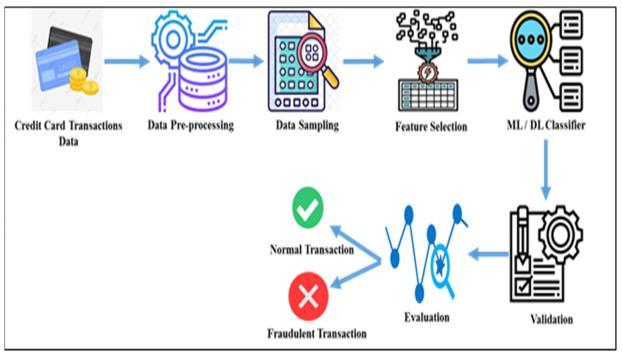
Figure1.2:DataMiningProcessforfrauddetection.
International Research Journal of Engineering and Technology (IRJET) e-ISSN: 2395-0056
Volume: 11 Issue: 05 | May 2024 www.irjet.net p-ISSN: 2395-0072
Classificationcanbeaminingtechniquethatplacesitemsin a collection into classes or groups. The purpose of classificationistopredictthetargetprocessforeachcasein thedata.Forexample,categoricalguidelinescanbeusedto classify potential candidates as low credit risk, medium credit risk, or high credit risk. The classification process beginswithprovidinginformationaboutthecurriculum.For example,thedistributionshowsthatloandurationcanbe predicted based on analysis of many top candidates over time. When linked to a credit report, this information can track employment history, home ownership or rent, time spentathome,number and typeofjobs,and more.Credit evaluationwillbeobjective,otherqualitywillbeexpertand each customer profile will constitute a case. The classificationisdiscreteandnoorderisextracted.Floatswill always indicate numerical targets rather than categorical targets.Presciently,theobjectivefunctionofnumberisnot categoricalcountingbutrepetitivecounting.
Forward-looking analytics involves a variety of real-time techniques, such as modeling, machine learning, and data mining that analyze current and actual facts to create predictions about the future or other conditions that are uncertain. Prescient patterns in business create abuses presentinevidenceandareusefulindiscerningthedangers of time. The model captures the connection between differentvariablestoassesstheriskorpotentialassociated withaparticularprocesstoguidetheselectionofcandidates forchange.Oneoftheadvantagesofthisprofessionalsystem is that the forecast is given to everyone (customers, employees,medicalfacilities,vehicles,equipment,machines orotherorganizations)alongwithforecastpoints(needs)to determine,clarifyorinfluencethesituation.Hetookpartin manymissionsrelatedtotheorganizationofpeople,suchas testimony,economicevaluation,torture,production,health careandgovernmentaffairs,includinglaw.Evidenceofmy informationisstoredinthearchive.Thedatabasecanstore alllocationinformation,customeridentificationinformation, click history information and transaction information. Althoughthedatadistributionareaisverylarge,thecapacity ofthefeaturecanensurethatmydataisgood.
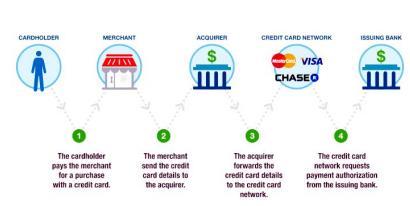
Someresearchhasbeendoneinthefieldofccfspace.This chapterpresentsaspecificresearchstrategyregardingthe rotation of the ccf program. We also clearly show the investigation of blackmail sites in the context of controversialtopics.Therearemanystrategiesfordifferent creditcards.Therefore,groupssuchasdl,ml,ccfdiscovery, clothing and emphasis localization, and customer identificationmaybethemostcommonmethodstoexamine themostimportantworkinthisfield[23],[24].Figure2.1 showshowacreditcardauthorizationsystemcanbeused
for credit card verification. There are two authentication methods:passwordandbiometricauthentication.Biometricbasedauthenticationcanbe dividedintothreecategories: physiologicalandbehavioralauthenticationandfederated authentication[25],[26].
There are many branches of machine learning, each performingadifferenttypeoflearning.However,machine learninghasitsownuniquesystem.Themlmethodprovides a ccf plan like arbitrary forest area (rf). The collection of selectedtreesisarbitrary forestry[24]. Mostanalystsuse radiofrequency.Wecanuse(rf)inadditiontotheresearch setup to combine the display. This concept is called apat [23]. Analysts can use specialized machine learning techniques such as control learning and unsupervised techniques.Mlcalculationssuchaslr,ann,dt,svmandnbare oftenusedforccfdetermination.Analystscancombinethese methodswithwrittenmethodstoproducerobustfindings [26].Theconnectionbetweenmanyneuronsandthecentral nervous system is called nervous tissue. The feedforward perceptronmultilayerconsistsofseverallayers:anoutput layer, an output layer, and one or more layers. The main processhasaccesspointstorepresentthesearch.Theaccess processiscopiedatwhatweightandchangedconsidering thecoexistenceofeachhublayer.Meanwhile,connections worktoproducetheresultsofeachneuron,whicharethen passedontothenextlayer.Finally,therevenuelayergives the algorithm's answer. The main system used weights liberally and at one point used a system designed to limit errors.Alltheseweightsarebalancedbyspecialcalculations suchasbackexpansion[27],[28].Therealjustificationfor theunityofprocessesiscalledbayesianbelieforganization. The liberal theory in naive bayes is that it is designed to relaxandletthingshappen.Whentheconditionsofevents emergeintheformofcurvesofspaces,changesarisefrom spaces. Meetings are associated with each connected hub, causingthevalueofthenodetovaryaccordingtothevalue oftheparent[29],[30].Theworkingprincipleofthebinary branching system (bbn) is as follows: finding the
International Research Journal of Engineering and Technology (IRJET) e-ISSN: 2395-0056
Volume: 11 Issue: 05 | May 2024 www.irjet.net p-ISSN: 2395-0072
developmentofthissystemisthefirststep:itisrequested byhumanexpertsandspecificcalculationsaremadeusing thedata.Oncethistopologyorganizationbegins,clearlyfit the competition to naive bayes using the data that can be collected to confirm significant and meaningful effects. In bbn, each hub must be independent from its children, i.e., Theparentofeachhubisinthediagram[31].Thisisoften considered a markov case. Direct classification shows potential support vector machines (svms) and problem duplication.Whenconvertedtosvmcalculation,wefound thefocusclosesttoastraightlineinbothgroups[32].These fociarecalledrotationvectors.Thisarticle focusesonthe integration of unsupervised techniques with directed techniquesforCCFlocalization.
Dlcomputationisimportant,includingconvolutionalneural network(cnn)computation,andfurthercomputationsare deep belief (dbns) and deep autoencoders; there are different technical methods, learning methods and classificationsystems[33].Thepurposeofdeeplearningis toconsiderartificialneuralsystems.Theproposedmethod respects the predictive neural system and is considered a backward representation [34]. The effectiveness of backcomputationisgreatly reduced,thusthedepthofthe brain is expanded, which can cause problems such as undershooting and shrinking of nearby targets. The longtermplanshouldbeseenasasuccess.Itisthoughtthatthey can significantly solve the problem of unplanned development[35],[36].Compiledbyshenzhenengineering co.,Ltd.Itisgenerallyconsideredthemainstoryofshenzhen engineeringco.,Ltd.Normalcountmlsuchassvm,dtandlr are expanded into the ccf field. These calculations are not specifictobigdata.In1dcnn,somechannelsmovedinthe testgroupprofileinsteadofmovingtotherightasin2dcnn [35],[36].Raghavandescribesautoencodersasactualneural tissue. An autoencoder can encode data the same way it decodes the data. In this concept, autoencoder is recommendedtoavoidabnormalanalysis.Accordingtothe establishedline,crimesarereportedandclassifiedas“fraud” or “non-fraud”, indicating that the framework is not yet ready and better criminalization is needed [ 37 ], [ 38 ]. However,valuesslightlyabovetheupperlimitorthreshold are considered characteristic. This concept is also used in [30], an autoencoder-based nonlinear detection network. Machinelearningperformancecanbeausefulfeaturewhen two neural networks work together to improve their predictions.Gansoftenlearnstousezero-sumgamesystems withoutsupervision.Themaincategoryofdeeplearningis gan[39],andtherecognitionoftheprogressitcanmakein deep learning is the most promising. Gan has two main modes. In the preparation phase, all modules create a dl demo which can be a neural network. The two most commonly used strategies are generator (g) and discrimination (d). The generator's organization can generate recycled data, and the difference between the
recycleddataandthetargetdatadeterminesthemanager,so thattrueandfalseinformationiscreatedaroundthevirtual information. Finally, modeling can produce better data to prepare for data generation [40] , [41] . Vae is a variable autoencoderwithacontinuousplanningcycletoensurethat theareaitcovershassufficientresourcestohelpusgenerate new data. Vae is created by increasing the diversity dependingonthepositionoftheautoencoder.Vggandgan aresurprisinglycomparable.Again,theaimistomodifyand integrate traffic data to create a virtual data close to the target[40].Ingeneral,thenumberoftestsisproportionalto thenumberofinfections.Ifeverythingchecksout,thework willbeperfect.Soanalystsalwaysusethebraintosmooth outthebrutalityandfine-tuningofthetransmission.Shortterm(lstm)isa recurrent neural array(rnn) designedfor useindlmodels[42],[43].Lstmorganizationisconsistent withtheclassification,executionandgenerationofforecasts basedontimerecords.Themostcommonrnntypeislstm. Standard neural networks (nn) cannot store information from previous learning each time they are run. In very simple terms, rnn with memory can be a neural network [44], [45]. Rnns tend to have short memory due to the horizon angle issue. The neural spine spreads back as the starting angle reduces the weight loss of the replacement tissue.Inrnns,theinclinebackfiresasitmovesthespinein line, and then the weight increases slightly. These small changesareinfluencedbypreviousprocessesinplanning. They can no longer learn and mn lose the ability to recall informationbeforelong-termplanning,resultinginshorttermmemoryorganization[46].Andlstmcanhandlelarge datasets and is therefore suitable for image classification, naturallanguageprocessing(nlp)andrbm.Thewaythesedl strategies perform ccf classification is important for this decision [47]. Additionally, data preprocessing is an importantorganizationinmachinelearning.Theimpactof preliminaryinformationonworkdistributionduringcredit cardapprovalisanotherquestionthatneedstobeanswered. Thesefactors mustbecompleteandsufficienttocover all aspectsofthecompany'soperations.Forexample,velocity ratio and revenue ratio show the change in growth, while earnings per share show the efficiency of the business; subsequently, the phonetic aspects of mds are used in scientificresearch.Petrhajekfoundthatfakecompanieshad slightlymorenegativereviewsintheirannualreportsthan non-fakecompanies.Sofakecompaniesoftenusebadwords. Thenumberoffakecompaniesusedinpreviousstudieshas ranged from tens to thousands, and research methods in eachcountryhavedifferedslightly.
Technologicaldevelopmentssuchase-commerceandnew financialtechnologies(fintech)havebeguntoincreasethe numberofonlinecreditcardsdaybyday.Becauseofthis, credit card skimming cases have occurred, affecting card issuers, carriers, and banks. That's why it's important to createproductsthatguaranteethesecurityanddiscretionof
International Research Journal of Engineering and Technology (IRJET) e-ISSN: 2395-0056
Volume: 11 Issue: 05 | May 2024 www.irjet.net
creditcardtransactions.Inresearch[48],weimplementeda machine learning (ml)-based credit card skimming localization system using real-world suspicious data generatedbyeuropeancreditcardholders.Todemonstrate theshynessissue,weresamplethedatausingaminimally invasiveprocedure(fractionation).Thesystemisevaluated usingmachinelearningtechniques:inversevectormachine (svm), repeated counting (lr), random forest (rf), custom angle boosting (xgboost), tree selection (dt), and tree addition (and). These ml calculations are combined with various boosting (adaboost) programs to increase classification efficiency. Model sensitivity was evaluated usingprecision,censoring,precision,matthewscorrelation coefficient(mcc),andrangeofinflection(auc).Additionally, theproposedmethodwasappliedonthecontroversialcredit card ransomware before the results obtained in this research were allowed. Test results show that the use of adaboost has a positive impact on the success of the proposed strategy. Note that improved models are more efficientthanexistingmethods.
Recent developments in e-commerce and telecommunicationshaveresultedinthewidespreaduseof creditcardsbothonlineandinbusinessmodels.Despitethis, thefakecreditcardbusiness,forexample,isontheriseand causesfinancialinstitutionstoincurhugelosseseveryyear. Improvementsinsuccessfulextortionsitecalculationsare important to reduce these frustrations, but are difficult becausemostcreditcardinformationsetsareinconsistent. Additionally,usingmachinelearningmodelsforcreditcard skimmingdetectioniswastefulbecausetheirinputsinclude poor performance of the input vectors for the generated vectors. After that, they cannot adapt to the credit card customer culture. This paper [49] presents an effective method to detect credit card skimming using neural permutation addition classifiers and cross-information resampling strategies. The cluster group is used to use a short-term(lstm)neuralnetworkasthelearnerbaseinthe general boost algorithm (adaboost). During this period, a revolutionary change was achieved by using the minority building strategy and the updated neighbor (smote-enn) strategy. The feasibility of the proposed strategy is demonstratedbyusingdataexchangeinthefreeworld.The success of the scheme was evaluated by the following calculations: inverse vector machine (svm), multilayer perceptron (mlp), tree selection, traditional adaboost and lstm. Test results show that the classifier performs better when planning to use repeated data, and the lstm tool outperforms other calculations with sensitivity and specificityof0.996and0.998,respectively.>Developments such as e-commerce and fintech (financial technology) applications
have begun to increase the number of online credit card transactions day by day. As a result, credit card extortion incidents occurred that affected credit card companies, merchantsandbanks.Inthisway,itisimportanttocreate
p-ISSN: 2395-0072
contentthatguaranteesthesecurityandspeedofcreditcard transactions.Inthiswork[50],weusemachinelearning(ml) asacreditcardextortionsiteusesreal-worlddatagenerated byeuropeancreditcardholders.Toaccountforthehard-tosolve problem, we resample the data using the proposed minority(distortion)strategy.Thesystemisevaluatedusing machinelearningtechniques:inversevectormachine(svm), repeated counting (lr), arbitrary forest (rf), hyper angle boosting(xgboost),selectiontree(dt)andcontributiontree (et). These machine learning methods are combined with multiple boosting (adaboost) techniques to expand its classification. Model sensitivity, censoring, accuracy were evaluatedusingmatthewscorrelationcoefficient(mcc)and area under the curve (auc). Additionally, the proposed methodhasbeenappliedtodifferentcreditcardskimming profilesinordertosupportthecompatibilityoftheresults obtainedinthisresearch.Researchresultsshowthattheuse of adaboost has a positive impact on the success of the planning strategy. Note that the extended model leads to results that check existing ideas. Machine learning (ml) algorithms are used in credit card fraud. However, the dynamic business model of credit card holders and the problem of different classes make it difficult for machine learning classes to achieve optimal performance. To solve this problem, this paper [51] proposes a deep learning methodbasedonthelearnerbaselevelinthejointprocess, consisting of short-term (lstm) and gated recurrent unit (gru) neural network. Multilayer perceptron (mlp) as a meta-learner.At thesametime, hybridsynthetic minority oversampling technique and modified nearest neighbor (smote-enn) method were used to balance the class distributioninthedataset.Experimentalresultsshowthat theintegrationofdeeplearningwiththesmote-ennmethod achieves sensitivity and specificity of 1.000 and 0.997, respectively,outperformingothermlclassifiersandmethods in the literature. Advances in processing and communications technology have made credit cards the most popular form of payment for both online and offline purchases, so app interactions with these businesses are expanding.Creditcardfraudisahugelosstobusinessesand consumerseveryyear,andfraudstersareconstantlytrying tofindnewwaystofakebusiness.
CCFS pose a serious threat to financial institutions. Scammersareconstantlyfindingnewwaystoscampeople. A strong product can withstand fraudulent changes. Estimating the true extent of fraud and reducing false positivesarethemostimportantaspectsoffrauddetection. Theeffectivenessofmachinelearningtechniquesvarieswith each marketer. The type of data input is the main driving variableofmachinelearning.Fortheccftest,thenumberof features, the number of variables and the relationship betweenfeaturesareimportantfactorsthatdeterminethe performance of the model. It is associated with deep learning, text processing, and underlying models such as
International Research Journal of Engineering and Technology (IRJET) e-ISSN: 2395-0056
Volume: 11 Issue: 05 | May 2024 www.irjet.net p-ISSN: 2395-0072
cnnsandlayers.Usingthismethodtoidentifycreditcardsis moreeffectivethantraditionalalgorithms.
[1] GuptaSandJohariR.Anewframeworkforcredit cardtransactionsinvolvingmutualauthenticationbetween cardholderandmerchant.InCommunicationSystemsand NetworkTechnologies,pages22–26.IEEE,2011.
[2] C. Arun. Fraud: 2016 & its business impact. Technicalreport,112016.
[3] Vronique Van Vlasselaer, Cristin Bravo, Olivier Caelen, Tina Eliassi-Rad, Leman Akoglu, Monique Snoeck, andBartBaesens.Apate:A novel approachforautomated creditcardtransactionfrauddetectionusingnetwork-based extensions.DecisionSupportSystems,75:38–48,2015.
[4] SuvasiniPanigrahi,AmlanKundu,ShamikSural,and A. K. Majumdar. Credit card fraud detection: A fusion approach using dempstercshafer theory and bayesian learning.InformationFusion,10(4):354–363,2009.
[5] JonT.SQuahandMSriganesh.Real-timecreditcard fraud detection using computational intelligence. Expert Systems with Applications An International Journal, 35(4):1721–1732,2007.
[6] Abhinav Srivastava, Amlan Kundu, Shamik Sural, and Arun Majumdar. Credit card fraud detection using hidden markov model. Dependable & Secure Computing IEEETransactionson,5(1):37–48,2007.
[7] Y.Abakarim,M.Lahby,andA.Attioui,‘‘Anefficient real time model for credit card fraud detection based on deep learning,’’ in Proc. 12th Int. Conf. Intell. Systems: Theories Appl., Oct. 2018, pp. 1–7, doi: 10.1145/3289402.3289530.
[8] A. O. Balogun, S. Basri, S. J. Abdulkadir, and A. S. Hashim,‘‘Performanceanalysisoffeatureselectionmethods insoftwaredefectprediction:Asearchmethodapproach,’’ Appl. Sci., vol. 9, no. 13, p. 2764, Jul. 2019, doi: 10.3390/app9132764.
[9] B.Bandaranayake,‘‘Fraudandcorruptioncontrolat education system level: A case study of the Victorian departmentofeducationandearlychildhooddevelopment inAustralia,’’J.CasesEduc.Leadership,vol.17,no.4,pp.34–53,Dec.2014,doi:10.1177/1555458914549669.
[10] V. N. Dornadula and S. Geetha, ‘‘Credit card fraud detectionusingmachinelearningalgorithms,’’Proc.Comput. Sci., vol. 165, pp. 631–641, Jan. 2019, doi: 10.1016/j.procs.2020.01.057.
[11] K. He, X. Zhang, S. Ren, and J. Sun, ‘‘Deep residual learningforimagerecognition,’’2015,arXiv:1512.03385
[12] D.Molina,A.LaTorre,andF.Herrera,‘‘SHADEwith iterativelocalsearchforlarge-scaleglobaloptimization,’’in Proc.IEEECongr.Evol.Comput.(CEC),Jul.2018,pp.1–8,doi: 10.1109/CEC.2018.8477755.
[13] J.Kim,H.-J.Kim,andH.Kim,‘‘Frauddetectionforjob placement using hierarchical clusters-based deep neural networks,’’Int.J.SpeechTechnol.,vol.49,no.8, pp.2842–2861,Aug.2019,doi:10.1007/s10489-019-01419-2.
[14] WenHuaJuandYehudaVardi.Ahybridhigh-order markov chain model for computer intrusion detection. JournalofComputational&GraphicalStatistics,10(2):277–295,2004.
[15] V.DheepaandR.Dhanapal.Behaviorbasedcredit cardfrauddetectionusingsupportvectormachines.Ictact JournalonSoftComputing,2(4),2012.
[16] Z.Zojaji,R.E.Atani,A.H.Monadjemi,etal.Asurvey ofcreditcardfrauddetectiontechniques:Dataandtechnique oriented perspective. arXiv preprint arXiv:1611.06439, 2016.
[17] Thuraya Razooqi, Pansy Khurana, Kaamran Raahemifar, and Abdolreza Abhari. Credit card fraud detection using fuzzy logic and neural network. In Communications&NETWORKINGSymposium,2016.
[18] GiovanniMontanaDavidJ.WestonNiallM.Adams, David J. Hand. Craud detection in consumer credit. Expert UpdateSGAI,SpecialIssueonthe2ndUKKDDWorkshop, 2(1),2006.
[19] Wang,L.andC.Wu,ACombinationofModelsfor FinancialCrisisPrediction:IntegratingProbabilisticNeural NetworkwithBack-PropagationbasedonAdaptiveBoosting. InternationalJournalofComputationalIntelligenceSystems, 2017.10(1):p.507.
[20] Kotsiantis,S.,etal.,Forecastingfraudulentfinancial statements using data mining. Enformatika, 2006. 3(2): p. 104-110.
[21] Huang, S.Y., Fraud Detection Model by Using SupportVectorMachineTechniques.InternationalJournalof DigitalContentTechnology&ItsApplic,2013.
[22] Olszewski,D.,Frauddetectionusingself-organizing mapvisualizingtheuserprofiles.Knowledge-BasedSystems, 2014.70(C):p.324-334.
[23] Y.Abakarim,M.Lahby,andA.Attioui,‘‘Anefficient real time model for credit card fraud detection based on deep learning,’’ in Proc. 12th Int. Conf. Intell. Systems: Theories Appl., Oct. 2018, pp. 1–7, doi: 10.1145/3289402.3289530.
[24] V. Arora, R. S. Leekha, K. Lee, and A. Kataria, ‘‘Facilitatinguserauthorizationfromimbalanceddatalogsof credit cards using artificial intelligence,’’ Mobile Inf. Syst., vol.2020,pp.1–13,Oct.2020,doi:10.1155/2020/8885269.
[25] A. O. Balogun, S. Basri, S. J. Abdulkadir, and A. S. Hashim,‘‘Performanceanalysisoffeatureselectionmethods insoftwaredefectprediction:Asearchmethodapproach,’’ Appl. Sci., vol. 9, no. 13, p. 2764, Jul. 2019, doi: 10.3390/app9132764
[26] B.Bandaranayake,‘‘Fraudandcorruptioncontrolat education system level: A case study of the Victorian departmentofeducationandearlychildhooddevelopment inAustralia,’’J.CasesEduc.Leadership,vol.17,no.4,pp.34–53,Dec.2014,doi:10.1177/1555458914549669.
[27] H. Abdi and L. J. Williams, ‘‘Principal component analysis,’’WileyInterdiscipl.Rev.,Comput.Statist.,vol.2,no. 4,pp.433–459,Jul.2010,doi:10.1002/wics.101.
[28] J.Błaszczyński,A.T.deAlmeidaFilho,A.Matuszyk, M.Szelg¸,andR.Słowiński,‘‘Autoloanfrauddetectionusing
International Research Journal of Engineering and Technology (IRJET) e-ISSN: 2395-0056
Volume: 11 Issue: 05 | May 2024 www.irjet.net p-ISSN: 2395-0072
dominance-based rough set approach versus machine learning methods,’’ Expert Syst. Appl., vol. 163, Jan. 2021, Art.no.113740,doi:10.1016/j.eswa.2020.113740.
[29] B.Branco,P.Abreu,A.S.Gomes,M.S.C.Almeida,J. T.Ascensão,andP.Bizarro,‘‘InterleavedsequenceRNNsfor frauddetection,’’inProc.26thACMSIGKDDInt.Conf.Knowl. Discovery Data Mining, 2020, pp. 3101–3109, doi: 10.1145/3394486.3403361.
[30] F.Cartella,O.Anunciacao,Y.Funabiki,D.Yamaguchi, T.Akishita,andO.Elshocht,‘‘Adversarialattacksfortabular data:Applicationtofrauddetectionandimbalanceddata,’’ 2021,arXiv:2101.08030.
[31] S. S. Lad, I. Dept. of CSE Rajarambapu Institute of Technology Rajaramnagar Sangli Maharashtra, and A. C. Adamuthe, ‘‘Malware classification with improved convolutionalneuralnetworkmodel,’’Int.J.Comput.Netw. Inf. Secur., vol. 12, no. 6, pp. 30–43, Dec. 2021, doi: 10.5815/ijcnis.2020.06.03.
[32] V. N. Dornadula and S. Geetha, ‘‘Credit card fraud detectionusingmachinelearningalgorithms,’’Proc.Comput. Sci., vol. 165, pp. 631–641, Jan. 2019, doi: 10.1016/j.procs.2020.01.057.
[33] X.Hu,H.Chen,andR.Zhang,‘‘Shortpaper:Credit cardfrauddetectionusingLightGBMwithasymmetricerror control,’’ in Proc. 2nd Int. Conf. Artif. Intell. for Industries (AII), Sep. 2019, pp. 91–94, doi: 10.1109/AI4I46381.2019.00030.
[34] J.Kim,H.-J.Kim,andH.Kim,‘‘Frauddetectionforjob placement using hierarchical clusters-based deep neural networks,’’Int.J.SpeechTechnol.,vol.49,no.8,pp.2842–2861,Aug.2019,doi:10.1007/s10489-019-01419-2.
[35] M.-J. Kim and T.-S. Kim, ‘‘A neural classifier with frauddensitymapforeffectivecreditcardfrauddetection,’’ inIntelligentDataEngineeringandAutomatedLearning,vol. 2412, H. Yin, N. Allinson, R. Freeman, J. Keane, and S. Hubbard,Eds.Berlin,Germany:Springer,2002,pp.378–383, doi:10.1007/3-540-45675-9_56.
[36] N.Kousika,G.Vishali,S.Sunandhana,andM.A.Vijay, ‘‘Machine learning based fraud analysis and detection system,’’J.Phys.,Conf.,vol.1916,no.1,May2021,Art.no. 012115,doi:10.1088/1742-6596/1916/1/012115.
[37] R. F. Lima and A. Pereira, ‘‘Feature selection approachestofrauddetectionine-paymentsystems,’’inECommerceandWebTechnologies,vol.278,D.BridgeandH. Stuckenschmidt, Eds. Springer, 2017, pp. 111–126, doi: 10.1007/978-3-319-53676-7_9.
[38] Y. Lucas and J. Jurgovsky, ‘‘Credit card fraud detection using machine learning: A survey,’’ 2020, arXiv: 2010.06479.
[39] H.Zhou,H.-F.ChaiandM.-L.Qiu,‘‘Frauddetection within bankcard enrollment on mobile device based payment using machine learning,’’ Frontiers Inf. Technol. Electron.Eng.,vol.19,no.12,pp.1537–1545,Dec.2018,doi: 10.1631/FITEE.1800580.
[40] S.Makki,Z.Assaghir,Y.Taher,R.Haque,M.-S.Hacid, andH.Zeineddine,“Anexperimentalstudywithimbalanced classification approaches for credit card fraud detection,’’
IEEE Access, vol. 7, pp. 93010–93022, 2019, doi: 10.1109/ACCESS.2019.2927266.
[41] I.Matloob,S.A.Khan,andH.U.Rahman,‘‘Sequence mining and prediction-based healthcare fraud detection methodology,’’ IEEE Access, vol. 8, pp. 143256–143273, 2020,doi:10.1109/ACCESS.2020.3013962.
[42] I. Mekterović, M. Karan, D. Pintar, and L. Brkić, ‘‘Credit card fraud detection in card-not-present transactions:Wheretoinvest?’’Appl.Sci.,vol.11,no.15,p. 6766,Jul.2021,doi:10.3390/app11156766.
[43] D.Molina,A.LaTorre,andF.Herrera,‘‘SHADEwith iterativelocalsearchforlarge-scaleglobaloptimization,’’in Proc.IEEECongr.Evol.Comput.(CEC),Jul.2018,pp.1–8,doi: 10.1109/CEC.2018.8477755.
[44] M.Muhsin,M.Kardoyo,S.Arief,A.Nurkhin,andH. Pramusinto, ‘‘An analyis of student’s academic fraud behavior,’’ in Proc. Int. Conf. Learn. Innov. (ICLI), Malang, Indonesia,2018,pp.34–38,doi:10.2991/icli-17.2018.7.
[45] H.Najadat,O.Altiti,A.A.Aqouleh,andM.Younes, ‘‘Credit card fraud detection based on machine and deep learning,’’inProc.11thInt.Conf.Inf.Commun.Syst.(ICICS), Apr. 2020, pp. 204–208, doi: 10.1109/ICICS49469.2020.239524.
[46] A. Pumsirirat and L. Yan, ‘‘Credit card fraud detection using deep learning based on auto-encoder and restricted Boltzmann machine,’’ Int. J. Adv. Comput. Sci. Appl., vol. 9, no. 1, pp. 18–25, 2018, doi: 10.14569/IJACSA.2018.090103.
[47] P.RaghavanandN.E.Gayar,‘‘Frauddetectionusing machine learning and deep learning,’’ in Proc. Int. Conf. Comput. Intell. Knowl. Economy (ICCIKE), Dec. 2019, pp. 334–339,doi:10.1109/ICCIKE47802.2019.9004231.
[48] E. Ileberi, Y. Sun and Z. Wang, "Performance Evaluation of Machine Learning Methods for Credit Card Fraud Detection Using SMOTE and AdaBoost," in IEEE Access, vol. 9, pp. 165286-165294, 2021, doi: 10.1109/ACCESS.2021.3134330.
[49] E.Esenogho,I.D.Mienye,T.G.Swart,K.Arulebaand G. Obaido, "A Neural Network Ensemble With Feature EngineeringforImprovedCreditCardFraudDetection,"in IEEE Access, vol. 10, pp. 16400-16407, 2022, doi: 10.1109/ACCESS.2022.3148298.
[50] E. Ileberi, Y. Sun and Z. Wang, "Performance Evaluation of Machine Learning Methods for Credit Card Fraud Detection Using SMOTE and AdaBoost," in IEEE Access, vol. 9, pp. 165286-165294, 2021, doi: 10.1109/ACCESS.2021.3134330.
[51] I.D.MienyeandY.Sun,"ADeepLearningEnsemble WithDataResamplingforCreditCardFraudDetection,"in IEEE Access, vol. 11, pp. 30628-30638, 2023, doi: 10.1109/ACCESS.2023.3262020.
[52] A. A. Taha and S. J. Malebary, "An Intelligent ApproachtoCreditCardFraudDetectionUsinganOptimized LightGradientBoostingMachine,"inIEEEAccess,vol.8,pp. 25579-25587,2020,doi:10.1109/ACCESS.2020.2971354.