
International Research Journal of Engineering and Technology (IRJET) e-ISSN:2395-0056
Volume: 11 Issue: 05 | May 2024 www.irjet.net p-ISSN:2395-0072
International Research Journal of Engineering and Technology (IRJET) e-ISSN:2395-0056
Volume: 11 Issue: 05 | May 2024 www.irjet.net p-ISSN:2395-0072
1Pawan Gupta, 2Amit Shringi,
1Assistant Professor, Dep. of Artificial Intelligence And Data Science Modi Institute of Technology, Kota, Rajasthan, India
2 Assistant Professor, Dep. Computer Science and Engineering, Modi Institute of Technology, Kota, Rajasthan, India ***
Abstract :- Transmission of data between two or more points without physical connections is called wireless data transmission. Wireless mobile communication has been around for several years, but the demand for mobile devices isconstantly increasing. Asa result, new integrated versions of networks are released regularly. These networks can span short distances, such as for remotecontroloftelevision,orevenlongdistances,such asdeepspaceradiocommunication.Thelatestversionis 5G,although itiscurrently onlyused ina few countries. The 5Gnetwork isa robust andhighly efficient wireless network that meets most user requirements. However, this does not mean the end of technological pursuits. This study looks at the development of technologies, theirbenefitsandhowtheymeettheneedsofusers.The 6G concept of the next generation of mobile communication networks will also be presented. The articlediscussesthedevelopmentandgrowthofboth6G and7G,pavingthewaytothefuture.
Key Words: 1G,2G,3G,4G,5G,6G,Transmission,TDMA, CDMA,GSM,SmartAntenna.
Today, the whole world is well aware of pioneering advancesinmobilecommunications.Theintroductionof wireless communication ushered in a new era of innovation in this field. In the current situation, 3G technology has provided a great internet experience. However, it was soon improved, leading to the birth of 5G, which revolutionized wireless communication by offering seamless and unlimited connectivity. 5G is a very advanced system that assigns a permanent home "IP address and maintenance address" to each mobile phone.Thefutureholdsthepromiseof6G,wheremobile phones have everything in a compact form, large memory, high speed and low energy consumption. Technologies like Bluetooth have become child's play in comparison. The goal of 6G wireless mobile network is to create a world-class standard that provides global coverage,similartotheGlobalPositioningSystem(GPS) developed by the United States, the COMPASS system developedbyChina,theGalileosystemdevelopedbythe EU.andtheGLONASSsystemdevelopedbyRussia.These autonomous systems present challenges for smooth roaming in space. Seventh generation (7G) wireless
cellular networks are tasked with connecting these systems.
Presently, there is little records approximately the standardsof 6G. However, it'smilesanticipatedthat the world-wide standardization our bodies will typeoutthe standards for 6G with the aid of the year 2030 [4]. The work at some of the research facilities has proven that 6G can be capable of transmitting a signal at a human computational capability by means of the 12 months 2035 [5]. Whilst the rollout of 5G continues to be underway, the researchers the world over have started running to deliver a brand new technology of Wi-Fi networks.Atentativetimelinefortheimplementationof 5G, B5G, and 6G standards by means of worldwide standardizationbodiesisshowninFig.1withadmireto the vision of 6G wireless networks. Global Telecommunication Union Radio communication zone (ITU-R) issued the necessities of international mobile Telecommunications-2020 (IMT-2020 preferred) in 2015forthe5Gnetworkrequirements.atthesametime, 3GPPissuedR13for5Gstandards.itisexpectedthatITU will whole the standardization of 6G (ITU-R IMT-2030) with the aid of the quit of the 12 months 2030, while 3GPP will finalize its standardization of 6G in R23 [5]. ITU has hooked up a focus workgroup for exploring the system technology for B5G/6Gsystemsin July2018 [7]. The Academy of Finland has founded, 6Genesis, flagship software that specialize in 6G technology, in 2018 [8]. similarly, China, the united states of the united states, South Korea, Japan, Russia have additionally started out the research for B5G/6G communique technology [4, 5, 9,10,11].
The vision of 5G technology is extended for the 6G networks via speculating the visionary technology for subsequent-era wi-fi systems in [5]. distinctive networkingscenariosareprovidedin[12,13,14,15].The authors in [12] and [13] deliver a predictive technical framework for industries in future generations of conversation structures in particular focusing at the specs of future generations of the communique system. cell-less architecture, decentralized networking, and resource allocation, and three-dimensional radio connectivity which include the vertical path are anticipated in next-era conversation systems. The
International Research Journal of Engineering and Technology (IRJET) e-ISSN:2395-0056
Volume: 11 Issue: 05 | May 2024 www.irjet.net p-ISSN:2395-0072
evolution of wi-fi structures from 1G to 6G is printed in [14].
The authors in [15] presented the role of wise surfaces within the structure of 6G networks. The authors in [16, 17, 18, 19] offers the anticipated technology, possible applications of 6G. The articles[20, 21,22,23,24]presentthesystem-degreeangleofthe6G scenario with use instances, vision, and technology. The authorsin[25]analyzetheapplicationofblockchainfor the safety and privacy measures in upcoming 6G networks. The capacity function of optical communique in 5G/B5G and 6G conversation networks is defined in [5].theobject[26]givesthefeasibilityoftheapplication of mm Wave verbal exchange in satellite tv for pc communicationasanenablerof6Gnetworks.thearticle [27]givesanevaluationofpotentialapplicationsoftoolto-toolconversationin6G.Theauthorsin[9,28,29,30] difficult at the multiple challenges in integrating synthetic intelligence (AI) and its capability function in destinycommunicationnetworks.
Theauthorsin[31,32],havefocusedatthevisionfor thefollowingeraofwirelessverbalexchangestructures. BlockchainandAIarethepotentialtechnologiesforthe next technology communiqué systems. Block chain can be usedfor efficient useful resourcesharingandAI may be applied for the sturdy, self-organizing, selfrestoration, and self-optimizing wireless network [33]. by using the usage of millimeter-wave (mm Wave) and terahertz (THz) frequency bands, massive bandwidth, andparticularlydirectiveantennascouldbeavailableto the 6G cell devices to permit new applications and seamless coverage [33]. Federal Communications fee (FCC) has commercialized these frequency bands in 2019[34].extremely-high-precisepositioningturnsinto available with 6G due to excessive-stop imaging and direction-finding sensors, much like human eyes and ears.6Gmobiletelephoneswillbe readywithsuccessful robotsandsensiblealgorithms[5].
Thelatencyofthenetworkin6Gcouldbeminimized by way of using exquisite-rapid and excessive computational strength processors both at the community and stop gadgets. The mobile phone of the destinynetworkmightbesensiblesufficienttosensethe environment and deliver the precautionary and preventivemeasures.forinstance,thosecellularphones could be successful to stumble on the air pollutants degree, poisonous meals substances, and explosive substances round us. these phones will update the wallet, difficult coins, and wristwatches by way of providing virtual currencies, and smart watches, respectively. further, smart goggles will update glasses and smart phones. it is expected that 6G cell phones, coupled with the fantastically excessive directive and beam-guidance antennas, could be capable enough to look via the walls by using reconstructing the pics by
receiving the indicators from more than one tiers of density of the environment within the region [9]. this option could be useful for extracting minerals and factors from rocks, exploring underground natural reserves,anddetectingarms.otherthanthis,6Gcellular phones will have notable features of imparting position, area, and range with very high accuracy. this can be useful for maritime and underwater communiqué and positioning.
Self-driving cars, which are already being evolved within the preliminary section these days, could make human lifestyles more secure and greater at ease [5]. Holographic technology and VR/augmented fact (AR) will spoil the barrier of distances. The digital revolution has converted the way we play, communicate, or work. inside the current technology of the digital revolution, 5G has come to be the middle of interest for all and sundry.soon thecell gadgetsinourwallet getsthe wi-fi pace approaching the fiber optic transmission speed, bringing3-d imagery, tv,on line games,and many other packagesthatwebynomeansimaginedintoourtablets ormobiles
Special attention is paid to the development of the visitor’spredictionin[35].Followingthe6Gimaginative and prescient and provider necessities, a few use case eventualities for the 6G, including independent cars, smart cities, flying networks, holographic, telemedicine, and Tactile internet, are mentioned in [36]. moreover, the reliability of the future wireless network is forecastedtobeontheidenticalorbetterlevelasthatof today’swiredverbalexchangenetworks.
Some potential key permitting technology encompassing block chain-aided decentralization of the community and gadget getting to know (ML)-primarily based intelligent conversation system for the 6G are discussed in [37]. A comparative evaluation among the importantthingperformancesigns(KPIs)for5Gand6G is achieved in [31]. realistic programs together with holography, ML , VR, net-of-things, visible light communiqué (VLC), automatic using is discussed in [38].
Advanced technology: 6G internet uses the latest radio and optical technology. We transmit data through thelineofsight,sothereisnoneedforcoppercablesand the speed does not depend on the distance of your business from the exchange point. How is 6G different from traditional broadband? The advantage of 6G is a completelynewnetworkthatincludesthelatestcuttingedge technology. This means we have no legacy issues from other providers. 6G over-the-air fiber is a clear future wireless solution that uses the military's pioneering technology to communicate with unmanned aerial vehiclesincritical situations.6G, now availableto
International Research Journal of Engineering and Technology (IRJET) e-ISSN:2395-0056
Volume: 11 Issue: 05 | May 2024 www.irjet.net p-ISSN:2395-0072
businesses, offers faster, more secure and more costeffectivebroadbandservices.
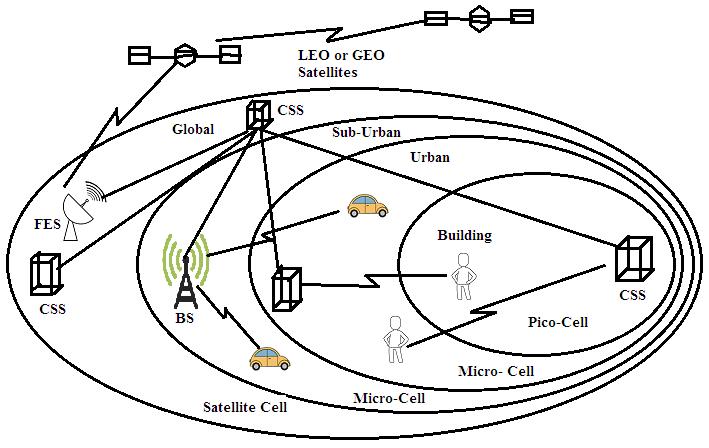
Innovative wireless system for dynamic operation Megacommunicationconcept,6thgeneration (veryhigh data quality of service (QoS) and service applications) and 7th generation (with space travel). This article focusesonfuturegenerationspecificationsandthelatest technologiesthatcanbeusedinfuturecellularnetworks. Considering India's population, some of the nextgeneration technologies include 2G and 2.5G networks so that the masses can benefit from Internet and multimedia services, while operators can earn decent revenue from existing mobile networks with little additionalcost.
The 6G cellular system aims to provide global coverage by integrating the existing 5G wirelesscellular system withsatellite networks.Thesesatellite networks include telecommunications, Earth imaging and navigationsatellites.Communicationssatellitesareused for voice, data, Internet and video transmission, while Earth imaging satellites collect weather and environmentaldata.Navigationsatellitesareresponsible for the Global Positioning System (GPS). Behind those satellitesystemsaretheUSforGPS,ChinaforCOMPASS, theEUforGalileoandRussiaforGLONASS.
Table -1:
Features 1 G 2G 3G 4G 5G
Started at 1980 1990 2000 2010 2020
Technol ogy Anal og Sign al, AMP S, NMT Digital Wirele ss, GPRS, EDGE, GSM, WCD MA, Broad Band IP Tech LTE,WiMax ,Single Standard MIMO,mm waves, IPv4
Services Anal og Voic e Calli ng Digital Voice, SMS High Capaci ty Packet data, Intern et Internet of Applicati ons, Complete IP Multimed ia Massive, Broadband and InternetOf Things
Core Network PST N Circ uit PSTN Circuit ,GSM Packet s, WCD MA Internet Internet
In 6G, handover and roaming are major challenges due to different networks and standards. A smooth transition between these four networks is still an issue thatneedstobeaddressed.Handover-Ifamobilephone user moves from one coverage area or cell to another during a call, the call must be routed to the new cell's base station. Making a waiver can be costly, so it's important to minimize unnecessary waivers. Inefficient and unreliable transmission processes can cause a deteriorationofthesystemqualityandreliability.
1.Thedifferencebetween5Gand6Gisduetotheuse of different parts of the wireless spectrum. Although both technologies use higher frequencies for faster data transmission, 5G operates in the frequency range below 6gigahertz(GHz)andabove24.25GHz,whicharecalled low and high frequencies, respectively. On the other hand, 6G works in the 95 GHz to 3 Terahertz (THz) range. At these wavelengths, 6G offers speeds 1,000 times faster than 5G, which itself is only four to five timesfasterthan4G.
2. The importance of 5G lies in its potential to make the Internet of Things (IoT) a practical reality. The limited bandwidth of 4G prevented the transmission of dataatthespeedsnecessaryfortheoptimaloperationof smart devices, thus hindering the widespread adoption of the Internet of Things. However, this is expected to changewith5G,andthesubsequentlaunchof6Gislikely tofurtherincreasethespeedandefficiencyofIoT.
3.It is important to note that5G will not replace 4G, and neither will 6G replace 5G. Each generation represents a distinct advance in wireless connectivity.
International Research Journal of Engineering and Technology (IRJET) e-ISSN:2395-0056
Volume: 11 Issue: 05 | May 2024 www.irjet.net p-ISSN:2395-0072
While 4G was essentially an improved version of 3G, 5G and 6G refer to separate iterations of wireless technology. 6G is expected to primarily serve limited consumerapplicationssuchasimmersiveentertainment for enterprise, military and industrial applications. However, future developments may change this scenario.
4. Unlike 5G, which faced challenges with infrastructure requirements, 6G leverages existing infrastructure built for 5G and extends connectivity to newfrontiers.Itspansland,underwaterandevenspace, openingupunprecedentedpossibilitiesforconnectivity.
5. Both 5G and 6G have remarkably low latency. Latency refers to the time it takes to send information packets at a certain frequency. Compared to the 4G latency of about 50 milliseconds, the latency of 5G reaches 5 milliseconds, which is about 10 times less.In addition, 6G achieves an estimated latency of 1 millisecond, five times less than 5G. This near-instant speed makes handling huge amounts of data much easier.
We can confirm that the current wireless technology (1G-4G) meets the needs of users. However, the current generation needs speed in everything, which is why we considerawiderandfasterapproachinallrequirements and performance limits. That is why we are considering the development of the next generation of wireless networks, 6G. 6G is expected to meet most of the demands of current and future generations of users. 7G will be the most advanced generation of mobile communication, but challenges must be solved, such as the use of mobile phones in transitions between countries, because satellites also move at a constant speed in certain orbits. Research is needed to develop standards and protocols for mobile communication systems and satellite-to-satellite communication systems. Realizing the 7G dream is only possible if all standardsandprotocolsareclearlydefined.Perhapsthis can be achieved in the next generation after 7G, which couldbecalled7.5G.
[1]InternationalJournalofElectronicsandComputer Science Engineering 1265 Available Online at www.ijecse.orgISSN-2277-1956ISSN2277-1956/V2N41265-12755GTechnologyofMobileCommunication.
[2] System Multimedia Wireless Sensor Networks: Perspectives S j l K D and Future Directions Sajal K. Das National Science Foundation Center for Research in WirelessMobilityandNetworking.
[3]SpectrumTradinginIndiaand5GPurnenduS.M. TripathiandRamjeePrasad.
[4]MouradA,YangR,LehnePH,DeLaOlivaA(2020) A baseline roadmap for advanced wireless research beyond5G.Electronics9(2):351
[5]Viswanathan H, Mogensen PE (2020) Communications in the 6G era. IEEE Access 8:57063–57074
[6] Global ICT Standardisation Forum for India (GISFI)and5GStandardizationPrasad,Ramjee.
[7](ITU), I.T.U.: International telecommunications union focus group on technologies for network. 2030.https://www.itu.int/en/IUTT/focusgroups/net2030.
[8] Pouttu A (2018) 6Genesis-taking the first steps towards 6G. In: Proc. IEEE Conf. Standards CommunicationsandNetworking
[9] Dang S, Amin O, Shihada B, Alouini MS (2020) Whatshould6Gbe?NatElectronics3(1):20–29
[10] Brito JMC, Mendes LL, Gontijo JGS Brazil 6G project–anapproachtobuildanational-wiseframework for6Gnetworks
[11]OrangeJSB,ArmadaAG,EvansB,GalisA,KarlH (2020) White paper for research beyond 5G (final edit). Networld(NW)pp.1–43
[12] Li X, Gani A, Salleh R, Zakaria O (2009) The future of mobile wireless communication networks. In: 2009 International Conference on Communication SoftwareandNetworks.pp.554–557.IEEE,NewYork
[13] Zhang Z, Xiao Y, Ma Z, Xiao M, Ding Z, Lei X, Karagiannidis GK, Fan P (2019) 6G wireless networks: vision,requirements,architecture,andkeytechnologies. IEEEVehicularTechnolMagazine14(3):28–41
[14] Gawas A (2015) An overview on evolution of mobile wireless communication networks: 1G–6G. Int J Recent Innovation Trends Comput Commun 3(5):3130–3133
[15] Basar E, Di Renzo M, De Rosny J, Debbah M, Alouini MS, Zhang R (2019) Wireless communications through reconfigurable intelligent surfaces. IEEE Access 7:116753–116773
[16]Chowdhury MZ,Shahjalal M,AhmedS, JangYM (2020) 6G wireless communication systems: applications,requirements,technologies,challenges,and researchdirections.IEEEOpenJCommunSoc1:957–975
International Research Journal of Engineering and Technology (IRJET) e-ISSN:2395-0056
Volume: 11 Issue: 05 | May 2024 www.irjet.net p-ISSN:2395-0072
[17] Lin K et al (2017) Green video transmission in the mobile cloud networks. IEEE Trans Circuits Syst VideoTechnol27(1):159–169
[18] Sheth K, Patel K, Shah H, Tanwar S, Gupta R, Kumar N (2020) A taxonomy of AI techniques for 6G communication networks. Comput Commun 161:279–303
[19] Kato N, Mao B, Tang F, Kawamoto Y, Liu J (2020) Ten challenges in advancing machine learning technologiestoward6G.IEEEWirelessCommunications
[20] Giordani M, Polese M, Mezzavilla M, Rangan S, Zorzi M (2020) Toward 6G networks: use cases and technologies.IEEECommunMagazine58(3):55–61
[21].Yang P, Xiao Y, Xiao M, Li S (2019) 6G wireless communications: vision and potential techniques. IEEE Network33(4):70–75
[22] Chowdhury MZ, Shahjalal M, Hasan M, Jang YM et al (2019) The role of optical wireless communication technologies in 5G/6G and iot solutions: prospects, directions,andchallenges.ApplSci9(20):4367
[23] Lu Y, Zheng X (2020) 6G: A survey on technologies, scenarios, challenges, and the related issues. Journal of Industrial Information Integration. p. 100158
[24] Giordani M, Zorzi M (2020) Satellite communicationatmillimeterwaves:akeyenablerofthe 6Gera.In:2020InternationalConferenceonComputing, Networking and Communications (ICNC). pp. 383–388. IEEE,NewYork
[25] Manogaran G, Rawal BS, Saravanan V, Kumar PM, Martínez OS, Crespo RG, Montenegro-Marin CE, Krishnamoorthy S (2020) Blockchain based integrated security measure for reliable service delegation in 6G communication environment. Comp Commun 161:248–256
[26]Zhou Y,Liu L, Wang L, Hui N,Cui X, Wu J, Peng Y, Qi Y, Xing C (2020) Service aware 6G: an intelligent and open network based on convergence of communication, computing and caching. Digit Commun Netw6(3):253–260
[27] Zhang S, Liu J, Guo H, Qi M, Kato N (2020) Envisioning device-to-device communications in 6G. IEEENetwork34(3):86–91
[28] Gui G, Liu M, Tang F, Kato N, Adachi F (2020) 6G: opening new horizons for integration of comfort, security and intelligence. IEEE Wirel Commun 27(5):126–132
[29] Huang X, Zhang JA, Liu RP, Guo YJ, Hanzo L (2019) Airplane-aided integrated networking for 6G
wireless:will it work?IEEE VehicularTechnolMagazine 14(3):84–91
[30] Letaief KB, Chen W, Shi Y, Zhang J, Zhang YJA (2019) The roadmap to 6G: AI-empowered wireless networks.IEEECommunMagazine57(8):84–90
[31]SaadW,BennisM,ChenM(2020)Avisionof6G wirelesssystems:applications,trends, technologies,and openresearchproblems.IEEENetw34(3):134–142
[32] Yajun Z, Guanghui Y, Hanqing X (2019) 6G mobilecommunicationnetworks:vision,challenges,and key technologies. SCIENTIA SINICA Informationis 49(8):963–987
[33] Raja AA, Jamshed MA, Pervaiz H, Hassan SA (2020) Performance analysis of UAV-assisted backhaul solutionsinTHzenabledhybridheterogeneousnetwork. In:IEEEINFOCOM2020–IEEEConferenceonComputer Communications Workshops (INFOCOM WKSHPS). pp. 628–633
[34] Herranz C, Zhang M, Mezzavilla M, MartinSacristán D, Rangan S, Monserrat JF (2018) A 3GPP NR compliant beam management framework to simulate end-to-end mmWave networks. In: Proceedings of the 21st ACM International Conference on Modeling, AnalysisandSimulationofWirelessandMobileSystems. pp.119–125
[35] Generations of Mobile Wireless Technology: A Survey Future broadband mobile communication technology.
[36] 5G WIRELESS TECHNOLOGIES-Still 4G auctions are not over, but time to start talking 5G Future Generations of Mobile Communication Networks Engr. Muhammad Farooq, Engr. Muhammad Ishtiaq Ahmed, Engr.UsmanMAl.
[37] What India wants from 5G Kumar N Sivarajan ChiefTechnologyOfficer.
[38] ITU/BDT Arab Regional Workshop on "4G WirelessSystems"LTETechnology.
[39] The FP7 RAS cluster in the ignition phase of 5G research © 2014, IJCSMC All Rights Reserved 1080 AvailableOnlineatwww.ijcsmc.com
[40]5GTechnology-EvolutionandRevolutionMeenal G.Kachhavay[1]AjayP.Thakare[2]
[41] 5G Ultra-High Capacity Network Design With Rates 10x LTE-A Protocols and Algorithms for the Next Generation5GMobileSystemsAleksandraTudzaroy.