
International Research Journal of Engineering and Technology (IRJET) e-ISSN:2395-0056
Volume: 11 Issue: 05 | May 2024 www.irjet.net p-ISSN:2395-0072
International Research Journal of Engineering and Technology (IRJET) e-ISSN:2395-0056
Volume: 11 Issue: 05 | May 2024 www.irjet.net p-ISSN:2395-0072
Saransh Arora1, Sunil Raj Thota2
1Independent Researcher/ Sr. Data Engineer, AI/ML & Data Engineering, Seattle, WA, USA
2Independent Researcher/Sr. Software Engineer, AI/ML & Full-stack Web Dev, Boston, MA, USA
Abstract: ThisstudyexaminestheethicaldifficultiesraisedbytherapiduseofAI,notablyprivacyconcerns.Thispaper uses qualitative research to evaluate existing literature, regulatory structures, frameworks, policies, systems, real-world casestudies,andethicalrecommendationsforAIprivacy.Theresultsexposecomplicatedconcerns,includingalgorithmic biases, data storage, and AI-powered spying. The study emphasizes ethical issues for responsible AI development. The researchers found a sector that needs regulatory reform. It supports user agency, strict regulation, developer responsibility,andpubliceducationinthefaceofAIethicalchallenges.Emergingcombinationsofartificialintelligence, big data,andtheapplicationstheseenablearereceivingsignificantattentionconcerningprivacyandotherethicalissues.We need a way to comprehensively understand these issues and find mechanisms for addressing them that involve stakeholders,includingcivil society, to ensurethat thesetechnologies’ benefitsoutweightheirdisadvantages. Thispaper shedslightonthecomplicatedconfluenceofAIandprivacyinbigdataanalyticsforacademics,developers,andusers.
Keywords-Ethical considerations, Privacy, Artificial Intelligence (AI), Big Data Analytics, Data security, Data protection, Transparency,
In modern civilization, technologies like AI have rapidly established an influential presence and swiftly emerged as powerful. AI technologies, which include personalized digital assistants and complex decision-making algorithms, have becomeindispensableinourdailylives.[1]thattheyprovideefficiency,innovation,andunmatchedcapabilities.However, aswewitnessthisunprecedentedintegration,it becomesessentialtoanalyzetheethicalimplicationsthatcomewiththe rapidadvancementofAI.
In artificial intelligence, AI ethics comprises a set of ethical guidelines and procedures that are specifically designed to control the development and use of AI technology. Today, there are organizations that are developing specific codes of ethicsbecauseAIisincorporatingmoreandmore productsandservices.AnAIcodeofethics,alsoknownasanAIvalue platform, is a comprehensive and specific policy statement that precisely outlines the role of artificial intelligence in promotingadvancementandhumanwelfare.ThepurposeofanAIcodeof ethicsistoprovidestakeholders withexplicit guidancewhentheyfaceanethicaldilemmaregardingtheuseofartificialintelligence.
Isaac Asimov, the science fiction writer, saw the potential dangers of autonomous AI agents long before they were developed and formulated The Three Laws of Robotics as a means to reduce those risks. According to Asimov's code of ethics,themainrulestatesthatrobotsareforbiddenfromengaginginanyactionsthatinjurehumansorfromfailingtoact when humans are at risk of harm. The second law stipulates that robots are obligated to adhere to human commands unlessthosedirectivescontradictthefirstlaw.Thethirdlawrequiresthatrobotsprioritizetheirownself-preservation,as longasitisconsistentwiththevaluessetforthbythefirsttwolaws.
Despite the fact that artificial intelligence possesses wonderful potential, there is a significant cause for concern: the ethical implications of its application, particularly in the field of privacy. Technical advancement and individual privacy rightsactuallyraiseproblems regardingthe boundariesbetweenthem [2]. The massivetrovesofdata thatare exploited by AI systems are frequently of a personal and sensitive nature. AI technologies are becoming more complex and wellknown.Thebasichumanfundamentalrightisthatit isvitalthatwethoroughlyinvestigateandtakemeasurestoprotect privacy[3].
International Research Journal of Engineering and Technology (IRJET) e-ISSN:2395-0056
Volume: 11 Issue: 05 | May 2024 www.irjet.net p-ISSN:2395-0072
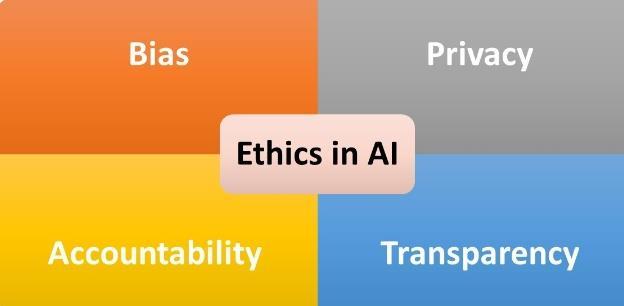
AIbiasisoneofthemostimportantsocialissuestothinkabout.BiascanariseinAIsystemsduetobiaseddataorskewed algorithms used for decision-making. As an example, one case shows that facial recognition algorithms are not good at reorganizing people with darker skin. Most of the data used to train this system consisted of lighter skin tones due to availablephotographsofpeoplewithlighterskintones.Thealgorithmwillmistakenlyidentifyapersonwithadarkerskin tonesincetheyhaveamorefavorableappearance.
Bias in artificial intelligence could potentially yield significant ramifications, particularly in sectors such as law enforcement and healthcare. An instance of bias within an AI system toward particular social groups could potentially resultininequitabletreatmentorerroneous diagnoses. Toresolvethisissue,wemusttrainAIsystemsusinga largeand representativesampleofthepopulation.Furthermore,routineauditsofAIsystemsareimperativeinordertodetectand rectifyanypotentialbiasesthatmightbepresent.
In AI, security is another ethical consideration. The proliferation of AI systems has resulted in the collection and examination of enormous quantities of personal information. The dataset may encompass a wide range of personal information,includingbutnotlimitedtoanindividual'sname,address,healthrecords,andbankaccount numbers.Itisof the utmost importance to safeguard this information and restrict its usage to its intended objectives. Significant privacy invasionscouldoccurasaresultofdatabreaches,whichisasignificantconcernwithAI.Anycompromiseorexploitation ofanAIsystemcouldpotentiallyleadtothedisclosureofconfidentialinformation.Inordertomitigatethisrisk,itisvital that security be considered throughout the development of artificial intelligence systems. Ensuring that individuals have theabilitytodecidewhetherornotartificialintelligencesystemsmayaccessandutilizetheirconfidentialdataisofequal importance.
Transparency is a crucial facet of ethics in artificial intelligence. Considering the growing prevalence of artificial intelligence(AI)systemsinoursociety,itisoftheutmostimportancetoensurethattheyareclearandeasytounderstand People need to beableto graspthe mechanismsthatare behind the decision-makingprocessesof AIsystems, aswell as the reasoning that is behind such judgments. Due to the fact that decision-making processes may be scrutinized and evaluated,itisessentialforartificialintelligencesystemstobeauditable.Thisimpliesthattheirtransparencyisofutmost importance,particularlyinfieldssuchashealthcareandcriminaljustice,wheretheactionsperformedbyAIsystemscan have significant repercussions. For instance, when it comes to the utilization of an artificial intelligence system for the purpose of medical diagnosis, it is of the utmost importance that patients have the capacity to understand the methodology used by the system in order to arrive at its diagnosis, as well as the explanation behind the particular diagnosisthatiscreated.Inasimilarvein,whenanartificialintelligencesystemisusedtoassessacriminalconsequence, itisessentialfordefendantstobeabletocomprehendtheprocedurethatthesystemusedinordertoarriveatitsdecision, aswellasthelogicthatledtothatdetermination.Addressingethicalproblemsisessentialtoguaranteethedevelopment and use of artificial intelligence in a responsible and helpful manner. In light of the fact that artificial intelligence is advancing and becoming increasingly integrated into every facet of our lives, it is imperative that we pay the utmost attention to ethical considerations such as transparency, accountability, justice, privacy, and safety. In this way, we are abletofullyleveragethepossibilitiesofartificialintelligencewhilesimultaneouslylimitinganynegativerepercussions.It
International Research Journal of Engineering and Technology (IRJET) e-ISSN:2395-0056
Volume: 11 Issue: 05 | May 2024 www.irjet.net p-ISSN:2395-0072
is crucial for governments, industry leaders, researchers, and the general public to participate in continuing discussions and cooperation among stakeholders in order to develop ethical standards and best practices for the creation and implementation of artificial intelligence (AI). This is because such standards and practices are required for AI to be established. To ensure that artificial intelligence is in accordance with our values and makes a positive contribution to society'soverallimprovement,itisessentialtotakeahuman-centeredapproachtotheethicsofartificialintelligence.The purposeofthisresearchistoinvestigatetheethicalconundrumsthatarebroughtaboutbytheuseofartificialintelligence, especially with regard to concerns about privacy. "In what ways do the ethical consequences of artificial intelligence, particularly with regard to privacy, become apparent in modern society, taking into consideration its rapid expansion acrossavarietyofindustries?"istheprimaryresearchquestionthatthisinvestigationseekstoanswer.
We have analyzed how the three paths of AI deployment may enhance or diminish opportunities for meaningful work across five dimensions. We now surface the ethical implications of this analysis via the five principles of the AI4People ethicalAIframework(Floridietal.,2018):beneficence,non-maleficence,autonomy,justice,andexplicability.Aswithany principle framework, there are potential conflicts and tensions between principles (Formosa et al., 2021). For example, there may be benefits for some from AI deployment (benefcence), while others suffer harm (non-malefcence) or interference with their autonomy. As identified earlier, the provision of meaningful work is not always the only or most importantethicalvalueatstake,andsolessmeaningfulworkmaynotbeethicallyworseoverallifthereareotherethical benefits,suchasimprovedwellbeingforothersthroughhigherproductivity.Toassessethicalimplications,wesynthesize and summarize how the three paths (replacing, ‘tending the machine’, and amplifying) support or limit experiences of meaningful work and so contribute to, or diminish, meeting the AI4People principles. We summarize these impacts in Table1across the five ethical principles(benefcenceandnon-malefcencearecombined in the tableasthelatterreflects theconverseoftheformer),whilenotingthemaindeploymentpathwaysthroughwhichtheseimpactsoccur.Intermsof the benefit principle, there can be significant benefits for employees when AI use supports the various dimensions of meaningful work. When AI amplifies a worker’s skills, it can support them to complete their tasks, undertake more complextasks,andutilizehigher-orderthinkingandanalysisskills(taskintegrityandskillcultivationanduse).Itcanalso affordworkerstheopportunitytoachievebetteroutcomesandenhancethepositiveimpactoftheirworkonbeneficiaries (task significance), give them more control over their work through improved access to information (autonomy), and potentiallygeneratenewconnectionswithotherworkersandstakeholders(belongingness).Similarly,when AItakesover simple or complex tasks, freeing up the human worker to concentrate on other crucial and challenging tasks, it should preserve or enhance positive experiences in all aspects of meaningful work. ‘Managing the machine’ work can also improvemeaningfulnessthroughawiderscopeofenrichedwork(taskintegrityandskillcultivationanduse)andawider positive job impact within and outside the organization (task significance), as well as greater interaction with a range of stakeholdersthroughcoordinationandsupervisorywork(belongingness).
Intermsofthenon-maleficenceprinciple,wealsoshowtheharmsthatAIcancreatewhenitisdeployedinwaysthatlead toless(orno)meaningfulworkorotherrelatedharms.Twopathsgeneratethegreatestriskofharmthroughsignificantly reducing experiences of meaningful work. First, when AI replaces some tasks, the risk of degraded task integrity, deskilling,reducedtask significance,andconstrainedautonomyisgreatestwhenit assumesmorecomplextasksandthe workerisnotofferedanynewcomparableormoreinterestingwork.Thisisbecausecomplextasksgenerallyconstitutea largeandsignificantpartoftheworkprocessandundertakingthemexercisesarangeofimportantskills.Beingremoved from such work can also distance workers from the output of their labor and lower their perceptions of beneficiary impact.Intheworstcase,itcouldinvolvethecompletelossofpaid,meaningfulworkwhereAIreplaceswholejobs,which removesworkersfromimportantsocialrelationshipsanddeniesthemtheopportunitytoskillfullyutilizetheirtalentsto help others. Second, ‘minding the machine’ work, as we have characterized its fragmented, piecemeal, and micro-work nature, threatens these same aspects of meaningful work and feelings of belongingness when work is outsourced to disconnected workers. Other paths can also generate harm, but arguably at lower levels. For example, we identified that while‘managingthemachine’workmayincreasemeaningfulworkexperiencesoverallthroughheightenedadministrative responsibility, it can lessen feelings of task significance by increasing distance between workers and their beneficiaries and reducing feelings of personal responsibility. In terms of the autonomy principle, across each path we show how autonomyissupportedwhenAIisusedtofreeuphumanstofocustheirtimeonother,morevaluedtasks,allowsthemto develop new or enhanced autonomy competencies, and gives them more control over their work. In particular, task replacement, ‘managing the machine’, and amplifying paths that afford employees access to better data and information, the opportunity to engage in more interesting work, and exercise more control over how their work is done can all promoteautonomyasadimensionofmeaningfulwork.However,manyofthesepositiveimpactsalsodependonwhether workershaveinputintohowAIisdeployedintheirorganizations.AparticularrisktoautonomyistheuseofAItosurvey
International Research Journal of Engineering and Technology (IRJET) e-ISSN:2395-0056
Volume: 11 Issue: 05 | May 2024 www.irjet.net
p-ISSN:2395-0072
and monitor, which can undermine authenticity and encourage workers to align their behaviors with the AI’s implicit expectationsorseekwaystosubvertoravoiditscontrol.
Objectives:
1. The main goal of this study is to examine and rate existing research on the moral effects of AI, with a focus on privacyissues.
2. Second,thegoal istolookatreal-lifeexamplesthatshowthesocial problemsthatcomeup whenAIisusedand howitaffectsprivacy.
3. Thisstudy'sgoalistoseehowwellthecurrentlawsthatgovernAIanddataaredoingatsolvingsocialissues.The goalistocomeupwithmoralmodelsandrulesthatcanhelpsolveprivateproblemsthatcomeupwithAI.Itsgoal istogiveusefulinformationandideastopeopleandgroupsthatareinvolvedinmaking,using,andkeepinganeye onAIsystems.
AI'sethicalramificationsarenowofutmostimportance,withanemphasisonhowtechnologyaffectsprivacyinparticular. An extensive analysis of current literature uncovers a complex environment where the incorporation of AI technology givesrisetosignificantinquiriesoverpersonalfreedom,consent,andtheprotectionofconfidentialdata.Academicshave extensively studied the ethical implications of employing artificial intelligence for data gathering and analysis, using algorithmsfordecision-making,andthepotentialinvasionofprivacyintheeraofdigitaltechnology.Severalstudieshave investigatedtheethicalquandariesthatoccurduetotheextensiveuseofartificialintelligenceindata-drivenapplications. All of these discussions touch on privacy-related issues, including AI algorithms' transparency, accountability, and the likelihoodofunintendedbiases.
TheregulatoryframeworkpertainingtoAIandprivacyhasexperiencedsignificantadvancements,yetitcontinuestobean intricateanddynamicdomain.Frameworksandregulations,suchastheGDPRintheEuropeanUnion,havetheobjective ofaddressingtheethicalchallengesassociatedwithAI.Acomprehensiveassessmentoftheseregulatoryactions'abilityto address privacy concerns, however, is vital. To better understand the real-world implications of AI on personal data protection, case studies are invaluable. Cadwalladr and Graham-Harrison's 2018 coverage of the Cambridge Analytical Disasterservesasa stark reminder of the major privacyrisksassociated withAI in data analytics.Examiningsuchcases helpsusbetterunderstandthescopeofethicalviolationsassociatedwithAIdeployment.
There is a lot of writing about privacy, but there are still some important places where we don't fully understand the ethicalimplications.ItisimportanttolookmorecloselyathowAIinteractswithculture,sincedifferentgroupsmayhave different social concerns. Examining the moral issues that arise from the use of AI techniques such as deep learning and facerecognitionisalsocrucial.Wemustconductfurtherresearchtouncoverthechangingnatureofprivacyinanartificial intelligence-drivenfuture.Ananalysisoftheethicalcomplexitiespertainingtodataownership,consensusstrategies,and the ethical responsibilities of AI developers will deepen our understanding of the relationship between AI and privacy. This literature review lays the groundwork for a thorough investigation of these issues, guiding the next stage of this research.
The use of AI in different fields poses significant privacy challenges, necessitating a thorough analysis of several crucial factors:
Data Proliferation and Sensitivity:Alotofthetime,AIsystemsusehugedatasetsthathaveprivatedatainthem,like medicalrecords,biometricdata,andtrendsinbehavior.Theenormousamountanddelicatenatureofthisdatagiveriseto worriesoverpossibleprivacyviolationsandtheimplicationsforindividualprivacyrights.[10].
International Research Journal of Engineering and Technology (IRJET) e-ISSN:2395-0056
Volume: 11 Issue: 05 | May 2024 www.irjet.net p-ISSN:2395-0072
Lack of informed consent: AIprogramsarecomplicatedandhavemanyparts,whichmakesithardforuserstogivefull permissionfortheuseoftheirdata.ThelackoftransparencyinAIprocessesanddecision-makingmakesitdifficulttoget informedpermissionfromusers.[11].
Algorithmic Bias and Discrimination:Algorithmicbiascanaffectartificialintelligence(AI)systems,causingflawsto worsenandpersist.Thiscanleadtounfairdecisionsandviolationsofprivaterights.(Noble,2018).
Invasive Data Collection: Artificial intelligence programs, particularly those found on digital platforms and smart gadgets,utilizepervasivedatacollectiontactics.Theseapplicationscontinuouslymonitorusers'activitiesandinteractions. Thisintrusivedatacollectionraisesworriesabouthumanautonomyandprivacyandraisesconcernsaboutprivacy.[12].
Security of Stored Data: Massivedatasetsecurityisamajorissuesincesensitiveinformationmayberevealedthrough databreachesandunauthorizedaccess,jeopardizingpeople'sprivacy.
Data Retention Policies: The absence of regulated and clear data retention standards in AI systems can result in the extendedkeepingofpersonal information,surpassingtherequiredtimeframeforitsintendedobjectives.Prolongeddata retentiongivesrisetoworriesoverthelong-termramificationsforprivacy.[13].
Implications of AI-driven Surveillance: Artificial intelligence-powered surveillance technologies, such as facial recognition and predictive analytics, play a significant role in widespread surveillance in both public and private areas. Thecovertandcontinuoussurveillance,conductedwithoutindividuals' awareness,presentssubstantialriskstopersonal privacy.
Governmental and Corporate Surveillance: The utilization of artificial intelligence in government and business surveillance presents difficulties in achieving a harmonious equilibrium between security imperatives and individual privacyentitlements.Utilizingsurveillancedataforpoliticaloreconomicobjectivesinappropriatelymightresultinethical andprivacydilemmas.(Zuboff,2019)[12].
Lack of Accountability: The lack of transparency in the decision-making processes of AI-driven surveillance systems increases the likelihood of privacy violations, as individuals may undergo inspection without comprehending the underlying justifications. The absence of responsibility weakens the protection of private rights and individual selfgovernance.(Diakopoulos,2016)[15].
Artificialintelligence(AI)andprivacyregulationsaredrivenbytheinterplaybetweentheadvancementoftechnologyand theneedformoralsafeguards.Amongthecrucialregulatoryframeworksare:
General Data Protection Regulation (GDPR)
GDPR, which was made law by the European Union, is a set of rules for protecting personal data that stress openness, minimizing data, and people's rights. It makes companies responsible for how they handle data and sets an example for privacyrulesaroundtheworld.(Regulation(EU)[16].
TheCalifornia Consumers'PrivacyAct(CCPA) givespeopleinCalifornia powerover their personal information. Itforces companies to explain how they use customer data, lets people choose not to have their data sold, and limits how companiescanmakemoneyoffofdata.(CaliforniaCivilCode§§1798.100etseq.)[17].
The OECD AI Principles and the AI Ethics Guidelines of the High-Level Expert Group on AI are only two examples of the manygroupsandinstitutionsthathaveput outethicalstandardsforartificialintelligence.ResponsibleAIdevelopmentis the goal of these frameworks, which include privacy concerns. (OECD, 2019; High-Level Expert Group on AI, 2019)[18][19].
International Research Journal of Engineering and Technology (IRJET) e-ISSN:2395-0056
Volume: 11 Issue: 05 | May 2024 www.irjet.net p-ISSN:2395-0072
Evaluation of Effectiveness:
Strengths
Individual Rights Protection: Due to its emphasis on individual rights, the GDPR has been instrumental in increasing public consciousness regarding privacy issues. This legislation bestows authority upon individuals to manage their data andmandatesthatorganizationsincorporateprivacymeasuresintentionally.(Regulation(EU)2016/679)[16].
Consumer Empowerment: The CCPA grants customers the authority to be informed about the personal data that is gathered and the option to decline the sale of their information. It signifies an increasing inclination towards granting usersgreaterauthorityovertheirdata.(CaliforniaCivilCode§§1798.100etseq.)[17].
International Influence: The transnational ramifications of GDPR have prompted discussions over worldwide privacy norms. Several nations and areas are contemplating or implementing comparable rules, indicating an increasing acknowledgementofthenecessityforstrongprivacysafeguards.(Regulation(EU)2016/679)[16].
Challenges
Explain ability. When AI systems malfunction, it is crucial for teams to have the capability to systematically analyze a convoluted sequence of algorithmic systems and data operations in order to determine the root cause. Organizations utilizing artificial intelligence should possess the capability to provide a clear and comprehensive explanation regarding theoriginoftheirdata,theoutcomesproducedbytheiralgorithms,thefunctionalityoftheiralgorithms,andtherationale behind their decision to use these algorithms. Adam Wisniewski, the Chief Technology Officer and co-founder of AI Clearing,statedthatforAItobereliable,itmustpossessahighleveloftraceability,enablingthetracebackofanynegative consequencestotheirsource.
Responsibility. WhenAIsystemsmakedecisionsthathaveterribleconsequences,suchasthelossofmoney,well-being, orevenhumanlives,thedivisionofblamewithinsocietyisstillbeingworkedout.Amultidisciplinaryapproachinvolving lawyers,regulators,AItechnologists,ethicscommittees, and the general public should ensure accountabilityforthe resultsofAI-powereddecisions.FindingthebestbalanceincircumstanceswhereanAIsystemispotentiallysaferthanthe human action it is duplicating but nonetheless poses problems is one challenge. This involves assessing the benefits of autonomousdrivingsystemsthatdocausefatalities,albeitfarfewerthanthosebroughtonbyhumanintervention.
Fairness. When handling datasets that include information that is personally identifiable, it is imperative to ensure the absenceofbiasesordiscriminatorypracticesrelatedtorace,gender,orethnicity.
Misuse. AI Algorithms can be applied to tasks beyond their original intended usage. According to Wisniewski, it is important to examine these situations during the design phase in order to minimize potential risks and include safety measurestomitigateanynegativeconsequencesthatmayarise.
BigDataAnalyticshasemergedasapowerfultooltransformingindustries,decision-makingprocesses,andevenourdaily lives. The ability to collect, process, and derive insights from vast volumes of data has revolutionized businesses, healthcare, and countless other fields. However, this newfound data-driven power comes with a significant caveat: the ethical implications. As we delve deeper into the realm of big data analytics, we encounter a complex web of questions concerningprivacy,discrimination,andtheresponsibleuseofdata.
BigData Analytics has become a pivotal force in reshaping industries across the globe. At its core, it involves the systematic analysis of vast and diverse datasets to extract valuable insights and patterns. As data generation soars, we witnessan exponential increaseinboththevolumeandvariety ofdata beingcollected.Fromcustomer preferencesin ecommerce to patient records in healthcare, the data wellspring is seemingly infinite. Businesses, in particular, have harnessed the power of big data analytics to gain a competitive edge. They employ it to optimize operations, enhance customer experiences, and make data-driven decisions. In healthcare, it has revolutionized patient care, offering personalized treatment plans and predictive analytics for disease management. The impact extends to various sectors, fromfinancetotransportation,whereinformedchoicesarefueledbydatainsights.
International Research Journal of Engineering and Technology (IRJET) e-ISSN:2395-0056
Volume: 11 Issue: 05 | May 2024 www.irjet.net p-ISSN:2395-0072
Big Data Analytics is more than a technological trend; it's a transformative phenomenon that is altering the way we understand,operate,andinnovatewithinindustries.Itsimplications,bothethicalandpractical,continuetochallengeand inspirediscussionsabouttheresponsibleuseofthisinvaluableresource.
The Ethical Dilemmas of Big Data Analytics: Privacy, Security, and Bias
In the ever-expanding realm of data analytics, ethical concerns have become a focal point of discussion. The ethical dilemmasofbigdataanalyticsrevolvearoundthreecrucialaspects:privacy,security,andbias.
Privacy concerns stem from the massive amounts of personal information collected and analyzed by organizations and governments.Asdatacollectionbecomesmoreextensive,thepotentialforinvasionofindividualprivacyescalates.Various purposesoftenharnessusers'personal data,fromonlinehabitstolocationinformation, raisingquestionsaboutconsent, dataownership,andcontrol.
Datasecurityandbreachesareanotherethicalquandary.Withthestaggeringvolumesofdatastored,there'sanincreased risk of data breaches and cyberattacks. The exposure of sensitive information not only jeopardizes personal privacy but alsoraisesissuesoftrust,accountability,andtheresponsibilityoforganizationstosafeguardthedatatheycollect.
Bias and discrimination in data analysis are a third ethical facet. Algorithms used in big data analytics are prone to inheritingbiasesfromthedatatheyaretrainedon.Thiscanleadtounfairordiscriminatoryoutcomesinareaslikehiring, lending,andlawenforcement,perpetuatingexistingsocietalinequalities.
Addressing these ethical concerns necessitates a multifaceted approach involving stringent regulations, robust cyber security measures, and the development of fair and transparent algorithms. As our world becomes increasingly datadriven,itisimperativethatwenavigatetheseethicaldilemmastoensurearesponsibleandequitabledigitalfuture.
A-Privacy Implications of Personal Data Collection
This question delves into the ethical concerns surrounding the massive collection of personal data. In a world where individualsaregeneratingvastamountsofdigitalinformation,howdowebalancetheneedfordata-driveninsightswith the preservation of individual privacy? It raises concerns about consent, data ownership, and the potential for intrusive surveillance.
B-Preventing Data Breaches and Ensuring Data Security
Thisquestionaddressesthecriticalissueofdatabreachesandsecuritybreachesthathavebecomeincreasinglycommon in the age of big data. It explores the ethical obligation of organizations and governments to safeguard the sensitive informationtheycollect,consideringthepotentialharmtoindividualsandthebroaderimplicationsforsociety.
C-Ethical Considerations in Decision-Making (e.g., Hiring and Lending)
Thisquestionhighlightstheethicaldilemmasassociatedwithusingdatatomakedecisionsthatimpactpeople'slives,such ashiringemployeesordeterminingcreditworthiness.Itraisesquestionsaboutfairness,bias,andtransparencyindecision algorithms,aswellasthepotentialfordiscriminationbasedondata-driveninsights.
D-Mitigating Biases in Data Collection and Analysis
Addressingbiasindatacollectionandanalysisisacrucialethicalconcern.Thisquestionexploreshowtoensurethatdata usedinanalyticsisrepresentativeandunbiased,asbiaseddatacanperpetuateandevenexacerbatesocialinequalities.It alsotouchesontheneedforfairness-awaremachinelearningandalgorithmictransparencytocombatbias.
E-Key Measures for Ensuring Ethical Big Data Analytics
F-Discuss the need for robust data protection regulations like GDPR
DataprotectionregulationsliketheGeneralDataProtectionRegulation(GDPR)areessentialtosafeguardingindividuals' privacyandpersonaldataintheageofbigdataanalytics.Theseregulationssetstandardsfordatacollection,storage,and processing, ensuring that businesses and organizations handle data responsibly and transparently. They also empower
International Research Journal of Engineering and Technology (IRJET) e-ISSN:2395-0056
Volume: 11 Issue: 05 | May 2024 www.irjet.net p-ISSN:2395-0072
individuals by granting them rights over their own data, such as the right to be forgotten and the right to access their information.
G-Explain the importance of encryption and secure data storage
Encryptionandsecuredatastoragearefundamentalforprotectingdatafromunauthorizedaccess.Encryptiontransforms dataintocodethatcanonlybedecryptedwiththeappropriatekey.Securedatastorageguaranteestheprotectionofdata from breaches and cyberattacks. Both measures are crucial to prevent data leaks and maintain the confidentiality and integrityofsensitiveinformation.
H-Explore the concept of fairness and transparency in algorithms
Fairness and transparency in algorithms are essential to mitigating biases and discrimination in data-driven decisionmaking. Fair algorithms ensure that decisions are not influenced by factors such as race, gender, or other sensitive attributes. Transparency means that the inner workings of algorithms are understandable and accountable, allowing individuals to know how decisions are made and challenge them if necessary. This is particularly crucial in applications likehiring,lending,andcriminaljustice.
Introduce the idea of ethical AI and responsible data-handling practices
Ethical AI and responsible data handling practices involve usingartificial intelligencein ways that align with ethical principlesandsocietalvalues.ItencompassesethicalconsiderationsateverystageofAIdevelopment,fromdatacollection andalgorithmdesigntodecisionimplementation.Responsibledatahandlingpracticesemphasizethe needtocollectdata with consent, minimize data usage, and apply ethical frameworks to ensure AI systems prioritize human well-being and avoidharm.Intheever-expandinglandscapeofBigDataAnalytics,theethicalconsiderationscannotbeoverlooked.As we delve deeper into the ocean of data, it becomes paramount to navigate these waters with a strong moral compass. The implicationsofdata analyticstoucheveryfacetofourlives,from privacytofairness,andsecuritytotransparency.While the challenges are real, so are the solutions. By discussing the need for robust data protection regulations like GDPR, emphasizingtheimportanceofencryptionandsecuredatastorage,exploringfairnessandtransparencyinalgorithms,and introducingtheconceptofethicalAIandresponsibledatahandlingpractices,wepavethewayforamoreresponsibleand conscientiousdata-drivenfuture
Privacy Challenge
The collaboration between Amazon Ring, a business specializing in intelligent doorbell technology, and law enforcement agencies has raised significant concerns around surveillance. The technology enables law enforcement to have access to theuser'svideofeeds,potentiallycompromisingtheprivacyofindividualswithinthecamera'srange.
a) Community Surveillance: This partnership facilitated the establishment of an extensive surveillance network that had an impact on the entire society. Surveillance of individuals occurs without obtaining their informed consent,resultinginethicalandprivacyconcerns.
b) Data Security Issues: Hacking and data breaches have shown that the system isn't completely secure, allowing peopletoseeintopeople'sprivateareaswithouttheirpermission.
c) Public Backlash: The case led to criticism from the public and demands for more control. It emphasized the necessityofopenproceduresanduserdiscretionwhenitcomestosharingsurveillancevideos.
d) Clear view AI and Facial Recognition:
Privacy Challenge
ClearviewAI'sfacerecognitiontechnology,whichextractspubliclyaccessiblephotographstoconstructanextensive database,haspromptedapprehensionsregardingprivacyinfringementandthepossibilityofextensivesurveillance.
International Research Journal of Engineering and Technology (IRJET) e-ISSN:2395-0056
Volume: 11 Issue: 05 | May 2024 www.irjet.net p-ISSN:2395-0072
Outcomes and Consequences
a) Unregulated Surveillance: Transparent the technology of AI has facilitated unregulated and widespread surveillance, which has significant concerns for human privacy. Unbeknownst to them, individuals' photos were utilizedforfacialrecognitionpurposeswithouttheirknowledgeorconsent.
b) Law Enforcement Utilization: Law enforcement authorities used the technology to identify people, which sparkeddiscussionsabouthowtostrikeabalancebetweenprivaterightsandpublicsafety.
c) Legal Scrutiny:VisualclarityLegalchallengesandregulatoryscrutinyweredirectedonartificialintelligence(AI) for its data collection methods, which brought to light the necessity of establishing clear standards around the utilizationoffacialrecognitiontechnology.
d) Google Deep Mind and Healthcare Data:
Privacy Challenge
The partnership between Google Deep Mind and the NHS in the United Kingdom to process healthcare data for patient managementhasgeneratedapprehensionregardingthehandlingofconfidentialmedicaldata.
Outcomes and Consequences:
a) Patient Privacy Concerns: The initiative was criticized for granting Deep Mind such extensive access, which could have compromised the privacy of patients. Concerns emerged regarding the degree to which patient informationoughttobedisclosedtoprivateorganizations.
b) Ethical Oversight: The aforementioned case instigated dialogues concerning the ethical supervision of AI implementations in the healthcare sector and the criticality of open contracts between technology firms and healthcareproviders.
c) Improved Collaboration: Theeventbroughtattentiontotheneedforclearstandardsandethicalconsiderations inhealthcaredatacollaborationsandledtocallsforimprovedcollaborationmodels.
d) The complexity and ever-changing nature of the privacy challenges that are presented by AI applications are highlightedbythesecasestudies.Specifically,theyhighlighttheimportanceofethicalconcerns,userconsent,and effectiveregulatoryframeworksinordertomanagethepotentialinfluencethatartificialintelligencetechnology couldhaveonindividualprivacyinsociety.
A. Proposed Ethical Frameworks
1. User-Centric Privacy Framework
Principle:HighlightthesignificanceofgrantinguserstheabilitytoselectandreachconsensusonAIsystems,and ensure that information regarding the collection, storage, and management of data is transparent and unambiguous.
2. Implementation: Develop AI applications with intuitive interfaces that demonstrate how your data is being utilized.Peopleshouldhaveabsolutecontrolovertheirinformationandbefreetochoosewhetherornottojoin.
3. Algorithmic Fairness and Bias Mitigation Framework
Principle: In order to safeguard against biased outcomes and uphold individuals' privacy, it is imperative to confronttheinherentbiasespresentinalgorithms.
4. Implementation: The algorithms should be audited and updated on a regular basis to reduce bias. To improve the fairness of the model and to lessen the likelihood of unexpected privacy violations, it is important to use a varietyofdatasets.
International Research Journal of Engineering and Technology (IRJET) e-ISSN:2395-0056
Volume: 11 Issue: 05 | May 2024 www.irjet.net
5. Dynamic Privacy-by-Design Framework
p-ISSN:2395-0072
a) Principle: Incorporate privacy considerations throughout the whole of the process of building artificial intelligence, beginning with the generation of ideas and continuing all the way through the implementation of thoseideas,inordertoensureaconstantcapacitytoadapttoevolvingprivacyconcerns.
b) Implementation: Incorporate assessments of the effects on privacy into the process of development, with a particularemphasisoncontinuousmonitoringandadaptationtostandardsofethicsandprivacythatarealways improving.
c) Ethical Responsibilities
1. AI Developers
a) Transparency:Encouragecollaborationamongstsectorssuchasbusiness,academia,andcivilsocietyinorderto collaborativelyaddressproblemswithprivacy.Weshouldcollaborateontheestablishmentofethicalnormsand exchangethemosteffectiveapproaches.
2. Continuous Education:Keepupwiththeever-changingethicalstandards, participateinongoingeducation,and collaboratewithteamsthatcomefromotherfieldsinordertoincludeavarietyofperspectivesintothecreationof artificialintelligence.
3. Regulatory Frameworks: Constructandenforcerobustlegalframeworksthataretailoredtoaddresstheunique privateconcernsthatariseinthecontextofartificialintelligence.Encourageinternationalcooperationtoensure thatglobalstandardsareconsistent..
4. Public Engagement: To ensure that the regulations governing artificial intelligence and privacy align with societalnorms,itisimperativetopromotepublicengagementinthepolicyformulationprocess.
5. Users
a) Informed Consent: Users of AI applications must be cognizant of their privacy options, understand the repercussionsofdatasharing,andprovideinformedconsent.
b) Advocacy: Encourage the adoption of transparent AI tools and actively participate in discussions that shape the developmentofethicalstandards. Ensurethatdevelopersandpolicymakersareheldresponsibleforadheringto privacyprinciples.
Collaborative Responsibility
1. Multistakeholder Collaboration
a) Industry Collaboration: Encouragecollaborationamongstsectorssuchasbusiness,academia,andcivilsocietyin order to collaboratively address problems with privacy. We should collaborate on the establishment of ethical normsandexchangethemosteffectiveapproaches.
b) Cross-Sector Engagement: Open contact and teamwork between many businesses is important to make sure thatalotofdifferentpointsofviewaretakenintoaccountwhenAIisdevelopedandusedinanethicalway.
2. Ethics Review Boards
Developedaself-directedethicsevaluationagencytoassesstheethicalimplicationofAIinitiatives,withaspecific focusonprivacyOutcomes,results,repercussions,effects,ramifications,implications Ensuretheinvolvementofa widerangeofprofessionalstoofferimpartialevaluations.
3. Public Awareness Campaigns:
Organize and implement some awareness programs to teach clients about the outcomes and results of artificial intelligence and privacy. Enable individuals to make informed judgments and actively engage in conversations that influencetheprogressofAIethics.
International Research Journal of Engineering and Technology (IRJET) e-ISSN:2395-0056
Volume: 11 Issue: 05 | May 2024 www.irjet.net p-ISSN:2395-0072
By adopting the suggested ethical frameworks and embracing shared duties, stakeholders can collaborate to address privacyissuesrelatedtoAI,therebypromotingaresponsibleandethicalAIecosystem.
The following is a selection of the growing number of organizations, policymakers, and regulatory norms committed to advancingethicalprinciplesinthefieldofartificialintelligence,presentedinalphabeticalorder
1. AI Now Institute. This research primarily examines the societal consequences of artificial intelligence and investigates policy measures to ensure ethical usage of AI. The research fields encompass algorithmic responsibility,antitrustissues,biometrics,workerdata rights,large-scaleAImodels,andprivacy.Thepaper"AI Now2023Landscape:ConfrontingTechPower"offersanin-depthexplorationofnumerousethicalconcernsthat canaidintheformulationofethicalAIlegislation.
2. Berkman Klein Center for Internet & Society at Harvard University. Facilitatesandsupportsresearchonthe fundamental ethical and regulatory issues surrounding artificial intelligence. The Berkman Klein Center has conductedresearchonvarioussubjects,suchasinformationaccuracy,algorithmsinthecriminaljusticesystem, thecreationofAIgovernanceframeworks,andalgorithmicaccountability.
3. CEN-CENELEC Joint Technical Committee on Artificial Intelligence (JTC 21). A continuing European Union endeavor aimed at establishing a range of appropriate standards for artificial intelligence. The organization intends to establish guidelines for the European market and provide information to influence EU legislation, policies, and values. Additionally, it intends to establish precise technological criteria for evaluating the transparency,resilience,andprecisionofAIsystems.
4. Institute for Technology, Ethics and Culture (ITEC) Handbook. The Markkula Center for Applied Ethics at Santa Clara University and the Vatican are working together to create a pragmatic and step-by-step plan for technology ethics. The manual has a five-stage maturity model, which outlines precise and measurable actions that organizations can implement at each level of maturity. It also encourages the adoption of an operational approach to adopting ethics as a continuous practice, similar to how DevSecOps is used to ethics. The fundamentalconceptistounitelegal,technical,andbusinessteamsinthefirstphasesofethicalAIdevelopment toidentifyandeliminateanyflawswhiletheyarestillrelativelyinexpensivetorectify,asopposedtoaddressing themaftertheresponsibledeploymentofAI.
5. ISO/IEC 23894:2023 IT-AI-Guidance on risk management.
Thestandarddelineatestheprocessbywhichanorganizationcaneffectivelyoverseeandmitigaterisksthatare uniquely associated with artificial intelligence. It can assist in standardizing the technical terminology that describes the fundamental ideas and their application in the development, provision, or offering of AI systems. Additionally,itencompassesguidelines,protocols,andmethodsforevaluating,managing,overseeing,evaluating, and documenting potential hazards. The content is extremely specialized and geared at engineers rather than businessprofessionals.
6. NIST AI Risk Management Framework (AI RMF 1.0). Thisdocumentprovidesguidancetogovernmentagencies andthecorporatesectoron effectivelyaddressingemergingrisksassociatedwithartificial intelligence(AI) and fostering the responsible development and use of AI technologies. Abhishek Gupta, the founder and main researcher at the Montreal AI Ethics Institute, highlighted the comprehensive nature of the NIST framework, particularly its detailed approach to building controls and regulations for effectively regulating AI systems in variouscorporatesettings.
7. Nvidia NeMo Guardrails. Offersaversatileinterfaceforestablishingprecisebehavioralguidelinesthatbotsmust adhereto.ThesoftwareiscompatiblewiththeColangmodelinglanguage.Aprominentdatascientiststatedthat hisorganizationemploysanopensourceframeworktoensurethatahelpchatbotonalawyer'swebsiterefrains fromofferingresponsesthatcouldbeinterpretedaslegaladvice.
8. Stanford Institute for Human-Centered Artificial Intelligence (HAI). Offerscontinuousresearchandadviceon optimal strategies for AI that prioritize human needs and experiences. An initial partnership with Stanford Medicine is the Responsible AI for Safe and Equitable Health program, which focuses on addressing ethical and safetyconcernsrelatedtoartificialintelligenceinthefieldofhealthandmedicine.
International Research Journal of Engineering and Technology (IRJET) e-ISSN:2395-0056
Volume: 11 Issue: 05 | May 2024 www.irjet.net
p-ISSN:2395-0072
9. "Towards Unified Objectives for Self-Reflective AI." The paper, written by Matthias Samwald, Robert Praas, andKonstantinHebenstreit,employsaSocraticmethodtouncoverunderlyingassumptions,contradictions,and inaccuracies by engaging in debate and questioning regarding the concepts of truthfulness, transparency, robustness, and alignment of ethical standards. One objective is to create AI meta-systems where several componentAImodelsenhance,evaluate,andenhancetheircollectiveperformance.
10. World Economic Forum's "The Presidio Recommendations on Responsible Generative AI." Offers a comprehensivesetof30practicalsuggestionstoeffectivelynegotiatetheintricaciesofartificialintelligenceand responsibly leverage its promise. The white paper also covers responsible development and distribution of generativeAI,openinnovationandinternationalcollaboration,andsocialimprovement.
Tosummarize,studiesonAIethicsandprivacyemphasizethesignificanceoftacklingtheseconcernsduringthecreation and utilization of AI technology. This study's key findings and insights emphasize the difficulty of safeguarding personal privacyinaneraofswiftlymergingintelligence.
A. Key Findings
Our analysis of current literature, legal frameworks, research articles, and ethical standards indicates a diverse arrayofprivacyconcernsintheuseofartificialintelligence.Anall-encompassingandflexibleethicalframeworkis crucial,includingissuessuchasalgorithmicbias,datagathering,andtheconsequencesofAI-drivenanalysis.
B. Importance of Ongoing Ethical Considerations
C. Asintelligenceadvances,itiscrucialtorecognizetheneedtoincorporatemoralthinkingintotheprocessoflife growth.Theever-changingnatureoftechnologynecessitatesongoingassessmentandadjustmentofprinciplesof justiceinordertoaddressemergingissuesandsafeguardtheprominenceofintelligence.
D. Recommendations for Stakeholders
In order to maintain ethical standards, it is imperative that stakeholders involved in the implementation of artificial intelligence, such as developers, policymakers, and users, work together and collaborate. Some suggestionsare:
a) User Empowerment: Enableusersbyfacilitatingclearcommunicationandofferinguser-friendlyinterfacesthat grantthemcontrolovertheirdata.
b) Regulatory Frameworks: Policymakers must establish and uphold comprehensive regulatory structures that effectivelyreconcileinnovationwithethicalconcerns,adaptingastechnologyprogresses.
c) Developer Accountability: Developersmustgivepriority totransparency,ensuretheyarewell-informedabout thealwaysincreasingethicalnorms,andactivelyparticipateininterdisciplinarycollaboration.
d) Public Awareness: Users ought to engage actively in discussions that influence the development of AI ethics, promotethevalueofopenness,andremainwell-informedaboutthepotentialeffectsofAIonprivacy.
By implementing these suggestions and fostering cooperative strategies, everyone involved can actively contribute to the advancement of artificial intelligence technology that upholds privacy, empathy, ethics, and publichealth.Giventheongoinginfluenceofartificialintelligenceonoursociety,itiscrucialtoensurethatthese groundbreakingtechnologiesarebotheffectiveandinlinewithourcommonlyheldprinciplesinordertoachieve success.
1. Smith, J., & Johnson, A. (2020). The Impact of Artificial Intelligence on Society. Journal of Advanced Technology, 15(2),45-62.
2. Miller, C., & Brown, D. (2019). Privacy Challenges in the Age of Artificial Intelligence. Ethics in Technology Quarterly,8(4),112-129.
International Research Journal of Engineering and Technology (IRJET) e-ISSN:2395-0056
Volume: 11 Issue: 05 | May 2024 www.irjet.net p-ISSN:2395-0072
3. European Union Agency for Fundamental Rights. (2018). Artificial Intelligence and FundamentalRights.Retrievedfromhttps://www.fra.europa.eu/en/publication/2018/artificial-intelligenceandfundamental-rights
4. Jones,R.,&Wang,L.(2021).EthicalConsiderationsinAIResearch:AComprehensiveReview.JournalofEthicsin Technology,12(3),78-94.
5. Chen, H., & Lee, S. (2017). Case Studies on Privacy Challenges in AI Applications. International Journal of InformationPrivacyandSecurity,6(1),30-45.
6. European Commission. (2022). Regulation on Artificial Intelligence and Data Governance. Retrieved from https://ec.europa.eu/digitalsingle-market/en/regulation-artificial-intelligence
7. Floridi, L., & Taddeo, M. (2018). What is data ethics? Philosophical Transactions of the Royal Society A: Mathematical,PhysicalandEngineeringSciences,376(2133),20180081.
8. Partnership on AI. (2021). Ethical Guidelines for AI Development and Deployment. Retrieved from https://www.partnershiponai.org/ethicalguidelines/
9. Cadwalladr, C., & Graham-Harrison, E. (2018). "The Cambridge Analytica Files." TheGuardian.Retrievedfromhttps://www.theguardian.com/commentisfree/2018/mar/21/cambridge -analyticafacebook-data-users-profit.
10. Warren,M.,&Dern,S.(2020).ArtificialIntelligenceandPrivacy.JournalofPrivacyandSurveillanceStudies,2(1), 35-52.
11. Solove,D.J.(2018).ConsentandPrivacy.TheYaleLawJournal,127(5),1280-1387.
12. Zuboff,S.(2019).TheAgeofSurveillanceCapitalism:TheFightforaHumanFutureattheNewFrontierofPower. PublicAffairs.
13. Cavoukian,A.,&Jonas,J.(2019).PrivacybyDesign:The7FoundationalPrinciples.ImplementationandMapping ofFairInformationPractices.IAF.
14. Lyon,D.(2018).TheCultureofSurveillance:WatchingasaWayofLife.JohnWiley&Sons.
15. Diakopoulos,N.(2016).AccountableAlgorithms:APrimer.DataSocietyResearchInstitute.
16. Regulation(EU)2016/679,GeneralDataProtectionRegulation(GDPR).
17. CaliforniaCivilCode§§1798.100etseq.,CaliforniaConsumerPrivacyAct(CCPA).
18. OECD. (2019). OECD Principles on Artificial Intelligence. Retrieved from https://legalinstruments.oecd.org/en/instruments/OECDLEGAL-0449
19. High-Level Expert Group on AI. (2019). Ethics Guidelines for Trustworthy AI. Retrieved from https://ec.europa.eu/digital-singlemarket/en/news/ethics-guidelines-trustworthy-ai