
International Research Journal of Engineering and Technology (IRJET) e-ISSN:2395-0056
Volume: 11 Issue: 05 | May 2024 www.irjet.net p-ISSN:2395-0072
International Research Journal of Engineering and Technology (IRJET) e-ISSN:2395-0056
Volume: 11 Issue: 05 | May 2024 www.irjet.net p-ISSN:2395-0072
Sunil Raj Thota1, Saransh Arora2
1Independent Researcher/Sr. Software Engineer, AI/ML & Full-stack Web Dev, Boston, MA, USA
2Independent Researcher/Sr. Data Engineer, AI/ML & Data Engineering, Seattle, WA, USA ***
Abstract- Thispaperproposesanovelapproachutilizingneurosymbolicartificialintelligence(AI)techniquestoenhance theinterpretabilityandeffectivenessofrecommendationsinfront-enduserinterface(UI)design.Byintegratingbothdatadriven and rule-based methodologies, our framework aims to bridge the gap between conventional recommendation systems and human-understandable decision-making processes. We leverage neurosymbolic AI to combine statistical learning from large-scale data with symbolic reasoning capabilities, enabling transparent and interpretable recommendations that align with user preferences and design principles. Through a series of experiments and case studies, we demonstrate the efficacy of our approach in providing explainable recommendations for front-end UI design tasks,facilitatingmoreintuitiveanduser-centricinterfaces.
Keywords-Neurosymbolic,AI,Data-DrivenApproaches,Rule-BasedApproachesBridgingtheGapInterpretability
In recent years, there has been growing interest in developing recommendation systems for frontend UI design that can effectivelybridgethegapbetweendata-drivenapproachesandrule-basedmethods.Whiledata-driventechniques,suchas collaborative filtering and matrix factorization, excel at capturing complex patterns in user preferences, they often lack transparency and interpretability. On the other hand, rule-based approaches offer explicit control over recommendation logicbutmaystruggletohandlethevastamountofdataandevolvinguserbehaviors[1].
Researchers have resorted to neurosymbolic artificial intelligence, a novel technique that successfully blends the advantages of neural networks with symbolic reasoning, in order to address these issues. By integrating deep learning models with symbolic knowledge representations, neurosymbolic AI offers a promising framework for developing recommendation systems that are both accurate and interpretable. Furthermore, the incorporation of knowledge graphs provides a structured representation of domain-specific information, enabling more effective reasoning and decisionmaking.
Inthispaper,weproposetoexploretheapplicationofneurosymbolicAIforexplainablerecommendationsinfrontendUI design,withaparticularfocusonleveragingknowledgegraphs.Weaimtodeveloparecommendationframeworkthatcan seamlesslyintegratedata-driveninsightswithdomainknowledgeencodedintheformofaknowledgegraph.Indoingso, we aim to improve the transparency, interpretability, and effectiveness of recommendation systems for frontend UI design.
In today's world, artificial intelligence (AI) has garnered widespread interest across a variety of application sectors, including the business sector. [2] Predictive maintenance, in particular, plays a significant role because it enables businesses to avoid internal system failures in a preventative manner and reduces the costs associated with business interruptions.Peoplearenowusingtechniquesbasedonmodelsanddatatodevelopdesign,optimization,diagnostic,and maintenancestages.Model-basedstrategiesutilizemathematicalmodels,alongwithbackgroundinformationfromhuman specialists, to achieve their goals. We utilize mathematical models to describe the interactions that govern a certain environment.Ontheotherhand,data-drivenapproachesareinductivemethods.Theseapproachesinvolvethecreationof models by generalizing from the data (that is, observations of the environment), with the objective of defining mathematicalmodelsbasedontheinsightsgainedfromthedata.Sincethemodelsoriginatefromthedata,itiscrucialto haveasignificantnumberofmodelsthataccuratelyreflecttheregion.Thefirstmethodhasproblemswithscalabilityand performance, while the second method is not interpretable and eliminates human engagement to some extent. Both methods have their drawbacks. Therefore, in order to make the most of the potential offered by both approaches while
International Research Journal of Engineering and Technology (IRJET) e-ISSN:2395-0056
simultaneously minimizing their drawbacks, we advocate the use of hybrid approaches to enhance the predictive maintenancesolutionsthatarenowinplace.
Havinganalyzedthevarious approachescurrentlyinuse,wecompileda listofthemostsignificantbenefitsto serveasa foundation for our investigation. It is also important that the novel models have the following characteristics: (i) interpretability;(ii)resilience;and(iii)efficacyfeatures.Thiswillenabletheenhancementofthecurrentmodels.Weare of the opinion that these objectives can be accomplished through the development of neuro-symbolic methods for predictivemaintenancepractices.
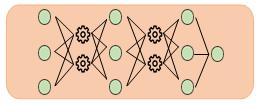
Neurosymbolic architecture refers to a computational framework that integrates neural network-based learning with symbolic reasoning methods. This hybrid approach combines the ability of neural networks to learn patterns and representationsfromdatawiththelogicalreasoningcapabilitiesofsymbolicsystems.
Neural networks typically perform tasks like feature extraction, pattern recognition, and representation learning from large-scale data in neurosymbolic architecture. These neural components learn to encode complex relationships and patternsinthedata,capturingitsunderlyingstructure.
Thestructureofthepaperisasdescribedbelow.
Discussing various models that are considered to be state-of-the-art, and provides an explanation of the neurosymbolicapproachanditspotentialities.
Thecontextofpredictivemaintenanceandthewaysthatarecurrentlybeingusedarediscussed.
Provides a description of our proposal to utilize neuro-symbolic approaches for the purpose of enhancing the predictivemaintenancemethodsthatarenowinuse.
Through this research, we hope to contribute to the advancement of recommendation systems in UI design and provide valuable insights into the potential of neurosymbolic AI for reasoning over rule-based design and knowledge graphs. Ultimately, our goal is to empower designers and developers with tools that can generate personalized and insightful recommendationswhilemaintainingtransparencyandinterpretabilityinthedecision-makingprocess.
The study aims to provide a rule-based design process for neurosymbolic systems, emphasizing the integration of knowledge-based systems (KBS) and deep learning models (DL). The study integrates both theoretical and practical integration components, making it applicable to a wide range of model combinations and application scenarios. This design process addresses the complementary features of symbolic and subsymbolic paradigms, aiming to harness their combinedbenefits.However,thelackofexplicitdesignrulesforneurosymbolicmodelsnecessitatesanexaminationofthe motivations for integration alongside contextual and practical considerations, such as available resources, required data
Volume: 11 Issue: 05 | May 2024 www.irjet.net p-ISSN:2395-0072 © 2024, IRJET | Impact Factor value: 8.226 | ISO 9001:2008 Certified Journal | Page767
International Research Journal of Engineering and Technology (IRJET) e-ISSN:2395-0056
Volume: 11 Issue: 05 | May 2024 www.irjet.net p-ISSN:2395-0072
types,andthescopeofwork.Whileneurosymbolicdesignmethodsinexistingliteraturelayafoundationalunderstanding and outline desired system characteristics, they fall short in offering specific implementation guidelines. Consequently, thereisanotableabsenceofclearinstantiationexampleshighlightingintegrationperspectives.[3]
Furthermore, we offer specialized integration templates to provide a more detailed characterization of neurosymbolic systems.Whenconsideringneurosymbolictechniquesfromtheperspectiveofintegration,wecandistinguishtwoprimary categories: introduction (also known as insertion) and extraction. When compared to extraction approaches, insertion approachesincludetheintegrationofmanymodelswithinasingleframework.Ontheotherhand,extractionapproaches involve mining one of the models from another. The provided description and the reviewed literature suggest three possible integrations: KBS insertion into DL models, DL insertion into KBS, and KBS extraction from DL models. This document outlines the parameters for each of these three integration scenarios, providing a template to represent those parameters.Weofferaninstantiationexampleforeachintegrationtemplatetofurtherdemonstratetheapplicabilityofthe given template-based design process. Each of these templates is associated with a different interaction that could occur. Thesetemplatesprovideadescriptionofneurosymbolicsystemsthathaveactuallyexistedinthepast,demonstratinghow theproposedmethodcanaccuratelyprofiletheseframeworks.
Cutting-edge technology A set of methodologies aimed at integrating antagonistic AI models is referred to as neurosymbolic (or hybrid) artificial intelligence. These methods aim to develop innovative approaches that amalgamate the most effective elements of symbolic and subsymbolic methods into a unified approach. [4] proposed a theory regardingthe potential advantagesthat could be gainedby integratingsymbolicandsubsymbolicsystems, whichfor the purposes of this discussion, are represented by rule-based systems and neural networks, respectively. "The ability of neural networks to perform tasks that would otherwise prove difficult or intractable to symbolic computing systems is nowrecognized,"[5]states."Thisabilityhasbeenrecognizednow."Neurosymbolicsystemsassertthattheyintegratethe benefitsofsymbolicandsubsymbolicmodels,enablingtheresultinghybridsystemtotackleproblemsbeyondthescopeof a single model. This statement explains the theory underlying neurosymbolic systems. You can find a more recent discussionofthisassertionin[6],whichoffersanoverviewofthecharacteristicsofsymbolicandsubsymbolicmodels.The research findings summarize the fundamental concept of neurosymbolic integration as "the creation of a system that combines the benefits of both methods: the ability to learn from the environment and the ability to reason about the results." One of the first ways that properties that these systems should have were defined was by the work of McGarry and coworkers. The study suggests that the following should be some of the most important parts of a neurosymbolic system: (i) the ability to think clearly even when the data is noisy or incomplete; (ii) the capacity to learn little by little from new experiences;and (iii)thecapacityto generalizeand explain the models'line ofthought.A recentstudy[8]has helpedusnarrowdownthebestqualitiesofneurosymbolicsystemstotwomainones..
Neuro-symbolic artificial intelligence is an interdisciplinary field in computer science that combines neural networks, which are a component of deep learning, with symbolic reasoning techniques. By combining the positive aspects of both approaches,itseekstoclosethegapthatexistsbetweenstatisticallearningandsymbolicthinking.Inadditiontoutilizing the tremendous pattern recognition capabilities of neural networks, this hybrid approach enables robots to reason symbolicallyabouttheirownactions.Amoresophisticatedformofartificialintelligencethanitsconventionalcounterpart, itemploysdeeplearningneuralnetworktopologiesandcombinesthemwithsymbolicreasoningtechniques.Withneural networks,forexample,wehavebeenabletodiscernthetypeofshapeorcolorthatanitempossesses.Ontheotherhand,it ispossibletopushitfurtherbyemployingsymbolicthinkinginordertoexposemoreexcitingpropertiesoftheitem,such asitsarea,volume,andrelatedcharacteristics.
NeurosymbolicAIforreasoningthatisbasedonrulescombinessymbolicruleswithneuralnetworkarchitecturestomake reasoningmoreeffectiveandeasiertounderstand.
In traditional rule-based systems, logical rules are manually defined to represent knowledge and infer new information based on logical deductions. However, these systems may struggle with handling uncertainty, noisy data, and complex patternsinreal-worldscenarios.Ontheotherhand,neuralnetworksexcelatlearningpatternsandrepresentationsfrom large-scaledatabutoftenlacktransparencyandinterpretability.
International Research Journal of Engineering and Technology (IRJET) e-ISSN:2395-0056
Volume: 11 Issue: 05 | May 2024 www.irjet.net p-ISSN:2395-0072
NeurosymbolicAIaimstocombinethestrengthsofbothsymbolicandneuralapproachestoaddresstheselimitations.In thecontextofreasoning,thismeansaddingsymbolicrulestoneuralnetworkmodelssotheycandoreasoningtaskswhile stillusingneuralnetworks'data-drivenlearningfeatures.
Thereareseveralwaystoincorporaterule-basedreasoningintoneuralarchitectures:
Neural-Symbolic Integration:
Thisapproachinvolvesexplicitlyencodingsymbolicrulesaspartoftheneuralnetworkarchitecture.Forinstance,wecan representlogicalrulesastrainableparametersorembedthemwithinthenetwork structureitself.Thisallowstheneural networktolearntoreasonbasedonbothdataandpredefinedrules.
Neural-Symbolic Fusion:
Thisapproachcombinesneuralembeddingslearnedfromdatawithsymbolicrepresentationstoperformreasoningtasks. This could involve learning embeddings for entities and relations in a knowledge graph, then using symbolic rules to performlogicalinferenceovertheseembeddings.
Differentiable Rule Learning:
This approach involves learning symbolic rules in a differentiable manner within a neural network framework. This lets the network improve boththe neural parametersandthesymbolicrulesatthe same time based on a goal function. This combinesdata-drivenlearningwithsymbolicreasoninginausefulway.
Neurosymbolic Execution: This approach involves executing symbolic rules directly within neural networks. Instead of relying on separate rule engines or inference mechanisms, neural networks are augmented with the ability to perform logicaloperationsandsymbolicreasoningaspartoftheircomputationgraph.
Need for Neuro Symbolic AI
Itisevidentthatsymbolsareanessentialcomponentofcommunication,whichhelpstheintelligenceofpeoplewhenone takesintoconsiderationhowpeoplethink andreason. Researchersattemptedtoimitaterobotsymbolsinordertomake them function in a manner that is comparable to that of humans. The explicit incorporation of human knowledge and behavioral standards into computer programs was necessary for rule-based symbolic artificial intelligence design. The additionofmorerulesnotonlyincreasedthecostofthesystems,butalsodecreasedtheiraccuracy.
Researchersstudiedatechniquethatwasmoredata-driventoaddresstheseissues,whichsparkedtheattractionofneural networks. Despite the constant information input required for symbolic artificial intelligence, a sufficiently large dataset can enable neural networks to train themselves. Despite everything operating smoothly, the difficulty in comprehending themodelandthevolumeofdatanecessaryforcontinuedlearningnecessitatetheimplementationofamoreappropriate system.
Inspiteofitseffectivenessinlarge-scalepatternrecognition,deeplearningisnotabletoidentifycompositionalandcausal structuresfromdata.Despitesymbolicmodels'designtocaptureintricatelinkages,theyeffectivelycapturecompositional andcausalpatterns.
The drawbacks of these two approaches led to their merging to create neuro-symbolic artificial intelligence, which outperformseachwhenusedseparately.Thegoalistoachieveahigherlevelofsystemintelligencebycombininglearning with logic. The integration of domain knowledge and common-sense thinking that is given by symbolic AI systems is anticipatedtobebeneficialtodeeplearning,asstatedbyresearchers.Forinstance,aneuro-symbolicsystemusesthelogic ofsymbolicartificialintelligencetodetectshapesmoreaccurately,andaneuralnetwork'spatternrecognitioncapabilities to identify items.A neuro-symbolic system works by employing logical reasoning and language processing in order to providearesponsetothequestioninthesamemannerthatahumanwould.Itis,nevertheless,moreeffectivethanneural networksandrequiresasignificantlysmalleramountoftrainingdatathanneuralnetworksdo.
Neuro-Symbolic approaches
Neuro-symbolic approaches are hybrid models that combine both inductive (deep learning) and deductive (symbolic) approaches. Together, these two methods provide models that are not only more resilient and accurate but also more
International Research Journal of Engineering and Technology (IRJET) e-ISSN:2395-0056
Volume: 11 Issue: 05 | May 2024 www.irjet.net p-ISSN:2395-0072
easily explicable. [9] developed a taxonomy for neuro-symbolic integrations by categorizing them based on the features theypossessandthemethodofcompletion.
Neuro-symbolictechniquesaregaininginterestintheresearchcommunityandfindingapplicationinvarious fields.After that, we provide an overview of the most advanced hybrid models, demonstrating their potential and the various applications that they can be used for in accordance with the taxonomy that was previously described. Even though six categories wereidentified in[10],asfaras weknow, noworkshave been written about neuro [symbolic].Thisrefersto methodsinwhichneuralnetworksusesymbolicsolversintheirdesign,asshowninFigure1.
Themajorityofthetime,modelsthatfallintothiscategoryareutilizedinthecontextofnaturallanguageprocessing(NLP). Inthiscontext,theobjectiveistoconstructanembeddingofatoken,whichisasymbol,suchasawordinasentence.We did this with the intention of predicting subsequent tokens, classifying them (through sentiment analysis), or producing newtokens.Figure2showsarepresentationofthearchitecture.Itwasproposedby[11].
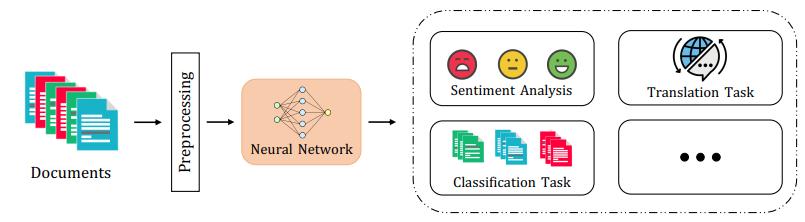
Themajorityofthetime,modelsthatfallintothiscategoryareutilizedinthecontextofNLP.Inthiscontext,theobjective istoconstructanembeddingofatoken,whichisasymbol,suchasawordinasentence.Wedidthiswiththeintentionof predictingsubsequenttokens,classifyingthem(throughsentiment analysis),orproducing new tokens.Figure 2showsa representationofthearchitecture.Itisproposedby.[12].
Neuro Symbolic Incontrasttotheprecedingcategory(Symbolic[Neuro]),inwhichneuralnetworksareconsideredtobe "sub-networks," the models in this category interact with one another in an equal manner inside the global architecture. Figures 3a and 3b depict two different groups. When it comes to neuro-symbolic, the most common applications for models are in the areas of query response and planning. Making plans. [13] proposed a unified framework, PEORL, to determinethebehaviorsanagentwouldperforminaspecificenvironment.Thisframeworkmixessymbolicplanningwith reinforcement learning. In [14], they describe an updated version that incorporates an intrinsic reward to enhance the optimization of the reinforcement learning model. PLANS [15] utilizes neural architecture to construct an action list, starting with visual data. Next, a rule-based solver receives the obtained outputs and generates the sequences of final actions that an agent will execute. Additionally, a filtering method selects and retains only those outputs that exceed a specific threshold in likelihood. The authors of [16] present a technique known as Symbolic Options for Reinforcement Learning(SORL).
International Research Journal of Engineering and Technology (IRJET) e-ISSN:2395-0056
Volume: 11 Issue: 05 | May 2024 www.irjet.net p-ISSN:2395-0072
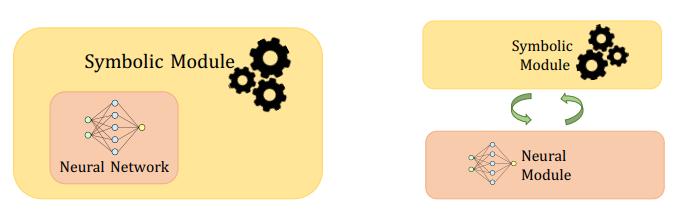
Figure3:asymbolicarchitecturewithneurocomponents,
Neuro:Symbolic Neuro - Thiscategoryincludesanyandallarchitecturesthatutilizeaneuralmodelfortheprocessingof the knowledge base. The architecture of such an approach is depicted in Figure 4a, respectively. The authors of [17] presentalanguagemodel,whichtheycalltheNeural-SymbolicLanguageModel.Thepurposeofthismodelistoimprove the inductive bias. The development of neural Markov Logic Networks (NMLN) may be found in. Probabilistic models, known as Markov Logic Networks, are characterized by the use of logic to describe data and statistics in order to solve prediction tasks. NMLN employs neural networks to estimate probability distributions that govern the logic rules using min-max entropy. In [18], we propose a framework that integrates symbolic (explicit) and implicit knowledge. This framework is provided by the term KRISP. Upon receiving an image as input, the model extracts symbolic information knownasvisualconcepts.Wethencoupletheseconceptswithaknowledgegraph(KG).Theestimationoftheprobability distributionsoftherepliesisaccomplishedthroughtheutilizationofgraphneuralnetworksandtransformerarchitecture.
Neuro {Symbolic} Figure4bdepicts one exampleofan architectural design thatfallswithinthiscategory.This category includes systems that incorporate logic principles into the weights of neural networks. On the basis of first-order logic formalism, the authors of [19] propose a logic tensor network (LTN) with the intention of locating a method that can discriminatelogicrules.Theauthorsconsider[20's]strategy,whichdefinesdifferentiableoperationsinsteadofemploying logicoperationstodistinguishlogicoperators.Proposedby[21],Multiplexnetisaneuralnetworkoptimizationtechnique that integrates logic constraints into neural network computation to guide its training. The objective is to locate a data transformationthat,giventheassumptionthattherulesareindisjunctivenormalform(DNF),willresultintheDNFbeing sufficient.Toachievethis, weadda component representingthedegreeof constraintviolationto the loss and adjustthe activation functions accordingly. Hard limitations should be incorporated into the neural network under consideration. Thetechniquesofinductivereasoninganddeductivereasoningarecombinedinneurallogicmachines(NLM).Throughthe utilization of a differentiable operator’s defined meta-rule, the grounding of the predicate is transformed into boolean tensors,whichmaythenbeemployedformanipulation.Theauthorsof[22]createdSATNettosolvetheMAXSATissuesby utilizinganeuralnetwork.
The rules that govern maintenance are essential in industries, and their objectives are diverse. These include preventing failures, reducing costs associated with unplanned downtime, and developing methods for recovering systems. They provide organizations with data-driven insights that enable them to monitor and manage their equipment in a proactive manner in order to address such difficulties. Predictive maintenance specifically aims to continuously monitor the data from inserted sensors in the system. We do this to identify failures and implement solutions to restore the equipment's operationalstatus.Specifically,thegoalofpredictivemaintenanceistocontinuouslymonitorthedataprovidedbysensors insertedintothesystem.Wedothistoidentifyfailuresandimplementsolutionstorestorethesystem'sfunctionality.
International Research Journal of Engineering and Technology (IRJET) e-ISSN:2395-0056
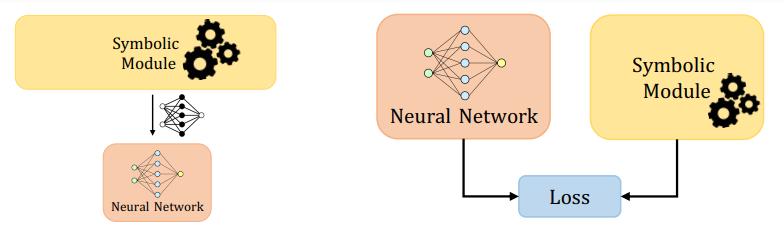
Figure4:Neuro:Symbolic→Neuro(a)andNeuro_{Symbolic}(b)architecture
• Residual Generation
• Residual Evalution
• Fault Diagnosis
Figure5:"Themodel-basedapproachencompassestheoverallmechanism."
Predictive maintenance can be broken down into three primary steps, which are as follows: (3) designing methods and tools to recover system functionalities; (4) monitoring the parameters of the systems; (5) establishing parameter thresholdsforthepurposeofdiscoveringabnormalities.Specifically,state-of-the-artmethodsutilizeautomaticalgorithms for(i)preprocessingsensordataand(ii)evaluatingthecorrectworkingofthesystems.Methodsandtoolsforpredictive maintenancearecontinuallyimproving,andthisisespeciallytrueforautomaticalgorithms.Model-basedanddata-driven algorithmsarethetwomostpopulartechniquesutilizedinthefieldofpredictivemaintenance.
Model-based. Methods that are based on models make use of mathematical models in order to discover failures; these methods also make use of a knowledge base that is provided by specialists in a particular field. Figure 5 illustrates the generalmechanismofmodel-basedtechniquesinthreesuccessivesteps.Inparticular,thisisthecase.Intheeventthatwe are provided with a component ��, a timestamp, a parameter that describes the usual performance levef, and a second parameter that represents the actual performance level, we are able to determine the residuals by computing �� Specialiststhenputthedatathroughaseriesoflogicrulestoidentifyirregularities..Inthefinalstage,whichis calledfault diagnosisis,theoutputfromthestepbeforeitisusedtoobtainfurtherdatainordertoinvestigatethecurrentfailureand takepreventativemeasuresagainstanypotentialanomalies.FormallanguagessuchasFirstOrderLogic(FOL)an position logicalareexamplesofpossiblewaysinwhichhumanknowledgecanbeexpressedassymbolsSymbolicsystemsemploya
Volume: 11 Issue: 05 | May 2024 www.irjet.net p-ISSN:2395-0072 © 2024, IRJET | Impact Factor value: 8.226 | ISO 9001:2008 Certified Journal | Page772
International Research Journal of Engineering and Technology (IRJET) e-ISSN:2395-0056
Volume: 11 Issue: 05 | May 2024 www.irjet.net p-ISSN:2395-0072
deductive method, enabling the inference of new knowledge from a generic knowledge base (KB) relevant to a specific subject.
Data-driven. Bottom-up tactics are carried out using inductive procedures, such as data-driven approaches. These approaches begin with observations and then develop models that are able to generalize the observation to a broader populationandinferadditionaldata. Asadata-drivenmethod,artificialintelligencehasbeenusedbecauseitcanbeused tomakemodelsthatcanlookatverylargedatasetsandfindpatternsthataren'tnormal."Anomalouspatterns" areoften relatedtotheideaof"systemsinefficiency"inpredictivemaintenance,whichmeansthattherearemorechancesforthings tobreak.Itusesavarietyofinformation,suchaslogicdataanddatafromsensors(liketemperature,humidity,andspeed). Bigdataandalotofcomputingpowerareneededtomakedata-drivensystemsthatwork.
Existing methods have various weaknesses and our proposal
Theexistingapproachestopredictivemaintenance,whicharemodel-basedanddata-driven,haveanumberoflimitations; hence,theywillpresentanoverviewofthemostsignificantshortcomings.Theysuggestthedevelopmentofsolutionsfor predictive maintenance that make use of hybrid approaches and are founded on three primary and important aspects in ordertoeffectivelyaddresstheseconcerns.Theyalsogiveapotentialuse-casescenarioforconsideration.
A method that is driven by data produces results that are of higher quality. Model-based approaches provide an easy interpretation because the parameters that respond to physical occurrences within systems coincide with behavioral models. This makes it possible for these approaches to provide clarity. Nevertheless, the generation of correct models sometimesprovestobechallenginginpractice,particularlywhendealingwithcomplexsystemsthatarecharacterizedby the presence of a wide variety of physical events. In most cases, even when such a model does exist, it is typically a representation of specific physical phenomena that were produced under precise experimental conditions. As a result, conductingtrialsunderavarietyofoperatingconditionscanbeacostlyendeavor,whichrestrictsthepossibleapplication of this approach. On the other hand, the broad availability of sensors and the increased processing power have made it easier to implement artificial intelligence approaches, which has resulted in the development of data-driven methodologies. These methods use artificial intelligence-supported tools to transform monitoring data into behavioral models.Data-drivenapproachesareamiddlegroundbetweenbeingtoohardtoadoptandbeingtooexpensive,accurate, and useful. Methods that are based on data are better than methods that are based on models for systems where it is possible tocollectmonitoringdata thatcorrectlyshowshowdegradationhappens.Ontheotherhand,oneproblem with data-driven methods is that learning can take a long time. While model-based methods yield more precise results, databasedmethodsaresimplerandthereforemorepracticallyapplicable.
Neurosymbolic AI is gaining traction in various industries, including software development, where it offers unique advantages in combining the strengths of neural networks and symbolic reasoning. Here are a few case studies highlightingtheapplicationofneurosymbolicAIinthesoftwareindustry:
Software developers can use neurosymbolic AI to enhance code generation and bug detection processes. By integrating neural networks for learning code patterns and symbolic reasoning for semantic analysis, developers can create more robustcodegenerationtools.Forexample,a studyconductedbyresearchersatMicrosoftResearchandtheUniversityof California, Berkeley, utilized neurosymbolic techniques to automatically generate code snippets from natural language descriptions.Thesystememployedneuralnetworkstounderstandthenaturallanguageinputandsymbolicreasoningto translateitintoexecutablecode,improvingtheefficiencyandaccuracyofcodegenerationtasks.
WecanalsoapplyneurosymbolicAItoautomatesoftwaretestingprocesses,therebyenhancingtheeffectivenessofquality assurance efforts. By combining neural network-based techniques for identifying potential software bugs with symbolic reasoningforgeneratingtestcasesandverifyingprogramcorrectness,developerscanstreamlinethetestingprocessand improvesoftwarereliability.ResearchersatGoogleandStanfordUniversity,forinstance,usedneurosymbolictechniques inacasestudytoautomaticallygeneratetestcasesforsoftwareprograms.Thesystemutilizedneuralnetworkstoidentify
International Research Journal of Engineering and Technology (IRJET) e-ISSN:2395-0056
Volume: 11 Issue: 05 | May 2024 www.irjet.net p-ISSN:2395-0072
potential bugs in the code and symbolic reasoning to generate test inputs that trigger those bugs, enabling more comprehensivesoftwaretesting.
NeurosymbolicAIhasapplicationsinnaturallanguageprocessing(NLP)tasksrelevanttosoftwaredevelopment,suchas code summarization, documentation generation, and requirement analysis. By combining neural network-based models for language understanding with symbolic reasoning for semantic interpretation, developers can improve the efficiency and accuracy of NLP-based software development tools. For example, a study conducted by researchers at Facebook AI and the University of Oxford utilized neurosymbolic techniques to automatically generate code documentation from natural language descriptions. The system employed neural networks to extract relevant information from the natural language input and symbolic reasoning to structure the documentation in a human-readable format, facilitating better codeunderstandingandmaintenance.
Neurosymbolic AI presents a promising approach for addressing complex challenges in the software industry, offering a unique combination of neural network-based learning and symbolic reasoning techniques. By integrating these methodologies, neurosymbolic AI enables more effective code generation, bug detection, automated testing, and natural language processing in software development. Neurosymbolic AI bridges the gap between data-driven and rule-based approachesbyleveragingneuralnetworksforpatternrecognitionandlearningfromlarge-scaledata,aswellassymbolic reasoning for logical inference and knowledge representation, resulting in more robust and interpretable software developmenttoolsandprocesses.Thecasestudieshighlightedinthisdiscussiondemonstratethediverseapplicationsof neurosymbolic AI in software development, from improving code generation efficiency and bug detection accuracy to automating software testing and enhancing natural language processing tasks. The neuro-symbolic techniques in the subject of predictive maintenance have demonstrated a great deal of promise. The goal is to do additional research and development on these methods, which have the potential to overcome some of the constraints that are associated with conventional model-based and data-driven approaches. The ultimate objective is to successfully supply revolutionary neuro-symbolic models for predictive maintenance in order to make use of new architectures that prioritize interpretabilityandresiliencewhilealsomaintaininghighlevelsofperformance.
1. T. Zonta, C. A. da Costa, R. da Rosa Righi, M. J. de Lima, E. S. da Trindade, G. P. Li, Predictive maintenance in the industry4.0:Asystematicliteraturereview,Computers&IndustrialEngineering150(2020)106889.
2. H.Kautz,Thethirdaisummer:Aaairoberts.engelmorememoriallecture,AIMagazine43(2022)105–125.
3. T. Mikolov, K. Chen, G. Corrado, J. Dean, Efficient estimation of word representations in vector space, in: ICLR (WorkshopPoster),2013.
4. J.Pennington,R.Socher,C.D.Manning,Glove:Globalvectorsforwordrepresentation,in:EMNLP,ACL,2014,pp. 1532–1543.
5. D. Silver, A. Huang, C. J. Maddison, A. Guez, L. Sifre, G. van den Driessche, J. Schrittwieser, Antonoglou, V. Panneershelvam, M. Lanctot, S. Dieleman, D. Grewe, J. Nham, N. Kalch- brenner, I. Sutskever, T. P. Lillicrap, M. Leach, K. Kavukcuoglu, T. Graepel, D. Hassabis, Mastering the game of go with deep neural networks and tree search,Nat.529(2016)484–489.
6. S. Garg, A. Bajpai, Mausam, Symbolic network: Generalized neural policies for relational mdps, in: ICML, volume 119ofProceedingsofMachineLearningResearch,PMLR,2020,pp.3397–3407.
7. W. W. Cohen, H. Sun, R. A. Hofer, M. Siegler, Scalable neural methods for reasoning with a symbolic knowledge base,in:ICLR,2020.
8. F.Yang,D.Lyu,B.Liu,S.Gustafson,PEORL:integratingsymbolicplanningandhierarchicalreinforcementlearning forrobustdecision-making,in:IJCAI,ijcai.org,2018,pp.4860–4866.
International Research Journal of Engineering and Technology (IRJET) e-ISSN:2395-0056
Volume: 11 Issue: 05 | May 2024 www.irjet.net p-ISSN:2395-0072
9. D. Lyu, F. Yang, B. Liu, S. Gustafson, SDRL: interpretable and data-efficient deep re- inforcement learning leveragingsymbolicplanning,in:AAAI,AAAIPress,2019,pp.2970–2977.
10. R.Dang-Nhu,PLANS:neuro-symbolicprogramlearningfromvideos,in:NeurIPS,2020.
11. M.Jin,Z.Ma,K.Jin,H.H.Zhuo,C.Chen,C.Yu,CreativityofAI:automaticsymbolicoptiondiscoveryforfacilitating deepreinforcementlearning,in:AAAI,AAAIPress,2022,pp.7042–7050.
12. X. Chen, C. Liang, A. W. Yu, D. Zhou, D. Song, Q. V. Le, Neural symbolic reader: Scalable integration of distributed andsymbolicrepresentationsforreadingcomprehension,in:ICLR,2020.
13. K.Yi,J.Wu,C.Gan,A.Torralba,P.Kohli,J.Tenenbaum,Neural-symbolicVQA:dis-entanglingreasoningfromvision andlanguageunderstanding,in:NeurIPS,2018,pp.1039–1050.
14. D. Demeter, D. Downey, Just add functions: A neural-symbolic language model, in: AAAI, AAAI Press, 2020, pp. 7634–7642.
15. G. Marra, O. Kuzelka, Neural markov logic networks, in: UAI, volume 161 of Proceedings of Machine Learning Research,AUAIPress,2021,pp.908–917.
16. K.Marino,X.Chen,D.Parikh,A.Gupta,M.Rohrbach,KRISP:integratingimplicitandsymbolicknowledgeforopendomainknowledge-basedVQA,in:CVPR,ComputerVisionFoundation/IEEE,2021,pp.14111–14121.
17. S.Badreddine,A.S.d’AvilaGarcez,L.Serafini,M.Spranger,Logictensornetworks,Artif.Intell.303(2022)103649.
18. E. van Krieken, E. Acar, F. van Harmelen, Analyzing differentiable fuzzy logic operators, Artif. Intell. 302 (2022) 103602.
19. N. Hoernle, R. Karampatsis, V. Belle, K. Gal, Multiplexnet: Towards fully satisfied logical constraints in neural networks,in:AAAI,AAAIPress,2022,pp.5700–5709.
20. E. Giunchiglia, T. Lukasiewicz, Multi-label classification neural networks with hard logical constraints, J. Artif. Intell.Res.72(2021)759–818.
21. H.Dong,J.Mao,T.Lin,C.Wang,L.Li,D.Zhou,Neurallogicmachines,in:ICLR(Poster),OpenReview.net,2019.
22. P. Wang, P. L. Donti, B. Wilder, J. Z. Kolter, Satnet: Bridging deep learning and logical reasoning using a differentiablesatisfiabilitysolver,in:ICML,volume97ofProceedingsofMachineLearningResearch,PMLR,2019, pp.6545–6554.