
International Research Journal of Engineering and Technology (IRJET) e-ISSN:2395-0056
Volume: 11 Issue: 05 | May 2024 www.irjet.net p-ISSN:2395-0072

International Research Journal of Engineering and Technology (IRJET) e-ISSN:2395-0056
Volume: 11 Issue: 05 | May 2024 www.irjet.net p-ISSN:2395-0072
Pranav Khare1, Sahil Arora2
1Independent Researcher/Sr. Product Manager, AI/ML & Digital Identity Verification, Seattle, WA, USA
2Independent Researcher/Staff Product Manager, AI/ML, Edge Infra & Identity, Mountain View, CA, USA
Abstract: The world of digital is quickly changing. In cloud-based services, the ability to quickly spot potential patterns in vendor migration or client loss threats is critical.A supervised machine-learning technique was utilized to create a training datasetfromactualcustomer,subscriptionservice,andusagehistorydatainordertomakepredictions Thisresearchaimsto explore the efficacy of machine learning models in predicting customer churn within Software as a Service (SaaS) products, offeringinsightstoempowercompaniestoproactivelyretainat-riskcustomersthroughtargetedinterventions.Inthedynamic landscapeofSaaSbusinesses,customerretentionstandsasacriticalfactorinfluencinglong-termsuccess.However,identifying and addressing churn risks among subscribers remains a formidable challenge. Leveraging historical data encompassing customer demographics, usage patterns, interactions, and subscription attributes, this study employs advanced machine learning techniques to develop predictive models capable of anticipating churn behavior. Through thorough data preprocessing, feature engineering, and model selection processes. Furthermore, model interpretation techniques shed light on the factors driving churn predictions, enabling companies to devise targeted retention strategies. By deploying the developed models into production environments and integrating them into the SaaS product lifecycle, organizations can actively monitor churn risks and implement proactive interventions, such as personalized marketing campaigns, tailored offers,andenhancedcustomersupportinitiatives.Thefindingsofthisresearchcontributetoadvancingtheunderstandingof customer churn prediction in SaaS contexts and offer practical guidance for companies seeking to mitigate churn risks and fosterlong-termcustomerrelationships.
Keywords: Digital transformation, Software as a Service (SaaS), Client loss threats, Long-term customer relationships, CustomerretentionandCustomerchurnprediction
Inrecentyears,businesseshavebeenabletocollectandprocessenormousamountsofdata,andatthesametime,theyhave come to the realization that putting the customer first is becoming an essential prerequisite in order to differentiate themselves from the competition. In point of fact, because of the saturation of markets, concentrating on Customer RelationshipManagement(CRM)inordertokeepthecustomersthatarealreadythereisnolongeranoption;rather,itisan imperative requirement for an organization to continue to be competitive. Taking a more general approach, data-driven decision making is a method that companies can use to ensure that their subsequent action will be beneficial to both themselves and their customers. The majority of businesses, particularly those operating within the technology ecosystem, have now implemented a tracking method in order to collect information concerning the actions of their customers. When businesses adopt machine learning applications that are functional for commercial purposes, they achieve better results in predictingtheamountofcustomerswhowillleave.Whenthereisalargeamountofnewdataofahighqualitytoworkwithin ordertoincreaseearnings,thedifficultyemerges.Oneofthemostimportantmetricsformeasuringcustomerhappinessisthe churn rate. Customers who are dissatisfied with your product or service and decide to quit company are said to have a high churnrate.Evenaminuteshiftinthechurnratecanhaveacumulativeeffectovertime,whichcanamounttoover12percent ofthechurnrateonanannual basis.Theindividual businessmodel ofeachfirmandtheproblemservicethat theyintendto address both have a role in determining the data that should be tracked accordingly. Through the process of studying how, when,andwhyconsumersbehaveinaparticularmanner,itispossibletoanticipatethenextstepsthattheywilltakeandhave the opportunity to work on resolving difficulties in advance. Churn prediction is the process of attempting to forecast the outcomeofaphenomenonthatinvolvesthelossofcustomers.Thisforecastandquantificationoftheriskoflosingclientscan be done on a global or individual level, and it is primarily utilized in regions where the product or service is promoted on a subscription basis. Generally speaking, the prediction of churn is accomplished by either researching the behavior of consumers or by observing individual behavior that suggests a danger of attrition taking place. The process involves the applicationofmodelingandmachinelearningtechniques,whichmayattimesrequiretheutilizationofasubstantialamountof
International Research Journal of Engineering and Technology (IRJET) e-ISSN:2395-0056
Volume: 11 Issue: 05 | May 2024 www.irjet.net p-ISSN:2395-0072
data. Churn rate analysis is an important topic for companies competing in saturated markets, such as telecommunications and internet service.[1] Regardless of the industry, companies need to analyze customer behavior and predict satisfaction and renewal rates. For Software-as-a-Service (SaaS) companies Churn rate is a particularly importantmetricfor evaluatingcustomerrelationshipssincecustomerretentioniscriticaltotheeconomicperformance ofthesecompanies.TheSaaS market is growing rapidly, but the increasinglycompetitive landscape and the diversity in marketshasmadeitdifficulttofindaconsensusonwhatfactorscontributetopositivechurn.[2]
In aSaaS business model,companiescharge monthly subscriptionfeeswithdifferentpricingtiers based onusage. This recurringrevenuebusinessmodelcreatesafundamentallydifferentdynamicfromatraditionalsoftware business. SaaS companies incur larger costs for every client acquisition due to marketing and advertising expenses, salaries for salespersons, and customer training expenses.With monthly subscription fee as the sole revenue stream forevery customer,ittakestwelvemonthsonaveragefor SaaScompaniestobreak-evenwiththeexpensesforasinglecustomer. Figure I illustrate the net cash flow for a new customer of a SaaS company and provides the basic intuitionbehind the idea of maximizing customer lifetime value (CLV).Ifthecustomercancelsservicebeforethe13thmonth,the companies cannotfullyrecover thecost to acquirethe customer(CAC).Theearlierhechurns,thelargerthelosstheSaaSCompany has to suffer. As a result, customer retention is extremely critical for SaaS companies to survive particularly in competitivemarkets.
Customer retention is crucial for the growth and sustainability of products with a subscription-based business model, particularlyinthecompetitivelandscapeoftheSoftwareasaService(SaaS)market.Withnumerousprovidersofferingsimilar solutionswithineachproductcategory,customershavethefreedomtoswitchbetweenproviderseasily.Evenasinglenegative experience canprompta customer tochurn, and ifa significant number ofcustomersleave in quick succession, the financial losses and reputational damage can be severe. Therefore, prioritizing customer satisfaction and implementing strategies to enhanceretentionisimperativeforSaaScompaniestothriveinthiscompetitiveenvironment.
There is a phenomena known as customer churn, which is sometimes referred to as customer attrition. This phenomenon describes the situationin whichcustomersstop being payingclientsand end their engagement witha certaincompany.Asa measure of the number of clients lost during a given time period, it is utilized. In the context of a certain time period, the customer churn rate refers to the percentage of consumers who discontinue utilizing the products or services offered by a particularorganization.Thechurnrateiscommonlycalculatedbyfirstdividingthetotalnumberofcustomersatthebeginning of a given period by the number of customers that were lost during that period, and then multiplying the result by 100 to expressitasapercentage.Forinstance,ifacompanyhad500customersatthebeginningofthemonthandthenhadalossof 20customersattheendofthemonth,thechurnrateforthatmonthwouldbecomputedasfollows:
Churn rate = (Number of customers lost / Total number of customers at the beginning of the month) * 100
Churn rate = (20 /500)*100= 4%
So,the monthly churn rate in this example is 4%.Understanding and effectively managing customer churn is essential for businesses, especially those with subscription-based models like SaaS, as reducing churn can lead to increased revenue and long-termcustomerloyalty.
International Research Journal of Engineering and Technology (IRJET) e-ISSN:2395-0056
Volume: 11 Issue: 05 | May 2024 www.irjet.net p-ISSN:2395-0072
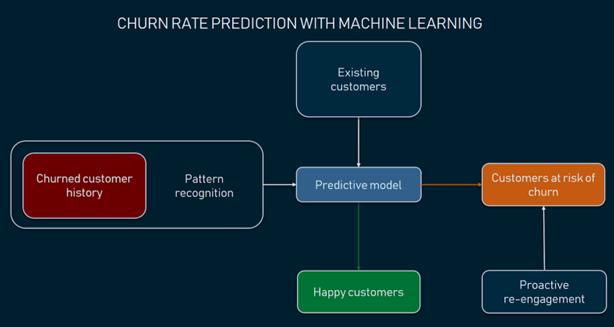
The term "customer churn" refers to the process by which customers terminate their engagement with a firm or brand by terminating their membership, canceling a service, or not making any additional purchases. The fact that it has a direct influence on a company's growth and income makes it an essential indicator for organizations. In order to have an understandingofcustomerchurn,itisnecessarytoconductananalysisofthefactorsthatcontributetocustomerattrition and to recognize patterns or trends that result in consumer disengagement. Businesses have the ability to take preventative measures to retain important consumers and enhance overall customer satisfaction if they acquire insights into the reasons why customers go away from the company.[2] Businesses operating in a wide range of sectors, such as telecommunications, software-as-a-service (SaaS), e-commerce, and others, are facing a huge challenge as a result of this issue. To achieve sustainablegrowthandtokeepahealthyclientbase,itisvitaltograsptheconceptofcustomerturnoverandemployeffective managementstrategies.
International Research Journal of Engineering and Technology (IRJET) e-ISSN:2395-0056
Volume: 11 Issue: 05 | May 2024 www.irjet.net p-ISSN:2395-0072
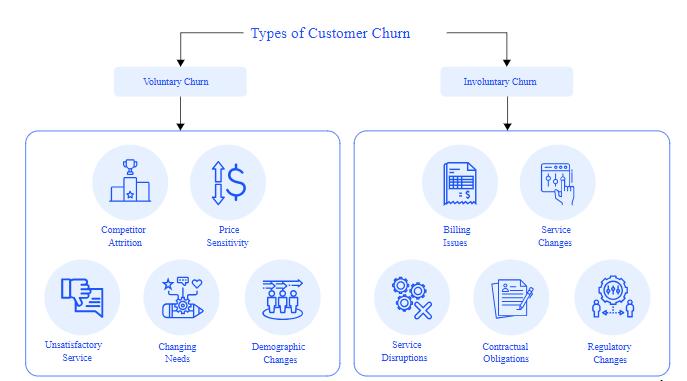
Voluntary churn: A consumer is said to have terminated their relationship with a company when they voluntarily made the decision to do so. There could bea number of reasons for this,including unhappiness withthe productor service,thepresenceofcomparableoffersfromotherbusinesses,shiftingrequirements,orfinancialbarriers.
Involuntary churn: Customers quit a company for causes that are beyond their control, which is an example of involuntary churn. As an illustration, this may take place in the event that a customer passes away, relocates to a regionwheretheserviceisinaccessible,orcontinuestohaveatechnicalproblemthathasnotbeenfixed.
Thephenomenonofcustomerchurnisnotlimitedtoaparticularsector;rather,itisawidespreadproblemthatisencountered bycompaniesoperatinginawiderangeofindustries,suchasbanking,e-commerce,telecommunications,softwareasaservice (SaaS),andmanyothers.Ancorporationmayexperiencecustomerchurnforavarietyofreasons,includingbutnotlimitedto intensecompetition,shiftingcustomerpreferences,inadequatecustomersupport,orinadequateproductorserviceofferings. This phenomenon occurs regardless of the industry in which the firm operates. It is essential to create efficient churn predictionsystemsinordertomanagethisissue,whichishighlightedbythefactthatchurnisaconcernthatissharedby all businesses. A number of interrelated issues and difficulties that businesses must overcome in order to keep their customers aretherootcausesofcustomerchurn,whichisaproblemthatisprevalentacrossallsectors.
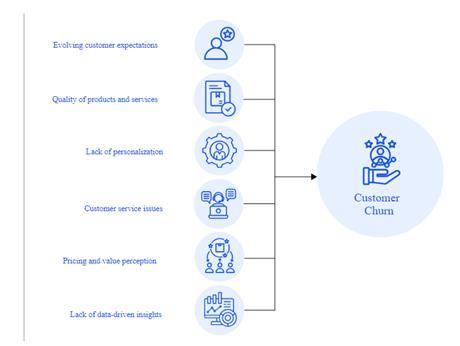
Fig:3.Keyreasonswhycustomerchurnisprevalentinvarioussectors:
Increased competition: Intense competition among businesses results in customers having numerous options. If a competitoroffersbettervalueorincentives,customersaremorelikelytoswitch,leadingtochurn.
Evolving customer expectations: Companies have to be able to quickly adapt in order to satisfy the ever-changing demands of their customers as technology continually develops and consumer preferences shift. Should this not be done,itmayleadtounhappinessand,ultimately,churn.
Global connectivity: Customers now have an easier time engaging in research, making comparisons, and switching between different products and services as a result of the internet and worldwide connectedness. As a result of this
International Research Journal of Engineering and Technology (IRJET) e-ISSN:2395-0056
Volume: 11 Issue: 05 | May 2024 www.irjet.net p-ISSN:2395-0072
enhanced access to information, clients are given more power, and they are more likely to investigate alternative options.
Quality of products and services: If a company's products or services consistently fail to meet customer needs or standards,customersmayseekalternativesthatofferbetterquality.
Lack of personalization: Customersvaluepersonalizedexperiencestailoredtotheirpreferences.Companiesthatfail topersonalizeinteractionsandofferingsmayrisklosingcustomerswhofeelundervalued.
Customer service issues: Poor customer service experiences, such as unresolved problems or inadequate support, candrivecustomerstoseekbetterserviceelsewhere.
Pricing and value perception: Customers expect to receive sufficient value for the price they pay. If they perceive thatthecost-to-valueratioisunfavorable,theymayswitchtocompetitorsofferingbetterpricingorperceivedvalue.
Life changes and circumstances: Customersmayleaveafirmeveniftheproductsandservicesitprovidescontinue tomeettheirexpectationsiftheyexperienceachangein theirlives,suchasmoving,experiencingfinancialissues,or shiftingtheirpreferences.
Subscription-based business models: Industries operating on subscription models, like SaaS companies or streamingservicesareparticularlysusceptibletochurnascustomerscaneasilycanceltheirsubscriptions.
Lack of data-driven insights: Companies that fail to collect and analyze customer data effectively may miss opportunitiestoproactivelyaddresschurnindicators.
Customer acquisition focus: Evenifitisessentialtoacquirenewcustomers,itisalsopossibletoincreasechurnrates anddecreaselong-termprofitabilitybyignoringexistingcustomersinfavorofobtainingnewones.
Inadequate churn prevention strategies: Thereisapossibilitythatbusinessesdonothaveappropriatestrategiesor resourcestopreventcustomerturnover,whichcanleadtoincreasedchurnratesovertime.
Predicting customer churn in Software as a Service (SaaS) products using machine learning is of paramount importance for businesses operating in this competitive landscape.
Proactive Retention Strategies: Customer churn prediction enables companies to anticipate which customers are at risk of churning. With this foresight, businesses can implement proactive measures to retain these customers, such as offering personalizedincentives,providingadditionalsupport,orintroducingnewfeaturestoenhancethevalueproposition.
Resource Optimization: By accurately identifying potential churners, companies can allocate resources more efficiently. Rather than spreading resources thinly across all customers, businesses can concentrate efforts on retaining those who are mostlikelytochurn,optimizingtheuseoftime,manpower,andfinancialresources.
Improved Customer Experience: A more in-depth comprehension of the preferences and behaviors of customers can be achievedthroughtheuseofchurnprediction.Withthisinformation,businessesareabletomodifytheirgoodsandservicesin ordertobettersatisfytherequirementsoftheircustomers,whichultimatelyresultsinanimprovementoftheoverallcustomer experienceandthedevelopmentoflong-termloyalty.
Cost Savings: Acquiring newcustomerstypicallyincurshighercosts comparedto retaining existingones. Byreducing churn through predictive modeling, businesses can save on acquisition expenses while maximizing the lifetime value of their customerbase.
Competitive Advantage: CompaniesthateffectivelypredictandmitigatecustomerchurngainacompetitiveedgeintheSaaS market. By maintaining a loyal customer base, businesses can differentiate themselves from competitors and solidify their positionintheindustry.
Revenue Growth: Retaining customers throughchurn prediction directly impacts revenue growth. Satisfied,loyal customers are more likely to renew subscriptions, upgrade to higher-tier plans, and recommend the product to others, thereby driving sustainedrevenuegrowthovertime.
Data-Driven Decision Making: Churnpredictionleveragesdataanalysisandmachinelearningalgorithmstoinformstrategic decision-making.Byrelyingonempiricalevidenceratherthanintuition,businessescanmakeinformedchoicesthatalignwith customerneedsandmarkettrends.[3-4]
International Research Journal of Engineering and Technology (IRJET) e-ISSN:2395-0056
Volume: 11 Issue: 05 | May 2024 www.irjet.net p-ISSN:2395-0072
Continuous Improvement: There is the potential for churn prediction models to be improved and updated in response to freshdataandinsights.Usingthisiterativeapproach,businessesareabletokeepaheadofchangingconsumerbehaviorsand changetheirretentionstrategiesaccordingly,whichensuresthattheywillcontinuetobesuccessfulinreducingchurnrates.
Customer churn refers to the situation where customers discontinue their relationship with a company or business, ceasing to use its products or services.
Product-market fit failure: Whenacompany'sproductorservicefailstomeettheneedsorexpectationsofitstargetmarket, customersmayopttoswitchtocompetitorsthatofferbettersolutions.
Poor onboarding: Iftheonboardingprocessfornewcustomersisconfusing,lengthy,orlackssufficientguidance,customers maybecomefrustratedandabandontheproductorservicebeforefullyrealizingitsvalue.
Delayed Aha moment: The "Aha moment" refers to the point at which customers experience the full value or benefits of a productorservice.Ifthismomentisdelayedorunclear,customersmayloseinterestandchurnbeforerealizingtheproduct's potential.
Bad customer experience: Negativeexperiencesatanytouchpointwithacompany,suchasdifficultiesinusingtheproduct, unresponsivecustomersupport,orunresolvedissues,canleadtocustomerdissatisfactionandultimatelychurn.
Poor customer service: Inadequateorsubparcustomerservice,includingslowresponsetimes,unhelpfulsupportagents,or lackofresolutiontocustomerinquiriesorcomplaints,candrivecustomersawayfromacompany.
Product pricing plans weak points: Ifacompany'spricingplansarenotalignedwiththeperceivedvalueoftheproductor service,customersmayviewthemastooexpensiveornotworththeinvestment,leadingtochurn.
Understanding Customer Pain Points: Analyzing churn prediction models can provide insights into the reasons why customerschurn.Thishelpscompaniesidentifycommonpainpointsorissuesthatleadtochurnandaddress themproactively toimproveoverallcustomersatisfactionandretention.
Increasing Customer Retention: Ultimately, the goal of churn prediction is to increase customer retention rates. By identifyingchurnrisksearlyandimplementingtargetedstrategies tomitigatethem,businessescanimprovecustomerloyalty, reducechurn,andultimatelyincreaserevenueandprofitability.
Customer retention is essential to the business models of SaaS companies. For this reason there is a large number of papers that investigate the topics ofpredicting customer retention and churn analysis for companies across various industries. Multiple statistical anddata mining techniqueshave beenproposedandsomehave been putinto usein the fieldofCustomerRelationshipManagement(CRM).Thesetechniquesincludedecisiontrees,logisticregression,random forests,SupportVectorMachines(SVM), Bayesianmodelsandsurvivalanalysis[5].Descriptionsofthesetechniquesand theiruseinourcontainedintheMethodologysection.
AnexampleoftheuseofdecisiontreesforchurnanalysisisprovidedbyEuler[6].Classificationtreesbreakdownadataset into smaller subsets containing homogenousinstances. The process is repeated until the subset at a node has all the samevalueofthetargetvariable,orwhensplittingnolongeraddsvaluetotheprediction[7].Inthispaper,theresulting decisiontree,incombinationwiththeanalysisoftemporalaspectsofcustomers’behavior,identifiedtelecommunication customerswhoweremostlikelytochurn.Theresultingdecisiontreewaseasilyinterpretableandgave theresearchersa betterunderstandingofthedrivingfactorsincustomerchurn.Theeasyinterpretabilitymakesdecisiontreespossiblythe mostusedmethodforpredictingcustomerchurn
LariViere and Van den Poel [8] used random forests and regression forests to predict customer retention and profitabilityfromareal-lifesampleof10,000customersofalargeEuropeanfinancialservicesprovider. Randomforests are ensembles of random decision trees that are built bybootstrapping sampling on both observations and features.In
International Research Journal of Engineering and Technology (IRJET) e-ISSN:
Volume: 11 Issue: 05 | May 2024 www.irjet.net
this way, random forests can achieve a good compromise between bias and variance, thus often outperforming standalone estimators. Here the random forest technique was used for binary classification and for continuous variable prediction. Their results showed that the random forest techniques provided significantly better fits for the validation samplethanordinaryleastsquaresregressionandlogisticregressionmodels.
[9]appliedsupportvectormachinesinanewspapersubscriptioncontexttoconstructachurnmodel.ConstructingSVMs in a binary classification context can be boiled down to finding an optimal hyper plane that maximizes the margin betweenpositiveandnegativeinstances,wherethechoiceofthekernelfunctionvariesbythegeometryoftheproblem[8]. Their paper describes how SVMs and random forests can offer more effective alternatives than logistic regression. [10] ConstructedaBayesianBelief Network(BBN)toidentifythebehaviorsof customerswhohadpropensitytochurn.BBN is a probabilistic graphical model that represents the relationships between the variables with their conditional probabilities.Itisconsideredoneofthemost powerfulmethodsfor reasoningunderuncertaintyby taking advantage of existing independencies between variables to compactly model the full joint distribution. The authors found that explanatory variables that had effects on customer churn had high correlation with each other, and BBN could help to showthecausalrelationshipsbetweenthevariable
Theresearchmethodologyadoptedinthisstudyencompassesseveralkeystepstoinvestigatetheefficacyofmachinelearning modelsinpredictingcustomerchurnwithinSoftwareasaService(SaaS)products.Firstly,historicaldatacomprisingcustomer demographics,usage patterns,interactions,andsubscription attributes iscollected andprocessedtocreate a comprehensive trainingdataset.Thisdatasetundergoesrigorouspreprocessing,includingdatacleaning,featureengineering,andencodingof categoricalvariables,toensureitssuitabilityforanalysis.Inthisstudy,asupervisedmachinelearningapproachwasemployed to develop predictive models for customer churn prediction within Software as a Service (SaaS) products. Historical data encompassing customer demographics, usage patterns, interactions, and subscription attributes were collected and used to createatrainingdataset.
Thedatasetwassubjectedtothoroughpreprocessing,includingdatacleaning,featureengineering,andencodingofcategorical variables. Various machine learning algorithms, such as logistic regression, random forest, and gradient boosting machines, were implemented and evaluated for their predictive performance, The developed models were deployed into production environments to enable real-time monitoring of churn risks and facilitate the implementation of proactive interventions for customer retention, such as personalized marketing campaigns and tailored offers.Through these methodological steps, this researchaimstoadvancetheunderstandingofcustomerchurnpredictioninSaaScontextsandprovidepracticalguidancefor companiesseekingtomitigatechurnrisksandfosterlong-termcustomerrelationships.
1. Investigatemachinelearning'sefficacyinpredictingSaaScustomerchurn.
2. Evaluatemodelinterpretabilitytoidentifykeydriversofchurnpredictions.
3. ProvideactionableinsightsforproactiveSaaScustomerretentionstrategies.
International Research Journal of Engineering and Technology (IRJET) e-ISSN:2395-0056
Volume: 11 Issue: 05 | May 2024 www.irjet.net p-ISSN:2395-0072
The selection of analytical tool has been done on the base of need and requirement of the study. Bar Graph, Percentage, Average Method isusedin this research.Coding, tabulation, graphical representationis alsodone. MSExcel sheet isusedfor presentationofdata.
Following the collection of data for statistical information, the data will be processed using software such as SPSS for the purposeoftestingandgatheringresults.Researchandanalysisarenotcompletewithouttheutilizationofstatisticalmethods andinstrumentsfordatapresentation.Theresearchersareabletoproperlyconveytheirfindingsandeffectivelydrawrelevant inferencesfromtheirdatawiththeassistanceofthesetoolsandmethodologies.Charts(suchasbarcharts,linecharts,and pie charts),tables,graphs,andvisualizationsareallexamplesofcommongraphicaltoolsthatareusedtoconveydata.
Machine learning algorithms impact the efficacy of predicting SaaS customer churn
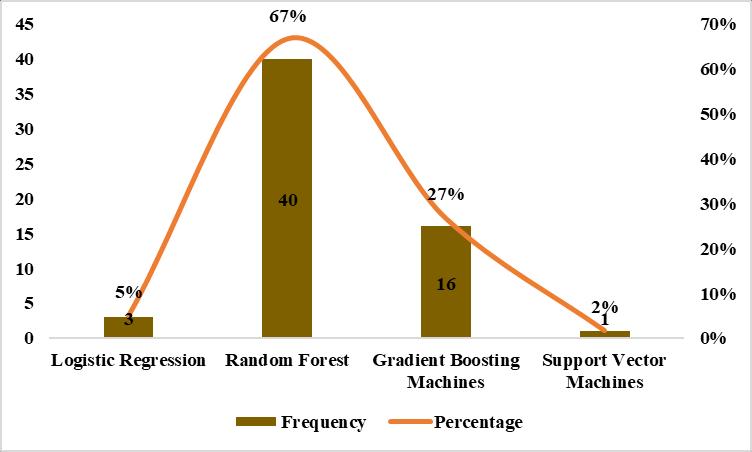
MachinelearningalgorithmsimpacttheefficacyofpredictingSaaScustomerchurn
ThechoiceofmachinelearningalgorithmssignificantlyimpactstheefficacyofpredictingSaaScustomerchurn.Whilelogistic regression offers simplicity and interpretability, random forest and gradient boosting machines often outperform it due to their ability to capture complex nonlinear relationships and handle large datasets effectively, leading to higher predictive accuracyandbetterperformanceinreal-worldapplications.
EngineeringplayinenhancingthepredictiveperformanceofSaaScustomerchurnmodels
International Research Journal of Engineering and Technology (IRJET) e-ISSN:2395-0056
Volume: 11 Issue: 05 | May 2024 www.irjet.net p-ISSN:2395-0072
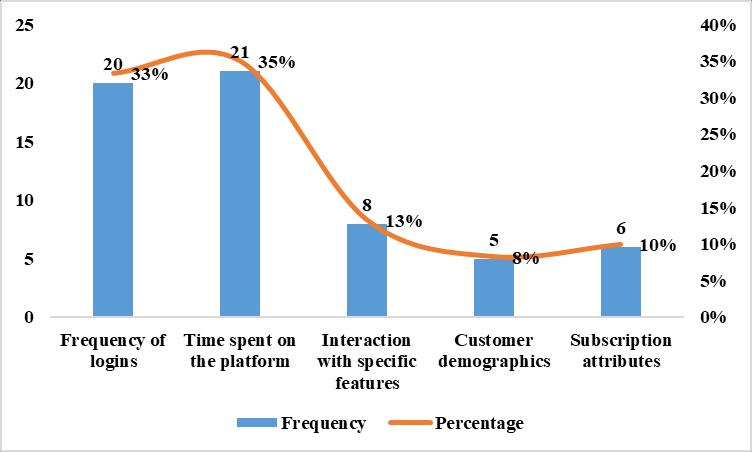
Fig.6engineeringplayinenhancingthepredictiveperformanceofSaaScustomerchurnsmodels
Engineering plays a crucial role in enhancing the predictive performance of SaaS customer churn models. While various featurescontribute,focusingonfactorslikefrequencyofloginsandtimespentontheplatformallowsmodelstocaptureuser engagementpatterns,providingvaluableinsightsintocustomerbehaviorandaidinginmoreaccuratechurnpredictions.
ContributemostsignificantlytoSaaScustomerchurnpredictions
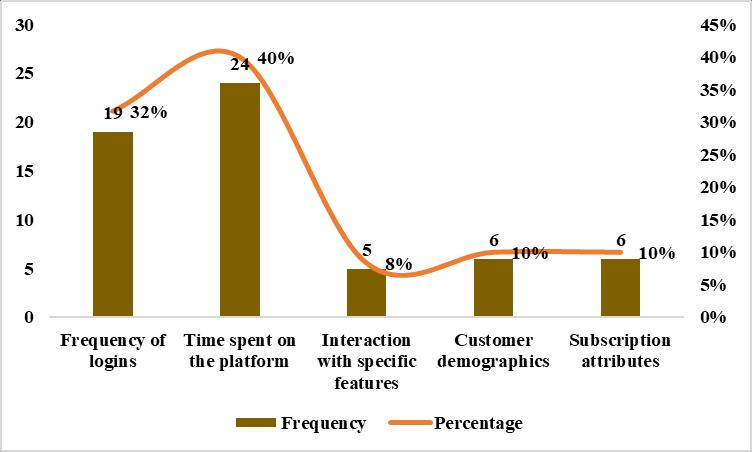
Fig.7ContributemostsignificantlytoSaaScustomerchurnpredictions
International Research Journal of Engineering and Technology (IRJET) e-ISSN:2395-0056
Volume: 11 Issue: 05 | May 2024 www.irjet.net p-ISSN:2395-0072
Time spent on the platform appears to contribute most significantly to SaaS customer churn predictions, with 40% of respondents indicating its importance. This suggests that user engagement plays a critical role in determining churn likelihood, highlighting the significance of monitoring and analyzing platform usage patterns for effective churn prediction strategies.
Decision-makingplayinoptimizingproactiveSaaScustomerretentionstrategies
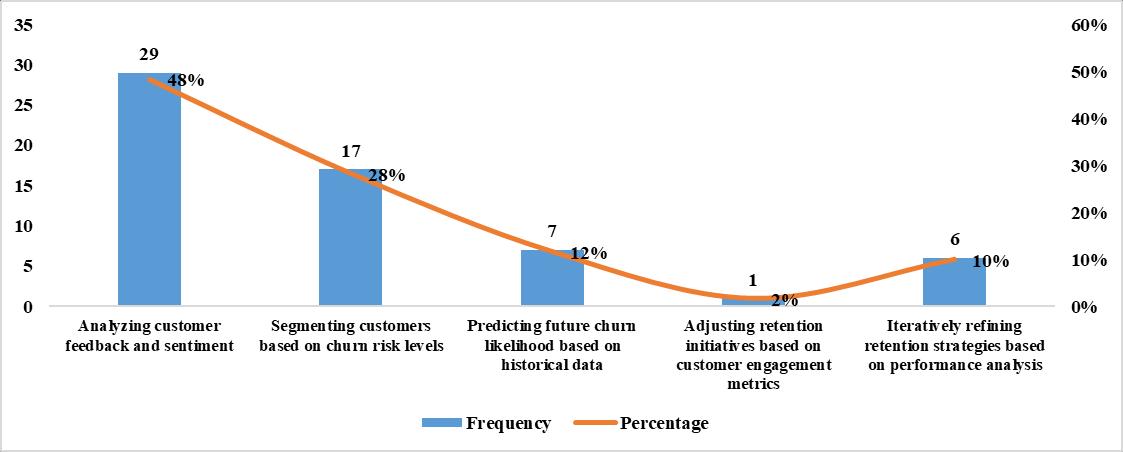
Fig.8Decision-makingplayinoptimizingproactiveSaaScustomerretentionstrategies
Decision-makingplaysacrucialroleinoptimizingproactiveSaaScustomerretentionstrategies.Analyzingcustomerfeedback and sentiment enables businesses to understand customer needs and preferences better, while segmenting customers based onchurnrisklevelsallowsfortargetedretentionefforts.Predictingfuturechurnlikelihoodhelpsprioritizeinterventions,and adjusting retention initiatives based on engagement metrics ensures effectiveness. Iteratively refining strategies based on performanceanalysisensurescontinuousimprovement.
Themajorityof(67%)favoredRandomForestasthemosteffectivealgorithmforpredictingSaaScustomerchurn,followedby Gradient Boosting Machines (27%). Logistic Regression and Support Vector Machines were less favored, indicating that ensemblemethodsarepreferredfortheirabilitytohandlecomplexrelationshipsinthedata.theimportanceoftimespenton the platform (40%) as the most significant featurecontributing to churn predictions, followed by frequency of logins (32%). This suggests that user engagement metrics play a critical role in identifying key drivers of churn. Analyzing customer feedbackandsentimentemergedasthemostfavoredapproach(48%)foroptimizingproactiveretentionstrategies,indicating the importance of understanding customer needs and preferences. Segmenting customers based on churn risk levels (28%) and iteratively refining retention strategies based on performance analysis (10%) were also deemed important. Research employs advanced machine learning techniques to predict customer churn in SaaS products. Through data preprocessing, featureengineering,andmodelinterpretation,itidentifieskeydriversofchurnandenablesproactiveretentionstrategies. By integrating models into production environments, companies can mitigate churn risks and foster long-term customer relationships.
The effectivenessofadvancedmachinelearningtechniquesinpredictingcustomer churnwithinSoftwareasaService(SaaS) products. By leveraging historical data and employing rigorous data preprocessing, feature engineering, and model selection processes, the research identifies key drivers of churn and enables proactive retention strategies. Through the integration of
International Research Journal of Engineering and Technology (IRJET) e-ISSN:2395-0056
Volume: 11 Issue: 05 | May 2024 www.irjet.net p-ISSN:2395-0072
predictive models into production environments, companies can actively monitor churn risks and implement targeted interventions,suchaspersonalizedmarketingcampaignsandenhancedcustomersupportinitiatives.Thisproactiveapproach to customer retention not only mitigates churn risks but also fosters long-term customer relationships, contributing to the overall success and sustainability of SaaS businesses in the dynamic digital landscape. The findings of this study provide valuableinsightsandpracticalguidanceforcompaniesseekingtooptimizetheircustomerretentioneffortsandachievelasting businessgrowthinthecompetitiveSaaSmarket.
Customerchurnrateservesasacrucialmetricforsubscription-basedcompanies,offeringinsightsintoproductorpricingplan weaknesses, operational issues, and customer preferences. Defining data sources and observation periods comprehensively provides a holistic view of customer interactions, enhancing predictive accuracy. Feature selection significantly influences model performance, with richer datasets yielding more precise forecasts. Segmentation of customers allows for targeted retentionstrategies,especiallyforcompanieswithextensiveofferings.Theselectionandnumberofmachinelearningmodels may vary based on segmentation outcomes. Continuous monitoring of deployed models and iterative feature adaptation by data scientists are essential to maintain prediction accuracy over time. This holistic approach enables proactive reduction of churnreasons,fosteringlong-termcustomersatisfactionandbusinesssuccess.
Predicting customer churn in Software as a Service (SaaS) products using machine learning holds significant scope and relevance in today's digital landscape. With the rapid growth of cloud-based services and the increasing competition among SaaSproviders,theabilitytoaccuratelyanticipateandmitigatecustomerchurnisparamountforensuringlong-termbusiness success. By leveraging machine learning techniques, companies can analyze vast amounts of historical data encompassing customer demographics, usage patterns, interactions, and subscription attributes to develop predictive models capable of identifying potential churn risks. These models enable proactive retention strategies, such as personalized marketing campaigns,tailoredoffers,andenhancedcustomersupportinitiatives,aimedatreducingchurnratesandfosteringlong-term customerrelationships. Additionally,theintegrationof predictive modelsintotheSaaSproductlifecycleallowsorganizations to continuously monitor churn risks and adapt their strategies to evolving customer needs, thereby enhancing customer satisfactionandmaximizingbusinessvalue.
1. E.W.T. Ngai, Li Xiu, D.C.K. Chau, "Application of Data Mining Techniques in Customer Relationship Management: A Literature Review and Classification." Expert Systems with Applications, vol. 36, Issue 2, Part 2, Pages 2592-2602, March2009.doi:10.1016/j.eswa.2008.02.021
2. Timm Euler, “Churn prediction in telecommunications using mining mart,” Proceedings of the Workshop on Data Mining and Business (DMBiz) at the 9th European Conference on Principles and Practice in Knowledge Discovery in Databases(PKDD),2005.
3. Quinlan,J.R.(1986).Inductionofdecisiontrees.MachineLearning,1(1),81-106.doi:10.1007/bf00116251
4. Ali Rodan, Ayham Fayyoumi, Hossam Faris et al., “Negative Correlation Learning for Customer Churn Prediction: A Comparison Study.” The Scientific World Journal, vol. 2015, Article ID 473283, 7 pages, 2015. doi:10.1155/2015/473283
5. Bart LariViere, Dirk Van den Poel, “Predicting customer retention and profitability by using random forests and regression forests techniques.” Expert Systems with Applications, vol. 29, Issue 2, Pages 472-484, August 2005. doi: 10.1016/j.eswa.2005.04.043
6. Breiman,L.MachineLearning(2001)45:5.doi:10.1023/A:1010933404324
7. Kristof Coussement, Dirk Van den Poel, “Improving customer attrition prediction by integrating emotions from client/companyinteraction
International Research Journal of Engineering and Technology (IRJET) e-ISSN:2395-0056
Volume: 11 Issue: 05 | May 2024 www.irjet.net p-ISSN:2395-0072
8. emails and evaluating multiple classifiers.” Expert Systems with Applications, 36:6127 - 6134, April 2009. doi: 10.1016/j.eswa.2008.07.021
9. Boser,B.E.,Guyon,I.M.,&Vapnik,V.N.(1992).Atrainingalgorithmforoptimalmarginclassifiers.Proceedingsofthe fifthannualworkshoponComputationallearningtheory-COLT'92.doi:10.1145/130385.130401
10. https://attri.ai/blog/how-to-implement-customer-churn-prediction-using-machine-learning
11. https://www.kdnuggets.com/2019/05/churn-prediction-machine-learning.html