
International Research Journal of Engineering and Technology (IRJET) e-ISSN: 2395-0056
Volume: 11 Issue: 05 | May 2024 www.irjet.net p-ISSN: 2395-0072
International Research Journal of Engineering and Technology (IRJET) e-ISSN: 2395-0056
Volume: 11 Issue: 05 | May 2024 www.irjet.net p-ISSN: 2395-0072
Lalhriatpuii1, Aakriti Baral1, Ayush1, Susheel Kumar2
1B. Tech Student, Civil Engineering Department, Delhi Technological University, Delhi, India
2Associate Professor, Civil Engineering Department, Delhi Technological University, Delhi, India
Abstract - Thisresearchfocusesontheimprovementinthe construction of flexible pavement, which is vital for strong transportation networks and economic growth. In this research, the focus is on improving the strength of the subgrade soil(measured using the California Bearing Ratio Test) by introducing ground improvement materials like Jute Fibre and Polypropylene Fibre. The addition of these reinforcements leads to an increase in the CBR value of the subgrade which leads to a decrease in the thickness of the overall pavement design. This helps in the improvement of pavementperformancewhileloweringconstructioncostsand placing a strong emphasis on creative and sustainable roadstrengtheningtechniques.Sowecansaythatthisresearchnot onlyenhancespavementengineeringbutalsoencouragesthe creation of ecologically friendly infrastructure using economical methods.
Key Words: California Bearing Ratio Method, Flexible Pavement, Pavement Thickness, Subgrade, IRC 37, Subgrade CBR, Jute Fibre, Polypropylene Fibre, Cost Analysis,Sustainability
A sustainable transport network is one of the most important necessities in this age, and the quality of the subgradeofpavementplaysapivotalroleinaroad'slifespan andusefulness.
Black-top pavements that exhibit rutting, pushing, waves, and corrugations are usually the result of inadequate subgradeconditions(Khanna&Justo,2011).Themajorityof transportation-related research has concentrated on improving and fortifyingthesoilusedasthe subgrade for flexible pavements (Pandit et al., n.d.). The findings of laboratoryandfieldexperimentsthatevaluatetheimpactof differentreinforcingtechniquesonpavementperformance arepresentedby(Rajagopaletal.,2014).Theresultsoftheir experiment demonstrate that adding reinforcement enhancesthestrength,stiffness,andenduranceofpavement systemsunderrepeatedloads.
The process of stabilizing soil is to enhance its engineeringperformanceandmakeitusefulforarangeof engineering projects (Prasanna & Nm, 2020). The performance, longevity, and efficacy of a pavement are
determinedbythestabilityofthesubgradesoil,whichis the foundation of any pavement (Hamid & Shafiq, n.d.). Jute fibres and geotextiles have both been effectively utilised to reinforce soils to increase their bearing capacity (Hossain, 2015). One of the most significant utilitiesisgeo-reinforcement,whichisprimarilyusedto mechanicallyincreasethestrengthofsoilthathasbeen specially designed for the building of geo-structures (Kumar et al., 2022). According to the results of laboratorytesting,this wovengeotextilecanbeusedto buildmedium-trafficunpavedroadsbothasaseparation layer and as a reinforcing material (Basu et al., 2009). Whenbuildingmedium-trafficroads,jutegeotextilecan beusedasbothananchoringmaterialandaseparation layer (Pavani et al., n.d.). Jute fibre reinforcement has considerably improved the strength and stiffness propertiesofsoil,accordingtoCBRandTriaxialtests(Lal etal.,n.d.).Enhancingthesoilleadstoanincreaseinits strength,ductility,bearingcapacity,andabilitytoresist deformations(“ImprovementinSubgradeCharacteristics ofSoilReinforcedWithJuteFibre,”n.d.).Asinglelayerof horizontal reinforcement placed within the soil significantlyraisestheCBRvalueofthesoil(Choudhary etal.,2012).Whentwolayersofjutefibrearecombined, thesoakedCBRvalueandmaximumdrydensitybothrise (R & Muralidhar, 2015). As fibre length and diameter increase, so does the soil's CBR value (Singh & Bagra, 2013).
Thestrengthandductilityofsoilsmaybesignificantly increased by combining sand, lime, and polypropylene fibres(Meddahetal.,2022).Whensoildrydensityrises, the fibre/soil interfacial peak strength (IPS) and interfacialresidualstrength(IRS)decrease,whereassoil water content rises (Tang et al., 2010). When LDPE is added, the softening point tends to rise, indicating improved resistance to deformation (Al-Hadidy & Tan, 2009).
Thisstudyinvestigatestheuseofpolypropyleneandjute fibreforimprovingthegroundduringpavementbuilding. Importantqualitieswereexaminedinsoilsamplestaken from university property. There was a percentage improvement with appropriate fibre content when the California Bearing Ratio (CBR) values of the reinforced and unreinforced samples were monitored. The
International Research Journal of Engineering and Technology (IRJET) e-ISSN: 2395-0056
Volume: 11 Issue: 05 | May 2024 www.irjet.net p-ISSN: 2395-0072
biodegradabilityandaccessibilityofjute,alongwiththe adaptabilityofpolypropylene,makethemidealmaterials forimprovingpavementperformance.
Overall, the study highlights how the use of jute and polypropylene fibre in load distribution systems may enhancethestructuralintegrityandlongevityofpavements.
2.1 Materials Used
2.1.1 Soil Samples
Thesoilsampleusedforthisprojectwastakenfrom the premises of our campus(i.e. the construction site nearthesportscomplex).
2.1.2. Jute Fibre
Juteishighlyvaluedforitsexceptionaltensilestrengthand biodegradability, making it a perfect material for strengtheningsubgradesoil.Theaspectratioofthejutefibre usedwas150.
2.1.3. Polypropylene Fibre
Given its inherent resilience, polypropylene fire is a good choice for providing stability in various weather circumstancesforreinforcingflexiblepavements.Notably, polypropylenefibre'sresiliencetochemicalsandmoisture increases pavement construction's dependability even further. The aspect ratio of polypropylene fibre used was 150.
Tofindoutthetypeofsoilsamplewewereworkingwith, certainlaboratorytestswereperformedasgiveninTable 1.
Table 1: Grain Size Analysis of soil
TypeofSoil Coarse-Grained Soil
Table 2: Index properties of soil sample
Index Properties Values
Specific Gravity 2.30 Kg/m3
Plastic Limit(%) Impossible to determine
Liquid Limit(%) 18.00
Plasticity Index Non-Plastic
SieveAnalysis,SpecificGravity(DensityBottlemethod), LiquidLimit(CasagrandeMethod),andPlasticLimitTests were performed as per IS:2720 1985 and values were identifiedandgroupedasperIS1498-1970.
Accordingtothevaluesobtained,weconcludedthe soilwasPoorlyGradedSand.
To achieve the optimum moisture content, unreinforced samplesandsamplesreinforcedwith0.5%,1%,2%,and3% of jute fibre and polypropylene fibre underwent heavy compactiontest.
Figure1showsthedifferenceintheOMCandMDDvalues byaddingdifferentpercentagesofjuteorpolypropylene fibres.TheOMCofthesampleascendsasthepercentageof fibre increases for both samples reinforced with jute or polypropylenefibres,whereasthereisadecreaseinMDD afteracertainpercentageoffibreisadded.
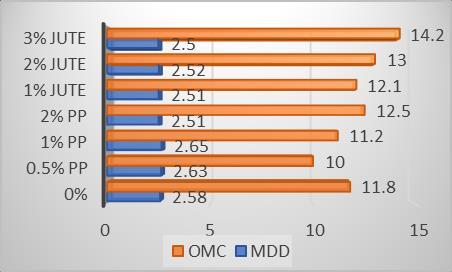
Figure 1: MDD and OMC values of samples at different fibre contents
International Research Journal of Engineering and Technology (IRJET) e-ISSN: 2395-0056
Volume: 11 Issue: 05 | May 2024 www.irjet.net p-ISSN: 2395-0072
TheCBRtestisusedtoconstructpavementstocheck the strength of the soil. The test was performed for soakedandunsoakedsampleswiththeadditionofOMC (OptimumMoistureContent)obtainedfromtheModified Proctor Test. For the soaked soil condition, the mould wassubmergedunderwaterfor96hours(equivalentto 4days).TheCBRvaluesat2.5mmand5mmpenetration arecalculatedusingtheformula,


ThehigherofthetwovaluesacquiredistakenastheCBR value of the subgrade, which usually occurs at2.5mm penetration, but if the value at 5mm penetration is higher,thenitistakenastheCBRvalueafterperforming thetestsmultipletimestoascertainit.
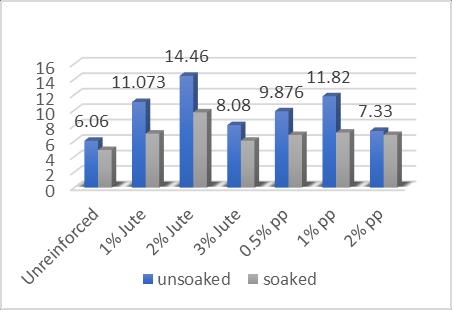
2: CBR values of soil at different fibre contents
Figure2representsthecomparisonoftheCBRvalueswhen fibresofdifferentpercentageswereaddedtothesubgrade soil. From the figure, we can assume the Optimum Fibre Contentwillliearound2%inthecaseofJuteFibreand1% forPolypropyleneFibre.
We plot the following graphs to get the optimum fibre content at which theCBR value is the highest.
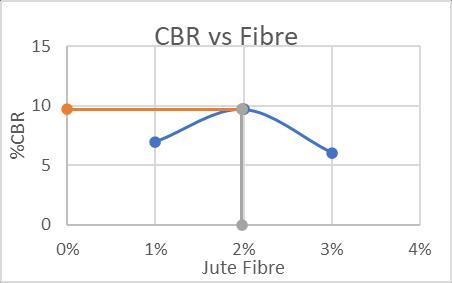
Figure 3: Graph between CBR value and %Jute Fibre
The Optimum Fibre Content for Jute Fibre (as per Figure3)is1.89%.
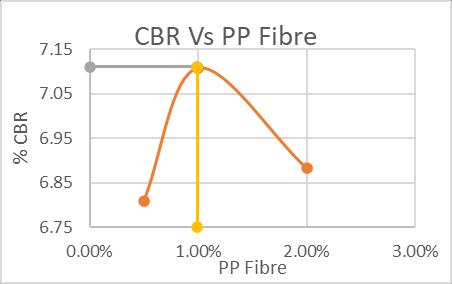
Figure 4: Graph between CBR value and %Polypropylene Fibre
TheOptimumFibreContentforPolypropyleneFibre (asperFigure4)is0.99%.
To design the thickness of the flexible pavement, we assumedaTwo-lanesingle-carriagewayroad,
Initial traffic, A = 1200 CVPD, and Lane distribution factor, D = 0.5 (as per IRC 37 Guidelines).Annualgrowth rateofcommercialvehiclesgivenindecimal,r=0.05,Lane distribution factor,D = 0.5
Vehicle Damage Factor, F = 3.5 VDF (as per IRC 37 Guidelines)
Assuming Design Life, n=15years
and,Cumulativenumberofstandardaxlestobecatered for in the design in terms of Million Standard Axle (MSA)=N,where,
International Research Journal of Engineering and Technology (IRJET) e-ISSN: 2395-0056
Volume: 11 Issue: 05 | May 2024 www.irjet.net p-ISSN: 2395-0072

Therefore,N=16.54MSA
( 3)
Using the value of N we obtained and the subgrade CBR,wecannowfindthethicknessofflexiblepavementas perIRC37guidelines.
Figure5showsthepavementthicknessofthesoilswhich werereinforcedwithJuteFibreandPolypropyleneFibre(at their Optimum Fibre Contents) that were obtained while followingthe guidelines of IRC372012.Aswecanseefrom thegraph,thethicknessofreinforcedsubgradesislowerthan thatoftheunreinforcedsubgrade.
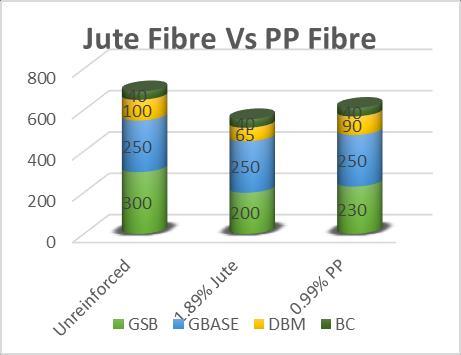
5: Pavement thickness comparison of the re-inforced subgrade with Optimum Fibre Content
The cost analysis for initial construction for each layer is doneaspertheaveragecostoftheconstructionpavement layerresearched.
Table 3: Rate of flexible Pavement Layer per cubic meter
PrimeCoat=Rs
Fromthefollowingrates,wecalculatethecostanalysisfor the different kinds of flexible pavement with different subgradevalues.
Firstly, wehave the cost analysis of Unreinforced Flexible PavementasgiveninTable4
Table 4: Cost/km of Unreinforced pavement
ThisgivesatotalofRs20,325,400,includingtheprimecoat andtackcoat.
The cost analysis of flexible pavement with the subgrade reinforcedwithjutefibreisgivenin(table5)
Table 5: Cost/km of pavement with Subgrade reinforced with Jute Fibre
ThisgivesatotalofRs15,909,800,includingtheprime coatandtackcoat.
Similarly,thecostanalysisofthesubgradereinforcedwith polypropylenefibreisgiveninTable6.
Table 6: Cost/km of pavement with Subgrade reinforced with Polypropylene Fibre
ThisgivesatotalofRs18,324,300(includingtheprime coatandtackcoat).
International Research Journal of Engineering and Technology (IRJET) e-ISSN: 2395-0056
Volume: 11 Issue: 05 | May 2024 www.irjet.net p-ISSN: 2395-0072
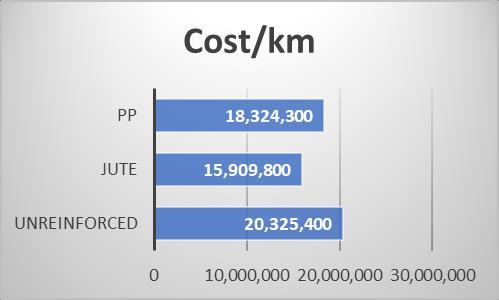
Figure 6: Comparison of cost analysis between three different pavement compositions
Figure 6representsthecomparisonofthecostanalysisof thethreepavementswithdifferentsubgradeCBRvaluesi.e. Flexible pavement design without unreinforced subgrade, Flexible pavement design with subgrade reinforced using Jute Fibre, and Flexible pavement design with subgrade reinforcedusingPolypropyleneFibre.
Thepercentagereductioninthecostofdesigninthecaseof subgrade reinforced with Jute fibre as compared to unreinforcedsubgradeis21.725%,whereasthereductionin thecaseofsubgradereinforcedwithPolypropyleneFibreis 9.845%.
Based on the studies done, we can see that the California Bearing Ratio (CBR) values significantly increasedwhenpolypropyleneandjutefibreswereused for subgrade reinforcement. This suggests promising advancements in flexible pavement design. Jute fibre, whichisnaturallyoccurringandbiodegradable,integrates well with sustainability goals while promoting accessibility and environmental benefits. On the other hand, polypropylene fibre, while not biodegradable, providestoughness
The highest CBR value obtained for Jute Fibre was 9.87%, whereas that of Polypropylene fibre was 7.11%.
We can also see the percentage reduction of the initial costofconstructionreducedforthereinforcedsubgradei.e. 21.725%fortheJuteFirereinforcedsubgradeand9.845% forthePolypropyleneFibrereinforcedsubgrade.
Although the CBR value of Jute Fibre is higher as comparedtothatofPolypropyleneFibre,JuteFibremay decompose over time which can cause an issue to the construction.Hence,bycarefullyconsideringengineering requirementsandtheenvironmentalimpactneededinthe area, jute or polypropylene fibres may be used for the optimizationofflexiblepavementdesigns.
i. Al-Hadidy,A.I.,&Tan,Y.(2009).Effectofpolyetheneon the life of flexible pavements. Construction & Building Materials, 23(3), 1456–1464. https://doi.org/10.1016/j.conbuildmat-.2008.07.004
ii. Basu,G.,Roy,A.N.,Bhattacharyya,S.K.,&Ghosh,S.K. (2009).Constructionofunpavedruralroadusingjute–synthetic blended woven geotextile – A case study. Geotextiles and Geomembranes, 27(6),506–512. https://doi.-org/10.1016/j.geotexmem.2009.03.004
iii. Choudhary, A. K., Gill, K. S., Jha, J. N., & Shukla, S. K. (2012). Improvement in CBR of the expansive soil subgrades with a single reinforcement layer. Edith Cowan University Research Online. https://ro.ecu.edu.au/cgi/viewcontent.cgi?article=1162&context=ecuworks2012
iv. Hamid,A.,&Shafiq,H.(n.d.).Subgradesoilstabilization using jute fibre as a reinforcing material. IJEDR https://www.ijedr.org/pap-ers/IJEDR1701013.pdf
v. Hossain, M. A. (2015). Improvement of granular subgrade soil by using geotextile and jute fibre. International Journal of Science, Technology, and Society,3(5),230. https://doi.org/10.11648/j.ijsts.20150305.12
vi. Improvement in Subgrade Characteristics of Soil ReinforcedwithJuteFibre.(n.d.). International Journal of Innovative Research in Science, Engineering and Technology https://www.ijirset.com/upload/2017/february/133_3 3_Improvement.pdf
vii. Kumar,N.,Kandasami,R.K.,&Singh,S.(2022).Effective utilization of natural fibres (coir and jute) for sustainable low-volume rural road construction – A criticalreview. Construction & Building Materials, 347, 128606. https://doi.org/10.1016/j.conbuildmat.2022.128606
viii. Lal, D., Reddy, Kumar, R. S., & Rao, V. G. (n.d.). StabilizationofExpansiveSoilbyusingJuteFibre. IOP Conference Series: Materials Science and Engineering https://iopscience.iop.org/article/10.1088/1757899X/998/1/012045/pd f
ix. Meddah, A., Goufi, A. E., & Pantelidis, L. (2022). ImprovingVeryHighPlasticClayswiththeCombined EffectofSand,Lime,andPolypropyleneFibres. Applied Sciences, 12(19), 9924. https://doi.org/10.3390/app12199924
International Research Journal of Engineering and Technology (IRJET) e-ISSN: 2395-0056
Volume: 11 Issue: 05 | May 2024 www.irjet.net p-ISSN: 2395-0072
x. Pavani, A., Rakesh, J., Gopichand, P., & Suvarnaraju, P. (n.d.).StudyOnSubgradeSoilUsingJuteGeotextileIn Prakasam District Of Andhra Pradesh. International Journal of Engineering and Applied Sciences (IJEAS) https://media.neliti.com/media/publications/257700study-on-subgrade-soil-using-jute-geotex-82b5affc.pdf
xi. Prasanna,S.,&Nm,M.(2020).ApplicationofJuteFibre in Soil Stabilization. Preprints https://doi.org/10.20944/preprints202008.0534.v1
xii. R,Y.S.,&Muralidhar,H.R.(2015).ImprovementofCBR using Jute Fibre for the Design of Flexible Pavement. International Journal of Engineering Research and Technology, 4(9). https://www.ijert.org/research/improvement-of-cbr-using-jute-Fibre-forthe-design-of-flexible-pavement-IJERTV4IS090837.pdf
xiii. Singh,H.P.,&Bagra,M.(2013).IMPROVEMENTINCBR VALUE OF SOIL REINFORCED WITH JUTE FIBRE. International Journal of Innovative Research in Science, Engineering and Technology, 2(8),3447–3452. http://ijirset.com/upload/august/11_IMPROVEMENT.pdf
xiv. Tang, C., Shi, B., & Zhao, L. (2010). Interfacial shear strength of Fibre-reinforced soil. Geotex-tiles and Geomembranes, 28(1), 54–62. https://doi.org/10.1016/j.geotexmem.2009.10.001
xv. Zhang,P.,&Li,Q.(2013).Effectofpolypropylenefibre onthedurabilityofconcretecompositecontainingfly ashandsilicafume.
xvi. Rajagopal,K.,Chandramouli,S.S.,Parayil,A.,&Iniyan,K. (2014). Studies on geosynthetic-reinforced road pavement structures. International Journal of GeotechnicalEngineering,8(3),287–298.
xvii. Khanna, S. K., & Justo, C. E. G. (2011). Highway Engineering(9thed.).NemChand&Bros.
xviii. Pandit,P.,Qureshi,F.,Nagar,S.,Singh,A.,&Chandran,A. (n.d.). EXPERIMENTAL ANALYSIS OF CBR VALUE OF SOIL REINFORCED WITH JUTE AND COIR FIBRE FOR THE EVALUATION OF PAVEMENT THICKNESS. InternationalJournalofCivilEngineeringandTechnology (IJCIET), 7(5).