
International Research Journal of Engineering and Technology (IRJET) e-ISSN: 2395-0056
Volume: 11 Issue: 05 | May 2024 www.irjet.net p-ISSN: 2395-0072
International Research Journal of Engineering and Technology (IRJET) e-ISSN: 2395-0056
Volume: 11 Issue: 05 | May 2024 www.irjet.net p-ISSN: 2395-0072
Divyani Ganphade1 , Prof. Ganesh Mahalle2
1M. Tech Student, Structural and construction Engineering Department, Ballarpur Institute of Technology, Maharashtra, India
2Assistant Professor, Structural and construction Engineering Department, Ballarpur Institute of Technology, Maharashtra, India
Abstract -This paper presents a dual-focused review encompassing two crucial aspects of structural engineering. The first segment explores the utilization of fiber-reinforced polymer (FRP) for confining concrete columns, aiming to enhance their strength and ductility by mitigating passive lateral confinement pressure. Existing numerical and analyticalformulationsdescribingthecompressivebehaviour ofFRP-confinedconcreteundermonotonicandcyclicloadsare critically examined. The paper highlights the lack of welldefined strategies for modelling and the oversimplification of existing models, shedding light on the need for a comprehensive understanding of stress/strain levels in columns.Effortsaremadetoassesstheeffectivenessofvarious FRP combinations and explore potential future scopes to optimizetheuseofFRP-confinedconcreteincivilapplications. The second segment provides a comprehensive overview of seismic analysis methodologies and retrofitting technologies, focusing on enhancing the resilience of structures. The discoursecriticallyevaluatesthetypicalapproachofnonlinear staticpushoveranalysisinassessingbridgesandproposesthe extension of the modal pushover method for more intricate structural configurations. The review delves into the advantages of retrofitting external sub-structures over conventional component-level methods and analyzes various methodologies,addressingkeyconcernsandofferingvaluable perspectives for seismic engineering professionals
Key Words: Fiber Reinforced Polymer (FRP), Concrete Column Confinement, Seismic Analysis Methodologies, Retrofitting Technologies, FRP Jacketing,Seismic analysis
The imperative shift of the construction sector towards sustainable development underscores the crucial significanceofenvironmentallyconsciousbuildingmaterials [1–5]. Several comprehensive literature reviews have extensivelyexamineddifferentmaterialsandprocesseswith theobjectiveofenhancingthestrengthofconcrete,taking into account both economic feasibility and environmental consequences [6–10]. It is worth mentioning that FiberReinforcedPolymer(FRP)compositematerials,whichhave historically been employed in the aerospace and military industries,haveexperiencedsignificantadoptioninthefield ofcivilengineeringduringthepastthreedecades.Thiscan
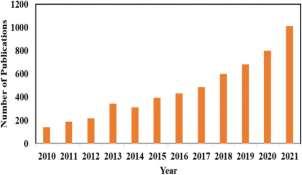
beattributedtotheirremarkablemechanicalcharacteristics that surpass those of conventional construction materials [11-15]. FRP materials possess corrosion-resistant properties and demonstrate adaptability, making them highly suitable for reinforcing pre-existing concrete elements or constructing new composite sections. These materials offer several advantages, such as decreased constructiontimeandlowermaintenancecosts[16,17].In recent years, there has been a notable increase in the utilisationofFRPcolumns.Thistrendcanbeattributedto theirremarkablemechanicalpropertiesandthedecreasing costs associated with fibrous materials [18,19]. The utilisationoffiber-reinforcedplastic(FRP)profilesinbeam andcolumnapplicationsiswidespread.Theseprofilescanbe categorisedintothreemaintypes:FRPtubes,FRPprofiles, andhybridcolumnsthatcombinesteel,concrete,andfiberreinforcedplastictubes[20–22].ThemainobjectiveofFibre ReinforcedPolymer(FRP)columnsistoutilisetheinherent strength of FRP materials in order to induce transverse confiningpressurewithinconcretecolumns.Simultaneously, thereexistsanotherclassificationofFRPprofilesthatseeks to provide structural column components that are lightweight [23,24]. The cost-effective production proceduresofpultrudedFRPprofiles,whicharenowsimilar tothoseofsteelprofiles,haveattractedsignificantinterestin recenttimes[25].Fiber-reinforcedpolymer(FRP)materials havedemonstratedconsiderablepromiseinenhancingthe strength, stiffness, and ductility of structural elements. Notably, there has been a notable increase in research attentiondedicatedtotheinvestigationof"FRPcolumns,"as seenbythepublicationof morethan1013publicationsin thisfieldintheyear2021alone.Theincreasinginterestand importance of FRP in civil engineering applications is highlighted by the growing trend shown in Figure 1. Simultaneously,theissueofseismicsusceptibilitycontinues tobeaconstantproblemforstructures,namelyreinforced concrete(RC)bridgesandbuildings,locatedinregionsthat aresusceptibletoseismicevents.ThedesignofRCbridgesin India has been historically characterised by several deficiencies, primarily attributed to the utilisation of old building codes. Consequently, these structures have been inadequatelyequippedtoendurelateralseismicloads.The importanceofmitigatingseismicvulnerabilityhasincreased due to the introduction of seismic analysis methodologies thatutilisenon-linearstaticmethods,whichhavereceived globalattention
International Research Journal of Engineering and Technology (IRJET) e-ISSN: 2395-0056
Volume: 11 Issue: 05 | May 2024 www.irjet.net p-ISSN: 2395-0072
This paper seeks to provide a comprehensive review, addressingtwocriticalaspectsofstructuralengineering.The firstsegmentdelvesintotheutilizationofFRPmaterialsin enhancingconcretestrength,particularlyinthecontextof columns. It explores the diverse applications, mechanical properties, and cost-effective fabrication processes associated with FRP materials, aiming to guide future researchdirectionsandapplicationsincivilengineering.The second segment focuses on the seismic vulnerability of structures, emphasizing the need for robust seismic retrofittingtechnologies.Thereviewencompassespushover analysisofRCbridges,modificationstotraditionalanalysis models, and advancements in seismic retrofitting technology.Bysynthesizingexistingknowledge,identifying researchgaps,andofferinginsightsintothestate-of-the-art in structural engineering practices, this paper aims to contributetotheadvancementofsustainableandresilient infrastructure. The incorporation of transverse steel confinement greatly enhances the structural strength of concrete.Nevertheless,theoccurrenceoflocalbucklingin columnsresultsinareductionoftheeffectivenessoflateral steel confinement, resulting in a decrease in both the capacity to bear axial loads and the ability to deform plastically [30–32]. As a result, the integration of Fibre ReinforcedPolymer(FRP)withintheframeworkfunctions to enhance confinement and mitigate the occurrence of outwardlocalbuckling.Despitetheextensivediscussionin the literature addressing the mechanical and physical characteristics of fiber-reinforced polymer (FRP) composites, there remains a lack of clarity regarding the ideal choice of fibre material and polymer matrix. This selectionisacrucialdeterminantofbothperformanceand cost-effectiveness.
Inanefforttobridgethisexistinggapinknowledge,the presentworkaimstoconductacomprehensiveassessment ofrecentresearchpertainingtotheuseoffiber-reinforced polymer (FRP) in concrete columns within civil constructions.Inordertoaccomplishthisobjective,avariety offibre materialsincludingglass,carbon,aramid,bamboo [33,34],jute,andothertypeshavebeenassessedwithinthe realmofcivilengineeringapplications.Thepurposeofthis review is to offer recommendations for the appropriate selection of fibre types based on specific applications, as
outlined in Table 1. Numerous investigations have been conductedtoexaminediverseapproachesforforecastingthe strengthcharacteristicsofFibreReinforcedPolymer(FRP) composites, employing numerical or analytical models. However, there exists a necessity to amalgamate and integrate this knowledge. The objective of this work is to integrate various experimental, numerical, and analytical methodologiesthathavebeenofferedinexistingliterature, with the purpose of assessing their efficacy in predicting desiredresults.
Table1.reviewofdifferentmaterialsandadvantagesin FRPcolumns
Ref Material Advantage
[7]
[14]
GFRP composites with crushed fired clay bricks
Concrete filled steeltubes
GFRP composite had a significant effect on the ultimate stressand strain ofconcretespecimens.
High compressive resistance,canbeachieved by employing the ultra highstrengthconcretes.
[19]
[24]
CFRP composite confinement
[28]
Aramid-FRP tubesandsteel tubes
RC columns with CFRP composites
The axial stress of FRP confinedconcreteislower than that of actively confined concrete under cyclicloading(Axialstrain, lateral strain, and confinementpressureare allequal).
Ultimate axial strain and hoop rupture strain, are highly sensitive to instrumentation arrangement
Improvement in strength and ductility of confined RCcolumns.
International Research Journal of Engineering and Technology (IRJET) e-ISSN: 2395-0056
[29]
Jute-polyester hybridFRP
[3032] Basalt based FRP
Thehybridconfinementis effectiveinimprovingthe compressivestrengthand straincapacity
Thereisanincreaseofthe strain reduction factor as thehybrid effectincreases.
[35]
[36]
CFRP-wrapped conereteccylin ders
[37]
CFRP/GFRP composite confinement
Natural fibrereinforced polymer (NFRP)jackets
Numerical research revealed that the compressive strength, stiffness, and ductility of CFRP-wrapped concrete cylinders were much higher.
TheDiameterincreasedto 350" " mm and the ultimate strength increasedupto2157.44%.
Proposed a new strength model to predict the compressive strength of natural fibre-reinforced polymerjackets.
[38]
CFRP-confined gangue aggregate concrete column
Proposed analytical formulation to systematically study the interaction mechanism betweenhybridFRPs.
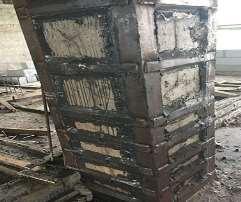
TheapplicationofFibreReinforcedPolymer(FRP)jacketing shown in Figure 2, is generally accepted as a seismic retrofitting technique on a global scale, owing to its multitude of advantages in comparison to traditional approaches like as Reinforced Concrete (RC) and steel jacketing. The advantages of this technology encompass accelerated installation, less labour requirements, limited modification to the original structure's geometry and aesthetics,a highratio of strength to weight, and features
thatarefavourabletooccupants.However,itisimportantto acknowledgethattherearestillcertainlimitsthatcontinue to exist in the use of externally bonded Fibre Reinforced Polymer (FRP) materials. These limitations mostly stem fromtherestrictedeffectivenessofthebondingbetweenthe FRP and the substrate, typically resulting in a maximum efficiencyofapproximately30-35%.Thisreducedefficiency isprimarilyattributedtotheoccurrenceofearlydebonding. Moreover, Fibre Reinforced Polymer (FRP) demonstrates limitations when exposed to elevated temperatures or moisture-laden conditions and is accompanied by a comparativelyelevatedexpense.Ingeneral,FibreReinforced Polymer(FRP)iscommonlyaffixedtocolumnsthroughthe applicationofepoxyresins.
There has been a recent focus on the utilisation of FRP jacketingasaviablealternativeforthestructuralapplication ofRecycledAggregateConcrete(RAC).Theprincipalbenefits associatedwithfiber-reinforcedpolymer(FRP)composites are their cost-efficiency, superior strength, and stiffness properties.TheutilisationofGlassFibreReinforcedPolymer (GFRP) composites and crushed fire clay bricks as coarse aggregateshasbeendemonstratedinpriorstudies,resulting innotableimprovementsinboththeultimateload-bearing capacity and stiffness of circular concrete columns [12]. FibreReinforcedPolymer(FRP)jacketinghasdemonstrated notableefficacyinenhancingtheperformanceofstructural elements subjected to compressive loads or possessing circular or annular cross-sectional geometries. This technique offers significant benefits, including enhanced confinement and corrosion resistance for embedded concrete, as supported by previous studies [23–27]. This sectiondelvesdeeperintotheexaminationofhowvarious fibre kinds affect the compressive behaviour of concrete columns.
Volume: 11 Issue: 05 | May 2024 www.irjet.net p-ISSN: 2395-0072 © 2024, IRJET | Impact Factor value: 8.226 | ISO 9001:2008
International Research Journal of Engineering and Technology (IRJET) e-ISSN: 2395-0056
Volume: 11 Issue: 05 | May 2024 www.irjet.net p-ISSN: 2395-0072
Concretestructuresexhibitintrinsicpropertiessuchashigh strength, resistance to corrosion, and resistance to deformation, rendering them appropriate for the construction of high-rise buildings [28–33]. Nevertheless, the inherent brittleness of these materials imposes some limitations on their potential uses, hence requiring the implementationoflateralconfinementtechniquesinorder to enhance their performance. The utilisation of conventionaltechniquesthatemployhigh-tensilesteeltubes is confronted with obstacles such as excessive material consumptionandelevatedexpenses[34–39].Theutilisation ofCarbonFibreReinforcedPolymer(CFRP)materials,which possess a notable strength-to-weight ratio, serves as a potential solution to these aforementioned concerns. However,itisimportanttonotethatthesematerialsmaybe susceptibletosuddenandcatastrophicrupturefailures.The effective confinement of FRP concrete structures can be achievedthroughthecombinationofcarbonfiber-reinforced polymer(CFRP)sheetsandsteeltubes.Thestudydoneby Chen et al. (2019) investigated the axial compression behaviourofrecycledaggregate/naturalaggregateconcrete constrained with CFRP. The researchers observed comparable compressive behaviour among specimens of varying sizes. The efficacy of CFRP confinement was not considerably affected by the incorporation of recycled material. Several studies have reported differing levels of effectiveness, which can be attributed to various factors, includingthereplacementratesofrecycledbrickaggregate (RBA) [26, 27]. This research highlights the potential of CFRP in enhancing the strength of concrete, while also recognising the various elements that can affect the effectiveness of confinement. Figure 3. represents the differentfailuremodesobservedintheexperimentwhere thedifferentsizeofaggregatewasusedbydifferentauthors.
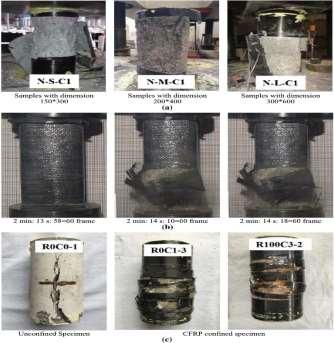
Figure3 Differentfailuremodes(a)Failuremodesbased onsamplesize[22](b)ProgressivefailureofaCFRP confinedconcreteof150*150*300mmdimension[26] (c)ComparisonofconfinedandCFRPconfinedsamples [27]
C. Comparative Analysis: Carbon vs. Glass Fiber Confinement
Inthisstudy,wewanttocomparetheeffectivenessofcarbon andglassfibreasconfinementmaterials.
Theaxialcompressivebehaviourofglassandcarbonfiberreinforced polymer tubes within recycled aggregate concrete, using recycled clay brick aggregate, was thoroughlyinvestigatedbyGaoetal.[45].Theresearchers producedglassfibrereinforcedpolymer(GFRP)andcarbon fibre reinforced polymer (CFRP) tubes by utilising unidirectional glass and carbon fabrics that were strengthenedwithepoxyresin.Thesematerialswerethen placedwithinpolyvinylchloride(PVC)moulds,withvarying numbersoflayersbeingemployed.Brick aggregateswere substitutedbynaturalaggregatesatdifferentproportions. Figure.4representsa typicalstress-straincurveforGFRP andCFRPcompositesandfromtheexperimentalresults.The results of their study shown a notable increase in the compressivestrengthofconcreteencasedwithrecycledclay brick aggregate (RCBA), especially when using a 6-layer glassfibrereinforcedpolymer(GFRP)tube.Nevertheless,an analysisofstress-straincurvesindicatednotabledifferences betweencarbonfibrereinforcedpolymer(CFRP)andglass fibre reinforced polymer (GFRP) tube-confined concrete.
International Research Journal of Engineering and Technology (IRJET) e-ISSN: 2395-0056
Specifically, CFRP exhibited reduced axial strain while displaying increased compressive strength. The study utilised visual depictions of unsuccessful specimens to illustrate specific failure mechanisms and evaluate the efficacyofdifferentconfinementmaterials,withaparticular focusonthecontrastingmechanicalcharacteristicsofGFRP andCFRPconfinedconcretes[41],Figure.5showsthefailed specimensofneat,CFRPandGFRPconfinedconcretes.
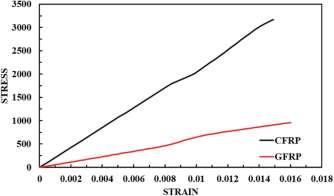
Figure4Tensilestress-straincurvesofGFRPandCFRP composites[45]
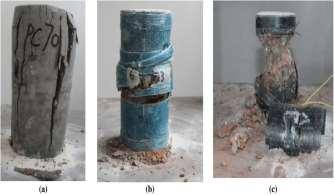
Figure5Failedspecimensundercompressiveload(a) Plain(b)GFRPconfinedconcrete(c)CFRPconfined concrete[45]
Hybridfiber-reinforcedpolymer(FRP)columnsintegrate conventional structural components such as steel and concretewithFRPprofiles,resultinginadaptablestructural elements.Theresearchprimarilycentresaroundtwoareas: the application of FRP composites for retrofitting existing concretecolumns[42–46]andtheconstructionofnewhighperformancecompositecolumns[46–48].Theemployment of fiber-reinforced polymers (FRP) in the confinement of concrete is to mitigate the risk of steel profile buckling. Scholarshaveconductedinvestigationsonthedevelopment ofhybridFRPcolumnmembersthatarebothcost-effective and high-performing. These studies have involved the
utilisationofdifferentcombinationsofunidirectionalandbidirectional fibres, capitalising on the strengths of each componenttoimprovethestructuralperformance[49–52].
E. Exploring the Potential of Hybrid FRP Columns
Instructuralapplications,itiscommontoutiliseconcretefilled steel tubes as columns. However, these columns are susceptible to inelastic outward local buckling in close proximity to the end of the column. Researchers have proposedandtestedtheuseofFibreReinforcedPolymers (FRP) as jackets or wraps in steel structures to prevent buckling. These studies have shown promising results in bothretrofittingandreinforcingexistingstructures,aswell as in new construction projects. Hybrid fiber-reinforced polymer (FRP) columns, which incorporate fillers, steel tubes, and steel I sections, are designed to provide lightweight structural solutions. Table 2 provides a comprehensiveoverviewofseveralhybridfiber-reinforced polymer(FRP)combinationsthathavebeendescribedinthe existingbodyofliterature.
Table2.Reviewofexistinghybridfrpcolumn Cita tion FRP hybrid componen ts Reinforce ment
Volume: 11 Issue: 05 | May 2024 www.irjet.net p-ISSN: 2395-0072 © 2024, IRJET | Impact Factor value: 8.226 | ISO 9001:2008
[29]
Jute polyester hybrid FRP composite s Wrapping offibre sheets
[30] CFRP BasaltFRP GFRP Wetlayup
[52] CFRP Aramid FRPGFRP Polypara phenylene BenzobisOxazole (PBO) FRP jackets formed usingwet lay-up process
International Research Journal of Engineering and Technology (IRJET) e-ISSN: 2395-0056
Volume: 11 Issue: 05 | May 2024 www.irjet.net p-ISSN: 2395-0072
[55]
S-GFRP tubesand steeltubes Wetlayup processin thehoop direction 60.3 to 114.3 mm 181 to 305 mm
[56] (Aramid) FRP tubesand steel tubes Layup process
[57] GFRP tubesand steeltubes Filament winding
[58] CFRP tubesand steeltubes Layup process 60to 150 180 to 300 mm
[59] CFRP tubesand steeltubes Layup process (Alternate layer arrangeme nt) 153 mm 300 mm
[60] GFRP wrap,steel tube Wet-layup withfibres inthe hoop 200 mm 400 mm
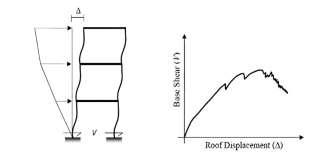
Pushover analysis employs a static nonlinear methodology, that involves incrementally increasing the amplitudeofthelateralloadwhilekeepingapredetermined distribution pattern along the vertical axis of the building (Figure6a).Thedisplacementofthebuildingoccursuntilthe "controlnode"attainsthedesiredlevelofdisplacementor untilthebuildingexperiencesstructuralfailure.Throughout theprocess,itiscleartoseetheorderinwhichthestructural componentsfracture,plastichinge,andcollapse.Thegraph inFigure6b.illustratesthecorrelationbetweenbaseshear
andcontrolnodedisplacementacrossallpushoveranalyses. Pushoveranalysisofferscomprehensive understanding of thecompletestructuralreactionuntilfailure[64].Pushover analysisisconductedusingseveralloadpatternsinorderto determinethemostappropriateloadpatternfortheanalysis of bridges [68]. The capacity curve, which represents the relationshipbetweenbaseshearandtopdisplacementofthe structure,istypicallyderivedbypushoveranalysis.Inorder toassessthesuitabilityofastructuretowithstandseismic loadsofaspecificmagnitude,itisnecessarytomeasureits capacity against the related requirements for a given scenarioevent.Thecomparisonmightbepredicatedupon eitherforceordisplacement[62].
a) b)
Theearthquakeriskofaparticularplaceisdeterminedby the estimated aggregate impact of many factors [74, 75], including the anticipated number of lives lost, individuals hurt,propertydamaged,andeconomicactivitydisruptedas a result of an expected powerful earthquake. In recent decades, India has encountered a number of significant earthquakes.AspertheguidelinesoutlinedinIS1893(Part I:2016), approximately 56% of India's landmass is susceptible to moderate to severe earthquake shaking intensity. This distribution is further broken down into specificzones,with12%fallingwithinZoneV,18%within ZoneIV,26%withinZoneIII,andtheremaining44%within Zone II.Over the past25years,a numberofsignificant to moderateearthquakeshavetakenplacewithinthecountry.
The seismic susceptibility of an existing building is determinedinthefollowingscenarios:
i. Thestructuraldesignanddetailingofthestructure may not have been adequately implemented to withstandseismiceffects.
ii. The building's design may have taken into considerationseismicforces,predatingtherelease of the present seismic standards. The building's lateralstrengthfailstomeettherequirementsfor seismicforcesoutlinedintheupdatedseismiczones
International Research Journal of Engineering and Technology (IRJET) e-ISSN: 2395-0056
Volume: 11 Issue: 05 | May 2024 www.irjet.net p-ISSN: 2395-0072
or the increased design base shear. The level of detailingemployeddoesnotmeetthespecifications outlined in the existing regulations, which are intended to assure both ductility and integrated actionofthecomponents.
iii. Thestructureappearstobeofsubstandardquality.
iv. The building's condition has evidently worsened overtime.
v. The structure has undergone alterations, extensions,orchangesinitsusage,resultinginan increased susceptibility. For instance, supplementarylevelshavebeenconstructed.
vi. The soil exhibits a significant propensity for liquefaction.
B. Objectives of Seismic Retrofit
The objectives of seismic retrofitting are numerical representations aimed at achieving the objectives of retrofitting.Inthecaseofanon-engineeredconstruction,it is possible that the objective may lack quantifiability. The underlyinggoalistoensuresufficientlateralstrengthbythe implementation of measures that have been empirically validatedandprovenbeneficialinpreviousseismicevents.It isimperativethattheretrofittedstructureexhibitssufficient structural integrity to withstand a major seismic event withoutexperiencinganyformofcollapse.
Objectives of seismic retrofit can be summarized as follows:
i. Publicsafety:Theprimaryobjectiveofpublicsafetyisto safeguardhumanlifebyensuringthatastructuredoes not pose a risk of collapsing on its occupants or individualspassingby,andthatthestructureallowsfor safe evacuation. In the event of significant seismic activity,thestructuremayincursubstantialeconomic losses, necessitating its complete demolition and subsequentreconstruction.
ii. StructuralResilience:Theobjectiveistoensurethatthe structure, while maintaining its safety for evacuation, may necessitate significant repairs (rather than complete replacement) before it becomes fully functionalordeemedsuitableforhabitation. Typically, the lowest level of retrofitting is implemented on bridges.
iii. Structural functionality: The core structure remains intactandretainsitsfullutilityforitsintendedprimary purpose.
iv. Structure unaffected: The optimum level of refit for historic structures of high cultural significance is one that does not alter the structure's original design or layout.
C. Seismic Retrofit Strategies/Technique
Thissectionprovidesanexplanationofthemethodology employed in formulating a retrofit strategy [63] after identifyingdefectsintheexistingbuildingsandestablishing apparentperformanceobjectives.Theretrofitstrategiescan be categorised into global and local initiatives. A
comprehensiveretrofitstrategyisimplementedonaglobal scale with the aim of enhancing the seismic resistance of buildings. Theprimaryobjectiveofalocalretrofittechnique istoenhancetheseismicresistanceofaspecificstructural part,whileminimisinganysubstantialimpactontheoverall resistance of the entire structure. In order to develop a sustainable and cost-effective retrofit plan [68], it may be imperativetointegratelocalandglobalretrofitideas.
Shearwallsmaybeincorporatedintobuildingsusingeither framed structures or flat slabs or plates. In the latter categoryofstructures,theabsenceoftraditionalframescan resultinsignificantdeficienciesinbothlateralstrengthand stiffness. It is imperative to ensure that a sufficient foundation is provided for the installation of a new shear wall.Itisimperativetoensurethatthereinforcingbarsof the wall are adequately secured to the bounding frame. Shearwallsaredesignedtowithstandtwodistincttypesof forces,namelyshearforcesandupliftforces.Thepreviously statedarrangementfacilitatesthetransmissionofhorizontal forcestotheshearwall. Theactoftransferringloadsinthis contextinducesshearforcesthataredistributeduniformly alongtheverticalextentofthewall,spanningfromtheupper tothelowerconnectionsoftheshearwall.Theabilityofthe lumber,sheathing,andfastenerstowithstandshearstresses iscrucialinpreventingthewallfromexperiencingtearingor shearing.
ii. Adding Infill Wall
The implementation of infill walls in the ground storey presentsanattractiveoptionforretrofittingstructuresthat possessopengroundlevels.Intheeventthataplinthbeam isnotpresent,itisnecessaryforthenewfoundationofthe infill wall to be securely connected to the pre-existing footingsoftheneighbouringcolumns.Alternatively,aplinth beammaybeaddedinordertoprovideadditionalsupport tothewall.Theinclusionofinfillinaframecontributestoan increaseinboththelateralloadresistanceandtheenergy dissipation capability. The option being discussed, which involvesabuildingwithanopengroundstory,isconsidered tobefeasible.Infillwallswithreinforcedconcretemasonry unitscanoperateasshearwalls.
Steelbracescanbe incorporatedintoaframestructure to enhance its lateral stiffness, strength, ductility, energy absorption,oracombinationofthesefactors.Thesebraces can be conveniently installed on the outside frames of a buildingwithnodisturbancetoitsfunctionality.Inthecase of an open ground story, the placement of braces within suitable bays can effectively preserve the practical utility. The relationship between the braces and the pre-existing frameisacrucialfactortotakeintoaccount. Onemethodfor placingbracinginvolvestheincorporationofasteelframe withintheallocatedbay. Alternatively,thebraceshavethe
International Research Journal of Engineering and Technology (IRJET) e-ISSN: 2395-0056
Volume: 11 Issue: 05 | May 2024 www.irjet.net p-ISSN: 2395-0072
potential to be directly affixed to the frame through the utilisationofplatesandbolts.
iv. BaseIsolation
Base isolation refers to a set of structural components incorporatedintoabuildingwiththepurposeofeffectively separatingthebuilding'sstructurefromthevibrationsofthe ground. It helps to protect the structural integrity of the buildingandimproveitsabilitytowithstandseismicactivity.
Base isolation is a technique that aims to minimise the transfer of ground motion to a building, while also maintaining the building's proper alignment with its foundation.
Inconclusion,thispaperoffersacomprehensivereviewof the use of various Fiber-Reinforced Polymers (FRPs) as confining materials in concretes and diverse methods employedtoassesstheirimpact.Overthelastthreedecades, researchinthisareahassignificantlyprogressed,leadingto enhanced structural applications. However, a notable challenge arises with FRP profiles, where buckling can adversely affect axial performance, necessitating modifications in cross-sections to optimize mechanical properties. Shifting focus to structural engineering, particularly nonlinear pushover analysis, this review underscoresnotableadvancementsinmethodologiessuchas multi-mode approaches and adaptive analogies. These developments signal a transition toward more accurate seismic effect capture. Additionally, the rapid global adoptionofexternalsub-structureretrofittingtechnology, originatinginJapan,holdspromiseforenhancingstructuralsystem-level performance with minimal disruption. In essence, the collaborative exploration of these knowledge gapspresentsopportunitiesforinternationalconsensusand therefinementofseismicengineeringpractices.Addressing theseareaswillcontributetoestablishingdefinitivedesign guidelinesandenhancingtheglobalresilienceofstructures inthefaceofseismicchallenges.Researchersareencouraged to pursue further studies in these domains, fostering a collectiveefforttoadvanceseismicengineeringpractices.
[1] Lopez-Anido, R. A., Naik, T. R. (2000). Emerging materials for civil infrastructure: State of the art. USA:AmericanSocietyofCivilEngineering.
[2] Liang, R. F., Stanislawski, D., & Hota, G. (2021). Material characterizationandstructural response under earthquake loads of hakka rammed earth building. Sustainable Structures, 1(1), 000003. [GoogleScholar][CrossRef]
[3] Cheng,X.,Wei,Y.,Nie,Y.,Wang,G.,&Li,G.(2021). Compressive behavior of bamboo sheet twining tube-confined concrete columns. Polymers, 13, 4124.[GoogleScholar][CrossRef]
[4] Nie,Y.,Wei,Y.,Zhao,K.,Ding,M.,&Huang,L.(2022). Compressiveperformanceofbamboosheettwining tube-confinedrecycledaggregateconcretecolumns. ConstructionandBuildingMaterials,323,126544. [GoogleScholar][CrossRef]
[5] Zhou,Y.H.,Huang,Y.J.,Sayed,U.,&Wang,Z.(2021). Researchondynamiccharacteristicstestofwooden floor structure for gymnasium. Sustainable Structures, 1(1), 000005. [Google Scholar] [CrossRef]
[6] O’Shea, M. D., & Bridge, R. Q. (2000). Design of circular thin-walled concrete filled steel tubes. JournalofStructuralEngineering,126,1295-1303. [GoogleScholar][CrossRef]
[7] Rodsin,K.(2021).ConfinementeffectsofglassFRP on circular concrete columns made with crushed firedclaybricksascoarseaggregates.CaseStudies in Construction Materials, 15, e00609. [Google Scholar][CrossRef]
[8] Felice, P., di Cesare, A., Lamarucciola, N., & Domenico, N. (2021). Experimental estimation of energy dissipated by multistorey post-tensioned timber framed buildings with anti-seismic dissipative devices. Sustainable Structures, 1(2), 000007.[GoogleScholar][CrossRef]
[9] Deskovic, N., Triantafillou, C., & Meier, U. (1995). InnovativedesignofFRPcombinedwithconcrete: Short-term behavior. Journal of Structural Engineering, 121, 1069-1078. [Google Scholar] [CrossRef]
[10] Assima,D.,Li,H.,Xiong,Z.H.,&Lorenzo,R. (2021). A review of mechanical behavior of structural laminated bamboo lumber. Sustainable Structures, 1(1), 000004. [Google Scholar] [CrossRef]
[11] Teng,J.G.,&Lam,L.(2004).Behaviorand modeling of fiber reinforced polymer-confined concrete. Journal of Structural Engineering, 130, 1713-1723.[GoogleScholar][CrossRef]
[12] Cheng,S.,Feng,P.,Bai,Y.,&Ye,L.P.(2016). Load-strainmodelforsteel-concrete-FRP-concrete columns in axial compression. Journal of CompositesforConstruction,20,04016017.[Google Scholar][CrossRef]
[13] Li, P., & Wu, Y. F. (2016). Stress–strain behaviorofactivelyandpassivelyconfinedconcrete undercyclicaxialload.CompositeStructures,149, 369-384.[GoogleScholar][CrossRef]
[14] Xiong, M. X., Xiong, D. X., & Liew, J. Y. R. (2017).Axialperformanceofshortconcrete filled steel tubes with high- and ultra-high- strength materials. Engineering Structures, 136, 494-510. [GoogleScholar][CrossRef]
[15] Ashraf, M., Hasan, M. J., & Al-Deen, S. (2021). Semi-rigid behaviour of stainless steel beam-to-column bolted connections. Sustainable
International Research Journal of Engineering and Technology (IRJET) e-ISSN: 2395-0056
Volume: 11 Issue: 05 | May 2024 www.irjet.net p-ISSN: 2395-0072
Structures, 1(1), 000002. [Google Scholar] [CrossRef]
[16] Punurai, W., Hsu, C. T. T., Punurai, S., & Chen,J.(2013).BiaxiallyloadedRCslendercolumns strengthened by CFRP composite fabrics. Engineering Structures, 46, 311-321. [Google Scholar][CrossRef]
[17] Faustino,P.,&Chastre,C.(2015).Analysis of load–strain models for RC square columns confined with CFRP. Composites Part B: Engineering,74,23-41.[GoogleScholar][CrossRef]
[18] Dundar, C., Erturkmen, D., & Tokgoz, S. (2015).Studieson carbon fiber polymerconfined slender plain and steel fiber reinforced concrete columns. Engineering Structures, 102, 31-39. [GoogleScholar][CrossRef]
[19] Wang,D.Y.,Wang,Z.Y.,Smith,S.T.,&Yu,T. (2016).Sizeeffectonaxialstress-strainbehaviorof CFRP-confined square concrete columns. ConstructionandBuildingMaterials,118,116-126. [GoogleScholar][CrossRef]
[20] Chen, P., Wang, Y., & Liu, C. (2018). Confinementpath-dependentanalyticalmodelfor FRP-confinedconcreteandconcrete-filledsteeltube subjected to axial compression. Composite Structures, 201, 234-247. [Google Scholar] [CrossRef]
[21] Corbi, O., Alessandro, B., Ileana, C., Francesca,T.,&Eugenio,L.(2021).Designissuesfor smart seismic isolation of structures: Past and recent research. Sustainable Structures, 1(1), 000001.[GoogleScholar][CrossRef]
[22] Chen,G.M.,Zhang,J.J.,Jiang,T.,Lin,C.J.,& He, Y. H. (2018). Compressive behavior of CFRPconfinedrecycledaggregateconcreteindifferentsized circular sections. Journal of Composites for Construction, 22, 04018021. [Google Scholar] [CrossRef]
[23] Xiao, Y. (2004). Applications of FRP composites in concrete columns. Advances in StructuralEngineering,7,335-343.[GoogleScholar] [CrossRef]
[24] Ozbakkaloglu,T.,&Lim,J.C.(2013).Axial compressive behavior of FRP-confined concrete: Experimental test database and a new designorientedmodel.CompositesPartB:Engineering,55, 607-634.[GoogleScholar][CrossRef]
[25] Liang,R.,&Hota,G.(2021).Development and evaluation of load-bearing fiber reinforced polymercompositepanelsystemswithtongueand groovejoints.SustainableStructures,1(2),000008. [GoogleScholar][CrossRef]
[26] Islam,M.M.,Choudhury,M.S.I.,&Amin,A. F. M. S. (2016). Dilation effects in FRP-confined square concrete columns using stone, brick, and recycledcoarseaggregates.JournalofComposites forConstruction,20(1),[GoogleScholar][CrossRef]
[27] Jiang,T.,Wang,X.M.,Zhang,W.P.,Chen,G. M., & Lin, Z. H. (2020). Behavior of FRP-confined recycledbrickaggregateconcreteundermonotonic compression. Journal of Composites for Construction, 24, 04020067. [Google Scholar] [CrossRef]
[28] Rahai, A., & Akbarpour, H. (2014). Experimental investigation on rectangular RC columnsstrengthenedwithCFRPcompositesunder axial load and biaxial bending. Composite Structures, 108, 538-546. [Google Scholar] [CrossRef]
[29] Wahab,N.,Srinophakun,P.,Hussain,Q.,& Chaimahawan,P.(2019).Performanceofconcrete confined with a jute–polyester hybrid fiber reinforced polymer composite: A novel strengthening technique. Fibers, 7, 72. [Google Scholar][CrossRef]
[30] Ribeiro, F., Sena-Cruz, J., Branco, F. G., & Júlio,E.(2018).HybridFRPjacketingforenhanced confinement of circular concrete columns in compression.ConstructionandBuildingMaterials, 184,681-704.[GoogleScholar][CrossRef]
[31] Ribeiro, F., Sena-Cruz, J., Branco, F. G., & Júlio, E. (2018). Hybrid effect and pseudo-ductile behaviourofunidirectional interlayerhybridFRP composites for civil engineering applications. ConstructionandBuildingMaterials,171,871-890. [GoogleScholar][CrossRef]
[32] Ribeiro, F., Sena-Cruz, J., Branco, F. G., & Júlio,E.(2019).3Dfiniteelementmodelforhybrid FRP-confined concrete in compression using modifiedCDPM.EngineeringStructures,190,459479.[GoogleScholar][CrossRef]
[33] Liu,K.,Durai,J.,Shi,Y.,Kent,H.,&Yang,J. (2022). Bamboo: A very sustainable construction material. Sustainable Structures, 2(1), 000015. [GoogleScholar][CrossRef]
[34] Su,J.,Li,H.,Xiong,Z.,&Lorenzo,R.(2021). Structural design and construction of an office building with laminated bamboo lumber. Sustainable Structures, 1(2), 000010. [Google Scholar][CrossRef]
[35] Sadeghian,P.,Rahai,A.R.,&Ehsani,M.R. (2008).Numericalmodelingofconcretecylinders confined with CFRP composites. Journal of ReinforcedPlasticsandComposites,27,1309-1321. [GoogleScholar][CrossRef]
[36] Raza, A., Rehman, A. R., Masood, B., & Hussain, I. (2020). Finite element modelling and theoreticalpredictionsofFRP-reinforcedconcrete columns confined with various FRP-tubes. Structures,26,626-638.[GoogleScholar][CrossRef]
[37] Pimanmas, A., Hussain, Q., Panyasirikhunawut,A.,&Rattanapitikon,W.(2019). Axial strength and deformability of concrete confined with natural fibre-reinforced polymers.
International Research Journal of Engineering and Technology (IRJET) e-ISSN: 2395-0056
Volume: 11 Issue: 05 | May 2024 www.irjet.net p-ISSN: 2395-0072
MagazineofConcreteResearch,71,55-70.[Google Scholar][CrossRef]
[38] Wang,J.,Xia,J.,Chang,H.,Han,Y.,&Yu,L. (2022). The axial compressive experiment and analyticalmodelforFRP-confinedgangueaggregate concrete.Structures, 36, 98-110.[Google Scholar] [CrossRef]
[39] Lim,J.C.,&Ozbakkaloglu,T.(2015).Hoop strains in FRP-confined concrete columns: Experimental observations. Materials and Structures, 48, 2839-2854. [Google Scholar] [CrossRef]
[40] Chakrabarti,A.,Chandra,A.,&Bharagava,P. (2008).Finiteelementanalysisofconcretecolumns confined with FRP sheets. Journal of Reinforced Plastics and Composites, 27, 1349-1373. [Google Scholar][CrossRef]
[41] Mortazavi,A.A.,Pilakoutas,K.,&Son,K.S. (2003). RC column strengthening by lateral pretensioning of FRP. Construction and Building Materials,17,491-497.[GoogleScholar][CrossRef]
[42] Abdelrahman, K., & Raafat, H. (2020). Behavioroflarge-scaleconcretecolumnswrapped withCFRPandSFRPsheets.JournalofComposites forConstruction,16(4),430-439.[GoogleScholar] [CrossRef]
[43] Al-Kamaki,Y.S.S.(2021).Ultimatestrain models derived using a digital image correlation (DIC)systemforpreloadedRCcolumnssubjectedto heatingandcoolingandconfinedwithCFRPsheets. Journal of Building Engineering, 41, 102306. [GoogleScholar][CrossRef]
[44] Wang, W., Wu, C., & Liu, Z. (2019). Compressive behavior of hybrid double-skin tubularcolumnswithultra-high-performancefiberreinforced concrete (UHPFRC). Engineering Structures, 180, 419-441. [Google Scholar] [CrossRef]
[45] Gao,C.,Huang,L.,Yan,L.,Kasal,B.,&Li,W. (2016). Behavior of glass and carbon FRP tube encasedrecycledaggregateconcretewithrecycled clay brick aggregate. Composite Structures, 155, 245-254.[GoogleScholar][CrossRef]
[46] Xie, J., Wang, Z., & Yan, J. B. (2022). Axial compressionbehavioursofseawaterandseasand concrete-filled GFRP stub tubes at Arctic low temperatures.Thin-WalledStructures,170,108566. [GoogleScholar][CrossRef]
[47] Vincent, T., & Ozbakkaloglu, T. (2015). Influenceofslendernessonstress-strainbehavior of concrete-filled FRP tubes: Experimental study. Journal of Composites for Construction, 19, 04014029.[GoogleScholar][CrossRef]
[48] Ozbakkaloglu, T., & Akin, E. (2012). Behavior of FRP-confined normal- and highstrength concrete under cyclic axial compression.
Journal of Composites for Construction, 16, 451463.[GoogleScholar][CrossRef]
[49] Taherirani,M.,Noroozolyaee,M.,Salimian, M. S., & Mostofinejad, D. (2022). Evaluation of squareslenderRCcolumns subjectedtoeccentric loadingstrengthenedwithlongitudinalFRPsheets based on PIV analysis. Construction and Building Material,324,126635.[GoogleScholar][CrossRef.
[50] Xiao, J. Z., Liu, H. R., Ding, T., & Ma, G. W. (2021). 3D printed concrete components and structures: An overview. Sustainable Structures, 1(2),000006.[GoogleScholar][CrossRef]
[51] Huang,L.,Yu,T.,Wang,Z.Y.,&Zhang,S.S. (2020). Compressive behaviour of slender FRPconfined concrete-encased cross-shaped steel columns.ConstructionandBuildingMaterials,258, 120356.[GoogleScholar][CrossRef]
[52] Wu, G., Wu, Z. S., Lu, Z. T., & Ando, Y. B. (2008). Structural performance of concrete confined with hybrid FRP composites. Journal of ReinforcedPlasticsandComposites,27,1323-1348. [GoogleScholar][CrossRef]
[53] Chaiyasarn, K., Hussain, Q., Joyklad, P., & Rodsin,K.(2021).Newhybridbasalt/E-glassFRP jacketing for enhanced confinement of recycled aggregateconcretewithclaybrickaggregate.Case Studies in Construction Materials, 14, e00507. [GoogleScholar][CrossRef]
[54] Xia,Y.,&Xian,G.(2020).Hybridbasalt/flax fibersreinforcedpolymercompositesandtheiruse inconfinementofconcretecylinders.Advancesin Structural Engineering, 23, 941-953. [Google Scholar][CrossRef]
[55] Fanggi,B.A.L.,&Ozbakkaloglu,T.(2015). Behaviorofhollowandconcrete-filledFRP-HSCand FRP-HSC-steel composite columns subjected to concentric compression. Advances in Structural Engineering, 18, 715-738. [Google Scholar] [CrossRef]
[56] Ozbakkaloglu,T.(2015).AnovelFRP–dualgrade concrete–steel composite column system. Thin-Walled Structures, 96, 295-306. [Google Scholar][CrossRef]
[57] Zhang, B., Teng, J. G., & Yu, T. (2015). Experimental behavior of hybrid FRP–concrete–steeldouble-skintubularcolumnsundercombined axial compression and cyclic lateral loading. Engineering Structures, 99, 214-231. [Google Scholar][CrossRef]
[58] Cao, Q., Tao, J., Wu, Z., & Ma, Z. J. (2017). Behavior of FRP-steel confined concrete tubular columns made of expansive self-consolidating concrete under axial compression. Journal of CompositesforConstruction,21,04017037.[Google Scholar][CrossRef]
[59] Zhou,Y.,Liu,X.,Xing,F.,Li,D.,&Wang,Y. (2017). Behavior and modeling of FRP-concrete-
International Research Journal of Engineering and Technology (IRJET) e-ISSN: 2395-0056
Volume: 11 Issue: 05 | May 2024 www.irjet.net p-ISSN: 2395-0072
steel double-skin tubular columns made of full lightweight aggregate concrete. Construction and Building Materials, 139, 52-63. [Google Scholar] [CrossRef]
[60] Hu,Y.M.,Yu,T.,&Teng,J.G.(2011).FRPconfined circular concrete-filled thin steel tubes underaxialcompression.JournalofCompositesfor Construction, 15, 850-860. [Google Scholar] [CrossRef]
[61] Mohammad Farhan, Mohd Tasleem. "A ReviewonSeismicAnalysisofRCCBridgewithNonLinearPushoverAnalysis."InternationalJournalof Innovative Research in Science, Engineering, and Technology(IJIRSET),vol.9,no.8,August2020,pp. 7706.
[62] Cao,X.-Y.,Shen,D.,Feng,D.-C.,Wang,C.-L., Qu, Z., & Wu, G. (2022). "Seismic retrofitting of existing frame buildings through externally attachedsub-structures:Stateoftheartreviewand future perspectives." Journal of Building Engineering,Volume57,1October2022,104904.
[63] C. Chitte, "Study of Seismic Retrofitting Techniques,"April2020.
[64] Krawinkler, H., Seneviratna, G. D. P. K. (1998) “Pros and Cons of a pushover analysis of seismicperformanceevaluation”,EngngStructures, 20(4-6),452-464.
[65] Isakovic,T.,Fischinger,M.,Kante,P.(2001) “Bridges: When is F mode seismic analysis adequate?”, Proc. of the Institution of Civil EngineersStructures&Buildings;149(4):1-9,Paper No.12468.
[66] Bracci, J.M., Kunnath, S. K.,andReinhorn, A. M. (1997) “Seismic performance andretrofit evaluation for reinforced concrete structures”, ASCE,JournalofStructuralEngng,123(1),3–10.
[67] GuptaB, Kunnath SK. Adaptivespectrabased pushover procedure for seismic evaluation of structures. Earthquake Spectra 2000; 16:367–392.
[68] Pinho, R., Casarotti, C., and Antoniou, S. (2007) “A comparison of single-run pushover analysis techniques for seismic assessment of bridges”,EngineeringStructures,vol.30,pp.13351345.
[69] Chiorean, Cosmin G.(2003), “Application Of Pushover Analysis On Reinforced Concrete Bridge Model”, Research Report No. POCTI/36019/99.
[70] Chung. C, Fu and Hamed AlAyed, “Seismic Analysis of Bridges Using DisplacementBased Approach”, Department of Civil & EnvironmentalEngineeringUniversityofMaryland.
[72] Muljati, I and Warnitchai, P (2007) “A modal pushover analysis on multi-span concrete bridges to estimate inelastic seismic responses”, CivilEngineeringDimension,Vol.9,No.1,33–41.
[73] Kappos A. J.,Paraskeva T.S. and Sextos A.G. (2010), “ModalPushover analysis asa means for theseismicassessment of bridge structures”, Proceedings of the 4th European Workshop on the Seismic behaviour ofIrregularandComplex Structures,Thessaloniki,Greece,PaperNo.49.
[74] Miller D.K.,Lessons learned from the Northridgeearthquake,Eng.Struct.(1998)
[75] MahinS.A.,Lessonsfromdamagetosteelbuildings duringtheNorthridgeearthquake,Eng. Struct.(1998)
[71] Pinho, R., Casarotti, C., and Antoniou, S. (2007) “A comparison of single-run pushover analysis techniques for seismic assessment of bridges”,EngineeringStructures,vol.30,pp.13351345.
2024, IRJET | Impact Factor value: 8.226 | ISO 9001:2008