
International Research Journal of Engineering and Technology (IRJET) e-ISSN: 2395-0056 p-ISSN: 2395-0072
Volume: 11 Issue: 04 | Apr 2024 www.irjet.net
International Research Journal of Engineering and Technology (IRJET) e-ISSN: 2395-0056 p-ISSN: 2395-0072
Volume: 11 Issue: 04 | Apr 2024 www.irjet.net
Abhinav Kandalkar1 , Suraj Bute 2 , Abhigyan Chhajed3 , Vishnu Zanwar4
1,2,3,4 B.E. (Computer Science & Engineering), Prof. Ram Meghe Institute of Research and Technology, BadneraAmravati, Maharashtra, India ***
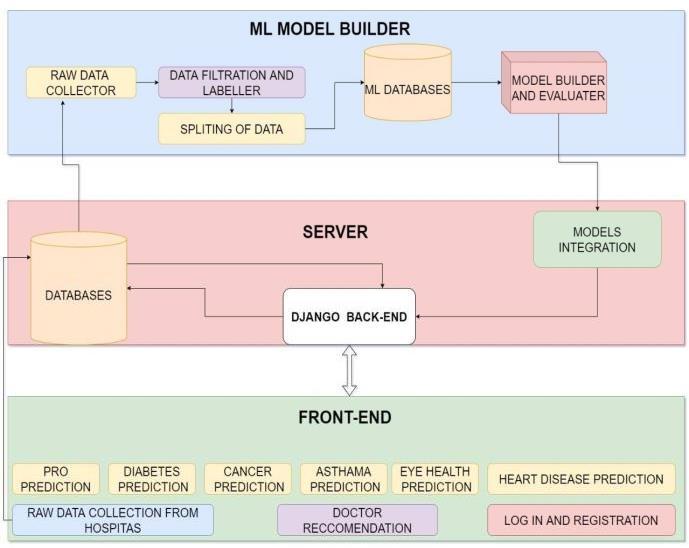
Abstract - Careful examination of patients’ health-related medical records can predict the likelihood of various diseases. Inaddition, having the expertiseofthatparticularpathologist, if needed, facilitates appropriate and effective diagnosis. This paper presents a new approach that uses data mining techniques, i.e. Naive Bayes classificationalgorithmfor disease prediction recommended by experts predicted heart rate, blood pressure by sensors, and other externally visible symptoms like fever, chills, headache The Naive Bayes algorithm measures those characteristics this andpredictsthe disease. Additionally, they provide all the necessary and sufficient information about the patient’s prognosis and the recommended physicians. The recommendation shows the location of the pathologists, their contacts, andother required information based on the user's chosen filter from low cost, more experience, nearbylocations,andthey useStanford's The core NLP algorithm compares physician claims with survey research. Thus, users can access appropriate treatment and necessary medical advice as soon as possible. Additionally, users provide their feedback to the recommending physicians who then incorporate it into search results to provide other recommendations based on the search results.
Keywords: Core NLP, Naive Bayes, Prediction, Recommendation, Django.
Healthcare indeed produces a vast amount of data yearly; this includes medical documents that contain incredible informationaboutthepatients'healthconditions.However, thistaskmightnotonlybechallengingbutalsocriticaldue todiagnosisanddiseasepredictioninhealthcare.Analyzing allthesehugedatasetsallowustorecognizethesepatterns, trends, and risks associated with a number of conditions.Throughtheuseofadvancedanalytics,machine learning algorithms, and AI-based resolutions, we can predict the advent of particular diseases with increasing accuracy.Throughthistypeofforecasting,onecanachieve the goal of health protection for the society by way of preventivemethodsandintervention.Anintelligentsystem for the disease prediction is of great importance for the diseasecontrolandthemaintainingofhealthstatusamong thepeople.Itenablestheaccurateandreliablediseaserisk prediction based on the accumulated data analytics which in turn helps healthcare professionals to make informed decisions and direct targeted interventions. To further advance healthcare personalization, the system makes it
possibletorecommendandprescribetreatmentaccording toriskprofilesandpatient-specificneeds.Thisapproachnot only leads to better patient outcomes, but enables a more efficientuseofhealthcareresourcesandreduceshealthcare costs in the long run. In brief, intelligent systems integration in healthcare will make disease control easier to achieve, wellnesspromotionmoreeffectiveandhealthcaredelivery moreefficient.
Themainobjectiveofthismanuscriptistominethedataand explore the inner coded structures behind the symptomdisease correlations. The disease diagnosis process involves examination of medical profiles based on key parameters like blood sugar levels, blood pressure readings, blood oxygen saturation, presence of headaches, and other symptomspossibleinthecontextcondition.Animportant method for disease classification which is applied is the NaiveBaysclassifierthatisaprobabilitymodelwhichthe likelihood of a disease is calculated by different observed symptomsandthemedicalrecords.Theclassifierisusedto enablethesystemtoidentifytheseemingcomplicationthat primarily affects an individual. The combination of data miningmethodswiththeadvancedclassifierssuchasNaive Bayes greatly increases the disease prediction models’ accuracy and trustworthiness. It permits a more subtle comprehension of the dynamics between diseases, symptoms and background factors, helping medical professionalstomakemoreprecisediagnosesandtreatment decisions. In addition, this technique helps in identifying early warning signs and risk factors to that proactive interventions being taken with preventive measures that would ensure people attain optimal health. However, a variety of data mining programmes and methods of prediction together make a real difference in disease predictionandhealthcare.
Inadditiontodiseaseoperationsthroughdataminingand the use of Naive Bayes Classifier, the system gives a professionalondemandviatheselectedfiltersbyauser.The review-oriented recommendations are obtained by collectingandprocessingreviewsaboutvariousphysician from otherusers.These reviewsarethen processedusing the CoreNLP for sentiment analysis and more valuable informationextraction.Thesystemseekstheclosestexperts to the user's location in a case where location-based
International Research Journal of Engineering and Technology (IRJET) e-ISSN: 2395-0056 p-ISSN: 2395-0072
Volume: 11 Issue: 04 | Apr 2024 www.irjet.net
recommendationsarerequired,thusprovidingconvenience and accessibility. Payment based and experience based advices are based on the criteria of the fee range and expertise level of medics among specialists. These customizable recommendations improve user interaction with the healthcare system, contributing that they make educatedchoicesabouttheirmedicalcare.
As of now sensitivity of body to diseases requires regular analysisofbody.Oneofthemostsignificantchangesthathas occurredtodayistheavailabilityofmultipleplatformsfor both individual insight prediction and recommendation purposes but the future is likely to be found in composite models that consist of the two systems. Moreover, I think that it will be quite easy and handier if patients could get some primary diagnoses and consultations online - not in hospitals and clinics only. This is done to make sure that consumers save money and spend less time. When some strange results are found in the diagnosis then potential suggestions of nearby specialists and hospitals from the users'listwillhelptogetrightandfastcuring.Healthcare, becomingachangeablediscipline,generatingmassivedata, requires the data to be transcoded into useful knowledge, which can be the reason why large organizations highly investinthisarea.
Binal T. et al [1], Healthcare decision support system for swineflupredictionusingnaivebayesclassifier,Thisarticle aims at discovering the medical diagnoses of swine flu by creatinganaiveBayesclassifier.Theclassifiercategorizes patientsintothreegroups:lesslikely,leastlikely,probable, and most likely swine flu cases. The approval rate of the study was around 63.33%, which is moderate predictive power. An important problem mentioned was narrow dataset size leading to lower generalizability and robustness of the model. Shengyong, et al [2], Predicting Disease by usingdataminingbasedonhealthcareinformationsystem, The research team in this study focuses on disease predictionthroughdatamining,especiallyforcardiovascular diseases. The study compares the performance of three algorithms: Naive Bayes, J-48 decision tree, and a J-48 classifier ensemble with 5 J-48 classifiers. The outcomes show that both Naive Bayes and J-48 classifiers yielded similaraccuracyratesofapproximately83%.Thisimplies that these algorithms perform the function of predicting hypertensionfrommedicalrecordsinacorrectway.
In the following paper, they postulate a collaborative filteringapproachthatexploitsuserreviewdata toenrich itemdescriptions.CoreNLPisemployedwithreviews;then, an algorithm builds representations for computing item similarityusingacollaborativefilteringframeworkbasedon k-nearest neighbors. This way of doing things helps recommendation systems to take the user feedback and
preferences into consideration and thus improving the accuracyandrelevanceofrecommendations.
ManjushaK.andhercolleagues[5],inPredictionofdifferent dermatological conditions using Naive Bayesian classification, This work isdone to predict dermatological conditions using Naive Bayesian classifier. It looks at the probabilities of eight various diseases based on patient attributes and acquires knowledge that is hidden in the databasetoimprovetheprocessofpredictions.Thesystem furtherdemonstratesthepossibilityofpredictingdiseases otherthanthedermatologicalones,illustratingtheuniversal andadaptablenatureoftheclassificationmodel.
Artificialintelligencemakesdiseasepredictionandmedical recommendationmoreconvenientandeffectivebyallowing users to fact in the symptoms and real-time vital sign analysis simultaneously. This framework guarantees sufficient accuracy of diagnosis and increases the best possible therapy for patients. The system becomes more user-friendly by integrating user-specific features like distance,rate,assessment,andreviewing.
The system is equipped with a sensing module that is constantly aware of pulse rate, blood pressure, and sugar levels so as to be able to give instant health condition updates.Thisdata,whichwhenintegratedwiththeexternal symptoms reported by people, underwent a detailed observation process to help in an accurate disease prediction. Advanced algorithms are employed by the systemtoutilizeprioritiessetbytheuserinordertolocate themostappropriatehealthcareorganizations.
Users get the liberty to decide how the factors like the proximity, affordability, experience and quality of care wouldweighwhentheyaregettingtherecommendationsfor the hospitals or clinics. Besides, the system takes doctors' specialtiesintoaccount,whichmeanspatientscangetthe help of doctors with the skills needed for curing their illnesses personally. These personalized measures further raisesthechanceforreceivinguniquemedicalcareandright medication.
Moreover,itcanbeenrichedbythereviewstheuserswill provide on chosen physicians. The feedback mechanism therefore improves the system's precision of recommendation and relevance in a step-by-step fashion, since it adjusts to each patient's changing health care situationanddemands.
Intotal,thisintegratedapproachenables not onlyprecise diseasediagnosticsdetectionbutalsosimplificationofthe accesstothetop-qualityhealthcareinstitutions.Throughthe provision of information that is patient-centric and the creationoflinkagesbetweenpatientsandthemostqualified health providers, the system improves patient’s health outcomesandthehealthcaresystem’sefficiency.
International Research Journal of Engineering and Technology (IRJET) e-ISSN: 2395-0056 p-ISSN: 2395-0072
Volume: 11 Issue: 04 | Apr 2024 www.irjet.net
5.1 Naive Bayes
ANaiveBayesianclassifierisasuperiormodelpresenting the common probability distribution over a stochastic variableset.Foratwo-classproblem,thecasesarewhat's presentedtotheclassifierinwhichthepointvariableshave differentvalues.Theclassifiercomingcomputesaposterior probability distribution over the class variable that estimates the probability of each class taking the input features. The literacy of a Naive Bayesian classifier we regard as a construction of the previous chances of the colorfulclasses,thesebeingtheoriginalhypotheticalsforthe liability of each class appearing. likewise, the predictor calculatestentativechancesofthefactorsgiventoallofthe classes. The tentative chances embody the probability of entering concrete point values given a specific class. The Naive Bayesian classifier accomplishes this through the admixtureofprevious chancesandtentativechances.The classifierissoeffectiveatlandingprobabilisticconnections betweenfeaturesandclassesthat'ssuitabletoprognosticate what the class marker of a new case is. This system is veritablypivotalandthusapplicableincircumstanceswhere the attributes are innately independent or in situations where the supposition of the trait interdependence is reasonable.Themodelissuitabletoperforminverselywell indeedwithlimitedtrainingdata.
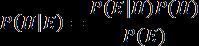
AccordingtoBayestheoremofprobabilitytheory:
ItiscommonlyassumedthatattributesE1throughEmare conditionally independent given the class label, which meansitisoftenassumedthat
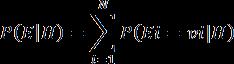
Aftermakingtheaboveassumption,theclassifieriscalled NaiveBayesclassifier.
Table 1: InputAttributes
Gender:F/M
BloodSugar:72-162mg/dl
BloodPressure:120/80mmHg
PalpitationRate:60-100bpm(normal)
Fever:Yes/No
LevelofFever:low(1),moderate(2),high(3)
Cough,Cold:<4days=1,>4days=2
Pain:eyes,head,casket,muscles,body,abdominal,nopain
Breathlessness:Yes/No
Headache:normal=1,severe=2
Nauseaandvomiting:Present/absent
Feelingweak:Yes/no
Experiencingchills:Yes/no
Constipation:Yes/no
Dizziness:Yes/no
Lossofappetite:Yes/no
the labors being either positive or negative bones , the classifier'sperformancecanbeassessedexhaustively,and theclassifier'sstrengthsandsinsinthebracketofcasescan be revealed.Accordingly,Django'slibrariesgobeyondthe simplificationofthedeveloper'sjobsincetheygivesuperior tools for assessing the model's delicacy, performance measures,andconfusionmatrixthatenabledatascientists and judges to reach sound opinions after interpreting the results.
The illness that the model foresees will be the one that enjoys the highest probability calculated from the Naive Bayes classifier, which is expected to have a 80 percent expectedaccuracyorhigher.Expertsthatarethebestwillbe recommended within the top five doctors associated with theexpecteddiseaseandfiltersselected bythe
International Research Journal of Engineering and Technology (IRJET) e-ISSN: 2395-0056 p-ISSN: 2395-0072
Volume: 11 Issue: 04 | Apr 2024 www.irjet.net
user. Building on the foundation of the Naive Bayes algorithm,wewillproceedwithpredictingthemostlikely diseasewiththeexpectedaccuracyofover80%.Thiswillbe followed by providinga list ofleadingphysicianswho are experts in treating that foreseen disease. It entails the employment of health specialists' expertise and their nodding with the specific user needs as well as the user's preferences. The Naive Bayes classifier is a probabilistic machine learning method for a variety of tasks including forecasting diseases conditioned on the symptoms and patientsprofiles.Itanalyzes thegive data anddetermines thepossiblediseasesbythegivendata.Then,itselectsthe disease with the highest probability among them as the predicted disease. An accurate model, with at least N accuracy percentage, demonstrates a reliable prediction methodology, which however, should be open to refining for bestperformance.Thenextstepistonamethediseasefor whichthemodeloffers thetopfivespecialistswithexpertise in that condition. The normally tailored recommendation basedontheuserselectedfiltersmightincludeanumberof factors such as the location , specialization ,experience , patientreviewsandotherpreferences.Theprocessingthe system puts through filters ensures that recommended professionalsdonotonlyhavehigh-endqualificationsbut alsodomeetthesetrequirementsofusersaswellastheir expectations.
Massivedatabasesofrealcasesfrommedicalrecordswith assistance from CoreNLP(Natural Language Processing) doctors' recommendation(s) are the base of such algorithms.Theintroductionofmoresymptomsaswellas additionalcasesforbothtrainingandtestingpurposeswill not only contribute to the precision but also make the modelsmoreeffective.
Beyondthis,integratingdifferenthealthmetricsincluding calorieintake,stepcount,sleepqualityandothernecessary medical profiles reportable from wearable devices can further avail a complete status of an individual's health.Usingthisplentifulofdata,nutritionalplanscanbe preparedanddesignedindividuallyforeachuseraccording to their unique needs and health goals.In addition, to the existingmeasures,thereal-lifealertsandnotificationscanbe triggered. When certain health risks or emergencies are detected, the user and designated caregivers or parents received the timely alerts immediately. This insures the timely intervention hence better management of health and preventativecaretreatments.
Throughcontinuousimprovementandenlargementofthese systemsintegration,predictivehealthcarecouldtransform entirely how diseases are diagnosed, managed, or prevented.Thesynergisticeffectofdataanalytics,machine learning, natural language processing, and wearable technologyleadstoaholisticandpreventativeapproachto
healthcare delivery allowing users to take a proactive position on their health while strengthening the collaboration among patients, healthcare providers, and caregivers.
[1] Binal A. Thakkar, Mosin I. Hasan, Mansi A. Desai, “Healthcare decision support system for swine flu prediction using Naive Bayes classifier”, “IEEE”, 101105,2010.
[2] Feixiang Huang, Shengyong Wang, Chien Chung Chan, “Predicting disease by using data mining based on healthcareinformationsystem”,“IEEE”,2012.
[3] RafaelM.D’addio,MarceloG.Manzato,“Acollaborative filtering approach based on users’ reviews”,“IEEE”, 204209,2014.
[4] F. O. Isinkaye, Y.O. Fola Jimi, B.A. Ojokoh,“ Recmmendation systems : Principles, Methods and Evaluation”,“Elsevier”,261-273,2015.
[5] ManjushaK.K.,K.Sankaranarayanan,SeenaP,“Prediction of different dermatological conditions using Naive Bayesianclassification”,”IJARCSSE”,864-868,2014.
[6] Subhash C. Pandey, “Data Mining techniques for medical data:AReview”,“IEEE”,2016.
[7] Lee, Yunkyoung, “Recommendation system using collaborativefiltering”,2015.
[8] GeoffA.,ElvisC.,MickeyE.,SameulS.,“Smartwearable bodysensorsforpatientsselfassistantandmonitoring”, BioMedCentral,2014.
[9] GGannu,YKakodkar,AMarian,“Improvingthequality ofpredictionsusingtextualinformationinonlineusers reviews”,InformationSystems,2013.
[10] Sellappan P., Rafia A., “Intelligent heart disease prediction system using data mining techniques”, IEEE/ACS,2008.