
International Research Journal of Engineering and Technology (IRJET) e-ISSN: 2395-0056
Volume: 11 Issue: 04 | Apr 2024 www.irjet.net p-ISSN: 2395-0072
International Research Journal of Engineering and Technology (IRJET) e-ISSN: 2395-0056
Volume: 11 Issue: 04 | Apr 2024 www.irjet.net p-ISSN: 2395-0072
Mansing M Rabade1, Arslan Ramjan Faras2, Avaduth Ashok Savant 3, Sammed Manik Patil4, Prathmesh Sunil Ghugardare5
1Assistant Professor, Department of Civil Engineering, D. Y. Patil Technical Campus, Talsande, Kolhapur 2,3,4,5 UG Students, Department of Civil Engineering, D. Y. Patil Technical Campus, Talsande, Kolhapur
Abstract -Railway maintenance is an important aspect whichisnotspokenmuch.Thisarticlespeaksabouttheneed of it, its importance and its prevalence in three major countriesIndia,ItalyandGermany.Westartwiththefleet size of each countries and methods deployed by each country, and finally concluding the situation in India and howitisbeingimproved.
Key Words: Maintenance, Railways, India, Italy, Germany
1.INTRODUCTION
Railwaymanagementisanessentialelementwhichcanbe seeninthecaseofpublictransportsystemsacrosstheglobe. Itisessentialtoinferthatrailwaymanagementsystemsare requiredinordertoensureahighrateofeffectivenessand efficiency which can be undertaken in the delivery of services to the general population of all countries. In the context of this, technological advancements have saved a pathway for enhanced management and maintenance of railway systems. Maintenance is important to ensure that the infrastructural capacity is maintained and enhanced effectively.Furthermore,it canbeanalysedthatthereisa salient requirement of ensuring that the systems are effectively aligned to the prospects which are effectively required. This research will look into the aspect of developing an understanding regarding systems of maintenance in railway management in the countries of India Germany and Italy. The study initially seeks to enumeratetherailwaysystemsandfurtheritlooksintohow technological advances have helped the field of railway maintenance.Thestudyattheendwilleffectivelyconclude by identifying why Indian railways has not adopted technological advancements and digital maintenance systems in order to understand the current context of railwaymanagementinIndia,
The German railway system effectively and efficiently stretchesoveradistanceof41,315kilometresandhavean electrifiedtracklengthof19,857kilometresascompared to18,201kilometresfordoubletracks(Web.archive.org,| Impact Factor value: 8.226 2015).They have a total of 3,188 long-distance vehicles and 17,174 short distance vehiclesforpassengertransportwithanadditional3,134 trainsforgoodscarriage(Web.archive.org,2015).{22}
DBNetzisthelargestoperatorofrailwaysinthecase ofGermanyandfurtherthestructuredevelopmentisalso uptothem.Itcanbeanalysedthattheoperatingincomeof thiscompany isaround4.797billion Eurosandthe net income is 716 million Euros (Cia.gov, 2020). A total revenueof440.576billioneuroswasnotedforGerman railways effectively in the year of 2016 Thus, it can be understood that the German railway system is an extensive and large system which is present. (Cia.gov, 2020).{4}
The Italian railway system in comparison to the German railroad system stretches for a total of 24,227 kilometresandtheactivelinesintheseareworth16,723 kilometres (Ec.europa.eu, 2019).A total ridership of 848,757,000 was noted in the year of 2017. It has a doubleracklengthof7,505kilometresintotalandfurther ithaselectrifiedtrackswhichfunctionon3kVDCworth 11,921kilometresand25kVACworth1,296kilometres (Ec.europa.eu,2019).{5}
In the case of the Italian railways it can be understood and ascertained that the overall number of trainsareadjoinedwiththeEUandhenceproperfigures arenotdecipherable.Incontrasttothisitcanbeviewed thattherailroadsystemgeneratesatotalrevenueof5.4 billionEurosasdiscernedin2018(Statista.com,2020).
Thus, it can be understood that the Italian Railway system is an effective and efficient system which is conjoinedwiththatoftheEUandhenceitgainsadditional efficiency.ThetotalnumberofemployeesinTrenitaliaof Italyis27,607.Thus,itcanbeascertainedthatTrenitalia ismuchsmallerinsizethanGermany,butitcarriesmuch morepassengers.
Number of Trains 24,496 N/A 2,89,185 freight wagons,74,003 passengercoaches, 12,147 locomotives.
International Research Journal of Engineering and Technology (IRJET) e-ISSN: 2395-0056
Volume: 11 Issue: 04 | Apr 2024 www.irjet.net p-ISSN: 2395-0072
InthecaseofIndianRailways,itcanbeunderstoodthatthe countryhasatotaltracklengthof68,155kilometresandis furtherexpanding.Outofthis,40,576kilometresworthtrack isabroadgaugetrackandtheseroutesareelectrifiedwitha 25 kV 50 HZ AC electric traction (Indianrailways.gov.in, 2019).
The Indian railway system annually as of 209 carried a total of “8.44 billion passengers” in addition to “1.23billiontonnesoffreight”.IndianRailwaysadditionally runs a total of 13,523 passenger trains on a daily basis across a total of 7,321 stations in the subcontinent (Indianrailways.gov.in,2019).Additionally,atotalof9,146 trainsarerundailyforfreightcarriage.Intermsofthetotal manpower of the railway system it can be viewed that it employs 1.23 billion people and additionally it can be understood that the aggregate number of trains in the country is larger than what is run every day (Indianrailways.gov.in,2019).{12}
Asof2019,“IndianRailways”hada“rollingstockof 2,89,185 freight wagons, 74,003 passenger coaches and 12,147 locomotives”. The net revenue of Indian Railways from 2018-2019 stood at US $ 28 billion (Indianrailways.gov.in,2020).{13}
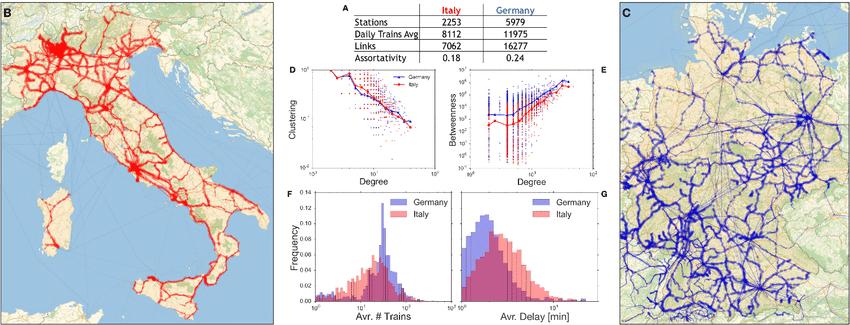
Differences in revenue and the quantity of passengers helps to denote the fact that the operational structure of Indian Railways is much more stable as compared to railway systems in either Italy or Germany. Through2Methodsofrailwaymaintenanceimplemented:It can be stated that there is an effective need for the maintenanceofrailwaysystemseffectivelyandefficiently. Vansteenwegen et al. (2016),{19} indicates that this is indicative of the fact that maintenance is a salient recruitmentinthecaseofrailwaysystems.Maintenanceaids inorderto ensurea “highrateofefficiency”inthecase of railwayservicedeliveryandqualitycontrol.Additionally,it can be ascertained that there is a definite level of efficacy which is produced through systems which are aimed at deliveringpropervaluetocustomers.
Verbert et al. (2017),{20} indicate that service deliveryisimportantandtherequirementofinfrastructure developmentandmaintenancealsoplaysalargeroleinthis process.Effectivelyitcanbeunderstoodthatinfrastructure developmentisessentialtoensurethatthesystemswhich havebeendevelopedarenotskewedatanygivenpointof time.ItcanalsobeunderstoodfromthestudyofCatelaniet al.(2020),{3}thatthelevelofinfrastructuredevelopment directly puts an impact on the prospect of products and serviceswhicharegiventocustomers.
In case of railway systems of India, Italy and Germany,itcanbeascertainedthatthesethreeareashave different types of railway constant developments in increasingtheseaspectsevenfurther,IndianRailwayscan be stated to be the most railway system that is the most pronetoachieving evengreaterefficiencyinthefuture as well.ItcanthusbeviewedthatthesizeofIndianrailwaysis much superior to that of Trenitalia or even the German railways.
It is additionally discerned that Indian railways employalargernumberofindividualsandthisismorethan thecombinedemploymentwhichiscreatedbyGermanyand Italy effectively. It can be ascertained from the above statistics that the large population of India puts a large emphasis on the maintenance and service delivery of the railwaysproperly.
It also is indicative of the fact that the Indian Railwaysarerequiredtoensureahighrateofefficiencyin deliveryofproductqualityascomparedtothatofGermany and Italy. Further, maintenance requirements are more requirementsforIndianrailwaysanditcanbeviewedthat there is an effective need for ensuring new technological developments which can be applied in the context of this country.
Comparing the statistics however, it can be analysed that German railways have the highest revenue generation capacity. As compared to this, Indian Railways has a decent amount to buy Italian railways which do not generateasmuch.(Indianrailways.gov.in,2020){13}
International Research Journal of Engineering and Technology (IRJET) e-ISSN: 2395-0056
Volume: 11 Issue: 04 | Apr 2024 www.irjet.net p-ISSN: 2395-0072
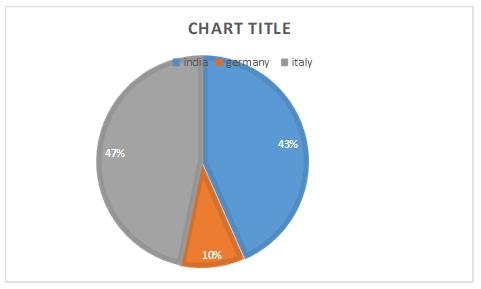
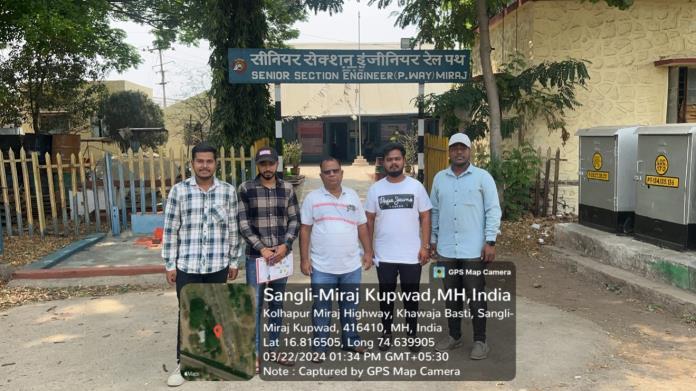
We have visited to the Miraj junction for getting the information of the maintenance methods machinery’s and otherinformationforthefutureexpansionandmodification as per to the following twodevelopedcountries whichwe haveselectedtheyareGermanyandItaly.
There we meet the respected Engg Dipak Kumar sir who haveguidedusveryproperlyforwhichwehaveaskedand they also provided the extra knowledge for us and they clearedallourdoubtsandgaveustherightinformation
1. Tostudymaintenancetechniquesusedindeveloped countries.
2. TostudymaintenancetechniquesusedinIndia
3. collect information of maintenance carried out in thatrailwaystation
4. To compare maintenance techniques between developedcountriesandinIndia.
5. To suggest the best maintenance techniques with variousparameters.
6. Toconductvisittothenearbyrailwaystationand
Summarizing the findings of this study it can be inferredthatthereisaneffectiverateofconclusivelythat can be drawn out in terms of the overall systems in the threerailways.ItcanbeanalyzedthattheIndianrailway systemisnotbelowparanditisheavilysuitedtotakethe laidwhichhasbeendescribed239However,itcanalsobe inferred that the Indian railway system essentially is functioningatabreakevenandhasnotbeenabletoachieve its full efficiency. This indicates as to why the level of effectivequalityislowerandtherevenuegeneratedisalso lower.
Itcanbeviewedthatthereisaneedforimplementingthe Industry 4.0 system in addition to big data analytics proceduresand predictiveanalysissystems.The existing predictiveanalysissystemisahugeefficiencyareaforthe Indian railways and it also provides a sound amount of effectivenessintermsofefficiency.Additionally,itcanbe analyzedthatthesystemsofonlinemonitoringofrailway systems helps in order to effectively improve the safety quotient of Indian Railways. Additionally, it can also be inferredthatacombinationoftheseaspectsmakesitvery advantageousandsafe.
However,owingtothegreatpopulationsizethepressure onthesesystemsisgreaterandthus,itcanbeinferredthat Industry 4.0 will be advantageous for the Indian railway maintenanceandservicedeliveryprospects.Thisisbecause the process of industry 4.0 falls in line with TQM requirements and seeks to provide high quality delivery. ThiswillallowforIndianRailwaystogenerateanextended scopeoftheiroperationsandalsoensurethatsafetyand security for passengers are maintained in the overall process.Itwillalsoaddtotheexistingbigdataanalytical and predictive risk measurement systems and provide greater efficiency to the overall system of OMRS as well. Thus, it can be understood that a higher level of effectiveness can be instilled into the Indian railway managementandmaintenancesystemsandthiswouldalso allowinreductionofrisks.Itconverselywouldallowthe generation of economies of scale for larger scales of revenuegenerationevenaftercostcutting.Thisprovidesa doublebenefitforthepassengersandtherailways.
I would like to thank all those people who have helped me in order to complete this project. Primarily, I
International Research Journal of Engineering and Technology (IRJET) e-ISSN: 2395-0056
Volume: 11 Issue: 04 | Apr 2024 www.irjet.net p-ISSN: 2395-0072
would like to thank my professor who has helped me for reviewFurther,Iwouldliketothankmyfamilyandallofmy friends who have beenunderstanding throughthe overall courseoftheresearchandhavesupportedmeunwaveringly. Iwouldnothavebeensuccessfulwithoutthem.
1 Arslan, B. and Tiryaki, H., (2020). Prediction of railway switch point failures by artificial intelligence methods. Turkish Journal of Electrical Engineering & Computer Sciences,28(2),(Pg.1044-1058).
2 Böckin, D., Willskytt, S., André, H., Tillman, A.M. and Söderman, M.L., (2020). How product characteristics can guide measures for resource efficiency A synthesis of assessmentstudies.Resources,ConservationandRecycling, 154(6),(Pg.104582-104673).
3 Catelani, M., Ciani, L., Guidi, G. and Patrizi, G. (2020). Maintainabilityimprovementusingallocationmethodsfor railwaysystem.ACTAIMEKO,9(1),(Pg.10-17).
4 Cia.gov, (2020). World Factbook. Available at: https://www.cia.gov/library/publications/the-world factbook/rankorder/2121rank.html [Accessed on: 2 September,2020]
5. Ec.europa.eu, (2019). Railway passenger and transport statistics – quarterly and annual data. Available at: explained/pdfscache/7066.pdf[Accessedon:2September, 2020]
6 Ehrbar,H.(2016).BuildingInformationModelling–Anew toolforthesuccessfulimplementationofmajorprojectsof German railways/Building Information Modelling–EinneuesWerkzeugzurerfolgreichenRealisierung von Großprojekten der DeutschenBahn. Geomechanics and Tunnelling,9(6),(Pg.659-673).
7. financialexpress.com, (2020). Indian Railways installs unique system for a automatic system of wheels; big step towardspassengersafety. indian-railways-installs-uniquesystem-for-automatic inspection-of-wheels-big-steptowards-passenger safety/1832718/ [Accessed on: 6 September,2020]
8 Ghofrani, F., He, Q., Goverde, R.M. and Liu, X., (2018). Recent applications of big data analytics in railway transportationsystems:Asurvey.TransportationResearch PartC:EmergingTechnologies,90(2),(Pg.226-246).
9. globalrailwayreview.com, (2016). Trenitalia improves rolling stock maintenance using big data. Available at:. [Accessedon:4September,2020]
10globalrailwayreview.com,(2019).DBetzawardsmajor railmaintenanceequipmentordertoHarscoRail..[Accessed on:6September,2020]
11.harscorail.com,(2020).MaintenanceSystems.[Accessed on:6September,2020]
12 Indianrailways.gov.in(2019).IndianRailwaysYearbook 2018-2019. Available at: /directorate/stat_econ/Year_Book/Year%20Book%202018 19-English.pdf[Accessedon:4September,2020]
13 Indianrailways.gov.in (2020). Budget at a glance. Available ate/finance_budget/Budget_2019 20_Final/Statement%20of%20Railway%20Receipts%20an d%20Expenditure_Regular%20Budget%202019-20.pdf [Accessedon:4September,2020]
14 Murugan,B.M.,(2020).AStudyonPassengerSatisfaction TowardsRailServiceinIndianRailways.StudiesinIndian PlaceNames,40(50),(Pg.4282-4287).
15 Nikitinas, V. and Dailydka, S. (2016). The models of managementofrailwaycompaniesintheEuropeanUnion: Holding, the German Experience. Procedia engineering, 134(21),(Pg.80-88).
16.Sahal,R.,Breslin,J.G.andAli,M.I.,(2020).Bigdataand streamprocessingplatformsforIndustry4.0requirements mappingfora predictivemaintenanceusecase.Journal of ManufacturingSystems,54(2),(Pg.138-151).
17 Statista.com(2019).RevenueofTrenitaliainItaly,2016 2018..[Accessedon:3September,2020]
18 Thaduri, A., Galar, D. and Kumar, U., (2015). Railway assets:Apotential domainforbigdata analytics.Procedia ComputerScience,53(5),(Pg.457-467).
19. Vansteenwegen, P., Dewilde, T., Burggraeve, S. and Cattrysse,D.,(2016).Aniterativeapproachforreducingthe impactofinfrastructuremaintenanceontheperformanceof railwaysystems.EuropeanJournalofOperationalResearch, 252(1),(Pg.39-53).
20 Verbert, K., De Schutter, B. and Babuška, R., (2017). Timely condition-based maintenance planning for multi componentsystems.ReliabilityEngineering&SystemSafety, 159(8),(Pg.310-321).
21. Wang, K., Cao, W., Xu, L., Yang, X., Su, Z., Zhang, X. and Chen, L., (2020). Diffuse ultrasonic wave-based structural healthmonitoringforrailwayturnouts.Ultrasonics,101(9), (Pg.106031-106077).
22 Web.archive.org (2015). Interactive key figure components.Availableat: