
International Research Journal of Engineering and Technology (IRJET) e-ISSN:2395-0056
Volume: 11 Issue: 04 | Apr 2024 www.irjet.net p-ISSN:2395-0072
SUSTAINABLE CONSTRUCTION CONSIDERING LEED CERTIFICATION
Abhinav.V 1 ,, Jinsha.K.V 2 ,, Shamna Sherin.P 3 ,, Vyshakh.C.M 4 ,, Ms. Malavika B L 5
1234UG student, Dept. of civil Engineering, Jawaharlal College of Engineering and Technology, Lakkidi, Kerala,India
5Assistant professor, Dept. of civil Engineering, Jawaharlal College of Engineering and Technology, Lakkidi, Kerala, India
Abstract – This paper investigates the principles and practices of sustainable design for existing college building, aiming to mitigate their environmental footprint while enhancing their functionality and resilience. The study examines various strategies and technologies employed to minimize the environmental impact of college buildings while enhancing occupant comfort, health and productivity. Through a comprehensive literature review and case study analysis, the study evaluates various approaches to retrofitting existing college buildings to meet contemporary sustainability standards. It explores the challenges and opportunities associated with upgrading building systems, improving energy-efficiency, enhancing indoor environmental quality and incorporating renewable energy technologies.
Key Words: Sustainability, Green building, LEED
1.
INTRODUCTION
As global awareness of environmental issues continues to grow, the imperative for sustainability has become increasinglyprominentacrossvarioussectors Sustainable building, also known as green building or eco-friendly construction, encompasses a holistic approach to design, construction,andoperationthatminimizesenvironmental impactwhilemaximizingresourceefficiencyandoccupant well-being. At its core, sustainable building seeks to harmonize human needs with those of the natural world, creatingbuiltenvironmentsthatareresilient,regenerative, andconducivetosustainableliving.
This journal aims to study and analyse the parameters which are required to convert an existing building into a sustainable structure. It explores the challenges, opportunities, and innovative solutions in retrofitting and renovating these structures to align with contemporary environmental standards and to provide healthy and comfortablelivingspaces.
While constructing new green buildings is commendable, thetransformationofexistingstructurespresentsaunique set of challenges and opportunities that merit careful examination.
This journal will examine various aspects of sustainable transformation, including energy efficiency upgrades,
wastemanagementsystems,waterconservationmeasures, indoor air quality enhancements, and the integration of renewable energysources.Throughcasestudies,research findings, and literature review, it aims to provide a comprehensive understanding of the strategies, technologies, and best practices involved in the sustainablerevitalizationofexistingbuildings.
In conclusion, the journey towards sustainability in existing college buildings is both a challenge and an opportunity.Byembracinginnovation,collaboration,anda commitment to environmental stewardship, colleges can transform their infrastructure into living laboratories of sustainability,empoweringcurrentandfuturegenerations to thrive in a rapidly changing world. This journal serves as a beacon of knowledge and inspiration for all those embarkingonthistransformativejourney.
Sustainability rating systems serve as guidelines for designing, constructing, and operating buildings in a manner that minimizes environmental impact and promotes resource efficiency. By establishing criteria and performance benchmarks, these systems provide a standardized framework for evaluating the sustainability ofbuildingsacrossdifferentscalesandtypologies.
One of the most widely recognized sustainability rating systems is the Leadership in Energy and Environmental Design (LEED) system, developed by the U.S. Green Building Council (USGBC). Another prominent rating system is the Building Research Establishment Environmental Assessment Method (BREEAM), developed in the United Kingdom GRIHA (Green Rating for Integrated Habitat Assessment) is also a sustainability rating system, developed by The Energy and Resources Institute (TERI) in collaboration with the Ministry of New andRenewableEnergy(MNRE),India.
1.1LEED
LEED assesses buildings based on criteria such as energy performance, water efficiency, materials selection, and indoorenvironmentalquality,assigningpointstodifferent sustainability measures and awarding certification levels ranging from Certified to Platinum. Among the above mentionedsystemsLEEDiswidelyrecognised.Hencehere
International Research Journal of Engineering and Technology (IRJET)
Volume: 11 Issue: 04 | Apr 2024 www.irjet.net p-ISSN:2395-0072
wearediscussingsustainableparametersasmentionedin LEEDguidelines.
2. LITERATURE REVIEW
ARE LEED CERTIFIED BUILDINGS ENERGY EFFICIENTINPRACTICE?
The study showed that energy efficiency of LEED certified buildings is questionable especially at lowerlevels.
COMPARATIVESTUDYONTHEGREENBUILDING RATING SYSTEM IN DEVELOPING AND DEVELOPEDCOUNTRIES
Each rating system differs in its structure, indicators, and level of certification based on its specific requirements. Even with geographical differencesmostoftheratingsystemsgiveenergy consumptioncriticalsignificance.
THE FINANCIALLY OPTIMUM LEVEL FOR A GREEN OFFICE BUILDING: LEED V4 VS LEED 2009”.
With LEED v4, a credit category for location and transportation was added to all rating systems placing more emphasis and attention on reducing maincontributorstoglobalwarming.
“COMPARATIVE STUDY OF GRIHA, LEED, BREEAM RATING SYSTEMS FOR GREEN BUILDING”.
The most recommended green building evaluation criteria in India are leadership in energy and environmental design (LEED), Indian green Building Council (IGBC) And Green Rating forIntegratedHabitatAssessment(GRIHA).
3. SCOPE OF WORK:
Taking the literature and various studies into considerationacasestudyisbeingdoneonNEWBLOCKof Jawaharlal college of engineering and technology (JCET), Lakkidi, Kerala in order to incorporate sustainability parameters such as increased water efficiency, improved air quality, increased energy efficiency, better waste management and reduced carbon emission .The methodology followed the case study analysis is mentionedinthispaper
4. METHODOLOGY
AstakingasacasestudytheexistingbuildingofJCETwas studied and found that the building does not satisfies the green building criteria and it need to be renovated by considering green building guidelines to achieve certificationfromsustainableratingsystemslikeLEED.By considering LEED certification levels we are aiming to achieve a GOLD level as the building is an existing one. Hence for achieving this we have work on several sustainable parameters as mentioned in LEED guidelines.
The important parameters to be considered are water efficiency, energy efficiency, indoor air quality, material and resources, waste management and sustainable site. The case study includes collection various data such as floor plan of building, electricity bills etc and conducted surveyswhicharerequired.

Water efficiency: it is the responsible use of available water without any wastage and implementing water storing practices like rainwater harvesting system. We designed a rainwaterharvestingsystemforthebuildingwith storage tank of capacity 196cubic meter having dimensions 14*3.5*4m as shown in fig 3 and 4 Total cost of installation is estimated as Rs.6.66
Lakh(fig5)
Energy efficiency: it focusses on reducing greenhouse gas emissions by using renewable energy sources. For that we are installing solar panels on roof of the building. The size of solar plant is 402.9KW which has a system cost of 39.1 lakh.
International Research Journal of Engineering and Technology (IRJET) e-ISSN:2395-0056
Volume: 11 Issue: 04 | Apr 2024 www.irjet.net p-ISSN:2395-0072
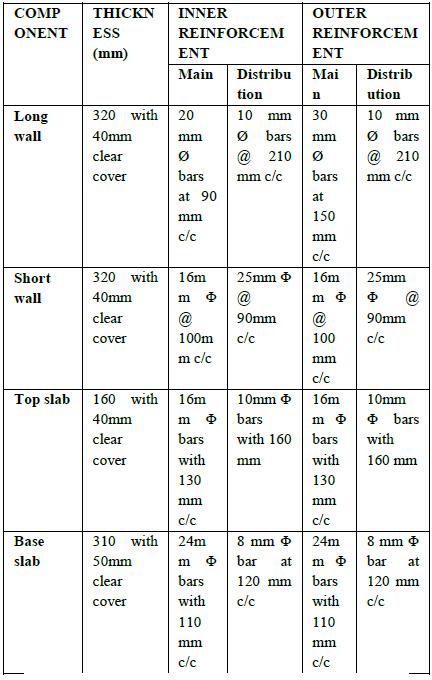
FIG2:DETAILINGOFCOMPONENTSOFSTORAGETANK
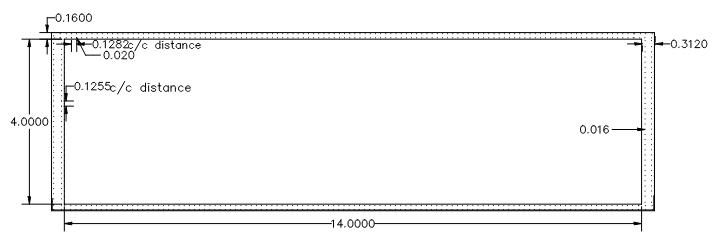
FIG3:SECTIONALFRONTVIEWOFSTORAGETANK

FIG4:TOPSECTIONALVIEWOFSTORAGETANK

FIG5:COSTESTIMATIONOFSTORAGETANK
5. CONCLUSION
From the case study the total cost of implementing sustainable parameter is 45.76 lakh. It is evident that embracing green building practices is crucial for a sustainable future. Achieving LEED certification not only enhances a building’s efficiency but also reflects a commitment to responsible and environmentally conscious construction. The journey towards sustainable development is ongoing and LEED certification play a pivotal role in advancing this important cause. Whether it be LEED, BREAM or GRIHA, the ultimate aim is to create buildings that are not only environmentally responsible but also contribute positively to the well-being of occupantsandthebroadercommunity.
REFERENCES
[1] Alyami S. H. and Rezgui Y. (2012). “Sustainable Building Assessment Tool Development Approach” SustainableCitiesandSociety5,52–62
[2] Eco-Housing, (2009). “Eco-housing Assessment Criteria Version 2.” Published by International Institute for Energy Conservation, Powai, Mumbai, India
[3] Greenomics, - Cost Efficiency of Green Buildings in India,(2008)JonesLangLaSalleMeghraj
[4] GRIHA Manual Volume 1, (2010). Published by The EnergyandResourcesInstitutePress,NewDelhi,India
International Research Journal of Engineering and Technology (IRJET)
Volume: 11 Issue: 04 | Apr 2024 www.irjet.net p-ISSN:2395-0072
[5] IGBC Green New Buildings, (2014). “IGBC Green New Buildings Rating System Version 3.” Published by CII Hyderabad,India
[6] Kibert, C.J. (2013). “Sustainable Construction: Green BuildingDesignanddelivery.”Thirdedition.Published byJohnWileyandSonsInc,Hoboken,NewJersey
[7] Kevern, J. T. (2011). “Green Building and Sustainable Infrastructure: Sustainability Education for Civil Engineers.” J. Professional Issues in Engineering EducationandPractice,137,107-112
[8] Kohler, N. (1999). The relevance of Green Building Challenge: an observer’s perspective. Building ResearchandInformation27(4/5),309–320