
International Research Journal of Engineering and Technology (IRJET) e-ISSN: 2395-0056
Volume: 11 Issue: 04 | Apr 2024 www.irjet.net p-ISSN: 2395-0072
International Research Journal of Engineering and Technology (IRJET) e-ISSN: 2395-0056
Volume: 11 Issue: 04 | Apr 2024 www.irjet.net p-ISSN: 2395-0072
1 Akshay A. Tayde, Manish R. Gond.2 Manjitkumar R. Varma, Jay K. Jagtap, Raj Abhay Badre.
1 Akshay A. Tayde, Agnihotri college Of Engineering Nagthana, Wardha,
2 Manish R Gond, Agnihotri college Of Engineering Nagthana, Wardha,
3 Manjitkumar R. Varma, Agnihotri college Of Engineering Nagthana, Wardha,
4 Jay K. Jagtap, Agnihotri college Of Engineering Nagthana, Wardha,
5 Raj Abhay Badre.Agnihotri college Of Engineering Nagthana, Wardha. Professor: - Kaustubh Tale Dept. of Civil Engineering, Agnihotri college Of Engineering Nagthana, Wardha. Maharashtra, India
Abstract – Plastic waste has become a pervasive environmental challenge in urban areas worldwide, exacerbating pollution and landscape degradation due to inadequate disposal practices. The urgency to address this issue stems from the sheer volume of plastic waste generated annually, with millions of tons ending up in landfills, oceans, and natural habitats. As such, finding sustainable solutions to mitigate the environmental impact of plastic waste has become a pressing priority for governments, organizations, and communities globally. One innovative approach to tackle the plastic waste problem is through its utilization in road construction, particularly in bituminous mixes. This study explores the potential of incorporating waste plastic into pavements as a means of addressing both infrastructure needs and environmental concerns. By integrating plastic waste into road surfaces, the aim is to enhance pavement performance, durability, and resistance to temperature variations and moisture infiltration, particularly in regions with hot and humid climateslikeIndia.
The utilization of plastic waste in road construction presents a promising opportunity to not only improve pavement performance but also alleviate the burden of plastic waste disposal. Traditional road construction materials, such as asphalt, require significant amounts of virgin resources like aggregates and bitumen, contributing to environmental degradation and resource depletion. By substituting a portion of these materials with waste plastic, road construction becomes more sustainable and environmentally friendly. The concept ofusingplastic waste in road construction is not entirely new. Several countries, including India, have already embarked on initiatives to incorporate waste plastic into pavement construction projects. These projects have demonstrated promising results in terms of pavement performance, durability, and environmentalsustainability.
One of the key advantages of using plastic waste in road construction is its ability to enhance the properties of bituminous mixes. Waste plastic, when properly processed and mixed with bitumen, can improve the flexibility, strength, and durability of pavements. Additionally, plastic-
modified pavements have shown greater resistance to temperature-induced cracking and moisture infiltration, making them particularly suitable for regions with extreme weather conditions. Moreover, the incorporation of waste plastic into road construction helps to address the growing problemofplasticpollution. Bydivertingplasticwastefrom landfills and oceans and integrating it into infrastructure projects, society can effectively reduce its environmental footprint and contribute to a circular economy model. This approach aligns with the principles of sustainable development, where resources are utilized efficiently, and wasteisminimized.
Through a comprehensive review of previous research findings, this study aims to shed light on the multifaceted implications of plastic waste utilization in road construction. By examining the potential benefits of plasticmodified pavements, the research seeks to contribute to the ongoing discourse on sustainable infrastructure developmentandenvironmentalconservation.Furthermore, the adoption of plastic waste in road construction can have socio-economic benefits for communities, particularly in developing countries where plastic waste management infrastructure is lacking. By creating demand for recycled plastic materials, road construction projects can stimulate the growth of local recycling industries, generate employment opportunities, and empower marginalized communities.
Key Words: Plastic Wastes, Bitumen, Aggregates, Plastic Roads, Plastic-Bitumen-Aggregate Mix, Substituting.
Plastic, with its versatile properties, has revolutionized variousindustries,offeringdurability,flexibility,andcosteffectiveness. From packaging materials to consumer goods, plastic has become an integral part of modern life. However, the widespread use and disposal of plastic products have led to a significant environmental challenge: plastic waste pollution. The non-biodegradable nature of plastic, coupled with improper disposal
International Research Journal of Engineering and Technology (IRJET) e-ISSN: 2395-0056
Volume: 11 Issue: 04 | Apr 2024 www.irjet.net p-ISSN: 2395-0072
practices,hasresultedintheaccumulationofplasticwaste in landfills, oceans, and natural habitats worldwide. The ubiquity of plastic waste poses grave threats to ecosystems, wildlife, and human health. Plastic debris in the environment not only detracts from the aesthetic appealoflandscapesbutalsoposeshazardsto marinelife through ingestion and entanglement. Moreover, plastic pollutionhasbeenlinkedtovariousenvironmentalissues, including soil and water contamination, greenhouse gas emissions,andmicroplasticpollution.
In urban areas, the accumulation of plastic waste exacerbates environmental degradation and poses challenges to waste management systems. Despite efforts to promote recycling and reduce single-use plastics, the sheer volume of plastic waste generated annually continues to strain existing infrastructure and resources. The need for innovative solutions to address the plastic waste crisis has never been more pressing. Recognizing theurgencyofthesituation,researchersandpolicymakers have increasingly turned their attention to finding sustainable alternatives for plastic waste management. Onepromisingsolutionistheutilizationofplasticwastein road construction, particularly in bituminous mixes used for pavement surfaces. Bituminous concrete, commonly known as asphalt, is a composite material comprising asphalt or bitumen and mineral aggregate. It forms the foundation of most road surfaces, providing durability, stability,andskidresistance.
By incorporating waste plastic into bituminous mixes, researchers aim to not only address the environmental challenges posed by plastic waste but also improve pavement performance and durability. Plastic-modified pavements have shown promising results in resisting temperature fluctuations, reducing moisture infiltration, and enhancing overall pavement quality. Moreover, the utilization of waste plastic in road construction presents an opportunity to reduce the consumption of virgin materials and promote a circular economy model. One of the key advantages of using waste plastic in road construction is its ability to enhance the properties of bituminous mixes. Plastic, when properly processed and mixed with bitumen, can improve the flexibility, strength, anddurabilityofpavements.Additionally,plastic-modified pavementshaveshowngreaterresistancetotemperatureinduced cracking and moisture infiltration, making them particularly suitable for regions with extreme weather conditions.
Theconceptofutilizingwasteplasticinroadconstruction isnotentirelynew.Severalcountries,includingIndia,have already embarked on initiatives to incorporate waste plastic into pavement construction projects. These projects have demonstrated promising results in terms of pavement performance, durability, and environmental sustainability.InIndia,wheretheplasticwasteproblemis
particularly acute, the government has taken proactive measures to promote the use of waste plastic in road construction. The "Plastic Roads" initiative, launched in 2015 by the Indian Ministry of Road Transport and Highways, aims to utilize waste plastic in road construction to address both infrastructure needs and plastic waste management challenges. Under this initiative, waste plastic is shredded into small pieces and mixed with hot bitumen before being added to asphalt mixes. The resulting plastic-modified asphalt is then used to pave roads, providing a sustainable solution to both plastic waste disposal and road infrastructure development.
Thebenefitsofplastic-modifiedpavementsextendbeyond environmental conservation. By creating demand for recycled plastic materials, road construction projects can stimulatethegrowthoflocalrecyclingindustries,generate employment opportunities, and empower marginalized communities. Moreover, plastic-modified pavements have the potential to reduce maintenance costs and extend the service life of roads, resulting in long-term economic savings for governments and taxpayers. Through comprehensive analysis and strategic implementation, plastic-modified pavements have the potential to transform waste management practices, enhance infrastructure resilience, and mitigate environmental impacts. By diverting plastic waste from landfills and oceans and integrating it into infrastructure projects, society can effectively reduce its environmental footprint andcontributetoacirculareconomymodel.
Justo (2002) “Asphalt concrete mixes” at the Centre for TransportationEngineering,ofBangaloreUniversity,used processed plastic bags as an additive in asphalt concrete mixes. The properties of this modified bitumen were compared to that of ordinary bitumen. It was noted that penetrationandductilityvalues,ofmodifiedbitumen,was decreasing with the increase in the proportion of the plasticadditive.
1. S. Rajasekaran (2009) “Reuse of waste plastic coated aggregate” Marshall’s mix design was carried out by changing the modified bitumen content at constant optimum rubber content and subsequent tests have beenperformedtodeterminethedifferentmixdesign characteristics and for conventional bitumen (60/70) also. This has resulted in many improved characteristics when compared with straight run bitumen and that too at reduced optimum modified bindercontent(5.67%).
2. V.S. Punith (2001), states there is possibility to improvetheperformanceofbituminousmixesofroad pavements.Wasteplastics(polythenecarrybags,etc.)
International Research Journal of Engineering and Technology (IRJET) e-ISSN: 2395-0056
Volume: 11 Issue: 04 | Apr 2024 www.irjet.net p-ISSN: 2395-0072
on heating soften at around 130°C. Softened plastics have a binding property. Hence, it can be used as a binderforroadconstruction.
3. Dr. R. Vasudevan (2007) investigated that the coating of plastics reduces the porosity, absorption of moisture and improves soundness. He stated that the polymerbitumenblendisabetterbindercomparedto plain bitumen. Blend has increased softening point and decreased Penetration value with a suitable ductility. When it used for road construction it can withstandhighertemperatureandload.Thecoatingof plastics reduces the porosity, absorption of moisture and improves soundness. The polymer coated aggregate bitumen mix forms better material for flexible pavement construction as the mix shows higher Marshall Stability value and suitable Marshall Coefficient.Hencetheuseofwasteplasticsforflexible pavementisoneofthebestmethodsforeasydisposal of waste plastics. Use of plastic bags in road help in many ways like Easy disposal of waste, better road andpreventionofpollutionandsoon.
4. S.Rajasekaran (2013) explains that by coating the aggregatewiththepolymerhasmanyadvantagesand which ultimately helps in improving the flexible pavement quality not only it improve the pavement quality but also improve the aggregate quality. This technology also helps in the disposal of waste plastic obtained from the domestic and industrial packing materials. The dry process is more valuable as it dispose the 80 % of waste polymer in eco-friendly way. And use of polymer reduces the equivalent bitumen quantity and therefore reducing the constructioncostofroad.
5. Sabina (2001) studied the comparative performance of properties of bituminous mixes containing plastic/polymer (PP) (8% and 15% by weight of bitumen) with conventional bituminous concrete mix (prepared with 60/70 penetration grade bitumen). Improvement in properties like Marshall Stability, retainedstability,indirecttensilestrengthandrutting wasobservedinPlasticmodifiedbituminousconcrete mixes.
6. WayalandWaglecarriedoutresearchonuseofwaste plasticandwasterubberinaggregateandbitumenfor road materials. In their research they used polymer and crumbed rubber as a binder with respect to aggregate and bitumen. They tested the material for crushing value, impact value, abrasion value, and specific gravity, bitumen penetration value, ductility, softening point. They found that the use of waste plastics and rubber tires in the form of powder for flexiblepavementmaterial isoneofthebestmethods foreasydisposalofwastes.
7. FransisHveem (1942)“Optimumquantityof bitumen inroads” who was a project engineer of California Department of Highways, has developed the Hveemstabilometer in 1927. He did not have any previousexperienceonjudging,therequiredmixofits colour, hence he decided to measure various mixture parameters to find the optimum quantity of bitumen [VallergaandLovering1985].Hehadusedthesurface areacalculationconcept,(whichwasalreadyinuse,at that time for the cement concrete mix design), to estimatethequantityofbitumenactuallyrequired.
8. Anzar Hamid Mir (2015) “Plastic waste in pavement construction” studied the visco-elastic nature of bindersandfoundthatthe complexmodulus &phase angles of the binders, need to be measured, at temperatures and loading rates which different resembleclimaticandloadingconditions.
9. Vatsal Patel (2014) “Utilization of plastic waste in road” described that the effect of wax in bitumen can be reduced by adding EVA (Ethyl Vinyl Acetate), aromatic resin and SBS in the waxy bitumen. The addition of 4% EVA or 6% SBS or 8% resin in waxy bitumen effectively reduces the Susceptibility to high temperatures, bleeding at high temperature and brittlenessatalowtemperatureofthemixes.
10. KurmadasuChandramoulietal (2016) “Plasticwaste: its use in the construction of roads ” reported that asphalt concrete using polyethylene modified binders were more resistant to permanent deformation at elevated temperature and found improvement in strippingcharacteristicsofthecrumbrubbermodified mixascomparedtounmodifiedasphaltmix.
11. Amit P. Gawande (2013)“Economics And Viability Of Plastic Road” evaluated flexural fatigue life of asphalt concrete modified by 3% crumb rubber as part of aggregated and reported that fatigue life and creep properties of the polymer modified mixes increased significantly as compared to unmodified asphalt mixes.
12. Sasane Neha .B. et al (2015) “Application of waste plasticasaneffectiveconstructionmaterialinflexible pavement” polyethylene as one sort of polymers is usedtoinvestigatethepotentialprospectstoenhance asphalt mixture properties. The objectives also include determining the best type of polyethylene to beusedanditsproportion.Twotypesofpolyethylene were added to coat the aggregate High-Density Polyethylene (HDPE) and Low-Density Polyethylene (LDPE). The results indicated that grinded HDPE polyethylene modifier provides better engineering properties. The recommended proportion of the modifieris12%bytheweightofbitumencontent.Itis
International Research Journal of Engineering and Technology (IRJET) e-ISSN: 2395-0056
Volume: 11 Issue: 04 | Apr 2024 www.irjet.net p-ISSN: 2395-0072
foundtoincreasethestability,reducethedensityand slightlyincreasetheairvoidsandthevoidsofmineral aggregate.
13. Prof. C.E.G. Justo states that addition of 8.0 % by weight of processed plastic for the preparation of modifiedbitumenresultsinasavingof0.4%bitumen byweightofthemixorabout9.6kgbitumenpercubic meter (m 3) of BC mix. Modified Bitumen improves the stability or strength, life and other desirable propertiesofbituminousconcretemix.
The objectives of this study are multifaceted, aiming to comprehensivelyassesstheimpactofincorporatingwaste plasticintobituminousmixesforroadpavements:
1. To compare the performance of bituminous roads with and without waste plastic: Through field trials and performance evaluations, the study will assess the realworld performance of plastic-modified pavements in comparison to conventional bituminous roads. This objective seeks to provide empirical evidence of the benefitsanddrawbacksofwasteplasticutilizationinroad construction.
2.Todeterminetheoptimalproportionofwasteplasticto achieve desired pavement strength and durability: By analyzing the results of Marshall Stability tests and field trials, the study aims to identify the most effective proportion of waste plastic that enhances pavement strength, durability, and other desirable properties. This objective is crucial for informing future road construction practices and maximizing the benefits of waste plastic utilization.
3. To address plastic waste disposal challenges through sustainable road construction practices, contributing to environmental conservation efforts: This overarching objective aims to align road construction activities with environmental sustainability goals by repurposing plastic waste as a valuable resource. By integrating waste plastic into road infrastructure projects, the study seeks to mitigate the environmental impact of plastic waste while simultaneously improving infrastructure resilience and longevity.
Through the fulfillment of these objectives, the study endeavors to contribute valuable insights to the field of sustainable infrastructure development and environmental conservation. By systematically evaluating the feasibility and efficacy of plastic waste utilization in road construction, the research aims to inform policy decisions, industry practices, and community initiatives aimedataddressingtheglobalplasticwastecrisis.
The methodology employed in this study encompasses a thorough approach to assessing the potential advantages ofintegratingwasteplasticintobituminousmixesforroad pavements. The following steps outline the detailed methodology:
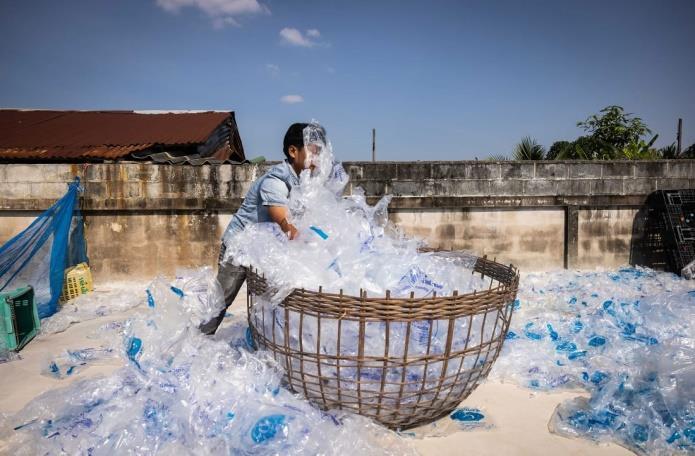
Segregation - Plastic waste sourced from various outlets undergoes meticulous segregation to isolate it from other waste materials. This process ensures the purity of the plastic waste and streamlines its subsequent processing and incorporation into bituminousmixes.

Cleaning Process - The segregated plastic waste undergoes rigorous cleaning and drying procedures to remove any contaminants, debris, or moisture. This stepiscrucialtoguaranteethequalityandsuitabilityof the plastic waste for road construction applications. Cleanand dry plasticwaste enhancestheadhesionand dispersion of plastic particles within the bituminous mix,therebyenhancingpavementperformance.
International Research Journal of Engineering and Technology (IRJET) e-ISSN: 2395-0056
Volume: 11 Issue: 04 | Apr 2024 www.irjet.net p-ISSN: 2395-0072
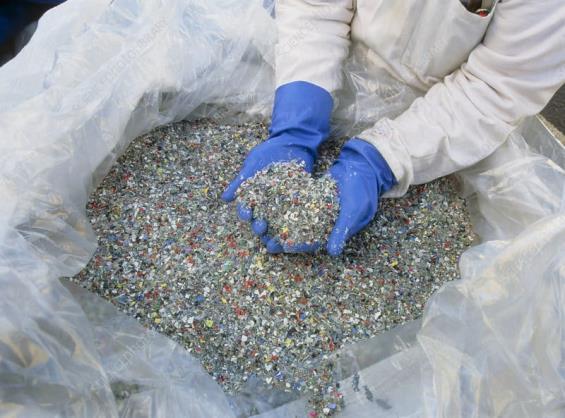
Shredding Process - The cleaned plastic waste is shredded or cut into small, uniform pieces to facilitate its even distribution and integration into the bituminous mix. Proper shredding ensures the homogeneousdispersionofplasticparticlesthroughout the mix, thereby improving the overall stability, durability,andperformanceofthepavement.
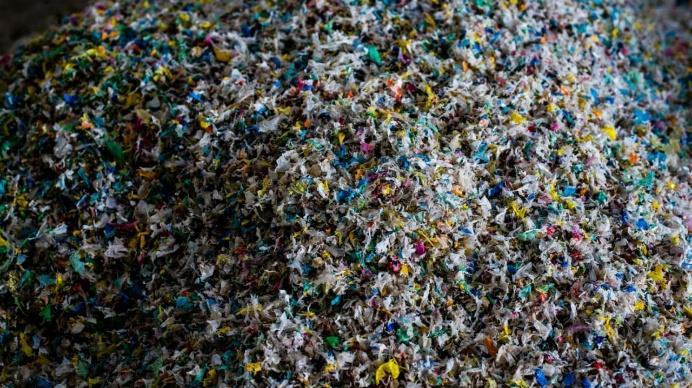
Collection Process -Plasticwasteparticlesretainedon a 2.36 mm IS sieve are meticulously collected for further processing and incorporation into bituminous mixes. Selecting appropriate particle sizes ensures optimal compatibility and interlocking between plastic particles and other mix components, maximizing pavementperformance.
Testing of Materials - Various tests are conducted on both aggregate and bitumen to comprehensively characterizetheirproperties.Thesetestsinclude:
AggregateImpactValueTest:Evaluatestheresistance ofaggregatestosuddenimpactorshock.
Los Angeles Abrasion Test: Assess the abrasion resistanceofaggregates.
Water Absorption Test: Measures the water absorption capacity of aggregates, indicating their porousnessandsusceptibilitytomoisturedamage.
Specific Gravity Test: Determines the density of aggregatesrelativetowater.
Stripping Value Test: Assesses the adhesion between aggregate and bitumen, indicating the mix's susceptibilitytomoisture-induceddebonding.
Penetration Value Test: Measures the hardness or consistencyofbitumen.
Ductility Test: Determines the elongation and flexibilityofbitumen.
Flash & Fire Point Test: Determines the flammability and combustibilityofbitumen.
Softening Point Test: Measures the temperature at which bitumensoftens.
Sample Preparation: Marshall Stability samples are prepared using various proportions of plastic waste (e.g., 5%, 10%, and 15%) and without plastic waste. The incorporation of plastic waste into the bituminous mix is systematically adjusted to evaluate its impact on pavement properties, including stability, durability, and resistancetotemperatureandmoisture.
Marshall Stability Testing: Marshall Stability tests are conducted on all prepared samples to evaluate their performanceundersimulatedloadingconditions.Thistest assesses the pavement's resistance to deformation and failure under compressive loads, providing valuable insights into the structural integrity and performance of plastic-modified pavements compared to conventional bituminousmixes.
By adhering to this comprehensive methodology, the study aims to systematically assess the potential benefits of incorporating waste plastic into bituminous mixes for road pavements. Through rigorous testing and analysis, the study seeks to elucidate the effects of plastic modification on pavement properties and performance, contributingvaluableinsightstotheongoingdiscourseon sustainable infrastructure development and environmentalconservation.
Volume: 11 Issue: 04 | Apr 2024 www.irjet.net p-ISSN: 2395-0072
Followingarethetestsperformedandtheresultsobtained
1. TESTSONAGGREGATE
Table-1: Results of tests on aggregate
This study concludes that integrating waste plastic into bituminous mixes holds immense promise for enhancing pavement performance and mitigating environmental concernsrelatedtoplasticwastedisposal.Bydetermining the optimal proportion of waste plastic and embracing sustainable road construction practices, the potential for creating a more resilient and eco-friendly infrastructure becomes evident. Plastic-modified pavements exhibit enhanceddurability,resistancetotemperaturevariations, andprotectionagainstmoisture,makingthemparticularly suitableforregionswithextremeclimaticconditions,such as India. This research contributes significantly to both infrastructure development and environmental conservation efforts by advocating for the reuse of plastic waste in road construction, thereby curbing plastic pollutionandelevatingpavementquality.
In summary, the utilization of plastic waste in road construction offers a compelling avenue for tackling environmentalchallengeswhilesimultaneouslyenhancing infrastructure standards. Through rigorous research, innovative methodologies, and strategic deployment, plastic-modified pavements can pave the way for a more sustainable and resilient transportation network, benefiting communities and ecosystems alike. By embracingthisapproach,stakeholderscancontributetoa circular economy model, where waste materials are repurposed to create valuable assets, fostering a greener andmoreprosperousfutureforgenerationstocome.
Table-2: Results of tests on bitumen
[1]Amit Gawande, G.S Zamre, V.C Renge G.R Bharsakalea and Saurabh Tayde, utilization of waste plastic in asphalt of roads, scientific reviews and chemical communication.
[2]Dr.SatishChandra,ShivKumar&RajeshKumarAnand, “Soil Stabilization with Rice Husk Ash and line Sludge”, India Highways, Indian Roads Congress, vol33 No. 5, May2005,pp.87-98
[3]Dr. S.S.Verma, “Road from Plastic state.”, Science Tech Entrepreneur, March 2008 Gianni A.K. Modi, A.J., “Bio Enzymatic Soil Stabilizers for Construction of Rural Roads”,InternationalSeminaron
Sustainable Development in Road Transport, New Delhi-India8-10November2001
[4]IRC: SP: 20-2002. “Rural Roads Manual”, Indian Roads Congress
[5]Mroueh,U.M.,andWahlstrom,M.(2002).“By-Products andRecycledMaterialsinEarthConstructioninFinland
International Research Journal of Engineering and Technology (IRJET) e-ISSN: 2395-0056
Volume: 11 Issue: 04 | Apr 2024 www.irjet.net p-ISSN: 2395-0072
M an Assessment of Applicability.” Resources, ConservationandRecycling,No.35,2002,pp.117M129
[6]Miss Aproova, use of plastic waste in flexible pavements,internationaljournalofinnovativeresearch inengineeringandmanagement
[7]Sherwood, P. T. (1995). “Alternative materials in road construction. “Thomas Telford Publications, London, 1995
[8]Tara Sen, Umesh Mishra, “Usage of Industrial Waste Products in Village Road Construction,” International Journal of Environmental Science and Development, Vol.1,No.2,June2010
[9]Vasudevan .R, utilization of waste plastics for flexible pavement, Indian High Ways (Indian Road Congress), Vol.34,No.7.(July2006).
[10] Wes Heidenreich, “Recycled plastic in highway construction and maintenance.” State Research report #525,July1997.
BIOGRAPHIES


AkshayA.Tayde (BECivil)




ManishR.Gond (BECivil) ManjitkumarR.Varma (BECivil) JayK.Jagtap (BECivil)
RajAbhayBadre (BECivil)