
International Research Journal of Engineering and Technology (IRJET) e-ISSN: 2395-0056
Volume: 11 Issue: 04 | Apr 2024 www.irjet.net p-ISSN: 2395-0072
International Research Journal of Engineering and Technology (IRJET) e-ISSN: 2395-0056
Volume: 11 Issue: 04 | Apr 2024 www.irjet.net p-ISSN: 2395-0072
Divya Rani1, Harsh Kumar2, Kunal Singh3 , Ajay Solanki4
1, 2 , 3
Undergraduate students , 4 Assistant Professor Department of Mechanical Engineering , Delhi Technological University , New Delhi , India
Abstract - This research was aimed at investigating different modeling approaches to predict solar power consumption in the building industry in India. LSTM neural networks, and linear regression , two machine learning models were used for evaluating efficiency. Namely, to create models, the analysis of historical records, weather forecasts, and building-specific datasets was performed. The demographic of the region, location, calendar factors, and historical consumption trends were extracted to feature consumption. LSTM networks can well catch complex temporality patterns while having low interpretability, while the linear regression model can assume causation but have reduced accuracy. As shown, the LSTM model was more successful over fitting data with 97.12% accuracy. However, the study shows that both approaches are possible and provide valuable insights into India urban expansion and sustainable energy solutions. The research brings to light the importance of using advanced predictive modeling solutions to address the energy problem and a greener environment in India.
Key Words: Solar Energy , Energy Consumption , Commercial building , Machine learning , Predictive Modeling
India’s building industry faces major challenges in regulating energy use and reducing environmental impactsduetorapidurbanizationandpopulationgrowth. Thesectorischaracterizedbyahighcarbonfootprintand requires immediate measures to reduce these negative impacts by increasing energy efficiency and use of renewable energy sources. One of the possible ways to tackle these problems is accurate estimation of solar power usage using predictive modeling approaches. This study examines linear regression and long-short-term memory neural network effectives in predictive modeling approaches of solar power consumption in the Indian building sector. It is necessary to examine the extracted keyfeatures,suchasthedemographyandgeography,and calendar, and the history of the building’s energy consumption, which helps to understand the time and environmental patterns of energy use. To do this, the following is used: primary measurement data, historical
weather data,forecastweatherdata,and building-specific datasets.
Thus, this study aims to explain the applicability and productivity of LSTM neural networks and linear regressionfor prescriptive energy followingIndia'surban development.Researchpresentsconsiderableconclusions forusageofenergyforecastingmethodscreativelytailored for the building industry in India, enabling policymakers and stakeholders to address energy-related concerns and supportecologicalsustainability..
"Predicting Energy Consumption in Residential Buildings Using Advanced Machine Learning Algorithms" by Dinmohammadi, F., Han, Y., & Shafiee (2023)[1]
The article provides a review of predicting building energy consumption with a focus on machine learning methods. Several machine learning algorithms that are currently widely used in predicting building energy consumption and performance, such as artificial neural networks, support vector machines and Gaussian-based regressions, and clustering, are introduced in this paper. The review underscores the need for accurate energy prediction for efficient decision making on energy consumptionandintelligent renovationofbuildings. The study recommends a framework to select the best machine learning method for various cases and building usage. Finally, the conclusion of the review argues the current hurdles associated with machine learning on energy prediction and their limitations and possible research avenues for improvement using machine learninginpredictingandbenchmarkingenergy.
"Energy consumption prediction by using machine learningforsmartbuilding:CasestudyinMalaysia"by MelKeytingan,M.Shapietal.(2021)[2]
This study explored the use of machine learning for the development of a predictive model for energy consumptioninsmartbuildings.Themodeltraining,data analysis, and model performance evaluation all took place in the Microsoft Azure Machine Learning Studio. The paper compared models based on three predictive techniques: k-nearest neighbor, support vector machine,
International Research Journal of Engineering and Technology (IRJET) e-ISSN: 2395-0056
Volume: 11 Issue: 04 | Apr 2024 www.irjet.net p-ISSN: 2395-0072
and artificial neural network. The results demonstrated the advantage of cloud-based predictive model development and emphasized the importance of data preprocessinginaccountingfortheheterogeneityofreallife data. The recommendations for further research includeutilizingmorepowerfulcomputationalresources, collecting more relevant data, and investigating hybrid andensemblemodelstoimprovepredictiveaccuracy.
"Machine learning for estimation of building energy consumption and performance: a review" by Saleh Seyedzadeh, Farzad Pour Rahimian, Ivan Glesk, and MarcRoper(2018)[3]
The subject of this work is a detailed analysis of implementing machine learning approaches used to efficient analysis of building energy usage. This paper providesanoverviewoftheadvantagesandconstraintsof this approach and tracks potential future developments, applications, and other modifications that could further enhance the model’s performance. The authors explain why machine learning is suitable for building energy analysis, describe machine learning models, assess how these models are used in the building sector, provide multiplecasestudies,demonstratehowtochoosetheright machine learning model, and identify current limitations andwaystoimproveresearch.Thisstudywillalsooutline how machine learning can influence building energy forecastsandbenchmarking.
"Predicting Daily Mean Solar Power Using Machine Learning Regression Techniques" by Faizan Jawaid and KhurumNazirJunejo(2016)[4]
The prerequisites of the article related to the importance of accurate sun irradiance forecasting for multiple solar power applications include the prediction of daily mean solar power with regression techniques of machine learning. The results presentation of the study is to establish thecomparisonof artificial neural networksand azimuth and zenith parameters modification against various regression methods. The publication is based on the extensive analysis of prediction methods and the significanceofsome meteorological variableson the solar power prediction. The primary objective is the enhancement of solar power mean forecasting for practicalapplication.
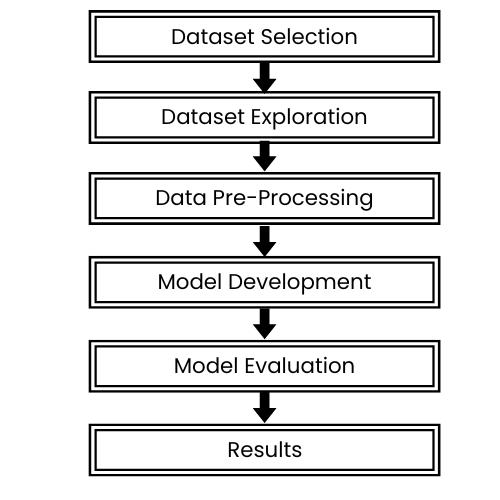
The methodology of this study includes several stages, including dataset selection, data exploration, data preprocessing,modeldevelopment,modelevaluation,and Results . These stages are illustrated in Figure 1 and describedindetailbelow.
3.1 Dataset Selection : Numerous publicly available databases and online resources provide a wealth of data on solar energy consumption across various buildings with unique characteristics. The dataset from a business building in Tamil Nadu, India, which was collected every dayfromDecember2017toMay2019,isthefocusofthis study. This dataset provides a comprehensive insight into the parameters impacting solar energy utilization in commercial establishments. It is enhanced with details such as hourlysolar power usage, floor assignments, staff presence, holiday schedules, and daily external temperatures.
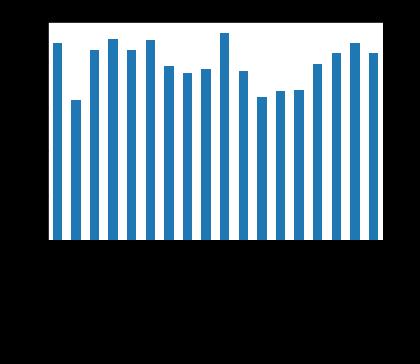
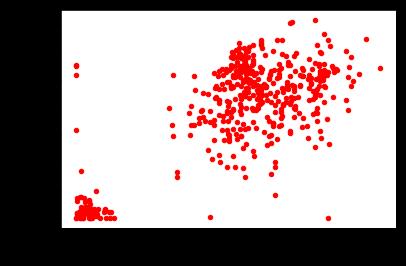
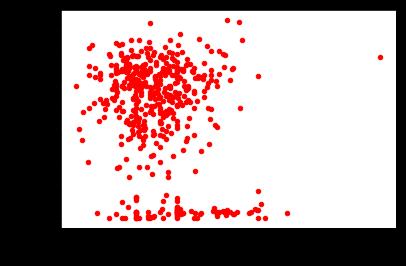
3.2 Dataset Exploration : Hundreds of records were collected in the dataset on a daily basis, and an initial exploration was conducted to understand its findings. Analysis of the visualization trends provided insights as follows:
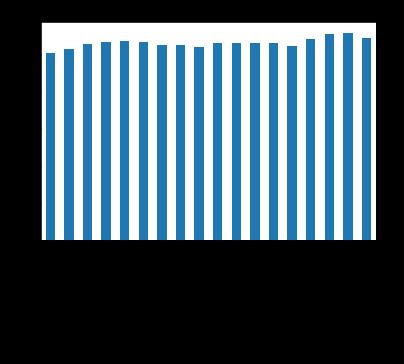
Fig2 . Temp (C) per month ( Averaged over month )
International Research Journal of Engineering and Technology (IRJET) e-ISSN: 2395-0056
Volume: 11 Issue: 04 | Apr 2024 www.irjet.net p-ISSN: 2395-0072
3.3 Dataset Preprocessing : Extensive preparation activities were conducted to improve the dataset’s utility and reliability before it was usable for analysis. Datacleaningandimputationstepswereundertakentoaddress errors, inconsistencies, and missing data. Additionally, categorical variables were encoded to make them compatible with analytical models; feature selection was usedtoidentifythemostrelevantvariablesforthisstudy. Inaddition,standardizationwasusedtoensureuniformity among the different features. This helped to enhance the dataset, making it more appropriate for use to generate more authentic and valid results about solar power use trendsincommercialbuildings.
3.4. Model development : A linear regression model wasdevelopedearlierforsimpleinsightsintosolarenergy consumption. Then, using LSTM networks positively captured complex temporal patterns and significantly increased forecast precision. This technique was used to gain a deeper understanding of the energy required in commercialbuildings,especiallysolarenergy.
3.5. Model Evaluation : The accuracy of the models would be measured by comparing how well the original predictioncomparestothedifferentpredictions.
A linear regression is a statistical technique used to analyzetheeffectofindependentfactorsonthedependent variable, before which one needs to understand and predict. Temperature, the number of employees, weekdays, and day types, are examples of independent variables relative to solar power consumption. This study utilizes linear regression to investigate trends in energy usage.
The accuracy of the model can be assessed based on how well the original prediction stands up to various predictions.Typically,itisdone bydividinga datasetinto differentpartsfortestingandtrainingthemodel.Training enables the model to comprehend the complexities of the interactions between independent and dependent variables. The coefficient of determination indicates how well the model can explain the variance in solar power use.Consequently,linearregressionprovidesasolidbasis for making informed energy management and strategy formulationdecisions.
International Research Journal of Engineering and Technology (IRJET) e-ISSN: 2395-0056
Volume: 11 Issue: 04 | Apr 2024 www.irjet.net p-ISSN: 2395-0072
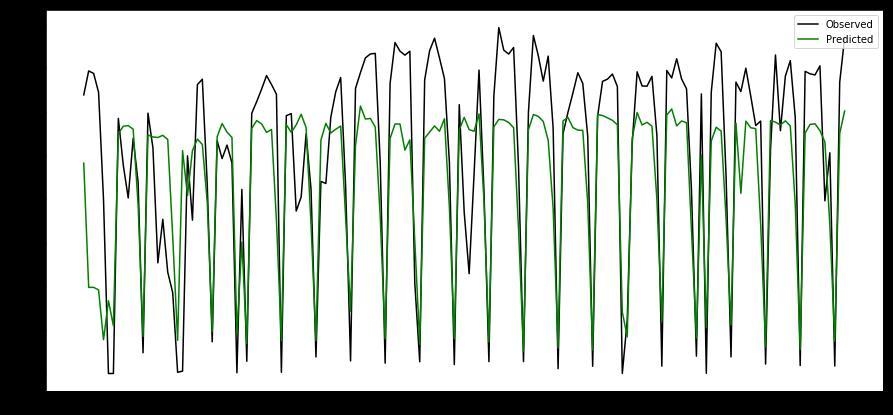
Comparing Observed and Predicted Solar Power Consumption using Linear Regression
The model in this study explains around 63.70% of the variance in solar usage with the independent variables chosen. The R2 score is 0.6370. To enhance forecasting performance,thestudyaimstoincorporatemorecomplex Long Short-Term Memory (LSTM) models , which are especiallygoodatcapturingcomplextemporalpatterns.
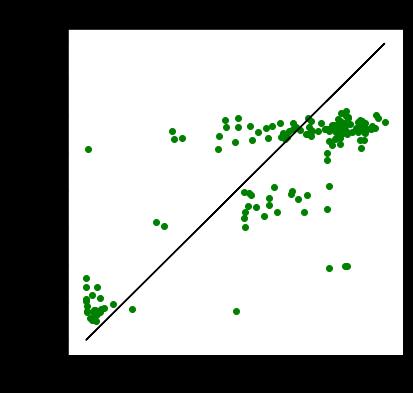
Scatter Plot: Comparing Observed vs. Predicted Solar Power Consumption using Linear Regression
4.2 Long Short Term Memory ( LSTM )
Earlier, a particular kind of neural network, long-shorttermmemory,wasutilizedforcommonsenseprediction: the future utilization of solar power based on preceding data.Dataondaytype,manpowercount,andtemperature was collected and organized using pandas, a datamanipulation tool that simplifies analysis. More thorough data is necessary to understand consumption patterns entirely.Therefore, thecapabilitytodifferentiatebetween
weekdays, weekends, and public holidays was included . The generator was split into “training” and “test” subsets to provide historical data to the model for training accountingandunobserveddata forperformancetesting. The target variable , solar power consumption, and input data,temperature,anddaytypewereseparated.Thedata was reshaped into a format appropriate for sequencebasedmodelingtoprepareitforLSTM.
An LSTM model was then developed and taught using the trainingdata torecognizevarioustrendsandcorrelations between the input factors and solar usage. This study’s model’s efficiency was measured to be test accuracy of 0.9712. This means that the model can forecast solar use withjusta97.12percentaccuracy.Thisdegreeofaccuracy is crucial toconsider the excellent forecasting accuracy of the LSTM model and to guide energy administration and policy.
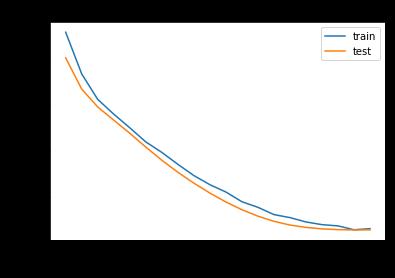
Fig.8 Visualizing Model Loss Over Epochs
International Research Journal of Engineering and Technology (IRJET) e-ISSN: 2395-0056
Volume: 11 Issue: 04 | Apr 2024 www.irjet.net p-ISSN: 2395-0072
Thelinearregressionanalysishasprovidedusefulfindings regarding the consumption of energy. A majority of the variability in solar power usage, about 63.70%, is explained by the model, as shown by the R2 score of 0.6370. That would indicate a reliable level of predictability, which would enable the professionals to make informed decisions and preparations in energy management.
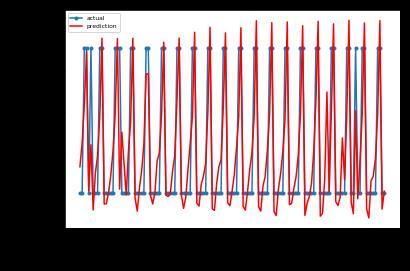
In particular, when it involves predicting solar power usage, the LSTM model has proven to be very effective at detecting complex sequential patterns. The assessment illustrates the outstanding predictive force of the LSTM modelsincethetestaccuracyis97.72%.
In conclusion, the present study results affirm the significance of LSTM and linear regression models in evaluating and predicting energy use trends, particularly those related to solar power consumption. Indeed, the interplayofsuchvariablesastemperatureoscillations,the numberofemployees,daycategorization,andsolarpower consumption levels has been one of the most clarified by both models. Ultimately, the achievement and the potential of forecast methodologies in guiding energy managementsolutionsarealluring,evidencedby thehigh R² indicator and the acceptable level of precision manifestedbytheLSTMmodel.
Therefore, forecasting of solar power consumption in India is crucial in view of the rapidly evolving country’s energy supply and demand dynamics and the government’s commitment to renewable energy. This research will enable relevant stakeholders to make informed decisions on energy distribution, grid improvements, and future investment in infrastructure. Moreover, utilizing LSTM modeling in combination with
linear regression eases the process of proper resource allocation and the need to consume non-renewable finite sources of energy as well as move sustainable developments further. The present report identifies actionable outcomes that are instrumental in driving radicalinnovationinrenewableenergyinIndia.
[1] Dinmohammadi, F., Han, Y., & Shafiee, M. (2023, April 27) “Predicting Energy Consumption in Residential Buildings Using Advanced Machine Learning Algorithms“ doi.org:10.3390/en16093748
[2] Shapi, M. K. M., Ramli, N. A., & Awalin, L. J. (2021, March 1). “Energy consumption prediction by using machine learning for smart building: Case study in Malaysia”doi.org:10.1016/j.dibe.2020.100037
[3] Seyedzadeh, S., Rahimian, F. P., Glesk, I., & Roper, M. (2018, October 2). “Machine learning for estimation of building energy consumption and performance: a review“ doi.org:10.1186/s40327-018-0064-7
[4] Jawaid, F., & NazirJunejo, K. (2016, August 1). “Predicting daily mean solar power using machine learning regression techniques” doi.org:10.1109/intech.2016.7845051
[5] Mosavi, A., & Bahmani, A. (2019, March 10). “Energy Consumption Prediction Using Machine Learning; A Review”doi.org:10.20944/preprints201903.0131.v1