
International Research Journal of Engineering and Technology (IRJET) e-ISSN: 2395-0056
Volume: 11 Issue: 04 | Apr 2024 www.irjet.net
p-ISSN: 2395-0072

International Research Journal of Engineering and Technology (IRJET) e-ISSN: 2395-0056
Volume: 11 Issue: 04 | Apr 2024 www.irjet.net
p-ISSN: 2395-0072
Mahesh Joshi1 , Niranjan Dengale2 , Amrin Shaikh3 , Jagannath Panchal4 , Dr. Prathamesh S. Gorane5, Dr. Vijay B. Roundal6
1BE Student, Department of Mechanical Engineering, GSMCOE, Balewadi, Pune, Maharashtra, India
2BE Student, Department of Mechanical Engineering, GSMCOE, Balewadi, Pune, Maharashtra, India
3BE Student, Department of Mechanical Engineering, GSMCOE, Balewadi, Pune, Maharashtra, India
4BE Student, Department of Mechanical Engineering, GSMCOE, Balewadi, Pune, Maharashtra, India
5Professor, Department of Mechanical Engineering, GSMCOE, Balewadi, Pune, Maharashtra, India
6Professor, Department of Mechanical Engineering, GSMCOE, Balewadi, Pune, Maharashtra, India ***
Abstract - In the modern landscape of infant caregiving, the demand for innovative solutions to enhance comfort, safety, and convenience for both infants and caregivers is paramount. This research paper presents the development and implementation of an automatic baby cradle with sensor integration, aimedat addressingthe challenges faced by caregivers in soothing infants and monitoring their needs.
This paper presents the development of an automatic baby cradle with sensor integration, aimed at enhancing infant caregiving. The project integrates noise detection and wetness indication sensors with an Arduino Uno microcontroller to automate cradle movement and enable real-timecommunicationwithcaregiversviaSMSalerts.
Key Words: Automatic cradle, sensor integration, infant care,ArduinoUno,GSMmodule.
The development of an automatic baby cradle has revolutionizedinfantcaregivingbyprovidingahands-free solution for soothing infants and monitoring their wellbeing. The cradle uses an Arduino Uno microcontroller to automateitsmovement,allowingittorespondtodetected noise levels and wetness. Sensors for noise detection and wetness indication enable the cradle to respond swiftly, enhancingcomfortandpromotinguninterruptedrest.The project also includes a GSM module for communication with caregivers, sending SMS alerts when the cradle detects a baby's crying or wetness. This technologically advancedsolutionprioritizessafety,comfort,andpeaceof mindforbothinfantsandcaregivers.
The paper discusses the design, fabrication, and analysisofautomatedcradles,anautomaticE-BabyCradle Swing based on baby cry, and an Arduino-based resonant electric cradle design with infant cries recognition. The automated cradle uses a DC motor to rotate in clockwise
and anticlockwise directions, pushing the bassinet to the frontandviceversa.
The system has an inbuilt alarm that alertscaregivers when the baby stops crying, ensuring hygienic conditions and indicating the need for attention. The paper also discussesanArduino-basedresonantelectriccradledesign withsensorsdesignedtodetectoscillationstateandinfant criesrecognition.Theforceisdrivenatthecritical timeto achieve maximum output response while saving energy.A GSMmoduleisalsoincludedtoenablecommunicationwith caregivers. When the cradle detects the baby crying or becomingwet,itsendsSMSalertstonotifythem,ensuring prompt attention and care. The aim of these studies is to revolutionizeinfantcaregivingbyofferingatechnologically advanced solution that prioritizes safety, comfort, and peaceofmindforbothinfantsandcaregivers.
The project aims to improve the functionality of baby cradlesbyintegratingsensorsandautomationtechnology to detect and respond to infant needs in real-time. The system will automate the cradle's motion, trigger noise detection for infant cries, and wetness indication for diaper changes. The Arduino Uno microcontroller will processsensorinputs,andaGSMmodulewillenablerealtimecommunication.
A user-friendly interface will be developed for caregiverstoadjustsettingsandmonitorsensorreadings. Testingwillvalidatethemechanism'sreliability,accuracy, and safety, with documentation detailing operation, maintenance,andtroubleshootingprocedures.
2. METHODOLOGY
Requirements Gathering and Analysis: Defined project objectives and functionalities based on caregiver needs and infant care requirements, identified necessary components.
International Research Journal of Engineering and Technology (IRJET) e-ISSN: 2395-0056
Volume: 11 Issue: 04 | Apr 2024 www.irjet.net p-ISSN: 2395-0072
Component Selection: Researched and selected appropriate components based on project requirements andcompatibilitywithArduinoUno.Ensuredcompatibility and reliability of selected components for integration into theautomaticbabycradle.
Circuit Design: Ensuredproperwiringandconnections between the sensors, GSM module, and Arduino Uno, followingmanufacturerspecificationsandguidelines.
Sensor Integration & Programming: Integratednoise detection and wetness indication sensors with Arduino Uno, ensuring accuracy and responsiveness. Developed softwarelogictocontrolcradlemovementandtriggerSMS alertsthroughGSMmodulebasedonsensorinputs.
Testing and Evaluation: Conductedtestingtovalidate functionality and reliability of automatic baby cradle system. Gathered feedback from caregivers to identify areas for improvement and future enhancements. Deployed cradle in real-world environment and evaluated performanceandusability.
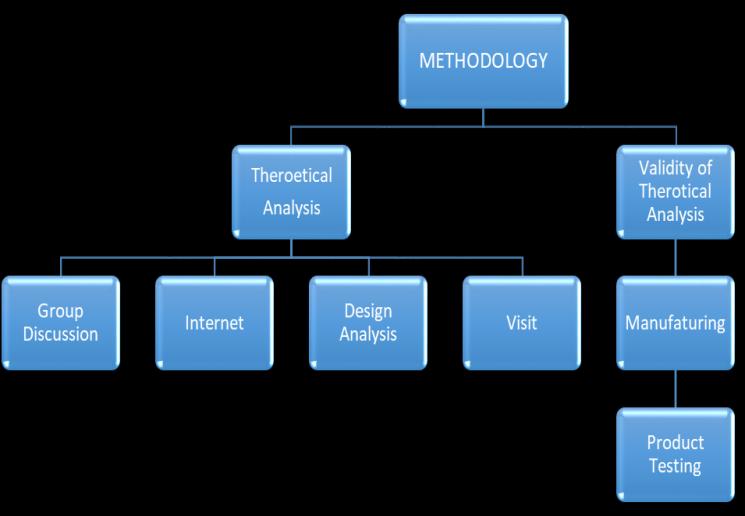
The primary goal is to choose the right material for each component of a machine. During the construction of a machine. Understanding how the manufacturing process and heat treatment affect a material's properties is essential for a design engineer. The following variables influencethematerialselectionforengineeringpurposes:
1) Thematerials'availability.
2) Material suitability for the operational environment inuse
3) Thepriceofthesupplies.
4) Thematerial'schemicalandphysicalcharacteristics.
5) Thematerial'smechanicalcharacteristics.
The mechanical properties of metals are those related to the material's capacity to withstand loads and mechanical forces.Now,let'stalkaboutthesequalitiesasfollows:
A.Power B.Flexibility
C.Tension D.Elasticity
E.Tension F.Sturdiness
G.Stiffness H.Adaptability
I.Hardness J.Adaptability
A component that is continuously stressed at a high temperature over an extended length of time will slowly and permanently deform; this process is known as creep. Whendesigningboilers,turbines,andinternalcombustion engines,thispropertyistakenintoaccount.











4. DESIGN CALCULATIONS
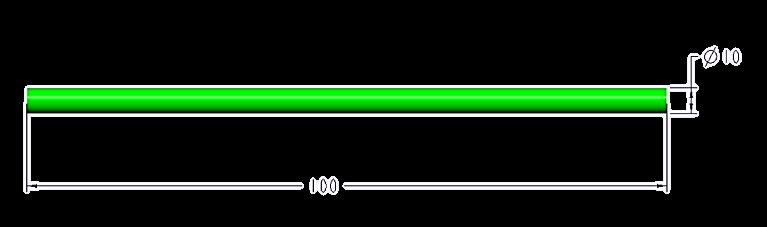
4.1 For shaft -
1. Materialused–MildSteel(C30)
2. ShaftSize–Ø10X100mm
3. Density:-7850kg/m3
4. Volume:-84823mm3
International Research Journal of Engineering and Technology (IRJET) e-ISSN: 2395-0056
Volume: 11 Issue: 04 | Apr 2024 www.irjet.net p-ISSN: 2395-0072
4.2 For Bearing -
Selection of Bearing
Spindle bearing has been subjected to purely medium radial loads; hence we used ball bearings for our application.
Selecting; a single Row deep groove ball bearing are as follows; Series62
Table -1: BearingSelection
ISI No. Bearingof BasicDesign No. D d1 D d2 B Basic Capacity
20 BC02 6000z 10 10 25 24 9 10000 6500
P=XF+YFa
ForourapplicationFa=o=XFr
WhereFr=204.24NAs-Fr<e=X=1
Maxradialload=Fr=204.24N P=204.24N
CalculationofdynamicloadcapacityofbearingL=(C)p wherep=3.2forballbearings
WhenPforballBearing
Form/c usedforeighthrofserviceperday;Lh=1210021000hr
But;L=62nLhL=620mrev Now;600=(C)3 =(204.24)3 C=1724.N
Astherequireddynamiccapacityofbearingislessthan therateddynamiccapacityofbearing,Bearingissafe.
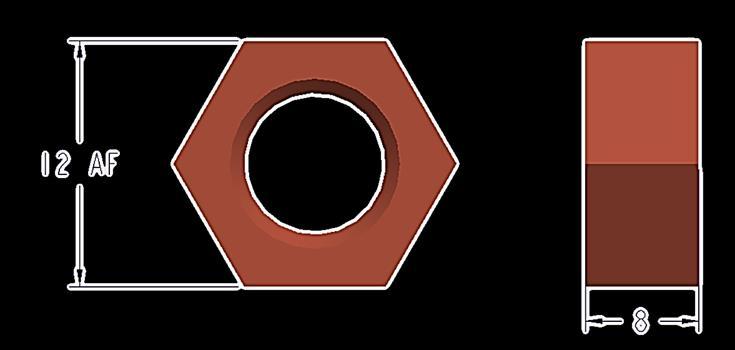
4.3 Lower Bearing Hexagonal locker part
Partweight–0.2kg
Partmaterial–M.S
Partquantity–2
Partsize–12X8mm.
4.4 Square hollow pipe for motor
Partweight–0.2kg
Partmaterial–M.S
Partquantity–1
Partsize–24X24X2&70mmlength.
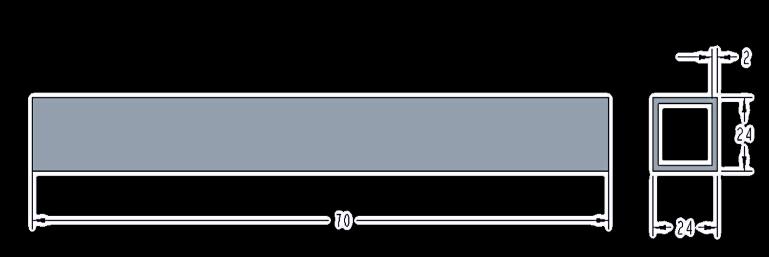
-3:Squarehollowpipe
4.5 Linkage plate to Cradle
Partweight–0.2kg
Partmaterial–M.S
Partquantity–1
Partsize–10X375X3mm.
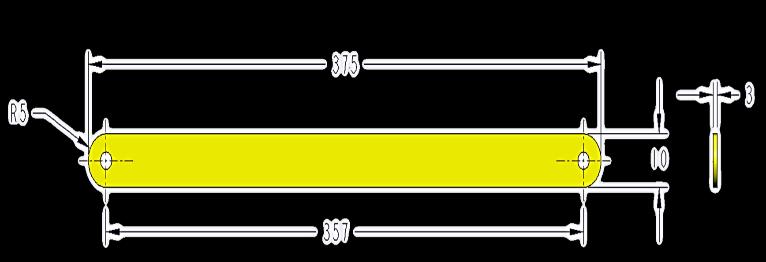
-4:Linkageplatetocradle
4.6 Linkage plate to shaft
Partweight–0.2kg
Partmaterial–M.S
Partquantity–1
Partsize–30X65X3mm.
International Research Journal of Engineering and Technology (IRJET) e-ISSN: 2395-0056
Volume: 11 Issue: 04 | Apr 2024 www.irjet.net p-ISSN: 2395-0072
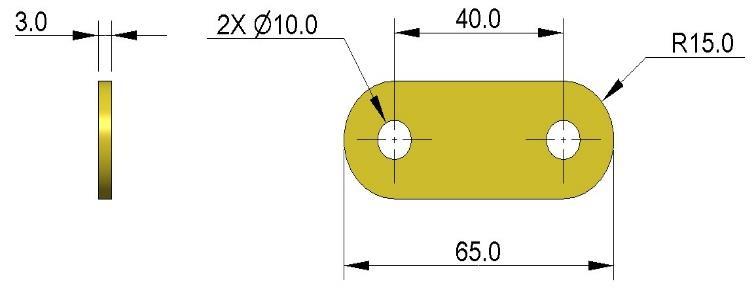
4.7 L-type angle bar
Partweight–0.2kg
Partmaterial–M.S
Partquantity–1
Partsize–25X25X3&352mmlength.

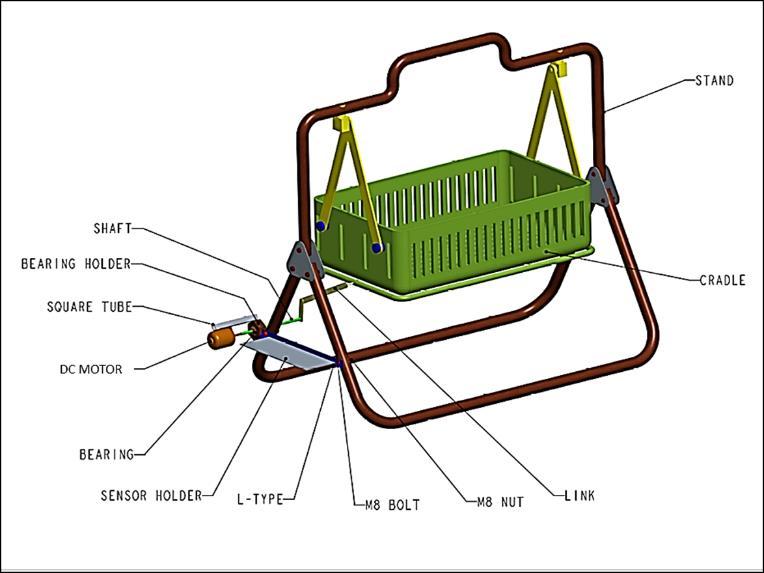
6. FABRICATION STEPS:
Step1–Measurement
Step2–MaterialProcurement
Step3–ComponentAssembly
Step4-MotorandElectronicsMounting
Step5–CradleMechanismIntegration
Step6–PowerSupplyIntegration
Step7-FinalAssemblyandTesting
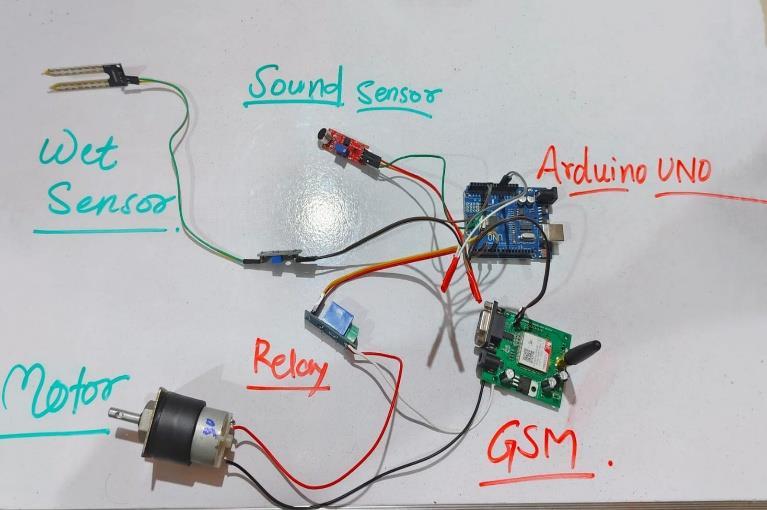
Step 1 (Power ON) - The caregiver powers on the automatedbabycradlesystem.
Step 2 (Sensor Detection) - Noise detection sensors continuously monitor the environment for infant cries. Wetnessindicationsensorsdetectdiaperwetness.
Step 3 (Infant Cries Detected) - If the noise detection sensors detect infant cries above a predefined threshold, thesystemactivates.
Step 4 (Cradle Movement) - The Arduino Uno microcontroller processes the sensor input and triggers the motorized mechanism to initiate gentle cradle movements.Thecradlebeginstoswaybackandforthina soothingmotiontocalmtheinfant.
Step 5 (Caregiver Alert) - The GSM module sends an SMS alert to the caregiver's mobile device, informing them of thediaperwetness.
Step 6 (Caregiver Intervention) - The caregiver receives thealert,attendstotheinfant'sneedsbychangingthewet diaper, and can optionally adjust cradle settings through theuserinterface.
Step7(StandbyMode)- Oncetheinfantissettledandthe diaperchanged,thesystem returnstostandbymodeuntil furthersensorinputsaredetected.
International Research Journal of Engineering and Technology (IRJET) e-ISSN: 2395-0056
Volume: 11 Issue: 04 | Apr 2024 www.irjet.net p-ISSN: 2395-0072
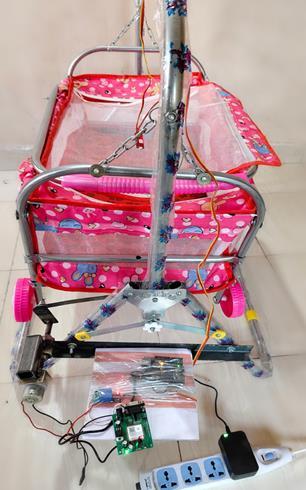
Cradle Movement Test:
Objective: Evaluated the smoothness and effectiveness of cradlemovements.
Method: Visual observation and subjective assessment of cradlemotion.
Results: Cradle movements were smooth and gentle, providingsoothingmotionsfortheinfant.
Noise Detection Test:
Objective:Assessedtheaccuracyofnoisedetectionsensors indetectinginfantcries.
Method: Simulated infant cries of varying intensity levels andmeasuresensorresponse.
Results: Noise detection sensors reliably detected infant cries,triggeringcradlemovementspromptly.
Wetness Detection Test:
Objective: Verified the effectiveness of wetness indication sensorsindetectingdiaperwetness.
Method: Simulated diaper wetness and measure sensor responsetime.
Results: Wetness indication sensors accurately detected diaperwetness,promptingtimelycaregiveralerts.
User Interface Test:
Objective: Evaluated the usability of the user interface for adjustingcradlesettings.
Method:Task-basedusabilitytestingwithcaregivers.
Results: Caregivers found the user interface intuitive and easy to use, allowing for convenient adjustment of cradle settings.
Analysis:
The results of the tests indicate that the automated baby cradle system performs effectively in providing realtimeassistancetocaregiversandensuringinfantcomfort.
The system demonstrates reliability in detecting infant cues (noise and wetness) and responding promptly with appropriate actions (cradle movements and caregiver alerts).
User feedback suggestshighsatisfaction with the usability and functionality of the system, indicating its potential to enhancecaregiverexperiencesandinfantcarepractices.
9. CONCLUSIONS:
1. Developed an automated mechanism to enhance the functionality of existing baby cradles, enabling seamlessmotion.
2. Integrated noise detection sensors to initiate automated cradle movements upon detecting infant cries,improvingresponsivenesstoinfantneeds.
3. Incorporated wetness indication sensors to promptly alert caregivers for timely diaper changes, enhancing infantcomfortandhygiene.
4. Implemented a GSM module for real-time communication, facilitating caregivers to receive SMS alerts when infant needs are detected, and ensuring timelyandefficientcare.
10. REFERENCES:
1. Misha Goyal ; Dilip Kumar- “Automatic E-Baby Cradle Swing Based On Baby Cry” International Journal of Computer Application (0975-8887), Volume 71No.21,June2013.
2. Adwait B Kadu ; Pranav C Dhoble ; Jagrut A Ghate ; NileshBBhure;Vaidehi AJhunankar;Prof.PMSirsat; - “Design, Fabrication And Analysis Of Automated Cradle” International Journal Of Mechanical Engineering And Robotics Research, ISSN 2278 –0149,Vol.3,No.2,April,2014.
3. Makeen Bin; Mohd Amin- “Automatic Baby Swing” University Malaysia Pahang, Department Of MechanicalEngineering,November2009.
4. Chun-Tang Chao; Chia-Wei Wang; Juing-Shian Chiou; Chi-Jo wang; - “An Arduino-Based Resonant Cradle Design With Infant Cries Recognition” Department Of
International Research Journal of Engineering and Technology (IRJET) e-ISSN: 2395-0056
ElectricalEngineering,SouthernTaiwanUniversityOf Science And Technology, ISSN 1424-8220, August 2015.
5. https://www.amazon.in/dp/B0CRLDPW51?ref_=cm_s w_r_cso_wa_apan_dp_1FWPQXRDSJJ6CKF0W4G9&sta rsLeft=1&th=1
6. https://www.amazon.in/dp/B00MYG0W2Y?starsLeft =1&ref_=cm_sw_r_cso_wa_apan_dp_SR3GCT0JGJZGSK VFGXYB&th=1
7. https://www.youtube.com/watch?v=ai9rj6qB2hY
8. https://www.arduino.cc/en/software
9. https://www.circuito.io/
10. https://www.youtube.com/watch?v=zJ-LqeX_fLU
11. Reference Book - Design of Machine Elements | 4th EditionPaperbackbyVBBhandari(Author)
Volume: 11 Issue: 04 | Apr 2024 www.irjet.net p-ISSN: 2395-0072 © 2024, IRJET | Impact Factor value: 8.226 | ISO 9001:2008
| Page