
International Research Journal of Engineering and Technology (IRJET) e-ISSN:2395-0056
Volume: 11 Issue: 04 | Apr 2024 www.irjet.net p-ISSN:2395-0072
International Research Journal of Engineering and Technology (IRJET) e-ISSN:2395-0056
Volume: 11 Issue: 04 | Apr 2024 www.irjet.net p-ISSN:2395-0072
Mohd Raish Ansari1, Tauheed Alam Khan2, Sujeet Kumar Bhatt3, Chandra Kumar4, Qamar Ahamad5
1Assistant Professor, Jahangirabad Institute of Technology, Barabanki, Uttar Pradesh, India
2Assistant Professor, Jahangirabad Institute of Technology, Barabanki, Uttar Pradesh, India
3Lecturer, Maharana Pratap Polytechnic Gorakhpur, Uttar Pradesh, India
4Assistant Professor, Seth Vishambhar Nath Institute of Engineering and Technology, Barabanki, Uttar Pradesh, India
5Assistant Professor, Seth Vishambhar Nath Institute of Engineering and Technology, Barabanki, Uttar Pradesh, India ***
Abstract - The exploration oftheseismicbehaviorexhibited bymasonry walls integrated withinreinforcedconcrete(RCC) structures, particularly when incorporating apertures, has garnered substantial attention within the field of earthquake engineering. Within this review paper, a comprehensive synthesis ofexistingresearch endeavors is undertakentoshed light onthe seismic repercussionsstemmingfromtheinclusion of openings in masonry walls positioned at various locations within RCC structures. By meticulously scrutinizinga breadth of literature encompassing experimental, analytical, and numerical investigations, theoverarchinggoalofthisreviewis to unravel the intricacies and obstacles inherentintheseismic performance of such structural configurations. Essential factors that exert influence on seismic response, such as wall geometry, the dimensions and placement of openings, reinforcement specifications, and dynamic loadingattributes, are subjectedto detailedanalysis. Throughtheamalgamation of insights gleaned from a myriad of studies, this paper endeavors to furnish valuable perspectives pertinent to researchers, engineers, and practitioners engaged in the seismic evaluation of masonry-infilled RCC structures. The amalgamated knowledge delineated herein not only accentuates gaps incurrent comprehensionbut also serves as a cornerstone for future research pursuitsaimedatenhancing the seismic resilience and safeguarding of constructed infrastructure.
Key Words: Seismic effects, Masonry walls, Reinforced concrete structures, Openings, Structural positioning, Seismic behavior, Structural dynamics.
During the latter half of the 20th century, a period characterized by the widespread adoption of reinforced concrete construction owing to its commendable strength and adaptability, a cohort of dedicated researchers and engineersembarkedonanextensivejourneytoexplorethe intricatebehaviorofmasonrywallsintegratedwithinRCC structures. This era marked a profound shift towards
unraveling the complex interplay between masonry infills andtheencompassingconcreteframework,withaparticular emphasisonseismicloadingdynamics[1].Motivatedbythe realization that the presence of openings, ranging from windows to doors, introduces notable alterations in the stiffness and distribution of strength within walls, researchersembarkedonfocusedinquiriesintotheseismic repercussions induced by these apertures. Experimental testingemergedasapivotalmethodology,withresearchers meticulously orchestrating laboratory experiments to faithfully simulate seismic loading conditions and meticulously observe the response of walls exhibiting a myriad of configurations of openings. Simultaneously, the development of analytical models gained prominence, enablingtheaccuratepredictionofthedynamicbehaviorof such structures and the meticulous assessment of their susceptibilitytoseismicforces,therebyestablishingarobust foundation for the continual advancement of numerical simulationtechniques[1].
Inregionssusceptibletoearthquakes,wherethesafetyand preservationofbothhumanlifeandpropertyareparamount concerns, the seismic performance of structures assumes utmost significance. The robustness and adaptability of reinforcedconcrete(RCC)structuresmakethemapreferred choice in such areas, offering resilience against seismic forceswhileaccommodatingdiversearchitecturaldesigns. EmbeddedwithintheseRCCstructures,masonrywallsplay multifaceted roles, serving as partitions, load-bearing elements,andaestheticfeatures[2].However,theinclusion of openings such as windows and doors within these masonry walls substantially modifies their structural response, particularly when subjected to seismic loading conditions.
Understanding the seismic implications of openings in masonry walls within RCC structures is imperative for safeguarding buildings in earthquake-prone regions. The
International Research Journal of Engineering and Technology (IRJET) e-ISSN:2395-0056
dynamicbehaviorofthesestructuresunderseismicforcesis intricate,influencedbyamultitudeoffactorsincludingwall geometry, the dimensions and positioning of openings, reinforcementspecifics,andthecharacteristicsofdynamic loading. Moreover, the placement of openings within the structure can yield diverse effects on its overall seismic performance [2]. Hence, conducting a comprehensive explorationintotheseismicbehaviorofmasonrywallswith openings at various positions within RCC structures is indispensableforinformingeffectivedesignstrategiesand retrofittinginterventions.
Byamalgamatinginsightsfromexperimentalinvestigations, analytical studies, and numerical simulations, this review endeavors to shed light on the intricacies and hurdles associatedwiththeseismicperformanceofsuchstructural configurations. Additionally, the paper seeks to pinpoint existing knowledge gaps and chart pathways for future research endeavors aimed at bolstering the seismic resilienceofmasonry-infilledRCCstructures.Throughthis concertedeffort,invaluableperspectivescanbegleanedto enhancethesafetyandsustainabilityofbuiltenvironments inearthquake-proneregions[9].
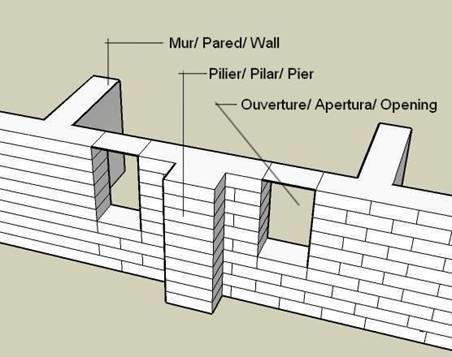
Tocreateanopeninginamasonrywall,meticulousplanning and execution are essential to uphold structural integrity, beginning with a thorough assessment of the opening's purpose and its potential impact on the wall's stability, especially for complex projects, seeking guidance from a structuralengineerifnecessary[8].Oncetheparametersare established,accuratelymarktheoutlineoftheopeningusing chalk or pencil, and for load-bearing walls, provide temporary support to redistribute the load during the cuttingprocess.Utilizeappropriatetoolssuchasmasonry sawsordiamond-tippedbladestocutthroughthemarked
Volume: 11 Issue: 04 | Apr 2024 www.irjet.net p-ISSN:2395-0072 © 2024, IRJET | Impact Factor value: 8.226 | ISO 9001:2008
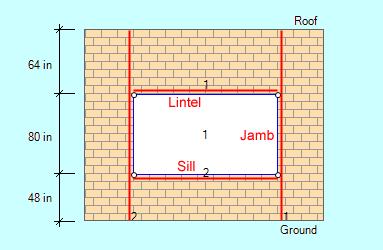
areawithprecision,takingcaretoavoiddamagetoadjacent surfaces. Reinforce the opening with lintels or other supports as required to maintain structural stability. Followingthecuttingphase, meticulouslyfinish the edges withmortarortrimpiecestoensurearefinedappearance and prevent water infiltration. Thoroughly clean the area and proceed to integrate frames for windows or doors, adheringcloselytomanufacturerinstructions[10].Conclude the process by conducting a comprehensive inspection to ensurecompliancewithbuildingcodesandaddfinaltouches suchaspaintingtoseamlesslyblendtheopeningwiththe surrounding wall. Throughout the entire procedure, prioritize safety considerations and enlist professional assistancewhendeemednecessary.
Openingswithinstructuresfulfillamyriadofindispensable functions,servingasconduitsforvariousessentialactivities. Firstly,theyactasportalsforingressandegress,facilitating thesmoothflowofindividuals,vehicles,andmaterialsinand outofabuilding.Additionally,aperturessuchaswindows, vents, and louvers assume a pivotal role in ventilation, ensuring optimal airflow to uphold indoor air quality and regulate humidity levels effectively [11]. Moreover, these openings permit natural light to permeate indoor spaces, diminishingrelianceonartificiallightingandaugmentingthe occupants'overallwell-being.Furthermore,theseapertures framescenicvistas,fosteringaharmoniousconnectionwith the surrounding environment and enriching the overall sensory experience within the structure. In emergency situations, designated openings function as critical escape routes, adhering to safety regulations to facilitate swift egressandensureoccupants'safety[3].
Beyond their functional aspects, openings also contribute significantly to the aesthetic appeal of a structure, adding architectural intricacy and imbuing it with character.
International Research Journal of Engineering and Technology (IRJET) e-ISSN:2395-0056
Volume: 11 Issue: 04 | Apr 2024 www.irjet.net p-ISSN:2395-0072
Thoughtfullypositioned openings mayalleviatestructural stresses,distributeloadsmoreeffectively,oraccommodate structural movement, thereby bolstering the building's overall stability and safety. Hence, openings emerge as integral components of structural design, catering to a spectrum of needs ranging from practical functionality to aestheticenhancementandparamountsafetyconsiderations [4-5].
Structures are characterized by a multitude of openings, eachservingdistinctfunctionsandadaptingtoawidearray ofarchitecturalandpracticalneeds.Doors,actingasprimary accesspoints,facilitateentryandexitthroughoutbuildings and individual rooms. Windows, with their dual functionality, not only allow natural light to flood indoor spaces but also aid in ventilation and provide captivating viewsofthesurroundingenvironment.Vents,strategically positionedwithinstructures,regulateairflow,particularlyin enclosed areas such as attics and mechanical rooms, ensuring proper ventilation. Skylights, ingeniously integrated into roofs or ceilings, infuse interiors with daylight,especiallyinspaceswheretraditionalwindowsare notfeasible.Louvers,distinguishedbytheirslatteddesign, strike a balance between airflow and privacy, serving essential roles in HVAC systems and enhancing the visual appeal of building facades. Transoms, positioned above doorsorwindows,augmentbothilluminationandairflow, often contributing to the refinement of traditional architecturalaesthetics.Garagedoors,tailoredforvehicular access, come in diverse configurations to accommodate various spatial constraints and functional necessities [6]. Emergency exits, indispensable for safety, provide swift egress during crises, featuring specialized hardware and adherence to stringent building codes. Collectively, these diverse openings play a pivotal role in enhancing the functionality, aesthetics, and safety of structures, meticulouslytailoredtomeettheuniquedemandsofeach architecturalendeavor[7].
Inthesectionoftheliteraturesurvey,wehavestudiedthe previousresearchpaperswhichisrelatedtotheopeningin the structure due to various loading conditions. The summaryofthepreviousresearchisgivenbelow:
Shariq et.al (2007): Thecriticaldirectionofseismicforce responsibleforinducingmaximumstresseswithinthewalls ofaroomcontainingopeningspredominantlyalignsalong theshorterwalloftheroom.Whentheaspectratioofsucha room with openings is augmented, while maintaining one side fixed, there is a corresponding escalation in both the maximumprincipaltensilestressandmaximumshearstress experiencedwithinthestructure.Specifically,theprincipal tensilestressandshearstressattaintheirpeakmagnitudes whenthedirectionofseismicforcecoincideswiththewall
housingthehighestconcentrationofopenings.Furthermore, an increase in the number of openings within a wall invariablyleadstoacorrespondingelevationinthestresses encirclingtheseapertures.
Vedang, Abhishek (2014): Various earthquake reactions are encompassed within the modeling process, including storytelling, storytelling moment, storytelling ability, and storytelling strength, as these parameters serve as prominent features in any comprehensive analysis. Consequently,itbecomesimperativetoconductathorough structural analysis of the asymmetrical cantilever with a shearwallpositionedindifferentareasundervaryingloads toascertaintheoptimallocationfortheshearwall.
Ashok et.al (2016): The presence of both external and internalshearwallsresultsinareductionofcolumnmoment andaxialforcewhencomparedtoconfigurationsemploying onlyacoreoracorewithinternalshearwalls.Amongthe various models considered, shear wall model IV demonstrates superior effectiveness due to its higher building stiffness. Additionally, the Response Spectrum Methodyieldspredictionsoflesserforcesincontrasttothe SeismicCoefficientMethod.Theinclusionofopeningswithin shearwallsdiminishesboththeirstrengthandrigidity,with theextent ofthisreduction contingentuponthesizesand shapesoftheopenings.Asthesizesoftheopeningsincrease, there is a corresponding increase in column moment and axial force due to the decrease in shear wall stiffness. However,thedetrimentaleffectsofopeningsonshearwall performancearemitigatedwithanincreaseinthelengthof theshear wall inplan, whiletheshapeoftheopening has minimalimpactonstructuralresponses,althoughtheheight andwidthoftheopeningsdoexertsignificantinfluence.
Gaikwad (2017): Observationsrevealthattwistingwithina building exhibits an increasing trend as the eccentricity between the geometrical centroid of the structure and its centerofmassisheightened.Notably,thetorsionalvaluesof structureswithshearwallspositionedatelevatorliftsare significantly lower approximately 24% for a 400mm eccentricityand34%fora150mmeccentricityinbothEQX andEQYdirections comparedtostructuresdevoidofshear walls. Furthermore, the base shear for structures with concentricshearwallsisnotablyreducedincomparisonto thosewithoutshearwalls,exhibitingdecreasesof31%fora 450mmeccentricityand25%fora150mmeccentricityin bothEQXandEQYdirections.Conversely,thereisminimal alteration in base shear and torsion when shear walls are oriented parallel to the Y direction due to EQX and EQY seismicforces,withtorsionbeingparticularlyunaffectedat top floors. However, on the ground floor, torsion is diminishedby16%to24%whenshearwallsarepresent. Interestingly,theinclusionofshearwallsatexteriorcorners leadstoasubstantialreductioninbothbaseshear(ranging from28%to35%forEQXandEQY)andtorsion(decreased by29%to35%).Despitethis,augmentingthethicknessof shear walls does not notably enhance structural strength,
International Research Journal of Engineering and Technology (IRJET) e-ISSN:2395-0056
Volume: 11 Issue: 04 | Apr 2024 www.irjet.net p-ISSN:2395-0072
resulting in uneconomical designs across all scenarios. Furthermore, the displacement of the top floor is significantly diminished in all cases involving shear walls; however, the reduction is more pronounced when shear wallsaresituatedatcornersasopposedtootherlocations withinthestructure.
In order to enhance the earthquake resistance of masonry walls, it is imperative to establish proper attachments between the masonry panels at their junctions. However, the seismic capacity of unreinforced masonry (URM) walls experiences a significant reduction with an increase in geometric irregularity. Notably, symmetrical buildingsdemonstratesuperior performance duringearthquakescomparedtoasymmetricalorbiaxially asymmetricalstructures.Amongthese,biaxiallyasymmetric buildings exhibit better performance in their long wall direction.Moreover,asthepercentageofopeningsinwalls increasesfrom3to7,there isa notable40%reductionin shear carrying capacity. Interestingly, buildings with openingspositionedatthecenter ofwallsshowcasea 3040%higherperformancethanthosewithopeningslocated atotherpositions.
Amit et.al (2019): Theinvestigationentailstheutilizationof Staad Pro software to determine the most effective, economical,andoptimalpositionsforshearwallsinahighrisebuildingsituatedindiverselocations.Specifically,aG+7 high-risestructurelocatedinzoneIVofDelhiservesasthe focal point of the study. Preliminary investigations are conducted,andthebuildingisanalyzedthroughfivedistinct models: a structure without shear walls, shear walls positionedalongtheperiphery,atcorners,inthemiddle,and atcornerlocationsinvarious positions.Subsequently, the maximumshearwallmomentsanddeflectionsarecalculated and scrutinized across all considered scenarios. For the analysis,M30gradeconcreteandFe415steelareemployed, withthedesignandanalysisprocessesbeingexecutedusing theSTAADProsoftwarepackage.
Hamid, Saraswati (2019): Theconstructionofmulti-storey buildings often employs a reinforced concrete frame with masonry infill walls, incorporating door and window openings for functional purposes. Although masonry infill wallsarenottypicallyconsideredstructuralelementsthat contributetotheoverallmassofthestructure,theirstrength andstiffnessare commonly disregardedingeneral design practicesoutlinedinIS:1893-2002,potentiallyresultingin unsafe designs. To address this oversight, IS:1893-2016 recommendsmodelingthein-planestiffnessofunreinforced masonry (URM) infill walls or panels using equivalent diagonalstruts,withnoreductioninstrutwidthrequiredfor URMinfillwallswithopenings.However,inthispaper,the effectofopeningsinURMinfillwallsistakenintoaccountby applying a width reduction factor for diagonal struts. The seismic response of a G+5 L-shaped reinforced concrete frame building with various openings in URM infill walls, situatedinseismiczoneIV,isanalyzedusinglineardynamic
Response Spectra Method with ETABS software. The parameters under investigation include lateral stiffness, displacement, story drift, base shear, and overturning moment.
Abin et.al (2020): Based on past global earthquake occurrences, it is evident that unreinforced masonry structures are significantly more vulnerable to seismic eventscomparedtoreinforcedstructures,oftenleadingto suddenandcatastrophiccollapses.Thefocusofthisreview paper primarily revolves around the seismic analysis and design methodologies pertaining to masonry structures. Initially,architecturaldrawingsaremeticulouslyprepared, taking into account various functional, geometrical, and engineeringconsiderations.Thebuildingunderscrutinyis situatedintheHimalayanregionofNepal,designated asa highseismiczone,namelyzoneV.Thestructuresubjectedto analysisanddesignisasingle-storydressedstonemasonry building featuring a metal roof structure with CGI roof sheets.Subsequently,thebuildingismeticulouslymodeled using FEM-based software (SAP2000, version 18.1.1) to conduct a detailed structural analysis encompassing all pertinentmaterialproperties,loads,andloadcombinations. Theresultinganalysisentailsthedeterminationandscrutiny of parameters such as direct stresses, bending stresses, shearstresses,tension,amongothers,againsttheprescribed materiallimitsasperrelevantcodeprovisions.Adjustments to the architectural drawings are made as necessary to ensurecompliancewiththesafetystandardsmandatedby applicablecodes.
Boria, Tamal (2021): Ithasbeenobservedthatpositioning shear wallsinthecoreas well asatthe cornersresults in minimalstoreydriftcomparedtoothertypesofshearwall placements,albeitwithanincreasedamountofbaseshear observedinboththexandydirections.Conversely,forbare frames,atypicaldisplacementtrendisobserved.According toIScode1893:2002,storeydriftshouldnotexceed0.004 timesthestoreyheight,andthestudiesindicatethatstorey drift remains within this limit. As a prospect for future research,furtherpushoveranalysisandtimehistoryanalysis couldbeproposedtoyieldmoreconclusiveresults.
Udit et.al (2022): Shearwallstructureswithnoopening, verticalopening,andstaggeredopeninghavetimeperiodsof 0.531,0.585,and0.591seconds,respectively.Incomparison toverticalopeningandnoopeninginshearwall,staggered opening in shear wall takes more time. By using the Equivalent Static Method, the storey displacement for a shearwallstructurewithoutopening,withverticalopening, andwithstaggeredopeningis21.443mm,23.171mm,and 23.169 mm, respectively. According to the Response SpectrumMethod,thestoreydisplacementforashearwall structurewithoutopening,withverticalopening,andwith staggered opening is 18.196 mm, 20.161 mm, and 20.123 mm, respectively. The presence of an opening increases storey displacement in both methods, but storey displacement in a staggered opening in a shear wall is
International Research Journal of Engineering and Technology (IRJET) e-ISSN:2395-0056
Volume: 11 Issue: 04 | Apr 2024 www.irjet.net p-ISSN:2395-0072
slightly less than in a vertical opening in a shear wall. By using the Equivalent Static Method, the Storey drift for a shearwallstructurewithoutopening,withverticalopening, and with staggered opening is 0.000755, 0.000798 and 0.000806,respectively.
Desale et.al (2022): The presence of shear walls substantiallyenhancesthestructure'sabilitytoresistlateral forces,whilealsosignificantlyaugmentingstoreystiffness across all levels. Particularly noteworthy are the notably elevatedstoreyshearvaluesobservedinCASE3relativeto allothermodels.Additionally,theinclusionofshearwalls effectively mitigates storey drift within the building, with CASE 3 exhibiting the lowest storey drift compared to all othermodels.
Vedang et.al (2023):Inthecurrentscenario,manybuildings exhibitirregularitiesinboththeirfloorplansandelevations, necessitatingmeasurestosafeguardthemfrompotentially devastating earthquakes. Understanding the structural performance under seismic loading is imperative for both existingandnewlyconstructedbuildings.Lateraldeflections experienced under earthquake loading systems are of significant concern, influenced by various factors such as structural configuration, mass distribution, and material properties. Analyzing reinforced concrete multistoried buildings poses considerable complexity due to their intricatestructuralsystems.Currentstandards,likeIS:18932002(Part1),mandatetheanalysisofmulti-storeybuildings as three-dimensional systems. In this study, we aim to investigate the introduction of shear walls into a multistorey building to evaluate their impact on seismic performance. The study focuses on a G+9 multi-storey building subjected to seismic loading, where structural irregularities play a crucial role in diminishing seismic resilience.Theinvestigationaimstoassesstheeffectofshear walls on dynamic characteristics and various influencing parameters such as story displacement, drifts between adjacent stories, excessive torsion, and base shear. It is observedthatalteringthepositionandshapeofshearwalls, while maintaining constant area, mitigates irregularity effectsagainstlateralloadinginG+9RCbuildings,leadingto reductions in story displacement, story drift, and overturning moment. Additionally, changes in shear wall location affect the stiffness distribution among building stories,whilesignificantshearforcesarenotedwithinthe structure.
In conclusion, the seismic effects of openings in masonry wallswithinRCCstructuresatvariouspositionspresenta complex interplay of factors that significantly influence structural performance during seismic events. Through a comprehensivereviewofexistingliterature,itisevidentthat while openings introduce vulnerabilities, strategic design considerationsandreinforcementtechniquescaneffectively mitigate adverse impacts. By incorporating appropriate
measuressuchasstrengtheningelements,redistributionof loads,andenhancingductility,thestructuralintegrityofRCC buildingswithmasonrywallopeningscanbesubstantially improved. Furthermore, advancements in analytical tools and experimental methodologies continue to refine our understanding and ability to predict the behavior of such structures under seismic loading. Ultimately, the findings underscoretheimportanceofinformeddesignpracticesand ongoingresearcheffortsaimedatenhancingtheresilienceof buildingsagainstseismichazards,thuscontributingtosafer andmoreresilientbuiltenvironments.
1. M. Shariq, H. Abbas , H. Irtaza, M. Qamaruddin “Influence of openings on seismic performance of masonry building walls” 2007, Building and Environment43(2008)1232–1240
2. VedangShukla1,AbhishekJhanjhot2 “SeismicAnalysis ofIrregular(G+9)buildingwithShearWallatDifferent Location”2014,JETIRFebruary2014,Volume9,Issue 2www.jetir.org(ISSN-2349-5162).
3. Ashok Kankuntla*, Prakarsh Sangave**, Reshma Chavan*** “Effects of Openings in Shear Wall” 2016, IOSR Journal of Mechanical and Civil Engineering (IOSR-JMCE) e-ISSN: 2278-1684,p-ISSN: 2320-334X, Volume13,Issue1Ver.II(Jan.-Feb.2016),PP01-06 www.iosrjournals.org.
4. GaikwadUjwalaVithal“EffectofShearWallonSesmic Behavior of Unsymmetrical Reinforced Concrete Structure”2017,InternationalJournalofResearchand Scientific Innovation (IJRSI) | Volume IV, Issue X, October2017|ISSN2321–2705.
5. Nila.N.D1,SivanP.P2,RamyaK.M.3 “StudyonEffect ofOpeningsinSeismicBehaviorofMasonryStructures” 2018, International Research Journal of Engineering andTechnology(IRJET)e-ISSN:2395-0056Volume:05 Issue: 04 | April-2018 www.irjet.net p-ISSN: 23950072.
6. AmitA.Paul,2Prof.G.D.Dhawale,3Prof.V.A.Kalmegh “EFFECTOFEARTHQUAKEONHIGHRISEBUILDINGIN DIFFERENTPOSITIONOFSHEARWALLUSINGSTAAD PRO”2019,JETIRNovember2019,Volume6,Issue11 www.jetir.org(ISSN-2349-5162).
7. Hamid Khan1 and Dr. Saraswati Setia2 “Effect of OpeninginMasonryInfillWallonSeismicResponseof L-shaped Unsymmetrical Reinforced Concrete Frame Building ” 2019, Journal of Civil Engineering and EnvironmentalTechnologyp-ISSN:2349-8404;e-ISSN: 2349-879X; Volume 6, Issue 4; April-June, 2019, pp. 260-264.
International Research Journal of Engineering and Technology (IRJET) e-ISSN:2395-0056
Volume: 11 Issue: 04 | Apr 2024 www.irjet.net p-ISSN:2395-0072
8. Abin Jose1 , Dinesh Rawat2 , Javid Ahmad Bhat3 ,Bimalesh Sah4 and Dinesh Raj Bhattrai5 “Seismic Analysis and Design of Masonry Structure ” 2020, International Journal Of Engineering Research And Developmente-ISSN:2278-067X,p-ISSN:2278-800X, www.ijerd.comVolume16,Issue11(November2020), PP.09-24
9. BoriaAnyaa,TamalGhosha“AStudyonEffectofShear Wall in Seismic Analysis of Building” 2021, IOP Conf. Series: Earth and Environmental Science 796 (2021) 012049 IOP Publishing doi:10.1088/17551315/796/1/012049
10. UditYaduwanshi1,KapilSoni2andDr.SharadKumar Soni3 “SEISMIC BEHAVIOR OF RCC SHEAR WALL BUILDINGWITHDIFFERENTOPENING”2022,Journal ofCivilEngineeringandTechnology(JCIET)Volume8, Issue1,January-December2022,pp.1-12,ArticleID: JCIET_08_01_001 Available online at https://iaeme.com/Home/issue/JCIET?Volume=8&Issu e=1ISSNPrint:2347-4203andISSNOnline:2347-4211 DOI:https://doi.org/10.17605/OSF.IO/USVJK
11. Vedang Shukla, Prof. Abhishek Jhanjhot, Ankita Choubey “Comparative Analysis of G+9 Multi-storied building for different positions of shear wall ” 2023, Vedang Shukla. et. al. International Journal of EngineeringResearchandApplicationswww.ijera.com ISSN:2248-9622,Vol.13,Issue9,September2023,pp 189-198