
International Research Journal of Engineering and Technology (IRJET) e-ISSN: 2395-0056 p-ISSN: 2395-0072

Volume: 11 Issue: 04 | Apr 2024 www.irjet.net
International Research Journal of Engineering and Technology (IRJET) e-ISSN: 2395-0056 p-ISSN: 2395-0072
Volume: 11 Issue: 04 | Apr 2024 www.irjet.net
Ankit Kumar
Electronics
and Telecommunications
K.J. Somaiya Institute of Technology, Sion, Mumbai, India.
Avanish Yadav
K.J. Somaiya Institute of Technology, Sion, Mumbai, India.
Electronics and Telecommunications
K.J. Somaiya Institute of Technology, Sion, Mumbai, India.
Sunil Patil
Electronics and Telecommunications
K.J. Somaiya Institute of Technology, Sion, Mumbai, India.
Abstract In today’s time, people are much more aware of the fluctuations in electricity that occur & the pricing or to be precisethe billtheyreceivefromthe electric power companies. According to our usage we might get a rough idea of how much energy are we consuming but in order to be accurate we need to keep a check on the usage and consumption of the energy. Hence, we have designed this circuit that we call as the “smart grid” which allows us to monitor the live data feed of our energy consumption. In this paper, we design and implement IoT based energy monitoring system that can be used in many applications, such as electricity billing system, energy management in smart grid and home automation. The experimental results showed that the system can successfully record the voltage, current, active power and accumulative power consumption.
Keywords Energy monitoring system, IoT, Smart grid
1. INTRODUCTION
Asweknow,IoTisbeingwidelyaccepted&implementedin electronicdevices&othertechnologiesthathelptoconnect & exchange data with other devices. IoT encompasses electronics,communication&computerscienceengineering. Theincreasingpopulation&theeconomicdevelopmentover thetimehasledtothegrowthintheconsumptionofelectric energy. [1] Here, in our circuit we have used components like: ZMPT101B which is a voltage sensor to detect the single-phaseACvoltage,ESP32whichisourWi-Fimodule,

LCDdisplaytodisplayourdata onthecircuit,I2C module which is a serial interface for 16x2 character LCD that convertsI2Cserialdatatoparalleldata,SCT-013whichisa non-invasive AC current sensor clamp & also few small componentslikeresistors&capacitors.
OurentirecircuithasbeenprintedonaPCBboardinorder tominimizetheerrorsfromopenwires&interferences.Test readings of a few light bulbs of different ratings such as 200W, 15W & 5W. The live data can we viewed on a spreadsheet.Thisspreadsheetdisplayslivedata&allowsus toevenstoreitasperourrequirementforanyfutureneeds.
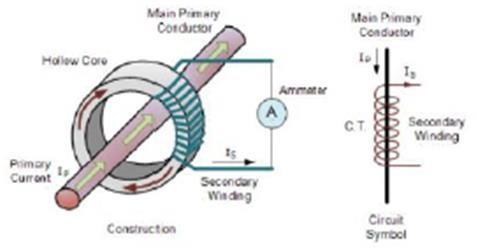
It is the principle of production of an electromotive force (emf)acrossanelectricalconductorinachangingmagnetic field. In simple terms, the current produced because of voltageproductionduetochangingmagneticfield.Soasthe currentflowsthroughthewiremagneticfieldisproduced aroundit.Thismagneticfieldcanbecheckedorstudiedto monitorthefluctuations.,ifany.
Its application can be seen in current transformer theory. Thecurrenttransformertheoryisbasedontheprincipleof electromagnetic induction. The current transformer in an electricaldevicethatmeasureselectriccurrentinaprimary conductor&transformsthehighcurrentintoamanageable valueinordertobesafelymeasured.
© 2024, IRJET | Impact Factor value: 8.226 | ISO 9001:2008 Certified Journal | Page2582


International Research
of
and Technology (IRJET) e-ISSN: 2395-0056 p-ISSN: 2395-0072 Volume: 11 Issue: 04 | Apr 2024 www.irjet.net
Smart meters are increasingly being installed in homes around the world, largely due to government initiatives aimed at saving energy. This creates a large physical communication network consisting of millions of meters. These meters benefit energy distributors by simplifying transactions such as reading and billing. However, digital communication networks such as smart meters have the flexibilitytooffernewservices.Smart meterscanprovide value-addedservicessuchasdisplayingenergyconsumption ormanagingloadstostaywithincontractualperformance limits. They can also offer general functions such as optimizingheating orlightingbasedon energytariffsthat canbeintegratedintohomeautomationsystems. Inaddition,othergas,heatandwatersmartmeterscouldbe connected to this network, increasing its efficiency. This requiressmartmetersthatcaneffectivelycommunicatewith both energyserviceprovidersandhouseholdsystems[1]. Effectivenetworkmanagementcouldbeanalternativetoa complete network overhaul. However, the integration of smart grid technology offers valuable benefits and operational improvements.However,implementingsmart metering systems presents a number of challenges and issues,includingsignificantcostsinthebillionsofdollars[2].
Thepoweradapterandthemetermonitorthetemperatures in the freezer and the refrigerator and send the data wirelesslyusingtheZigBeeprotocoltothemonitoringand controldevice.Thisdatacanthenbesenttoacomputerfor analysis.Energy-Butlerobtainsthepriceinformationforthe next day through the home network from the Internet. Adjustsenergyconsumptionbasedonthesettemperatures of the refrigerator and freezer. This helps shift energy consumptionfromhigh-priceperiodstolow-priceperiods, improvingeconomicefficiencyandensuringstableenergy supplies[4].
Improving monitoring capabilities to monitor all critical componentsinkeylocationsrequiresthecollectionoflarge amounts of data to accurately and quickly visualize the situation.Itisveryimportanttocreateandsendalertswhen predefined conditions are met and store these alerts in a databaseforlateranalysis.ThisenhancestheSCADAsystem
bydisplayingnetworkstatusongeographicmaps,helping operatorsrespondmorequickly.Implementingrobustdata processing capabilities and gathering data from multiple locationsmorefrequentlyenablesbetterdecision-makingto improve efficiency and reliability. Analyzing this data and visually presenting the results helps to identify potential problems, take preventive measures and create accurate forecastsandinvestmentplans. Thisultimatelyincreasesreliabilitywhilereducingoperating costs [5]. Electricity consumption (KWH) in India was 689,537,000,000in2011andearlieritwas156,400,000,000 in1990.Themainreasonistheincreaseinelectronicand electricalappliancesinthehomenetwork(HAN).Whenwe comparetheenergyconsumptionbetween1990and2011, we can hardly find a home without a television, washing machine,refrigerator,etc.Amonghouseholdappliances,the largestelectricityconsumptionislightingequipment,which consumes about 30 percent of electricity, followed by refrigerators, fans and electric water heaters, etc. [6] Intelligent infrastructure includes the intelligent energy subsystem, the intelligent information subsystem, and the intelligent communication subsystem. The smart energy subsystem controls the mechanism of production, distribution and consumption of electrical energy. The intelligent information subsystem is responsible for managing the exchange of information related to the measurement,monitoringandoperationcontrolofthesmart grid system. Meanwhile, the intelligent communication subsystem solves the problems of the communication infrastructure for exchanging data between smart grid systems, devices and applications connected to the smart grid.Theintelligentmanagementsystemisimplementedby usingsmartinfrastructuredevicestoachievegoalsrelatedto improvingenergyefficiency,balancingsupplyanddemand, regulating emissions, reducing operating costs, and maximizingutilityvalue.Anintelligentprotectionsystemisa subsystem in the intelligent grid that provides advanced networkreliabilityanalysis,failureprotection,andsecurity andprivacyservices[7].
Thepowergridislikeacomplexadaptivesystem(CAS)with manypartsdistributedgeographically.Itcanchangequickly asawholeasaresultofactionsinspecificareas.EPRIused CAStodevelopmodeling,simulation,andanalysistoolsfor adaptiveandreconfigurablegridcontrol.
The idea of self-healing distributed power system control involves treating each component as an intelligent agent. Theseagentscooperateandsometimescompetetooptimize the entire system. This approach includes modeling, computation,sensingandcontrol.EPRIbeganbymodelinga bulkenergymarketwhereartificialagentsrepresentbuyers and sellers. Using this and other projects, EPRI has developed a model with multiple adaptive agents representingthegridanditsinterconnectedorganizations. The parameters to be measured in this proposal include consumption rates of electrical equipment, energy production rates of various energy sources, interactive connectionofenergysourcestothegrid,etc.
Volume: 11 Issue: 04 | Apr 2024 www.irjet.net
In addition, the experiment will monitor real-time energy billing and analyze consumer energy consumption habits and also the energy demand forecast. To this end, it will monitorhowtheconsumer monitorsenergyconsumption andtrackbackenergyconsumptionrates[4][9].
The energy provider requests automatic readings of electricitymetersmonthlyviaSMS.TheSMSgatewaysends requeststoallGSMelectricitymeters.Eachelectricitymeter respondsbyreadingitsconsumptioninkWhviaSMS.The SMSgatewaycollectsandstoresthesereadings.Itmaytake sometimetoloadallthereadingsduetonetworktrafficand weatherconditions.Oncethemeasuredvaluesarecollected, theapplicationterminalupdatesthedatabase.Thee-billing system calculates bills based on tariff rates and sends notifications via email, SMS or hard copy. A web portal allows owners to check and pay bills online. Payment optionsincludeonlinebankingorcashatenergyprovider outlets. Owners can also get meter readings via SMS and monitorusagefromanywhere[10].
TheimplementedUSEMisperfectlycalibratedforitsnormal operatingrange.Measurementaccuracyandallfeaturesof theUSEMaretestedundervariousloadswithawiderange ofvoltageandcurrent.All quantitiesarecomparedwith a standard Fluke 5502A calibration meter. We measured voltagesfrom150to300VwiththeUSEM andcomparedwiththeFluke5502A.ItshowsthattheUSEM givesasmallerrorwhentheoperatingvoltageis<180and >240 V. We also compared the current measurements between the implemented USEM and a standard Fluke 5502Acalibrationmeter. TheresultisshowninFig.7b. It shows that the current measurement gives a small error whentheoperatingcurrentis<0.2Aand>15A[10]. Grid computing can be described as a world in which computing power is as readily available as electricity and other utilities. According to Irving et al. in "Plug into Grid Computing", Grid computing could offer participants an inexpensive and efficient means to compete (but also cooperate) in providing reliable, cheap and sustainable electricitysupplies.Furthermore,potentialapplicationsfor future energy systems include all aspects that involve computationandareinterconnected,suchasmonitoringand control, market entry and participation, regulation and planning.Gridcomputingholdsthepromiseofsolvingthe design, management and protection of electric power infrastructureasCAS.ThatMentionedinS.M.AminandB.F. Wollenberg, “Toward a smart grid: power delivery [9]. Finally, in terms of end-user benefits, a number of issues needtobeaddressedtobeeffective.Therequirementofa goodefficienteconomicinterfaceisagainmandatory.Thisis especially true wherever meter placement is typical in locationsthatareremotefromeverydaylivingspaces,such asbasements,cellarsordedicatedutilityrooms.However, onceaneffectiveinterfaceisenabled,anumberofservices canbeimplementedthatcanrunandbeintegratedwithin the functions and services that fall under the category of home automation and which have so far expanded significantlyatthenationallevel.basis.Homeautomationis
2395-0056
p-ISSN: 2395-0072
associated not only with functions such as security, entertainmentandcomfort,andcareforthesick,elderlyand disabled,butalsowithenergysavings.Unfortunately,sofar, themorecommonenergy-savinghomeautomationdevices ignore the official smart meter mainly due to the lack or complexity of the local interface in favor of other independent and cheap devices to measure consumption, whichinturnwouldbedifficult.beintegratedintoprograms forDRpolicies.
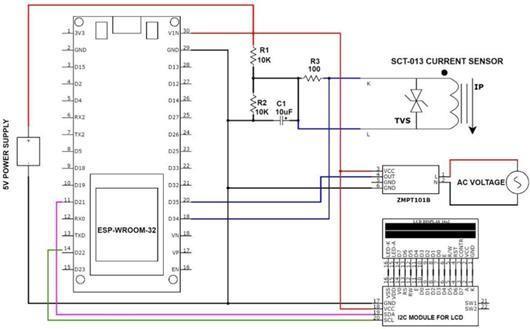
Asseeninthecircuitdiagram,wehaveusedSCT-013(anoninvasivecurrentsensorclamp)thatisclampedaroundthe input wire in order to detect the electric current flowing throughit.TheZMPT101Bisavoltagesensorthatdetects theACvoltageflowingthrough&isconnectedtoESP-32that actsasWi-Fimodule.
All the components are connected together first through jumperwiresontoabreadboard&inordertominimizethe errorsproducedduetotheopenwiresthecircuithasbeen printed on PCB. Allowing us to create a compact system circuit&alsominimizetheerrorsorfluctuationsproduced earlier.TheschematicdiagramofthePCBcanbeseenbelow.
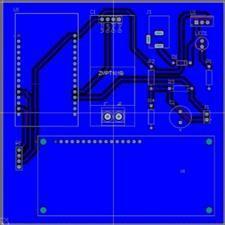
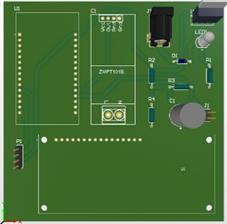
Fig.3:SchematicDiagram(PCB)
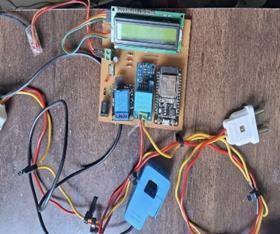
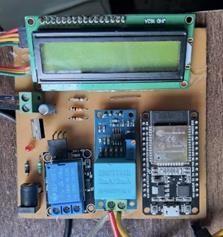
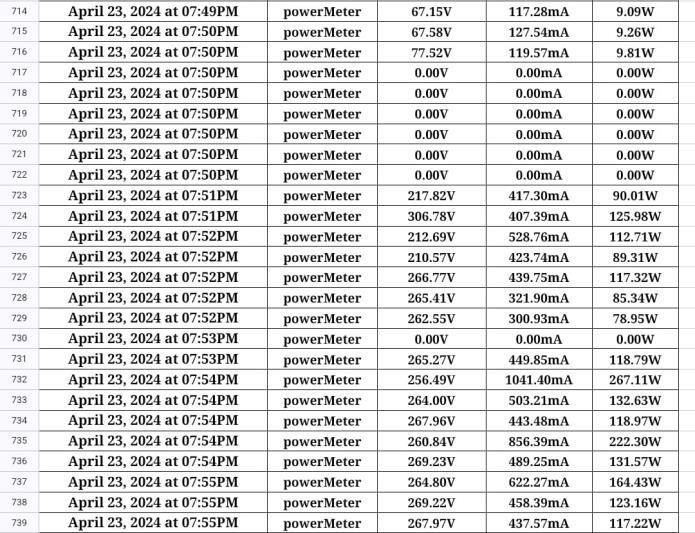
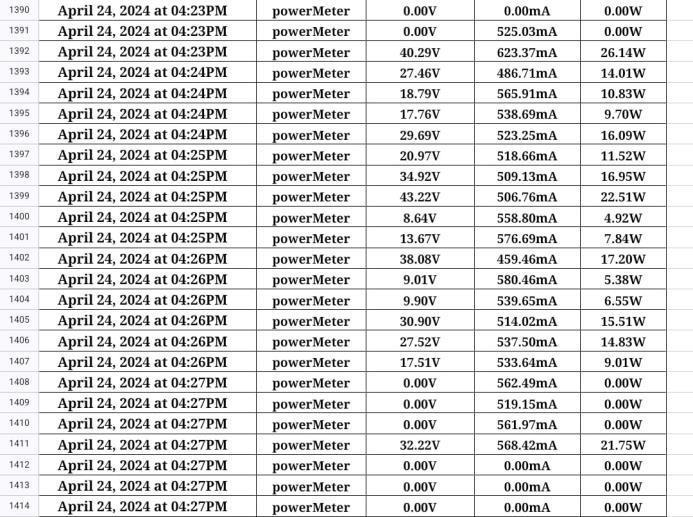
Through our system we have successfully managed to monitorthevoltage,current&powerconsumptionasseen inFig.4.Herewecanseethatthevaluesareshownforwhen the appliance is running & as and when we turn off the appliancesallthe‘valuesreturntozero’.Inthiswaywehave managedtodothetestrunonlightbulbsofdifferentWatts. Thecircuitiscapableofmonitoringheavyappliancesalso suchasjuicemixerorgrinder,hairdryer,etc.Inthissection, the operation of the developed IoT energy meter is demonstrated.
The implementation took place experimentally at our laboratory.Comprisinggaugesindicatingtheactivevaluesof voltage, current, and power, the dashboard also featured graphs representing the measured energy data over time. Energydatawascollectedfromtheenergysensornodeand transmittedtotheserver.EachsensorpossessedauniqueID andtransmitteddataevery20secondsthroughouttheday. This design allows for the deployment of multiple sensor nodes,withdatafromeachnodesimultaneouslydisplayed onthedashboard.
Fig.5(a,b,c)respectivelyshowtheresultsobtainedwhile monitoringtheappliances,sincethedataobtainedisinlarge amounts, it is not possible to show entire data but an instanceofeachcanbeseen.
e-ISSN: 2395-0056 p-ISSN: 2395-0072
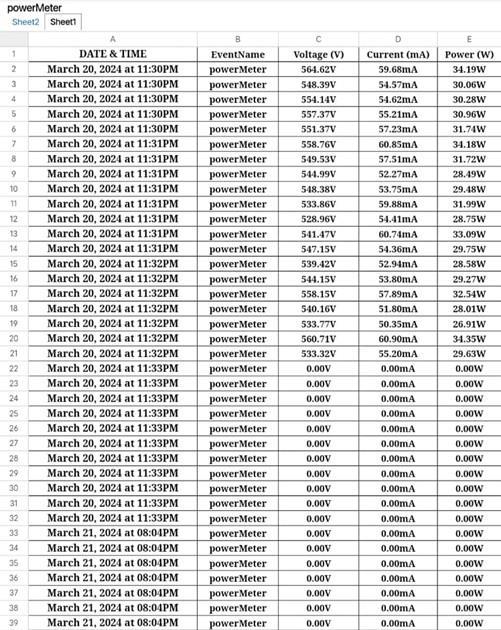
Resultsfor3differentlightbulbsconnectedin serialconnection
A low-cost energy monitoring system is designed for monitoringtheenergy&trackingapplications.Theresultsof the project bespeaks the system's ability to successfully monitorvoltage,current,activepower.Insubsequentwork, systemcanbefurtherdevelopedtogainmoreinsightinto the energyusageprofileandlearnto automaticallydetect theappliancesinuse.
International Research Journal of Engineering and Technology (IRJET) e-ISSN: 2395-0056 p-ISSN: 2395-0072
Volume: 11 Issue: 04 | Apr 2024 www.irjet.net
[1] S.M.AminandB.F.Wollenberg,“Towardasmart grid:powerdeliveryforthe21stcentury,”IEEEPower andEnergyMagazine,vol.3,no.5,pp.34-41,2005.
[2] F.Benzi,N.Anglani,E.Bassi,andL.Frosini,“Electricity Smart Meters Interfacing the Households,” IEEE TransactionsonIndustrialElectronics,vol.58,no.10, pp.4487-4494,2011.
[3] A. Zaballos, A. Vallejo, M. Majoral, and J. M. Selga, “Survey and Performance Comparison of AMR Over PLCStandards,”IEEETransactionsonPowerDelivery, vol.24,no.2,pp.604-613,2009.
[4] R.RashedMohassel,A.Fung,F.Mohammadi,andK. Raahemifar, “A survey on Advanced Metering Infrastructure,” International Journal of Electrical Power&EnergySystems,vol.63,pp.473-484,2014
[6] E. Taktak and I. B. Rodriguez, “Energy Consumption Adaptation Approach for Smart Buildings,” in 2017 IEEE/ACS14thInternationalConferenceonComputer Systems and Applications (AICCSA), 2017, pp.13701377.
[7] M. Beaudin and H. Zareipour, “Home energy management systems: A review of modelling and complexity,” Renewable and Sustainable Energy Reviews,vol.45,pp.318-335,2015.
[8] K.Athira,A.R.Devidas,M.V.Ramesh,andV.P. Rangan,“Usercenteredenergymanagementscheme for smart buildings,” in 2017 International Conference
[5] A.M.Vega,F.Santamaria,andE.Rivas,“Modelingfor home electric energy management: A review,” RenewableandSustainableEnergyReviews,vol.52, pp.948-959,2015. on Advances in Computing, Communications and Informatics(ICACCI),2017,pp.1296-1302.
[9] H. G. R. Tan, C. H. Lee, and V. H. Mok, “Automatic powermeterreadingsystemusingGSMnetwork,”in 2007 International Power Engineering Conference (IPEC2007),2007,pp.465-469.
[10] M.Wasi-ur-Rahman,M.T.Rahman,T.H.Khan,andS. M.L.Kabir,“DesignofanintelligentSMSbasedremote metering system,” in 2009 International Conference onInformationandAutomation,2009