
International Research Journal of Engineering and Technology (IRJET) e-ISSN: 2395-0056
Volume: 11 Issue: 04 | Apr 2024 www.irjet.net p-ISSN: 2395-0072
ULTRASONIC SMART GLASS FOR VISUALLY IMPAIRED PEOPLE
M.Muralitharan1, A.Anandhan2 , A.Thirumalai vasan3 , S.Kalaimani4
4Assistant Professor, Department of Mechatronics, Sri Manakula Vinayagar Engineering College, Puducherry, India 123 U.G. Student, Department of Mechatronics, Sri Manakula Vinayagar Engineering College, Puducherry, India ***
ABSTRACT- This concept offers an innovative approachto improve navigation for people with visual impairments by integrating glasses with ultrasonictechnology.TheNodeMCU module, a flexible microcontroller, is used by the system to provide real-time data processing and communication. The smart glass identifies impediments around the user by incorporating ultrasonic sensors into its structure. It then gives the user intelligent feedback in the form of tactile or audible indications.
The main goal of this project is to provide an efficient and affordable assistive technologythatincreasesthemobilityand freedom of people who are blind or visuallyimpaired.Thegoal of the smart glass prototype is to increase obstacle detection accuracy while maintaining user-friendliness through the smooth integration of hardware elements and software algorithms.
Key Words: NodeMCU module, real-time data processing, Ultrasonic sensors, Tactile and audible indications
1. INTRODUCTION
An inventive idea called "Ultrasonic Glasses for Visually Impaired People" aims to give those who are visually impaired more freedom and safety when navigating their environment. In order to improve users' mobility and confidence, this project aims to give users real-time environmentalawarenessandhelpthroughtheintegration of innovative technologies into a wearable gadget.
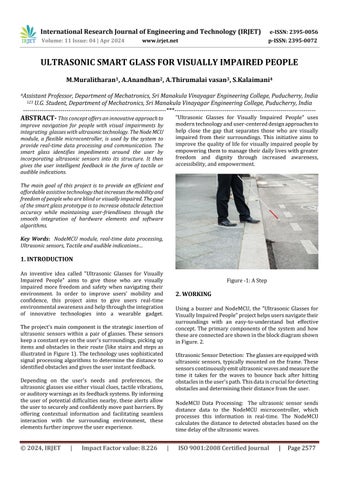
Theproject'smaincomponentisthestrategicinsertionof ultrasonic sensors within a pair ofglasses. These sensors keepaconstanteyeontheuser'ssurroundings,pickingup itemsandobstaclesintheir route (likestairsandstepsas illustratedinFigure1).The technologyusessophisticated signal processing algorithms to determine the distance to identifiedobstaclesandgivestheuserinstantfeedback.
Depending on the user's needs and preferences, the ultrasonicglassesuseeithervisualclues,tactilevibrations, orauditorywarningsasitsfeedbacksystems.Byinforming the user of potential difficulties nearby, these alerts allow theusertosecurelyandconfidentlymovepastbarriers.By offering contextual information and facilitating seamless interaction with the surrounding environment, these elementsfurtherimprovetheuserexperience.
"Ultrasonic Glasses for Visually Impaired People" uses moderntechnologyanduser-centereddesignapproachesto help close the gap that separates those who are visually impaired from their surroundings. This initiative aims to improvethequalityoflifeforvisuallyimpaired people by empoweringthemtomanagetheirdailyliveswithgreater freedom and dignity through increased awareness, accessibility,andempowerment.

2. WORKING
Using a buzzer and NodeMCU, the "Ultrasonic Glasses for VisuallyImpairedPeople"projecthelpsusersnavigatetheir surroundings with an easy-to-understand but effective concept. The primary components of the system and how theseareconnectedareshownintheblockdiagramshown inFigure.2.
UltrasonicSensorDetection: Theglassesareequippedwith ultrasonicsensors, typicallymounted ontheframe.These sensorscontinuouslyemitultrasonicwavesandmeasurethe time it takes for the waves to bounce back after hitting obstaclesintheuser'spath.Thisdataiscrucialfordetecting obstaclesanddeterminingtheirdistancefromtheuser.
NodeMCU Data Processing: The ultrasonic sensor sends distance data to the NodeMCU microcontroller, which processes this information in real-time. The NodeMCU calculates the distance to detected obstacles based on the timedelayoftheultrasonicwaves.
International Research Journal of Engineering and Technology (IRJET) e-ISSN: 2395-0056
Volume: 11 Issue: 04 | Apr 2024 www.irjet.net p-ISSN: 2395-0072
Threshold Determination: The NodeMCU compares the calculated distance to a predefined threshold value. If the distancetoanobstaclefallsbelowthisthreshold,indicating thattheobstacleiswithinaspecifiedrange,theNodeMCU triggersthebuzzer.
BuzzerAlert: WhentheNodeMCUactivates the buzzer, it emits an audible alert to notify the user of the detected obstacle.Theintensityorfrequencyofthebuzzeralertcan beadjustedbasedontheproximityoftheobstacle,providing the user with essential feedback about the distance and potentialdanger.
UserResponse: Uponhearingthebuzzeralert,theusercan react accordingly by adjusting their direction, speed, or taking other necessary actions to avoid the obstacle. The timely feedback provided by the buzzer helps the user navigatetheirenvironmentsafelyandindependently.
ContinuousMonitoring: Theprocessrepeatscontinuously astheusermoves,withtheultrasonicsensorsscanningthe surroundings,theNodeMCUprocessingdata,andthebuzzer providingalertswheneverobstaclesaredetectedwithinthe specifiedrange.
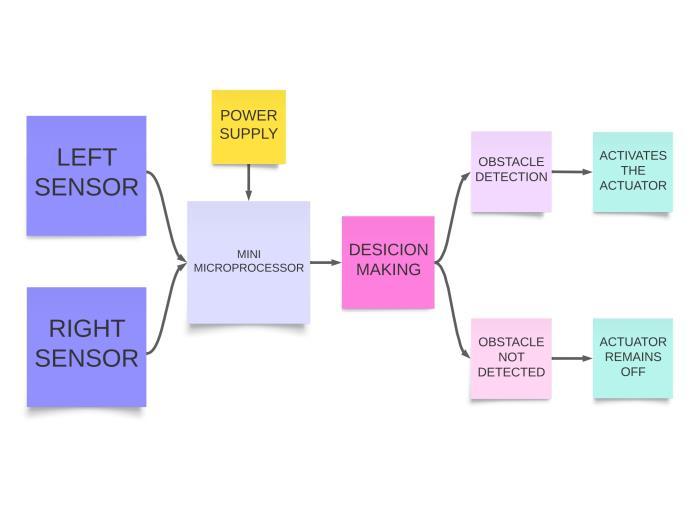
Overall, the system aims to enhance the users safety by enabling the timely detection and communication of obstacles on the route, thereby facilitating prompt maintenancetomitigatetheriskofaccidents
3. SENSOR SELECTION
Selectingtheappropriatesensorforaspecificapplicationcan indeed be a challenging task and in the case of obstacle detection we must properly select the sensors and componentsonmanyparameters.
It’scrucialtochooseasensorthatoffershighefficiencyand reliability. After careful consideration and evaluation, the
decision was made to utilize an Ultrasonic sensor for this projectduetoseveralreasons:
Suitability for Surface Detection: Ultrasonic sensors are excellentforidentifyingbarrierssincetheyarewell-suited forsurfacedetectionapplications.
Toensurepreciseidentification,theyareabletorecognize variations or irregularities in the surface texture, such as stairsandsteps,witheffectiveness.
Ultrasonic sensors function in a non-contact way, which means they don't make physical contact with the surface theyaremonitoring.Thisfeaturedecreaseswearandtearon the sensor and lowers the possibility of damage or malfunction, which makes it beneficial for obstacle monitoring
Cost-effectiveness: When compared to other sensor types with comparable characteristics, ultrasonic sensors are typically more affordable. This is an important factor, particularlyinprojectswheretherearefinanciallimitations orscalabilityissues.
Robustness and Durability: Because of their well-known resilienceandsturdiness,ultrasonicsensorsarewell-suited for use in challenging environments that are frequently foundnearbarrierslikestairsandsteps.
With all these considerations we choose the ultrasonic sensor for our project for promoting high efficiency and reliability for the user and also suits the objectives of the projectbyenhancingtheobstacledetectionandalerting.
4. METHODOLOGY
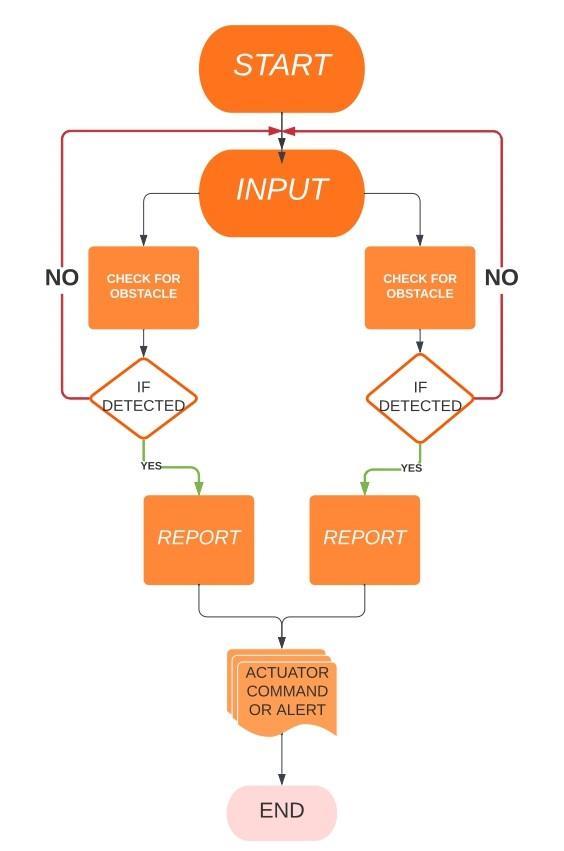
TheFigure-3depictstheworkflowoftheproposedmodel.
Theprocessbeginsasfollows:
a) The system turns on with the power supply form thebattery.
b) TheUltrasonicsensorstartstoemitandreceivethe sound waves, these sound waves check for any obstacleintheroute.
c) Allthethresholdvaluesandthealgorithmsarebeen preprogrammedinthemicrocontrollerunit,thatis thenodeMCUmodule.
d) Once the obstacle range is within the threshold value or range the microcontroller activates the actuators.
e) Ifnodetectionofobstacleencounteredthisstartto endcyclerepeatscontinuously.
International Research Journal of Engineering and Technology (IRJET) e-ISSN: 2395-0056
Volume: 11 Issue: 04 | Apr 2024 www.irjet.net p-ISSN: 2395-0072
5. MODEL IMPLEMENTATION AND COMPONENTS
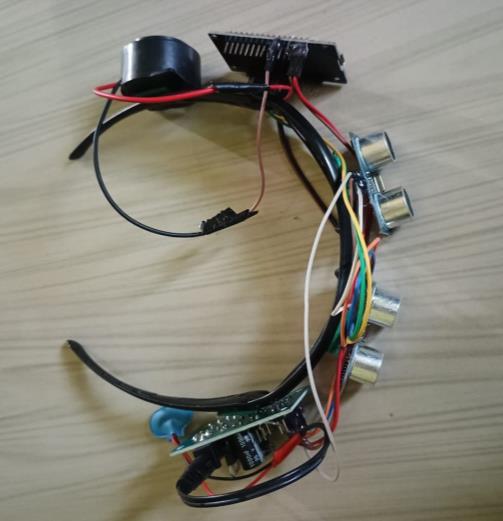
The ultrasonic smart glass is the innovative idea of combining the ultrasonic sensor in the glass for better navigation and obstacle detection. This idea has been implementedwiththehelpoftheultrasonicsensorandthe nodeMCUmicrocontrollerandtheothercomponents. These are altogether connected with the help of the connecting wires.
Theimplementationoftheprojectisverysimpleasfirstthe nodeMCU is been programmed with the ultrasonic sensor which is very important to optimize the sensor, as the sensor,sensethesurroundingsanddetectforanyobstacles intherouteorthepath.
Onceanyobstaclehasbeendetecteditsendthesignaltothe microcontroller,iftheobstacledetectedrangeiswithinthe thresholdrangethemicrocontrolleractivatestheactuator.
Withthehelpoftheactuatortheusercaneasilygettoknow thatthereisanobstacleinfrontofthemandtheynavigate throughitsafely.
5.1 NODEMCU MICROCONTROLLER
The NodeMCU is a versatile and affordable development boardwidelyusedinIoT(InternetofThings)projects.Itis basedontheESP8266Wi-Fimoduleandisequippedwitha microcontrollerunit,makingitcapableofbothprocessing andwirelesscommunication
NodeMCUservesasacrucialcomponentforcontrollingand processingdata.Here'showitfunctionswithinthecontextof the project. It is very small for the proposed model thus resolving the problem of big microcontroller in reference no.2
SensorInterface: TheNodeMCUlikelyinterfaceswiththe ultrasonicsensor(s)thatdetectobstaclesorobjectsinthe environment. It receives data from these sensors, which typicallyworkbyemittingultrasonicwavesandmeasuring thetimetakenforthemtobouncebackfromobstacles.
DataProcessing: OncetheNodeMCUreceivesdatafromthe ultrasonic sensor(s), it processes this information. This processing might involve interpreting the distance to detected objects, determining if they pose a potential obstacle,andcalculatingtheappropriateresponsebasedon theuser'spreferencesorpre-definedparameters.
ControlLogic: Basedontheprocesseddata,theNodeMCU executescontrollogictoprovidefeedbacktotheuser.This feedbackcouldtakevariousforms,suchasgeneratingaudio alerts, vibrating motors embedded in the smart glass, or activatingothertactilefeedbackmechanisms.TheNodeMCU coordinatestheseactionsinreal-timetoenhancetheuser's awarenessoftheirsurroundingsandassistinnavigation.
International Research Journal of Engineering and Technology (IRJET) e-ISSN: 2395-0056
Volume: 11 Issue: 04 | Apr 2024 www.irjet.net p-ISSN: 2395-0072

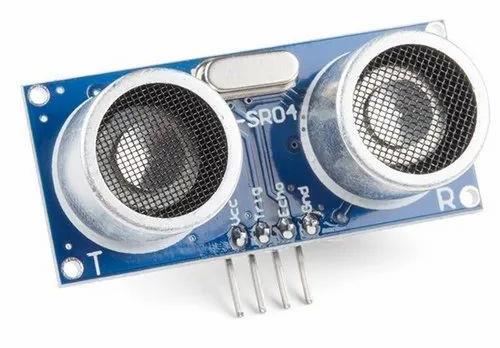
5.2 ULTRASONIC SENSOR
An ultrasonic sensor is a device that utilizes sound waves beyond the range of human hearing to detect objects or measure distances. It works by emitting high-frequency soundpulsesandthenlisteningfortheechoesreflectedoff nearby objects. By measuring the time it takes for these echoestoreturn,thesensorcancalculatethedistancetothe object.
In an ultrasonic smart glass project designed for visually impairedindividuals,theultrasonicsensorplays a pivotal roleinenhancingtheuser'sawarenessoftheirsurroundings andassistinginnavigation.Here'showtheultrasonicsensor functionswithinthisproject:
ObstacleDetection:Theprimaryfunctionoftheultrasonic sensoristodetectobstaclesorobjectsintheuser'spath.It emitsultrasonicwavesand measuresthetimeittakesfor these waves to bounce back after hitting an obstacle. By analyzing the time delay, the sensor can determine the distancetotheobstacle.
Feedback Integration: The ultrasonic sensor's data is integratedwiththecontrollogicofthesmartglasssystem. Thisintegrationallowsfordynamicadjustmentsbasedon the detected obstacles, such as altering the frequency or intensityofalertsbasedon thedistancetotheobstacleor theuser'sspeedofmovement.
5.3 BUZZER
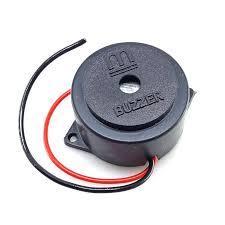
The buzzerisa simpleyet effectivecomponentthat emits soundwhenactivatedbytheNodeMCUmicrocontroller.In thisproject,itservesasanessentialalertsystem,notifying thewearerofpotentialobstaclesorhazardsdetectedbythe ultrasonicsensor.
Whentheultrasonicsensordetectsanobjectwithinacertain range, the NodeMCU triggers the buzzer to emit specific sounds or patterns corresponding to the distance of the detectedobject.Forexample,itmayproduceshortbeepsfor objects at a moderate distance and continuous tones for objectsinverycloseproximity.
5.4 PROGRAMMING
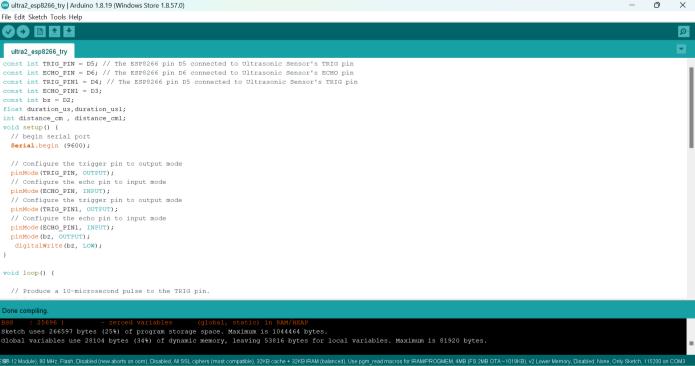
TheArduinoIDEsoftwareisanopen-source,user-friendly programming tool that we utilized in this instance. Numerousbuilt-inlibraryfeaturesandpre-installedboards make them highly beneficial for programming. The microcontroller in this case is the NODEMCU ES8266 board.
International Research Journal of Engineering and Technology (IRJET) e-ISSN: 2395-0056
Volume: 11 Issue: 04 | Apr 2024 www.irjet.net p-ISSN: 2395-0072
We utilized the embedded C programming language to programtheultrasonicsmartglasses.
6. CONCLUSIONS
Thedevelopmentandimplementationofultrasonicglasses for visually impaired individuals represent a significant advancement in assistive technology. Through the integration of ultrasonic sensors, microcontrollers, and audio feedback systems, these glasses offer users a newfoundindependenceandenhancednavigationabilities intheirdailylives.
Inconclusion,ultrasonicglassesforvisuallyimpairedpeople representasignificantstepforwardinassistivetechnology, offeringapracticalandaffordablesolutiontoimprovethe mobility and independence of individuals with visual impairments.Byaddressingtheuniquechallengesfacedby thiscommunity,theseglasseshavethepotentialtomakea meaningfuldifferenceinthelivesofcountlessindividuals, enablingthemtonavigatetheworldwithgreaterconfidence andautonomy.
7. REFERENCE
1) “Vision impairment and blindness,” Oct 2020. [Online].Available: https://www.who.int/newsroom/fact-sheets/detail/blindnessand visualimpairment.
2) S.Divya,S.Raj,M.PraveenShai,A.JawaharAkash, andV.Nisha,“Smartassistancenavigationalsystem for visually impaired individuals,” in 2019 IEEE InternationalConferenceonIntelligentTechniques in Control, Optimization and Signal Processing (INCOS),2019.
3) N.Dey,A.Paul,P.Ghosh,C.Mukherjee,R.De,andS. Dey,“Ultrasonicsensorbasedsmartblindstick,”in 2018InternationalConferenceonCurrentTrends towardsConvergingTechnologies(ICCTCT),2018.
4) A. Kanal. and P. S. Chavan, “An affordable handglove for the blind using ultrasonic sensors,” International Journal of Innovative Research in ComputerandCommunicationEngineering,vol.5, 2017.
5) D.E.Gbenga,A.I.ShaniandA.L.Adekunle,“Smart Walking Stick for Visually Impaired People Using Ultrasonic Sensors and Arduino”, in International JournalofEngineeringandTechnology(IJET),Vol9 No.5Oct-Nov2017.