
International Research Journal of Engineering and Technology (IRJET) e-ISSN: 2395-0056
Volume: 11 Issue: 04 | Apr 2024 www.irjet.net p-ISSN: 2395-0072
International Research Journal of Engineering and Technology (IRJET) e-ISSN: 2395-0056
Volume: 11 Issue: 04 | Apr 2024 www.irjet.net p-ISSN: 2395-0072
PROF.P. VANITHA MUTHU1 , D. BALA MURALI KRISHNA2 , M. GOKULAKRISHNAN3 , A. VIMAL RAJ4
1234 Dept. of Computer Science and Engineering, Government College of Engineering Srirangam, Tamilnadu, India
Abstract - Supply chain management is a complex process involving multiple stakeholders and intricate logistics. Traditional supply chain systems often encounter challenges such as lack of transparency, inefficiencies, and vulnerabilities to fraud and counterfeiting. In recent years, blockchain technology has emerged as a potential solution to address these issues by offering a decentralized, transparent, and immutable ledger system. This paper delves into the transformative potential of blockchain technology in supply chain management, with a specific focus on enhancingtransparencyandtraceabilitythroughoutthe supplychainecosystem.Throughanextensivereviewof existingliteratureandin-depthanalysisofcasestudies, we explore the implications of blockchain for various stakeholders, including manufacturers, distributors, retailers, and consumers. The literature review highlights the benefits of blockchain technology, including improved transparency, traceability, and accountability. Case studies from diverse industries demonstrate practical applications of blockchain in supplychainmanagement,suchasproductprovenance tracking, supply chain optimization, and counterfeit prevention.Furthermore,wediscusstheimplicationsof blockchain for different stakeholders. Manufacturers can leverage blockchain to enhance quality control and compliance management, while distributors and retailers can optimize inventory management and logistics. Consumers, on the other hand, can gain confidence in the authenticity and safety of products throughblockchain-enabledtraceability.Drawingupon insightsfrom theliteraturereview and casestudies, we provide recommendations for organizations looking to adoptblockchainsolutionsintheirsupplychains.These recommendationsencompassaspectssuchasfeasibility studies, platform selection, collaboration with supply chain partners, and addressing regulatory and privacy concerns. In conclusion, this paper underscores the potential of blockchain technology to revolutionize supply chain management by fostering transparency, traceability, and efficiency. By embracing blockchain solutions,organizationscanmitigaterisks,reducecosts, and build trust among stakeholders, ultimately leading to a more resilient and sustainable supply chain ecosystem.
Keywords: Blockchain, Supply Chain Management, Transparency, Traceability, Case Studies.
Supplychainmanagementisafundamental aspect of modern business operations, encompassing the coordination and integration of activities involved in the production,distribution,anddeliveryofgoodsandservices toendconsumers.Traditionally,supplychainshaverelied oncentralized,paper-basedsystemsthatoftensufferfrom inefficiencies, lack of transparency, and vulnerabilities to fraud and counterfeiting. These shortcomings have significantimplicationsforbusinesses,includingincreased costs,operationaldisruptions,andreputationaldamage.
Inrecentyears,blockchaintechnologyhasemerged as a disruptive force with the potential to address these longstandingchallengesinsupplychainmanagement.Atits core, blockchain is a distributed ledger technology that enables secure, transparent, and immutable recording of transactionsacrossanetworkofcomputers.Byleveraging cryptographic techniques and consensus mechanisms, blockchaineliminatestheneedforintermediaries,reduces theriskoftamperingorfraud,andprovidesasinglesource oftruthforallparticipantsinthenetwork.
The decentralized nature of blockchain makes it particularlywell-suitedforsupplychainapplications,where multiple parties are involved in complex, cross-border transactions.Blockchainenablesstakeholderstotrackthe movementofgoodsandassetsinreal-time,fromthepointof origin to the final destination, with full transparency and traceability. This enhanced visibility not only improves operational efficiency but also facilitates compliance with regulatoryrequirementsandethicalstandards.
Moreover,blockchaintechnologyhasthepotentialto transformhowsupplychainsaremanagedandoptimized. Smartcontracts,self-executingagreementsencodedonthe blockchain, can automate and enforce contractual obligationsbetweenparties,streamliningprocessessuchas procurement, invoicing, and payments. Additionally, blockchain-basedsolutionscanenablenewbusinessmodels, suchassharedeconomyplatformsandsupplychainfinance, by unlocking previously inaccessible sources of value. Despiteitspromise,theadoptionofblockchaintechnologyin supplychainmanagementisstillinitsnascentstages,with many challenges and barriers to overcome. Technical hurdles, such as scalability, interoperability, and data privacy, need to be addressed to ensure the seamless
International Research Journal of Engineering and Technology (IRJET) e-ISSN: 2395-0056
Volume: 11 Issue: 04 | Apr 2024 www.irjet.net p-ISSN: 2395-0072
integrationofblockchainintoexistingsupplychainsystems. Furthermore,regulatoryuncertaintyandindustrystandards pose additional challenges, requiring collaboration and coordination among stakeholders to establish common frameworksandbestpractices.
In light of these developments, this paper aims to provide a comprehensive analysis of how blockchain technology can revolutionize supply chain management, with a specific focus on enhancing transparency and traceability. Through a combination of literature review, casestudies,andpracticalinsights,weseektoexplorethe opportunities and challenges associated with blockchain adoptioninsupplychainsandproviderecommendationsfor organizations seeking to leverage this transformative technology.
The last many times have witnessed an explosion of exploration and development exertion around Blockchain technology, substantially within the financial technology (FinTech) assiduity. Indeed, its natural capability of furnishinginflexibleandtamper-evidencerecords,together withitseventualitytoenabletrustandtrustability among untrustedpeersrepresenttooseductivefeatures,precluding this technology from staying relegated to a single perpendicular sector. For this reason, several diligences beyondtheFinTechsectorhaveformerlylinkedBlockchain technologyasamotoristforaparadigmshift.TarunKumar Agrawalet.al (12). Blockchain- grounded frame for supply chain traceability A case illustration of cloth and apparel assiduity.Theclothassiduityrequirestraceabilitytoaddress translucency and quality enterprises. A blockchaingrounded frame fosters trust, offering translucency and sustainabilityinsupplychains.Azziet.al(4).Thepowerofa blockchain-groundedsupplychain.Computers&Industrial Engineering.Blockchainintegrationenhancessupplychain translucencyandsecurity,combatingcorruptionandfraud. Thispaperexploresitsbenefitsandchallengesforcreatinga dependable and authentic supply chain operation system. Agrawalet.al (1). A blockchain- grounded secured cooperative model for supply chain resource sharing and visibility. InB. Lalic,V. Majstorovic,U. Marjanovic,G. von Cieminski, &D. Romero( Eds.), Advances in product operationsystems.Thepathtodigitalmetamorphosisand invention of product operation systems (pp. 259 – 266). Springer International Publishing. To enhance product visibility and resource sharing, a Blockchain- grounded cooperativemodelisproposed.Itaddressessequestration pitfalls and trust issues, promoting sustainability and reducingfraudulentdealsinsupplychainintegrationsweats PaulKengfaiWanet.al(13).Blockchain-EnabledInformation participatingWithinasupplychain.Blockchaintechnology enablesstreamlinedinformationsharingincomplexsupply chains,fosteringtranslucencyandcollaboration.Thispaper exploresitsimpactacrosscolorfulsectors,pressingbenefits
similar as vindicated information access while addressing walls like technological understanding and clashing interests. Miguel Pincheria Caroet.al (5). Blockchaingrounded traceability in Agri- Food Supply Chain Management. The swell in IoT relinquishment extends to Agri-Foodsupplychains,drivinginterestindecentralized traceabilitysystems.AgriBlockIoTpresentsablockchaingroundedresultseamlesslyintegratingIoTbias,estimated throughafrom-ranch-to-chopstickusecasewithEthereum andHyperledgerSawtoothexecutions.PedroAzevedoet.al (3).SupplyChainTraceabilityusingBlockchain.Blockchain enablescomprehensivetraceabilityincomplexglobalsupply chains, integrating digital instruments to validate both supplychainactorsandproductindividualities.Througha DesignScienceexplorationapproach,architecturalvestiges including Ethereum Smart Contracts and a PKI- grounded instrument authentication system were developed, icing decentralizedandsecureassuranceofprovenance,chainof guardianship, and traceability functionalities. Biswaset.al (5). Analysis of walls to apply blockchain in assiduity and service sectors. Computers & Industrial Engineering. This study develops a frame to probe walls to blockchain relinquishmentacrossdiligence.ThroughDEMATELfashion, it identifies crucial challenges similar as scalability and request-groundedpitfalls,abettingdirectorsinprostrating obstaclestoeffectiveperpetration.Alzahraniet.al(2).Anew productanti-counterfeiting blockchain using a truly decentralizeddynamicagreementprotocol.Concurrencyand ComputationPracticeandExperience.WeintroduceBlock‐Supply, a decentralized anti ‐ counterfeiting supply chain usingNFCandblockchaintech.Ournewagreementprotocol utilizes game proposition to determine validator figures, icing obscurity and resistance against colorful attacks. ElMessiryet.al (7). Binary Token Blockchain Economy Framework–TheGarmentUseCase.157–170.Overthelast many times, the preface of blockchain technology has broughtforthanewsetofchallengesconcerningblockchain commemorative economics and its beginning business requirements.numerousoriginalCoinImmolations(ICOs) have concentrated on a single commemorative that eased the original design backing but complicated the factual perpetration. Frizzo- Barkeret.al (8). Blockchain as a disruptive technology for business A methodical review. International Journal of Information Management. Blockchain,a disruptiveinvention, garnersattention from scholarsandstakeholdersforitsimplicittoreshapecolorful sectors.Amethodicalreviewrevealsaswellinexploration on blockchain from 2014 to 2018, pressing its benefits, challenges,andtheneedforfarthertheoreticalandempirical disquisition.Overall,tothestylishofourknowledge,some crucial- features offered by certain blockchain executions remaineithernotexplored,ornotcompletelyexploited,one for all being the independent deals capability (frequently appertainedtoassmartcontracts).
International Research Journal of Engineering and Technology (IRJET) e-ISSN: 2395-0056
Volume: 11 Issue: 04 | Apr 2024 www.irjet.net p-ISSN: 2395-0072
Accordingto(Gupta,2018),blockchaincanbedescribedas “aparticipated,inflexibleledgerthatfacilitatestheprocess ofrecordingdealsandtrackingmeansinabusinessnetwork. An asset can be palpable (a house, an auto, cash, land) or intangible (intellectual property, patents, imprints, branding). nearly anything of value can be tracked and traded ona blockchainnetwork, reducingthreat andslice costsforallinvolved”.Thetermblockchainisdeducedfrom the way it stores the transactional data. It consists of a sequence of blocks that are linked in the form of a chain. Eachblockholdsaset/batchofthedealsarrangedinMerkle treeformwherethecryptographichashesofthedealsare storedasheadsforaquickandeasyverificationofindividual deals in the block. In addition, each block contains a timestampindicatingwhentheblockisformed,thehashof theformerblock,ablockID/Number,andevidencefromthe agreement algorithm(Swan, 2015).Theblocksarelogged into a distributed tally grounded on the agreement rules agreeduponbythenetworkmates.Further,tounderstand the blockchain medium and the proposed frame, it's important to understand the four pivotal factors of blockchain technology i.e. distributed participated tally, smartcontract,warrants,andagreement
2.2
The ledger is a record of transactions used in doubleentry bookkeeping for the ages. In blockchain, the shared ledger records all transactions between the authorized partnersofthenetwork,makingitadistributedledger.The ledger is immutable by linking transactions with cryptographic hashes. A hash is a random combination of digitsgeneratedbypassingblockinformation(transaction details and the hash of the previous block) using a cryptographichashfunction.Thiscreatesanewhashofthe required length (egg 256 bits) for the current block. Cryptographic functions uniquely map input data to an
output hash, and slight variations in the input generate a differenthashwithnoapparentpattern.Duetothepseudorandom nature of the calculated hashes, it is difficult to calculate the input information using the resulting hash, makingitaone-wayencryption.Inablockchain,eachblock containsahashofthepreviousblock,makingitimpossible to manipulate any block without breaking the chain. a change in the transactions of a previously registered one would change the hashes of all subsequent blocks. This makes it subsequently easy and quick to identify any tamperingwithablockinadistributedledger.Adistributed ledger is a digital record that keeps a secure and tamperproofrecordofalltransactions.Eachtransactionisrecorded only once, eliminating the risk of duplicate records. The ledger contains the current state of the network, which includes the recording and tracking of all tangible and intangibleassetsthathavebeentradedsincetheinstallation oftheblockchain,aswellasthechainoftransactions.Since theblockchainledgerisaconnection-onlysystem,itserves asasinglesourceoftruthforallassociatedparties.
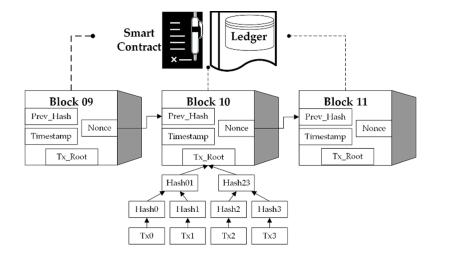
Fig. 2. Atypicalblockchainrepresentation.
Thus, the participated tally is one of the most important blockchainfactorsthatfacilitatestraceabilityofmeansand information, and creates a technology- grounded trust among a group of parties interacting on the blockchain networkwithoutcentralizedauthority.
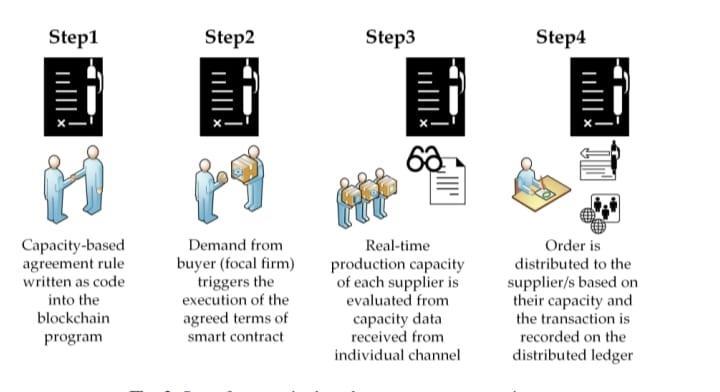
Smart contracts are programmable rules that govern businessdealsinblockchain.Thesecontractsarerigorously executedandeachsaleisvindicatedagainsttherulesbefore being recorded on the participated tally. There are two popularstylesofsaleconfirmationandrecord-keepingin blockchainUnspentsaleAffair(UTXO)andAccount/Balance model.IntheAccount/Balancemodel,eachaddress(IDof thetradingmates)isconsideredasanaccountwithaspecific
International Research Journal of Engineering and Technology (IRJET) e-ISSN: 2395-0056
Volume: 11 Issue: 04 | Apr 2024 www.irjet.net p-ISSN: 2395-0072
balance, and deals hold information about the transfer of means between differentaccounts. Asaleisvalidatedand recorded on the blockchain only when the sender has an assetvaluethat'sequaltoorfurtherthanwhat'srequested to transfer in the sale. In the UTXO model, there's no essential notion of the account associated with the ID/ address of the dealer. rather, deals trade and spend labors(means)generatedbyformerdealsandproduceanew log of unspent labors(means). Both styles have their separateprosandcons.Adetailedexplanationcanbe setup inworkbyZahnentferner(2018).IntheenvironmentofT&C supplychain,thebelow-mentionedstylescanbeacclimated in agreement with the asset transfer and shadowing conditionsfromthesupplychain
2.4 PERMISSIONS
There are two types of blockchain networks private and public.Publicblockchains,similarasthebitcoinblockchain, areopentoanyonewithinternetaccessandallowdealsto beperformedbyanyonewhojoinsthenetwork.Ontheother hand,businessblockchains,similarasthoseusedinsupply chainoperations,areprivateandbearauthorizationtojoin andperform deals.Ina privateblockchain network,there are known partners who have a certain position of trust amongthemselves.Eachmateislinkedbyapublic-private crucialbrace.Thisidentifierdeterminesthetypeandextent of access that a mate has within the private blockchain network and helps to set the network rules and mates' commerce programs. To maintain security and avoid fraudulentdeals,theprivate keyisalways keptnonpublic andknownonlytoitsproprietor.Thisfunctionalitymakesit easy to misbehave with data protection regulations, maintaindatasequestration,tracethehistoryofaproduct, identify the source of a disfigurement and have better control over the data that's added to the blockchain (participated tally). agreement When dealing with a participatedtally,it'spivotaltohaveamediumthatprevents whatisknownastheintricatefault(Castro&Lesko,2002). Simplyput,itmeansanincorrecttallyentry,whethermade bymistakeordesignedly.Tohelpthis,eachsaleisvindicated againstthecurrentstateoftheparticipatedtallybeforeit's recordedinablock.Thisconfirmationcanbeperformedbya
single peer (validating peer) on the blockchain, which is aimlesslynamedwhenanewblockisformed.Thisensures that the tally is defended against any incorrect entry. The address of the validating peer is also saved on each block alongwiththesaledataandotherapplicableinformation. Public blockchains like Bitcoin use an evidence- of- work (Pow)agreementmediumthatmakestheBitcoinblockchain largely secure against attacks. In Pow, miners (a group of processing bumps) contend with each other to find the applicablehashofthenewblockandearnapriceintheform ofbitcoins.Theapplicablehashisattainedbycalculatinga number appertained to as nonce (number only used formerly).Thelesserthedifficultyposition,theharderit'sto produce a hash lower than the target. In a private blockchain, piecemeal from Pow, mechanisms similar as Proof-of-ceasedTime,intricatefaultforbearance.canalso be used where the validating miner is chosen aimlessly groundedonasetmedium.Adetailedexplanationcanbeset upintheworkbyViriyasitavatandHoonsopon(2018).
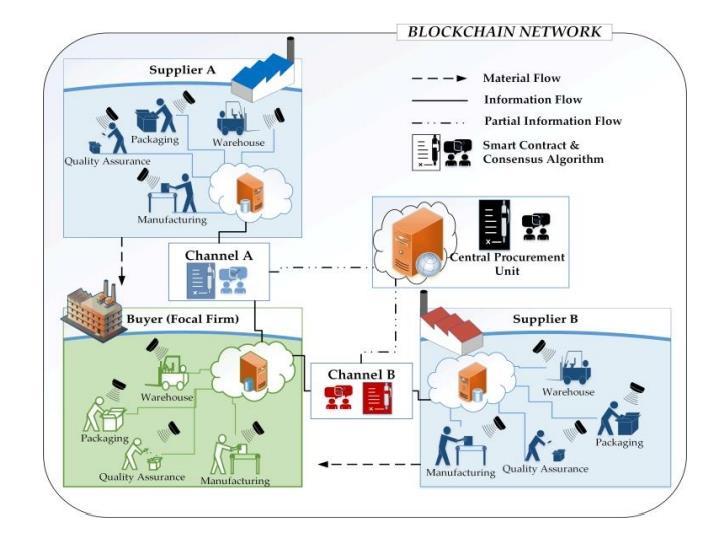
Whendesigningablockchain-groundedtraceabilityframe, it's pivotal to dissect how the blockchain will be operationalized. This analysis should consider the environment of supply chain operation, which involves multipleoperationsby differentstakeholders.Forcase, in the cloth and apparel supply chain, the traceability frame shouldmanagevesturedatafromthefiberstagetothefinal product.Thefunctional-positionframeshoulddemonstrate theconditioninginvolvedinplanning,gathering,arranging, andswappingtraceabilitydataatdifferentsituationsofthe supply chain. utmost upstream mates in the cloth and apparelsupplychaintakerawaccoutrementsfromsuppliers and perform colorful operations to produce the final product, which is also passed to the coming supply chain mate.Thisprocessrepeatsuntilthefinalproductreachesthe retailer. At each stage of the supply chain, a substantial quantum of information is generated, taking proper collection and operation procedures. The generated information is a critical element of the supply chain, and each mate must control its inflow and cover nonpublic information. thus, all information should be recorded, but only essential information should be participated on the distributed tally. To apply a blockchain- grounded traceability frame, it's essential to plan and identify the necessarytraceabilityinformationthatcanbeparticipated on the distributed tally by erecting a proper agreement amongthesupplychainmates.also,it'spivotaltocollectand partake the necessary data to misbehave with original regulationsandcertifyingagencies'conditions.Tosimplify theprocess,traceabilityinformationcanbedividedintofour setsprivateshareable,publicshareable,secured,andlinking information.
International Research Journal of Engineering and Technology (IRJET) e-ISSN: 2395-0056
Volume: 11 Issue: 04 | Apr 2024 www.irjet.net p-ISSN: 2395-0072
1. Private shareable information
Privateshareableinformationreferstoasetofimportant detailsthatareessentialforB2Boperations,particularlyfor materialmetamorphosisprocessessimilarasintermediate productspecifications,designdetails,andmore.Whenthis information is participated securely among supply chain mates, it can ameliorate visibility and reduce pitfalls. still, this information is rigorously secured and cannot be penetratedbyanythirdpartyorguests.
2. Public shareable information
Publicsharableinformationcanbeparticipatedwithguests andthirdparties.Thisinformationshouldberecordedand participated at all stages of product metamorphosis to misbehave with original government regulations and delegationconditions.Thetranslucencypositionofasupply chainforitsguestsisdeterminedbytheextentofcollection and sharing of public shareable information. On the other hand, private shareable information shouldn't be participatedwiththirdparties.
3. Secured information
Thisinformationisdecodedandcanonlybepenetratedby specific authorized mates within the channel. Unlike shareableinformation,whichcanbepenetratedbyanyB2B mate,thissecuredinformationissensitiveandnonpublic.It mayincludefiscalorIPdata,orotherinformationthatcould giveacompetitiveadvantage.
4. Linking information
TheworkofKumarteal.(2017)discussesthesignificance of linking information in the environment of supply chain traceability. The linking of information is pivotal to the
functioning of the blockchain because it's the information thatgetsvalidatedduringeverysaleagainsttheparticipated tallygovernedbythesmartcontract.Thistallycontainsfour valuefields,andacombinationofallthesefieldsisverified againsttheglobalstateoftheparticipatedtallytovalidate thesale.Thefourvaluefieldsare
a)TraceabilityID orLotID isa unique identification law that differentiates each traceability unit (TRU) from the other analogous TRUs. This identification law is a pivotal elementoftraceabilityandisessentialtobindeachTRUwith the traceability information. It also facilitates dogging of assetlotsindeedafterthey'redivided,mixed,orrecombined. These IDs can be generated through a time- grounded functiontoinsuretheironeness.
b) Public crucial This is assigned to identify the supply chain mates. The key is a pivotal element to trace and corroboratetheclaim.Duringtheconfirmationofthesale, thepublickeysofthetradingmatesarecheckedagainstthe participatedtallytocorroborateifthetransferringmatehas sufficient means, i.e., at least equal to the quantum to be transacted.
c)salehandThisisacombinationoftheprivatekeyandthe unique ID or address of the authorized mate that has initiatedthesale.It'susedtoauthenticatethesale,helpin maintainingthesecurityofthetally,anddefinethetypeof availability.
d)AssetValueThisisthequantumofassetbeingtradedon the supply chain. Each supply chain mate can pierce the blockchain through operations and latterly add deals, including the asset value that they would like to trade However,theassetvalueiswrittenonthe blockchainand the tally is streamlined, if validated. Asset values and quantitiescanbetrackedandcapturedautomaticallyusing detectors.
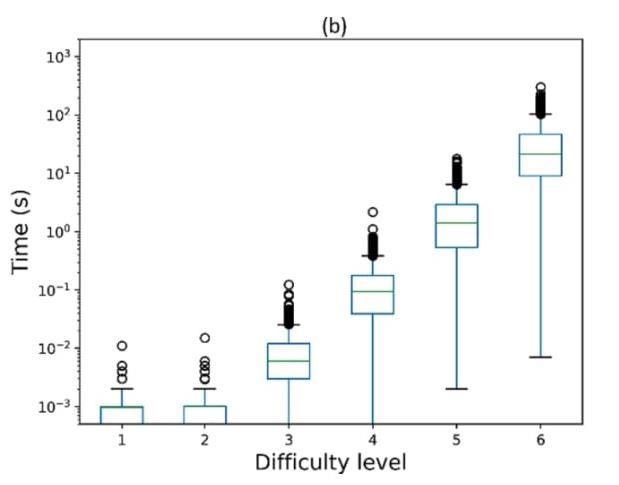
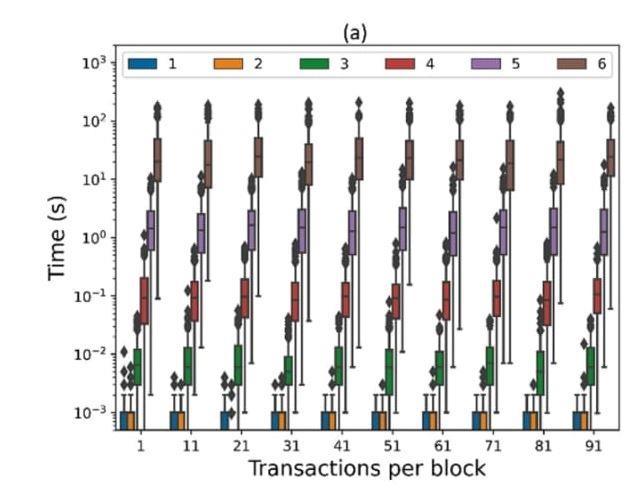
Fig. 5. Averagetimetakentopredicttargethashat differentnoncedifficultylevel.
International Research Journal of Engineering and Technology (IRJET) e-ISSN: 2395-0056
Volume: 11 Issue: 04 | Apr 2024 www.irjet.net p-ISSN: 2395-0072
Inconclusion,theimplementationofblockchain-based supply chain management offers a transformative opportunity across industries, particularly in sectors like foodwheretransparencyiscrucial.Whiledemonstratingits benefits,challengessuchasscalability,interoperability,and regulatory compliance must be addressed for widespread adoption. Future efforts should focus on novel consensus mechanisms for scalability, interoperability standards for seamless integration, and collaborative regulatory frameworks to ensure innovation while maintaining compliance.Despitechallenges,blockchaintechnologyholds immense potential toenhancesupplychain efficiencyand transparency. Addressing scalability, interoperability, and regulatory compliance through innovative solutions and collaborativeeffortswillpavethewayforamoreresilient and efficient supply chain ecosystem. By leveraging emergingtechnologieslikeAI,IoT,andDeFi,wecanfurther optimize supply chain operations and unlock new opportunitiesforinnovationandvaluecreation.
Future research in blockchain-based supply chain managementshouldconcentrateonintegratingIoTdevices for specific use cases like temperature and humidity monitoring, and GPS tracking. Standardizing protocols for seamless integration between IoT devices and the blockchain network are essential. Additionally, advanced analytics techniques such as anomaly detection and sentimentanalysiscanuncover hidden patternsinsupply chaindata,aidingstakeholdersinanticipatingdisruptions and optimizing operations.Expanding smart contracts to include supply chain finance and payments, along with ensuringinteroperabilitywithotherblockchainnetworks, remains crucial. Collaborating with regulatory bodies to address compliance challenges and developing scalability solutionsarevitalforblockchain'swidespreadadoptionin supplychainmanagement,fosteringefficiency,transparency, andinnovationglobally.
[1]. Agrawal, T. K., Kalaiarasan, R., & Wiktorsson, M. (2020, August). Blockchain-based secured collaborative model for supply chain resource sharing and visibility. In IFIP International ConferenceonAdvancesinProductionManagement Systems (pp. 259-266). Cham: Springer International Publishing. https://doi.org/10.1007/978-3-030-57993-7_30
[2]. Alzahrani,N.,&Bulusu,N.(2020).Anewproduct anti-counterfeiting blockchain using a truly decentralized dynamic consensus protocol. Concurrency and Computation: Practice and
Experience, 32(12), e5232. https://doi.org/10.1002/cpe.5232
[3]. Azevedo,P.,Gomes,J.,&Romão,M.(2023).Supply chain traceability using blockchain. Operations Management Research, 16(3), 1359-1381. https://doi.org/10.1007/s12063-023-00359-y
[4]. Azzi, R., Chamoun, R. K., & Sokhn, M. (2019). The power of a blockchain-based supply chain. Computers&IndustrialEngineering,135,582–592. https://doi.org/10.1016/j.cie.2019.06.042
[5]. Biswas,B.,&Gupta,R.(2019).Analysisofbarriers to implement blockchain in industry and service sectors.Computers&IndustrialEngineering,136, 225–241. https://doi.org/10.1016/j.cie.2019.07.005
[6]. Caro, M. P., Ali, M. S., Vecchio, M., & Giaffreda, R. (2018,May).Blockchain-basedtraceabilityinAgriFood supply chain management: A practical implementation. In 2018 IoT Vertical and Topical SummitonAgriculture-Tuscany(IOTTuscany)(pp. 1-4). IEEE. https://doi.org/10.1109/IOTTUSCANY.2018.8373021
[7]. Zhang,Y.,Zhang,P.,Tao,F.,Liu,Y.,&Zuo,Y.(2019). Consensus aware manufacturing service collaborationoptimizationunderblockchainbased Industrial Internet platform. Computers & Industrial Engineering, 135, 1025–1035. https://doi.org/10.1016/j.cie.2019.05.039