
International Research Journal of Engineering and Technology (IRJET) e-ISSN: 2395-0056
Volume: 11 Issue: 04 | Apr 2024 www.irjet.net p-ISSN: 2395-0072
International Research Journal of Engineering and Technology (IRJET) e-ISSN: 2395-0056
Volume: 11 Issue: 04 | Apr 2024 www.irjet.net p-ISSN: 2395-0072
Varnna S 1 , Dr. Josna Raphael 2 ,
1 Plan student, Dept of Architecture and planning, Govt Engineering College, Thrissur, Kerala, India
2 Professor, Dept of Architecture and planning, Govt Engineering College, Thrissur, Kerala, India
Abstract - This paper explores the intersection of urban planning and multiculturalism, focusing on strategies to promote inclusivity and social cohesion in diverse urban contexts. The study employs case studies from three global cities Toronto, Western Australia, and Sao Paulo to analyze the effectiveness of various urban planning approaches in fostering harmonious coexistence among culturally diverse populations.Thefirstsectionofthedissertationestablishesthe theoretical framework, drawing on existing literature on multiculturalism, urban planning, and social cohesion. It outlineskeyconceptsanddebatessurroundingtheintegration of diverse communities within urban spaces. The subsequent sections delve into the case studies of Toronto, Western Australia, and Sao Paulo, exploring the historical context, policyframeworks,andspecificinitiativesundertakenbyeach city to foster multiculturalism. Comparative analysis will highlight the unique challenges and opportunities each city faces, considering factors such as historical immigration patterns,governancestructures,andsocio-economiccontexts. The findings contribute to the development of best practices and recommendations to create more inclusive and socially cohesivecities.Byexaminingdiversecontexts,thispaperoffers anuancedunderstandingofthechallengesandopportunities associated with multiculturalism in urban settings and provides practical recommendations for inclusive multicultural urban development.
Key Words: Multi culturalism, CaLD communities, Inclusivity, Multicultural planning
Theconceptofmulticulturalismreferstoasocial,political, andculturalframeworkthatrecognizesandvaluescultural diversity within a society. It is based on the idea that a society is composed of multiple distinct cultural, ethnic, religious, and linguistic groups, and that these diverse elements should be acknowledged, respected, and celebrated.Multiculturalismemphasizesthecoexistenceof differentculturalidentitieswithinalargersocialframework.
Sociologically, multiculturalism assumes that society as a whole benefit from increased diversity through the harmoniouscoexistenceofdifferentcultures.
Planning in multicultural cities is important for many reasons.Thesecities,characterizedbydiversepopulations withdiverseculturalbackgrounds,languagesandtraditions, require thoughtful and comprehensive urban planning to ensure social cohesion, vitality and vitality. economic and generalwelfare.
Multiculturalcitiesoftenconsistofdistinctethnic,religious, and linguistic communities. Proper planning helps create spaces that facilitate interaction and integration among thesecommunities,fosteringsocialcohesionandasenseof belonging.
Multiculturalcitiesoftenbenefitfromadiverseworkforce andentrepreneurialspirit.Planningcansupporteconomic developmentbycreatingconditionsconducivetothegrowth of businesses run by individuals from different cultural backgrounds
To explore the perspectives and opportunities of multiculturalism in urban planning, with a focus on strategiestofosterinclusivityandsocialcohesion.
1. To understand the concept of multiculturalism in urbanenvironmentsanditsimplicationsforUrban planning.
2. To examine the challenges and barriers faced by multiculturalcities.
3. Toassesstheroleofparameterslikemulticultural policyindexandmulticulturalqualityoflifeindexin theurbanplanningprocessofmulticulturalcities.
4. To identify best practices and innovative approaches in urban planning that promote multiculturalism, inclusivity, and social cohesion throughrelevantcasestudies.
5. To provide recommendations and guidelines to enhanceurbanplanningformulticulturalcities
International Research Journal of Engineering and Technology (IRJET) e-ISSN: 2395-0056
Volume: 11 Issue: 04 | Apr 2024 www.irjet.net p-ISSN: 2395-0072
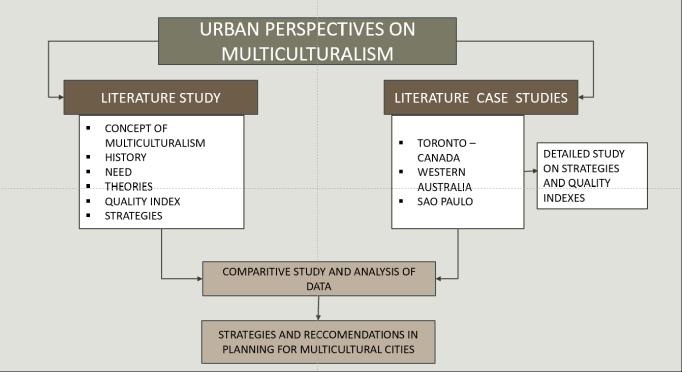
The history of multicultural cities is as old as urban civilization itself. Throughout history, cities have been centersoftrade,commerce,andculturalexchange,attracting people from diverse backgrounds. The coexistence of different cultures within the same urban space has been shapedbyvarioushistorical,economic,political,andsocial factors
2.1 Multiculturalism and Urban planning
Cultural diversity plays an important role in the urban landscape.Urbanlandscapesnormallyreflectandrepresent culturalandpersonalvaluesIncertaincircumstances,when theculturalmixofanareachanges,thecommunitystructures willchange,thesignage,streetfront,buildingstyleandeven the landform will change together. Cultural diversity transformstheurbanstructuresandlandscapere-enforces thedynamicsofcontainment.
2.2 Advantages and dis advantages of multiculturalism
Advantages:
Higherleveloftolerancetowardsminorities
Oneimportantadvantageofmulticulturalismisthatithas the potential to increase the overall level of tolerance towards minorities in our society. This is extremely important since minorities have been discriminated throughouthistoryforaquitelongtimeandweurgentlyhave to solve this problem in order to significantly increase the qualityoflifeofpeoplewhobelongtothoseminoritygroups. Throughthepromotionofmulticulturalism,everyoneofus canmakehisorhercontributiontowardsamoretolerantand opensociety,whichiswelcomingtoallgroupsofminorities.
Multiculturalism can lead to a more peaceful society
If people become more tolerant towards minorities, chances are that the overall level of peace in society will increase as well. It is quite sad but there are still many
regions all over the world where minorities are still discriminatedandmanyofthemareevenattackedinaverbal or even in a physical manner by the local population who doesn’tacceptthoseminoritiesandtheirdifferentwaysof life.Consequently,itiscrucialtoacceptethnicpluralismin our society in order to improve the living conditions of minoritiesandalsotoincreasetheoveralllevelofpeacein manyregionsallovertheworld.
Make connections with people from many differentcultures
Ethnic pluralism can also help us to make connections with many people with different cultural and ethnic backgrounds. This can be quite interesting since you can experiencecompletelynewwaysoflife.
Multiculturalism is an important part of a moderntolerantsociety
Ingeneral,multiculturalismisjustpartofamodernand tolerant society. Politicians often claim that they are so tolerant and want to accept everyone in our society, independentofhisorhergender,raceandsoon.However, thetruthisthatminoritiesarestilldiscriminatedagainstin many different countries all over the world and that their chancesinlifearemuchlower.Therefore,ifacountryreally wants to promote the equality of all people, it also has to accepttheconceptofmulticulturalism.
Can help to lower prejudices towards certain cultures
Manypeoplearestillquiteprejudicedandscepticalabout peoplefromdifferentethnicalbackgrounds.Thiscanbedue tonegativepersonalexperiencesinthepast,butalsoduetoa historical perspective. However, most of those prejudices towards ethnical minorities are not true at all and multiculturalismcanhelptoremovethoseprejudicesinthe longrun.
Multiculturalismmayhelptolowertensionsin school
Multiculturalism can also be important to lower the tensions in school. In many countries all over the world, childrenfromminoritiesstillhaveaquitehardtimeinschool sincetheyareoftenbulliedandnotacceptedbytherestof the class. Hence, it is crucial that multiculturalism is promoted in schools and that teachers focus on this importanttopic
Fostertechnologicalprogress
Multiculturalism can also help to foster our global technologicalprogress.Peoplefromdifferentcultureshave differentknowledge,strengthsandweaknesses.Hence,itis crucial to bring people from many different ethnic and cultural backgroundstogethersothattheycansharetheir
International Research Journal of Engineering and Technology (IRJET) e-ISSN: 2395-0056
Volume: 11 Issue: 04 | Apr 2024 www.irjet.net p-ISSN: 2395-0072
knowledgewitheachotherinordertospeeduptechnological progressasmuchaspossible.
Disadvantages:
Tensionsbetweenpeoplewithdifferentcultural backgrounds
Whilethemajorityofthelocalpopulationisoftenquite tolerantandwantstocoexistwithpeoplefromothercultures inapeacefulmanner,therearealsosomepeopleoutthere whothinkthattheirwayoflifeistheonlyvalidoneandthat allotherpeopleshouldalsofollowthesamelifestyle.Inturn, thisattitudeimpliesplentyoftensionsbetweenpeoplewith differentculturalandethnicbackgrounds,whichmayturn intoseriousconflictsinthelongrun.
Hardtimetointegrateintosociety
Somepeoplewhocomefromforeigncountriesalsohave difficulties to integrate themselves into society. If people movetoanothercountry,everythingisnewforthemandit cantakeplentyoftimeuntiltheyassimilatethemselveswith the new conditions. While many people are willing and integratethemselvesovertime,somemigrantsmaynotbe willingtodosoatall,whichcanleadtoseriousproblemsfor yoursociety.
Language barrier as a big problem of multiculturalism
Especiallyifpeoplewithdifferentethnicalbackgrounds don’t speak the language of the country they migrated to, chancesarethatthosepeoplewillsufferfromseriouslevels ofsocial isolation.Speakingthelocal languageiscrucial in order to find work and also to make friends over time. In turn, if people don’thave sufficient knowledge of the local languageandarealsonotwillingtolearnit,chancesarethat thosepeoplewillneverbecomevaluedmembersofsociety.
Feartolosetheiridentitywithmulticulturalism
Many people also fear ethnic plurality since they think thattheywilllosetheirculturalidentitysoonerorlaterdue tothisconcept.Whileethnicminoritiesbringnewwaysof life,thisdoesn’tmeanthatalltraditionswillbeeroded.
Multiculturalismmayleadtoradicalmovements
One real danger of multiculturalism is that it can be misusedforthespreadofradicalreligiousideas.Infact,in manycountriesallovertheworld,gurusandotherspiritual or political leaders try to use multiculturalism for their purposesinordertospreadradicalideasamongthegeneral public.
Originallocalpopulationmaybecomeextinct
Opponentsofmulticulturalismalsooftenclaimthatifwe allowtoomuchmigration,thelocalracewillbecomeextinct in the near future. While it is true that our genes will be alteredovertime,thisshouldactuallybeconsideredtobea good thing since genetic variety is known to have many positiveeffects.
Multiculturalism may lead to higher sovereign debt
Ifunemploymentratesincreaseduetomulticulturalismand an excessive level of migration, chances are that also sovereign debt will increasein thosecountriessince more moneyhastobespentonwelfareandothersocialsubsidies. Intheworstcase,thiscanevenleadtosovereigndebt
TheimpactofmulticulturalismonIndigenouscommunities iscomplexandvariesdependingonhistorical,cultural,and contextualfactors.Multiculturalpoliciesinsomecountries aimtorecognizeandaccommodatethediversityofcultural groups, including Indigenous populations. However, the outcomesofthesepoliciescanbediverse,andtheirimpact onIndigenouscommunitiesmayincludebothpositiveand negativeaspects
2.4
Multiculturalism policy index
TheMulticulturalPolicyIndex(MPI)isascholarlyresearch projectthatmonitorstheevolutionofMulticulturalpolicies across select western democracies over time. Through aggregatingthescoresofarangeofpublicpolicyindicators representativeofmulticulturalism,theMPIisausefuland accurate measure of a nation-state’s approach towards cultural diversity that helps comparative research and contributestotheoverall understandingofstate-minority relations within modern trends of globalization and mass migration.Quantitativedataandqualitativeassessmentsof policy changes are collected from policy documents, programguidelines,legislation,governmentnewsresources, andsecondarysourcesinthreetofourpointsintime(1980, 1990, 2000, and 2010) targeting three minority groups (immigrant minorities, historic national minorities and Indigenous peoples). Indicators are scored as no policy, partial policy and clear policy, and while they are not an exhaustivelistofthemeasuresofmulticulturalism,theyare an important starting point to test the recognition, accommodation and support of minorities within an immigrant-receivingnation-state.
International Research Journal of Engineering and Technology (IRJET) e-ISSN: 2395-0056
Volume: 11 Issue: 04 | Apr 2024 www.irjet.net p-ISSN: 2395-0072
TheMulticulturalQualityofLifeIndex(MQLI)isaself-report originallydevelopedbyMezzichetal.Itwasconstructedto provideameasureofQoLbasedontheconsensusofsubject matterexpertsfromseveralcountries,subjectiveassessment ofsatisfactionwitheachdomain,andtheimportanceofeach domaintoeachperson.TheMQLIisa10-itemquestionnaire withaLikert-typeresponsescalerangingfrom1(Poor)to 10(Excellent)thatassessesthefollowingareas:physicaland psychological wellbeing (e.g., feeling good about oneself), self-careandindependentfunctioning(e.g.,performingdaily tasks), occupational and interpersonal functioning (e.g., performing one's job; relating well to family, friends, and groups), socioemotional support (e.g., having people to confide in), community and service support (e.g., safe, resourceful neighborhood, access to resources), personal and spiritual fulfillment (e.g., feeling of personal balance; feelingoffaith),andoverallperceptionofQoL(e.g.,feelings ofsatisfactionandhappinessinone'slife)
3. CASE STUDIES
3.1 Inference
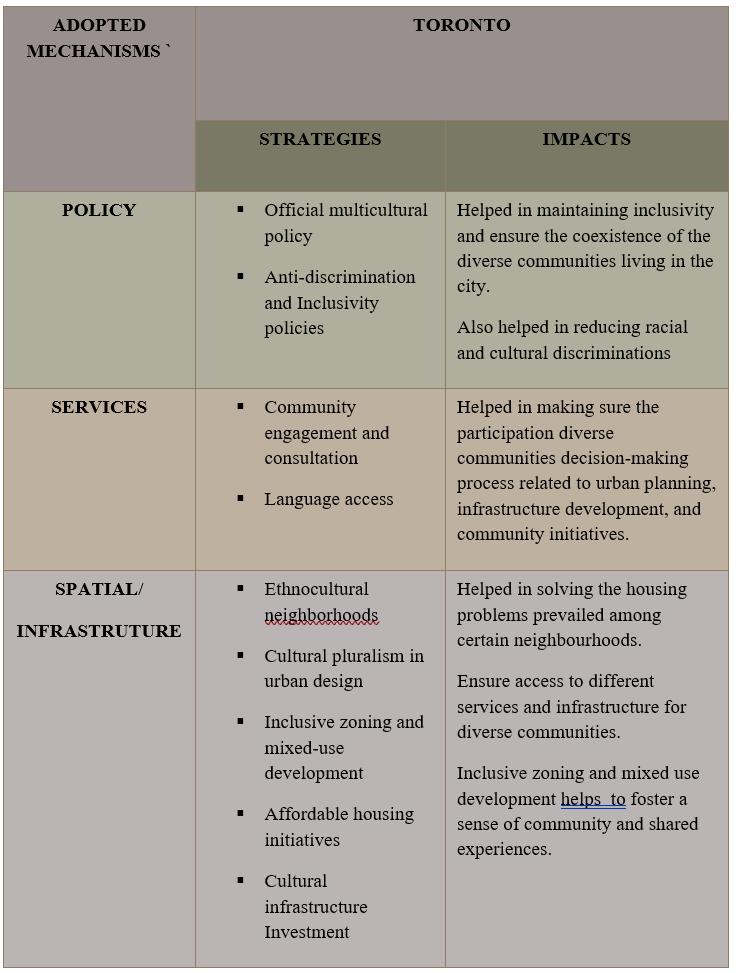
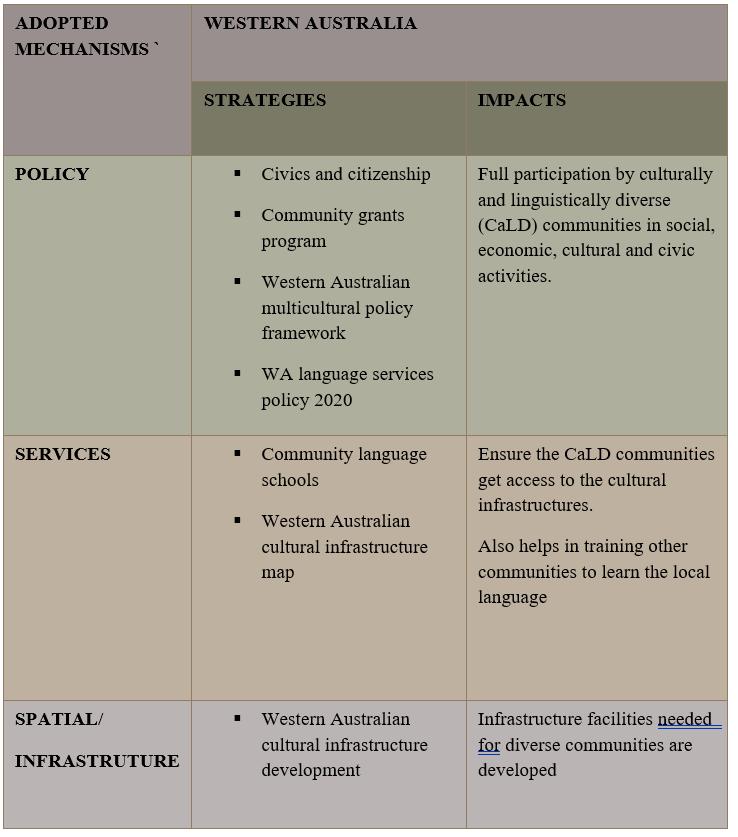
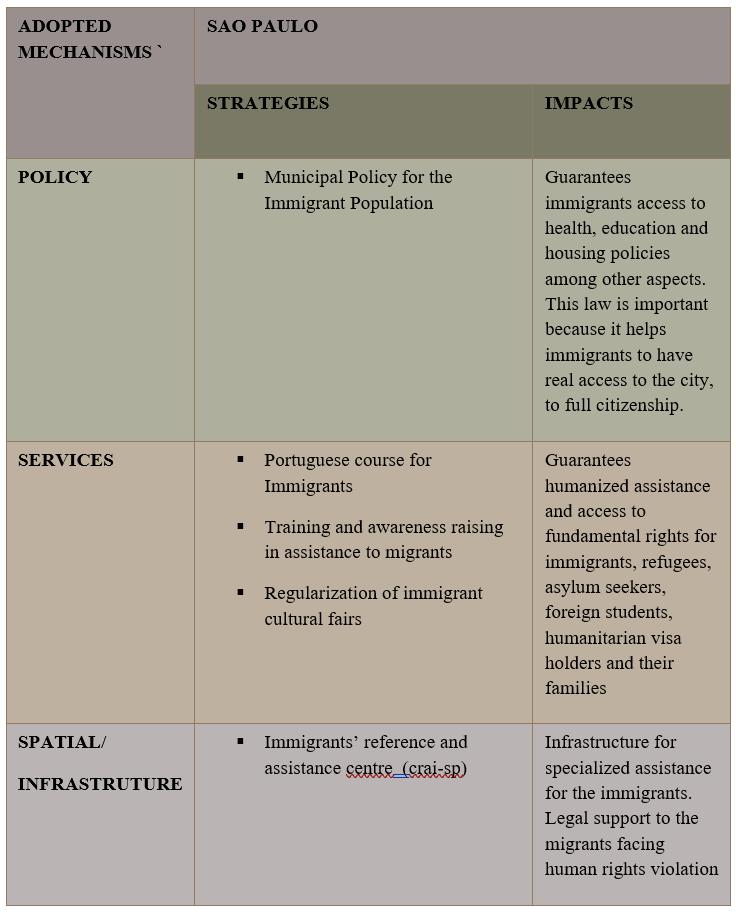
The case studies of Toronto, Western Australia, and São Paulooffervaluableinsightsintosuccessfulstrategiesand initiatives that contribute to building harmonious and
International Research Journal of Engineering and Technology (IRJET) e-ISSN: 2395-0056
Volume: 11 Issue: 04 | Apr 2024 www.irjet.net p-ISSN: 2395-0072
culturally rich urban environments. These case studies collectivelyemphasizethesignificanceofintegratingcultural considerationsintoeveryaspectofurbanplanning. By actively involving communities, providing inclusive services, preserving cultural heritage, and promoting economicopportunities,citiescancreateenvironmentsthat thrive on diversity. Multicultural urban planning is not merelyaconceptbutapracticalapproachthatenhancesthe livability,sustainability,andresilienceofcitiesworldwide, creatingspaceswherepeopleofallbackgroundscanprosper and coexist harmoniously. As cities continue to evolve, embracingandcelebratingdiversitythrougheffectiveurban planning will remain essential for building resilient and inclusiveurbanspaces.
Ensuringequitablehousingpolicies,economicopportunities, andresourcedistributionhelpspreventthesegregationof communities along cultural or socioeconomic lines. Multilingual urban design, coupled with the provision of diverse services and facilities, guarantees that the city infrastructurecaterstothevariedneedsofitsresidents.
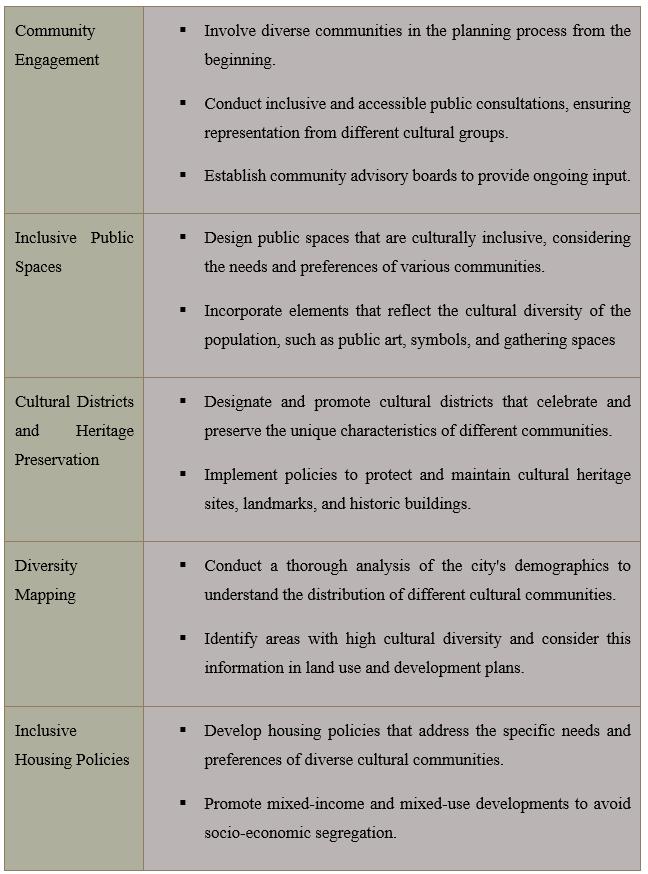
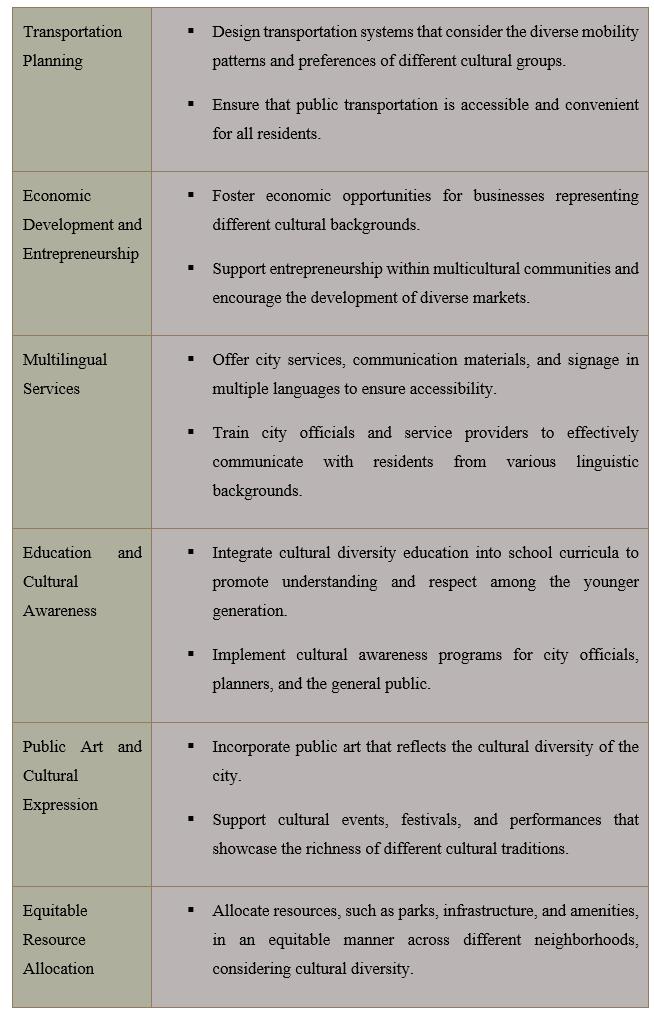
In conclusion, urban planning in multicultural cities is a dynamic and essential process that shapes the physical, social, and cultural fabric of urban environments. The strategies employed to address the needs of diverse communitiescontributetothecreationofinclusive,vibrant, and resilient cities. Through inclusive zoning, cultural competence training, and community engagement, urban plannerscanfosterasenseofbelongingforresidentsfrom differentculturalbackgrounds.Thepreservationofcultural heritageandthecreationofculturallysensitivepublicspaces contribute to a city's unique identity and promote social cohesion.
Public art, cultural events, and expressions of identity in urbanspacesnotonlybeautifythecitybutalsoserveasa testamenttothecelebrationofdiversity.Equallyimportant are educational programs that promote cultural understanding and awareness, fostering a sense of unity among residents. By prioritizing the needs of all communities, urban planners can contribute to the development of cities that are not only physically well-
International Research Journal of Engineering and Technology (IRJET) e-ISSN: 2395-0056
Volume: 11 Issue: 04 | Apr 2024 www.irjet.net p-ISSN: 2395-0072
designedbutalsosociallycohesive,economicallyrobust,and culturallyvibrant.
[1] Gizem Caner, Fulin Bölen (September 2012) ‘Multicultural’citiesor‘divided’cities:whatmakesthe difference?
[2] Kurt Iveson, Helga Leitner, Valerie Preston (August 2014) Planning in the multicultural city: Celebrating diversityorreinforcingdifference?Volume92page1-55
[3] Government of Western Australia (July2020) ImplementingthePrinciplesofMulticulturalismLocallyA planning guide for Western Australian local governments
[4] Michael Paolo Romero Pisco (2018) Transnational UrbanPlanningintheMulticulturalCity:AnAnalysisof DiversityBeyondEthnoculturalism
[5] Yucui He (2015) Multiculturalism in the Urban Landscape -Create a better city with multicultural communities
[6] TorontoNewcomerStrategy2022-2026(May2021)
[7] Lars Marcus , & Mohammad Sarraf (2019) Cities and Cultural Diversity – is there a spatial form for multiculturalismAdvancesinSocialSciencesResearch Journal–Vol.6,No.8
[8] Dr Sev Ozdowski AM (March 2016) Australian multiculturalism
[9] GabrielaNarcizodeLima,VíctorOrlandoMagañaRueda (September2018)Theurbangrowthofthemetropolitan areaofSaoPauloanditsimpactontheclimate
[10] RafaelBarretoCastelodaCruz,KarinReginadeCastro Marins (June 2019) Urban planning and popular participation: A diagnosis of the effectiveness of participatory processes applied to the revision of São Paulomasterplan