
International Research Journal of Engineering and Technology (IRJET) e-ISSN: 2395-0056
Volume: 11 Issue: 04 | Apr 2024 www.irjet.net p-ISSN: 2395-0072
International Research Journal of Engineering and Technology (IRJET) e-ISSN: 2395-0056
Volume: 11 Issue: 04 | Apr 2024 www.irjet.net p-ISSN: 2395-0072
Virender Kumar1 , Manoj Kumar2 , Kewal Kumar3, Saransh4
1B.Tech. Mechanical Engineering (Evening) Scholar, School of Mechanical Engineering, Lingaya’s Vidyapeeth, Faridabad, Haryana, India
2B.Tech. Mechanical Engineering (Evening) Scholar, School of Mechanical Engineering, Lingaya’s Vidyapeeth, Faridabad, Haryana, India
3B.Tech. Mechanical Engineering (Evening) Scholar, School of Mechanical Engineering, Lingaya’s Vidyapeeth, Faridabad, Haryana, India
4B.Tech. Mechanical Engineering (Evening) Scholar, School of Mechanical Engineering, Lingaya’s Vidyapeeth, Faridabad, Haryana, India
Abstract – The purpose of this research report is to investigatetheuseofultrasonicsensorsinthecreation of robotorvehicleobstacleavoidancesystems.Oneofthekey componentsofmobilerobotsisobstacleavoidance.Robotic movementwouldbeverylimitedanddelicatewithoutit.The goalofthisprojectistocreatearoboticvehiclewithbuilt-in intelligence that can steer itself away from obstacles to prevent physical harm to the robot. This may be used to create a robotic vehicle that avoids obstacles with its movementusinganultrasonicsensor.Aroboticvehiclethat can avoid obstacles needs the right sensors and taskappropriate motors. The robot moves in an unidentified environmentthankstotheArduinoUnomicroprocessor,two DC motors, and an ultrasonic sensor. The robot's frontmountedultrasonicsensordetectstheexistenceofobstacles and relays the information it finds to the microcontroller. Theroboticvehiclemaytravelinfourdirections:forward, backward, right, and left, depending on the information received by the controller. The primary functions of an Arduinomicrocontrollerarevehiclecontrolandachieving theintendeddetectionandavoidanceaction.
Keywords: obstacle avoidance, DC motor, motor driver, ultrasonicsensor,ArduinoUNO,etc.
An intelligent machine that can recognise and avoid obstacles in its path automatically is called an obstacleavoidingrobot.Thegoaloftheroboticdisciplineofobstacle avoidanceistomovevehiclesbyusingsensorydata.Because of their many uses, these mobile robots are gradually becomingmorenumerousandsophisticated.Thegoalofan obstacleavoidancerobotvehicleistopreventcrasheswhile navigatingaforeignenvironment.Robotvehiclethatavoids impediments in its route detects them, avoids them, and continues moving. It is an autonomous robot that can navigatearoundwithoutrunningintoanyobstacles.Inother words,itjuststopstravellingaheadandtakesa stepback whenitencountersanobstructionwhiletravellingforward. It then performs a little turn and continues travelling forwardusingthesameloop.Thefoundationalstepofany
automatedroboticvehicleisthisproject.Weareshowcasing an extremely useful robotic vehicle that avoids obstacles. This is a basic example of how complex machines and technologyavoidobstacles.Thisrobotvehicleisintelligent enoughtooccupythewholeavailablespace.Itisequipped with an ultrasonic sensor, which detects objects in the roboticvehicle'sroute.Itwillautomaticallylookaroundfor potential routes. It will go in a certain route, avoiding the obstructioninitspath.Theroboticcarisnowmovingthanks totheuseoftwoDCmotors.Therobotcircuitiscompactand simpletocreate.Toaccomplishthenecessaryprocesses,an Arduino-UNO is needed. A robot vehicle that avoids obstaclesismadeupofbothhardware,suchasmotors,and software. Software uses the commands entered into the programme by the user. Our research validates that a car withintegratedthecapacitytonavigateonitsownwhenever achallengearises.Thisself-determiningvehicle'sprimary needishurdledetection.Anautonomousobstacle-avoiding robotcancompletethetaskswithouthumanassistance.Asa result,thisformofautomationmaybeusedtoautomobiles and other vehicles based on the needs, enabling them to detectobstaclesandimmediatelyswitchtoafreerouteto preventaccidentsorothermishaps
International Research Journal of Engineering and Technology (IRJET) e-ISSN: 2395-0056
Volume: 11 Issue: 04 | Apr 2024 www.irjet.net p-ISSN: 2395-0072
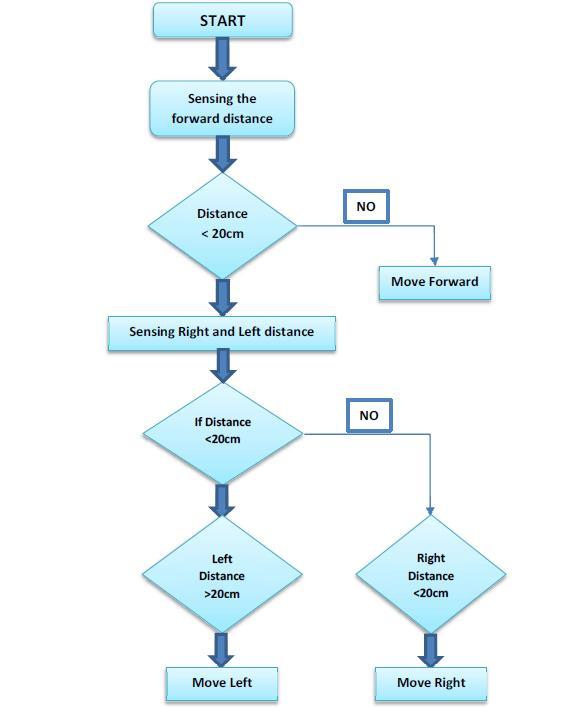
The robot vehicle is configured to find things inside the designatedarea.Thecarwillveerawayfromthethingifit detectsit.Thesensorpauseswhenitdetectsanitemmoving andlookstoseewhetherthereareanyobstaclestotheleft orright.Itveersintothehurdle-freerouteifthereareany obstaclesintheright-sidedirectionthatareclosetogether. Theself-determininghurdleavoideractsinasimilarmanner intheeventthatanitemisintheleftdirection. Therobot employsanHC-SR04ultrasonicsensortoidentifyobstacles, andanArduinocode-writtenmotordriverdrivesthemotor inresponsetotheultrasonicsignal.
2.1
The following materials are being used in this robotic project:
TheArduinoUNO,
twowheeldriveroboticchassis,
twoDCBOmotors,
anL293motordriver,
anHC-SR04ultrasonicsensor,
aswitch,
nine-voltbatteriesandaconnection,
jumperwires,acastor,
nuts,boltsandspacers,
amongothersupportingpartsandtools
2.1.1 Overview of the Components
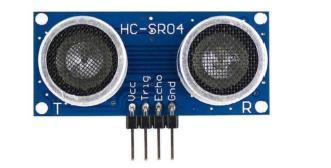
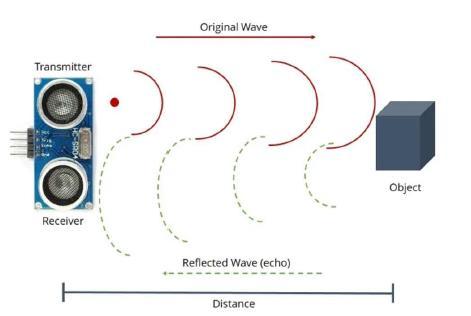
Ultrasonic Sensor HC-SR04: This sensor consists of a receiver and a signal generator. The signal generator broadcasts in a forward direction while producing an ultrasonicpulse.Whenthetransmittedwaveencountersan obstruction along its route, a significant portion of it is reflected. The ultrasonic gadget transmits an ultrasonic movementfromthesensorandthenpicksupanultrasonic signal that the body reflects back. The reflected wave is receivedbytherecipient.
To acquire useful data (distance), the ultrasonic sensor's collectedreadingsmustbecalibrated.Thetimeittakesthe wavetocompleteitstransmission,reflection,andcollecting processesisusedtocomputetheobject'sdistance.
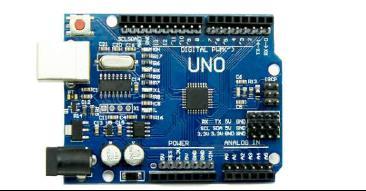
ArduinoUNOATmega328P:BasedontheATmega328P,the Arduino UNO functions as a microcontroller. There are fourteendigitalinput/outputpinsonit.Sixofthedevice's fourteenpinsareusedasaUSBport,sixanalogueinputs,a power connector, an ICSP header, a reset button, a USB connection,anda16MHzquartzcrystaloscillator.
The open-source electronics platform Arduino is built on user-friendlyhardwareandsoftware.AnArduinoboardcan readaninput(suchasasensor'slight,abutton'ssignal,ora signalfromanothersensor,etc.)andconvertittoanoutput (such as starting a motor, turning on an LED, posting anythingonline,etc.).Bygivingtheboard'smicroprocessora setofinstructions,wemaydirectitwhattodo.Wedothisby using the Arduino Software (IDE) and the Arduino programminglanguage.
In order to avoid the barrier in the project's route, a conditionisaddedtothesystemthatstates:halttherobot, reverseitscourse,andrestarttheloopiftherobot'sdistance fromtheitemfallsbelowacertainthreshold.Writingcodein theArduinoprogramminglanguageallowsthislogictobe appliedtothesystem
International Research Journal of Engineering and Technology (IRJET) e-ISSN: 2395-0056
Volume: 11 Issue: 04 | Apr 2024 www.irjet.net p-ISSN: 2395-0072
L293MotorDriverModule:DesignedtooperateDCmotors andsteppermotors,thismotordrivermodulehasamedium poweroutput.Thewell-likedL293motordriverICisusedin it.IthastheabilitytoturnonandofffourDCmotorsorto regulatethedirectionandspeedoftwoDCmotors.
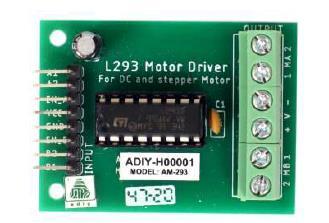
The driver makes controlling motors, relays, and other devices from micro-controllers more easier and more straightforward. Up to 12V motors with a maximum DC currentof600mAmaybedrivenbyit.Aroboticcarwould beidealforthismotormotorist.
BO Motor: A lightweight DC geared motor with adequate torque and RPM at lower voltages is a battery-operated motor,orBOmotor.Thismotormaybepoweredbyasingle Li-Ionbatteryandoperateataround100RPM
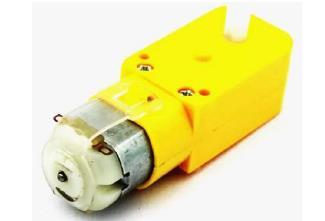
This technique makes use of the Left Motor and the Right Motor,twoBOmotors.Bothmotorsareactivatedinorderto propeltherobotvehicleahead.Bothmotorsmustruninthe oppositedirectioninordertotakeabackwardstride.One motor is temporarily reversed in order to manoeuvre the robotvehicletoavoidobstacleswhilemaintainingtheother motor'sforwardmotion.
TheHC-SR04projectusesanultrasonicsensortomeasure anobject'sorobstacle'sdistance.Excellentcharacteristicsof theHC-SR04includecontactlessrangeobservationfrom2to 400cm,or1to13feet.Theultrasonicgadgetwouldemitthe frequencysignal.Thevehiclewillreturntheechosignalby graspingtheI/Pandsendingittothesensor'sdirectecho pinifitdetectsanyobstacles.Whentheusersetstheactive andechopinsto0,thecarentersforwardobservation.The echo pin will indicate to the microcontroller that I/P is 1 when an obstacle is detected. Pulse signals are used to quantifythetimespaceviathehurdle.Everytimethedutyis held until the pin becomes large, at which point timing begins,theregulationwillendwhenthepingetstiny.Until thewholepulseisnotcapturedwithintheallottedperiod, the pulse duration in microseconds is provided. Timing has a predetermined significance; it indicates the pulse's length and introduces error into brief pulses.
The pulse length, which ranges from 10 microseconds to threeminutes,istakenintoaccount.Itturnsintospaceafter thetimeisestablished.Ifthereislittleroomfortheitem,the robotwillmovemoreslowlyanddiverttotheleft;ifthereis a barrier to the left, the right turn is seen to be hinted at. Whenthereisinsufficientroombetweenthedeviatorand theobject,thevehicleslowsdown,reversesdirection,and may go in either left or right direction under supervision.
BasedonsignalsorI/Pindicatedbyanultrasonicsensor,a microcontroller controls the hurdle avoider's left, right, reverse,andforwardsupervision.TheusageofPWM(Pulse WidthModulation)controlsthespeedofmotors.
International Research Journal of Engineering and Technology (IRJET) e-ISSN: 2395-0056
Volume: 11 Issue: 04 | Apr 2024 www.irjet.net p-ISSN: 2395-0072
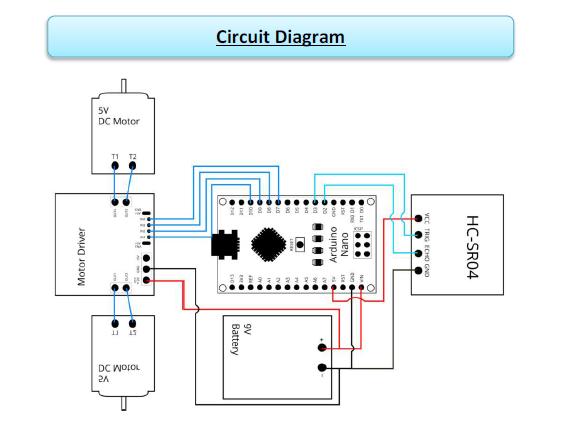
Utilising the software to help fix the HC-SR04 sensor and sendsignalstomotorpinstomoveindesiredareaisknown asobstacleavoid-eroperation.Intheprogrammeplan,we firstmodifythetrigandechopinsoftheHC-SR04ultrasonic sensor.HardwareconnectiontrigpinnineontheArduino panelisassignedtoit,andechopinisconfiguredasI/P.If there is greater room, there is no obstacle and forward surveillance is possible. whether there is less room, it determinesthatthereisabarrierinthepath.Therobotcar thenpausestocheckwhetherthereisanotherbarrieronthe oppositeside,andifnot,itcontinueson.
3.1. How the Ultrasonic Sensor (HC-SR04) Works
An increased voltage pulse applied to the ultrasonic transducer causes it to vibrate and produce sound waves. Soundwavesarereflectedbackasasignalandproducean electricpulsewhenanultrasonicsensordetectsobstacles. Theultrasonicreceiverwilldetectwhenthesentwavesand signal from the ultrasonic transmitter hit a hurdle. When thesetwoarecombined,thecarcanidentifyobstaclesinits path.
4. OBSTACLE AVOIDING ROBOTIC VEHICLE BLOCK DIAGRAM
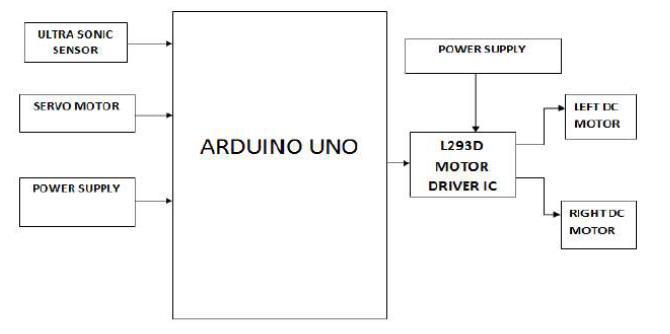
BlockDiagramoftheSystem
5. RESULT AND DISCUSSION
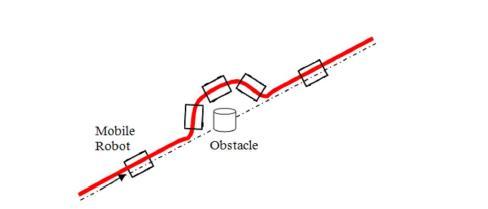
The designed vehicle has to be switched on and then the vehicle moves, as soon as the vehicle encounters any obstacleinfrontofitthevehiclewilldeviateitspathfrom theobstacleandchoseanotherpathwhereobstacledoesn’t exist,orthepathwherethereisfewerobstacles.
6. CONCLUSIONS
In order to recognise and avoid impediments in its route, this team built a robot vehicle that can avoid them. The Arduino platform, on which the robot vehicle is based, is used for data processing, and its software equivalent assisted in communicating with the robot to provide movement-guidingparameters.
Ultrasonicsensors,whichofferedalargerfieldofdetection, were employed for obstacle detection. The robot car operates entirely on its own without the need for human involvementaftertheprogramminghasbeenloaded.When put in an unfamiliar area with impediments, it navigated withremarkableprecision,avoidingeveryobstacle.
Theevaluationofthefreeframeworkdemonstratesthatit can avoid obstructions, stay distant from collisions, and
International Research Journal of Engineering and Technology (IRJET) e-ISSN: 2395-0056
Volume: 11 Issue: 04 | Apr 2024 www.irjet.net p-ISSN: 2395-0072
changeitslocation.Itisobviousthatthisstructurewillmake it much more convenient to achieve different goals with almostlittlehumaninteraction.Thisprojectwillbehelpful in regions of the country with unfavourable climates for securityandprotection.
[1] Turkish Journal of Computer and Mathematics Education Vol.12 No.12 (2021), 2358-2362 research article “Obstacle Avoidance Robotic Vehicle Using HCSR04 Ultrasonic Sensor” by Shashank Venkatesh, ShivaKundan,AllaSrijja
[2] IOP Conference Series: Materials Science and Engineering707(20190)012012doi:10.1088/1757899X/707/1/012012 “Obstacle detection using ultrasonicsensorforamobilerobot”byJosephAzeta, ChristianBolu,DanielHinvi,andAbiodunAAbioye.
[3] Year2020,Volume8,Issue4“DesignandDevelopment ofaIOTbasedObstacleAvoiderRobotforResidential Applications”byBhavyaB.Agarwal,RydhamMGoyal, IGCSEJ.G.InternationalSchool,Ahmedabad,India.
[4] AmirAttar,Aadilansari,AbhishekDesai,ShahidKhan, dip ashrisonawale “line follower and obstacle avoidancebotusingarduino”InternationalJournalof AdvancedComputationalEngineeringandNetworking, vol.2,pp.740-741.April2017.
[5] 2021 JETIR June 2021, Volume 8, Issue 6 OBSTACLE AVOIDING ROBOT USING using Arduino ch. vinay kumar1, B. Rakesh2 , s.shyam3 , manjula4 ECE students1,2,3 Guide name4 Electronics and communications engineering J B INSTITUTE OF ENGINEERING AND TECHNOLOGY AUTONOMOUS COLLEGEMoinabad,RRdistrict,hyderabad-500075
[6] JSejaandMBanshidhar2013Obstacledetectionand avoidance by a mobile robot. National Institute of Technology,Rourkela.B.Sc.thesis.1-9.
[7] InternationalJournalofAdvancesinEngineeringand Management(IJAEM)Volume3,Issue7July2021,pp: 4094-4101www.ijaem.netISSN:2395-5252“Obstacle AvoidingRobotCarbyUsingGSMModemtoGetAlert Message” Yashashvi Gour1, Unnati Ninawe2, Ruchita Tetu3, Mohit Bhoge4, Prof. Mr. Harish Gorewar. 1,2,3,4,5,DepartmentofInformationTechnology,KDK CollegeofEngineering,Nagpur,Maharashtra,India.
[8] Nat.Volatiles& Essent.Oils,2021; 8(5):3412-3421
“ObstacleAvoidanceRoboticVehicle”VishwaPriyaV, Gokul S, Jeevanandham M B, Sanjay Johnson W, Sri RamRT,SuryaPrakashLRoboticsandAutomation
EngineeringPSGCollegeofTechnology,Coimbatore, India.
[9] R. Gowtham, “Obstacle Detection and Avoidance MethodsforAutonomousMobileRobot”,International Journal of Science and Research,vol. 5, pp. 12451249,January,2016.
[10] An Autonomous Obstacle Avoidance Robot Using Ultrasonic Sensor Article in Journal of Computer Science and Its Application · August 2020 DOI: 10.4314/jcsia.v27i1.15 Author: Abayomi O. Agbeyangi,OlaitanAlashiri,Joseph [11] O.Odiete,OlujideA.Adeneken.
[12] ObstacleAvoidanceofMulti-SensorIntelligentRobot BasedonRoadSignDetectionJianweiZhao,Jianhua Fang,ShouzhongWang,KunWang, [13] ChengxiangLiuandTaoHan
[14] Arduino Robotics Copyright © 2011 by John-David Warren,JoshAdams,andHaraldMollePresidentand Publisher: Paul Manning Lead Editor: Michelle LowmanandJamesMarkham
[15] Arduino Kit “An introduction of Basic Arduino for ImproveYourKnowledge”-AkshayD.Shelke.
[16] Arduino Project Handbook. Copyright © 2016 by MarkGeddes.Publisher:WilliamPollockProduction Editor:SerenaYang
[17] Cytron Technologies, Robot Head to Toe, Product User’s Manual – HCSR04 Ultrasonic Sensor User’s ManualV1.0May2013
[18] INTERNATIONAL RESEARCH JOURNAL OF ENGINEERINGANDTECHNOLOGY(IRJET)VOLUME: 07, SPECIAL ISSUE | JUNE 2020 Obstacle Avoiding VehicleBhuvanMS1,ManjaunathK21Electronicsand CommunicationDept.,ATMECollegeofEngineering, Mysore,India
[19] “Obstacle Avoidance Robotic Vehicle Using UltrasonicSensor,AndroidAndBluetoothForObstacle Detection”1VaghelaAnkit,Dept.OfE&CEngineering, Sigma Institute & technology, Gujarat, India 2Patel Jigar, Dept. Of E&C Engineering, Sigma Institute & technology, Gujarat, India 3Vaghela Savan, Dept. Of E&C Engineering, Sigma Institute & technology, Gujarat,India