
International Research Journal of Engineering and Technology (IRJET) e-ISSN: 2395-0056
Volume: 11 Issue: 04 | Apr 2024 www.irjet.net p-ISSN: 2395-0072
International Research Journal of Engineering and Technology (IRJET) e-ISSN: 2395-0056
Volume: 11 Issue: 04 | Apr 2024 www.irjet.net p-ISSN: 2395-0072
Prof. H. Sheik mohideen1, A. Aslam Sujath2 , P. Pradeep3, E. Selvakumar4
1Assistant Professor, Department of CSE, Government College of Engineering, Srirangam, Tamil Nadu, India 234UG student, Department of CSE, Government College of Engineering, Srirangam, Tamil Nadu, India ***
Abstract - Research in Speech Emotion Recognition (SER) has garneredsignificant attention, particularlyintherealmof Human-Computer Interaction (HCI) with a focus on personal assistants andassistiverobots.Thismethodinvolvesanalyzing subtle tones and pitches in speech, utilizing aural cues to classify human emotions like calm, happy, sad, anger, fear, surprise, and disgust. Annotated datasets like RAVDESS facilitate this research, containing recordings of actors expressing various emotions. Deep learning techniques, especially convolutional neural networks (CNNs), are emerging as powerful tools for processing emotional speech signals.CNNsautomaticallylearnhierarchicalrepresentations from raw data, making them adept at capturing complex patterns in audio signals. This approach enhances humantechnology interactions by enabling machines to recognize and respond to human emotions conveyed through language. Thus, the integration of SER into HCI research contributes to improving interactive computer systems' design.
Keywords: Speech Emotion Recognition, Preprocessing, CNN Classification, Feature Extraction (MFCC, ZCR, CHROMA)
Humancomputerintelligenceisanupcomingfieldof research which aims to make computers learn from experiencesanddecidehow toa particularsituation.This hasresultedinimprovedinteractionbetweenusersandthe computer. With the help of certain algorithms and procedures,thecomputercanbemadefittodetectvarious characteristics present in the audio sample and deduce emotion underlying. In the field of human-computer interaction,aimstodevelopaSpeechEmotionRecognition System(SERS)usingConvolutionalNeuralNetworks(CNN). The selection of the RAVDESS dataset, which provides a diversesetofemotional audiosamples,addsdepthtoour approach. The main goal is to train the system to classify spokenwordsintosevendifferentemotions.Byusingdeep learning techniques, particularly CNNs, we aim to equip machineswiththeabilitytodecipherhumanemotionsand respondeffectively.Theimportanceofthisprojectliesinits potential to improve applications ranging from virtual assistantstoemotionrecognitiontechnology.Astechnology becomes more integrated into our daily lives, machines' ability to understand and adapt to human emotions will
become increasingly important. Our SERS project aims to bridge this gap and create more intuitive and empathetic interactionsbetweenhumansandmachines.Ultimately,our focusisnotjustoninnovation,butonimprovingtheoverall user experience. In navigating the complex landscape of humanemotion,ourvoiceemotionrecognitionsystemwill playakeyroleindrivingmoremeaningfulandresponsive interactions in the ever-evolving field of artificial intelligence.
Convolutional neural networks(CNNs)area valuabletool forspeechemotionrecognition(SER)duetotheirabilityto effectively analyze the intricate patterns found in audio signals.Originallydesignedforimageprocessing,CNNshave been successfully adapted to handle continuous data like audio, showcasing impressive performance in extracting both basic and advanced features crucial for emotion recognition.IntherealmofSER,CNNsemployhierarchical feature learning to pinpoint variations in pitch, intensity, prosody,andotheracousticattributesthatsignifydifferent emotional states. Moreover, CNN's parameter sharing approach aids in reducing the number of trainable parameters and enhancing the model's adaptability to diverseemotionalexpressions.
Inrecentyears,theapplicationofspeechemotion recognitionhaswitnessedwidespreadadoptionintherealm ofhuman-computerinteraction,offeringmachinestheability tocomprehendandlearnhumanemotions.However,despite significant advancements, the performance of emotion recognitionsystemsfallsshortofresearchers'expectations. Addressingthis,twoprimarychallengesinspeechemotion recognition are identified: the identification of effective speechemotionfeaturesandtheconstructionofasuitable recognitionmodel.Previousstudieshaveexploredvarious featureparameterstoenhanceemotionalrecognitiontasks utilized pitch frequency, short-term energy, formant frequency,andchaoticcharacteristics,constructinga144dimensionalemotionfeaturevectorachievedencouraging results by combining energy, zero crossing rate, and firstorderderivativeparametersforspeechemotionrecognition. Despitetheprogress,thechallengeofhighdimensionality andfeatureredundancypersists,necessitatingthefiltration
International Research Journal of Engineering and Technology (IRJET) e-ISSN: 2395-0056
Volume: 11 Issue: 04 | Apr 2024 www.irjet.net p-ISSN: 2395-0072
ofcharacteristicparameterswithhigherdistinguishability. The Fisher criterion, a classical linear decision method, proves effective in feature selection, as demonstrated by Huang et al., resulting in a notable increase in emotion recognition.Tofurtherenhancespeechemotionrecognition, an effective emotion recognition model is crucial. Various classifiers, including Gaussian mixture model (GMM), artificialneuralnetwork(ANN),andsupportvectormachine (SVM),havebeenemployed,withSVMstandingoutforits advantagesinsolvingcomplexrecognitionproblems.Inan efforttooptimizeSVMclassifiers,researchershaveexplored innovative algorithms such as the leaping algorithm and integrated systems combining hidden Markov models (HMM)andSVM.Inthisstudy,aspeechemotionrecognition method is proposed based on a decision tree SVM model withFisherfeatureselection.Followingfeatureextraction, Support Vector Machine (SVM), Adaptive Boosting (AdaBoost), and Gaussian Mixture Model (GMM) are the commonly used classifiers. However, most of these approaches are unable to characterize the temporal variationoftheemotionexpressioninspeechsignals.This approachestablishesahigh-performancedecisiontreeSVM classifierbycalculatingthedegreeofemotionalconfusion, enabling a two-step classification process involving rough and fine classification. By applying Fisher criterion, redundant features are filtered out to obtain an optimal featureset,contributingtoenhancedemotionalclassification performance.Thecontributionsofthispaperencompassthe adoption of the Fisher criterion to improve emotion recognitionperformance,theproposal ofanalgorithmfor dynamic decision tree structure determination, and the integration of Fisher criterion with decision tree SVM, furtheroptimizedthroughgeneticalgorithms.Theseefforts areimplementedandevaluatedontheCASIAChinesespeech emotion corpus and the EMO-DB Berlin speech corpus, showcasingthepotentialforimprovedemotionrecognition rates.
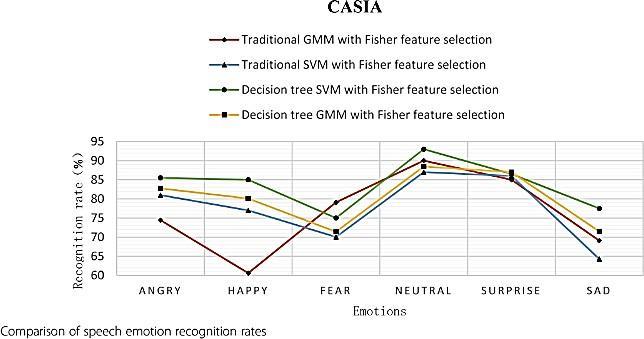
Table -1: EMO-DBaudiosamples
3.1
The proposed system for speech emotion recognition(SER)isacombinationoftheRAVDESSdataset andaconvolutionalneuralnetwork(CNN)architecture.The system effectively integrates Mel frequency cepstral coefficients(MFCC),zerocrossingrate(ZCR),andchroma featurestoclassifyemotions.TheRAVDESSdatasetprovides adiversesetoflabeledemotionalspeechsamples thatare vital for training and evaluating SER systems. The MFCC extracts a compressed representation of spectral characteristics,theZCRcapturestemporaldynamics,andthe chromafunctionencodestonalcontent.Thesefeaturesare concatenated into the CNN's input feature vector, making bothspectralandtemporalinformationavailable.TheCNN architecture comprises convolutional, pooling, and fully connectedlayersthataretrainedonlabeleddatasetsusing supervisedlearningtechniques.Techniquessuchasdropout regularizationandearlystoppingpreventoverfittingduring
International Research Journal of Engineering and Technology (IRJET) e-ISSN: 2395-0056
Volume: 11 Issue: 04 | Apr 2024 www.irjet.net p-ISSN: 2395-0072
training.Themodel'sperformanceondifferenttestsetsis evaluatedusingmetricssuchasaccuracyandtheF1score. Fine-tuning and optimization strategies further refine the model, resulting in a system that can be deployed in realworld applications. This integrated approach provides a robustsolutionforSERsystemswithpotentialapplications inthefieldsofhuman-computerinteractionandemotional computing.Theproposedsystemhasthepotentialtobea game-changerinspeechemotionrecognition,asitcombines different techniques to classify emotions, making it more efficientandeffective.
3.2
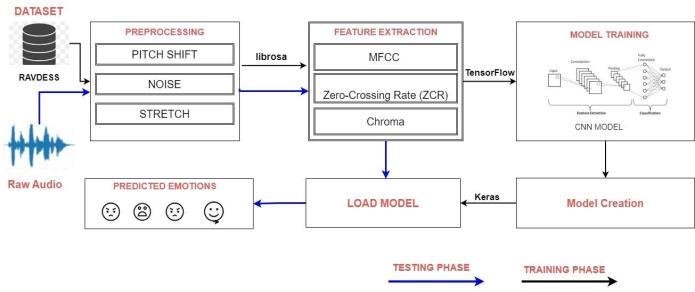
The architecture for speech emotion recognition consistsoftwodistinctphases:trainingandtestingshownin
Fig3.1.1Duringthetrainingphase,machinelearningmodels aretrainedusinglabelleddatasets,andaudiosamplesare pre-processedandfeature-extractedusingtechniquessuch as MFCC, ZCR, and chroma features. Supervised learning techniquessuchasconvolutionalneuralnetworks(CNN)are utilizedtooptimizemodelparameterswithalgorithmssuch asgradientdescent.Performanceevaluationiscarriedout using a validation dataset. During the testing phase, the trainedmodelisusedinreal-timetoanalyseincomingaudio streams in a real application or system. The input audio samples undergo preprocessing and feature extraction, similartothetrainingphase.Theextractedfeaturesarethen usedtomakepredictionsregardingtheemotionalcontentof speech. These predictions can inform decisions, provide feedback, and trigger actions within your application or system.
SystemArchitecture3.2Methodology
3.3 RAVDESS Dataset
Inadvancingspeechemotionrecognition(SER),this systemfocusesonleveragingthe potential of theRyerson Audio-VisualDatabaseofEmotionalSpeech(RAVDESS).This partofRAVDESScontains1440files:60trialsperactorx24 actors=1440.RAVDESSismadeupof24professionalactors (12 women, 12 men) who pronounce his two lexically matching statements in Neutral North American accents. Verbal emotionsinclude expressionsofhappy, sad,anger, fear,surprise,neutralanddisgust.Eachfacialexpressionis generatedwithtwoemotionalintensities(usuallystrong),
and an additional neutral facial expression is added. The multimodal nature of RAVDESS with different emotional expressions by different actors adds complexity to our approachandtrainarobustconvolutional neuralnetwork (CNN) model for speech emotion recognition (SER). This inherentdiversityallowsourmodeltocaptureawiderange of emotional nuances, contributing to the effectiveness of understandingandclassifyingemotionsinlanguage.Itaims toimprovethemodel'sgeneralizationabilityacrossdifferent emotionalcontextsandultimatelyimproveitsperformance inreal-worldapplications.
Table -2: RAVDESSaudiosamples
Intheprocessofcollectingdataforspeechemotion recognition(SER),itwasdecidedtousetheRyersonAudioVisual Database of Emotional Speech (RAVDESS). The RAVDESSdatasetservesasaprimarysourceofrawaudio data and provides a rich collection of diverse emotional expressions. This dataset consists of recordings from multipleactors,contributingvariationsinvoicepitch,accent, andspeakingstyle.ThedecisiontousetheRAVDESSdataset isconsistentwiththegoaloftrainingarobusthisSERmodel, as it covers a wide range of emotional states such as happiness, sadness, anger, surprise, fear, and neutral expressions.Themultimodalnatureofdatasetscontaining audiosamplesmakestheapproachmorecomplexandallows themodeltocapturethenuancespresentindifferentaudio modalities. Ethical considerations are taken into account throughoutthedatacollectionprocessandwhenobtaining consentfromthosecontributingtothedataset.Privacyand confidentialitywillbemaintainedinaccordancewithethical guidelines.ByselectingtheRAVDESSdataset,eachaudiofile islabeledwiththecorrespondingemotionalstatetoensure consistent annotation. This labeled dataset serves as the basisfortrainingandevaluatingmachinelearningmodels. The accessibility and well-documented nature of the RAVDESSdatasetstreamlinesthedatacollectionprocessand enableseffectiveintegrationintoSERsystems.Annotation involves assigning labels to the collected audio data that indicate the emotional state expressed in each recording.
International Research Journal of Engineering and Technology (IRJET) e-ISSN: 2395-0056
Volume: 11 Issue: 04 | Apr 2024 www.irjet.net p-ISSN: 2395-0072
Emotion labels may include categories such as happiness, sadness, anger, surprise, fear, and neutral. To ensure the reliability of the dataset, it is important to maintain consistencyinassigningemotionlabels.
Dataaugmentationisanimportantstepinusingthe RAVDESSdatasettoimprovethediversityandrobustnessof speechemotionrecognition(SER)datasets.Usingthelibrosa libraryimplementation,itappliesvarioustransformationsto the audio data, such as pitch shifting, time stretching, and adding noise, to improve the generalization of the model. Differentacousticconditionsandemotionalexpressionscan be simulated, allowing the model to better generalize to unseeninstances.
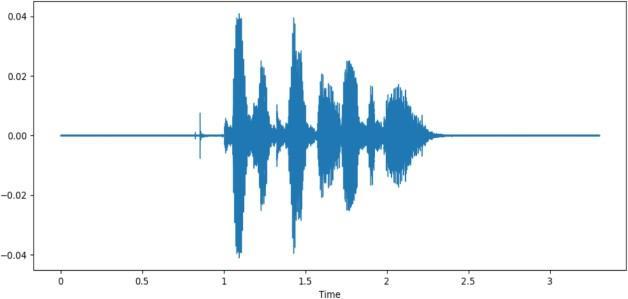
Pitchshiftingisafundamentaltechniqueinspeech emotion recognition (SER) that allows the frequency characteristics of an audio signal to be changed while preservingitstemporalcharacteristics.InSER,pitchshifting serves as a data augmentation method to increase the diversity of the training data set. The SER model detects pitch variations by applying a pitch shift to the original speechsample,allowingittobettergeneralizetodifferent speech features and emotional expressions shown in Fig.3.5.1.Thistechniqueadjuststheaudiosignal'sfrequency up or down without affecting its duration. Pitch shifting implementedinPythonthroughsignalprocessinglibraries suchasLibrosa allowsresearchersto simulatechanges in vocaltone,contributingtoamorecomprehensiveandrobust trainingdatasetfortheSERmodel.
Time stretching facilitates the modification of the duration of speech signals while preserving their pitch or frequencycontent.WithinSER,timestretchingservesasa crucial data augmentation method, enriching the training dataset'svariability.Byadjustingspeechsamples'duration, timestretchingallowsSERmodelstolearnfromabroader
spectrum of temporal patterns and speech rhythms, ultimately enhancing their capacity to identify emotional expressionsacrossdiversespeechspeedsandstylesshown inFig.3.5.2.Thistechniqueistypicallyimplementedthrough signalprocessinglibrarieslikeLibrosainPython.
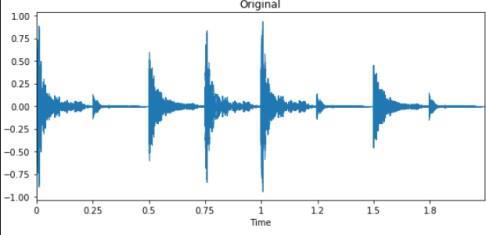
Fig-3.5.2:Timestretching
Addingnoiseisacommontechniqueinaudiosignal processingthatintroducesrandomfluctuationstoanaudio signal. This acts as a data augmentation method that increasestherobustnessofthetrainingdataset.Byinjecting randomnoiseintoaudiosamples,researcherscansimulate real-world environmental conditions and acoustic distortions,makingSERmodelsmorerobusttonoiseinrealworld applications. This technique superimposes random noise,typicallygeneratedfromaGaussiandistribution,onto the original audio signal. The added noise level can be controlled to achieve the desired amplification level. SER modelsgainaccuracyand generalizationability byadding noiseandlearninghowtodistinguishemotionaldatafrom backgroundandothernoise.
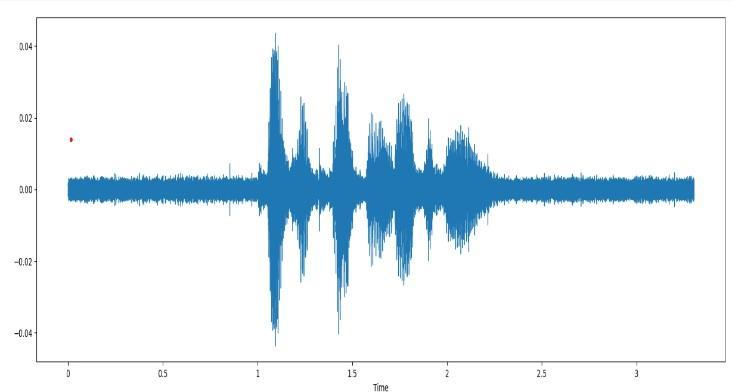
Fig-3.5.3:Addingnoise
3.6
A variety of Python libraries, including librosa, Numpy, Pandas, and Matplotlib, are used for feature extraction from audio recordings because of their userfriendly interface and extensive capabilities. For feature extraction from audio samples, load the audio file using
International Research Journal of Engineering and Technology (IRJET) e-ISSN: 2395-0056
Volume: 11 Issue: 04 | Apr 2024 www.irjet.net p-ISSN: 2395-0072
librosaandextractvariousfeaturessuchasMelFrequency Cepstral Coefficient (MFCC), Zero Crossing Rate (ZCR), Chroma,RootMean SquareEnergy(RMSE).
3.6.1 Mel-frequency Cepstral coefficients (MFCC)
The MFCC represents the short-term power spectrum ofa sound,captures thespectral envelopeofan audio signal, and is often used as a feature in speech and audio processing tasks for capturing the acoustic signal showninFig3.6.1.
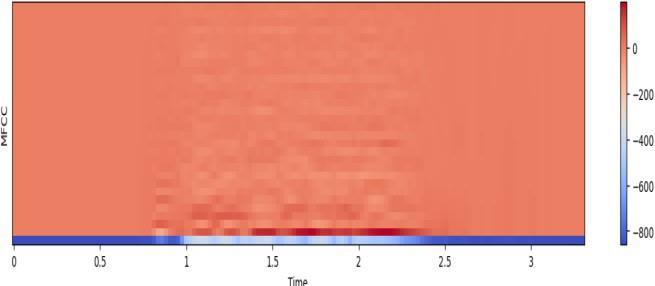
Fig-3.6.1: Mel-frequencyCepstralcoefficients
3.6.2 Zero Cross Rate (ZCR)
ZCR measures how quickly the sign of an audio signalchangesandprovidesinformationaboutthefrequency contentandperiodicityofthesignal.Thisisusefulfortasks suchasspeechonsetrecognitionandrhythmicanalysis.
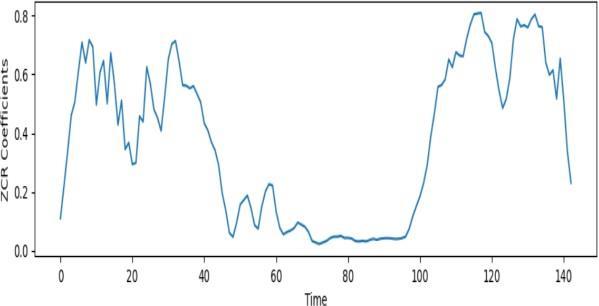
Fig-3.6.2:ZeroCrossRate
3.6.2 Chroma
Thechromafunctiondescribesthedistributionof pitchclassesinanaudiosignalthatisinvarianttochangesin timbreoroctave,andisusefulfor tasksinvolvinganalysisof harmoniccontent,suchasmusicalgenreclassificationand chordrecognitionshowninFig3.6.3.
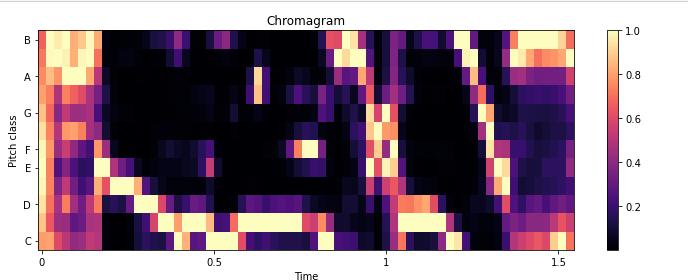
Fig-3.6.3 Chroma
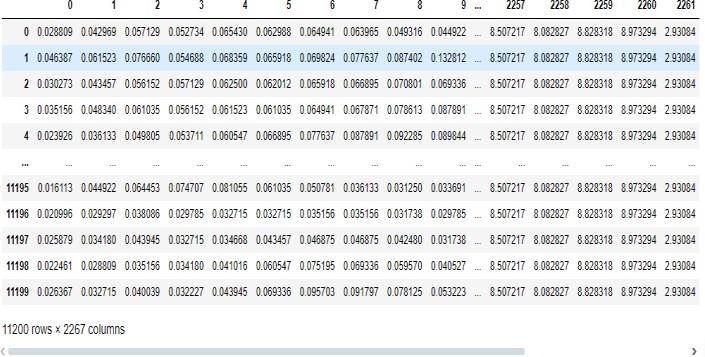
TheextractedfeatureswereconvertedintoaPandasData Frameintabularformattofacilitatefurtheranalysis.
Convolutionalneuralnetwork(CNN)architectures tailoredforaudioemotionrecognitionarehighlyintegrated withdifferentcomponents,eachofwhichplaysacriticalrole inaccuratelyclassifyingemotionsfromaudiosignals.Atthe core of a CNN, an input layer is used to receive a concatenatedfeaturevectorextractedfromanaudiosample, such as Mel-frequency cepstral coefficients (MFCC), zerocrossing rate (ZCR), and chroma features. These feature vectors provide a comprehensive representation of the spectral and temporal speech characteristics of the audio signal.Successiveconvolutionallayersformthebackboneof theCNNandperformfeatureextractionbyconvolvingthe input feature map with a learnable filter. These filters capturedifferentpatternsandstructuresintheinputdata and help the model detect subtle differences in emotional expressions. Activation functions such as Rectified Linear Units(Relu)introducenonlinearitytothemodel,allowingit to learn complex mappings between input features and emotionclasses.Thepoolinglayerplaysanimportantrolein downsamplingthefeaturemapcreatedbytheconvolutional layer, reducing overfitting and improving computational efficiency by preserving the most salient features while reducing the spatial dimension. The fully connected layer
International Research Journal of Engineering and Technology (IRJET) e-ISSN: 2395-0056
Volume: 11 Issue: 04 | Apr 2024 www.irjet.net p-ISSN: 2395-0072
servesasthefinalstageoftheCNN.Theextractedfeatures areintegratedandclassifiedintoemotionclasses.Thislayer usesthehierarchicalrepresentationlearnedfromprevious layers to make informed predictions. Regularization techniquessuchasdropoutandbatchnormalizationprevent overfitting during training and improve the model's generalization performance on unseen data. Optimization algorithmssuchasstochasticgradientdescent(SGD)using AdamandMomentumefficientlyupdatemodelparameters tominimizethelossfunction,allowingCNNstoaccurately classifyemotionsbasedonaudiosignals.Theoutputlayer uses SoftMax activations to compute the probability distribution between emotion classes and provides a measureofthemodel'sconfidenceinitspredictionsshown inFig3.7.ThiscomprehensiveCNNarchitecturecombines spectral and temporal features with deep learning techniques to produce robust speech emotion recognition withpotentialapplicationsinhuman-computerinteraction, affectivecomputing,andmentalhealthmonitoring.Itoffers thewayformoreempatheticandintelligentsystems.
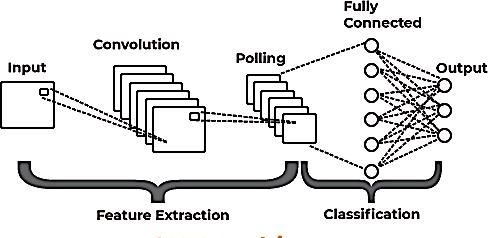
:CNNModelArchitecture
Table -3:NeuralNetworkTrainingParameters
Parameter
Description
Optimizeralgorithm Adam
Batchsize
Numberofepochs
Dropout
to100
or50%
Lossfunction Categorical cross entropy
ActivationFunctions (HiddenLayer) Relu
Activation functions (Output Layer) Softmax
TheAdamoptimizerhasbeenemployedtofindtheoptimal node weights and minimize prediction error. Adam is derived from adaptive moment estimation. The Adam optimizermodifiesthelearningratethroughoutthetraining process with its many advantages, the Adam optimizer is highlyrecommendedasadefaultoptimizertechniqueand servers as a useful benchmark for deep learning projects. Comparedtootheroptimizationalgorithms,itworksmore quickly, uses less memory, and needs less running. The Adam optimizer combination of gradient descent with momentumandtheRMSPalgorithm.
Intheoutputlayer,theSoftMaxactivationfunctionisused, whichisusedfor multiclassclassification.Theoutputof a SoftMaxisa vectorcontainingprobabilitiesforeachclass. Thevector’sprobabilityforallpotentialoutcomesorclasses sumtoone.
CategoricalCross-Entropylosshasbeenusedinthestudy, Cross-Entropy,oftenknownasloss,isaperformancemetric forclassificationmodelswhoseoutputisaprobabilityvalue between0and1.Asthepredictedprobabilitygetscloser1, log loss drops gradually. Cross-entropy loss grows then predictedprobabilitydeviatesfromtheactuallabel,andasa result,errorsarepenalized
Itrepresentsthe experimental setupofthestudy. The research work takes place on an AMD-Ryzen 3 CPU. Furthermore,themachinehas8GBofRAMandanintegrated graphicscard.AllofthemodelsarebuiltinPythonandrun ondeeplearninglibrarieslikeKerasandTensorFlow.
Table -4: ExperimentalSetup
Process name S.No Action
Input
Environment
Configuration
Directories
Configuration
Trainingand
Testing
1. Collectionofinputaudio samplesinclude7 differentemotions.
2. Anaconda,JupyterNotebook
3. Importallnecessarylibraries andpackages
4. Loadtheaudiosamples
5. Loadthedirectoriesfor training,testingand create validationontrainingdata
6 BuildaCNNmodels
7 Fine-tunedmodelsbyadding theReluandSoftMax activationfunction
International Research Journal of Engineering and Technology (IRJET) e-ISSN: 2395-0056
Volume: 11 Issue: 04 | Apr 2024 www.irjet.net p-ISSN: 2395-0072
Model Compilation 8 Themodelcomplieswith Adamoptimizeranda learningrate0.001
9 Set50epochsformodel training
10 Asmodelcheckpoint,usethe validationlosstomonitor
11 Savemodel
By comparing the number of true positive findingstothetotal numberofactual positivesamples (TP+FN),therecallvalueisusedtogaugetheaccuracy ofpositivepredictions.Thefollowingequationisusedto determinetherecallvalue:
RecallorTPR=

4.2.4 F1-Score
Performance Report 12 Generateclassificationreport
13 Generatemodelaccuracyand lossreports
Prediction 14 Loadthetrainedmodel 15 Predictthetypeofspeech emotions.
4.2 Evaluation metrics
Theeffectivenessofthestatistical,ML,orDLmodel isassessedusingevaluationmetrics.Toevaluatea study’s proposedmodel,itiscrucialtouseavarietyofevaluation metrics. Metrics for evaluation are crucial for ensuring models’ performance. Model predictive or classification efficiencycanbemeasuredbyaccuracy,precision,recall,and thef1-scorearemeasuredforallemotionsshowinTable4.2.
4.2.1 Accuracy
Accuracy is the percentage of images correctly predicted from all the predictions. The following Eq. (9) describeshowtheaccuracyisstated:
Accuracy=

Theaccuracyscoremeasuresthenumberofcorrect predictions (TP + TN) made by a model in relation to the totalnumberofpredictions(TP+TN+FP+FN)made.The abbreviations for "true positive", "true negative", "false positive",and"falsenegative"are"TP","TN","FP",and"FN" respectively.
AccuracyoftheCNNmodel=95.75%
4.2.2 Precision
Theprecision,whichmeasuresthepercentageof trulyrightpositiveoutcomes,isdeterminedbyusingthe formulae.
Precision=

Tomeasurehowwellamodelperforms,researchers utilize measures like the F1-score, which is calculated by taking the harmonic mean of the model’s precision and recall.ItisdefinedasEq:
F1–Score=2

Table -5: EvaluationMetrics
4.3 Result analysis and deployment
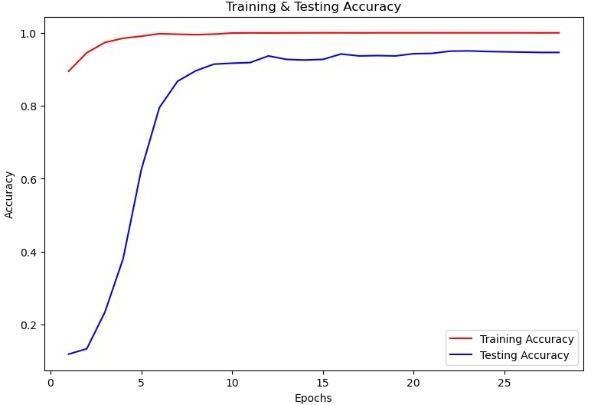
Fig-4.3.1: Training&Testingaccuracygraph
International Research Journal of Engineering and Technology (IRJET) e-ISSN: 2395-0056
Volume: 11 Issue: 04 | Apr 2024 www.irjet.net p-ISSN: 2395-0072
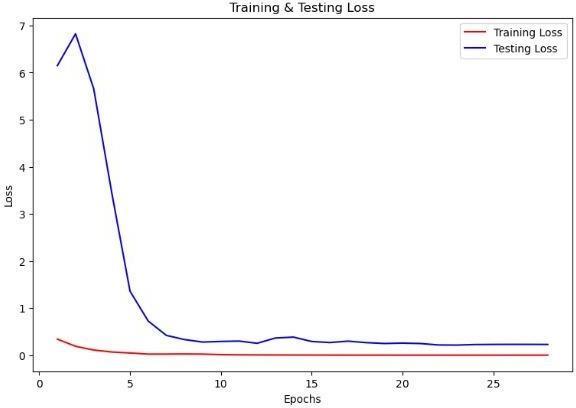
Training&Testinglossgraph
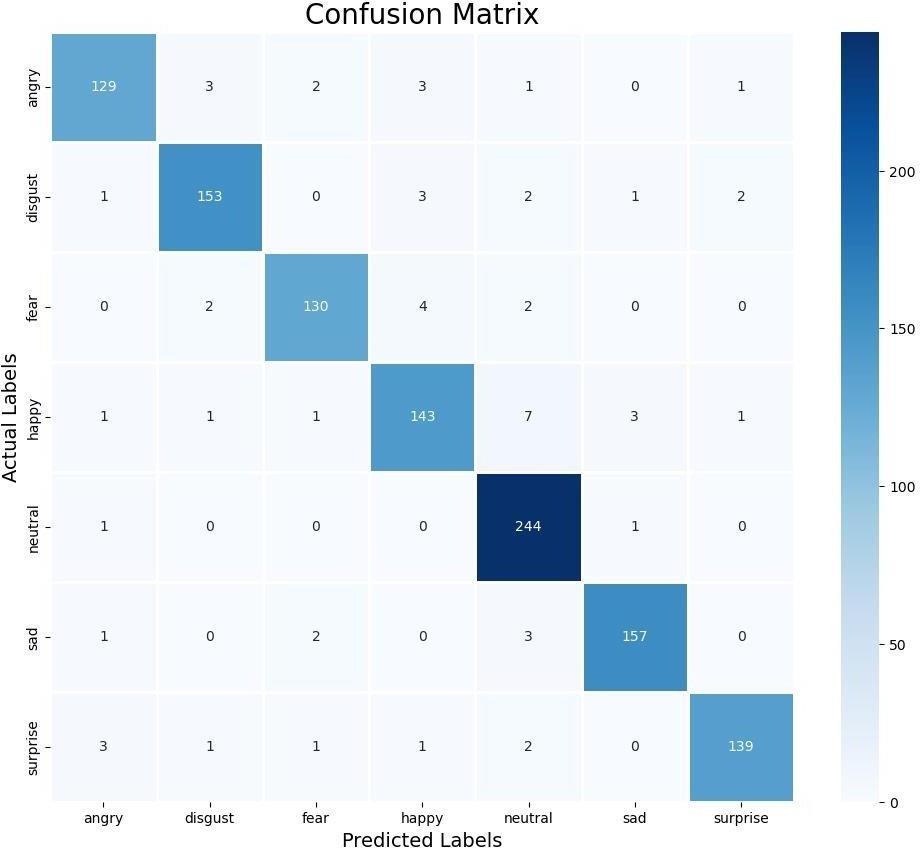
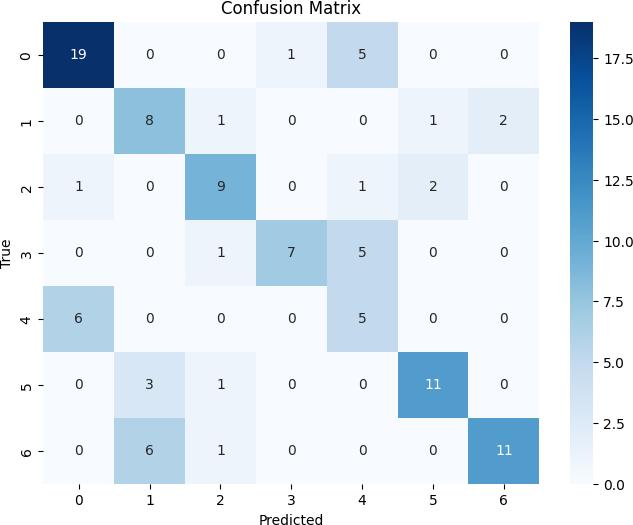
Fig-4.3.3:Confusionmatrix
5.CONCLUSION
Speechemotionrecognition(SER)isattheforefront ofhuman-computerinteraction,providingdeepinsightinto thecomplexityofhumanemotionsconveyedthroughspeech based on audio feature analysis and machine learning algorithms,thesystemcrossesdisciplinaryboundariesand hasapplicationsinavarietyoffields,includinghealthcare, education,andentertainment.SERisfocusedonexploring theRAVDESSdataset,alargecollectionofemotionalspeech samples spanning the full range of human experience and speech expression. The SER journey begins with the
extractionandanalysisofkeyaudiofeatures.Thistaskcan be accessed through powerful Python libraries such as librosa, NumPy, Pandas, and Matplotlib. These libraries allowresearcherstoharnessthepotentialofaudiodataand gain insight into the spectral and temporal properties of emotionalspeech.Amongthemyriadfeaturesextracted,the Mel frequency cepstral coefficient (MFCC) emerges as a fundamental element that captures the subtle patterns of vocal colour and articulation underlying emotional expression. In addition to MFCC, features such as zero crossingrate(ZCR),chroma,androotmeansquareenergy (RMSE)provideadditionalanalyticaldimensionsandreveal rhythmic,tonal,anddynamicaspectsofemotionalspeech. Beyond academia, SER offers practical applications in a varietyofreal-worldscenarios,eachdrivenbythepromise ofimprovinghumaninteractionandunderstanding.Inthe healthcarefield,SERhasthepotentialtorevolutionizethe diagnosis and treatment of mental illness by enabling emotion-awarevirtualassistantstoprovidecompassionate support to those in need. Educational institutions benefit fromSER-drivenpersonalizedlearningexperiences,where emotion-aware tutoring systems adapt their teaching approaches based on students' emotional state and engagement.Additionally,incustomerservice,SERenables sentiment analysis of call centre interactions, allowing companiestoprovideamoreempatheticandpersonalized serviceexperience.Theentertainmentandmediaindustries are harnessing the power of SER to create immersive experiences that engage viewers on a deeper emotional level. From emotion-aware content recommendation systems to interactive gaming experiences that adapt to player emotions in real-time, SER drives innovation in storytelling and audience engagement. Additionally, SER provides valuable insight into consumer sentiment and emotional responses in market research and advertising, guidingthedevelopmentoftargetedmarketingcampaigns andproductstrategies.Lookingahead,thefutureofSERis fullofpossibilitiesthankstoadvancesinmachinelearning, natural language processing, and affective computing. Researchers continue to push the boundaries of SER technology,usheringinaneweraofemotionallyintelligent systems that will enrich our lives and further deepen our understanding of human emotions. Through collaborative efforts and a commitment to ethical and inclusive design practices, SER fosters more caring and meaningful interactions between people and technology, ultimately creatingamorecaringandconnectedworld.
Speechemotionrecognition(SER)includesseveral importantdirections,includingconsiderationofmultimodal approaches that integrate audio, video, and text data to improve emotion recognition accuracy. Deep learning architecturessuchasrecurrentneuralnetworks(RNNs)and transformer models promise improved SER performance. Transfer learning and domain adaptation techniques
International Research Journal of Engineering and Technology (IRJET) e-ISSN: 2395-0056
Volume: 11 Issue: 04 | Apr 2024 www.irjet.net p-ISSN: 2395-0072
facilitate the generalization of the SER model to new domainsorlanguageswithlimitedlabelleddata.Real-time emotion recognition systems, contextual emotion recognitionmodels,andadvancesinemotionunderstanding and generation are also important areas of focus. Additionally,considerationofethicalandsocialimplications such as privacy, bias, and fairness are critical for the responsibledevelopmentanduseofhisSERtechnologyina varietyofapplications.Throughtheseresearchdirections, the future of SER aims to advance the state of the art and enablemoreempatheticandemotionallyintelligenthumancomputerinteractions.
[1] A. Milton, S. Sharmy Roy, S. Tamil Selvi, "SVM Scheme for Speech Emotion Recognition using MFCC Feature," International Journal of Computer Applications, vol.69,no.9,May2013.
[2] Akshath Kumar B.H, Nagaraja N Poojary, Dr. Shivakumar G S, "Speech Emotion Recognition Using MLP Classifier," International Journal of Scientific Research in ComputerScience,EngineeringandInformationTechnology, vol.7,no.4,2021.
[3] FuWang,LinhuiSun,ShengFu,"DecisiontreeSVM model with Fisher feature selection for speech emotion recognition,"EURASIPJournalonAudio,Speech,andMusic Processing,2019.
[4] G.Liu,W.HeandB.Jin,"FeatureFusionofSpeech EmotionRecognitionBasedonDeepLearning,"International ConferenceonNetworkInfrastructureandDigitalContent (IC-NIDC),pp.193-197,Guiyang,China,August22–24,2018.
[5] H. O. Nasereddin and A. R. Omari, "Classification Techniques for Automatic Speech Recognition (ASR) Algorithms used with Real Time Speech Translation," ComputingConference,London,UK,pp.200-207,2017.
[6] K.Tarunika,R.B.PradeebaandP.Aruna,"Applying Machine Learning Techniques for Speech Emotion Recognition,"9thInternationalConferenceOnComputing, CommunicationandNetworkingTechnologies.
[7] MasatoAkagi,Reda Elbarougy,"FeatureSelection Method or Real-time Speech Emotion Recognition," International Committee for Coordination and Standardization of Speech Databases and Assessment Technique,November2017.
[8] S.Prasomphan,”ImprovementofSpeechEmotion RecognitionwithNeuralNetworkClassifierbyUsingSpeech Spectrogram”,2015,InternationalConferenceonSystems, SignalsandImageProcessing(IWSSIP),London,UK,10-12 September,pp.72–76,2015.
[9] T. Özseven, “Investigation of the Effect of SpectrogramImagesandDifferentTextureAnalysisMethods onSpeechEmotionRecognition,"AppliedAcoustics,pp.70–77,2018.
[10] YeSimÜlgenSonmez,AsafVarol,"NewTrendsin Speech Emotion Recognition," Institute Of Electrical And ElectronicsEngineers,June2019.