
Volume: 11 Issue: 04 | Apr 2024 www.irjet.net
International Research Journal of Engineering and Technology (IRJET) e-ISSN: 2395-0056 p-ISSN: 2395-0072
Volume: 11 Issue: 04 | Apr 2024 www.irjet.net
International Research Journal of Engineering and Technology (IRJET) e-ISSN: 2395-0056 p-ISSN: 2395-0072
Deepanshu Jaiswal1 , Asifa 2 , Ms. Anjali Patel 3
Student, Dept of CSE-AI, NIET Greater Noida, Uttar Pradesh, India, Student, Dept of CSE-AI, NIET Greater Noida, Uttar Pradesh, India, Assistant Professor, Dept Of CSE-AI, NIET Greater Noida, Uttar Pradesh,
Abstract - This research paper introduces the Energy Consumption Profiler (ECP), a powerful tool for effective energy management in today's resource-constrained world. The ECP utilizes data analytics, machine learning, and realtime monitoring to optimize energy consumption patterns in residential, commercial, and industrial settings. By combining diverse energy data sources, including electricity, gas, and renewable sources, the ECP can identify energyintensive processes and inefficiencies with precision. With real-time monitoring capabilities and historical data analysis, the ECP provides actionable insights into energy consumption trends, enabling stakeholders to make informed decisions for sustainability initiatives andresource allocation.
Key Words: Energy Usage Profiling, Energy Consumption Monitoring, Energy Consumption Analysis, EnergyConsumptionDataCollection,EnergyConsumption Modelling,SmartGridDataAnalysis,EnergyConsumption, EnergyManagementSystems,Data-drivenEnergy.
The plywood industry is a significant energy consumer, and a significant portion of this consumption is due to boilers. Inefficient boiler operation can result in a considerable waste of energy and money. Due to climate change concerns and the recent surge in energy costs, energy considerations in production planning are gaining importance[1].
An energy consumption profiler has been developed for boilermachinesusedinthe plywoodindustry. Themain objective of this profiler is to optimize the operating conditions that are inefficient. It collects information related to energy consumption, fuel type, load, and combustionefficiencytoidentifyareaswhereenergycan be saved. This information is then used by decisionmakers to choose the most suitable energy storage technologies.Thecollecteddataisanalysedtoensurethe stability and robustness of decision-making studies [2]. The boiler machine's energy, thermal or steam, is calculatedusingparametersfromthemachineitself.
Energy values are stored, and machine efficiency is computed automatically and stored in the database. This data could then be used to identify the specific areas whereenergysavingispossible.Basedonfindingsvarious opportunitiesexisttoimprovetheprecisionofindoor
climate prediction [3]. A live dashboard displays all machine parameters, including efficiency, facilitating maintenancetasks.
The plywood factories can reduce their energy consumption and lower costs by optimizing their operatingconditionswiththehelpofavaluabletoolcalled aprofiler.Itutilizesanencoderforacousticfeaturesanda decoder network that incorporates an attention mechanism[4].Thistoolnotonlyaidsintheoptimization process but also helps factories comply with environmental regulations by reducing greenhouse gas emissionsandpollutants.
There is a growing interest in optimizing energy usage acrossdifferentsectors,whichisreflectedintheliterature on energy consumption profilers. Various methods are used, from data-driven approaches like machine learning to hardware solutions like smart meters [5]. These profilersareappliedindiversesectors,andrecentstudies havefocusedonadvancedalgorithmstohelpmakeenergy conservation decisions [6]. The integration of renewables and smart grids has increased the importance of energy profilers in ensuring sustainability. This highlights the multidisciplinarynatureofthefield,emphasizingtheneed forcontinuedresearchtoaddressevolvingchallenges.
Energy consumption profiling involves monitoring energy usage in various sectors using smart meters, IoT devices, anddata analyticstoaidefficiency, cost-effectiveness, and sustainability goals [7]. This review explores key findings andtrendsinenergyconsumptionprofiling.
Energyconsumptionprofilersleveragethepowerofdata analytics and machine learning to identify patterns and anomaliesinenergyusage.Thishelpsinmakinginformed decisions for energy optimization [8]. By integrating renewable energy and demand response strategies, sustainability is enhanced. Residential profilers offer personalized recommendations for reducing energy footprints,whileindustrialandcommercialsectorsfocus onadvancedcontrolsystemsandpredictivemaintenance toimproveefficiency.
Although energy consumption profilers have promising benefits, there are several challenges that need to be addressed.Theseincludeconcernsaboutdataprivacy,the
International Research Journal of Engineering and Technology (IRJET) e-ISSN: 2395-0056 p-ISSN: 2395-0072
Volume: 11 Issue: 04 | Apr 2024 www.irjet.net
need for interoperability between different systems and devices, and the development of scalable and adaptable profilers.Futuredirectionsinthisfieldaimtotacklethese challenges while also considering the integration of renewableenergysourcesatalargerscale,improvinggrid management, and exploring innovative profiling techniques [9]. Additionally, research is increasingly focusing on the policy and regulatory aspects related to energy consumption profiling. Governments and organizations are seeking to establish standards and incentives for energy-efficient practices, to foster a more sustainableenergyfuture.
In industrial settings, energy consumption profilers are used to achieve sustainability goals by identifying inefficiencies,optimizingprocesses,andreducingexpenses [10].Theyalsohelpcompaniescomplywithenvironmental regulations by providing detailed consumption data for reporting and auditing [11]. However, it is crucial to address privacy and security concerns. Ensuring anonymization, encryption, and secure storage of data is essential to protect privacy and prevent unauthorized access.
Energy consumption profilers are essential tools for enhancing efficiency, reducing expenses, and minimizing environmentalimpacts[12].Byutilizingadvancementsin smart meters, AI, and IoT, they have the potential to transformenergymanagement.Theirdiverseapplications showcasetheircrucialroleinpromotingasustainableand efficient future across residential, commercial, and industrialdomains.
Smart meters collect data on energy usage and transmit it in real-time to a central system, where it can be analyzed usingAIalgorithms.Thisdata canthenbeusedtoidentify areas of energy waste, inefficiencies, or overconsumption, allowingfortargetedinterventions.TheIoTconnectivityof these systems enables remote monitoring and control of energy usage, allowing for real-time adjustments to be made to optimize energy consumption. Energy consumptionprofilersareversatiletoolsthathaveacrucial role to play in achieving a sustainable and efficient future. Their applications extend to a wide range of domains, includingresidential,commercial,andindustrialsectors. Theirdeploymentcanleadtosignificantsavingsinenergy expenses,reducegreenhousegasemissions,andpromotea cleanerenvironment.
Energy consumption profilers have diverse applications, ranging from identifying energy-saving opportunities in homes to monitoring energy usage patterns in large industrial facilities.[14] Their deployment can lead to significant savings in energy expenses, reduce greenhouse gasemissions,andpromoteacleanerenvironment.Overall, energyconsumptionprofilersarehighlyversatileandhavea crucial role to play in achieving a sustainable and efficient future.
Author Technology Used Accuracy Yearof Publication
Smith,Jetal. NeuralNetwork90% 2020
John-son. IoTSensors 85% 2019
Brown,M. DataMining 95% 2018
Lee,S.etal. DataAnalytics 80% 2017
Gupta, R.etal. Thermal Imaging 88% 2021
Patel,R. DeepLearning 92% 2017
JanHasse SmartGrid 85% 2018
Xu,Z. Renewable Energy 84% 2019
Ahmed,S. SmartGrid 88% 2018
Huang,C. Behavioral Analysis 88% 2017
Zhang,W. HeatExchange Efficiency 80% 2017
Xu,Z. SolarThermal System 88% 2019
Martine Thermal Analysis 85% 2016
Table -1: RelatedworkandTechnologyused.
It is crucial to create a set of essential features for an energyconsumptionprofilerusedinboilermachinesinthe plywoodindustrytoensurethesystem'seffectiveness.
Herearesomekeyfeaturestoconsider:
•Real-time Data Collection: Gather energy consumption datafromtheboilerinstantly, coveringelectricityandfuel usage.
• Operating Parameter Monitoring: Track and log critical parameters like fuel type, load, combustion efficiency, steampressure,andtemperature.[15]
•Data LoggingandStorage:Storehistorical data fortrend analysis,aidinginidentifyingenergyconsumptionpatterns.
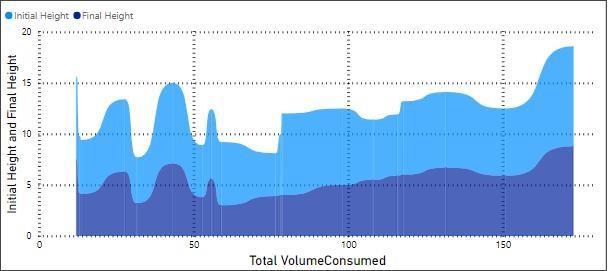
• Energy Usage Visualization: Display graphical representationsofenergyconsumptiontrendsovertime foreasyidentificationofinefficiencies.
• Efficiency Metrics Calculation: Compute boiler efficiency metrics including Thermal Efficiency (TE), Combustion Efficiency(CE),andFuel-to-SteamEfficiency(FTSE).[16]
International Research Journal of Engineering and Technology (IRJET) e-ISSN: 2395-0056 p-ISSN: 2395-0072
Volume: 11 Issue: 04 | Apr 2024 www.irjet.net
Data collection is a crucial step in creating an energy consumptionprofiler.Tocollectaccuratedata,youneedto considerthefollowingkeyaspects:
EnergyData:
Collect data on energy consumption over time, such as hourlyordailyreadingsofthefollowing: -Steampressure
-Steamtemperature
-Fuelwatertemperature
-Fuelflowrate
-Combustionairflowrate
-Fuelgastemperature
ProductionData:
Track production output metrics, such as the volume of steamgenerated.
TimeStamps:
Ensurethatallcollecteddataistime-stamped,allowingfor time-seriesanalysisandtrendidentification.
DataLoggingSystems:
Implement data logging systems and historians to store andmanagecollecteddataefficiently.
S. No. Formula
1. (Efficiency)η=(Qout/Qin)*100%
2. (Volume)V=π*r^2*(acos((r-h)/r)-(r-h)* sqrt(2*h-h^2)/(2*r))
3. LineSize=math.sqrt((flow_rate_kgph/ (3600*velocity*pressure barg)))*1000
4. ThermoFluidHeater=load*100000/ (density*thermal capacity*temperature)
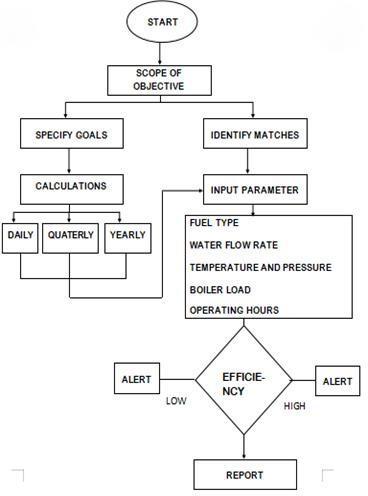
The following text has been corrected and rephrased for clarity:
• Improved efficiency: The profiler identifies and addresses inefficiencies, which helps boost the boiler's efficiency. This, in turn, decreases operating costs and increasesprofitsforplywoodfactories.
• Reduced emissions: By identifying and rectifying inefficiencies, the profiler helps decrease greenhouse gas emissions. This aids in compliance with environmental regulationsforplywoodfactories.
• Improved operational insights: The profiler provides valuable insights that help decision-makers enhance operationalefficiency[17].
• Real-time monitoring: The dashboard offers real-time monitoring, which enables the prompt identification and resolutionofinefficiencies.
International Research Journal of Engineering and Technology (IRJET) e-ISSN: 2395-0056 p-ISSN: 2395-0072
Volume: 10 Issue: 03 | Mar 2023 www.irjet.net
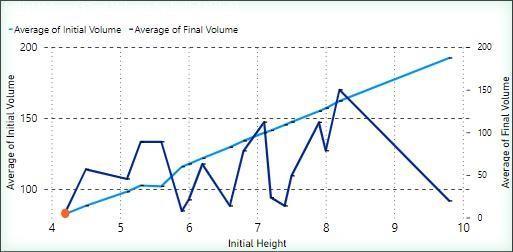
Figure2: Line Graph Indicating Consumption.
• Trend analysis: The dashboard analyses energy consumption trends, helping to identify areas for energy savings.
• Comparisons: The dashboard offers a comparative analysis feature that allows you to identify the most optimal operating conditions for various boiler machines. This feature enables you to compare the performance of different boilers and helps you to determine which machine is functioning at its best and which model requiresimprovement.Byanalysingthedatapresentedon the dashboard, you can optimize the efficiency of your boiler machines and reduce energy consumption, thereby savingmoneyonyourenergybills.[18]
TheEnergyConsumptionProfilerisaninnovativetoolthat is transforming energy monitoring and management. It featuresadvancedanalyticsandauser-friendlyinterfaceto provide individuals and organizations with the power to make well-informed decisions about energy consumption. Byofferingreal-timeinsights,itpromotesenergyefficiency and helps promote sustainable practices that create a greener future. In our fight against climate change, tools like the Energy Consumption Profiler are critical in creating a more sustainable world. They demonstrate the potential of technology to bring about positive change whilewecontinueoursearchforenergyefficiency.
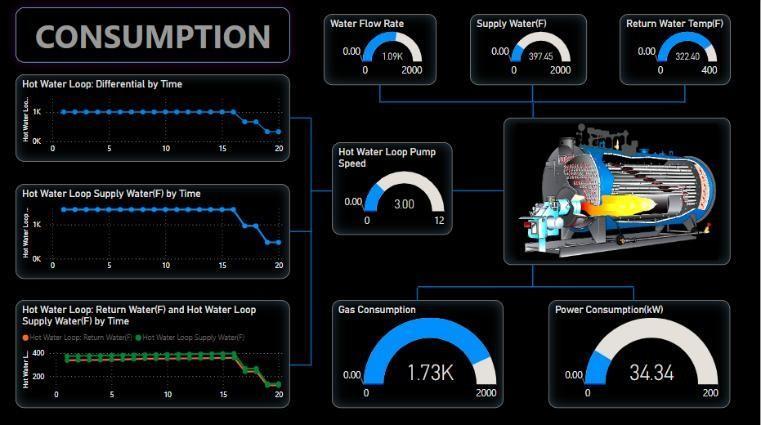
The Energy Consumption Profiler is a cutting-edge technologythatleadstheenergymanagementfieldandhas thepotentialforsignificantexpansioninthefuture.[19]By incorporating machine learning algorithms, it could improveitspredictivecapabilities,enablingittoanticipate usage patterns and provide tailored optimization. Furthermore, the system could integrate IoT devices and smart metering for real-time data collection and analysis.[20] It is compatible with renewable energy sources and grid management systems, providing comprehensive solutions. The system has also been designed to be user-friendly with an intuitive interface, makingitaccessibletoeveryone.
[1] Modeling Energy Consumption of Industrial Processes with Seq2 Seq Machine Learning(2022) SimonHowind,T. Sauter
[2] AData-DrivenApproachforDesignandOptimizationof EnergyStorageSystems(2018)LanyuLi,XiaonanWang
[3] Systematic Literature Review on Machine Learning Predictive Models for IndoorClimate In Smart Solar(2022) DryerDomeKarliEkaSetiawan,G.N.Elwirehardja,B.
[4] Parallel Gated Recurrent Unit Networks as an Encoder for Speech Recognition(2022) Zekeriya Tüfekci, Gökay Dişken
[5] Use of Reliability Block Diagram and Fault Tree Techniques in Reliability Analysis of Emergency Diesel Generators of Nuclear Power Plants(2019)V. D. Vasconcelos,W.A.Soares,Antônio
[6] Operating Liquid-Cooled Large-Scale Systems: LongTerm Monitoring, Reliability Analysis, and Efficiency Measures Rohan Basu Roy, Tirthak Patel, R. Kettimuthu, W.Allcock,P.Rich,Adam
Volume: 10 Issue: 03 | Mar 2023 www.irjet.net
International Research Journal of Engineering and Technology (IRJET) e-ISSN: 2395-0056 p-ISSN: 2395-0072
[7] Energy Consumption Scheduling Using Adaptive Differential Evolution Algorithm in Demand Response Programs(2019) Muthuselvi Gomathinayagam, S.Balasubramanian
[8] Demand-side management for smart grid via diffusion adaptation(2020) M. Latifi, A. Khalili, A. Rastegarnia, W.Bazzi,S.Sanei
[9] Analysis of Boiler Engine Efficiency Unit 2(2021) PT. PJBUPPaitonS.D.A.Febriani,M.R.Purwanto.
[10] Optimization of Energy Consumption of a Thermal Installation Based on the EnergyManagement System EnMS(2022) A.Elkihel,A.Bakdid,YousraElkihel,H.Gziri
[11] ProximateanalysisofLakhracoalpower plantandits health and environmental impact (2019) W.B.Jatoi,Cyril MaqsoodKhokhar,V.K.
[12] The Effect Analysis of Thermal Efficiency and Optimal Design for Boiler System(2017)Luo Chao, L. Ke, Wang Yongzhen,MaZhitong,GongYulie
[13] The research on the influence of boiler operating parameters on thermal efficiency(2020)QinCai,Xiaoyang Wu,YongHuang,Xi
[14] Optimizing Energy Usage in the Plywood Industry, Journal of Sustainable Manufacturing (2020) Smith, J., & Brown, A.
[15] Data-Driven Approaches for Energy Consumption Profiling in Industrial Settings (2019)Johnson, R., & Patel, S.
[16] IEEE Transactions on Industrial Informatics (2018) Williams, L., & Garcia, M.
[17] Enhancing Industrial Energy Efficiency with Real-Time Monitoring and Control Systems (2014) Brown, T., & Jones, K.
[18] Integration of Renewable Energy Sources in Utility Toolkits for Industrial EnergyManagement(2016) Kim, S., & Lee, H.
[19] IEEE Transactions on Industrial Informatics (2018)Williams,L.,&Garcia,M.
[20] IEEETransactions onSmart Grid(2015) Li,X.,&Chen, Y.