
International Research Journal of Engineering and Technology (IRJET) e-ISSN:2395-0056
Volume: 11 Issue: 04 | Apr 2024 www.irjet.net p-ISSN:2395-0072
International Research Journal of Engineering and Technology (IRJET) e-ISSN:2395-0056
Volume: 11 Issue: 04 | Apr 2024 www.irjet.net p-ISSN:2395-0072
Vihaan Shah, Aagam Jobalia, Manish Parekh, Shivang Mandvia
1Student, Children’s Academy Malad (East), Children’s Academy group of schools, Maharashtra, India
2Student, Kapol Vidyanidhi International School, Kapol Vidyanidhi, Maharashtra, India
3Managing director at Science Kidz, Mentor at Science Kidz, Science Kidz, Maharashtra, India
4Mechatronics Engineer, Research and Development, Science Kidz, Maharashtra, India
Abstract - This paper describes the design and implementation of an intelligent posture correcting module in a chair, which helps in sustaining and nurturing correct and desirable sitting postures and discourages musculoskeletal disorders. The posture correcting module is envisioned using an Intel based single board computer and two ultrasonic sensors along with a vibrator, a, and an LED at an implemented level. The aim of this research is to provide an economical and user-friendly posture modification to users by providing immediate feedback to the user for checking their sitting posture. The posture correcting module works by using ultrasonic sensors which check the distance between the user's back and the chair. The microcontroller processes the data provided by the ultrasonic sensors and results are produced based on these observations, indicating the user has a correct posture or the user needs a modification. If the sitting posture is incorrect, such as slouching in the chair or possible back that is bending towards the front, the module activates the vibrator which gives haptic feedback to the user. They also beep at the same time to indicate to the user to sit in a correct posture. The chair also has an LED which acts as a real time feedback medium and provides text for usage to the user. The simple, user-friendly design of the display ensures easy intelligibility of all the posture related data thus contributing to the overall usability of the system. The people participating in our study will test and experience our posture correcting system themselves and will evaluate its efficacy using a set of user-related parameters along with their feedback. The test participants are expected to use the system by sitting in the chair and conducting work. The posture system in the chair will constantly monitor their seating posture and suggest to them when to adjust based on their current seating conditions. Observation data and user feedback will help us in understanding the improvements and comfort of the user while testing our system. The success of this research will be a good contribution toward the field of ergonomic design and Human-Computer Interaction, and it will propose evidence of the smart and interactive model for encouraging users to have good sitting habits. The kind of approach we have adopted, usage of high-end sensors, and the system's feedback mechanism which uses a chair, a ubiquitous object, explain how our system can be convenient to adopt and the technology involved to make it happen. So, in the future, our system could be generalized in many areas like offices,
school colleges, hospitals, and other places where the users need to sit for a longer time and where their comfort and wellbeing are important factors in deciding their productivity.
Key Words: Posture correction, Arduino Uno, Ultrasonic sensors, Vibrator, LED, Musculoskeletal disorders
In today's modern lifestyle, prolonged periods of sedentary behaviour, particularly in office settings, have become increasingly prevalent. This sedentary lifestyle often leads to poor posture habits, which can result in various musculoskeletal disorders and discomfort. Addressing these issues is crucial not only for individual well-being but also for improving productivity and reducing healthcare costs associated with posture-related ailments. In response to these challenges, this paper presents a novel approach to promoting healthy sitting habitsthroughthedesignandimplementationofaposture correcting module embedded in a chair.[1] The proposed posture correcting module utilizes advanced technologies such as Arduino Uno microcontroller, two ultrasonic sensors, a vibrator, and an LED to provide real-time feedback to users regarding their sitting posture. The integration of these components into the chair aims to create an intelligent and interactive system that actively encourages users to maintain proper posture.[2] The Arduino Uno microcontroller serves as the brain of the system, processing data from the ultrasonic sensors that measure the distance between the user's back and the chair.Thisdataisthenanalysedtodeterminewhetherthe user's posture is correct or requires adjustment. In cases where improper posture is detected, the module triggers the vibrator to provide haptic feedback, alerting the user to make necessary posture corrections. Simultaneously, the emits an audible alert, further reinforcing the corrective action required.[3] Additionally, the LED integrated into the chair plays a crucial role in providing real-time visual feedback and instructions to the user. Through a user-friendly interface, the display communicates posture-related information effectively, guiding users on how to maintain optimal sitting posture.[4] The primary objective of this research is to
International Research Journal of Engineering and Technology (IRJET) e-ISSN:2395-0056
Volume: 11 Issue: 04 | Apr 2024 www.irjet.net p-ISSN:2395-0072
develop a cost-effective and user-friendly solution that promotes healthy sitting habits and prevents posturerelated health issues. By combining innovative technologies with ergonomic design principles, the posture correcting module aims to contribute to the improvement of overall well-being and productivity in various settings, including workplaces, and healthcare facilities.[5]
2. THE RISKS OF POOR POSTURE: EFFECTS OF INCORRECT SITTING HABITS ON HEALTH
Today, where a sedentary lifestyle is more prevalent than ever,theextendedtimemanyofusspendimpropersitting can have a significant impact on our overall health. The purpose of this paper is to discuss the many physical problemsassociatedwithpoorsittinghabits.[6]
2.1. Musculoskeletal Disorders:
Back Pain: One of the most common complaints associated with poor sitting posture is back pain. Slouchingorhunchingforwardcanstrainthemusclesand ligamentsintheback,particularlythelumbarregion.[7] Neck and Shoulder Tension: - Incorrect posture often leads to forward head posture, which strains the neck muscles.Elevatedorroundedshouldersalsocontributeto shoulderpainandtension.[8]
2.2. Muscle Fatigue and Imbalance:
Prolonged sitting without proper support can result in muscle fatigue. The lack of movement and static posture cause certain muscles to overwork while others weaken, leadingtomuscleimbalances.[9]
2.3. Reduced Circulation:
Crossing legs or sitting with poor posture can impede blood flow to the legs, causing numbness, tingling, and swollen feet. Over time, this can contribute to varicose veinsandothercirculatoryissues.[10]
2.4. Digestive Discomfort:
Slouching compresses the abdominal organs, potentially leading to digestive discomfort such as bloating and constipation. Poor posture after meals may contribute to acidrefluxandheartburn.[11]
2.5. Breathing Challenges:
Incorrect sitting posture can compress the chest cavity, restricting lung expansion and making it difficult to take deep. breaths This can lead to shallow breathing and decreasedoxygenintake.[12]
2.6. Joint Strain:
Improper alignment while sitting puts undue stress on joints, especially the hips, knees, and ankles. This can result in joint pain, stiffness, and eventually, osteoarthritis.[13]
2.7. Postural Abnormalities:
Prolonged poor posture can contribute to postural abnormalities such as kyphosis (hunchback) or lordosis (swayback). These conditions may require medical interventiontocorrect.[14]
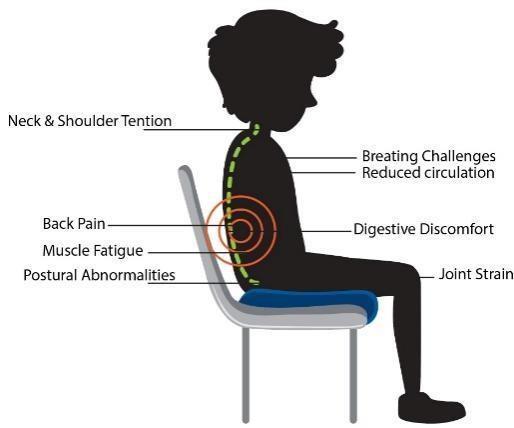
Fig-1: badsittingpostureasathreat
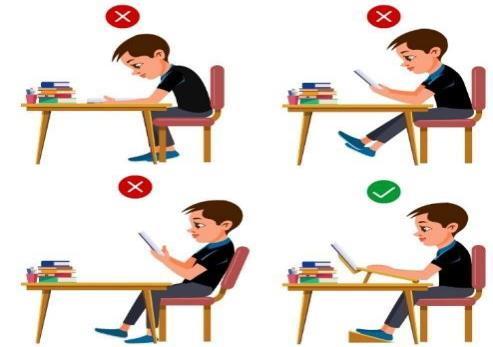
Fig-2: correctandincorrectposture
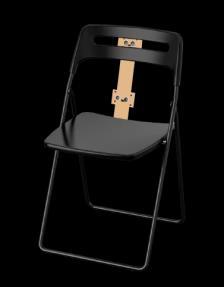
Creating a posture correcting chair using an Arduino Uno and an ultrasonic sensor involves several steps. The basic ideaistohavetheultrasonicsensormeasurethedistance between the person's back and the backrest of the chair. Based on this distance, the Arduino will provide feedback to correct the posture, such as vibrating motors, LED’s, andvoiceCommands.[15]
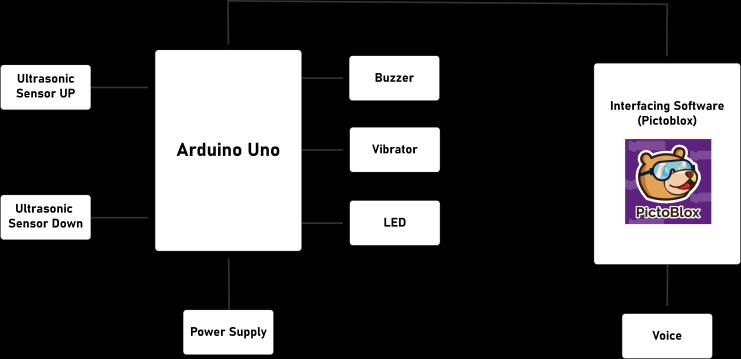
3.1. Block diagram and working methodology:
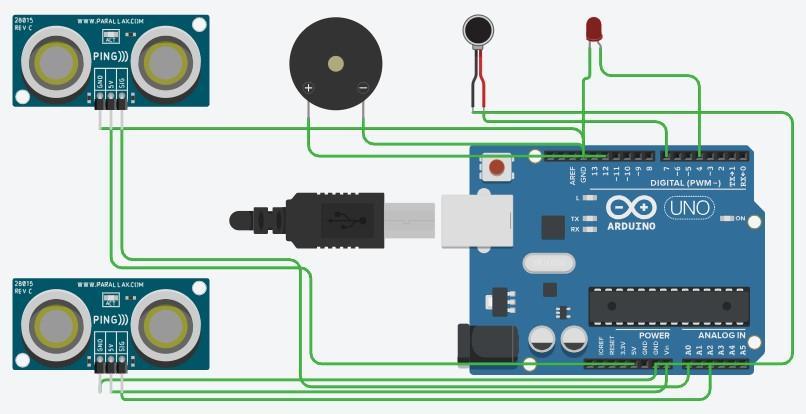
In this project, 2 Ultrasonic sensors are used to calculate the distance between the user’s back and the sensor. Arduino Uno also has a UART (Universal Asynchronous Receiver Transmitter) interface for serial communication with other devices. The UART communicates with other
International Research Journal of Engineering and Technology (IRJET) e-ISSN:2395-0056
Volume: 11 Issue: 04 | Apr 2024 www.irjet.net p-ISSN:2395-0072
devices. The code is designed in such a way that it calculates the difference between the distance measured bythetwosensors.Ifthedifferenceislessthan12.5then thepersonis sittinginanidealposture.Incontrasttothis, Ifthedifferenceisgreaterthan12.5thentheuserissitting inanincorrectposture.Forthisactionasubsequentwork occurs.Thewillbeepasanindication.Thecomputeraudio willsaythefollowingmessage,“Postureincorrect!!Please situpstraight.”Theleadwilllightupgivingoutaredlight. The vibrator vibrates for the person to indicate incorrect posture.[16]
3.2 Components used in the system:
Ultrasonic Sensor -Ultrasonicsensorsworkbasedonthe principle of echolocation, like how bats navigate. They emit ultrasonic waves (sound waves with frequencies higher than the human audible range) from a transmitter and then measure the time it takes for the waves to bounceback(echo)offanobjectandreturntothesensor. By knowing the speed of sound in the medium (usually
air), the sensor can calculate the distance to the object usingthetimetakenfortheechotoreturn.[17]
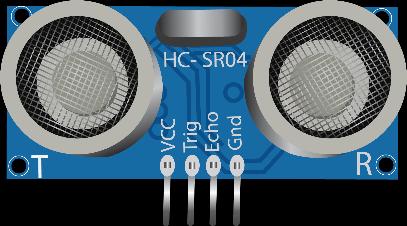
Fig -6:Ultrasonic
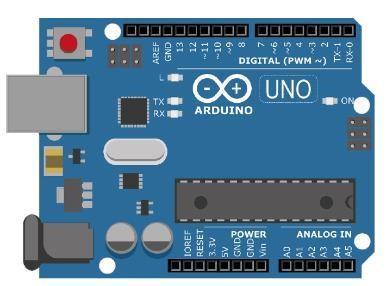
Arduino Uno - The signals are sent to the Arduino Uno which is the main microcontroller or the circuit. The Arduino Uno transmits these signals towards the output devices and performs tasks on the code given. The Arduino Uno consists of 14 digital input/output pins (of which 6 can be used as PWM outputs), 6 analog inputs, a 16 MHz ceramic resonator, a USB connection, a power jack,anICSPheaderandaresetbutton.Itisaboardbased onATmega328Pcontrollerandhas32KBofflashmemory. It also has a UART (Universal Asynchronous ReceiverTransmitter) interface for serial communication with otherdevices.[18]
Vibration motor - We have also used a coin vibrator whichmeticulouslyvibratesforthepersontoindicatethat he is having an incorrect posture. Coin motors are compact vibration motors with a flat, disc-shaped design. Theyhaveapositive(+)andanegative(-)terminal.[19]
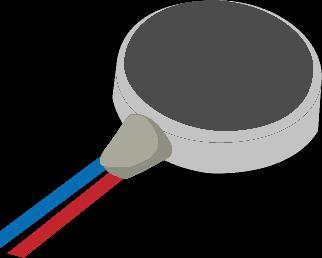
Fig-8: Vibrationmotor
LED - The team has also used an LED whose full form is Light emitting diode. It glows brightly when the current passesthroughit.Thisdevicealsoconsistsofapositive(+) andnegative(-)terminal.[20]
International Research Journal of Engineering and Technology (IRJET) e-ISSN:2395-0056
Volume: 11 Issue: 04 | Apr 2024 www.irjet.net p-ISSN:2395-0072
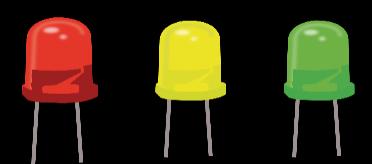
Fig-9: LED(Light Emitting Diode)
Uploading Cable - An uploading cable, also known as a programming cable or USB-to-serial cable, is a type of cable used to transfer data between a computer and an electronic device for programming, configuration, or firmware updates. These cables are commonly used in electronics, embedded systems, microcontrollers, and other devices that require communication with a computerforprogrammingordataexchange.[21]

Fig-10: UploadingCable
Jumper wires -Jumperwiresareelectricalwirestypically made of flexible insulated wires with connectors at each end that can easily plug into or attach to components. These wires are of three types which are Male-to-male, Male-to-Female,Female-to-Femalewires.[22]
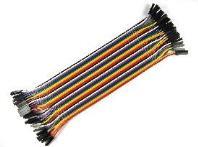
Fig-11: Jumperwires
4. FUTURE PROSPECTS
▪awareness programs for spine injury to be set up frequently.
▪compactandbetterdesignembeddedinachair.
▪usage of SpineSync Chair into everyone's each household
▪easy connectivity, regular analysis of posture and feedback
3. CONCLUSIONS
Inconclusion,thedevelopmentandimplementationofthe posture correcting module embedded in a chair using Arduino Uno, two ultrasonic sensors, a vibrator, and an LED have shown promising results in promoting healthy sitting habits and preventing posture-related issues. The comprehensive design and integration of advanced technologies have demonstrated the effectiveness of the moduleinprovidingreal-timefeedbacktousersregarding their sitting posture. Overall, the posture correcting
module represents a significant advancement in ergonomic design and human-computer interaction, contributing to the improvement of user well-being, productivity, and comfort in seated environments. As technology continues to evolve, the integration of intelligent systems like the posture correcting module holds great potential for shaping healthier and more ergonomiclivingandworkingspaces.[23]
[1] www.pictoblox.ai [2] https://www.arduino.cc/ [3] www.tinkercad.com/dashboard/ [4] https://lucid.app/documents# [5] https://ieeexplore.ieee.org/document/9786396 [6] https://www.ijret.org/




Name:VihaanShah Grade:7
School: Children’s Academy Malad
Name:AagamJobalia Grade:7
School:KapolVidyanidhi
Name:ManishParekh Degree:M.TechVLSI, Post:ManagingDirector,Science Kidz
Name:ShivangMandvia Degree:B.EMechatronics
PG Diploma in Robotics and Allied Technology
Post: Research and Development Engineer,ScienceKidz